Intellectual
Disability
“Know me for my abilities, not my disability”
 Intellectual function can be measured with a test.
 The main symptom is difficulty thinking and understanding. Life skills that can be
impacted upon include certain conceptual, social and practical skills.
 Special education and behaviour therapy can help a person live to his or her fullest.
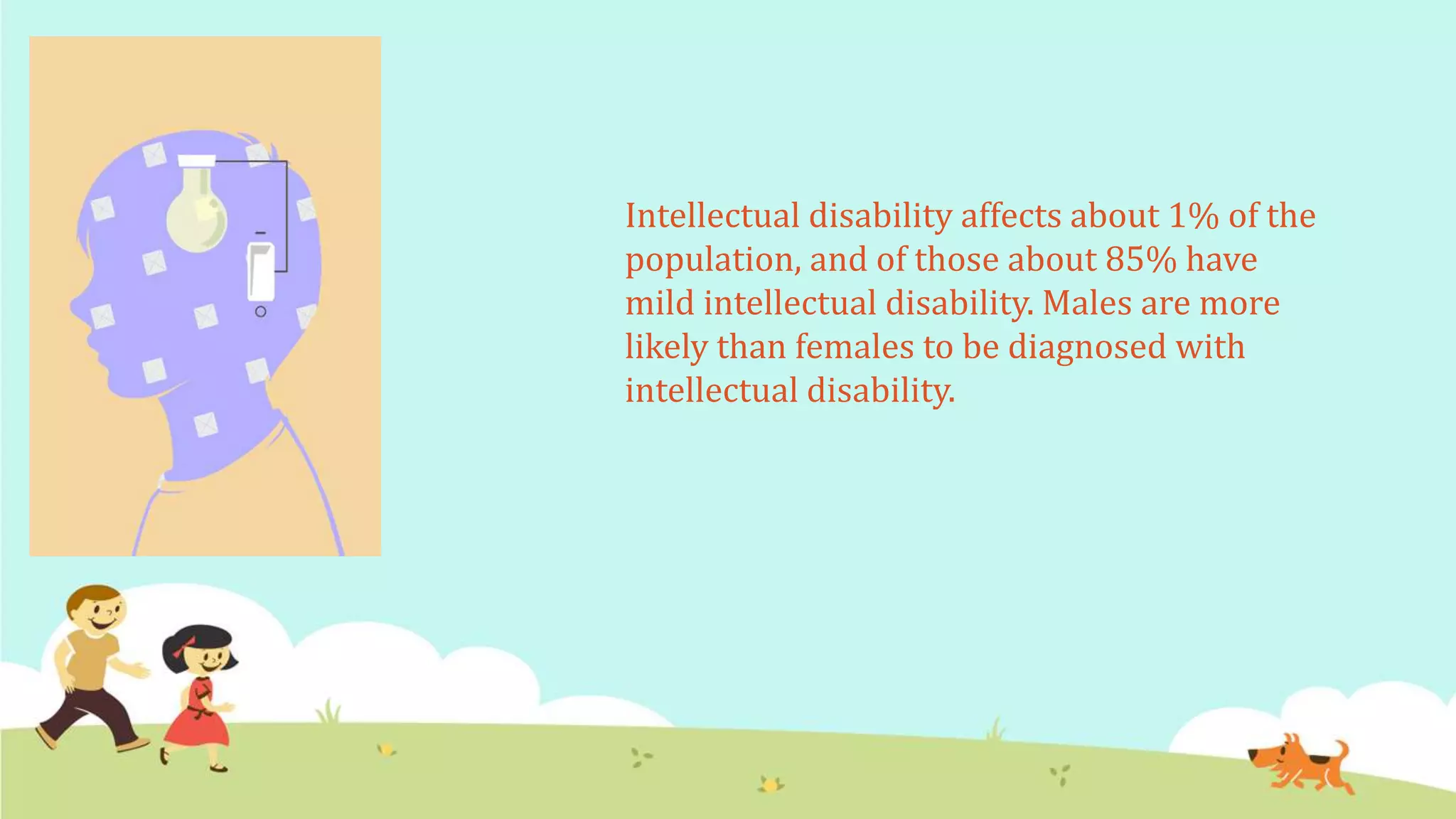
Intellectual disability affects about 1% of the
population, and of those about 85% have
mild intellectual disability. Males are more
likely than females to be diagnosed with
intellectual disability.
“Fostering activities for Intellectual
disable Children”
Cognitive Domain
Intellectual disability (or ID) is a term used when a person has
certain limitations in cognitive functioning and skills, including
communication, social and self-care skills. These limitations can
cause a child to develop and learn more slowly or differently
than a typically developing child.
1. Emotion
Recognition
How is it played?
1. It is an activity that consists of recognizing the emotions shown and relating them to the terms that
define it. In this case you have to choose between whether this man is having fun or is angry.
2. At the simpler levels it will be easier as there will be fewer terms to relate and no possibility of
doubt between the right option, while at the more advanced levels the options and difficulty will
increase.
In addition, this card is available in both digital and paper format.
3. Cognitive Functions : Social recognition
: Vocabulary
: Reasoning
2.Objects, places
and professionals
How is it played?
• It consists of relating various objects with the places where they are obtained and the professionals
who are in charge of them.
• In the simpler levels it will be easier as there will be less objects to select, while in the more
advanced levels it will be more complicated as there will be more images to choose from.
• In addition, this tab is available in both digital and paper format.
• Cognitive Functions: Spatial orientation
: Semantic memory
Fine Motor
The mean rate of mastery of motor proficiency was 38.96% in
children with moderate intellectual disability, 47.4% in those
with developmental disability, 58.65% in those with autism,
58.78% in those with mild intellectual disability, and 68.8% in
those with borderline intellectual disability.
Buttoning the shirt
Play "I'm a Button!": A game to teach the concept of buttoning.
• In order to button, children must understand the way buttoning works: A button goes in or out of
the buttonhole, depending if you button or unbutton. Placing a button in a button hole is similar to
stepping in and out of a doorway. For a break from buttoning, children can play a listening game as
they step in and out of a doorway. When an adult says, "Button", the child steps out the door. When
an adult says, "Unbutton", the child steps back through the door.
• This will help the child to learn in an effective and interactive way by playing in different modes of
games.
• It’ll also help them to improve fine motor skills by learning the movement of fingers in order to
buttoning the shirt.
Playing with
Play-Doh
1.Clay Caterpillar.
2.Clay Cone Ice-creams.
3.Cookie Cutter Shapes.
4.Seashell and Pasta Impressions.
5.Fruit Basket.
6.Mosaic Art.
7.Celestial Puppets.
8.Leaf Impressions.
This is one of the many creative clay activities
 Chaining
 Every task involves a series of steps that work like links in a chain
 . For example, you can't brush your teeth until you put toothpaste on the brush. Some people prompt their
child for each step in the chain, and then start removing links as the child learns. Finally, the child may be able
to complete the task with just a simple reminder.
 Video Modeling
 Many children with disabilities are visual learners, and most learn well through videos. Video models can be
purchased off the shelf, downloaded from the Internet, or created for an individual child.
 They can feature actors doing a task, or they can actually show the child going through the process. It can also
be helpful to make a video of your child so that they can watch and identify any mistakes they made.
Self-Help Activities
Social Emotional
Skills
1.Social Stories
1. Social Stories:-
Social stories are a step up from the visual guide described above. Rather than simply listing steps,
parents use pictures and words to describe "expected behavior." Most social stories are customized
to the individual.
For example: "Every morning after breakfast, Johnny brushes his teeth. First, Johnny knocks on the
bathroom door. If no one is inside, Johnny can go in," and so forth. Parents can read the social story
about Johnny as often as needed until the child knows it by heart and can complete all the steps
without prompting.
Puppet Show
• The shy child, or the young child still learning social skills, has an opportunity to be more sociable
through the medium of a puppet. The puppet becomes the spokesperson for the group.
• A puppet can be the voice used to correct table manners or other social skills. The puppet becomes
the instructor and children often enjoy listening to the puppet teaching them to be sociable.
• Puppets can teach children about their emotions.
• Children can interact with the puppets as they share their ability to be happy, sad, angry, funny or
jealous.
• Puppets are great tutors.
The puppet on your hand can encourage your child to listen to it as it gives instructions or tells a story.
Puppets can help children to learn rhymes and songs as they imitate the puppet too.
Intellectual disability

Intellectual disability

  • 1.
  • 2.
    “Know me formy abilities, not my disability”  Intellectual function can be measured with a test.  The main symptom is difficulty thinking and understanding. Life skills that can be impacted upon include certain conceptual, social and practical skills.  Special education and behaviour therapy can help a person live to his or her fullest.
  • 3.
    Intellectual disability affectsabout 1% of the population, and of those about 85% have mild intellectual disability. Males are more likely than females to be diagnosed with intellectual disability.
  • 4.
    “Fostering activities forIntellectual disable Children”
  • 5.
    Cognitive Domain Intellectual disability(or ID) is a term used when a person has certain limitations in cognitive functioning and skills, including communication, social and self-care skills. These limitations can cause a child to develop and learn more slowly or differently than a typically developing child.
  • 6.
  • 7.
    How is itplayed? 1. It is an activity that consists of recognizing the emotions shown and relating them to the terms that define it. In this case you have to choose between whether this man is having fun or is angry. 2. At the simpler levels it will be easier as there will be fewer terms to relate and no possibility of doubt between the right option, while at the more advanced levels the options and difficulty will increase. In addition, this card is available in both digital and paper format. 3. Cognitive Functions : Social recognition : Vocabulary : Reasoning
  • 8.
  • 9.
    How is itplayed? • It consists of relating various objects with the places where they are obtained and the professionals who are in charge of them. • In the simpler levels it will be easier as there will be less objects to select, while in the more advanced levels it will be more complicated as there will be more images to choose from. • In addition, this tab is available in both digital and paper format. • Cognitive Functions: Spatial orientation : Semantic memory
  • 10.
    Fine Motor The meanrate of mastery of motor proficiency was 38.96% in children with moderate intellectual disability, 47.4% in those with developmental disability, 58.65% in those with autism, 58.78% in those with mild intellectual disability, and 68.8% in those with borderline intellectual disability.
  • 11.
  • 12.
    Play "I'm aButton!": A game to teach the concept of buttoning. • In order to button, children must understand the way buttoning works: A button goes in or out of the buttonhole, depending if you button or unbutton. Placing a button in a button hole is similar to stepping in and out of a doorway. For a break from buttoning, children can play a listening game as they step in and out of a doorway. When an adult says, "Button", the child steps out the door. When an adult says, "Unbutton", the child steps back through the door. • This will help the child to learn in an effective and interactive way by playing in different modes of games. • It’ll also help them to improve fine motor skills by learning the movement of fingers in order to buttoning the shirt.
  • 13.
  • 14.
    1.Clay Caterpillar. 2.Clay ConeIce-creams. 3.Cookie Cutter Shapes. 4.Seashell and Pasta Impressions. 5.Fruit Basket. 6.Mosaic Art. 7.Celestial Puppets. 8.Leaf Impressions. This is one of the many creative clay activities
  • 15.
     Chaining  Everytask involves a series of steps that work like links in a chain  . For example, you can't brush your teeth until you put toothpaste on the brush. Some people prompt their child for each step in the chain, and then start removing links as the child learns. Finally, the child may be able to complete the task with just a simple reminder.  Video Modeling  Many children with disabilities are visual learners, and most learn well through videos. Video models can be purchased off the shelf, downloaded from the Internet, or created for an individual child.  They can feature actors doing a task, or they can actually show the child going through the process. It can also be helpful to make a video of your child so that they can watch and identify any mistakes they made. Self-Help Activities
  • 16.
  • 17.
  • 18.
    1. Social Stories:- Socialstories are a step up from the visual guide described above. Rather than simply listing steps, parents use pictures and words to describe "expected behavior." Most social stories are customized to the individual. For example: "Every morning after breakfast, Johnny brushes his teeth. First, Johnny knocks on the bathroom door. If no one is inside, Johnny can go in," and so forth. Parents can read the social story about Johnny as often as needed until the child knows it by heart and can complete all the steps without prompting.
  • 19.
  • 20.
    • The shychild, or the young child still learning social skills, has an opportunity to be more sociable through the medium of a puppet. The puppet becomes the spokesperson for the group. • A puppet can be the voice used to correct table manners or other social skills. The puppet becomes the instructor and children often enjoy listening to the puppet teaching them to be sociable. • Puppets can teach children about their emotions. • Children can interact with the puppets as they share their ability to be happy, sad, angry, funny or jealous. • Puppets are great tutors. The puppet on your hand can encourage your child to listen to it as it gives instructions or tells a story. Puppets can help children to learn rhymes and songs as they imitate the puppet too.