NUTRI_VATION
I N T E G R A T I N G P R E C I S I O N
A G R I C U L T U R E I N
T R A D I T I O N A L F A R M I N G
P R A C T I C E S
Presented by: Chauke Thapelo
Discussion Structure
Topics we will tackle
Introduction
Challenges within the agriculture sector
Climate change and food security in Africa
Precision farming (what is it? and its proposed
technologies)
Integrating precision farming technology within traditional
farming practices
Future of farming
Talk to Us (feedback)
N U T R I _ V A T I O N | M A Y . 2 0 2 1
Introduction
BACKGROUND
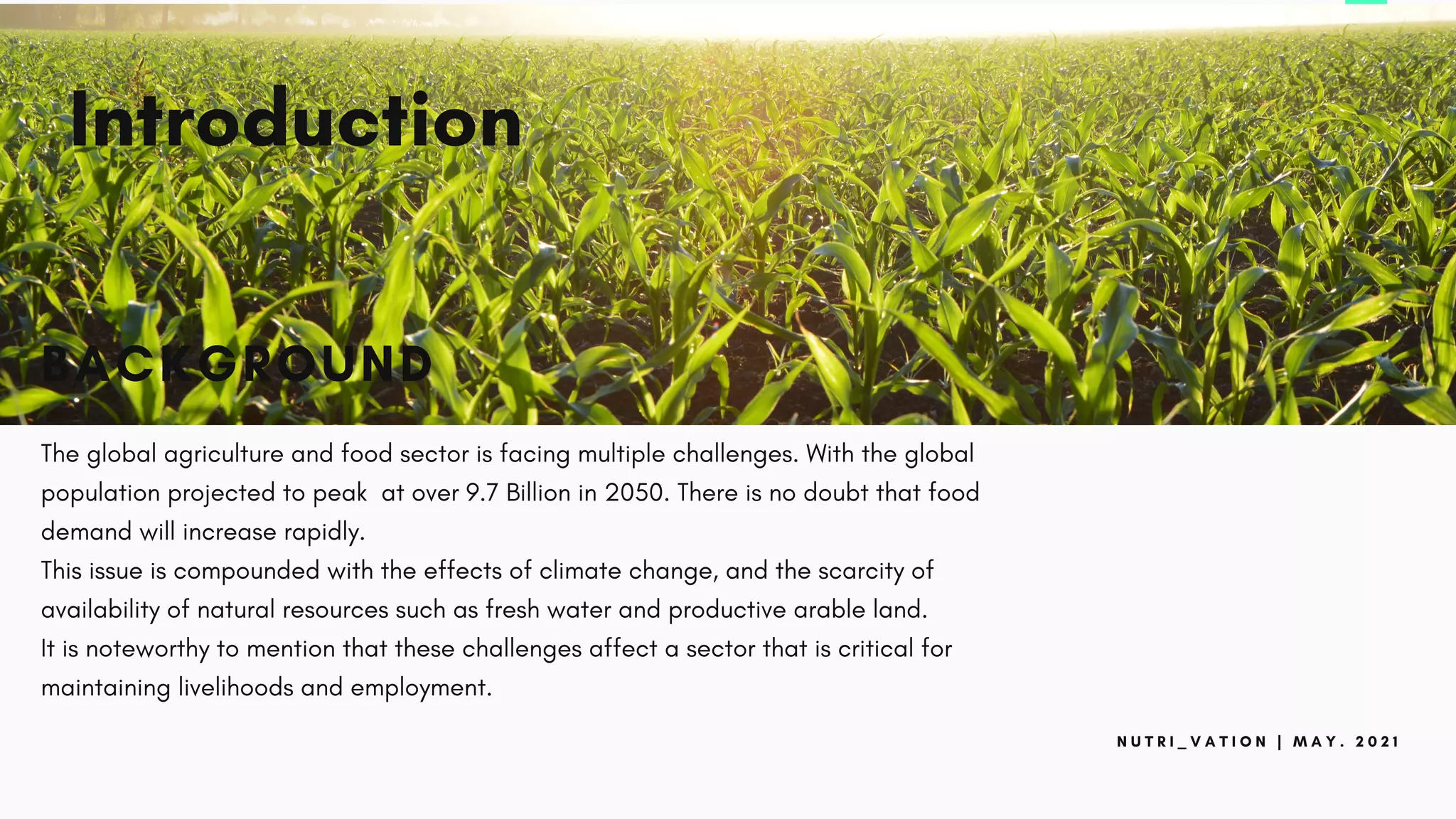
The global agriculture and food sector is facing multiple challenges. With the global
population projected to peak at over 9.7 Billion in 2050. There is no doubt that food
demand will increase rapidly.
This issue is compounded with the effects of climate change, and the scarcity of
availability of natural resources such as fresh water and productive arable land.
It is noteworthy to mention that these challenges affect a sector that is critical for
maintaining livelihoods and employment.
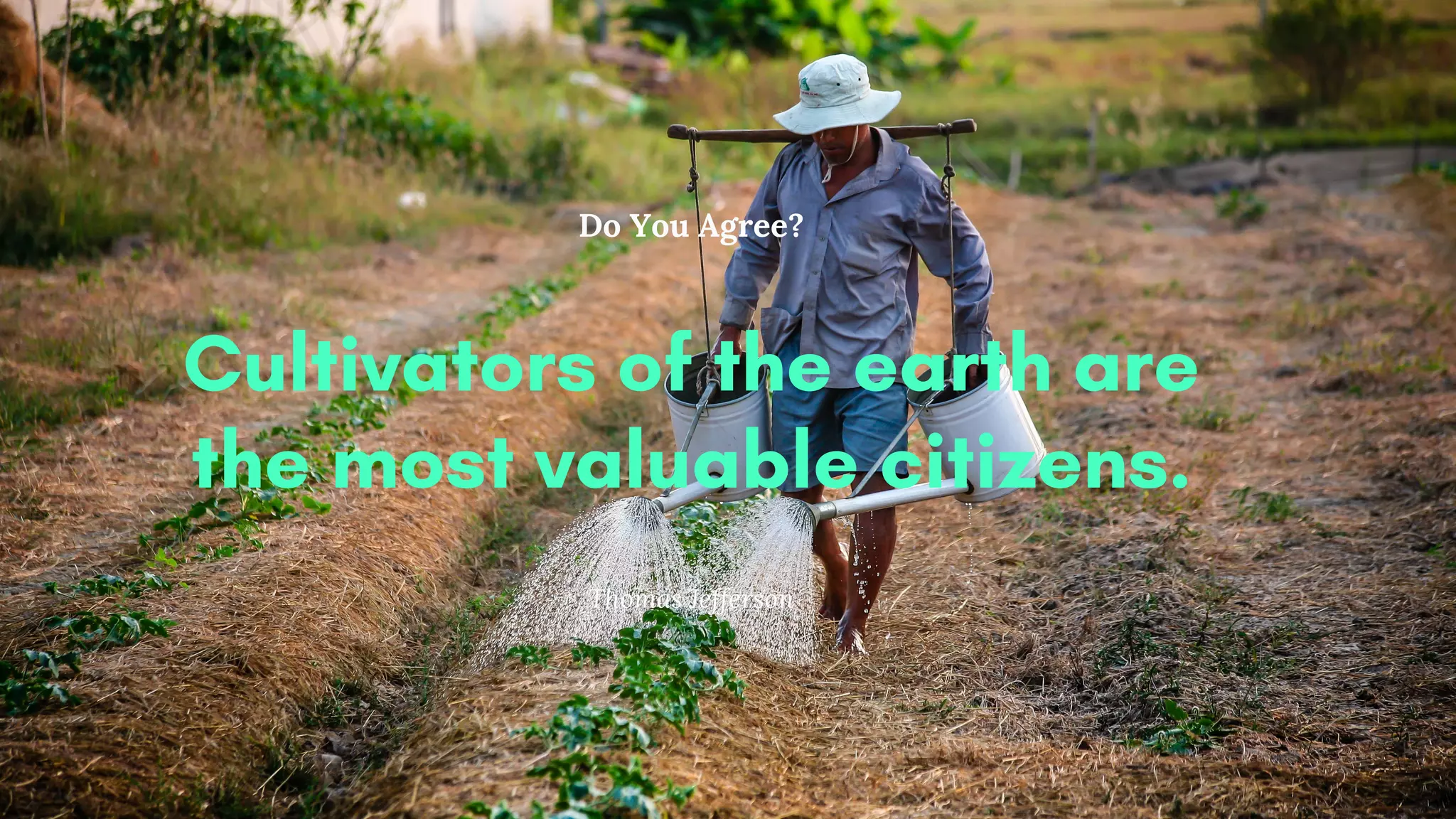
Thomas Jefferson
Cultivators of the earth are
the most valuable citizens.
Do You Agree?
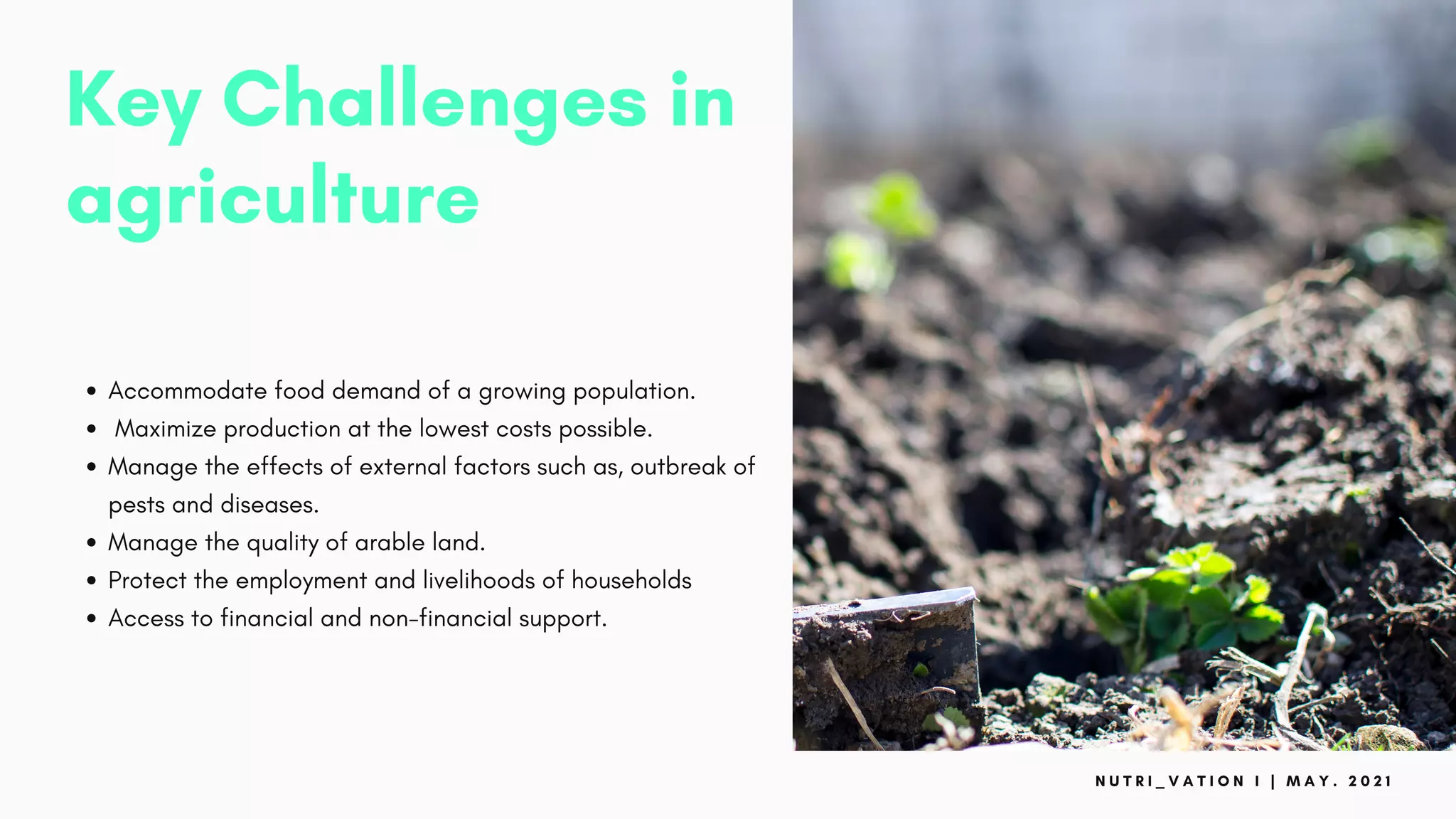
Key Challenges in
agriculture
Accommodate food demand of a growing population.
Maximize production at the lowest costs possible.
Manage the effects of external factors such as, outbreak of
pests and diseases.
Manage the quality of arable land.
Protect the employment and livelihoods of households
Access to financial and non-financial support.
N U T R I _ V A T I O N I | M A Y . 2 0 2 1
Climate Change and Food
Security
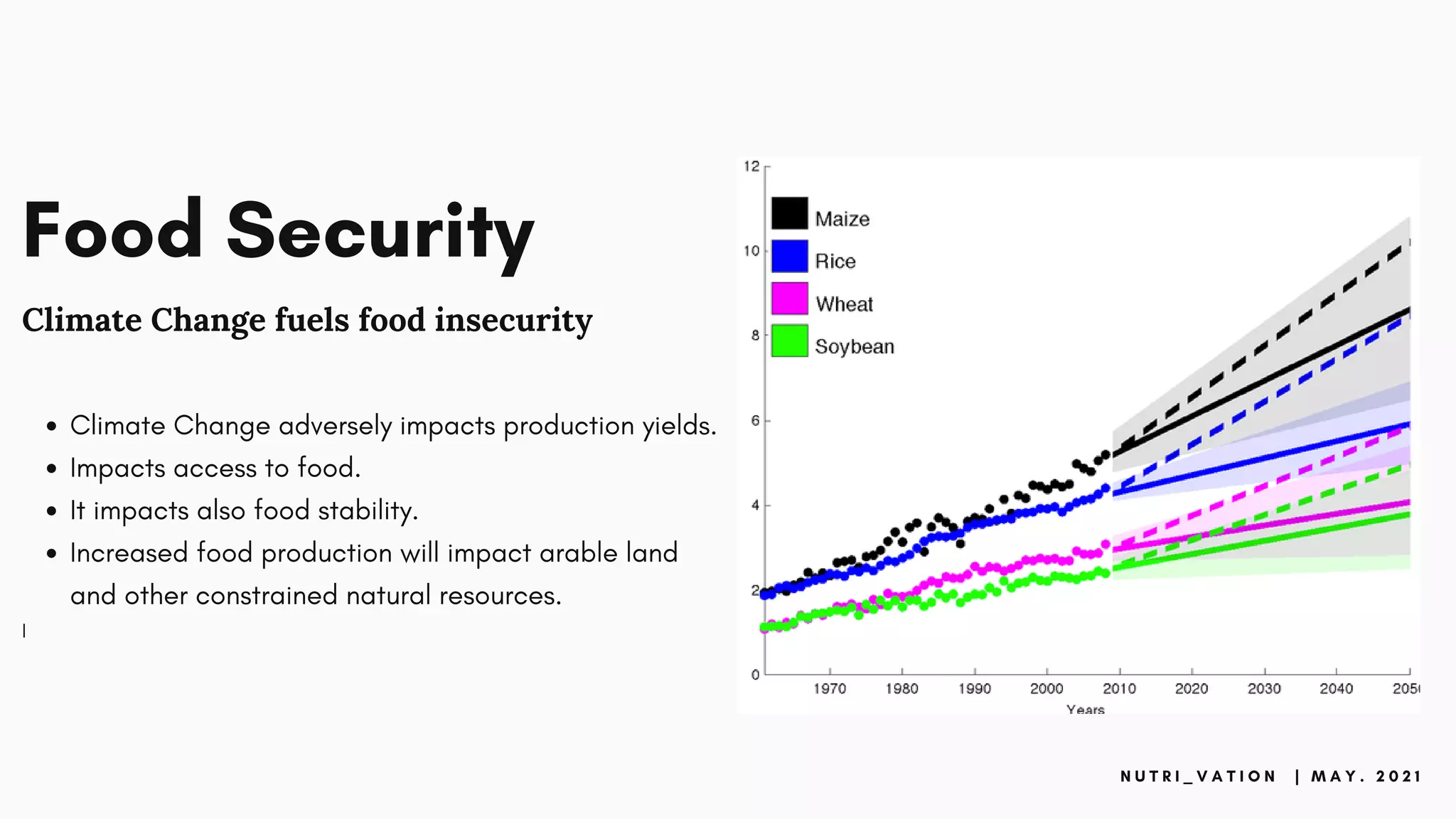
Food Security
Climate Change fuels food insecurity
Climate Change adversely impacts production yields.
Impacts access to food.
It impacts also food stability.
Increased food production will impact arable land
and other constrained natural resources.
I
N U T R I _ V A T I O N | M A Y . 2 0 2 1
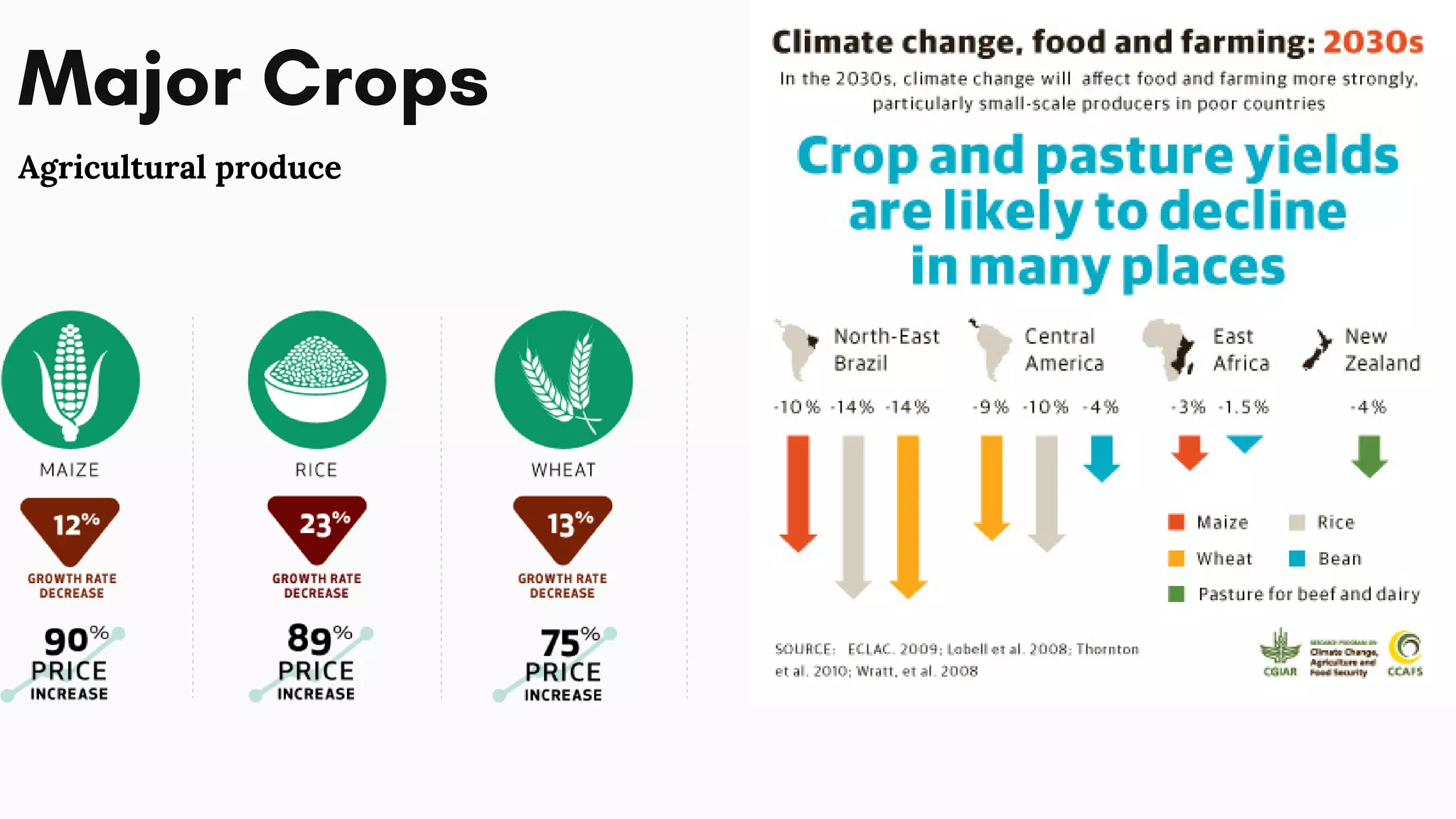
Major Crops
Agricultural produce
Climate Change fuels food insecurity levels
ALL HOPE LOST?
What do you think?
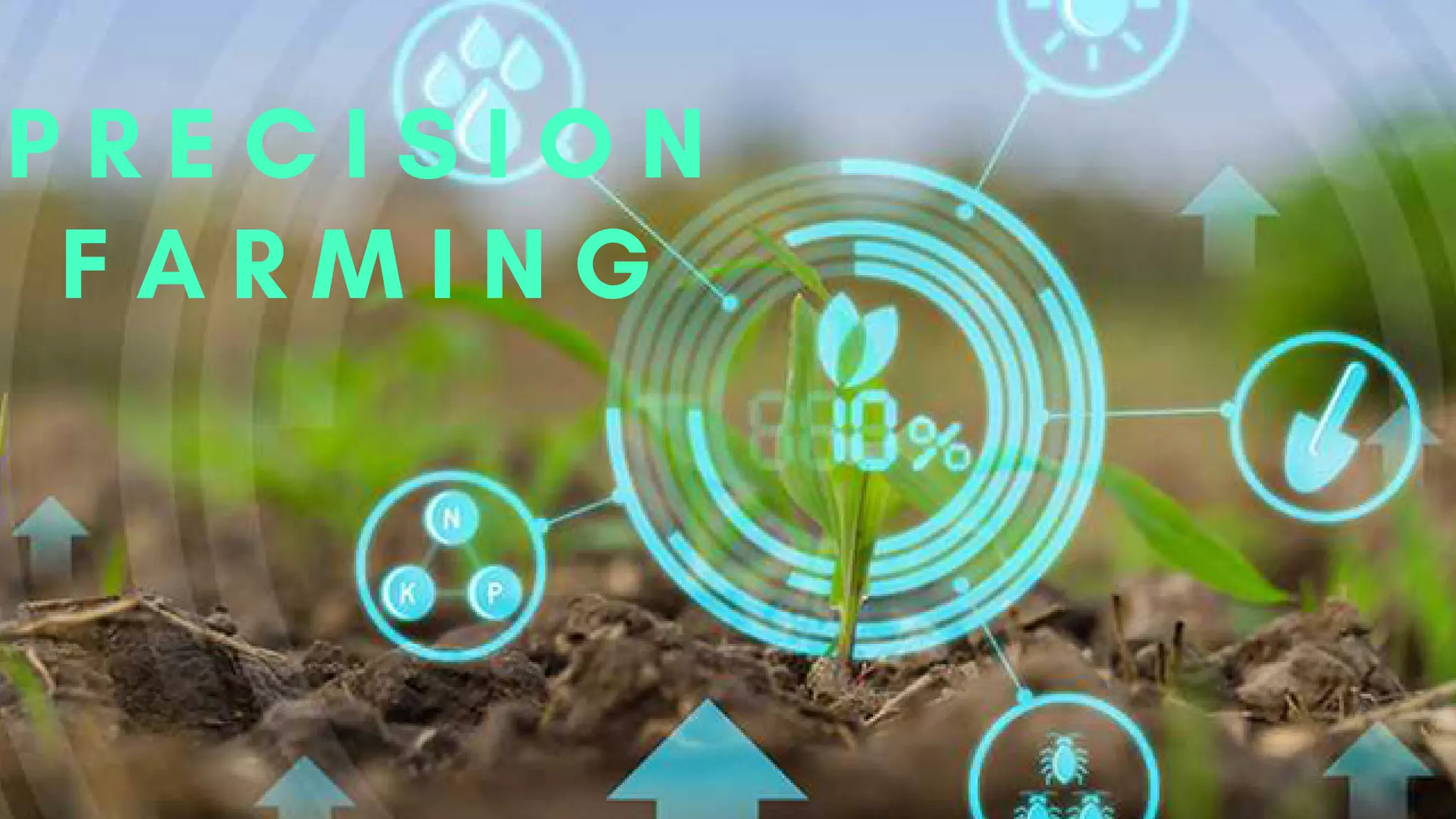
P R E C I S I O N
F A R M I N G
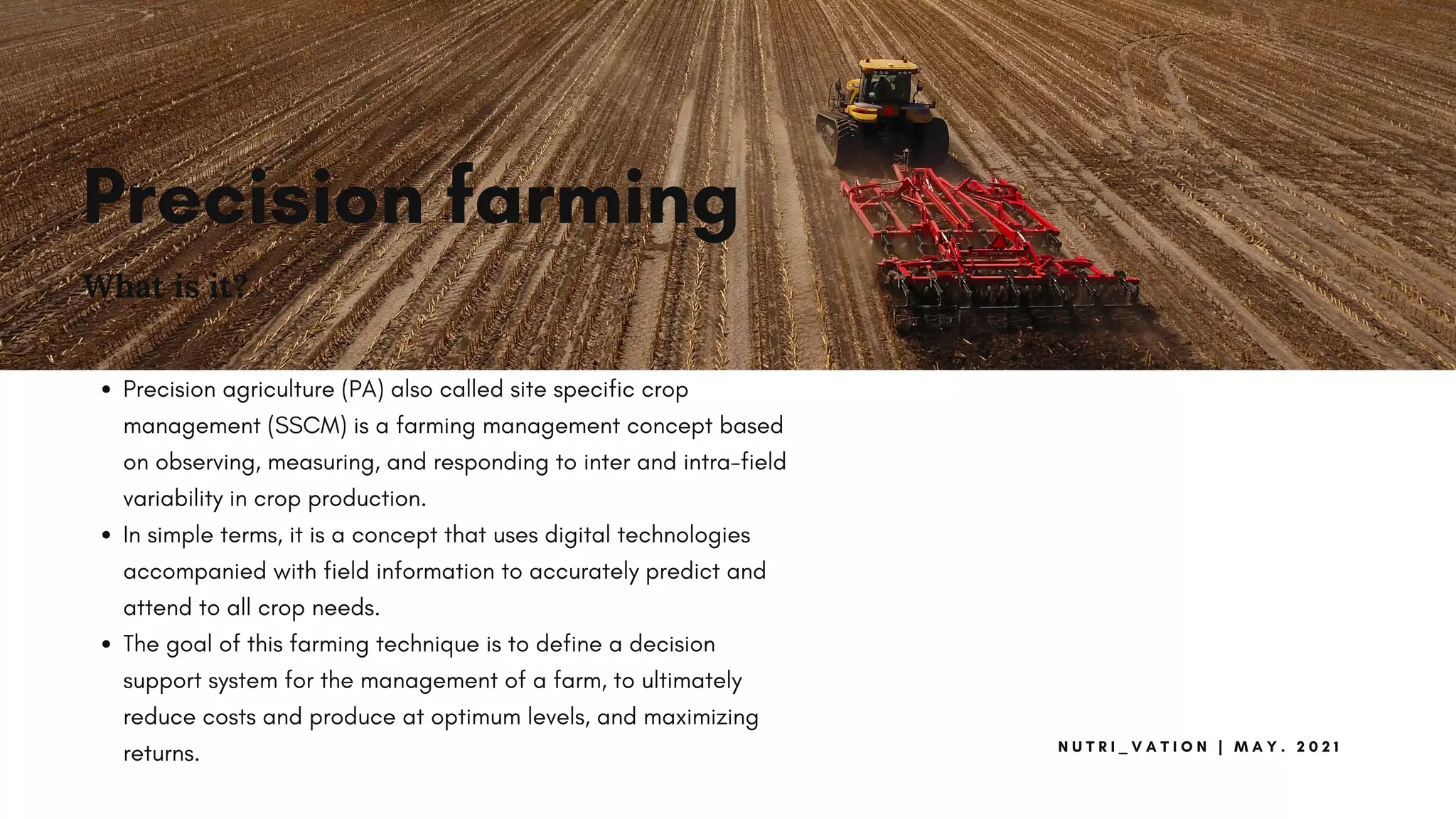
Precision farming
What is it?
Precision agriculture (PA) also called site specific crop
management (SSCM) is a farming management concept based
on observing, measuring, and responding to inter and intra-field
variability in crop production.
In simple terms, it is a concept that uses digital technologies
accompanied with field information to accurately predict and
attend to all crop needs.
The goal of this farming technique is to define a decision
support system for the management of a farm, to ultimately
reduce costs and produce at optimum levels, and maximizing
returns.
N U T R I _ V A T I O N | M A Y . 2 0 2 1
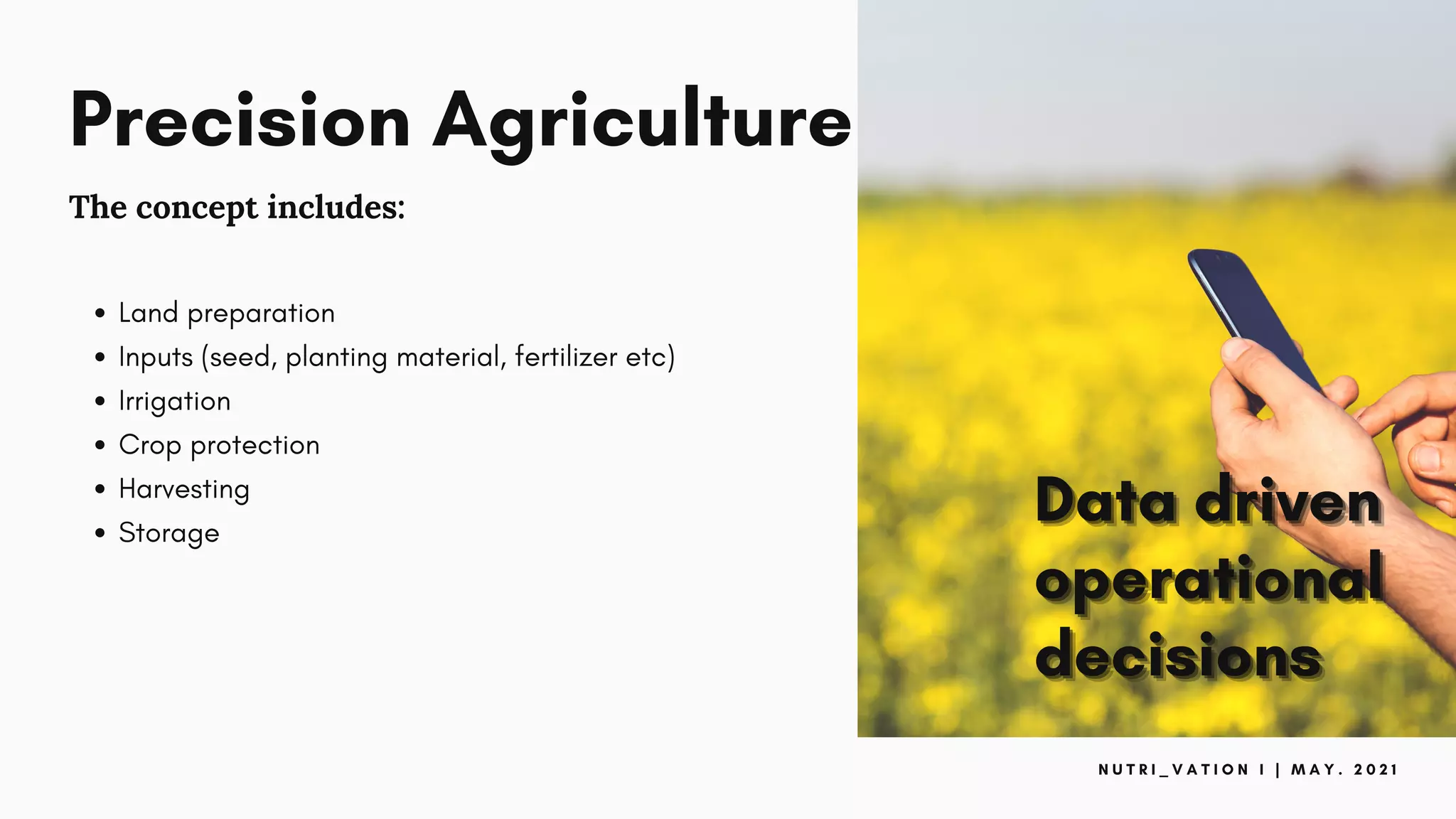
Precision Agriculture
The concept includes:
Land preparation
Inputs (seed, planting material, fertilizer etc)
Irrigation
Crop protection
Harvesting
Storage
N U T R I _ V A T I O N I | M A Y . 2 0 2 1
Precision Agriculture
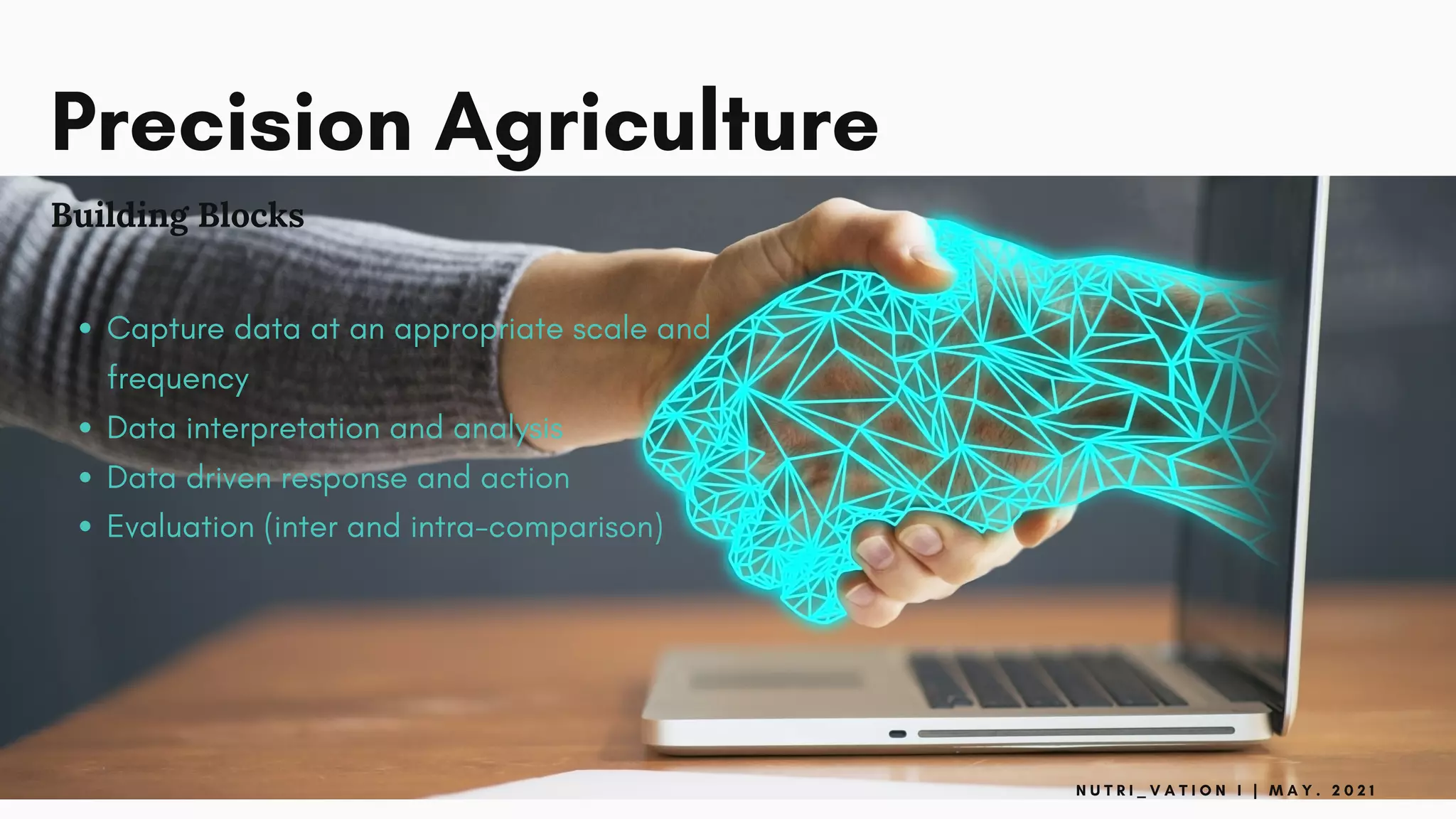
Building Blocks
Capture data at an appropriate scale and
frequency
Data interpretation and analysis
Data driven response and action
Evaluation (inter and intra-comparison)
N U T R I _ V A T I O N I | M A Y . 2 0 2 1
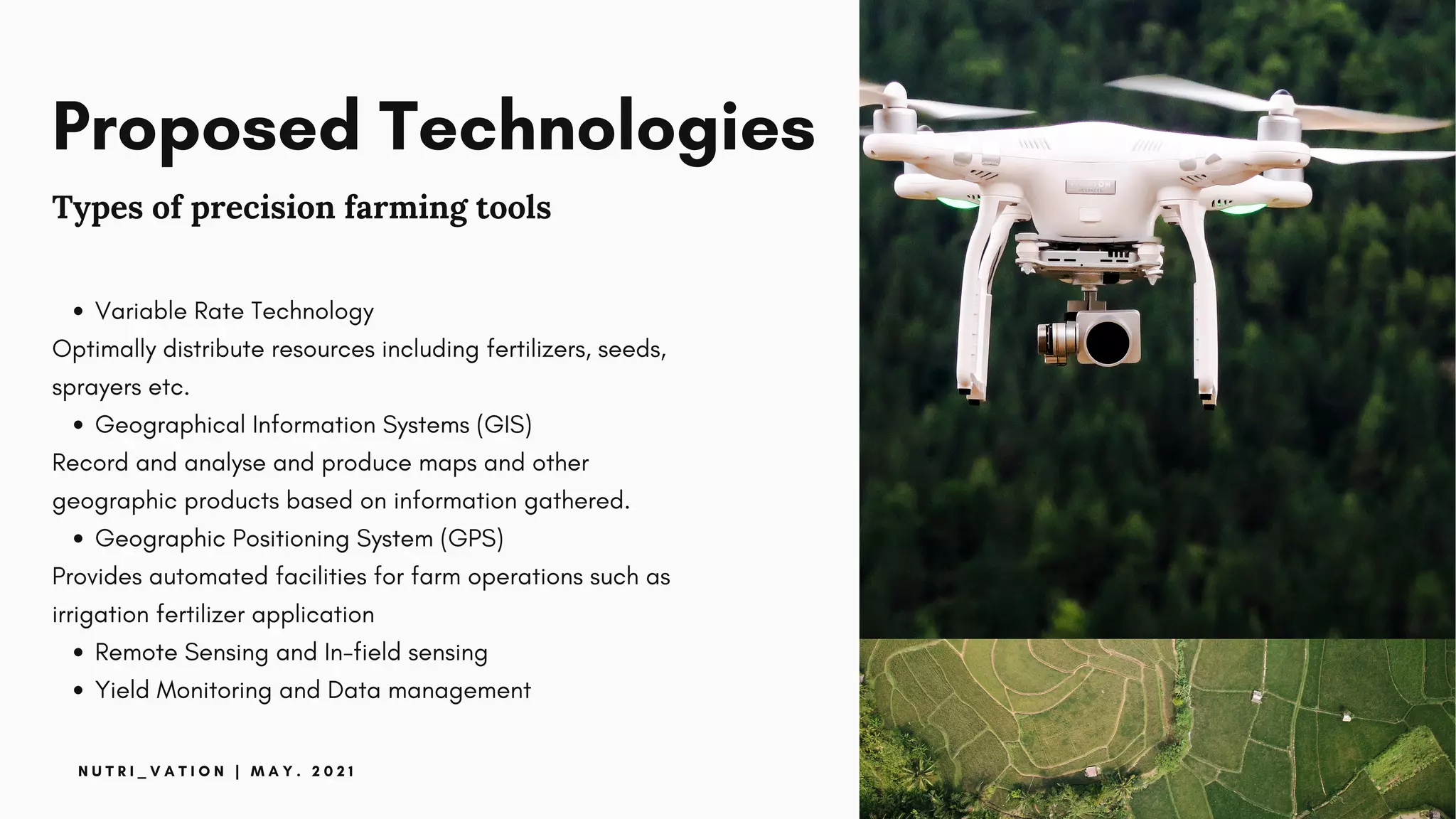
Proposed Technologies
Types of precision farming tools
Variable Rate Technology
Geographical Information Systems (GIS)
Geographic Positioning System (GPS)
Remote Sensing and In-field sensing
Yield Monitoring and Data management
Optimally distribute resources including fertilizers, seeds,
sprayers etc.
Record and analyse and produce maps and other
geographic products based on information gathered.
Provides automated facilities for farm operations such as
irrigation fertilizer application
N U T R I _ V A T I O N | M A Y . 2 0 2 1
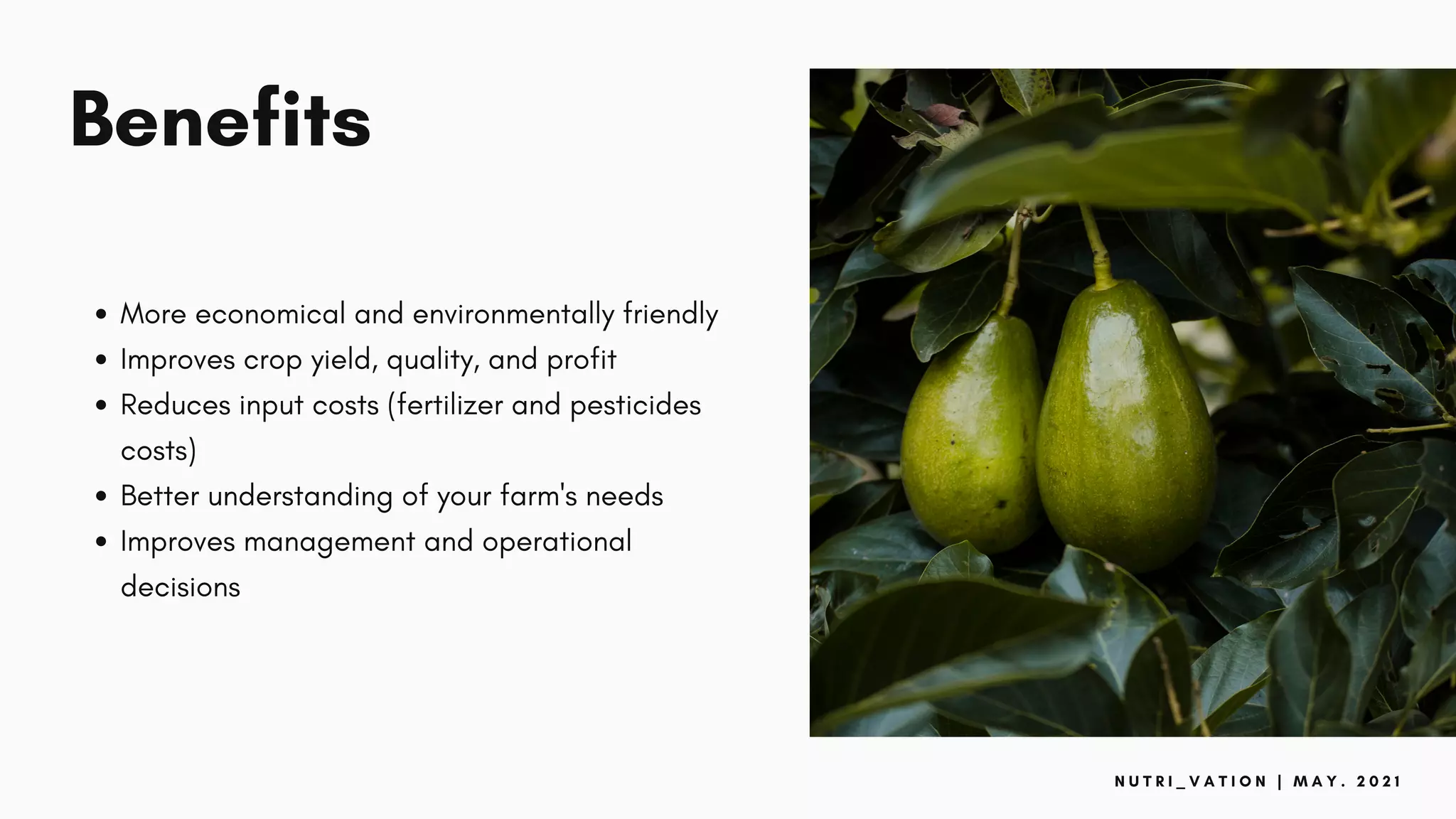
Benefits
More economical and environmentally friendly
Improves crop yield, quality, and profit
Reduces input costs (fertilizer and pesticides
costs)
Better understanding of your farm's needs
Improves management and operational
decisions
N U T R I _ V A T I O N | M A Y . 2 0 2 1
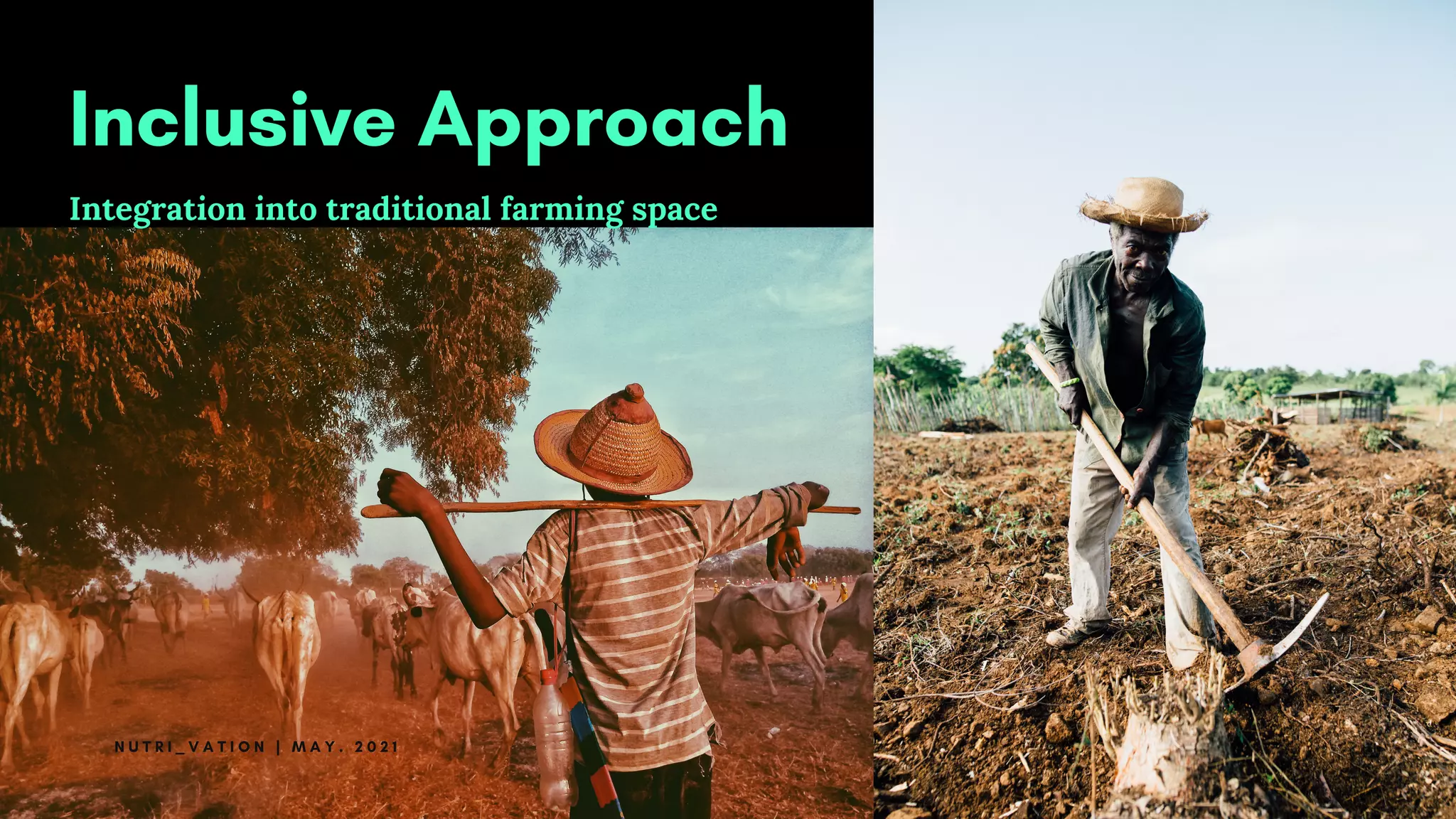
Inclusive Approach
Integration into traditional farming space
N U T R I _ V A T I O N | M A Y . 2 0 2 1
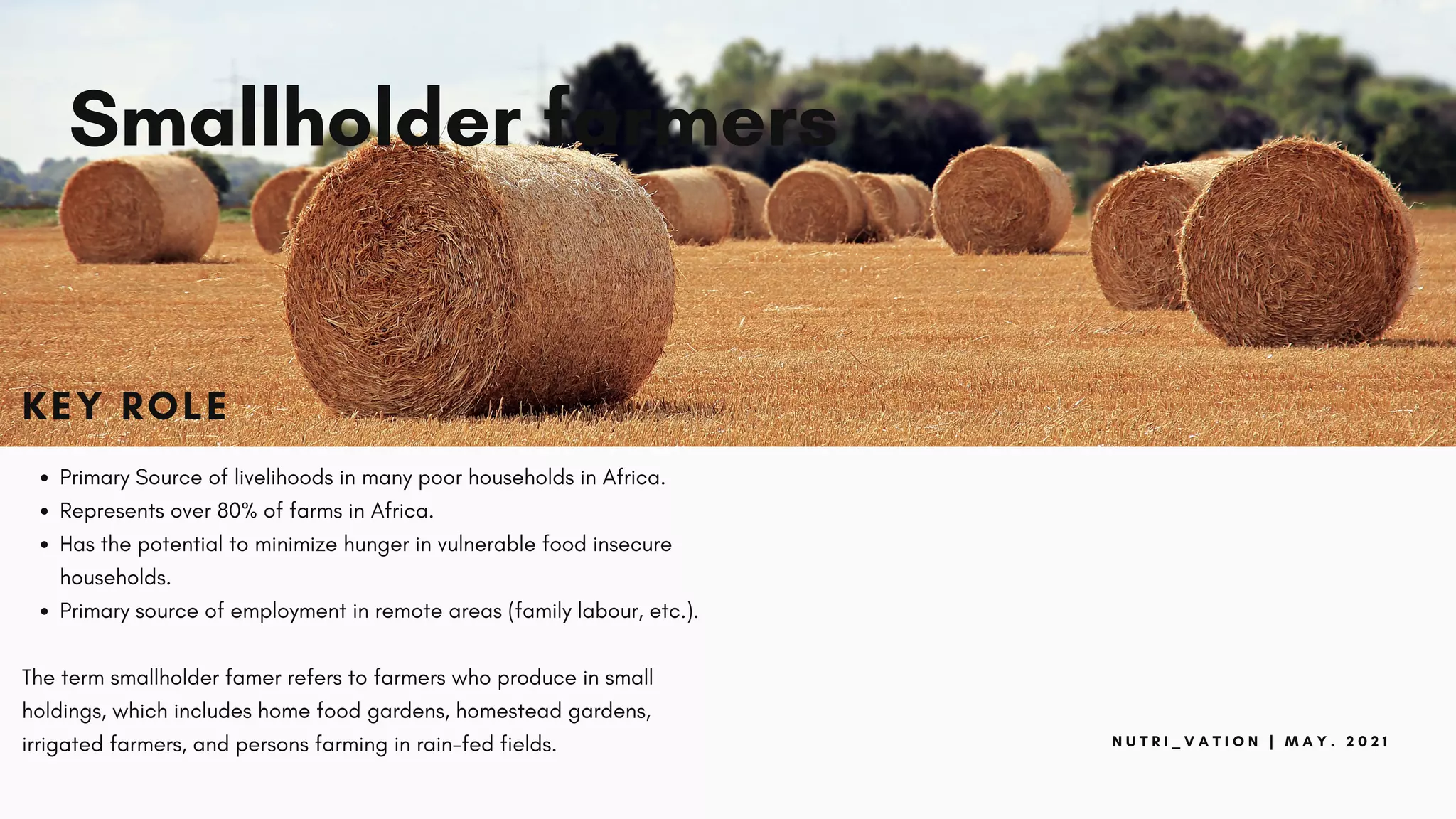
Smallholder farmers
KEY ROLE
Primary Source of livelihoods in many poor households in Africa.
Represents over 80% of farms in Africa.
Has the potential to minimize hunger in vulnerable food insecure
households.
Primary source of employment in remote areas (family labour, etc.).
The term smallholder famer refers to farmers who produce in small
holdings, which includes home food gardens, homestead gardens,
irrigated farmers, and persons farming in rain-fed fields.
Key Takes
Smallholder farmers, Poverty, and Food
Security in Africa
86% of the world's population living in extreme poverty will be
concentrated in sub-Saharan Africa by 2050.
Food production levels need to be increased by at least 70% to meet
food demand.
Climate change will continue to threaten food security in Africa by
worsening the fragile agricultural system.
Small-scale agriculture offers the opportunity to ensure food security,
and protect the livelihoods of the poor and vulnerable.
Many farmers however have experienced low yield, and returns, and
some have ceased production.
N U T R I _ V A T I O N | M A Y . 2 0 2 1
Tough economic
conditions,
increased
competition, low
productivity, and
urbanisation
continue to cripple
smallholder farming
systems
N U T R I _ V A T I O N | M A Y . 2 0 2 1
Digital technology
advancement
INNOVATIVE SOLUTIONS
It is important that farmers adopt new technologies to improve production
and the quality of yields to ensure food security.
Low cost technologies provide practical solutions to accommodating food
security on a global scale.
Agricultural forums offer opportunities for farmers to gain, share and access
information system (including information relating to financial and non
financial support).
Ecosystem to promote and support innovative ideas.
"Embracing innovation is
the gift only we can award
ourselves."
Chauke Thapelo
The future of farming
Self-exercise
From everything we have discussed, I challenge you to think about
the future of farming, and how best can society respond to food
insecurity levels, and what technological tools could be deployed in
remote areas to enhance productivity levels, improve the quality of
life, and award smallholder farmers the opportunity to participate
in the main stream economy.
N U T R I _ V A T I O N | M A Y . 2 0 2 1
Talk to Me
Mailing address
1010 Majola Street Boipatong 1911
Email address
chakethapelo98@gmail.com
Phone number
+ 27 64 950 6811
LinkedIN
Thapelo Chauke
Twitter
@MakaveliChauke
I WOULD LOVE TO HEAR FROM YOU!
Integrating Precision Agriculture Technologies within Traditional Farming Practices

Integrating Precision Agriculture Technologies within Traditional Farming Practices

  • 2.
    NUTRI_VATION I N TE G R A T I N G P R E C I S I O N A G R I C U L T U R E I N T R A D I T I O N A L F A R M I N G P R A C T I C E S Presented by: Chauke Thapelo
  • 3.
    Discussion Structure Topics wewill tackle Introduction Challenges within the agriculture sector Climate change and food security in Africa Precision farming (what is it? and its proposed technologies) Integrating precision farming technology within traditional farming practices Future of farming Talk to Us (feedback) N U T R I _ V A T I O N | M A Y . 2 0 2 1
  • 4.
    N U TR I _ V A T I O N | M A Y . 2 0 2 1 Introduction BACKGROUND The global agriculture and food sector is facing multiple challenges. With the global population projected to peak at over 9.7 Billion in 2050. There is no doubt that food demand will increase rapidly. This issue is compounded with the effects of climate change, and the scarcity of availability of natural resources such as fresh water and productive arable land. It is noteworthy to mention that these challenges affect a sector that is critical for maintaining livelihoods and employment.
  • 5.
    Thomas Jefferson Cultivators ofthe earth are the most valuable citizens. Do You Agree?
  • 6.
    Key Challenges in agriculture Accommodatefood demand of a growing population. Maximize production at the lowest costs possible. Manage the effects of external factors such as, outbreak of pests and diseases. Manage the quality of arable land. Protect the employment and livelihoods of households Access to financial and non-financial support. N U T R I _ V A T I O N I | M A Y . 2 0 2 1
  • 7.
    Climate Change andFood Security
  • 8.
    Food Security Climate Changefuels food insecurity Climate Change adversely impacts production yields. Impacts access to food. It impacts also food stability. Increased food production will impact arable land and other constrained natural resources. I N U T R I _ V A T I O N | M A Y . 2 0 2 1
  • 9.
    Major Crops Agricultural produce ClimateChange fuels food insecurity levels
  • 10.
    ALL HOPE LOST? Whatdo you think?
  • 11.
    P R EC I S I O N F A R M I N G
  • 12.
    Precision farming What isit? Precision agriculture (PA) also called site specific crop management (SSCM) is a farming management concept based on observing, measuring, and responding to inter and intra-field variability in crop production. In simple terms, it is a concept that uses digital technologies accompanied with field information to accurately predict and attend to all crop needs. The goal of this farming technique is to define a decision support system for the management of a farm, to ultimately reduce costs and produce at optimum levels, and maximizing returns. N U T R I _ V A T I O N | M A Y . 2 0 2 1
  • 13.
    Precision Agriculture The conceptincludes: Land preparation Inputs (seed, planting material, fertilizer etc) Irrigation Crop protection Harvesting Storage N U T R I _ V A T I O N I | M A Y . 2 0 2 1
  • 14.
    Precision Agriculture Building Blocks Capturedata at an appropriate scale and frequency Data interpretation and analysis Data driven response and action Evaluation (inter and intra-comparison) N U T R I _ V A T I O N I | M A Y . 2 0 2 1
  • 15.
    Proposed Technologies Types ofprecision farming tools Variable Rate Technology Geographical Information Systems (GIS) Geographic Positioning System (GPS) Remote Sensing and In-field sensing Yield Monitoring and Data management Optimally distribute resources including fertilizers, seeds, sprayers etc. Record and analyse and produce maps and other geographic products based on information gathered. Provides automated facilities for farm operations such as irrigation fertilizer application N U T R I _ V A T I O N | M A Y . 2 0 2 1
  • 16.
    Benefits More economical andenvironmentally friendly Improves crop yield, quality, and profit Reduces input costs (fertilizer and pesticides costs) Better understanding of your farm's needs Improves management and operational decisions N U T R I _ V A T I O N | M A Y . 2 0 2 1
  • 17.
    Inclusive Approach Integration intotraditional farming space N U T R I _ V A T I O N | M A Y . 2 0 2 1
  • 18.
    N U TR I _ V A T I O N | M A Y . 2 0 2 1 Smallholder farmers KEY ROLE Primary Source of livelihoods in many poor households in Africa. Represents over 80% of farms in Africa. Has the potential to minimize hunger in vulnerable food insecure households. Primary source of employment in remote areas (family labour, etc.). The term smallholder famer refers to farmers who produce in small holdings, which includes home food gardens, homestead gardens, irrigated farmers, and persons farming in rain-fed fields.
  • 19.
    Key Takes Smallholder farmers,Poverty, and Food Security in Africa 86% of the world's population living in extreme poverty will be concentrated in sub-Saharan Africa by 2050. Food production levels need to be increased by at least 70% to meet food demand. Climate change will continue to threaten food security in Africa by worsening the fragile agricultural system. Small-scale agriculture offers the opportunity to ensure food security, and protect the livelihoods of the poor and vulnerable. Many farmers however have experienced low yield, and returns, and some have ceased production. N U T R I _ V A T I O N | M A Y . 2 0 2 1 Tough economic conditions, increased competition, low productivity, and urbanisation continue to cripple smallholder farming systems
  • 20.
    N U TR I _ V A T I O N | M A Y . 2 0 2 1 Digital technology advancement INNOVATIVE SOLUTIONS It is important that farmers adopt new technologies to improve production and the quality of yields to ensure food security. Low cost technologies provide practical solutions to accommodating food security on a global scale. Agricultural forums offer opportunities for farmers to gain, share and access information system (including information relating to financial and non financial support). Ecosystem to promote and support innovative ideas. "Embracing innovation is the gift only we can award ourselves." Chauke Thapelo
  • 21.
    The future offarming Self-exercise From everything we have discussed, I challenge you to think about the future of farming, and how best can society respond to food insecurity levels, and what technological tools could be deployed in remote areas to enhance productivity levels, improve the quality of life, and award smallholder farmers the opportunity to participate in the main stream economy. N U T R I _ V A T I O N | M A Y . 2 0 2 1
  • 22.
    Talk to Me Mailingaddress 1010 Majola Street Boipatong 1911 Email address chakethapelo98@gmail.com Phone number + 27 64 950 6811 LinkedIN Thapelo Chauke Twitter @MakaveliChauke I WOULD LOVE TO HEAR FROM YOU!