Integrated Marketing 
Communication 
MM5003 
Marketing Management 
Week 5, September 15 2014
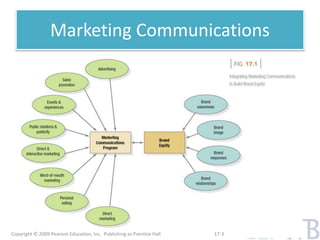
Marketing Communications 
• The means by which firms attempt to inform, 
persuade, and remind consumers –directly or 
indirectly- about the products and brands that 
they sell.
Marketing Communications 
Copyright © 2009 Pearson Education, Inc. Publishing as Prentice Hall 17-3
Brand Equity 
• The added value endowed to products and 
services. 
• Reflected in how consumers think, feel, and 
act. 
• Also reflected in prices, market share, and 
profitability for the firm.
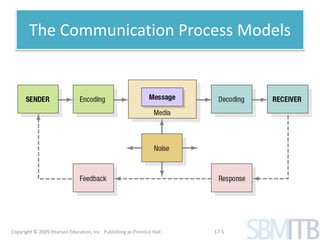
The Communication Process Models 
Copyright © 2009 Pearson Education, Inc. Publishing as Prentice Hall 17-5
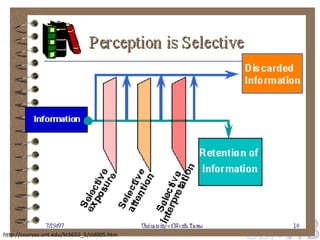
http://courses.unt.edu/kt3650_5/sld005.htm
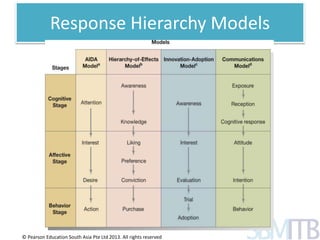
Response Hierarchy Models 
© Pearson Education South Asia Pte Ltd 2013. All rights reserved 
© Pearson Education South Asia Pte Ltd 2013. All rights reserved
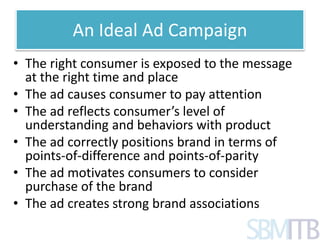
An Ideal Ad Campaign 
• The right consumer is exposed to the message 
at the right time and place 
• The ad causes consumer to pay attention 
• The ad reflects consumer’s level of 
understanding and behaviors with product 
• The ad correctly positions brand in terms of 
points-of-difference and points-of-parity 
• The ad motivates consumers to consider 
purchase of the brand 
• The ad creates strong brand associations
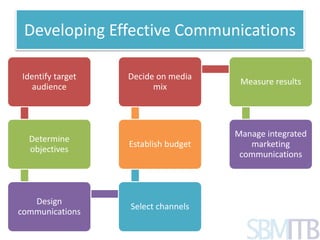
Developing Effective Communications 
Identify target 
audience 
Determine 
objectives 
Design 
communications 
Decide on media 
mix 
Establish budget 
Select channels 
Measure results 
Manage integrated 
marketing 
communications
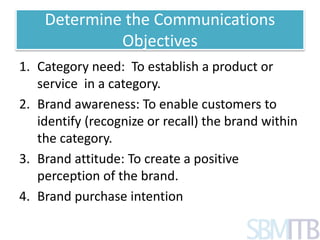
Determine the Communications 
Objectives 
1. Category need: To establish a product or 
service in a category. 
2. Brand awareness: To enable customers to 
identify (recognize or recall) the brand within 
the category. 
3. Brand attitude: To create a positive 
perception of the brand. 
4. Brand purchase intention
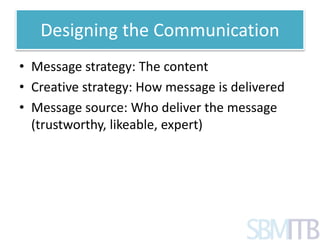
Designing the Communication 
• Message strategy: The content 
• Creative strategy: How message is delivered 
• Message source: Who deliver the message 
(trustworthy, likeable, expert)
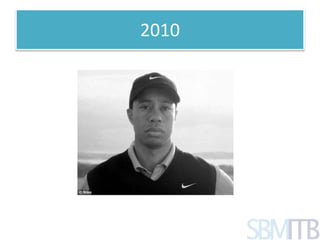
2010
2013
Select the Communication Channels 
• Personal communication channel: face-to-face, 
person-to-audience. 
• Non-personal communication channel: media, 
sales-promotions, events, and publicity. 
• Integration of communication channels
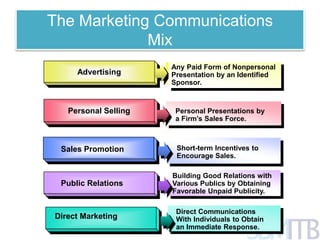
The Marketing Communications 
Advertising 
Personal Selling 
Any Paid Form of Nonpersonal 
Presentation by an Identified 
Sponsor. 
Personal Presentations by 
a Firm’s Sales Force. 
Sales Promotion Short-term Incentives to 
Encourage Sales. 
Public Relations 
Building Good Relations with 
Various Publics by Obtaining 
Favorable Unpaid Publicity. 
Direct Marketing 
Direct Communications 
With Individuals to Obtain 
an Immediate Response. 
Mix
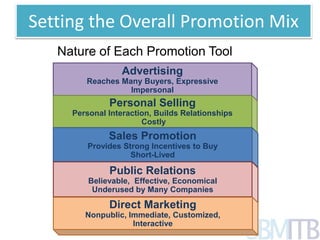
Setting the Overall Promotion Mix 
Nature of Each Promotion Tool 
Advertising 
Reaches Many Buyers, Expressive 
Impersonal 
Personal Selling 
Personal Interaction, Builds Relationships 
Costly 
Sales Promotion 
Provides Strong Incentives to Buy 
Short-Lived 
Public Relations 
Believable, Effective, Economical 
Underused by Many Companies 
Direct Marketing 
Nonpublic, Immediate, Customized, 
Interactive
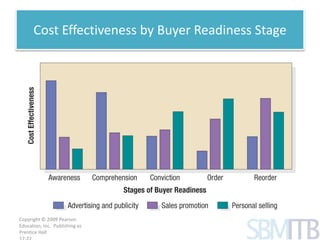
Cost Effectiveness by Buyer Readiness Stage 
Copyright © 2009 Pearson 
Education, Inc. Publishing as 
Prentice Hall 
17-22
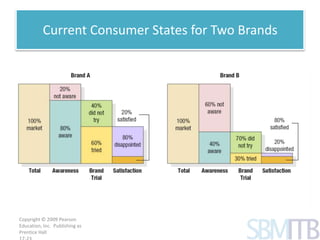
Current Consumer States for Two Brands 
Copyright © 2009 Pearson 
Education, Inc. Publishing as 
Prentice Hall 
17-23

Integrated Marketing Communications

  • 1.
    Integrated Marketing Communication MM5003 Marketing Management Week 5, September 15 2014
  • 2.
    Marketing Communications •The means by which firms attempt to inform, persuade, and remind consumers –directly or indirectly- about the products and brands that they sell.
  • 3.
    Marketing Communications Copyright© 2009 Pearson Education, Inc. Publishing as Prentice Hall 17-3
  • 4.
    Brand Equity •The added value endowed to products and services. • Reflected in how consumers think, feel, and act. • Also reflected in prices, market share, and profitability for the firm.
  • 5.
    The Communication ProcessModels Copyright © 2009 Pearson Education, Inc. Publishing as Prentice Hall 17-5
  • 6.
  • 7.
    Response Hierarchy Models © Pearson Education South Asia Pte Ltd 2013. All rights reserved © Pearson Education South Asia Pte Ltd 2013. All rights reserved
  • 8.
    An Ideal AdCampaign • The right consumer is exposed to the message at the right time and place • The ad causes consumer to pay attention • The ad reflects consumer’s level of understanding and behaviors with product • The ad correctly positions brand in terms of points-of-difference and points-of-parity • The ad motivates consumers to consider purchase of the brand • The ad creates strong brand associations
  • 9.
    Developing Effective Communications Identify target audience Determine objectives Design communications Decide on media mix Establish budget Select channels Measure results Manage integrated marketing communications
  • 10.
    Determine the Communications Objectives 1. Category need: To establish a product or service in a category. 2. Brand awareness: To enable customers to identify (recognize or recall) the brand within the category. 3. Brand attitude: To create a positive perception of the brand. 4. Brand purchase intention
  • 11.
    Designing the Communication • Message strategy: The content • Creative strategy: How message is delivered • Message source: Who deliver the message (trustworthy, likeable, expert)
  • 13.
  • 14.
  • 15.
    Select the CommunicationChannels • Personal communication channel: face-to-face, person-to-audience. • Non-personal communication channel: media, sales-promotions, events, and publicity. • Integration of communication channels
  • 16.
    The Marketing Communications Advertising Personal Selling Any Paid Form of Nonpersonal Presentation by an Identified Sponsor. Personal Presentations by a Firm’s Sales Force. Sales Promotion Short-term Incentives to Encourage Sales. Public Relations Building Good Relations with Various Publics by Obtaining Favorable Unpaid Publicity. Direct Marketing Direct Communications With Individuals to Obtain an Immediate Response. Mix
  • 17.
    Setting the OverallPromotion Mix Nature of Each Promotion Tool Advertising Reaches Many Buyers, Expressive Impersonal Personal Selling Personal Interaction, Builds Relationships Costly Sales Promotion Provides Strong Incentives to Buy Short-Lived Public Relations Believable, Effective, Economical Underused by Many Companies Direct Marketing Nonpublic, Immediate, Customized, Interactive
  • 22.
    Cost Effectiveness byBuyer Readiness Stage Copyright © 2009 Pearson Education, Inc. Publishing as Prentice Hall 17-22
  • 23.
    Current Consumer Statesfor Two Brands Copyright © 2009 Pearson Education, Inc. Publishing as Prentice Hall 17-23