Overview of P&C
insurance metrics
Dashboard
Gregg Barrett
1
Executive summary of key insurance metrics
Combined ratio
Property and Casualty (P&C) underwriting results are most often measured by the combined ratio. The combined ratio measures the total of acquisition and administrative expenses
and claims and insurance benefits incurred divided by premiums earned. A combined ratio above 100 percent indicates that premiums were inadequate to cover claims and expenses
for a given reporting period.
Investment income, realized gains/losses, and income taxes are not considered in the combined ratio.
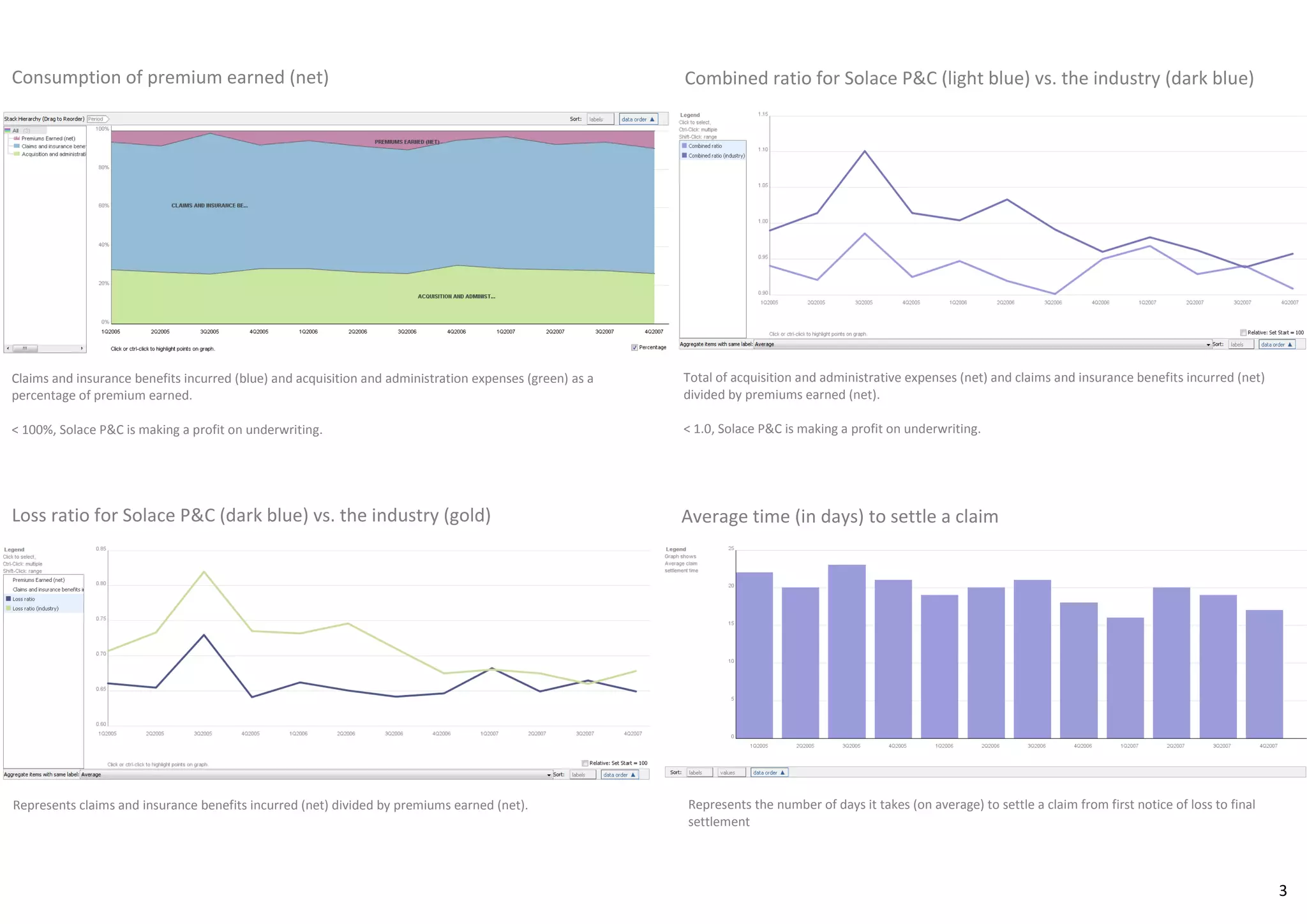
The graphic on the top right of the dashboard provides the combined ratio for the organisation against the combined ratio for the P&C sector on a quarterly basis for the period 2005
through 2007.
P&C insurers are not often profitable from underwriting results alone. In addition to underwriting results, P&C insurers rely on income derived from investing policyholder premiums.
According to the Federal Insurance Office (2013) the P&C sector (in the US) held a total of $1.4 trillion (USD) in invested assets as of December 31, 2012, and earned $50 billion of net
investment income during the year, which excludes $8.6 billion of realized gains. The P&C sector investment returns had been declining since 2005.
To gauge overall profitability, P&C sector combined ratios must be assessed in conjunction with the prevailing interest rate environment. For example, while the combined ratio of the
organisation show that the company did report aggregate underwriting profits in 2005 through 2007, the company’s profitability may be higher (lower) because interest rates were
higher (lower) and the company was able to earn higher (lower) nominal returns on investment portfolios.
Fraud impact:
Fraud impacts the combined ratio by increasing administrative expenses through the use of resources to fight fraud. Further, fraud impacts the combined ratio by increasing the
amount of claims and insurance benefits incurred. All else equal, a more efficient use of resources to fight fraud and a reduction in fraud should result in an improvement in the
combined ratio.
Combined ratio = (acquisition and administrative expenses + claims and insurance benefits incurred) / premiums earned
Combined ratio < 100%: the company is making a profit
Combined ratio > 100%: the company is losing money on underwriting
Historical industry average ~ 100%
2
Loss ratio
The loss ratio measures claims and insurance benefits incurred divided by premiums earned. The loss ratio indicates the percentage of premium earned that is paid out as a result of
claims and other insurance benefits.
The graphic on the bottom left of the dashboard provides the loss ratio for the organisation against the loss ratio for the P&C sector on a quarterly basis for the period 2005 through
2007.
Fraud impact:
Fraud impacts the loss ratio by increasing the amount of claims and insurance benefits incurred. All else equal, a reduction in fraud should result in an improvement in the loss ratio by
reducing claims and insurance benefits incurred.
Loss ratio = claims and insurance benefits incurred / premiums earned
Expense ratio
The expense ratio measures acquisition and administrative expenses divided by premiums earned. The expense ratio indicates the percentage of premium earned that is consumed as a
result of acquisition and administration expenses – that is, in running the insurance operation.
The graphic on the top left of the dashboard show a breakdown of premium earned that is consumed by acquisition and administrative expenses as well as claims and insurance
benefits for the organisation on a quarterly basis for the period 2005 through 2007.
Fraud impact:
Fraud impacts the expense ratio by increasing the acquisition and administrative expenses incurred through the use of resources to combat fraud. All else equal, the more efficient use
of resources to fight fraud should result in an improvement in the expense ratio by reducing acquisition and administrative expenses.
Expense ratio = acquisition and administrative expenses / premiums earned
Average claim settlement time
The average claim settlement time (in days) measures the length of time it takes on average for the organisation to settle a claim from first notice of loss to final settlement. The time it
takes to settle a claim is an important metric impacting customer service, with shorter times beings associated with higher levels of service.
The graphic on the bottom right of the dashboard provides the average claim settlement time in days for the organisation on a quarterly basis for the period 2005 through 2007.
Fraud impact:
According to Accenture (2010) more than half (55 percent) of U.S. adults say poor service from an insurance company is more likely to cause an individual to commit fraud against that
company.
Average claim settlement time = total claim cycle time for all claims / total number of claims
3
Claims and insurance benefits incurred (blue) and acquisition and administration expenses (green) as a
percentage of premium earned.
< 100%, the organisation is making a profit on underwriting.
Total of acquisition and administrative expenses (net) and claims and insurance benefits incurred (net)
divided by premiums earned (net).
< 1.0, the organisation is making a profit on underwriting.
Consumption of premium earned (net) Combined ratio for the organisation (light blue) vs. the industry (dark blue)
Represents claims and insurance benefits incurred (net) divided by premiums earned (net).
Average time (in days) to settle a claim
Represents the number of days it takes (on average) to settle a claim from first notice of loss to final
settlement
Loss ratio for the organisation (dark blue) vs. the industry (gold)
4
References:
Accenture. (2010). Improve Customer Service and Fraud Detection to Deliver High Performance
Through Claims. [pdf]. Retrieved from http://www.accenture.com/us-en/Pages/insight-insurance-consumer-fraud-survey-summary.aspx
Federal Insurance Office. (2013). Annual report on the insurance industry. [pdf]. Retrieved from
http://www.treasury.gov/initiatives/fio/reports-and-notices/Documents/FIO%20Annual%20Report%202013.pdf

Insurance metrics overview

  • 1.
    Overview of P&C insurancemetrics Dashboard Gregg Barrett
  • 2.
    1 Executive summary ofkey insurance metrics Combined ratio Property and Casualty (P&C) underwriting results are most often measured by the combined ratio. The combined ratio measures the total of acquisition and administrative expenses and claims and insurance benefits incurred divided by premiums earned. A combined ratio above 100 percent indicates that premiums were inadequate to cover claims and expenses for a given reporting period. Investment income, realized gains/losses, and income taxes are not considered in the combined ratio. The graphic on the top right of the dashboard provides the combined ratio for the organisation against the combined ratio for the P&C sector on a quarterly basis for the period 2005 through 2007. P&C insurers are not often profitable from underwriting results alone. In addition to underwriting results, P&C insurers rely on income derived from investing policyholder premiums. According to the Federal Insurance Office (2013) the P&C sector (in the US) held a total of $1.4 trillion (USD) in invested assets as of December 31, 2012, and earned $50 billion of net investment income during the year, which excludes $8.6 billion of realized gains. The P&C sector investment returns had been declining since 2005. To gauge overall profitability, P&C sector combined ratios must be assessed in conjunction with the prevailing interest rate environment. For example, while the combined ratio of the organisation show that the company did report aggregate underwriting profits in 2005 through 2007, the company’s profitability may be higher (lower) because interest rates were higher (lower) and the company was able to earn higher (lower) nominal returns on investment portfolios. Fraud impact: Fraud impacts the combined ratio by increasing administrative expenses through the use of resources to fight fraud. Further, fraud impacts the combined ratio by increasing the amount of claims and insurance benefits incurred. All else equal, a more efficient use of resources to fight fraud and a reduction in fraud should result in an improvement in the combined ratio. Combined ratio = (acquisition and administrative expenses + claims and insurance benefits incurred) / premiums earned Combined ratio < 100%: the company is making a profit Combined ratio > 100%: the company is losing money on underwriting Historical industry average ~ 100%
  • 3.
    2 Loss ratio The lossratio measures claims and insurance benefits incurred divided by premiums earned. The loss ratio indicates the percentage of premium earned that is paid out as a result of claims and other insurance benefits. The graphic on the bottom left of the dashboard provides the loss ratio for the organisation against the loss ratio for the P&C sector on a quarterly basis for the period 2005 through 2007. Fraud impact: Fraud impacts the loss ratio by increasing the amount of claims and insurance benefits incurred. All else equal, a reduction in fraud should result in an improvement in the loss ratio by reducing claims and insurance benefits incurred. Loss ratio = claims and insurance benefits incurred / premiums earned Expense ratio The expense ratio measures acquisition and administrative expenses divided by premiums earned. The expense ratio indicates the percentage of premium earned that is consumed as a result of acquisition and administration expenses – that is, in running the insurance operation. The graphic on the top left of the dashboard show a breakdown of premium earned that is consumed by acquisition and administrative expenses as well as claims and insurance benefits for the organisation on a quarterly basis for the period 2005 through 2007. Fraud impact: Fraud impacts the expense ratio by increasing the acquisition and administrative expenses incurred through the use of resources to combat fraud. All else equal, the more efficient use of resources to fight fraud should result in an improvement in the expense ratio by reducing acquisition and administrative expenses. Expense ratio = acquisition and administrative expenses / premiums earned Average claim settlement time The average claim settlement time (in days) measures the length of time it takes on average for the organisation to settle a claim from first notice of loss to final settlement. The time it takes to settle a claim is an important metric impacting customer service, with shorter times beings associated with higher levels of service. The graphic on the bottom right of the dashboard provides the average claim settlement time in days for the organisation on a quarterly basis for the period 2005 through 2007. Fraud impact: According to Accenture (2010) more than half (55 percent) of U.S. adults say poor service from an insurance company is more likely to cause an individual to commit fraud against that company. Average claim settlement time = total claim cycle time for all claims / total number of claims
  • 4.
    3 Claims and insurancebenefits incurred (blue) and acquisition and administration expenses (green) as a percentage of premium earned. < 100%, the organisation is making a profit on underwriting. Total of acquisition and administrative expenses (net) and claims and insurance benefits incurred (net) divided by premiums earned (net). < 1.0, the organisation is making a profit on underwriting. Consumption of premium earned (net) Combined ratio for the organisation (light blue) vs. the industry (dark blue) Represents claims and insurance benefits incurred (net) divided by premiums earned (net). Average time (in days) to settle a claim Represents the number of days it takes (on average) to settle a claim from first notice of loss to final settlement Loss ratio for the organisation (dark blue) vs. the industry (gold)
  • 5.
    4 References: Accenture. (2010). ImproveCustomer Service and Fraud Detection to Deliver High Performance Through Claims. [pdf]. Retrieved from http://www.accenture.com/us-en/Pages/insight-insurance-consumer-fraud-survey-summary.aspx Federal Insurance Office. (2013). Annual report on the insurance industry. [pdf]. Retrieved from http://www.treasury.gov/initiatives/fio/reports-and-notices/Documents/FIO%20Annual%20Report%202013.pdf