The Insurance IndustryWhat is insurance
Different types of insurance
Insurance Law
Opportunities
Surety and Fidelity
Principles of Insurance
Terminology
• Noun. An agreement by which one party guarantees a compensation
against a specified loss, damage, or casualty.
• Insurance is a contract. All principles must exist in order to be valid
• Transferring the risk to another party for a premium
• Two types of insurance companies;
• Life insurance companies – those who sells life insurances
• Property and casualty/ general insurance – sells different types
insurance other than life insurance.
Coverage – Amount of risk covered by the insurer
Premiums – amount being paid by the insured to the insurer
Risk – exposure to liability
Indemnity – Compensation for a damage or loss
Policy – a contract between the insured and insurer
Claim – a demand by the insured to be compensated
Quote – estimated premium given by the insurer
What is Insurance?
• Royal Insurance + Sun Alliance = RSA Insurance Group.
• A property and casualty insurance company listed on the
FTSE 100
• Based in London, UK with main operations in Western
Europe, Scandinavia, Middle East and Canada
• Offices in Montreal, Vancouver, Greater Toronto Area and St.
John’s.
• Operations begun back in the 16th Century and still is thriving
today. With networks over 150 countries.
Making Things Better, Together
Personal Insurance Commercial Insurance Global Specialty Lines
• Pets
• Auto
• Home
• Travel
• Leisure
• High Net-Worth
• Surety
• ProFin
• Multi-National
• Commercial Fleet
• Marine and Aviation
• Equipment Breakdown
• Project Construction
• National Programs
• Auto
• Realty
• Property
• Micro/Start Up
• Bed and Breakfast
• Equipment Breakdown
• Construction and Contracts
Personal Insurance – for individuals
Travel
Home
Auto
Pets
Leisure
High-Net
Commercial Insurance – for SMEs
Bed and Breakfast
Manufacturing
Auto Trade
Construction and Contracting
Residential Condo.
Startup
Hospitality
Global Specialty Lines – for complex risks
Commercial Fleet
Aviation
Marine
Project Construction
Professional and Financial Liability
Multi-National
Surety
Project Owner/Obligee Contractor/Principal
How Surety Works:
• Surety guarantees a performance of a contract
• Surety bond promises to pay the obligee in an event that
a principal could not do their obligation/s
• A three party contract. Different from a typical insurance
• Bond is another term for “financial guarantee”
For Principals;
• Acts as a credit line
• Reduces the risk of
participating in a job they
cannot do
Why Surety? For Obligees;
• Guarantees a compensation
when in default
• Confident projects will be
completed
Surety example
A three party contract that guarantees performance
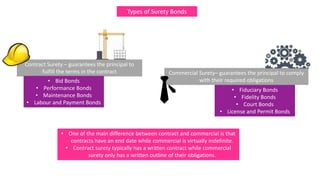
Contract Surety – guarantees the principal to
fulfill the terms in the contract Commercial Surety– guarantees the principal to comply
with their required obligations
Types of Surety Bonds
• Bid Bonds
• Performance Bonds
• Maintenance Bonds
• Labour and Payment Bonds
• Fiduciary Bonds
• Fidelity Bonds
• Court Bonds
• License and Permit Bonds
• One of the main difference between contract and commercial is that
contracts have an end date while commercial is virtually indefinite.
• Contract surety typically has a written contract while commercial
surety only has a written outline of their obligations.
• Transferring a calculated risk to the insurer
• Once a claimed has been filed, the insured must provide the
necessary compensation.
• Some insurance are required by law
• To protect taxpayers’ money
• Protection to clients and to the individual
• Allows the insured to gain a ‘peace of mind’
• Prepare for the worst and hope for the best
• Covers costs to improve financial stability
Why do we need insurance?
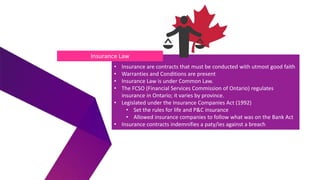
• Insurance are contracts that must be conducted with utmost good faith
• Warranties and Conditions are present
• Insurance Law is under Common Law.
• The FCSO (Financial Services Commission of Ontario) regulates
insurance in Ontario; it varies by province.
• Legislated under the Insurance Companies Act (1992)
• Set the rules for life and P&C insurance
• Allowed insurance companies to follow what was on the Bank Act
• Insurance contracts indemnifies a paty/ies against a breach
Insurance Law
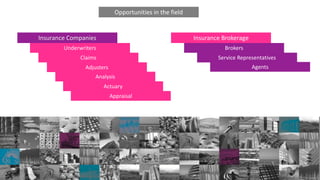
Underwriters
Opportunities in the field
Insurance Companies
Claims
Adjusters
Insurance Brokerage
Brokers
Analysis
Actuary
Service Representatives
Agents
Appraisal
Insurance Designations and Licenses
Certified Insurance Professional
Fellow Certified Insurance Professional
Life License Qualification
Chartered Financial Analyst
Chartered Professional Accountant
Canadian Accredited Insurance Broker
Other-Than-Life Licence
Insurance Broker Licence
General Insurance Essentials
Certified Health Insurance Specialist
Chartered Life Underwriter
&
A
Q

Insurance experience

  • 1.
    The Insurance IndustryWhatis insurance Different types of insurance Insurance Law Opportunities Surety and Fidelity Principles of Insurance Terminology
  • 2.
    • Noun. Anagreement by which one party guarantees a compensation against a specified loss, damage, or casualty. • Insurance is a contract. All principles must exist in order to be valid • Transferring the risk to another party for a premium • Two types of insurance companies; • Life insurance companies – those who sells life insurances • Property and casualty/ general insurance – sells different types insurance other than life insurance. Coverage – Amount of risk covered by the insurer Premiums – amount being paid by the insured to the insurer Risk – exposure to liability Indemnity – Compensation for a damage or loss Policy – a contract between the insured and insurer Claim – a demand by the insured to be compensated Quote – estimated premium given by the insurer What is Insurance?
  • 3.
    • Royal Insurance+ Sun Alliance = RSA Insurance Group. • A property and casualty insurance company listed on the FTSE 100 • Based in London, UK with main operations in Western Europe, Scandinavia, Middle East and Canada • Offices in Montreal, Vancouver, Greater Toronto Area and St. John’s. • Operations begun back in the 16th Century and still is thriving today. With networks over 150 countries. Making Things Better, Together
  • 4.
    Personal Insurance CommercialInsurance Global Specialty Lines • Pets • Auto • Home • Travel • Leisure • High Net-Worth • Surety • ProFin • Multi-National • Commercial Fleet • Marine and Aviation • Equipment Breakdown • Project Construction • National Programs • Auto • Realty • Property • Micro/Start Up • Bed and Breakfast • Equipment Breakdown • Construction and Contracts
  • 5.
    Personal Insurance –for individuals Travel Home Auto Pets Leisure High-Net
  • 6.
    Commercial Insurance –for SMEs Bed and Breakfast Manufacturing Auto Trade Construction and Contracting Residential Condo. Startup Hospitality
  • 7.
    Global Specialty Lines– for complex risks Commercial Fleet Aviation Marine Project Construction Professional and Financial Liability Multi-National
  • 8.
    Surety Project Owner/Obligee Contractor/Principal HowSurety Works: • Surety guarantees a performance of a contract • Surety bond promises to pay the obligee in an event that a principal could not do their obligation/s • A three party contract. Different from a typical insurance • Bond is another term for “financial guarantee” For Principals; • Acts as a credit line • Reduces the risk of participating in a job they cannot do Why Surety? For Obligees; • Guarantees a compensation when in default • Confident projects will be completed
  • 9.
    Surety example A threeparty contract that guarantees performance
  • 10.
    Contract Surety –guarantees the principal to fulfill the terms in the contract Commercial Surety– guarantees the principal to comply with their required obligations Types of Surety Bonds • Bid Bonds • Performance Bonds • Maintenance Bonds • Labour and Payment Bonds • Fiduciary Bonds • Fidelity Bonds • Court Bonds • License and Permit Bonds • One of the main difference between contract and commercial is that contracts have an end date while commercial is virtually indefinite. • Contract surety typically has a written contract while commercial surety only has a written outline of their obligations.
  • 11.
    • Transferring acalculated risk to the insurer • Once a claimed has been filed, the insured must provide the necessary compensation. • Some insurance are required by law • To protect taxpayers’ money • Protection to clients and to the individual • Allows the insured to gain a ‘peace of mind’ • Prepare for the worst and hope for the best • Covers costs to improve financial stability Why do we need insurance?
  • 12.
    • Insurance arecontracts that must be conducted with utmost good faith • Warranties and Conditions are present • Insurance Law is under Common Law. • The FCSO (Financial Services Commission of Ontario) regulates insurance in Ontario; it varies by province. • Legislated under the Insurance Companies Act (1992) • Set the rules for life and P&C insurance • Allowed insurance companies to follow what was on the Bank Act • Insurance contracts indemnifies a paty/ies against a breach Insurance Law
  • 13.
    Underwriters Opportunities in thefield Insurance Companies Claims Adjusters Insurance Brokerage Brokers Analysis Actuary Service Representatives Agents Appraisal
  • 14.
    Insurance Designations andLicenses Certified Insurance Professional Fellow Certified Insurance Professional Life License Qualification Chartered Financial Analyst Chartered Professional Accountant Canadian Accredited Insurance Broker Other-Than-Life Licence Insurance Broker Licence General Insurance Essentials Certified Health Insurance Specialist Chartered Life Underwriter
  • 15.