Introduction
• An autoclaveis a device that uses pressurized steam
to sterilize items, effectively killing bacteria, viruses,
fungi, and spores.
• It's a critical piece of equipment in healthcare,
laboratories, and various industries for ensuring
items are free from microbial contamination.
• The sterilization process relies on high-pressure
saturated steam, typically at 121 degrees Celsius, to
denature proteins and destroy microorganisms.
4.
Principle
• The autoclaveworks on the principle of moist heat
sterilization where steam under pressure is used to
sterilize the material present inside the chamber.
• The high pressure increases the boiling point of water and
thus helps achieve a higher temperature for sterilization.
• Water usually boils at 100°C under normal atmospheric
pressure (760 mm of Hg); however, the boiling point of
water increases if the pressure is to be increased.
• Similarly, the high pressure also facilitates the rapid
penetration of heat into deeper parts of the material, and
moisture present in the steam causes the coagulation of
proteins causing an irreversible loss of function and
activity of microbes.
5.
• This principleis employed in an autoclave where the
water boils at 121°C at the pressure of 15 psi (pounds
per square inch) or 775 mm of Hg.
• When this steam comes in contact with the surface, it
kills the microbes by giving off latent heat.
• The condensed liquid ensures the moist killing of the
microbes.
• Once the sterilization phase is completed (which
depends on the level of contamination of material
inside), the pressure is released from the inside of the
chamber through the whistle.
• The pressure inside the chamber is then restored back
to the ambient pressure while the components inside
remain hot for some time.
6.
Types
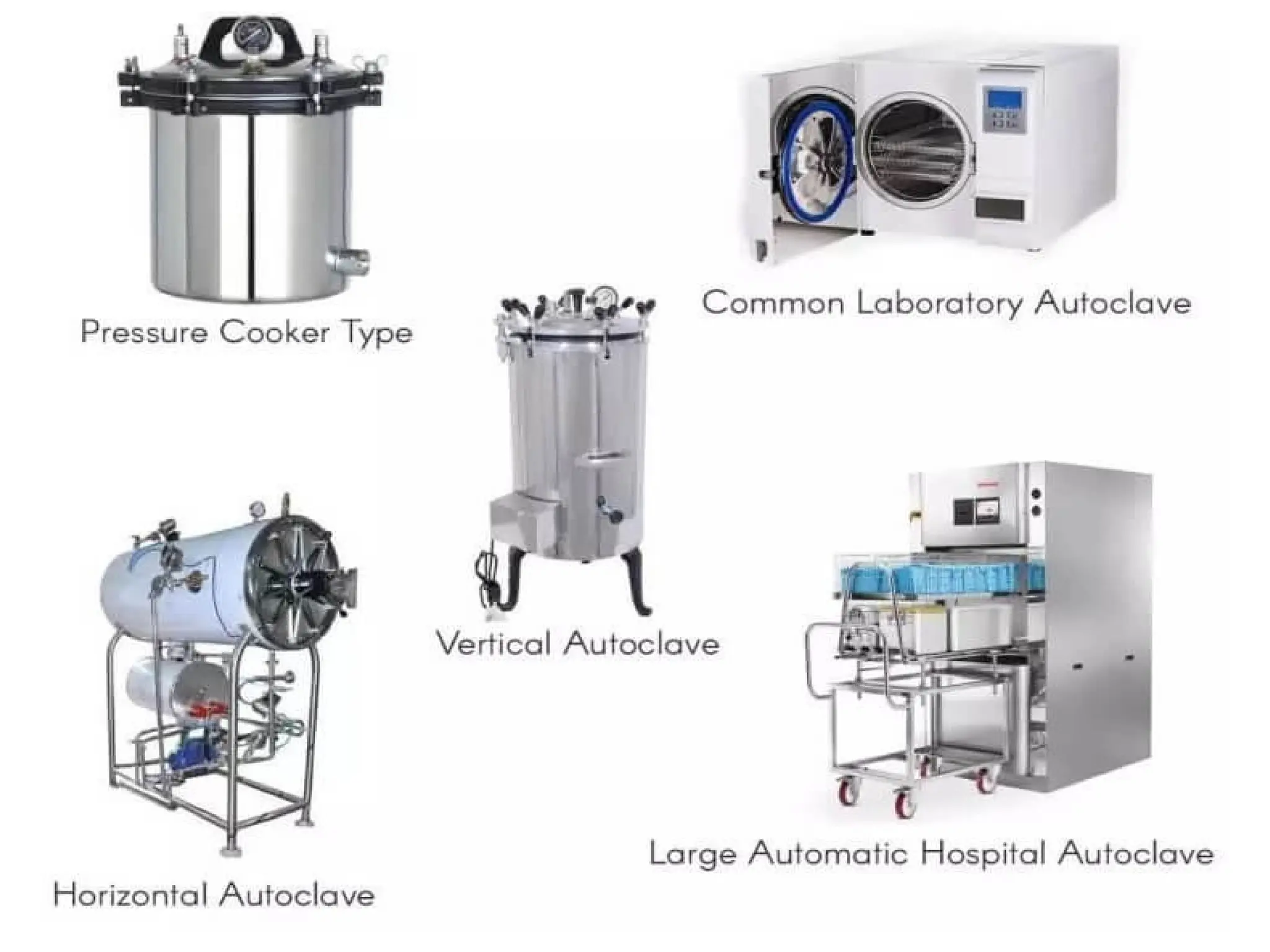
1. Pressure cookertype/ Laboratory bench autoclaves (N-type)
• These, as domestic pressure cookers, are still in use in many
parts of the world.
• The more modern type has a metal chamber with a secure
metal lid that can be fastened and sealed with a rubber gasket.
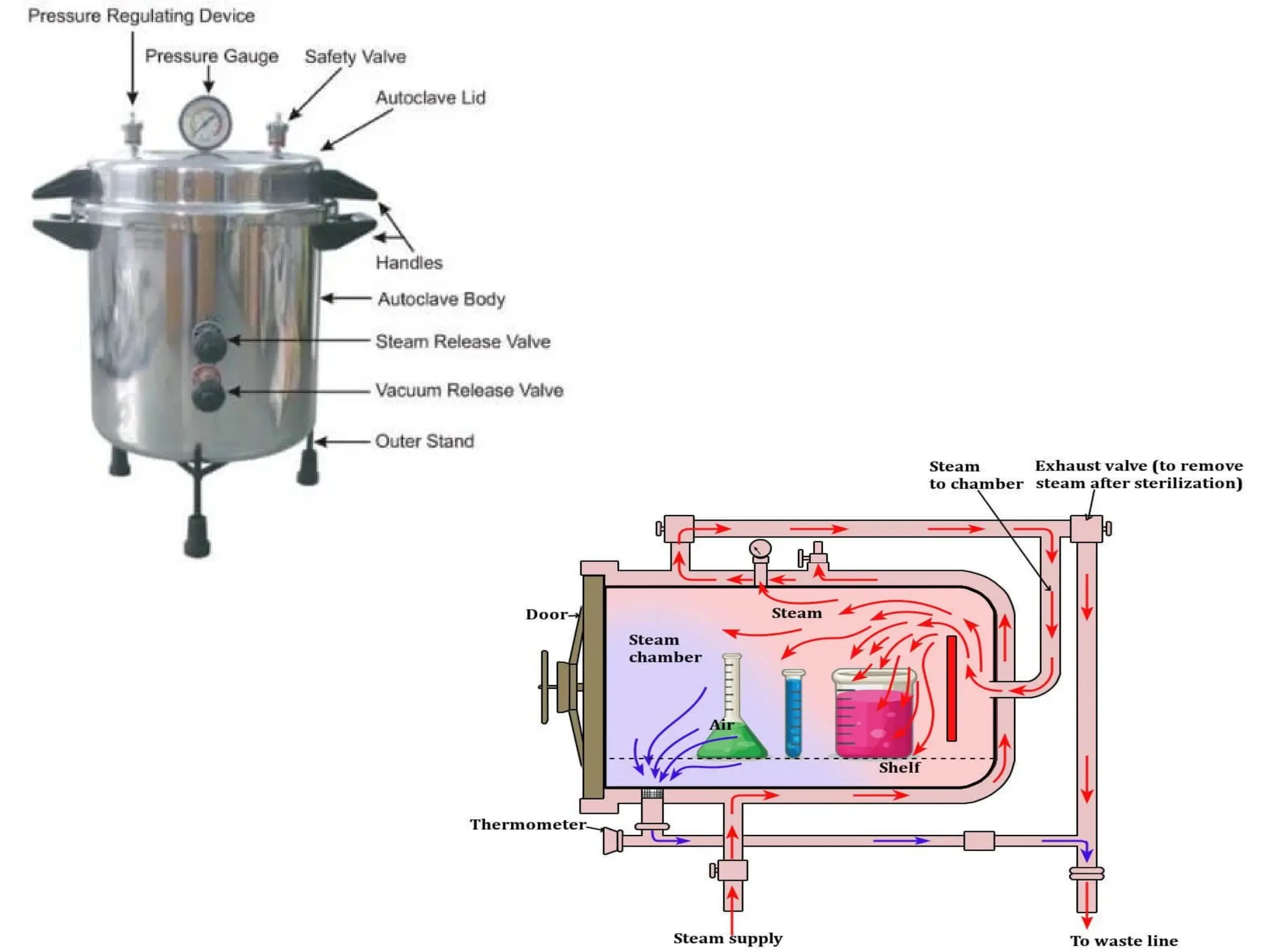
• It has an air and steam discharge tap, pressure gauge, and
safety valve. There is an electric immersion heater at the
bottom of the chamber.
2. Gravity displacement type autoclave
• This is the common type of autoclave used in laboratories.
• In this type of autoclave, the steam is created inside the
chamber via the heating unit, which then moves around the
chamber for sterilization.
• This type of autoclave is comparatively cheaper than other
types.
7.
3. Positive pressuredisplacement type (B-type)
• In this type of autoclave, the steam is generated in a separate
steam generator which is then passed into the autoclave.
• This autoclave is faster as the steam can be generated within
seconds.
• This type of autoclave is an improvement over the gravity
displacement type.
4. Negative pressure displacement type (S-type)
• This is another type of autoclave that contains both the steam
generator as well as a vacuum generator.
• Here, the vacuum generator pulls out all the air from inside the
autoclave while the steam generator creates steam.
• The steam is then passed into the autoclave.
• This is the most recommended type of autoclave as it is very
accurate and achieves a high sterility assurance level.
• This is also the most expensive type of autoclave.
9.
Importance
1. Preventing Infectionsand Ensuring Safety:
• Healthcare:
• Autoclaves are critical for sterilizing surgical instruments, medical devices, and
other items used in patient care, preventing the transmission of infections.
• Laboratories:
• They ensure the safety of research and diagnostic procedures by sterilizing
equipment, media, and waste materials.
• Food Processing:
• Autoclaves are used to sterilize packaged foods, extending shelf life and
ensuring product safety.
2. Sterilization of Various Materials:
• Solids, Liquids, and Hollows:
• Autoclaves can sterilize a wide range of items, including solids, liquids, hollow
objects, and various instruments.
• Specific Examples:
• This includes surgical equipment, laboratory instruments, culture media,
plastic materials, and even certain types of waste.
10.
3. Ensuring ReliableResearch and Production:
• Eliminating Contamination:
• By effectively sterilizing equipment and materials, autoclaves
minimize the risk of contamination in research experiments and
production processes.
• Consistent Results:
• Reliable sterilization leads to more accurate and dependable results
in research and ensures consistent product quality in manufacturing.
4. Replacing Outdated Methods:
• Beyond Cleaning:
• Autoclaves provide a more thorough sterilization process than basic
cleaning methods, which may not eliminate all microorganisms.
• Alternatives to Incineration:
• They can be used to sterilize medical waste before disposal, offering
11.
Operation
• Components
a. PressureChamber
• The pressure chamber is the main component of a steam autoclave consisting of an
inner chamber and an outer jacket.
• The inner chamber is made up of stainless steel or gunmetal, which is present inside
the out chamber made up of an iron case.
• The autoclaves used in healthcare laboratories have an outer jacket that is filled with
steam to reduce the time taken to reach the sterilization temperature.
• The inner chamber is the case where the materials to be sterilized are put.
• The size of the pressure chamber ranges from 100 L to 3000 L.
• b. Lid/ Door
• The next important component of an autoclave is the lid or door of the autoclave.
• The purpose of the lid is to seal off the outside atmosphere and create a sterilized
condition on ht inside of the autoclave.
• The lid is made airtight via the screw clamps and asbestos washer.
• The lid consists of various other components like:
• Pressure gauge
• Pressure releasing unit/ Whistle
•
12.
Pressure gauge
• Apressure gauge is present on the lid of the autoclave to indicate the
pressure created in the autoclave during sterilization.
• The pressure gauge is essential as it assures the safety of the autoclave
and the working condition of the operation.
• Pressure releasing unit/ Whistle
• A whistle is present on the lid of the autoclave is the same as that of
the pressure cooker.
• The whistle controls the pressure inside the chamber by releasing a
certain amount of vapor by lifting itself.
• Safety valve
• A safety valve is present on the lid of the autoclave, which is crucial in
cases where the autoclave fails to perform its action or the pressure
inside increases uncontrollably.
• The valve has a thin layer of rubber that bursts itself to release the
pressure and to avoid the danger of explosion.
13.
c. Steam generator/Electrical heater
• An electrical steam generator or boiler is present underneath the
chamber that uses an electric heating system to heat the water and
generate steam in the inner and the outer chamber.
• The level of water present in the inner chamber is vital as if the
water is not sufficient; there are chances of the burning of the
heating system.
• Similarly, if the water is more than necessary, it might interfere with
the trays and other components present inside the chamber.
d. Vacuum generator (if applicable)
• In some types of autoclaves, a separate vacuum generator is
present which pulls out the air from the inside of the chamber to
create a vacuum inside the chamber.
• The presence of some air pockets inside the chamber might
support the growth of different microorganisms. This is why the
14.
e. Wastewater cooler
•Many autoclaves are provided with a system to cool the
effluent before it enters the draining pipes.
• This system prevents any damage to the drainage pipe due
to the boiling water being sent out of the autoclave.
• Procedure for running an autoclave
• In general, an autoclave is run at a temperature of 121° C
for at least 30 minutes by using saturated steam under at
least 15 psi of pressure. The following are the steps to be
followed while running an autoclave:
• Before beginning to use the autoclave, it should be checked
for any items left from the previous cycle.
• A sufficient amount of water is then put inside the chamber.
15.
• Now, thematerials to be sterilized are placed inside the chamber.
• The lid is then closed, and the screws are tightened to ensure an airtight condition,
and the electric heater is switched on.
• The safety valves are adjusted to maintain the required pressure in the chamber.
• Once the water inside the chamber boils, the air-water mixture is allowed to
escape through the discharge tube to let all the air inside to be displaced. The
complete displacement can be ensured once the water bubbles cease to come out
from the pipe.
• The drainage pipe is then closed, and the steam inside is allowed to reach the
desired levels (15 lbs in most cases).
• Once the pressure is reached, the whistle blows to remove excess pressure from
the chamber.
• After the whistle, the autoclave is run for a holding period, which is 15 minutes in
most cases.
• Now, the electric heater is switched off, and the autoclave is allowed to cool until
the pressure gauge indicates the pressure inside has lowered down to that of the
atmospheric pressure.
• The discharge pipe is then opened to allow the entry of air from the outside into
the autoclave.
• Finally, the lid is opened, and the sterilized materials are taken out of the chamber.
16.
Applications
• Sterilization ofLaboratory Equipment:
• Autoclaves are crucial for sterilizing glassware (test tubes, beakers,
flasks, etc.), metal instruments (forceps, scalpels), and plastic
equipment (sample containers, tubes) used in research and
diagnostic laboratories.
• Preparation of Culture Media:
• They are used to sterilize liquid media (nutrient broths, growth
media, buffers) needed for cultivating microorganisms in
laboratories, ensuring a sterile environment for microbial growth
and analysis.
• Decontamination of Biohazardous Waste:
• Autoclaves are used to decontaminate biohazardous waste, such as
cultures, stocks, and other materials, before disposal, minimizing the
risk of environmental contamination.
17.
• Sterilization inHealthcare:
• In hospitals, autoclaves sterilize surgical instruments, implanted medical devices, surgical
drapes, and linens.
• Industrial Applications:
• Autoclaves are used in manufacturing environments to process materials using steam and
pressure, such as in the production of pressure-treated wood and specialized rubbers.
• Food Industry:
• In the food industry, autoclaves are used in canning and other high-pressure methods to
ensure food safety and preservation.
• Plant Tissue Culture:
• Autoclaves are used to sterilize equipment and solutions used in plant tissue culture labs to
eliminate microorganisms.
• Dental Procedures:
• Autoclaves sterilize dental instruments to maintain aseptic conditions during procedures.
• Research and Pharmaceutical Industries:
• Beyond basic sterilization, autoclaves are used in research and pharmaceutical settings for
various applications, including sterilizing liquids used in laboratory environments.
• Preventing Contamination:
• Autoclaves play a vital role in preventing contamination in various industries, including
pharmaceuticals, by ensuring sterility of equipment and materials.
18.
Advantages
1. Effective andReliable Sterilization:
• Autoclaves use pressurized steam to kill bacteria, viruses, and
spores, making them a highly effective method for sterilization.
• The consistent and reliable nature of autoclaves ensures that items
are sterilized properly when used correctly.
• Steam sterilization is often faster than other methods, reducing the
time needed to sterilize instruments and equipment.
2. Versatile Applications:
• Autoclaves can sterilize a wide variety of materials, including
surgical instruments, laboratory equipment, and biohazardous
waste.
• This versatility makes them valuable in various settings, such as
hospitals, laboratories, research facilities, and even restaurants.
19.
3. Non-Toxic Sterilization:
•Unlike chemical sterilization methods, autoclaves use water and steam, leaving behind no
toxic residues on sterilized items.
• This is particularly important for items that will come into contact with biological tissues
or DNA.
4. Time and Cost Savings:
• The speed of autoclave sterilization can save time for healthcare professionals, allowing
them to focus on patient care.
• By sterilizing reusable items, autoclaves can reduce the need for disposable items,
leading to cost savings in the long run.
• The ability to sterilize a variety of items with a single unit also contributes to cost-
effectiveness.
5. Safety Features:
• Modern autoclaves are equipped with safety features like pressure locks to prevent
accidental opening during operation.
• These features help ensure that the sterilization process is safe for both the user and the
items being sterilized.
6. Environmental Benefits:
• Autoclaves can help reduce waste by sterilizing and reusing items, which is beneficial for
the environment.
• The non-toxic nature of steam sterilization also minimizes environmental impact.
20.
Disadvantages
1. Damage toMaterials:
• Heat and Moisture Sensitivity:
• Autoclaves utilize high-pressure steam, which can damage or degrade materials sensitive
to heat and moisture, such as certain plastics, rubber, and electronic components.
• Dulling of Cutting Edges:
• Repeated exposure to high heat and humidity can dull the edges of sharp instruments,
particularly high-grade carbon steel, like scissors and scalpels.
• Corrosion:
• Some metals, especially carbon steel, can corrode or rust when exposed to the moisture
and heat of an autoclave.
2. Operational Limitations:
• Time Consumption:
• Autoclaves can take a significant amount of time for heating up and cooling down, which
can affect the quality of heat-sensitive materials or create delays.
• Size and Capacity Constraints:
• Autoclaves have limitations on the size and quantity of items that can be sterilized at
once. Overloading can lead to incomplete sterilization.
• Specialized Equipment:
• Autoclaves require specific maintenance and handling to ensure proper function and
prevent safety hazards.
21.
3. Safety Concerns:
•Burns:
• Operators face the risk of burns from hot steam, hot surfaces, or spilled hot liquids during loading,
operation, or unloading.
• Explosion:
• While rare, there is a potential risk of explosion if the autoclave is not properly maintained or if
there are internal issues.
4. Energy and Resource Consumption:
• Electricity:
• Autoclaves require a considerable amount of electricity to operate, which can increase energy costs.
• Water:
• Autoclaves use water for steam generation, which can contribute to water consumption.
5. Incomplete Sterilization:
• Improper Loading:
• Overloading the autoclave or improper placement of items can prevent steam from circulating
effectively, leading to incomplete sterilization.
• Temperature Inconsistencies:
• If the autoclave does not reach the required temperature or maintain it consistently, sterilization will
be incomplete.
• Wet Loads:
• Items may still be damp after the sterilization cycle, which can be problematic for certain materials.
22.
Maintenance
1. Daily Maintenance:
•Clean the interior of the autoclave chamber, including the
heating element, after each cycle.
• Wipe away any spills immediately.
• Ensure the chamber is free of debris.
• Check door seals and clean them with a damp cloth.
2. Weekly Maintenance:
• Drain the water from the reservoir and refill with fresh
distilled or deionized water.
• Clean the chamber with a damp cloth or sponge.
• Consider using a cleaning solution like Chamber Brite to
remove mineral deposits and residue.
• Check and clean the door gasket (seal).
23.
3. Monthly Maintenance:
•Inspect and clean the chamber, plumbing, and door gasket.
• Check for wear and tear on cords and plugs, replacing if
necessary.
• Verify the proper functioning of the safety valve and bleed valve.
• Clean filters using a mild soap and distilled water solution, and
inspect for damage.
• Consider using a cleaning solution like Speed Clean, following the
manufacturer's instructions.
4. Annual Maintenance:
• Have the autoclave inspected, cleaned, tested, and calibrated by a
qualified technician.
• Replace worn or damaged parts like gaskets, seals, and filters.
• Calibrate the temperature controller.
• Inspect the door locking mechanism and hinges.
24.
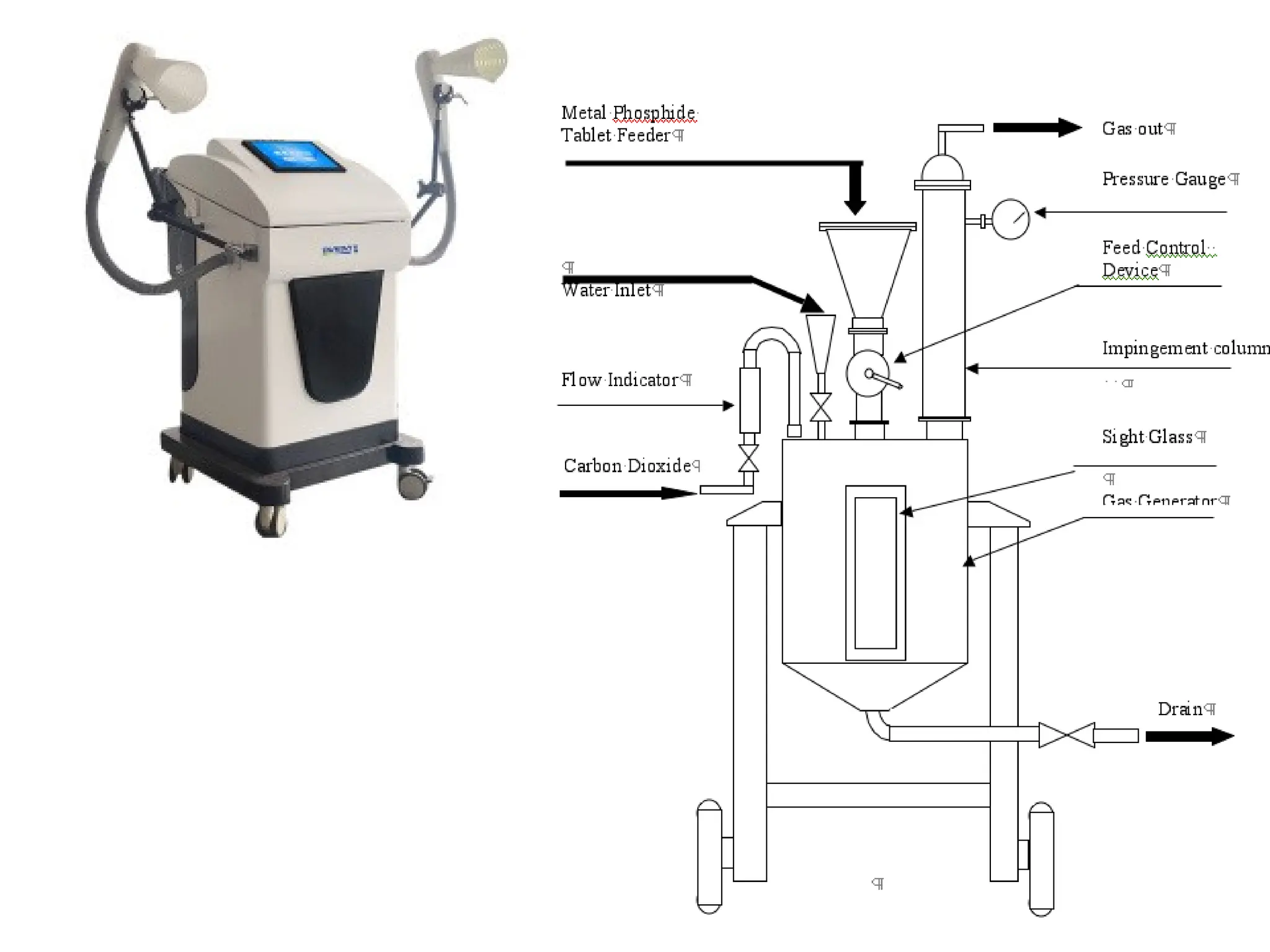
Fumigator
• Fumigator instrumentationrefers to the equipment and
tools used in the process of fumigation, which involves
using gaseous pesticides to control pests in enclosed
spaces.
• This instrumentation is crucial for ensuring the safe and
effective application of fumigants, which are gases
designed to kill or control pests like insects, rodents, or
microorganisms.
• The instrumentation varies depending on the specific
fumigation application, but commonly includes devices
for measuring fumigant concentration, sealing the
fumigation area, and safely introducing and removing
fumigants.
26.
Principle
• Principle involvescreating a gas-tight enclosure,
introducing a fumigant at a specific concentration and
duration, and then ventilating the area to remove the
toxic gas.
• Key aspects include selecting the right fumigant,
ensuring proper sealing, applying the correct dosage,
and monitoring the process.
• Types
1. Gas Fumigators:
2. Thermal Foggers:
3. ULV (Ultra Low Volume) Foggers:
4. Electric Fumigators:
5. Misting Systems:
27.
1. Gas Fumigators:
•These utilize gaseous pesticides, or fumigants, to eliminate pests. They
are often used in enclosed spaces or for treating large areas.
2. Thermal Foggers:
• These machines heat liquid pesticides into a dense fog, which is then
dispersed into the treated area. They are effective for indoor and
outdoor pest control.
3. ULV (Ultra Low Volume) Foggers:
• These devices produce a very fine mist of pesticide droplets, ideal for
treating large areas with minimal liquid volume. They are often used
for pest control in agricultural settings and public health applications.
4. Electric Fumigators:
• These devices use electricity to heat and vaporize fumigants, releasing
them into the environment.
5. Misting Systems:
• These systems utilize a network of nozzles to distribute a fine mist of
pesticide, providing continuous pest control in targeted areas.
28.
Importance
1. Precise andEffective Pest Control:
• Thorough Coverage:
• Fumigation, when executed with proper instrumentation, ensures that fumigants reach every
nook and cranny, including hidden areas like cracks, crevices, and voids, where pests often hide.
• Targeted Application:
• Specialized equipment allows for the controlled release and distribution of fumigants, ensuring
that the appropriate concentration reaches the targeted area.
• Complete Pest Elimination:
• By reaching all life stages of pests, including eggs and larvae, fumigation can prevent re-
infestation and provide a more comprehensive solution compared to other pest control
methods.
2. Safety and Environmental Protection:
• Minimized Risk to Humans and Animals:
• Fumigation instruments, like gas detectors and personal protective equipment (PPE), help to
monitor gas concentrations and ensure the safety of operators and individuals in the vicinity.
• Reduced Exposure to Harmful Chemicals:
• Proper equipment ensures that fumigants are released in a controlled manner, minimizing
unnecessary exposure to toxic chemicals for humans, pets, and other non-target organisms.
• Environmentally Responsible Practices:
• Modern fumigation techniques and instruments allow for targeted application, reducing the
amount of fumigant needed and minimizing environmental impact.
29.
3. Versatility andAdaptability:
• Use in Various Settings:
• Fumigation instrumentation can be adapted for use in diverse environments, including
warehouses, food storage facilities, agricultural settings, and residential buildings.
• Treatment of Different Pests:
• Specific instruments and techniques can be employed to address a wide range of pests,
from insects and rodents to stored product pests and even microorganisms.
• Adaptability to Different Spaces:
• Fumigation can be carried out in various spaces, from enclosed chambers to large
warehouses, by utilizing specialized equipment and techniques.
4. Maintaining Hygiene and Safety Standards:
• Food Safety:
• Fumigation is crucial in the food industry to prevent contamination of food products
and maintain hygiene standards.
• Public Health:
• Fumigation helps to eliminate pests that can transmit diseases, contributing to public
health and safety.
• Property Protection:
• Fumigation protects structures and stored goods from pest damage, preserving
investments and preventing costly repairs.
30.
5. Cost-Effectiveness:
• PreventingProduct Damage and Loss:
• Fumigation helps to prevent costly damage to stored
products, reducing financial losses associated with
spoilage and infestation.
• Reducing Recalls and Returns:
• In the food industry, fumigation helps to prevent product
recalls and returns due to pest contamination,
protecting brand reputation and minimizing financial
losses.
• Optimizing Resource Utilization:
• By minimizing pest damage and contamination,
fumigation optimizes resource utilization and reduces
waste.
31.
Operation
1. Planning andPreparation:
• Area Assessment:
• Measure and inspect the space to determine the required fumigant dosage and
sealing needs.
• Sealing:
• Seal all cracks, crevices, and openings to create a gas-tight environment.
• Fumigant Selection:
• Choose the appropriate fumigant based on the target pest and the area being
treated.
• Equipment Preparation:
• Ensure all fumigation equipment (e.g., fumigators, gas detectors, sealing materials) is
in good working order.
2. Fumigant Application:
• Gas Introduction: The fumigant, in gaseous form, is introduced into the sealed area.
• Concentration Monitoring: Gas concentrations are monitored using specialized
equipment to ensure they reach the required levels for effective pest control.
• Temperature and Humidity Control: Temperature and humidity levels are monitored
and maintained to optimize fumigant effectiveness.
32.
3. Exposure andAeration:
• Exposure Period:
• The sealed space is kept under the influence of the fumigant for a specific
duration, allowing it to penetrate and eliminate pests.
• Aeration:
• After the exposure period, the area is ventilated to remove the fumigant
gas.
• Safety Precautions:
• Personnel should wear appropriate protective gear (mask, gloves, etc.)
during both fumigant application and aeration.
4. Post-Fumigation:
• Testing: The ambient air is tested to ensure that the fumigant has been
completely removed before re-occupying the space.
• Cleaning: All fumigation equipment and materials are cleaned and properly
stored.
• Record Keeping: A detailed record of the fumigation process, including
fumigant used, dosage, exposure time, and aeration details, is maintained.
33.
Applications
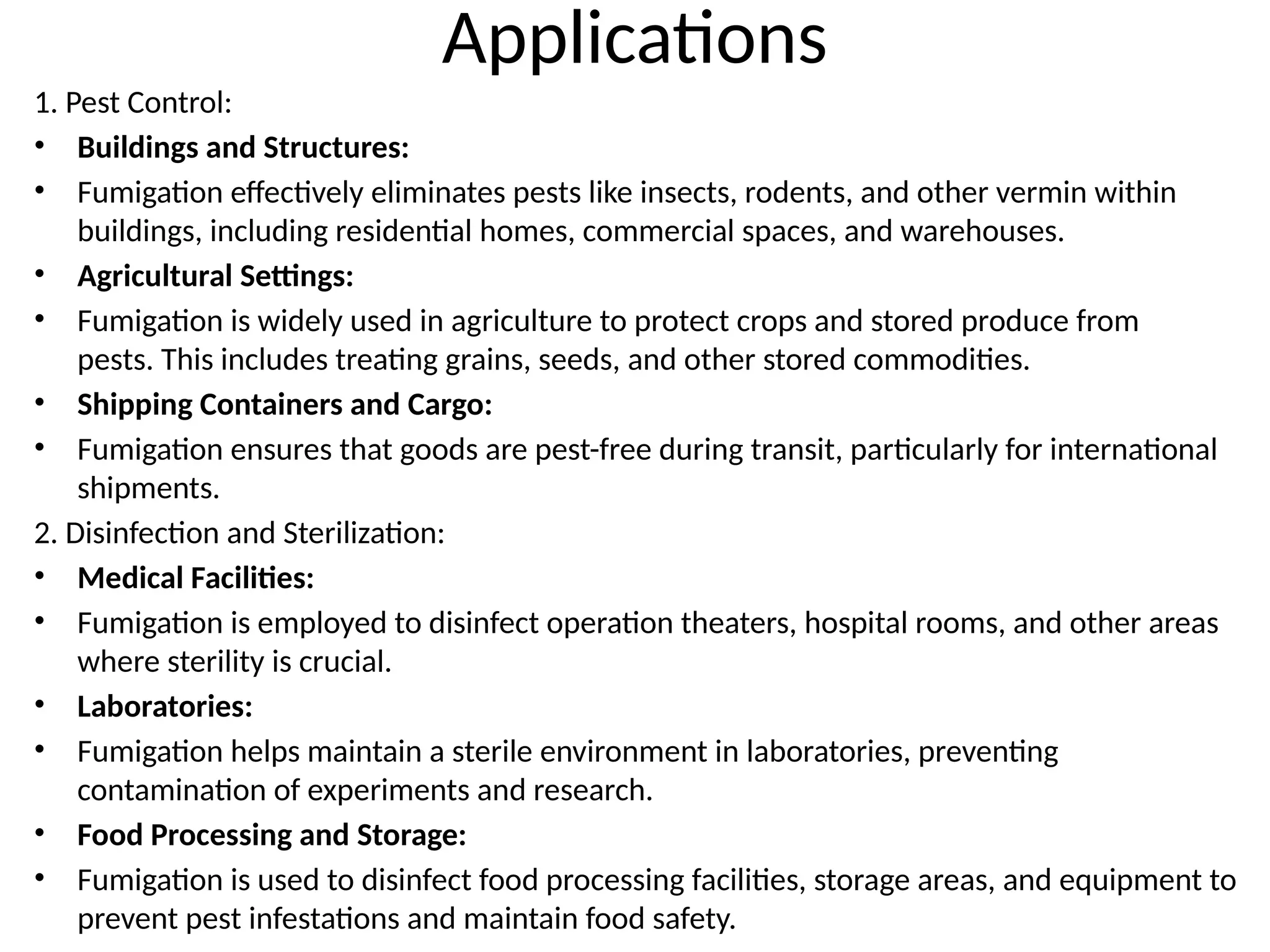
1. Pest Control:
•Buildings and Structures:
• Fumigation effectively eliminates pests like insects, rodents, and other vermin within
buildings, including residential homes, commercial spaces, and warehouses.
• Agricultural Settings:
• Fumigation is widely used in agriculture to protect crops and stored produce from
pests. This includes treating grains, seeds, and other stored commodities.
• Shipping Containers and Cargo:
• Fumigation ensures that goods are pest-free during transit, particularly for international
shipments.
2. Disinfection and Sterilization:
• Medical Facilities:
• Fumigation is employed to disinfect operation theaters, hospital rooms, and other areas
where sterility is crucial.
• Laboratories:
• Fumigation helps maintain a sterile environment in laboratories, preventing
contamination of experiments and research.
• Food Processing and Storage:
• Fumigation is used to disinfect food processing facilities, storage areas, and equipment to
prevent pest infestations and maintain food safety.
34.
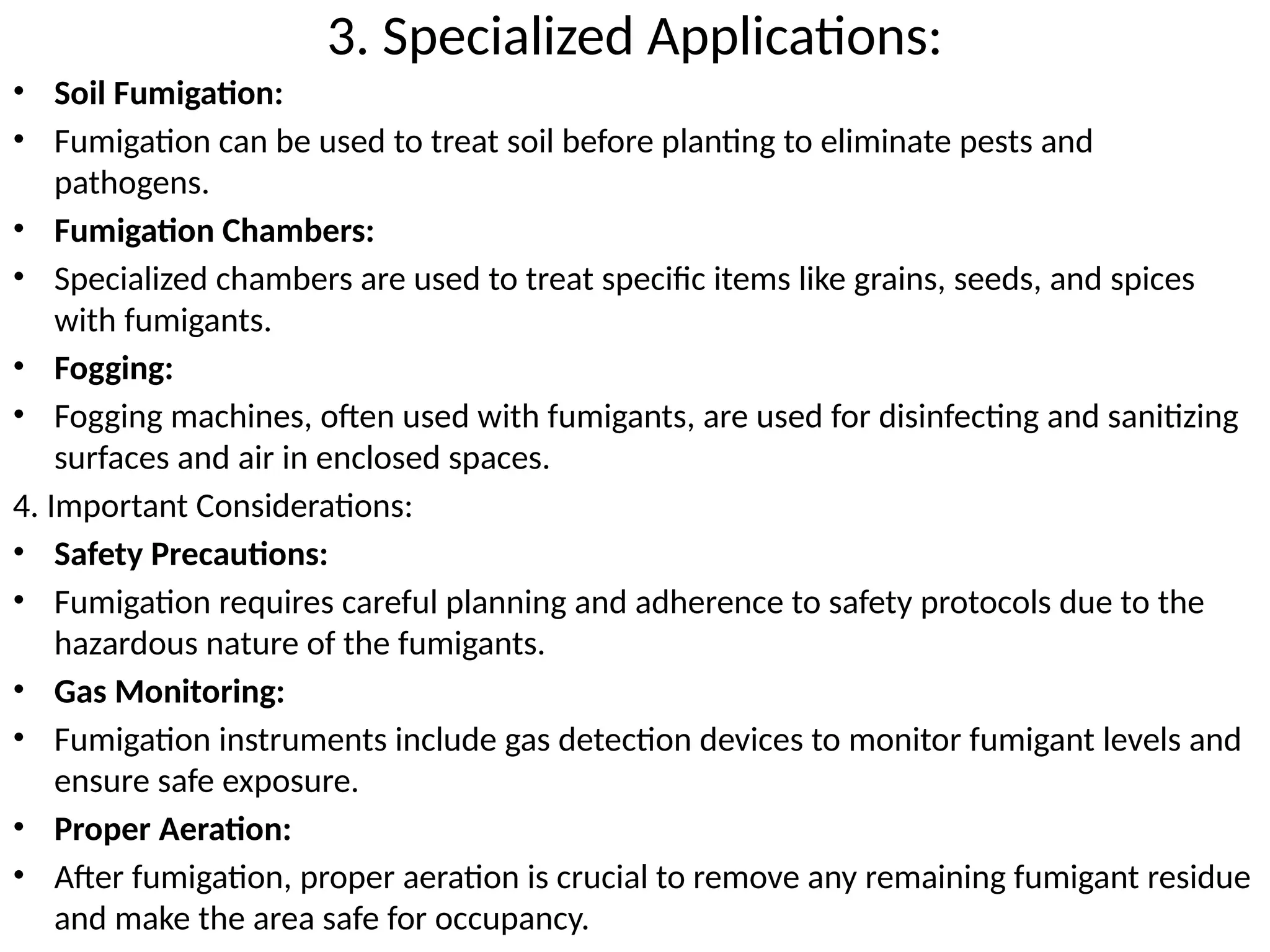
3. Specialized Applications:
•Soil Fumigation:
• Fumigation can be used to treat soil before planting to eliminate pests and
pathogens.
• Fumigation Chambers:
• Specialized chambers are used to treat specific items like grains, seeds, and spices
with fumigants.
• Fogging:
• Fogging machines, often used with fumigants, are used for disinfecting and sanitizing
surfaces and air in enclosed spaces.
4. Important Considerations:
• Safety Precautions:
• Fumigation requires careful planning and adherence to safety protocols due to the
hazardous nature of the fumigants.
• Gas Monitoring:
• Fumigation instruments include gas detection devices to monitor fumigant levels and
ensure safe exposure.
• Proper Aeration:
• After fumigation, proper aeration is crucial to remove any remaining fumigant residue
and make the area safe for occupancy.
35.
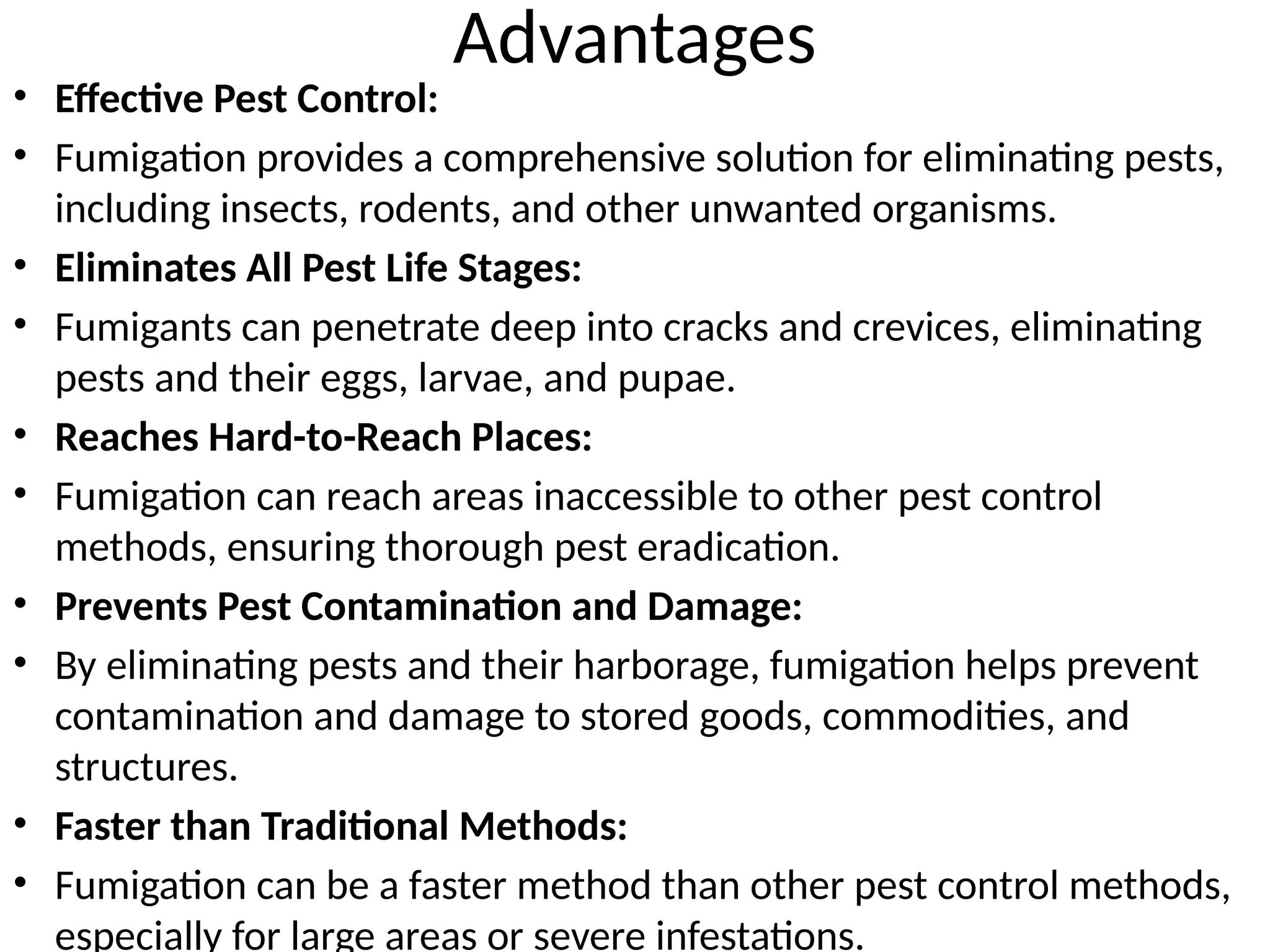
Advantages
• Effective PestControl:
• Fumigation provides a comprehensive solution for eliminating pests,
including insects, rodents, and other unwanted organisms.
• Eliminates All Pest Life Stages:
• Fumigants can penetrate deep into cracks and crevices, eliminating
pests and their eggs, larvae, and pupae.
• Reaches Hard-to-Reach Places:
• Fumigation can reach areas inaccessible to other pest control
methods, ensuring thorough pest eradication.
• Prevents Pest Contamination and Damage:
• By eliminating pests and their harborage, fumigation helps prevent
contamination and damage to stored goods, commodities, and
structures.
• Faster than Traditional Methods:
• Fumigation can be a faster method than other pest control methods,
especially for large areas or severe infestations.
36.
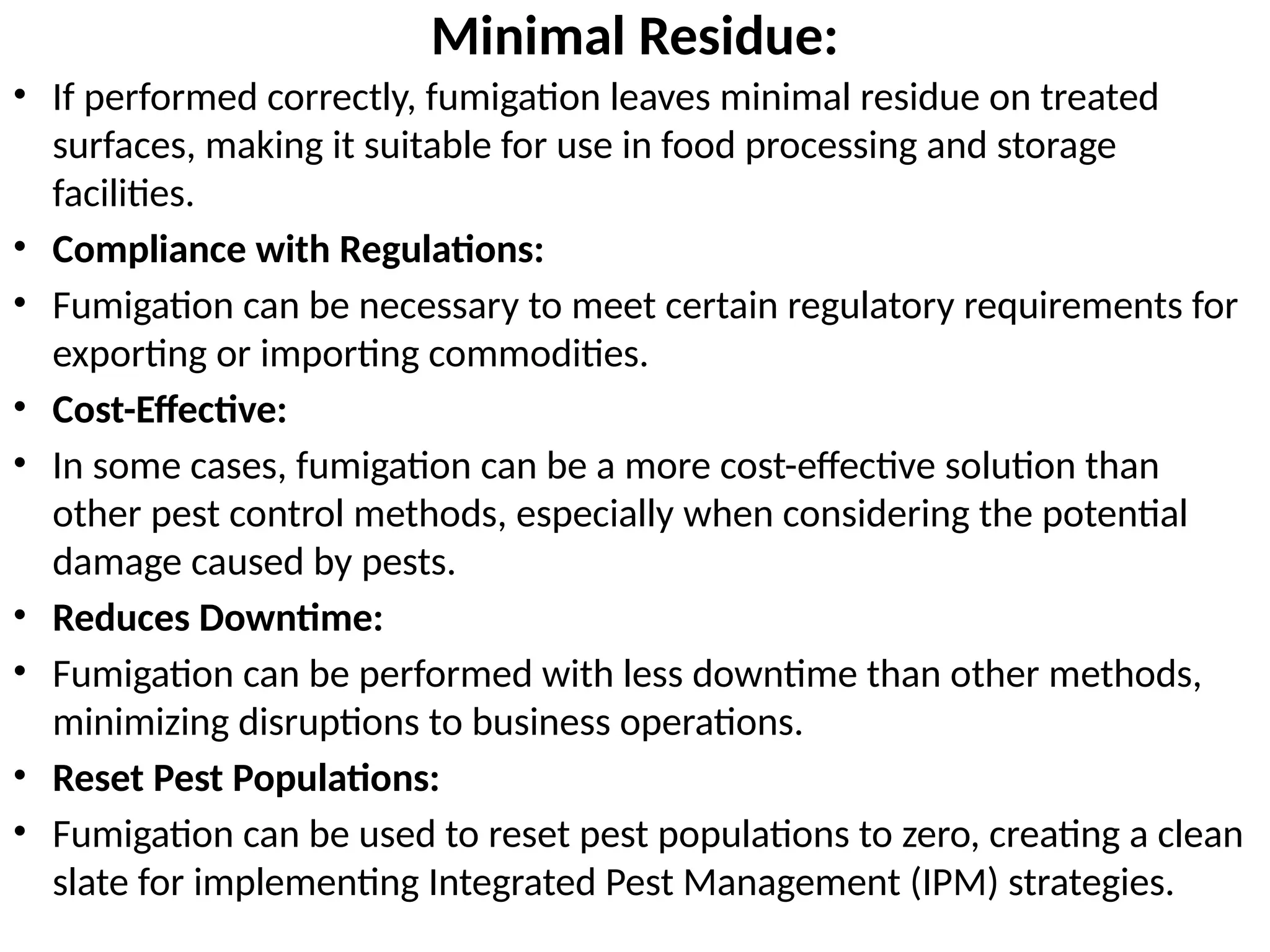
Minimal Residue:
• Ifperformed correctly, fumigation leaves minimal residue on treated
surfaces, making it suitable for use in food processing and storage
facilities.
• Compliance with Regulations:
• Fumigation can be necessary to meet certain regulatory requirements for
exporting or importing commodities.
• Cost-Effective:
• In some cases, fumigation can be a more cost-effective solution than
other pest control methods, especially when considering the potential
damage caused by pests.
• Reduces Downtime:
• Fumigation can be performed with less downtime than other methods,
minimizing disruptions to business operations.
• Reset Pest Populations:
• Fumigation can be used to reset pest populations to zero, creating a clean
slate for implementing Integrated Pest Management (IPM) strategies.
37.
Disadvantages
• Safety Concerns:
•Toxicity:
• Fumigants are highly toxic and can be fatal if inhaled, even in small
amounts.
• Specialized Equipment:
• Requires self-contained breathing apparatus (SCBA) and gas detectors, as
well as the expertise to handle them.
• Potential for Leaks:
• Leaks can compromise the effectiveness of the fumigation and pose a
danger to those in the surrounding area.
• Corrosion and Flammability:
• Some fumigants can be corrosive or flammable, adding to the safety risks.
• Environmental Impact:
• Fumigants can be harmful to beneficial insects and other organisms
outside the treated area.
38.
Practical Disadvantages:
• Disruption:
•Requires occupants to vacate the treated area, disrupting daily activities and
routines.
• Cost:
• Fumigation can be expensive due to the cost of fumigants, specialized
equipment, and professional labor.
• Preparation:
• Requires thorough sealing of the treated area to prevent leaks, which can be
time-consuming.
• Temperature Sensitivity:
• Some fumigants are less effective at low temperatures, potentially limiting
their use in certain climates.
• Pest Specificity:
• Not all pests are equally susceptible to fumigation, and some may be resistant.
• No Residual Effect:
• Fumigation only eliminates existing pests; it doesn't provide any long-term
protection against future infestations.
39.
Maintenance
• 1. Cleaning:
•Empty and Rinse:
• After each use, empty the fumigant tank and rinse it
thoroughly with water.
• Clean External Surfaces:
• Wipe down the exterior of the fumigator with a damp cloth,
paying attention to areas where residue may accumulate.
• Clean Nozzles and Filters:
• Remove and clean nozzles and filters to prevent
clogging. Use a soft brush and water to dislodge debris.
• Drying:
• Ensure all parts are completely dry before reassembly to
prevent rust and corrosion.
40.
2. Inspection:
• VisualInspection: Regularly inspect the fumigator for any
signs of damage, such as cracks, leaks, or loose parts.
• Pressure Check: If applicable, check the pressure gauge to
ensure proper operation and identify any pressure-related
issues.
• Nozzle Condition: Inspect nozzle tips for wear and tear, as
they can affect spray patterns and application accuracy.
• Hose Integrity: Check hoses for cracks, leaks, or blockages
that can hinder performance.
• Filter Condition: Ensure filters are clean and free of debris
to maintain proper airflow.
• Calibration: If using monitoring equipment, calibrate it
regularly to ensure accurate readings.
41.
3. Storage:
• ControlledEnvironment:
• Store fumigation equipment in a cool, dry place, away from extreme temperatures and
moisture.
• Manufacturer's Guidelines:
• Follow the manufacturer's instructions for storage and handling to prevent damage.
• Proper Reassembly:
• Ensure all parts are properly reassembled before storage to prevent loss or damage.
4. Other Important Considerations:
• Release Pressure:
• Release the pressure in sprayers and other equipment after each use to prevent damage
to hoses, O-rings, and other components.
• Training:
• Ensure that all users are properly trained on the safe operation and maintenance of the
equipment.
• Documentation:
• Keep a log of all maintenance and repairs to track equipment performance and identify
potential issues early.
• Safety:
• Always follow safety precautions when handling fumigants and operating fumigation
equipment.
42.
Vortex mixer
• Avortex mixer is a laboratory device that uses a
rapid, circular motion to mix liquids in small
containers, like test tubes or vials, creating a vortex.
• It's a common tool in microbiology, biochemistry,
and analytical labs for applications such as
suspending cells, mixing reagents, and preparing
samples.
• The device typically consists of a motor, a platform,
and a rubber cup or attachment where the
container is placed.
44.
Principle
• A vortexmixer operates on the principle of creating a swirling vortex
within a liquid sample to achieve rapid and efficient mixing.
• This is accomplished by a motor-driven eccentric rotating cup that
transfers motion to the sample container, causing a vortex to form and
blend the contents.
• Types:
1. By Control Type:
• Analog Vortex Mixers:
• These mixers typically offer variable speed control using a dial or knob,
allowing for adjustments to the mixing intensity. They are generally more
affordable than digital models.
• Digital Vortex Mixers:
• These mixers provide precise speed and time settings, often displayed on
a digital screen. They allow for more controlled and reproducible mixing.
45.
2. By Speed:
•Fixed Speed Vortex Mixers:
• These mixers operate at a single, pre-set speed, often chosen for high-
speed mixing applications.
• Variable Speed Vortex Mixers:
• These mixers allow users to adjust the speed of mixing, offering more
flexibility for different applications.
3. By Mixing Capacity:
• Mini Vortex Mixers:
• These are compact and designed for mixing small volumes, often used
with microtubes and other small test tubes.
• Multi-Tube Vortex Mixers:
• These mixers can accommodate multiple tubes simultaneously, increasing
efficiency for high-throughput applications.
• Microplate Vortex Mixers:
• These are designed specifically for mixing microplates, often with a high-
speed and small orbit to ensure efficient mixing of samples in microplate
wells.
46.
Importance
• 1. EfficientMixing and Homogenization:
• Vortex mixers provide a quick and effective way to mix small volumes
of liquids, which is crucial for many laboratory procedures.
• They ensure thorough mixing and uniform distribution of substances,
leading to more reliable and consistent results.
• 2. Time Efficiency:
• Compared to manual mixing methods like shaking or stirring, vortex
mixers significantly reduce the time required for mixing samples.
• This time-saving aspect is particularly important in high-throughput
laboratories where numerous samples need to be processed quickly.
• 3. Versatility:
• Vortex mixers are used in various scientific fields, including
microbiology, biochemistry, cell culture, and molecular biology.
• They are used for tasks such as resuspending cells, mixing reagents,
preparing samples for analysis, and even cell lysis.
47.
4. Sample Integrity:
•Vortex mixers offer a gentle yet effective way to mix liquids,
minimizing the risk of damaging delicate cells or causing excessive
shear stress.
• This is especially important in cell culture applications where
maintaining cell viability is crucial.
• 5. Assay Procedures:
• In various biochemical assays, efficient mixing is essential for
proper interaction between reagents and samples.
• Vortex mixers ensure that reagents are thoroughly mixed,
optimizing reaction conditions and leading to reliable assay results.
• 6. Quality Control:
• Vortex mixers are used in quality control processes to ensure that
products or samples are well-mixed and uniform.
• This is important in industries like food and beverage where
consistency in product formulation is critical.
48.
Operation
• Parts ofVortex Mixer:
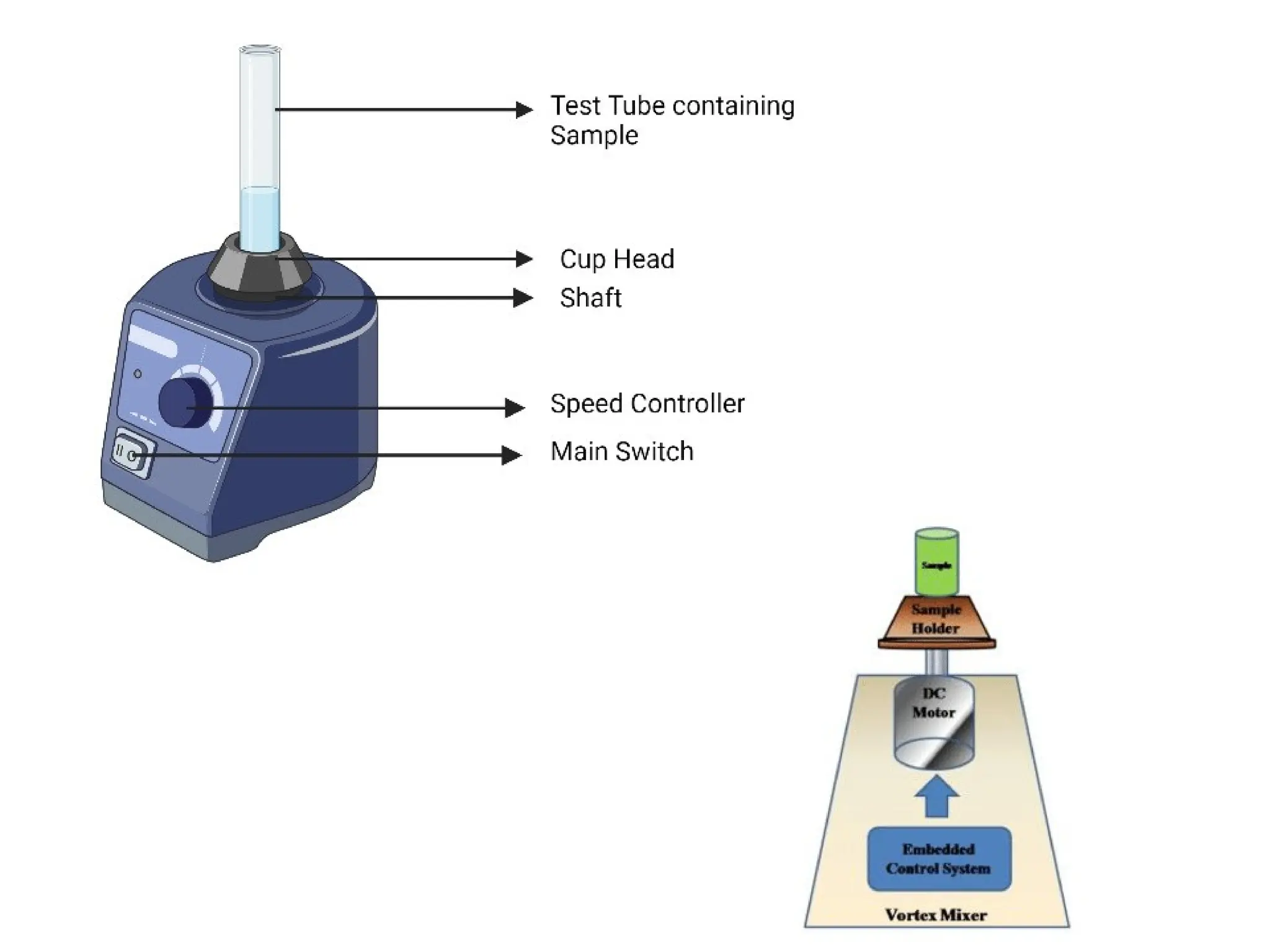
• Main switch: The electrical current necessary to run the
vortex mixer is supplied by turning on the main switch.
It manages the machine’s power.
• Motor: It is the core of the vortex mixer and rotates in a
circular motion. It is located immediately below the cup
head. For proper sample homogenization, it creates a
vortex effect in the liquid.
• Speed controller knob: The speed control knob is
located in the front panel of the machine. The speed of
the rotation can be adjusted by turning the knob.
• Operation controller button: An embedded control unit
offers the ability to program the mixer’s operation.
49.
Cup head:
• Cupheads are available in various sizes and allow rapid
mixing. To blend a range of tube sizes, these heads are
simply interchangeable with various-sized cup heads.
The tube is positioned on the cup head to produce a
vortex.
• Digital/Pulsing Vortex Mixer also comprises all the
switches and controls with the addition of a display and
pulsing facility.
• Time display: shows the length of time that has passed
(in continuous mode) or the remaining time (timed
mode).
• Speed display: shows how fast the vortex mixer is
moving.
50.
Accessories
• Tube platforms
•The mixer for which they are designed has a specialized
tube holder. These platforms can accommodate a range
of tubes of various sizes, hence expanding the number of
samples that can be vortexed simultaneously.
• Single tube holder
• To hold the tube into the cup head for prolonged mixing,
a tube holder that attaches to the top of the vortex mixer
is needed. This makes it possible for the sample to be
mixed independently.
• Tube insert
• A tube insert can handle tubes of various sizes.
51.
Vortex mixer operatingprocedure
• The front panel of the device houses all of the functioning
controls. Three positions- TOUCH, OFF, and ON are available on
the power switch, which is situated on the left side of the panel.
• TOUCH- The TOUCH position turns on the mixer by depressing
the mixing head while the operation will halt when pressure is
released from the mixing head.
• ON- When the switch is ON, the mixer will run constantly.
• OFF- The mixer will stop running when turned to the OFF or
TOUCH position.
• The knob of adjustable speed control on the right side of the
panel, when turned clockwise, causes the oscillating speed to
increase at a non-linear pace up to a maximum of 3,400rpm. Set
the speed control to the lowest setting before starting the mixer.
52.
The steps, includingoperating procedures, are:
• Place the power switch in either the TOUCH or ON position
to activate the device.
• Turn the speed control to the chosen setting.
• The shaking head will start moving immediately when the
power switch is turned on.
• When the power switch is set to the TOUCH setting, the
device will start operating when anything is placed on the
shaking head, and a small amount of pressure is used to
depress it.
• As soon as the pressure is lifted and the object is removed,
the shaking will stop.
• Turn the speed-controller knob to the desired speed.
• Disconnect the main switch.
53.
Applications
• It haswide application in the clinical and medical sectors for
thawing and mixing samples.
• The vortexer has been used to suspend cell or tissue samples
for use in tissue analysis and cell culture.
• When investigating proteins and enzymes, a vortex mixer is
essential for the homogeneous mixing of samples with reagents
and buffer.
• It is also utilized in heating and mixing samples in
pharmaceutical areas.
• It is employed in schools and universities for practical
demonstrations and experiments.
• Vortexer is used in quality control testing and sample
preparation for industrial use.
54.
Advantages
• The variousspeed options guarantee that the
intended speed is kept constant throughout the
process.
• Depending on how many vials are being mixed at
once, vortex mixers can hold one vial up to a dozen.
• Additionally, the vortex mixer works with minimal
resources, expertise, and resources.
• The vortex mixer ensures an effective and
dependable way of mixing samples.
55.
Disadvantages
• Aerosol Formation:
•Vortex mixers can create aerosols, which are tiny airborne particles,
when mixing liquids. This can be a concern when working with
infectious or hazardous materials, as it increases the risk of exposure.
• Limited Control:
• Vortex mixers typically offer limited control over mixing speed and
intensity. While some models have adjustable speeds, the range may
be restricted, and it can be challenging to achieve very precise mixing
conditions.
• Sample Damage:
• The high-speed mixing action of a vortex mixer can sometimes
damage delicate samples, especially those containing fragile
components or biological materials.
56.
Not Suitable forAll Samples:
• Vortex mixers are not ideal for all sample types. For
example, they may not be effective for mixing solids with
liquids or for achieving thorough mixing of samples with
large, dense particles.
• Noise:
• Some vortex mixers can be quite noisy during operation,
which can be a nuisance in a laboratory setting.
• Vibration:
• Prolonged use can cause vibrations that might disturb
other equipment or even cause items on the same
surface to be displaced.
57.
Maintenance
• Daily/Post-Use Maintenance:
•Wipe down the exterior:
• Use a soft cloth to clean the mixer after each use to remove any
spills or dust.
• Clean the shaking head:
• If needed, the shaking head can be removed after disconnecting
the power. Clean it with a mild detergent and ensure it's
completely dry before reattaching.
• Clean up spills immediately:
• Address any spills promptly to prevent damage or potential
electrical hazards.
• Inspect the power cord and plug:
• Check for any signs of wear or damage before each use.
58.
Periodic Maintenance:
• Deepclean the unit: If necessary, use a damp cloth and
mild detergent to clean the entire unit, paying attention to
the control panel and any areas prone to spills.
• Check for loose parts: Ensure all attachments and
components are securely fastened.
• Verify functionality: Test the power switch and speed
control to ensure proper operation.
• Decontaminate: If working with hazardous materials,
decontaminate the vortex mixer with 70% alcohol or a
suitable disinfectant.
• Store properly: Store the vortex mixer in a dry, cool place,
away from extreme temperatures or moisture.
59.
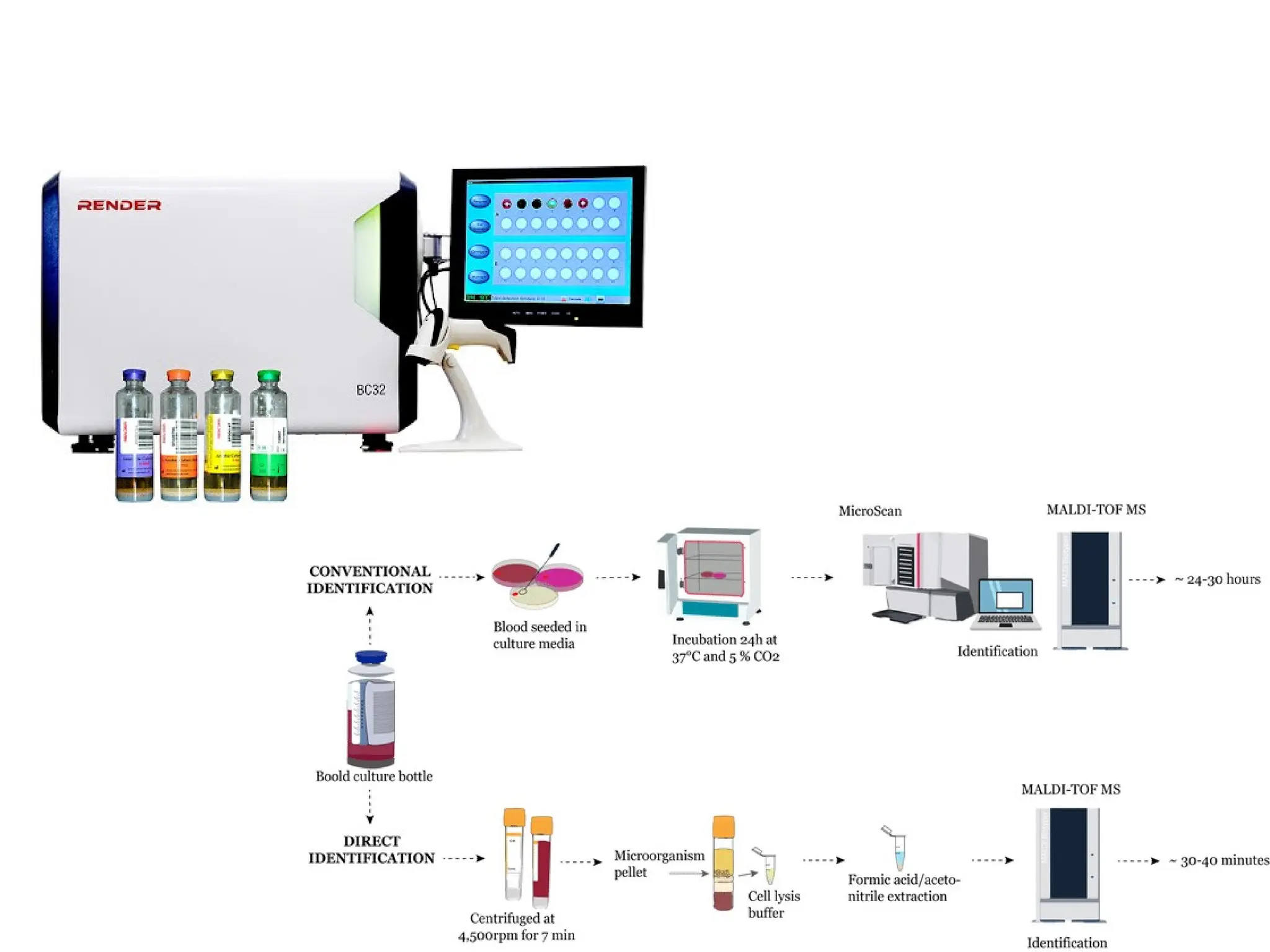
Automatic blood culturesystem
• Automated blood culture systems are laboratory
instruments designed to streamline the process of
detecting microorganisms in blood samples, offering
advantages over traditional manual methods.
• These systems automate the detection of microbial
growth, reduce manual handling of blood culture
bottles, and improve the speed and accuracy of
results, ultimately aiding in faster diagnosis and
treatment of bloodstream infections.
61.
Principle
• Automated bloodculture systems detect microbial
growth in blood samples by continuously
monitoring changes in carbon dioxide (CO2) or
fluorescence levels within blood culture bottles.
• These changes occur as microorganisms metabolize
nutrients in the medium, producing CO2, or alter
the fluorescence of a sensor, which is then detected
and analyzed by the system.
• This allows for faster and more sensitive detection
of pathogens compared to traditional manual
methods.
62.
Types
1. BacT/ALERT:
• Thissystem utilizes a colorimetric sensor in the culture bottles to detect
changes in carbon dioxide (CO2) concentration, indicating microbial growth.
• It employs different media formulations, including standard aerobic and
anaerobic media, as well as FAN (Fastidious Anaerobe Medium) bottles
designed to neutralize antimicrobial agents.
2. BACTEC:
• BACTEC systems, like the BACTEC FX and BACTEC 9000 series, use fluorescence
to detect microbial growth.
• They monitor changes in fluorescence caused by a drop in pH due to CO2
production from metabolizing microbes.
• Like BacT/ALERT, BACTEC also offers various media options, including aerobic,
anaerobic, and mycobacterial/fungal media.
3. VersaTREK:
• The VersaTREK system monitors microbial growth by detecting changes in
oxygen or carbon dioxide levels using a pressure sensor.
• It also utilizes different media formulations, including REDOX media designed
for aerobic and anaerobic cultures.
63.
Importance
1. Faster Detectionof Infections:
• Automated systems continuously monitor blood cultures, allowing for the
rapid detection of microbial growth, often within 24-48 hours, compared
to the 2-3 days or longer required by manual methods.
• This speed is critical for timely diagnosis and treatment of sepsis, a severe
and potentially fatal condition caused by bloodstream infections.
• Early detection enables clinicians to initiate appropriate antimicrobial
therapy sooner, improving patient outcomes and reducing mortality rates.
2. Reduced Contamination Rates:
• Automated systems minimize the number of times blood culture bottles
need to be handled, reducing the risk of introducing contaminants during
the process.
• Proper aseptic technique during blood collection and handling is crucial to
minimize contamination and ensure accurate results.
• Automated systems can also help differentiate between true bloodstream
infections and contaminants, further improving diagnostic accuracy.
64.
3. Increased Sensitivityand Specificity:
• Automated systems can detect a wider range of microorganisms,
including bacteria and fungi, with greater sensitivity than manual
methods.
• This improved detection rate is particularly important for identifying
pathogens in patients with low levels of infection.
• By providing more accurate results, automated systems reduce the
likelihood of false-positive or false-negative results, leading to more
appropriate treatment decisions.
4. Improved Laboratory Efficiency:
• Automated systems streamline the blood culture workflow, reducing
the amount of manual labor required in the microbiology lab.
• This can lead to increased efficiency and cost savings for the
laboratory.
• The standardized and automated process also reduces variability in
results and improves reproducibility.
65.
5. Enhanced PatientManagement:
• Faster and more accurate diagnosis of bloodstream
infections allows for prompt initiation of targeted
antimicrobial therapy, improving patient outcomes.
• Reduced turnaround times enable clinicians to make
more informed decisions about patient management,
including adjusting antibiotic regimens or determining
the need for further diagnostic testing.
• By minimizing the use of broad-spectrum antibiotics,
automated systems can also help reduce the risk of
antibiotic resistance.
66.
Operation
• 1. BloodSample Collection and Inoculation:
• Blood is drawn from the patient and carefully
inoculated into specialized blood culture bottles. These
bottles contain media designed to support the growth
of both aerobic and anaerobic microorganisms.
• 2. Incubation and Continuous Monitoring:
• The inoculated bottles are placed into the automated
system, which provides a controlled incubation
environment. The system continuously monitors the
bottles for signs of microbial growth, using sensors to
detect changes in carbon dioxide levels or
fluorescence.
67.
3. Detection ofMicrobial Growth:
• The sensors in the automated system detect metabolic activity
produced by microorganisms as they grow and utilize nutrients
in the culture media. This detection process is often more
sensitive and faster than traditional methods.
• 4. Positive Result and Identification:
• When microbial growth is detected, the system flags the bottle
as positive. Further analysis, such as Gram staining and culture
identification, can then be performed on the positive sample to
identify the specific pathogen causing the infection.
• 5. Reporting and Treatment:
• The results of the blood culture are reported to the clinician,
who can then use this information to guide appropriate
antibiotic therapy.
68.
Applications
• 1. Diagnosisof Infections:
• Detecting Bacteremia and Fungemia:
• Automated blood culture systems are vital for diagnosing
bloodstream infections (bacteremia and fungemia) by
identifying the presence of microorganisms in the blood.
• Identifying Pathogens:
• These systems can identify the specific types of bacteria or
fungi causing the infection, enabling targeted treatment.
• Diagnosing Sepsis:
• Early detection of bloodstream infections is critical in
diagnosing and managing sepsis, a life-threatening condition
caused by the body's overwhelming response to infection.
69.
2. Guiding Treatment:
•Targeted Antibiotic Therapy:
• By identifying the specific pathogen, automated blood culture systems help clinicians select
the most effective antibiotics, minimizing the use of broad-spectrum antibiotics and reducing
the risk of antibiotic resistance.
• Monitoring Treatment Efficacy:
• Follow-up blood cultures can be performed to assess the effectiveness of antibiotic therapy
and make adjustments as needed.
• Adjusting Antifungal Treatment:
• In cases of fungal infections, these systems can help guide the selection and dosage of
antifungal medications.
3. Optimizing Laboratory Efficiency:
• Faster Results:
• Automated systems provide results much faster than traditional manual methods, allowing
for quicker diagnosis and treatment.
• Reduced Hands-on Time:
• Automated systems reduce the amount of manual handling required, freeing up laboratory
staff for other tasks.
• Increased Sensitivity and Specificity:
• Automated systems often have a higher sensitivity and specificity for detecting
microorganisms, meaning they are more likely to detect true infections and less likely to
produce false-positive results.
70.
4. Research andDevelopment:
• Studying Microbial Growth:
• Automated blood culture systems are used in research to
study microbial growth patterns, antibiotic resistance, and the
development of new diagnostic and therapeutic strategies.
• Evaluating New Media and Methods:
• Researchers use these systems to evaluate the performance
of new blood culture media and methods for detecting
microorganisms.
• Developing New Technologies:
• Automated blood culture systems are evolving, with ongoing
research focused on improving their speed, accuracy, and
ability to detect a wider range of microorganisms.
71.
Advantages
1. Faster Detection:
•Automated systems continuously monitor blood cultures, detecting
microbial growth much sooner than traditional methods, which require
manual checks.
• This can lead to quicker diagnosis and treatment initiation, potentially
improving patient outcomes.
• Some systems can detect positive results within 12-24 hours.
2. Reduced Contamination:
• Automated systems minimize the need for manual handling of blood
culture bottles, reducing the risk of introducing contaminants during
processing.
• This leads to more accurate results and fewer false positives.
3. Decreased Workload:
• Automated systems automate many of the steps involved in blood culture
processing, reducing the time and effort required from lab personnel.
• This allows technicians to focus on other tasks and potentially improve
overall lab efficiency.
72.
4. Increased Sensitivityand Specificity:
• Automated systems can be more sensitive in detecting low levels of microbial
growth, leading to a higher recovery rate of pathogens.
• They can also be more specific, reducing the likelihood of false positives and
misidentification of organisms.
5. Reduced Risk of Infection:
• By reducing the need for manual handling, automated systems can lower the
risk of accidental punctures and exposure to infectious agents for lab personnel.
• This is particularly important in settings where patients with infectious diseases
are common.
6. Standardization and Automation:
• Automated systems provide standardized procedures, reducing variability and
improving the reproducibility of results.
• They also automate many of the time-consuming steps, freeing up lab staff for
more complex tasks.
7. Improved Data Management:
• Automated systems often come with software that can track and manage blood
culture data, providing valuable information for quality control and process
improvement.
73.
Disadvantages
1. Higher Initialand Ongoing Costs:
• Automated systems require a significant upfront investment in
equipment.
• They also involve ongoing costs for maintenance, software updates, and
specialized reagents.
2. Specialized Maintenance and Expertise:
• These systems require trained personnel for operation and
troubleshooting.
• Specific maintenance protocols must be followed to ensure proper
functioning.
3. Potential for False Positives:
• Automated systems often rely on detecting metabolic byproducts like
CO2. High white blood cell counts in a sample can lead to a false positive
result.
• Visual inspection of growth curves and subsequent Gram staining and
subculturing are often necessary to confirm positive results.
74.
4. Limitations withFastidious Organisms:
• Some bacteria, like certain Brucella and Mycobacteria species, may require
specialized media and prolonged incubation times that automated systems
might not readily accommodate.
• Non-fermentative Gram-negative bacteria have also been reported to be
missed by some automated systems.
5. Delays and Contamination Issues:
• If there are delays in transporting blood cultures to the lab or loading them
into the automated system, it can impact the accuracy of the results.
• While automated systems reduce some handling steps, contamination can
still occur during blood collection.
6. Need for Backup Procedures:
• Due to the potential for false negatives and limitations in detecting certain
organisms, it's often necessary to perform backup subcultures on positive
bottles to ensure accurate identification and susceptibility testing.
7. Impact of Antibiotics:
• The presence of antibiotics in the blood sample can interfere with the
detection of bacteria in automated systems, potentially leading to false
75.
Maintenance
1. Quality Control:
•Calibration: Ensure the system is calibrated according to the
manufacturer's recommendations to maintain accuracy.
• Positive and Negative Controls: Regularly test the system with
positive and negative controls to verify its performance.
• Reagent Quality: Check the quality of reagents used in the
system, ensuring they are not expired and stored properly.
2. Cleaning and Disinfection:
• Regular Cleaning: Clean the exterior surfaces of the system
regularly with appropriate disinfectants to prevent
contamination.
• Disinfection: Disinfect the system according to the
manufacturer's instructions, especially after any spills or
potential contamination.
76.
3. Incubation andDetection:
• Temperature Monitoring: Ensure the incubation temperature is
maintained within the specified range for optimal growth.
• Reading of Results: Regularly monitor and interpret the results
according to the manufacturer's guidelines.
4. Troubleshooting:
• Follow Manufacturer's Guidelines: Consult the manufacturer's
troubleshooting guide for any error messages or system
malfunctions.
• Service Contracts: Consider having a service contract with the
manufacturer or a qualified service provider for regular
maintenance and repairs.
5. Training:
• Proper Training: Ensure all personnel using the system are
adequately trained on its operation, maintenance, and
troubleshooting.
77.
6. Blood CultureCollection:
• Proper Technique: Emphasize the importance of
proper blood culture collection techniques to
minimize contamination and ensure accurate
results.
• Volume of Blood: Ensure the correct volume of
blood is collected for each culture, as overfilling
can lead to false positives.
• Multiple Sites: Consider drawing blood from
multiple venipuncture sites to improve sensitivity
and help differentiate contamination from true
bacteremia.