CLINICAL TEACHING
ON
INSTITUTIONALIZATION AND
DEINSTITUTIONALIZATION
PREPARED BY,
Ms.DIVYA THOMAS
M.Sc.SECOND YEAR
NIN ,NOIDA
INTRODUCTION
In deinstitutionalization policy ,people who were formerly required long
hospital stay become able to leave the institution and return to their
community or home
The modern deinstitutionalisation movement was made possible by the
discovery of psychiatric drugs and somatic therapies in the mid-20th
century, which could manage psychotic episodes and reduced the need for
patients to be confined and restrained. Another major impetus was a series
of socio-political movements that campaigned for patient freedom
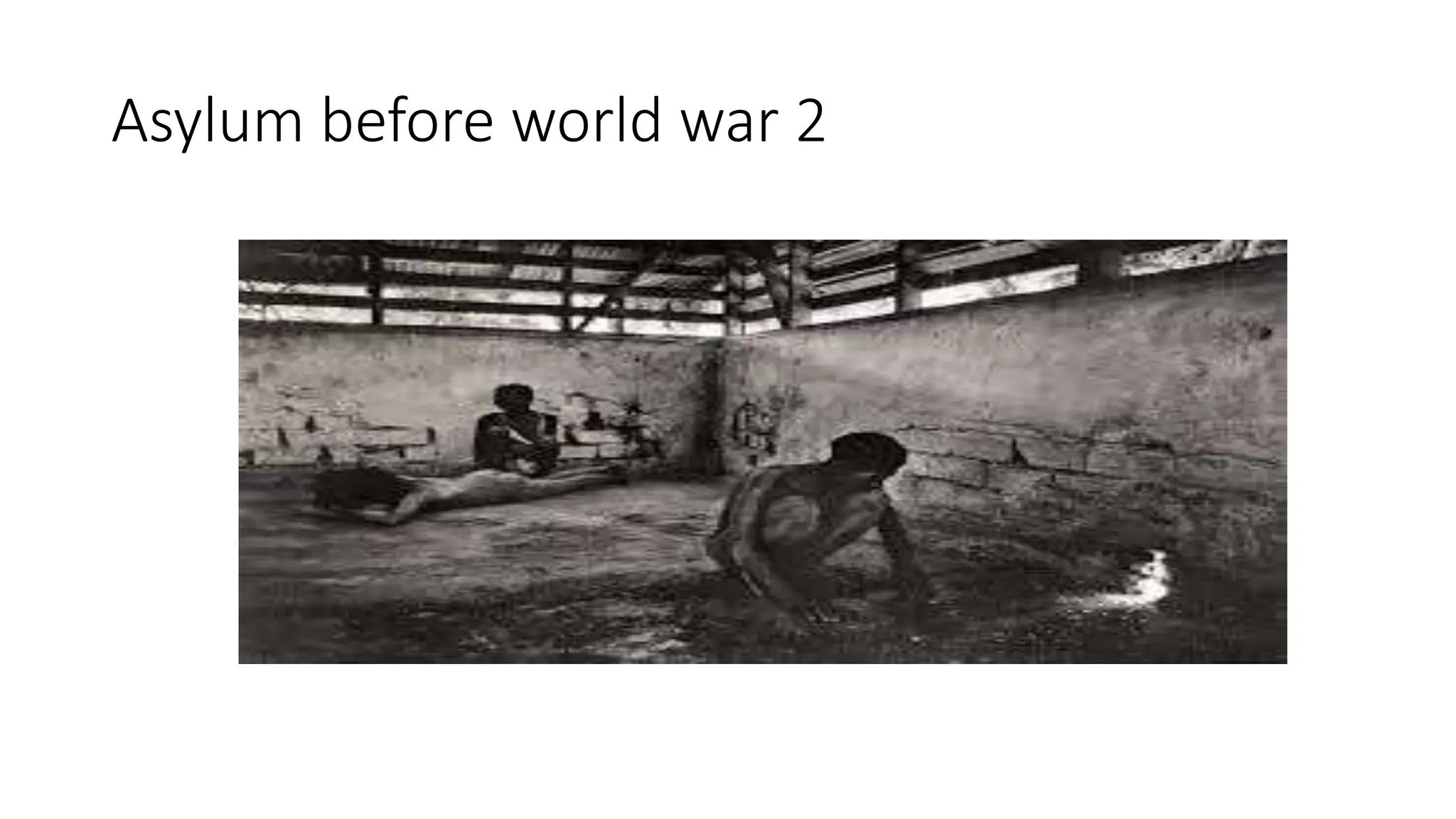
Asylum before world war 2
Example -deinstitutionalization
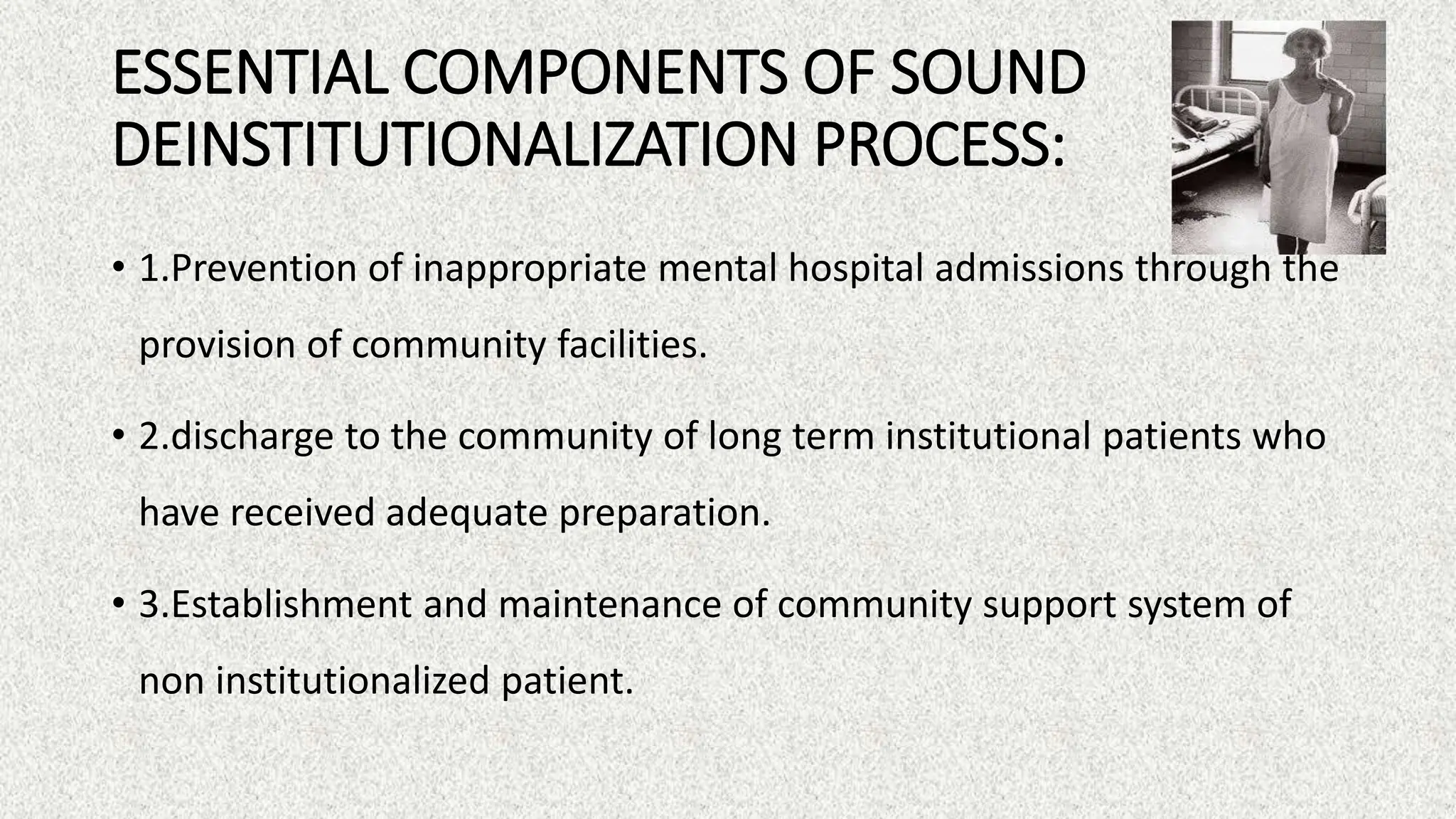
ESSENTIAL COMPONENTS OF SOUND
DEINSTITUTIONALIZATION PROCESS:
• 1.Prevention of inappropriate mental hospital admissions through the
provision of community facilities.
• 2.discharge to the community of long term institutional patients who
have received adequate preparation.
• 3.Establishment and maintenance of community support system of
non institutionalized patient.
BENEFITS OF DEINSTITUTIONALIZATION
 Allow for the integration of family and social system in care of
patients
 Better care would be provided to mentally ill patients in their home
communities surrounded by those who are not mentally ill.
• It was a huge step in returning a sense of worth ,ability and
independence to those who had been dependent on others for their care
for so long.
NEGATIVE EEFFECTS OF DEINSTITUTIONALIZATION:
• Unfortunately ,adequate support services were not in place in many
communities and a decreased quality of life for the mentally ill
resulted
• Revolving door syndrome:patients were often return to hospitals
stabilized and discharged again in a cycling pattern
• Emergency department use by acutely ill individuals has increased
dramatically
• patients with severe and persistent mental illness not receiving
adequate care commit homicides
• Homelessness among patients increased
• state prisons are occupied by severly mentally ill patients.
INSTITUTIONALIZATION
• In recent years the focus of psychiatric care has moved away from
extended care to shorter length of inpatient stays.most inpatient
psychiatric settings now have an average stay of 5-10 days when
compared to 24-30 days during 1980s .
INDICATIONS FOR INSTITUTIONALIZATION
INPATIENT HOSPITALADMISSION:
 Prevention of harm to self or others
 Management of severe symptoms
 Need for a rapid ,multidisciplinary diagnostic
evaluation that requires frequent observation
by specially trained personnel
enfeeblement’s OBJECTIVES OF
INSTITUTIONALIZATION
RAPID EVALUATION AND
DIAGNOSIS
CHANGING BEHAVIOUR THAT
IS DANGEROUS TO SELF AND
OTHERS
PREPARE CARE GIVERS
enfeeblement’s ARRANGING EFFECTIVE
AFTER CARE
MAJOR DEVELOPMENT FOR DEINSTITUTIONALIZATION
• Community support services programs are developed to meet the needs of
the persons with mental illness outside the institution.
• These programs focus on rehabilitation,vocational needs,education and
socialization as well as managemet of symptoms and medications.
• In India,alternative community based services are not adequately
developed and existing mental hospitals are not fully equipped with
therapeutic activities
CONTI……..
• What is now required is the need for a balanced approach
,i.e.inpatient treatment needs to be improved and community based
health programs strenghthened.
• There is an urgent need to sensitize governments on the importance
of mental health and clearly define goals and objectives of
community based health programs.
SUMMARY
CONCLUSION
• Mental health services should be integrated into the overall primary
health care system. Innovative community based health programs
which are culturally and gender appropriate and reach out to every
segment of population need to be developed. Well organised
community based care is urgently required besides increasing the
number of psychiatric beds in general hospitals.
BIBLIOGRAPHY:
• 1.R SREEVANI,A GUIDE TO MENTAL HEALTH AND PSYCHIATRIC NURSING,4TH EDITION,JAPEE
BROTHERS,371-373.
• 2. https://www.slideshare.net/philiphlevy/deinstitutionalization-35324733
INSTITUTIONALIZATION (1)ppt.pptx

INSTITUTIONALIZATION (1)ppt.pptx

  • 1.
  • 2.
    INTRODUCTION In deinstitutionalization policy,people who were formerly required long hospital stay become able to leave the institution and return to their community or home The modern deinstitutionalisation movement was made possible by the discovery of psychiatric drugs and somatic therapies in the mid-20th century, which could manage psychotic episodes and reduced the need for patients to be confined and restrained. Another major impetus was a series of socio-political movements that campaigned for patient freedom
  • 3.
  • 4.
  • 5.
    ESSENTIAL COMPONENTS OFSOUND DEINSTITUTIONALIZATION PROCESS: • 1.Prevention of inappropriate mental hospital admissions through the provision of community facilities. • 2.discharge to the community of long term institutional patients who have received adequate preparation. • 3.Establishment and maintenance of community support system of non institutionalized patient.
  • 6.
    BENEFITS OF DEINSTITUTIONALIZATION Allow for the integration of family and social system in care of patients  Better care would be provided to mentally ill patients in their home communities surrounded by those who are not mentally ill. • It was a huge step in returning a sense of worth ,ability and independence to those who had been dependent on others for their care for so long.
  • 7.
    NEGATIVE EEFFECTS OFDEINSTITUTIONALIZATION: • Unfortunately ,adequate support services were not in place in many communities and a decreased quality of life for the mentally ill resulted • Revolving door syndrome:patients were often return to hospitals stabilized and discharged again in a cycling pattern • Emergency department use by acutely ill individuals has increased dramatically • patients with severe and persistent mental illness not receiving adequate care commit homicides • Homelessness among patients increased • state prisons are occupied by severly mentally ill patients.
  • 8.
    INSTITUTIONALIZATION • In recentyears the focus of psychiatric care has moved away from extended care to shorter length of inpatient stays.most inpatient psychiatric settings now have an average stay of 5-10 days when compared to 24-30 days during 1980s .
  • 9.
    INDICATIONS FOR INSTITUTIONALIZATION INPATIENTHOSPITALADMISSION:  Prevention of harm to self or others  Management of severe symptoms  Need for a rapid ,multidisciplinary diagnostic evaluation that requires frequent observation by specially trained personnel
  • 10.
  • 11.
  • 12.
    CHANGING BEHAVIOUR THAT ISDANGEROUS TO SELF AND OTHERS
  • 13.
  • 14.
  • 15.
    MAJOR DEVELOPMENT FORDEINSTITUTIONALIZATION • Community support services programs are developed to meet the needs of the persons with mental illness outside the institution. • These programs focus on rehabilitation,vocational needs,education and socialization as well as managemet of symptoms and medications. • In India,alternative community based services are not adequately developed and existing mental hospitals are not fully equipped with therapeutic activities
  • 16.
    CONTI…….. • What isnow required is the need for a balanced approach ,i.e.inpatient treatment needs to be improved and community based health programs strenghthened. • There is an urgent need to sensitize governments on the importance of mental health and clearly define goals and objectives of community based health programs.
  • 17.
  • 18.
    CONCLUSION • Mental healthservices should be integrated into the overall primary health care system. Innovative community based health programs which are culturally and gender appropriate and reach out to every segment of population need to be developed. Well organised community based care is urgently required besides increasing the number of psychiatric beds in general hospitals.
  • 19.
    BIBLIOGRAPHY: • 1.R SREEVANI,AGUIDE TO MENTAL HEALTH AND PSYCHIATRIC NURSING,4TH EDITION,JAPEE BROTHERS,371-373. • 2. https://www.slideshare.net/philiphlevy/deinstitutionalization-35324733