The document provides an overview of institutional ethics committees (IECs), including their evolution, composition, responsibilities, and functions. Key points include:
- IECs were established to safeguard human subjects in clinical research following unethical studies in the 1940s-1970s.
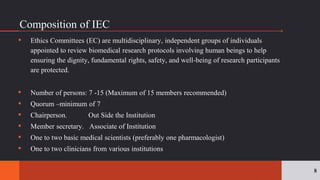
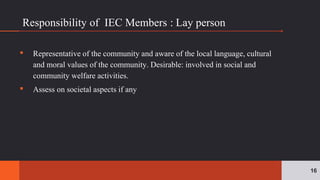
- An IEC typically has 7-15 multidisciplinary members including medical, legal, and layperson representatives.
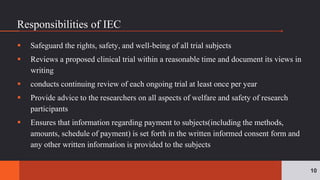
- Responsibilities include reviewing research protocols, providing oversight of ongoing studies, and ensuring participant safety and consent.
- Functions involve initial and continuing review of research, approving protocols, and maintaining documentation of IEC activities.