Instagrok and Glogster
Using Technology to Write in the Curriculum Areas
Kimberly M. Howell-Martin, Media Specialist
Palm Terrace Elementary
NWP Presenter
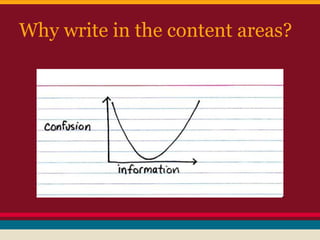
Why write in the content areas?
Common Core Standards
K-5 Anchor Standards
Conduct short as well as more sustained research projects
based on focused questions, demonstrating understanding
of the subject under investigation.
Gather relevant information from multiple print and digital
sources, assess the credibility and accuracy of each
source, and integrate the information while avoiding
plagiarism.
Draw evidence from literary or informational texts to
support analysis, reflection, and research.
Common Core Standards
6-12 Anchor Standards
Use technology, including the Internet, to produce and publish writing and
to interact and collaborate with others.
Conduct short as well as more sustained research projects based on
focused questions, demonstrating
understanding of the subject under investigation.
Gather relevant information from multiple print and digital sources, assess
the credibility and accuracy of each
source, and integrate the information while avoiding plagiarism.
Draw evidence from literary or informational texts to support analysis,
reflection, and research.
What the Research Says
Your Turn!
Use Instagrok to research a topic of your
choice. You can stick with your grade level or
subject area, or branch out and learn about
something new!
Open a second tab and login to Glogster to
create a poster about what you learned. Please
include: one definition or concept, one graphic,
one video, and one picture.
Resources
Tower, K. (July 2005). What's the purpose? Students talk
about writing in
science. Language Arts, 82(6).
Writing Across the Curriculum: Creative Writing Ideas,
Tips, and Best Practices.
Zinsser, W. (1993). Writing to Learn. Harper: New York.
Dexter, S., Doering, A., & Riedel, E. (2006). Content area
specific technology integration: A model for educating
teachers. Journal of Technology and Teacher Education,
14(2), 325-345.

Instagrok and glogster

  • 1.
    Instagrok and Glogster UsingTechnology to Write in the Curriculum Areas Kimberly M. Howell-Martin, Media Specialist Palm Terrace Elementary NWP Presenter
  • 2.
    Why write inthe content areas?
  • 3.
    Common Core Standards K-5Anchor Standards Conduct short as well as more sustained research projects based on focused questions, demonstrating understanding of the subject under investigation. Gather relevant information from multiple print and digital sources, assess the credibility and accuracy of each source, and integrate the information while avoiding plagiarism. Draw evidence from literary or informational texts to support analysis, reflection, and research.
  • 4.
    Common Core Standards 6-12Anchor Standards Use technology, including the Internet, to produce and publish writing and to interact and collaborate with others. Conduct short as well as more sustained research projects based on focused questions, demonstrating understanding of the subject under investigation. Gather relevant information from multiple print and digital sources, assess the credibility and accuracy of each source, and integrate the information while avoiding plagiarism. Draw evidence from literary or informational texts to support analysis, reflection, and research.
  • 5.
  • 8.
    Your Turn! Use Instagrokto research a topic of your choice. You can stick with your grade level or subject area, or branch out and learn about something new! Open a second tab and login to Glogster to create a poster about what you learned. Please include: one definition or concept, one graphic, one video, and one picture.
  • 9.
    Resources Tower, K. (July2005). What's the purpose? Students talk about writing in science. Language Arts, 82(6). Writing Across the Curriculum: Creative Writing Ideas, Tips, and Best Practices. Zinsser, W. (1993). Writing to Learn. Harper: New York. Dexter, S., Doering, A., & Riedel, E. (2006). Content area specific technology integration: A model for educating teachers. Journal of Technology and Teacher Education, 14(2), 325-345.