Patient Responsibility –
Solutions for Increasing Self Pay Collection Rates
Disclaimer: Nothing that we are sharing is intended as legally binding or prescriptive advice. This presentation is a
synthesis of publically available information and best practices.
Increasing Move to Self Pay
 Financial responsibility for healthcare has shifted
to consumers, especially with the advent of the
ACA.
 Patients now pay more healthcare costs than
employers.
 This is leading to more cost sensitivity from
patients.
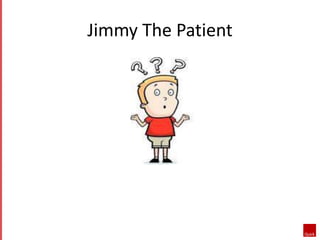
Jimmy The Patient
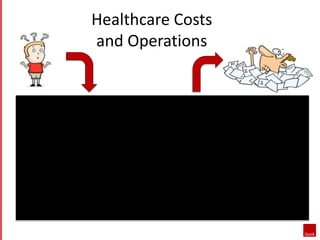
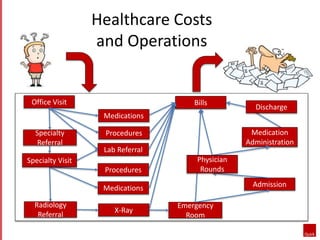
Healthcare Costs
and Operations
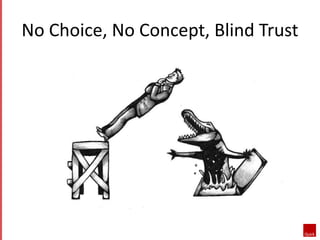
No Choice, No Concept, Blind Trust
Healthcare Costs
and Operations
Office Visit Bills
Radiology
Referral
X-Ray
Medications
Lab Referral
Admission
Emergency
Room
Procedures
Procedures
Medications
Specialty Visit
Specialty
Referral
Medication
Administration
Discharge
Physician
Rounds
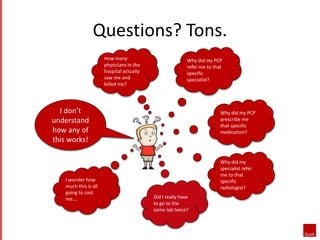
Questions? Tons.
Why did my PCP
refer me to that
specific
specialist?
Why did my PCP
prescribe me
that specific
medication?
Why did my
specialist refer
me to that
specific
radiologist?
Did I really have
to go to the
same lab twice?
How many
physicians in the
hospital actually
saw me and
billed me?
I wonder how
much this is all
going to cost
me….
I don’t
understand
how any of
this works!
Is This Information Being Published?
• Some patients might already be seeing how much
you charge or at least have access to that
information.
• Some patients might already have access to your
quality scores or other performance based
metrics.
• Medicare is shining lights all over different
partnerships in healthcare and how much
physicians have been paid.
• There are companies specifically dedicated to
showing all of this information.
Companies To Know
Patients Are Now Consumers
 Many consumers now shop around for the
best healthcare deals.
 With HSAs, FSAs, and HRAs, people can now
manage for themselves how to pay for their
healthcare
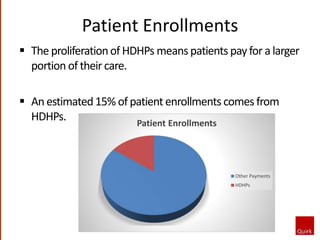
Patient Enrollments
 The proliferationof HDHPs means patients pay for a larger
portion of their care.
 An estimated15% of patient enrollments comes from
HDHPs. Patient Enrollments
Other Payments
HDHPs
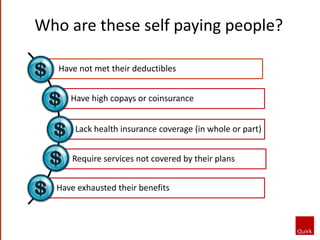
Who are these self paying people?
Have not met their deductibles
Have high copays or coinsurance
Lack health insurance coverage (in whole or part)
Require services not covered by their plans
Have exhausted their benefits
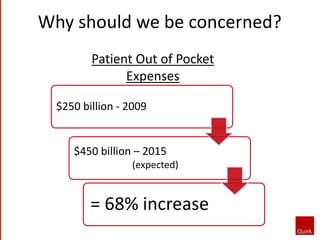
Why should we be concerned?
Patient Out of Pocket
Expenses
$250 billion - 2009
$450 billion – 2015
(expected)
= 68% increase
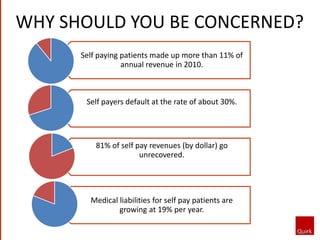
WHY SHOULD YOU BE CONCERNED?
Self paying patients made up more than 11% of
annual revenue in 2010.
Self payers default at the rate of about 30%.
81% of self pay revenues (by dollar) go
unrecovered.
Medical liabilities for self pay patients are
growing at 19% per year.
The Challenges
 Strong pursuit of patient payment  negative
message
 Payment collections cost time and money
 Insurers
 More difficult
 Automated process
 Self-Payers
 More expensive
 Slower payments received
How Can You Get Your Payments?
 Providers are loath to broach the subject of
patient financial responsibilities and
payment plans, but it has become a
necessity.
 These days, the one size fits all payment
approach does not work.
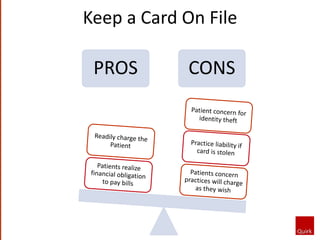
Keep a Card On File
PROS CONS
Safely Store Credit Info
 Store patients’ credit card information
securely in a certified system.
 DO NOT keep a paper copy of any card
numbers.
Communicate Safeguards to the
Patient
 Make sure you have the patient’s
permission to use the card for payment.
 Use it as part of an easy-to-understand
financial policy form, complete with
explaining how the card will be used.
 Have the patient sign the policy.
Estimate Costs and Collect Payment
Before Treatment
 Plans are increasingly complex, so correctly
estimating costs is difficult.
 Knowing when a patient has met a deductible
and/or copay is a challenge.
 Patients may balk and choose another provider
whose costs are less expensive for the same
services.
 The best solution is to collect patient
payment up front.
 Once a patient goes out the door, your
chances of recouping full payment decrease
dramatically.
 Staff accordingly – this takes time!
Collect Payment Up Front
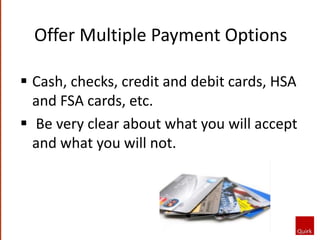
 Cash, checks, credit and debit cards, HSA
and FSA cards, etc.
 Be very clear about what you will accept
and what you will not.
Offer Multiple Payment Options
 Inform the patient before you charge
their card.
 This will make patients feel more
comfortable keeping their card on file
and result in fewer disputes later.
Communicate Safeguards to the
Patient
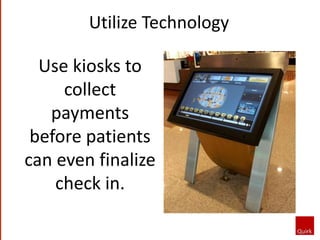
Use kiosks to
collect
payments
before patients
can even finalize
check in.
Utilize Technology
Make it clear all bills are clearly marked as
patient responsibility. Patients receive so
many “This is not a bill” EOBs that they can
become confused.
Send Clear Bills
Follow up with a personal call. This one-to-
one contact produces better results than
paper collection notices.
Personalize Follow Up
- Patients are on the hook for more of their
health costs and are making decisions as
educated consumers using new tools. You
need to ensure the patients see the value
you provide.
- Tools such as “card on file” can, when
implemented correctly, help significantly
when the patient is ultimately responsible.
In Summary
Q&A
Ben.quirk@quirkhealthcare.com

Insights Webinar - Patient Payments

  • 1.
    Patient Responsibility – Solutionsfor Increasing Self Pay Collection Rates Disclaimer: Nothing that we are sharing is intended as legally binding or prescriptive advice. This presentation is a synthesis of publically available information and best practices.
  • 2.
    Increasing Move toSelf Pay  Financial responsibility for healthcare has shifted to consumers, especially with the advent of the ACA.  Patients now pay more healthcare costs than employers.  This is leading to more cost sensitivity from patients.
  • 3.
  • 4.
  • 5.
    No Choice, NoConcept, Blind Trust
  • 6.
    Healthcare Costs and Operations OfficeVisit Bills Radiology Referral X-Ray Medications Lab Referral Admission Emergency Room Procedures Procedures Medications Specialty Visit Specialty Referral Medication Administration Discharge Physician Rounds
  • 7.
    Questions? Tons. Why didmy PCP refer me to that specific specialist? Why did my PCP prescribe me that specific medication? Why did my specialist refer me to that specific radiologist? Did I really have to go to the same lab twice? How many physicians in the hospital actually saw me and billed me? I wonder how much this is all going to cost me…. I don’t understand how any of this works!
  • 8.
    Is This InformationBeing Published? • Some patients might already be seeing how much you charge or at least have access to that information. • Some patients might already have access to your quality scores or other performance based metrics. • Medicare is shining lights all over different partnerships in healthcare and how much physicians have been paid. • There are companies specifically dedicated to showing all of this information.
  • 9.
  • 10.
    Patients Are NowConsumers  Many consumers now shop around for the best healthcare deals.  With HSAs, FSAs, and HRAs, people can now manage for themselves how to pay for their healthcare
  • 11.
    Patient Enrollments  Theproliferationof HDHPs means patients pay for a larger portion of their care.  An estimated15% of patient enrollments comes from HDHPs. Patient Enrollments Other Payments HDHPs
  • 12.
    Who are theseself paying people? Have not met their deductibles Have high copays or coinsurance Lack health insurance coverage (in whole or part) Require services not covered by their plans Have exhausted their benefits
  • 13.
    Why should webe concerned? Patient Out of Pocket Expenses $250 billion - 2009 $450 billion – 2015 (expected) = 68% increase
  • 14.
    WHY SHOULD YOUBE CONCERNED? Self paying patients made up more than 11% of annual revenue in 2010. Self payers default at the rate of about 30%. 81% of self pay revenues (by dollar) go unrecovered. Medical liabilities for self pay patients are growing at 19% per year.
  • 15.
    The Challenges  Strongpursuit of patient payment  negative message  Payment collections cost time and money  Insurers  More difficult  Automated process  Self-Payers  More expensive  Slower payments received
  • 16.
    How Can YouGet Your Payments?  Providers are loath to broach the subject of patient financial responsibilities and payment plans, but it has become a necessity.  These days, the one size fits all payment approach does not work.
  • 17.
    Keep a CardOn File PROS CONS
  • 18.
    Safely Store CreditInfo  Store patients’ credit card information securely in a certified system.  DO NOT keep a paper copy of any card numbers.
  • 19.
    Communicate Safeguards tothe Patient  Make sure you have the patient’s permission to use the card for payment.  Use it as part of an easy-to-understand financial policy form, complete with explaining how the card will be used.  Have the patient sign the policy.
  • 20.
    Estimate Costs andCollect Payment Before Treatment  Plans are increasingly complex, so correctly estimating costs is difficult.  Knowing when a patient has met a deductible and/or copay is a challenge.  Patients may balk and choose another provider whose costs are less expensive for the same services.
  • 21.
     The bestsolution is to collect patient payment up front.  Once a patient goes out the door, your chances of recouping full payment decrease dramatically.  Staff accordingly – this takes time! Collect Payment Up Front
  • 22.
     Cash, checks,credit and debit cards, HSA and FSA cards, etc.  Be very clear about what you will accept and what you will not. Offer Multiple Payment Options
  • 23.
     Inform thepatient before you charge their card.  This will make patients feel more comfortable keeping their card on file and result in fewer disputes later. Communicate Safeguards to the Patient
  • 24.
    Use kiosks to collect payments beforepatients can even finalize check in. Utilize Technology
  • 25.
    Make it clearall bills are clearly marked as patient responsibility. Patients receive so many “This is not a bill” EOBs that they can become confused. Send Clear Bills
  • 26.
    Follow up witha personal call. This one-to- one contact produces better results than paper collection notices. Personalize Follow Up
  • 27.
    - Patients areon the hook for more of their health costs and are making decisions as educated consumers using new tools. You need to ensure the patients see the value you provide. - Tools such as “card on file” can, when implemented correctly, help significantly when the patient is ultimately responsible. In Summary
  • 28.