CASE STUDY IN ETHICS, CSR & COPRORATE
             GOVERNANCE
GROUP – 2
 KUMARI AKANSHA (17)
 SHRUTI DUBEY (18)
 PUNEET SHARMA (39)
 INSIDER TRADING


SEBI’S ALLEGATIONS ON HLL


 FLAWS IN SEBI’S INSIDER TRADING
 REGULATIONS (ITR)

HLL DEFENCE


VERDICT OF UNION MINSISTRY OF FINANCE
 The controversy involving HLL's purchase of 8 lakh
  shares of BBLIL before the public announcement of
  merger.
 SEBI suspected HLL of insider trading.
 At the end of a 15 month process in March 1998 SEBI
  charged HLL of insider trading.
 On July 14 1998, the Appellate Authority in the Finance
  Ministry set aside SEBI's March 1998 ruling
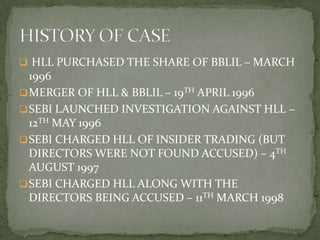
 HLL PURCHASED THE SHARE OF BBLIL – MARCH
  1996
 MERGER OF HLL & BBLIL – 19TH APRIL 1996
 SEBI LAUNCHED INVESTIGATION AGAINST HLL –
  12TH MAY 1996
 SEBI CHARGED HLL OF INSIDER TRADING (BUT
  DIRECTORS WERE NOT FOUND ACCUSED) – 4TH
  AUGUST 1997
 SEBI CHARGED HLL ALONG WITH THE
  DIRECTORS BEING ACCUSED – 11TH MARCH 1998
 Whether HLL was an insider?


 Whether or not the information which HLL had access
 to was unpublished?

 Whether HLL had profited from the deal or gained any
 unfair advantage?

 SEBI’s allegations & rules were up to the mark?
Insider Trading refers to a situation when
person having unpublished price sensitive
information       such       as     financial
results, expansion plans, take-over bids, etc.
by virtue of his or her association with a
company, trades its shares to make undue
profits.
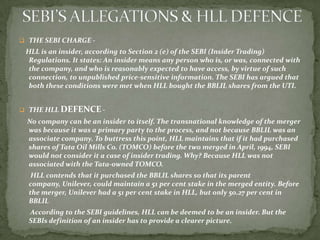
 THE SEBI CHARGE -
 HLL is an insider, according to Section 2 (e) of the SEBI (Insider Trading)
  Regulations. It states: An insider means any person who is, or was, connected with
  the company, and who is reasonably expected to have access, by virtue of such
  connection, to unpublished price-sensitive information. The SEBI has argued that
  both these conditions were met when HLL bought the BBLIL shares from the UTI.


 THE HLL DEFENCE -
 No company can be an insider to itself. The transnational knowledge of the merger
 was because it was a primary party to the process, and not because BBLIL was an
 associate company. To buttress this point, HLL maintains that if it had purchased
 shares of Tata Oil Mills Co. (TOMCO) before the two merged in April, 1994, SEBI
 would not consider it a case of insider trading. Why? Because HLL was not
 associated with the Tata-owned TOMCO.
   HLL contends that it purchased the BBLIL shares so that its parent
  company, Unilever, could maintain a 51 per cent stake in the merged entity. Before
  the merger, Unilever had a 51 per cent stake in HLL, but only 50.27 per cent in
  BBLIL
  According to the SEBI guidelines, HLL can be deemed to be an insider. But the
  SEBIs definition of an insider has to provide a clearer picture.
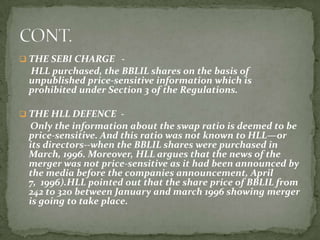
 THE SEBI CHARGE -
 HLL purchased, the BBLIL shares on the basis of
 unpublished price-sensitive information which is
 prohibited under Section 3 of the Regulations.

 THE HLL DEFENCE -
 Only the information about the swap ratio is deemed to be
 price-sensitive. And this ratio was not known to HLL—or
 its directors--when the BBLIL shares were purchased in
 March, 1996. Moreover, HLL argues that the news of the
 merger was not price-sensitive as it had been announced by
 the media before the companies announcement, April
 7, 1996).HLL pointed out that the share price of BBLIL from
 242 to 320 between January and march 1996 showing merger
 is going to take place.
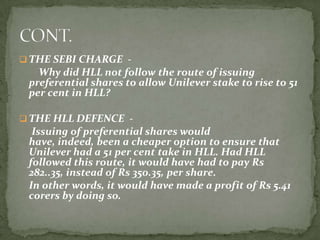
 THE SEBI CHARGE -
   Why did HLL not follow the route of issuing
 preferential shares to allow Unilever stake to rise to 51
 per cent in HLL?

 THE HLL DEFENCE -
  Issuing of preferential shares would
 have, indeed, been a cheaper option to ensure that
 Unilever had a 51 per cent take in HLL. Had HLL
 followed this route, it would have had to pay Rs
 282..35, instead of Rs 350.35, per share.
 In other words, it would have made a profit of Rs 5.41
 corers by doing so.
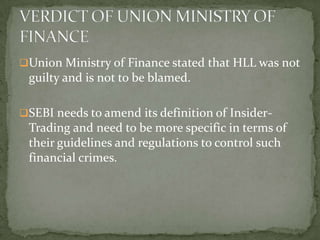
Union Ministry of Finance stated that HLL was not
 guilty and is not to be blamed.

SEBI needs to amend its definition of Insider-
 Trading and need to be more specific in terms of
 their guidelines and regulations to control such
 financial crimes.
 The case was ethical on part of HLL.


 The merger had become " a generally known
 information ".

 HLL did not make any unfair advantage or profit out of
 the deal.

 SEBI needs to be more specific about the definition of
 insider trading.
Insider trading

Insider trading

  • 1.
    CASE STUDY INETHICS, CSR & COPRORATE GOVERNANCE
  • 2.
    GROUP – 2 KUMARI AKANSHA (17)  SHRUTI DUBEY (18)  PUNEET SHARMA (39)
  • 3.
     INSIDER TRADING SEBI’SALLEGATIONS ON HLL  FLAWS IN SEBI’S INSIDER TRADING REGULATIONS (ITR) HLL DEFENCE VERDICT OF UNION MINSISTRY OF FINANCE
  • 4.
     The controversyinvolving HLL's purchase of 8 lakh shares of BBLIL before the public announcement of merger.  SEBI suspected HLL of insider trading.  At the end of a 15 month process in March 1998 SEBI charged HLL of insider trading.  On July 14 1998, the Appellate Authority in the Finance Ministry set aside SEBI's March 1998 ruling
  • 5.
     HLL PURCHASEDTHE SHARE OF BBLIL – MARCH 1996  MERGER OF HLL & BBLIL – 19TH APRIL 1996  SEBI LAUNCHED INVESTIGATION AGAINST HLL – 12TH MAY 1996  SEBI CHARGED HLL OF INSIDER TRADING (BUT DIRECTORS WERE NOT FOUND ACCUSED) – 4TH AUGUST 1997  SEBI CHARGED HLL ALONG WITH THE DIRECTORS BEING ACCUSED – 11TH MARCH 1998
  • 6.
     Whether HLLwas an insider?  Whether or not the information which HLL had access to was unpublished?  Whether HLL had profited from the deal or gained any unfair advantage?  SEBI’s allegations & rules were up to the mark?
  • 7.
    Insider Trading refersto a situation when person having unpublished price sensitive information such as financial results, expansion plans, take-over bids, etc. by virtue of his or her association with a company, trades its shares to make undue profits.
  • 8.
     THE SEBICHARGE - HLL is an insider, according to Section 2 (e) of the SEBI (Insider Trading) Regulations. It states: An insider means any person who is, or was, connected with the company, and who is reasonably expected to have access, by virtue of such connection, to unpublished price-sensitive information. The SEBI has argued that both these conditions were met when HLL bought the BBLIL shares from the UTI.  THE HLL DEFENCE - No company can be an insider to itself. The transnational knowledge of the merger was because it was a primary party to the process, and not because BBLIL was an associate company. To buttress this point, HLL maintains that if it had purchased shares of Tata Oil Mills Co. (TOMCO) before the two merged in April, 1994, SEBI would not consider it a case of insider trading. Why? Because HLL was not associated with the Tata-owned TOMCO. HLL contends that it purchased the BBLIL shares so that its parent company, Unilever, could maintain a 51 per cent stake in the merged entity. Before the merger, Unilever had a 51 per cent stake in HLL, but only 50.27 per cent in BBLIL According to the SEBI guidelines, HLL can be deemed to be an insider. But the SEBIs definition of an insider has to provide a clearer picture.
  • 9.
     THE SEBICHARGE - HLL purchased, the BBLIL shares on the basis of unpublished price-sensitive information which is prohibited under Section 3 of the Regulations.  THE HLL DEFENCE - Only the information about the swap ratio is deemed to be price-sensitive. And this ratio was not known to HLL—or its directors--when the BBLIL shares were purchased in March, 1996. Moreover, HLL argues that the news of the merger was not price-sensitive as it had been announced by the media before the companies announcement, April 7, 1996).HLL pointed out that the share price of BBLIL from 242 to 320 between January and march 1996 showing merger is going to take place.
  • 10.
     THE SEBICHARGE - Why did HLL not follow the route of issuing preferential shares to allow Unilever stake to rise to 51 per cent in HLL?  THE HLL DEFENCE - Issuing of preferential shares would have, indeed, been a cheaper option to ensure that Unilever had a 51 per cent take in HLL. Had HLL followed this route, it would have had to pay Rs 282..35, instead of Rs 350.35, per share. In other words, it would have made a profit of Rs 5.41 corers by doing so.
  • 11.
    Union Ministry ofFinance stated that HLL was not guilty and is not to be blamed. SEBI needs to amend its definition of Insider- Trading and need to be more specific in terms of their guidelines and regulations to control such financial crimes.
  • 12.
     The casewas ethical on part of HLL.  The merger had become " a generally known information ".  HLL did not make any unfair advantage or profit out of the deal.  SEBI needs to be more specific about the definition of insider trading.