
Inquiry in the Classroom and the use of cooperative learning PowerPoint by Valerie Goetz Doud
Stages of the   Instructional Model and The  Five “Es”
E ngage Creates interest Generates curiosity Raises questions Elicits responses that uncover what the students know or think about the topic/concept
E xplore Encourages the students to work together without direct instruction from teacher Observes and listens to students as they interact Asks probing questions Provides time for students to puzzle through problems Acts as a consultant for students
E xplain Encourages students to explain concepts Asks for evidence Formally provides definitions and explanations Uses students’ previous experiences as a basis for explaining concepts
E laborate Expects students to use formal labels Encourages students to apply or extend concepts and skills in new situations Reminds students of alternative explanations Refers the students to existing data and evidence and asks “What do you know and think?”
E valuate Observes students as they apply new concepts Assesses student knowledge/skills Looks for evidence that students have changed their thinking or behavior Allows students to assess their own learning and group-process skills Asks open-ended questions
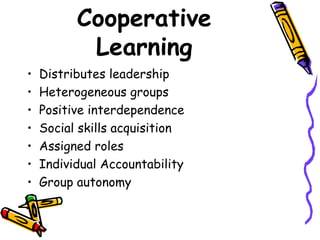
Cooperative Learning Distributes leadership Heterogeneous groups Positive interdependence Social skills acquisition Assigned roles Individual Accountability Group autonomy
BSCS  Science & Technology Kendall/Hunt Publishing Company Copyright 2005 by BSCS

Inquiry In The Classroom Power Point 2009

  • 1.
    Inquiry in theClassroom and the use of cooperative learning PowerPoint by Valerie Goetz Doud
  • 2.
    Stages of the Instructional Model and The Five “Es”
  • 3.
    E ngage Createsinterest Generates curiosity Raises questions Elicits responses that uncover what the students know or think about the topic/concept
  • 4.
    E xplore Encouragesthe students to work together without direct instruction from teacher Observes and listens to students as they interact Asks probing questions Provides time for students to puzzle through problems Acts as a consultant for students
  • 5.
    E xplain Encouragesstudents to explain concepts Asks for evidence Formally provides definitions and explanations Uses students’ previous experiences as a basis for explaining concepts
  • 6.
    E laborate Expectsstudents to use formal labels Encourages students to apply or extend concepts and skills in new situations Reminds students of alternative explanations Refers the students to existing data and evidence and asks “What do you know and think?”
  • 7.
    E valuate Observesstudents as they apply new concepts Assesses student knowledge/skills Looks for evidence that students have changed their thinking or behavior Allows students to assess their own learning and group-process skills Asks open-ended questions
  • 8.
    Cooperative Learning Distributesleadership Heterogeneous groups Positive interdependence Social skills acquisition Assigned roles Individual Accountability Group autonomy
  • 9.
    BSCS Science& Technology Kendall/Hunt Publishing Company Copyright 2005 by BSCS