INNOVATION & IT’S
SOURCES:
INCONGRUITIES
Shraddha Koirala
Seema Bhattarai
Narayani Gaha
Rabina Thapaliya
Abishek B. Rana
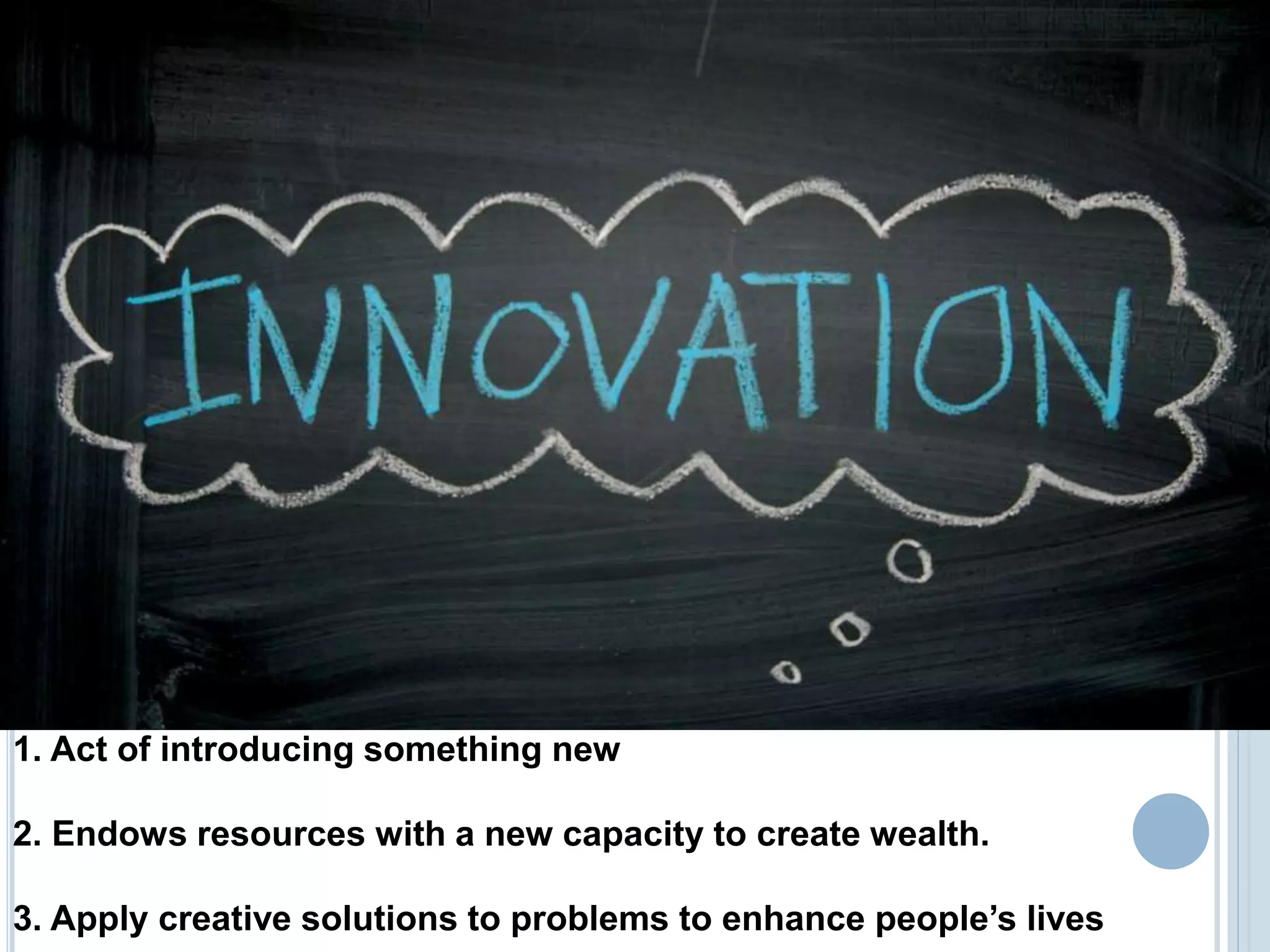
1. Act of introducing something new
2. Endows resources with a new capacity to create wealth.
3. Apply creative solutions to problems to enhance people’s lives
INNOVATION
 19th century- “Innovation is Innovation”.
 No theories developed yet.
 But many of us look systematically for innovative opportunities.
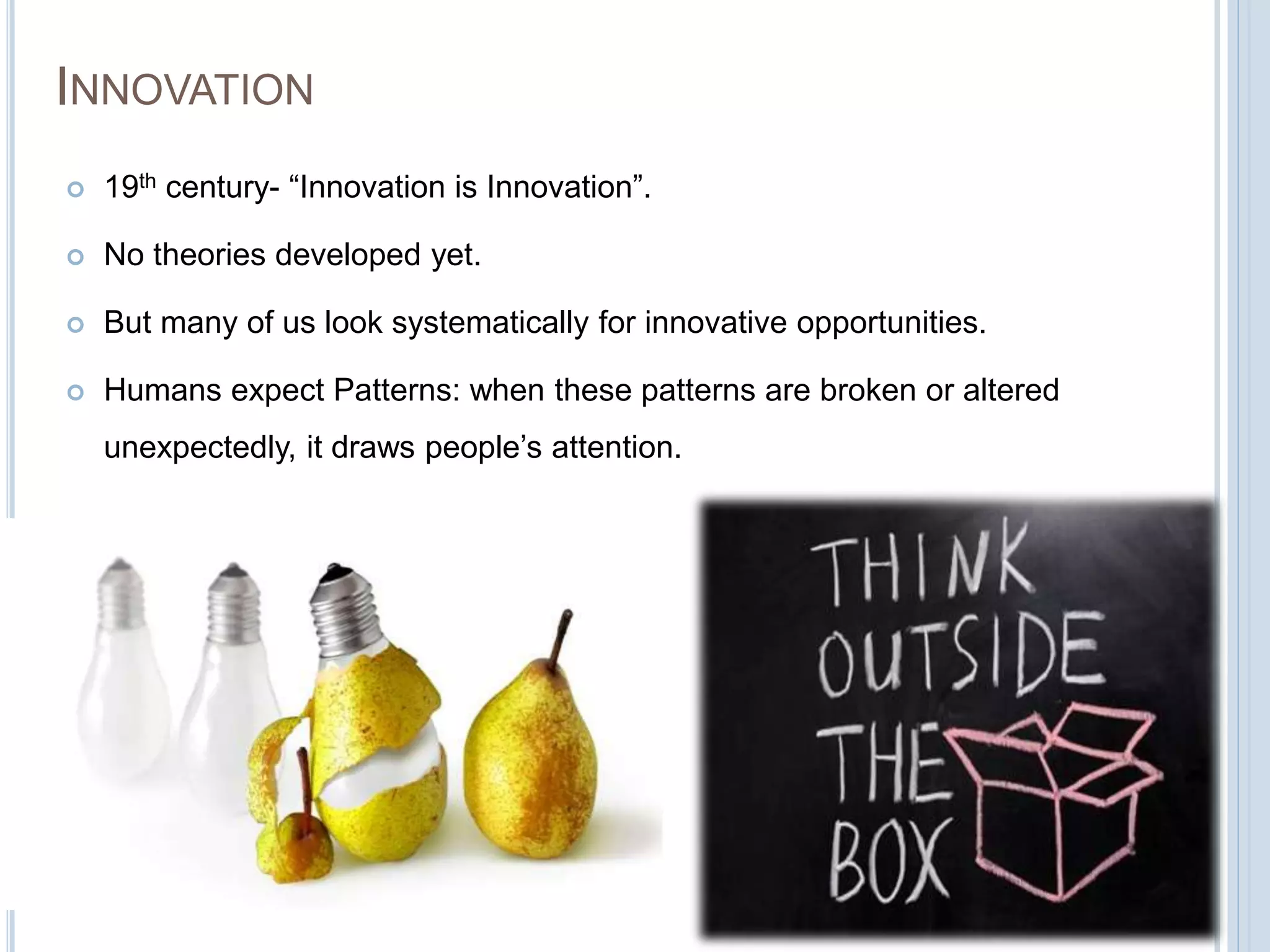
 Humans expect Patterns: when these patterns are broken or altered
unexpectedly, it draws people’s attention.
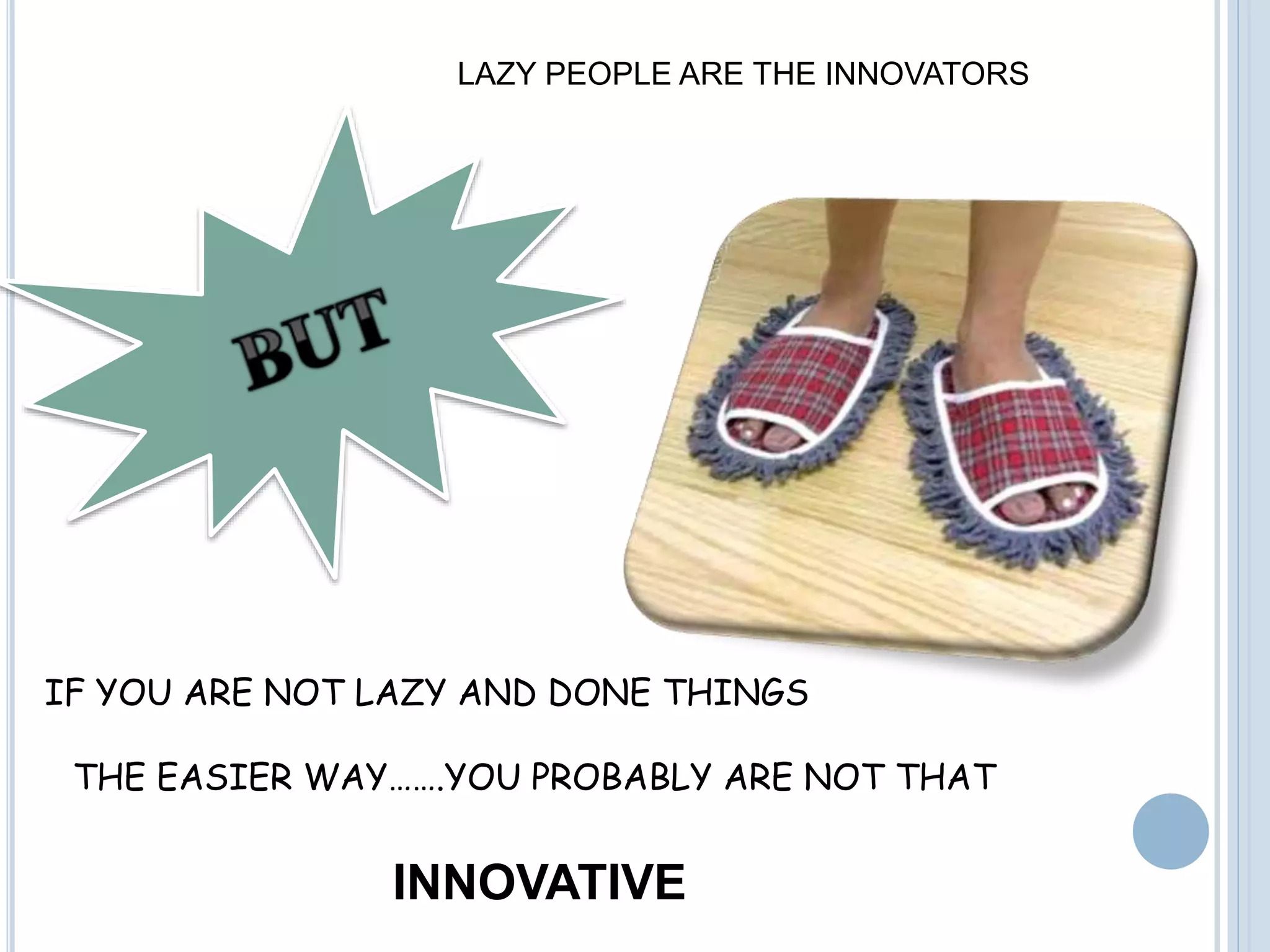
LAZY PEOPLE ARE THE INNOVATORS
IF YOU ARE NOT LAZY AND DONE THINGS
THE EASIER WAY…….YOU PROBABLY ARE NOT THAT
INNOVATIVE
7 SOURCES OF SYSTEMATIC INNOVATION
• Listed in descending order of reliability and predictability.
• For all the visibility, glamour, and importance of science-based innovation, it is
actually the least reliable and least predictable one.
• They are basically symptoms. But they are highly reliable indicators of changes
that have already happened or can be made to happen with little effort.
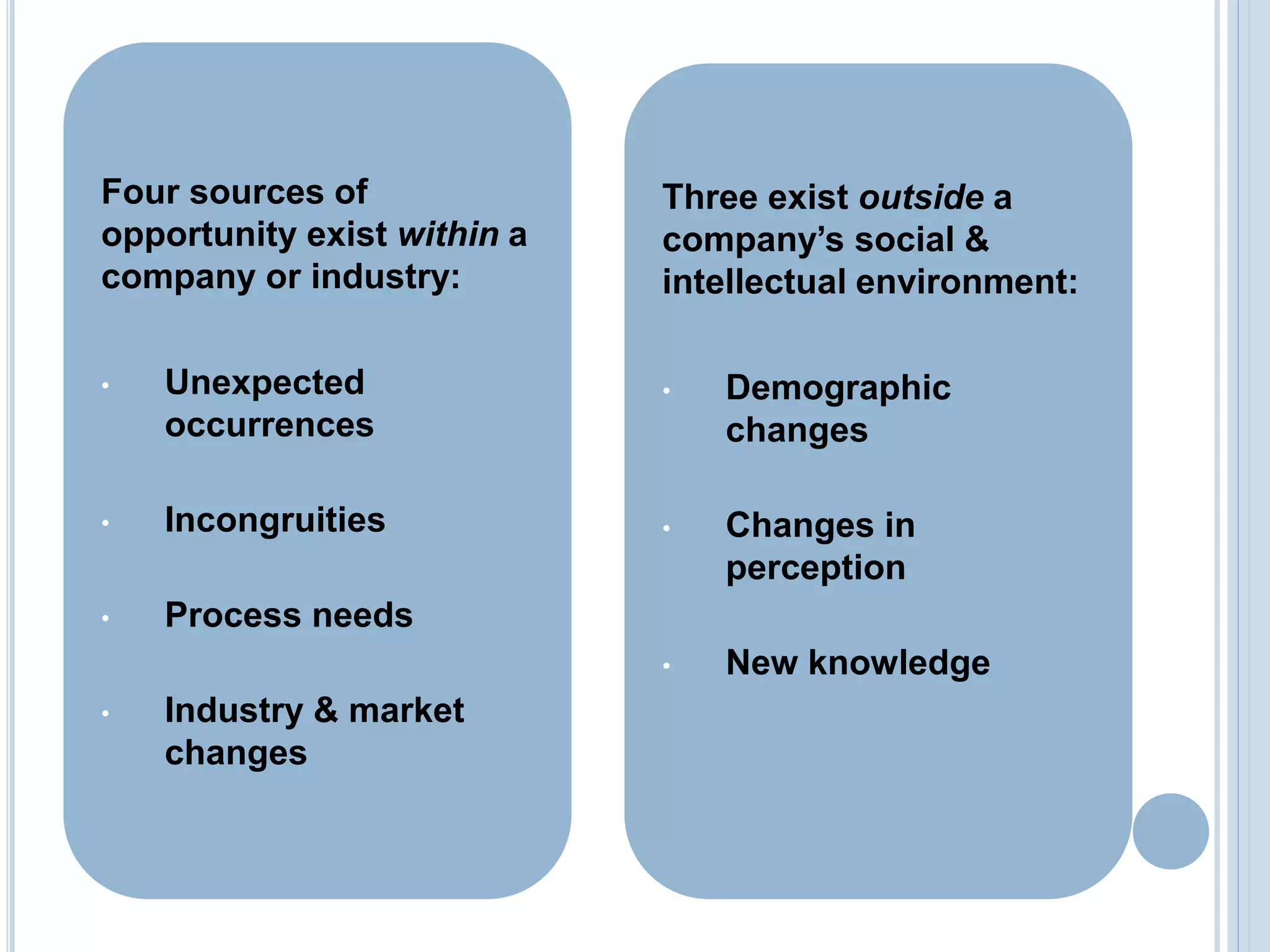
Four sources of
opportunity exist within a
company or industry:
• Unexpected
occurrences
• Incongruities
• Process needs
• Industry & market
changes
Three exist outside a
company’s social &
intellectual environment:
• Demographic
changes
• Changes in
perception
• New knowledge
INCONGRUITY
 Dissonances between what “is” and what “ought to be”
 Is a symptom of change, either change that has already occurred or
change that can be made to happen.
 When demand for a product is increasing, but sales are flat, this is
when incongruity happens creating an opportunity for innovation
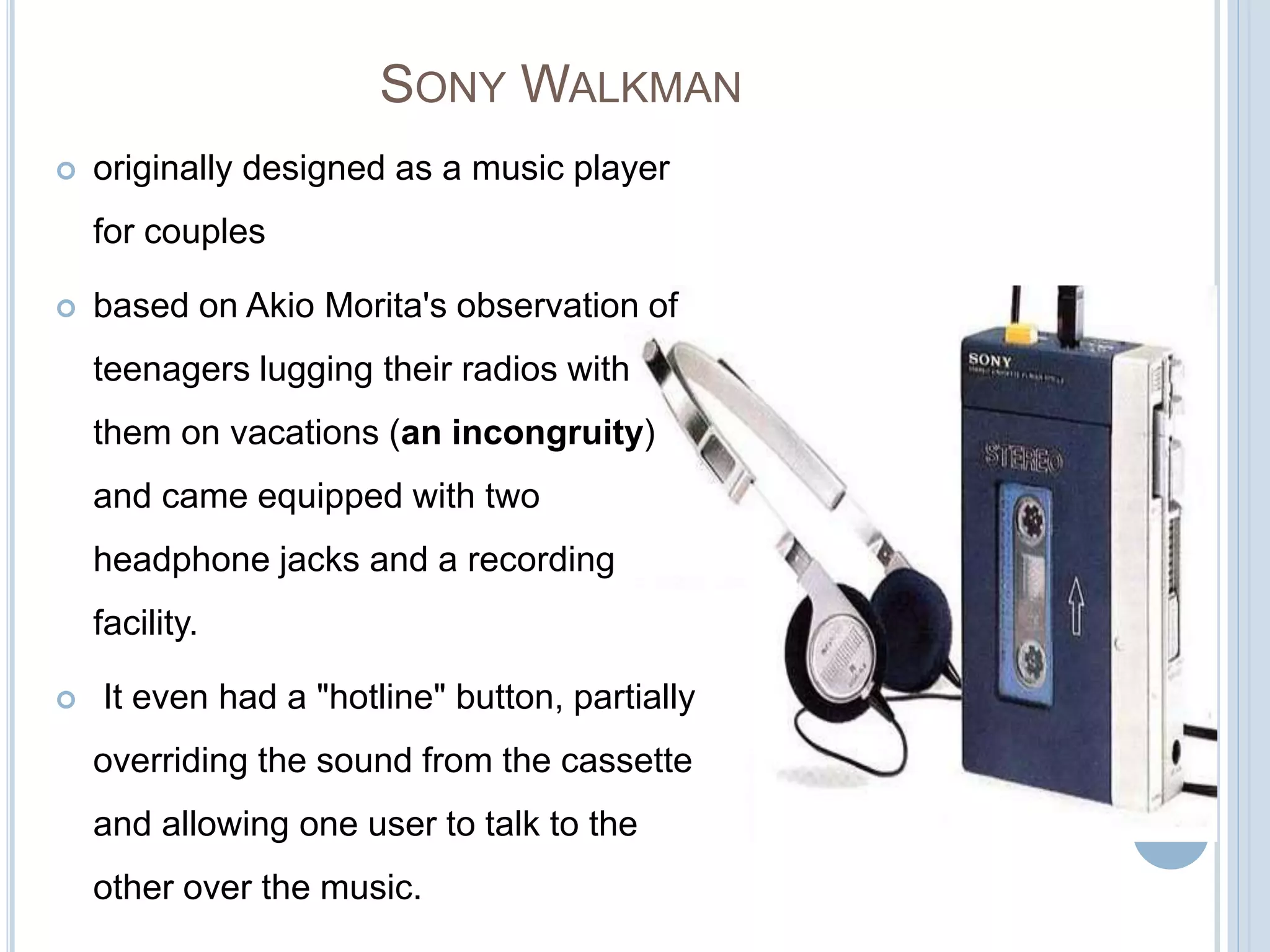
 Eg: Sony Walkman
SONY WALKMAN
 originally designed as a music player
for couples
 based on Akio Morita's observation of
teenagers lugging their radios with
them on vacations (an incongruity)
and came equipped with two
headphone jacks and a recording
facility.
 It even had a "hotline" button, partially
overriding the sound from the cassette
and allowing one user to talk to the
other over the music.
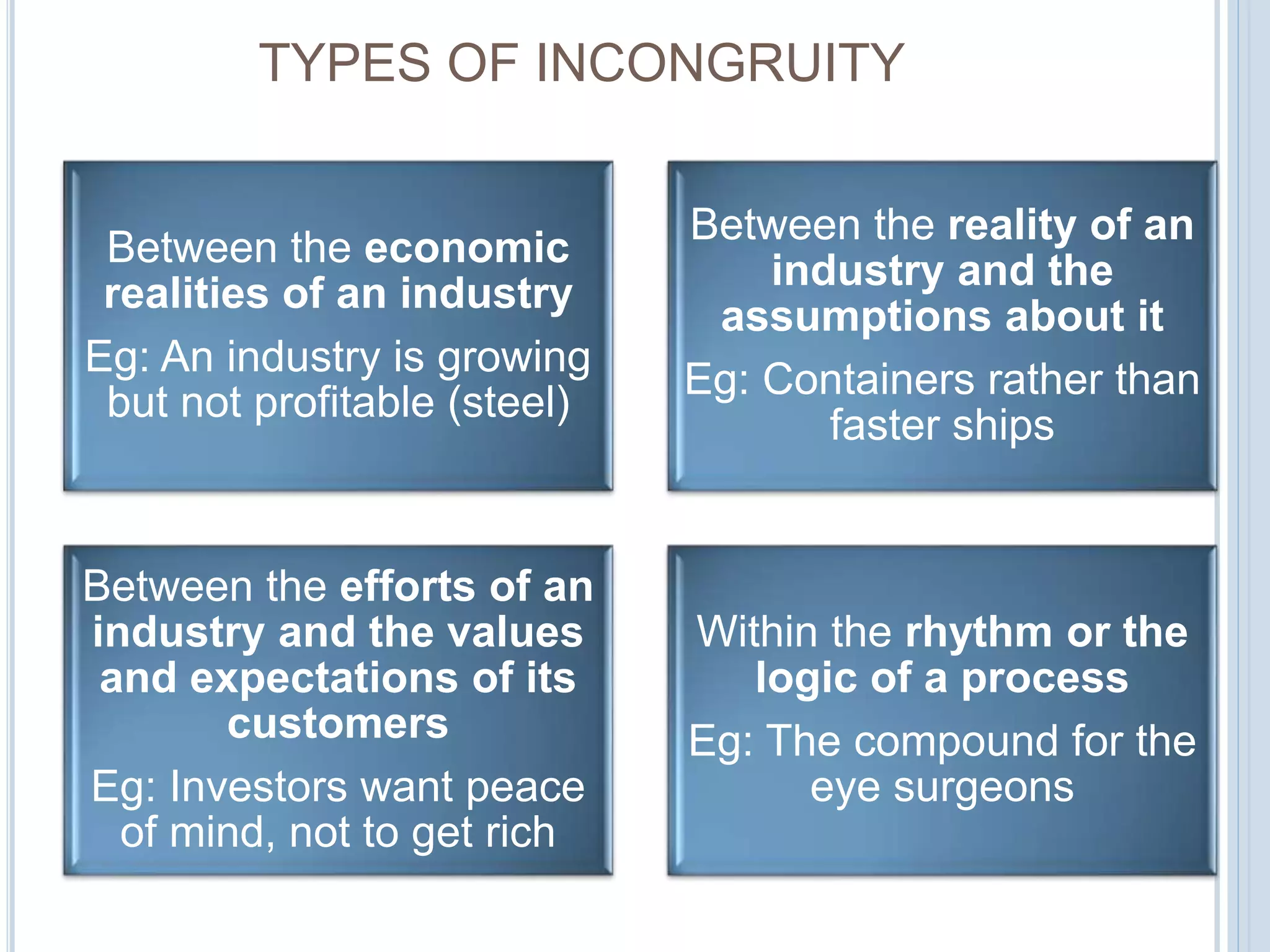
TYPES OF INCONGRUITY
Between the economic
realities of an industry
Eg: An industry is growing
but not profitable (steel)
Between the reality of an
industry and the
assumptions about it
Eg: Containers rather than
faster ships
Between the efforts of an
industry and the values
and expectations of its
customers
Eg: Investors want peace
of mind, not to get rich
Within the rhythm or the
logic of a process
Eg: The compound for the
eye surgeons
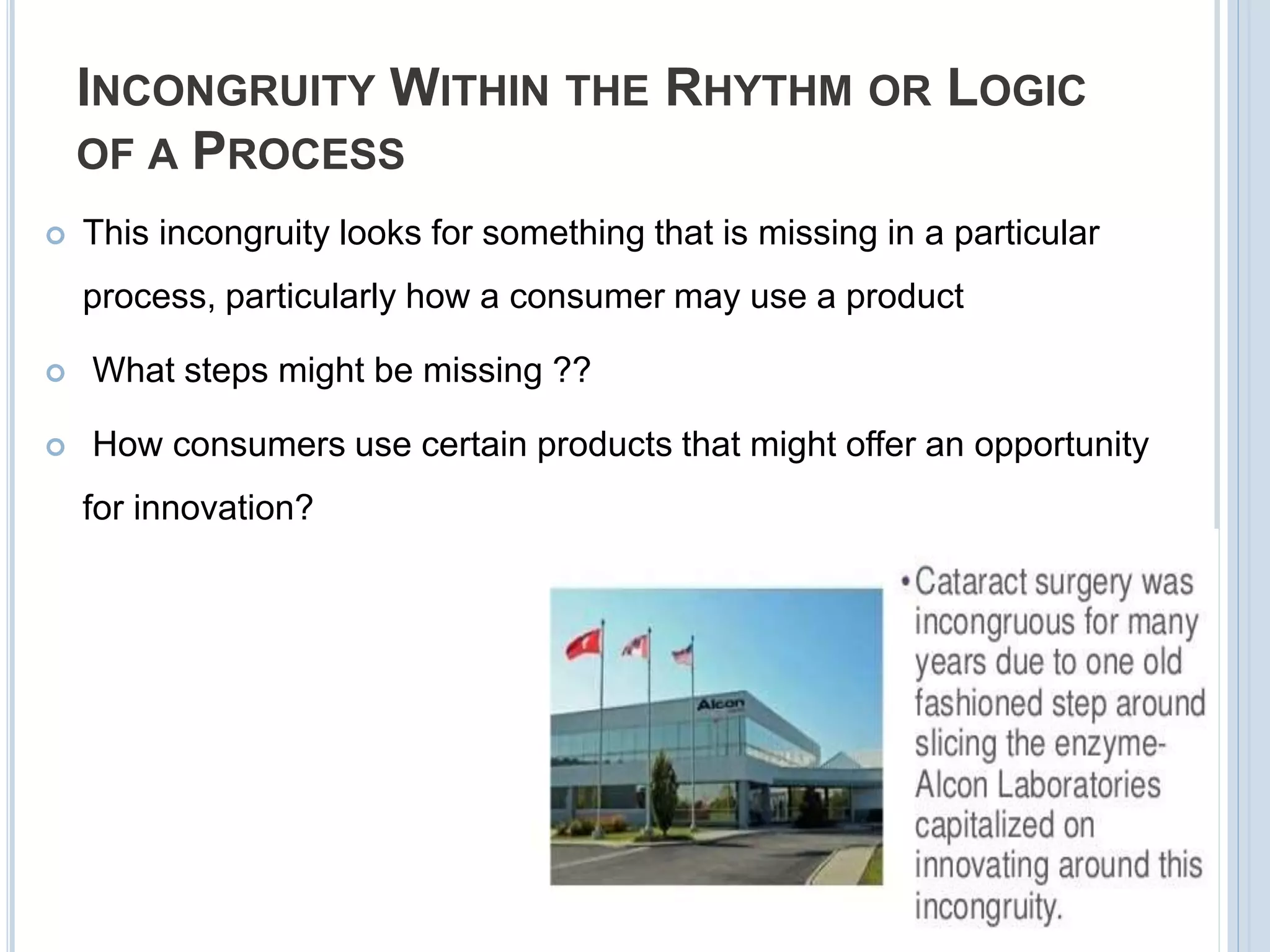
INCONGRUITY WITHIN THE RHYTHM OR LOGIC
OF A PROCESS
 This incongruity looks for something that is missing in a particular
process, particularly how a consumer may use a product
 What steps might be missing ??
 How consumers use certain products that might offer an opportunity
for innovation?

Innovation & It's 7 Source

  • 1.
    INNOVATION & IT’S SOURCES: INCONGRUITIES ShraddhaKoirala Seema Bhattarai Narayani Gaha Rabina Thapaliya Abishek B. Rana
  • 2.
    1. Act ofintroducing something new 2. Endows resources with a new capacity to create wealth. 3. Apply creative solutions to problems to enhance people’s lives
  • 4.
    INNOVATION  19th century-“Innovation is Innovation”.  No theories developed yet.  But many of us look systematically for innovative opportunities.  Humans expect Patterns: when these patterns are broken or altered unexpectedly, it draws people’s attention.
  • 7.
    LAZY PEOPLE ARETHE INNOVATORS IF YOU ARE NOT LAZY AND DONE THINGS THE EASIER WAY…….YOU PROBABLY ARE NOT THAT INNOVATIVE
  • 9.
    7 SOURCES OFSYSTEMATIC INNOVATION • Listed in descending order of reliability and predictability. • For all the visibility, glamour, and importance of science-based innovation, it is actually the least reliable and least predictable one. • They are basically symptoms. But they are highly reliable indicators of changes that have already happened or can be made to happen with little effort.
  • 10.
    Four sources of opportunityexist within a company or industry: • Unexpected occurrences • Incongruities • Process needs • Industry & market changes Three exist outside a company’s social & intellectual environment: • Demographic changes • Changes in perception • New knowledge
  • 11.
    INCONGRUITY  Dissonances betweenwhat “is” and what “ought to be”  Is a symptom of change, either change that has already occurred or change that can be made to happen.  When demand for a product is increasing, but sales are flat, this is when incongruity happens creating an opportunity for innovation  Eg: Sony Walkman
  • 12.
    SONY WALKMAN  originallydesigned as a music player for couples  based on Akio Morita's observation of teenagers lugging their radios with them on vacations (an incongruity) and came equipped with two headphone jacks and a recording facility.  It even had a "hotline" button, partially overriding the sound from the cassette and allowing one user to talk to the other over the music.
  • 13.
    TYPES OF INCONGRUITY Betweenthe economic realities of an industry Eg: An industry is growing but not profitable (steel) Between the reality of an industry and the assumptions about it Eg: Containers rather than faster ships Between the efforts of an industry and the values and expectations of its customers Eg: Investors want peace of mind, not to get rich Within the rhythm or the logic of a process Eg: The compound for the eye surgeons
  • 14.
    INCONGRUITY WITHIN THERHYTHM OR LOGIC OF A PROCESS  This incongruity looks for something that is missing in a particular process, particularly how a consumer may use a product  What steps might be missing ??  How consumers use certain products that might offer an opportunity for innovation?