Alumna:Jillary Soto
CI: V-27462815
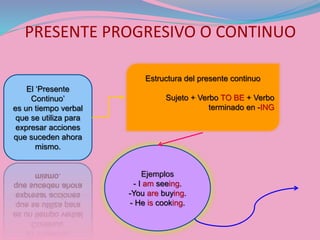
PRESENTE PROGRESIVO O CONTINUO
El ‘Presente
Continuo’
es un tiempo verbal
que se utiliza para
expresar acciones
que suceden ahora
mismo.
Ejemplos
- I am seeing.
-You are buying.
- He is cooking.
Estructura del presente continuo
Sujeto + Verbo TO BE + Verbo
terminado en -ING
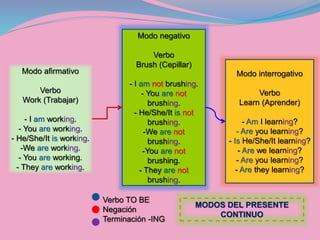
Modo afirmativo
Verbo
Work (Trabajar)
- I am working.
- You are working.
- He/She/It is working.
-We are working.
- You are working.
- They are working.
Modo negativo
Verbo
Brush (Cepillar)
- I am not brushing.
- You are not
brushing.
- He/She/It is not
brushing.
-We are not
brushing.
-You are not
brushing.
- They are not
brushing.
Modo interrogativo
Verbo
Learn (Aprender)
- Am I learning?
- Are you learning?
- Is He/She/It learning?
- Are we learning?
- Are you learning?
- Are they learning?
Verbo TO BE
Negación
Terminación -ING
MODOS DEL PRESENTE
CONTINUO
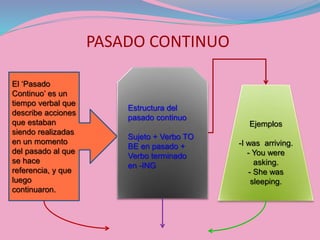
PASADO CONTINUO
El ‘Pasado
Continuo’ es un
tiempo verbal que
describe acciones
que estaban
siendo realizadas
en un momento
del pasado al que
se hace
referencia, y que
luego
continuaron.
Estructura del
pasado continuo
Sujeto + Verbo TO
BE en pasado +
Verbo terminado
en -ING
Ejemplos
-I was arriving.
- You were
asking.
- She was
sleeping.
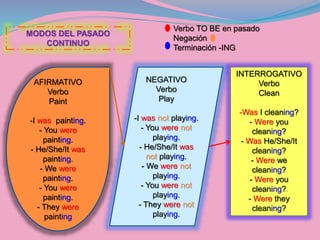
MODOS DEL PASADO
CONTINUO
AFIRMATIVO
Verbo
Paint
-I was painting.
- You were
painting.
- He/She/It was
painting.
- We were
painting.
- You were
painting.
- They were
painting
NEGATIVO
Verbo
Play
-I was not playing.
- You were not
playing.
- He/She/It was
not playing.
- We were not
playing.
- You were not
playing.
- They were not
playing.
INTERROGATIVO
Verbo
Clean
-Was I cleaning?
- Were you
cleaning?
- Was He/She/It
cleaning?
- Were we
cleaning?
- Were you
cleaning?
- Were they
cleaning?
Verbo TO BE en pasado
Negación
Terminación -ING
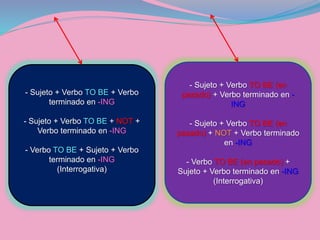
- Sujeto + Verbo TO BE + Verbo
terminado en -ING
- Sujeto + Verbo TO BE + NOT +
Verbo terminado en -ING
- Verbo TO BE + Sujeto + Verbo
terminado en -ING
(Interrogativa)
- Sujeto + Verbo TO BE (en
pasado) + Verbo terminado en -
ING
- Sujeto + Verbo TO BE (en
pasado) + NOT + Verbo terminado
en -ING
- Verbo TO BE (en pasado) +
Sujeto + Verbo terminado en -ING
(Interrogativa)

Mapaconceptual jillary soto

  • 1.
  • 2.
    PRESENTE PROGRESIVO OCONTINUO El ‘Presente Continuo’ es un tiempo verbal que se utiliza para expresar acciones que suceden ahora mismo. Ejemplos - I am seeing. -You are buying. - He is cooking. Estructura del presente continuo Sujeto + Verbo TO BE + Verbo terminado en -ING
  • 3.
    Modo afirmativo Verbo Work (Trabajar) -I am working. - You are working. - He/She/It is working. -We are working. - You are working. - They are working. Modo negativo Verbo Brush (Cepillar) - I am not brushing. - You are not brushing. - He/She/It is not brushing. -We are not brushing. -You are not brushing. - They are not brushing. Modo interrogativo Verbo Learn (Aprender) - Am I learning? - Are you learning? - Is He/She/It learning? - Are we learning? - Are you learning? - Are they learning? Verbo TO BE Negación Terminación -ING MODOS DEL PRESENTE CONTINUO
  • 4.
    PASADO CONTINUO El ‘Pasado Continuo’es un tiempo verbal que describe acciones que estaban siendo realizadas en un momento del pasado al que se hace referencia, y que luego continuaron. Estructura del pasado continuo Sujeto + Verbo TO BE en pasado + Verbo terminado en -ING Ejemplos -I was arriving. - You were asking. - She was sleeping.
  • 5.
    MODOS DEL PASADO CONTINUO AFIRMATIVO Verbo Paint -Iwas painting. - You were painting. - He/She/It was painting. - We were painting. - You were painting. - They were painting NEGATIVO Verbo Play -I was not playing. - You were not playing. - He/She/It was not playing. - We were not playing. - You were not playing. - They were not playing. INTERROGATIVO Verbo Clean -Was I cleaning? - Were you cleaning? - Was He/She/It cleaning? - Were we cleaning? - Were you cleaning? - Were they cleaning? Verbo TO BE en pasado Negación Terminación -ING
  • 6.
    - Sujeto +Verbo TO BE + Verbo terminado en -ING - Sujeto + Verbo TO BE + NOT + Verbo terminado en -ING - Verbo TO BE + Sujeto + Verbo terminado en -ING (Interrogativa) - Sujeto + Verbo TO BE (en pasado) + Verbo terminado en - ING - Sujeto + Verbo TO BE (en pasado) + NOT + Verbo terminado en -ING - Verbo TO BE (en pasado) + Sujeto + Verbo terminado en -ING (Interrogativa)