Information is Power
The Press through the Decades
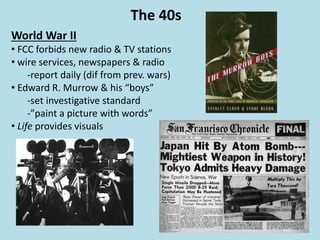
World War II
• FCC forbids new radio & TV stations
• wire services, newspapers & radio
-report daily (dif from prev. wars)
• Edward R. Murrow & his “boys”
-set investigative standard
-”paint a picture with words”
• Life provides visuals
The 40s
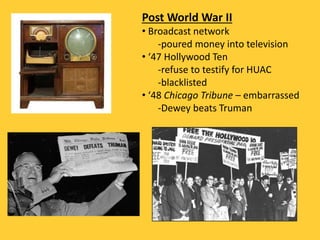
Post World War II
• Broadcast network
-poured money into television
• ‘47 Hollywood Ten
-refuse to testify for HUAC
-blacklisted
• ‘48 Chicago Tribune – embarrassed
-Dewey beats Truman
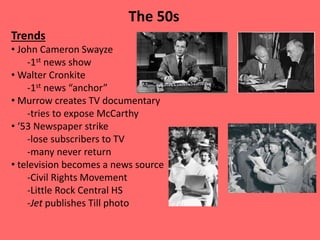
Trends
• John Cameron Swayze
-1st news show
• Walter Cronkite
-1st news “anchor”
• Murrow creates TV documentary
-tries to expose McCarthy
• ‘53 Newspaper strike
-lose subscribers to TV
-many never return
• television becomes a news source
-Civil Rights Movement
-Little Rock Central HS
-Jet publishes Till photo
The 50s
The 60s
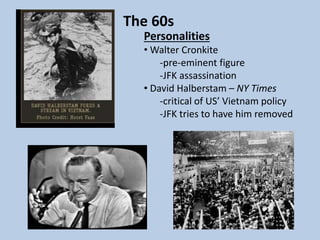
Personalities
• Walter Cronkite
-pre-eminent figure
-JFK assassination
• David Halberstam – NY Times
-critical of US’ Vietnam policy
-JFK tries to have him removed
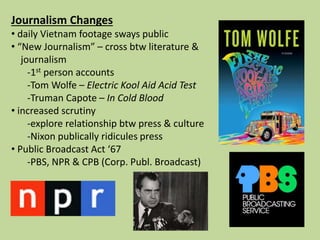
Journalism Changes
• daily Vietnam footage sways public
• “New Journalism” – cross btw literature &
journalism
-1st person accounts
-Tom Wolfe – Electric Kool Aid Acid Test
-Truman Capote – In Cold Blood
• increased scrutiny
-explore relationship btw press & culture
-Nixon publically ridicules press
• Public Broadcast Act ‘67
-PBS, NPR & CPB (Corp. Publ. Broadcast)
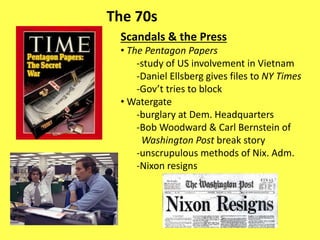
The 70s
Scandals & the Press
• The Pentagon Papers
-study of US involvement in Vietnam
-Daniel Ellsberg gives files to NY Times
-Gov’t tries to block
• Watergate
-burglary at Dem. Headquarters
-Bob Woodward & Carl Bernstein of
Washington Post break story
-unscrupulous methods of Nix. Adm.
-Nixon resigns
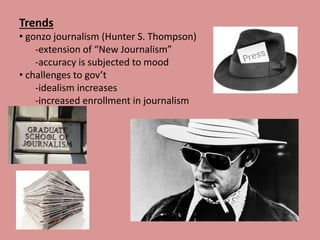
Trends
• gonzo journalism (Hunter S. Thompson)
-extension of “New Journalism”
-accuracy is subjected to mood
• challenges to gov’t
-idealism increases
-increased enrollment in journalism
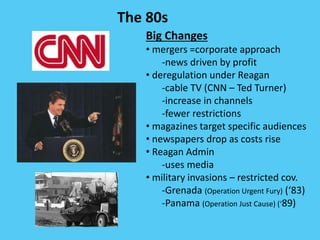
The 80s
Big Changes
• mergers =corporate approach
-news driven by profit
• deregulation under Reagan
-cable TV (CNN – Ted Turner)
-increase in channels
-fewer restrictions
• magazines target specific audiences
• newspapers drop as costs rise
• Reagan Admin
-uses media
• military invasions – restricted cov.
-Grenada (Operation Urgent Fury) (‘83)
-Panama (Operation Just Cause) (‘89)
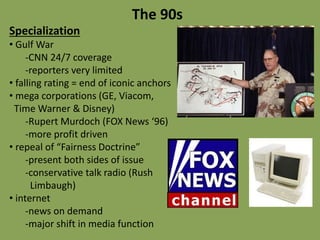
The 90s
Specialization
• Gulf War
-CNN 24/7 coverage
-reporters very limited
• falling rating = end of iconic anchors
• mega corporations (GE, Viacom,
Time Warner & Disney)
-Rupert Murdoch (FOX News ‘96)
-more profit driven
• repeal of “Fairness Doctrine”
-present both sides of issue
-conservative talk radio (Rush
Limbaugh)
• internet
-news on demand
-major shift in media function

Information is power

  • 1.
    Information is Power ThePress through the Decades
  • 2.
    World War II •FCC forbids new radio & TV stations • wire services, newspapers & radio -report daily (dif from prev. wars) • Edward R. Murrow & his “boys” -set investigative standard -”paint a picture with words” • Life provides visuals The 40s
  • 3.
    Post World WarII • Broadcast network -poured money into television • ‘47 Hollywood Ten -refuse to testify for HUAC -blacklisted • ‘48 Chicago Tribune – embarrassed -Dewey beats Truman
  • 4.
    Trends • John CameronSwayze -1st news show • Walter Cronkite -1st news “anchor” • Murrow creates TV documentary -tries to expose McCarthy • ‘53 Newspaper strike -lose subscribers to TV -many never return • television becomes a news source -Civil Rights Movement -Little Rock Central HS -Jet publishes Till photo The 50s
  • 5.
    The 60s Personalities • WalterCronkite -pre-eminent figure -JFK assassination • David Halberstam – NY Times -critical of US’ Vietnam policy -JFK tries to have him removed
  • 6.
    Journalism Changes • dailyVietnam footage sways public • “New Journalism” – cross btw literature & journalism -1st person accounts -Tom Wolfe – Electric Kool Aid Acid Test -Truman Capote – In Cold Blood • increased scrutiny -explore relationship btw press & culture -Nixon publically ridicules press • Public Broadcast Act ‘67 -PBS, NPR & CPB (Corp. Publ. Broadcast)
  • 7.
    The 70s Scandals &the Press • The Pentagon Papers -study of US involvement in Vietnam -Daniel Ellsberg gives files to NY Times -Gov’t tries to block • Watergate -burglary at Dem. Headquarters -Bob Woodward & Carl Bernstein of Washington Post break story -unscrupulous methods of Nix. Adm. -Nixon resigns
  • 8.
    Trends • gonzo journalism(Hunter S. Thompson) -extension of “New Journalism” -accuracy is subjected to mood • challenges to gov’t -idealism increases -increased enrollment in journalism
  • 9.
    The 80s Big Changes •mergers =corporate approach -news driven by profit • deregulation under Reagan -cable TV (CNN – Ted Turner) -increase in channels -fewer restrictions • magazines target specific audiences • newspapers drop as costs rise • Reagan Admin -uses media • military invasions – restricted cov. -Grenada (Operation Urgent Fury) (‘83) -Panama (Operation Just Cause) (‘89)
  • 10.
    The 90s Specialization • GulfWar -CNN 24/7 coverage -reporters very limited • falling rating = end of iconic anchors • mega corporations (GE, Viacom, Time Warner & Disney) -Rupert Murdoch (FOX News ‘96) -more profit driven • repeal of “Fairness Doctrine” -present both sides of issue -conservative talk radio (Rush Limbaugh) • internet -news on demand -major shift in media function