INFORMATION
CAPABILITIES
FRAMEWORK (ICF)
Albert Santiago, Alexander Y, Arsalan Khan, Guneet Gill,
Maryam Moussavi
Abstract
 What? ICF is a conceptual framework that is used to create
value from information assets
 Who? Enterprise organizations that want to utilize data within
and beyond their boundaries
 When? ICF should be considered at the Strategic Level.
Sometimes even before ECM & BI
 Where? We believe ICF is a strategic collaboration between
Business and IT
 Why? Effective utilization of information assets in a holistic
way. To make us plan for the future!
 How? Depending on your use case, you can utilize ICF
accordingly
 We agree with Gartner’s view on Information Infrastructure
Key Findings
People
 Adoption issues
 Resistance to change
Process
 Technical and non-technical governance
issues
Technology
 Tool technology dependent
 Not scalable technology platforms
Recommendations
 Use the ICF to identify the technologies that
contribute to your most important capabilities
 Move toward a comprehensive, deliberate
information infrastructure to allow for easily
accessed and shared, and lower-cost
information asset management and access as
the ultimate goal of modernizing your
information infrastructure
 Ensure capabilities that support big data can
interoperate with incumbent and emerging
tools to enable the robust quality assurance of
data
Overview
Organizations need to …..
 Describe
 Organize
 Integrate
 Share
 Govern data
in an application-independent manner in support
of info needs and business goals.
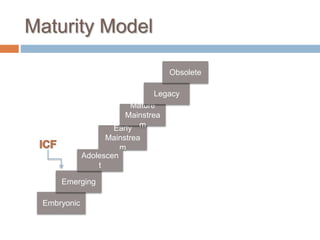
Maturity Model
Embryonic
Emerging
Early
Mainstrea
m
Adolescen
t
Mature
Mainstrea
m
Legacy
Obsolete
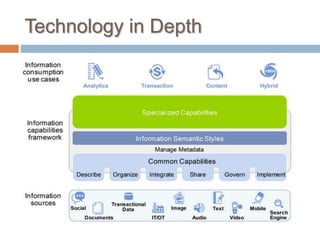
Technology in Depth
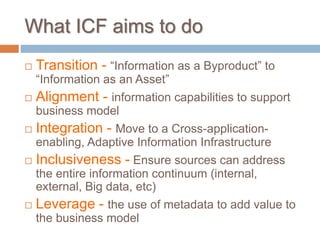
 Transition - “Information as a Byproduct” to
“Information as an Asset”
 Alignment - information capabilities to support
business model
 Integration - Move to a Cross-application-
enabling, Adaptive Information Infrastructure
 Inclusiveness - Ensure sources can address
the entire information continuum (internal,
external, Big data, etc)
 Leverage - the use of metadata to add value to
the business model
What ICF aims to do
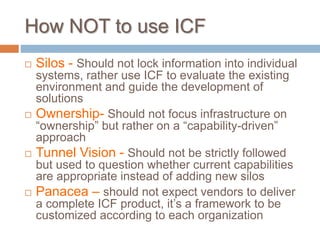
How NOT to use ICF
 Silos - Should not lock information into individual
systems, rather use ICF to evaluate the existing
environment and guide the development of
solutions
 Ownership- Should not focus infrastructure on
“ownership” but rather on a “capability-driven”
approach
 Tunnel Vision - Should not be strictly followed
but used to question whether current capabilities
are appropriate instead of adding new silos
 Panacea – should not expect vendors to deliver
a complete ICF product, it’s a framework to be
customized according to each organization
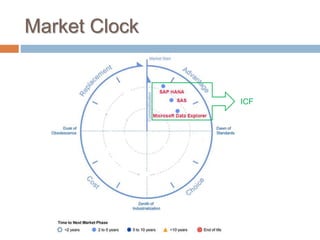
Market Clock
ICF
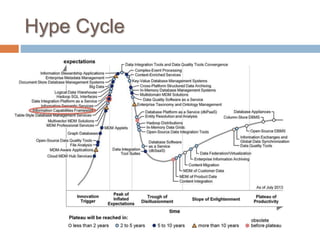
Hype Cycle
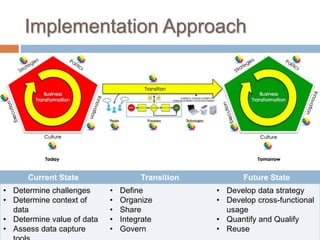
Implementation Approach
Current State Transition Future State
• Determine challenges
• Determine context of
data
• Determine value of data
• Assess data capture
• Define
• Organize
• Share
• Integrate
• Govern
• Develop data strategy
• Develop cross-functional
usage
• Quantify and Qualify
• Reuse
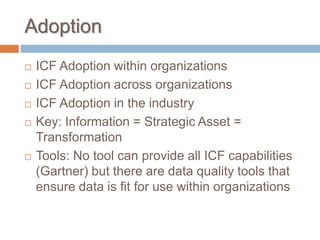
Adoption
 ICF Adoption within organizations
 ICF Adoption across organizations
 ICF Adoption in the industry
 Key: Information = Strategic Asset =
Transformation
 Tools: No tool can provide all ICF capabilities
(Gartner) but there are data quality tools that
ensure data is fit for use within organizations
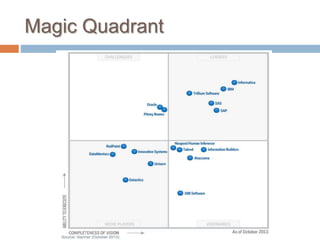
Magic Quadrant
Deployment Risks
 Risks with deploying ICF
 Organizational information synchronization should be a priority
 Figuring out which data to keep and not keep for current and
future use
 Collecting data just to collect data without understanding the
strategic consequences
 Key Data Indicators valued incorrectly
 Risks with not deploying ICF
 Ad hoc and haphazard ways of getting value from internal and
external data
 No competitive advantage due to lack of accurate responses
Competitive Advantage
 Enable business growth by:
 Improving the timeliness and quality of decision making through
access to a more comprehensive set of information sources.
 Improving the agility of enterprise processes for new context-
aware products/service introduction.
 Improving the ability to predict new opportunities or challenges
through pattern seeking, matching and discovery.
 Reduce/manage risk by:
 Improving enterprise compliance with regulations and policies
through improved information quality and governance.
 Reduce cost by:
 Reducing the cost of storing, locating and mashing information
through the information continuum.
Implementation Timeline
 Highly subjective and dependent upon
organizational understanding and adoption
 Phase 1 – Current & Future ECM & BI – 3
months
 Phase 2 – Current & Future Metadata, MDM–
3 months
 Phase 3 – PPT change and implementation –
3 months
 Total ideal implementation timeline = 9 months
Bottom Line
 ICF is a conceptual framework through which
organizations can evolve their information
infrastructure for greater agility, control and
value
 Information throughout the organization and
beyond needs to be defined consistently
 Focus on key capabilities in the information
infrastructure
 ICF is transformational within 5-10 years
 ICF is relevant to both old and new
organizations
Sources/Recommended
Reading
 The Information Capabilities Framework: An
Aligned Vision for Information Infrastructure
(G00215835)
 How to Use (And Not Use) Gartner's
Information Capabilities Framework
(G00215834)
 Microsoft Research – Data Explorer
 Digging for Treasure with Analytics

Information Capabilities Framework (ICF)

  • 1.
    INFORMATION CAPABILITIES FRAMEWORK (ICF) Albert Santiago,Alexander Y, Arsalan Khan, Guneet Gill, Maryam Moussavi
  • 2.
    Abstract  What? ICFis a conceptual framework that is used to create value from information assets  Who? Enterprise organizations that want to utilize data within and beyond their boundaries  When? ICF should be considered at the Strategic Level. Sometimes even before ECM & BI  Where? We believe ICF is a strategic collaboration between Business and IT  Why? Effective utilization of information assets in a holistic way. To make us plan for the future!  How? Depending on your use case, you can utilize ICF accordingly  We agree with Gartner’s view on Information Infrastructure
  • 3.
    Key Findings People  Adoptionissues  Resistance to change Process  Technical and non-technical governance issues Technology  Tool technology dependent  Not scalable technology platforms
  • 4.
    Recommendations  Use theICF to identify the technologies that contribute to your most important capabilities  Move toward a comprehensive, deliberate information infrastructure to allow for easily accessed and shared, and lower-cost information asset management and access as the ultimate goal of modernizing your information infrastructure  Ensure capabilities that support big data can interoperate with incumbent and emerging tools to enable the robust quality assurance of data
  • 5.
    Overview Organizations need to…..  Describe  Organize  Integrate  Share  Govern data in an application-independent manner in support of info needs and business goals.
  • 6.
  • 7.
  • 8.
     Transition -“Information as a Byproduct” to “Information as an Asset”  Alignment - information capabilities to support business model  Integration - Move to a Cross-application- enabling, Adaptive Information Infrastructure  Inclusiveness - Ensure sources can address the entire information continuum (internal, external, Big data, etc)  Leverage - the use of metadata to add value to the business model What ICF aims to do
  • 9.
    How NOT touse ICF  Silos - Should not lock information into individual systems, rather use ICF to evaluate the existing environment and guide the development of solutions  Ownership- Should not focus infrastructure on “ownership” but rather on a “capability-driven” approach  Tunnel Vision - Should not be strictly followed but used to question whether current capabilities are appropriate instead of adding new silos  Panacea – should not expect vendors to deliver a complete ICF product, it’s a framework to be customized according to each organization
  • 10.
  • 11.
  • 12.
    Implementation Approach Current StateTransition Future State • Determine challenges • Determine context of data • Determine value of data • Assess data capture • Define • Organize • Share • Integrate • Govern • Develop data strategy • Develop cross-functional usage • Quantify and Qualify • Reuse
  • 13.
    Adoption  ICF Adoptionwithin organizations  ICF Adoption across organizations  ICF Adoption in the industry  Key: Information = Strategic Asset = Transformation  Tools: No tool can provide all ICF capabilities (Gartner) but there are data quality tools that ensure data is fit for use within organizations
  • 14.
  • 15.
    Deployment Risks  Riskswith deploying ICF  Organizational information synchronization should be a priority  Figuring out which data to keep and not keep for current and future use  Collecting data just to collect data without understanding the strategic consequences  Key Data Indicators valued incorrectly  Risks with not deploying ICF  Ad hoc and haphazard ways of getting value from internal and external data  No competitive advantage due to lack of accurate responses
  • 16.
    Competitive Advantage  Enablebusiness growth by:  Improving the timeliness and quality of decision making through access to a more comprehensive set of information sources.  Improving the agility of enterprise processes for new context- aware products/service introduction.  Improving the ability to predict new opportunities or challenges through pattern seeking, matching and discovery.  Reduce/manage risk by:  Improving enterprise compliance with regulations and policies through improved information quality and governance.  Reduce cost by:  Reducing the cost of storing, locating and mashing information through the information continuum.
  • 17.
    Implementation Timeline  Highlysubjective and dependent upon organizational understanding and adoption  Phase 1 – Current & Future ECM & BI – 3 months  Phase 2 – Current & Future Metadata, MDM– 3 months  Phase 3 – PPT change and implementation – 3 months  Total ideal implementation timeline = 9 months
  • 18.
    Bottom Line  ICFis a conceptual framework through which organizations can evolve their information infrastructure for greater agility, control and value  Information throughout the organization and beyond needs to be defined consistently  Focus on key capabilities in the information infrastructure  ICF is transformational within 5-10 years  ICF is relevant to both old and new organizations
  • 19.
    Sources/Recommended Reading  The InformationCapabilities Framework: An Aligned Vision for Information Infrastructure (G00215835)  How to Use (And Not Use) Gartner's Information Capabilities Framework (G00215834)  Microsoft Research – Data Explorer  Digging for Treasure with Analytics