INFECTION
CONTROL
POLICY IN NICU
GUIDE: MAJ KIRTI MAAN
PRESENTED BY: N/CDT TANVEER
KAUR
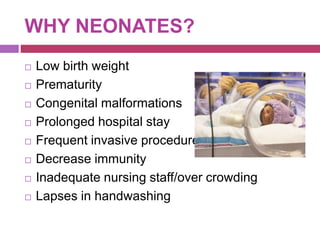
WHY NEONATES?
 Low birth weight
 Prematurity
 Congenital malformations
 Prolonged hospital stay
 Frequent invasive procedures
 Decrease immunity
 Inadequate nursing staff/over crowding
 Lapses in handwashing
COMMON INFECTIONS
 Central Line Associated Blood Stream
Infection(CLABSI)
 Pneumonia
 Neonatal sepsis
 Device associated
infections
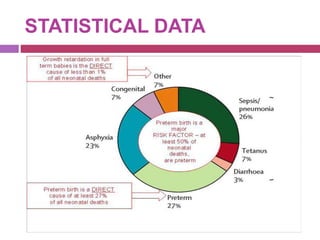
STATISTICAL DATA
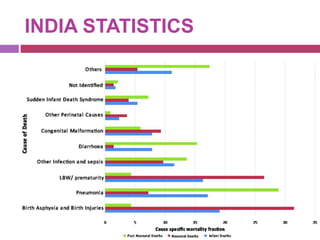
INDIA STATISTICS
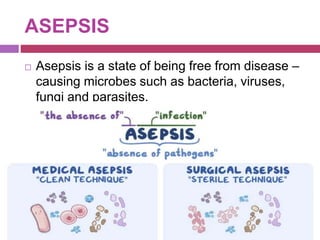
ASEPSIS
 Asepsis is a state of being free from disease –
causing microbes such as bacteria, viruses,
fungi and parasites.
PARTS OF ASEPSIS
 Practices that prevent entry of microbes into
the nursery environment
 Practices that prevent proliferation of microbes
in nursery
 Practices that prevent spread of microbes
between babies
 Practices that protect newborn from
developing infections
 Practices that enable better asepsis and
administration
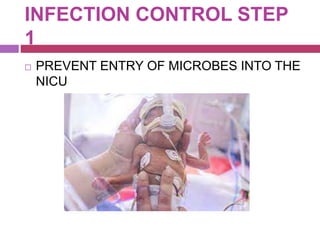
INFECTION CONTROL STEP
1
 PREVENT ENTRY OF MICROBES INTO THE
NICU
CLEAN IMMEDIATE
ENVIRONMENT
6 C’s
 Clean perineum
 Clean delivery surface
 Clean cord
 Cutting instrument
 Clean cord care
 Nothing unclean is introduced to vagina
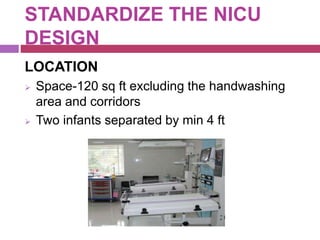
STANDARDIZE THE NICU
DESIGN
LOCATION
 Space-120 sq ft excluding the handwashing
area and corridors
 Two infants separated by min 4 ft
Contd..
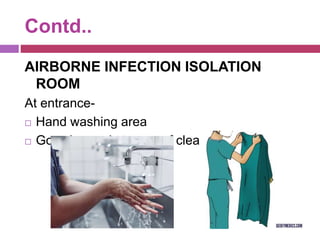
AIRBORNE INFECTION ISOLATION
ROOM
At entrance-
 Hand washing area
 Gowning and storage of clean material
Contd..
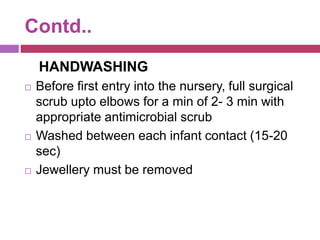
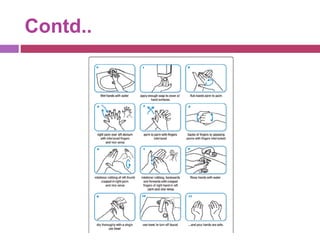
HANDWASHING
 Before first entry into the nursery, full surgical
scrub upto elbows for a min of 2- 3 min with
appropriate antimicrobial scrub
 Washed between each infant contact (15-20
sec)
 Jewellery must be removed
Contd..
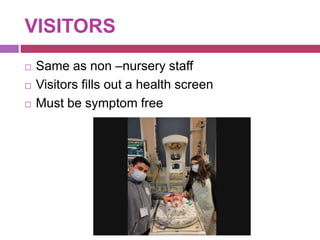
VISITORS
 Same as non –nursery staff
 Visitors fills out a health screen
 Must be symptom free
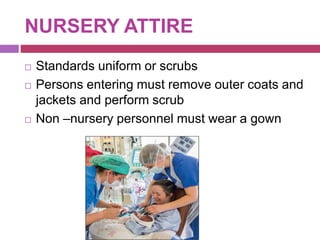
NURSERY ATTIRE
 Standards uniform or scrubs
 Persons entering must remove outer coats and
jackets and perform scrub
 Non –nursery personnel must wear a gown
Contd..
PERSONNEL
 Prior to employment,nurses will complete a
pre-placement physical by Hospital Health
Service
 Any staff member with a known contagious
illness is not permitted in NICU
INFECTION CONTROL STEP
2
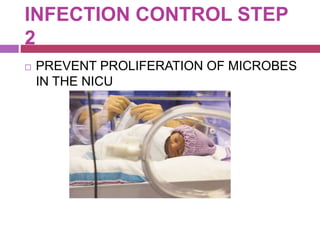
 PREVENT PROLIFERATION OF MICROBES
IN THE NICU
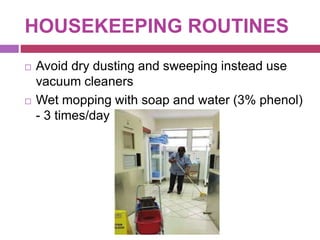
HOUSEKEEPING ROUTINES
 Avoid dry dusting and sweeping instead use
vacuum cleaners
 Wet mopping with soap and water (3% phenol)
- 3 times/day
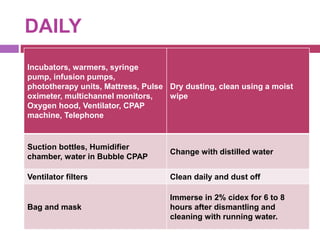
DAILY
Incubators, warmers, syringe
pump, infusion pumps,
phototherapy units, Mattress, Pulse
oximeter, multichannel monitors,
Oxygen hood, Ventilator, CPAP
machine, Telephone
Dry dusting, clean using a moist
wipe
Suction bottles, Humidifier
chamber, water in Bubble CPAP
Change with distilled water
Ventilator filters Clean daily and dust off
Bag and mask
Immerse in 2% cidex for 6 to 8
hours after dismantling and
cleaning with running water.
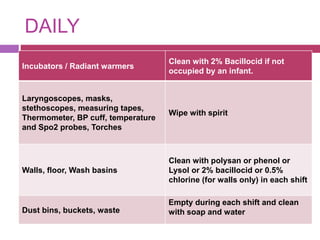
DAILY
Incubators / Radiant warmers
Clean with 2% Bacillocid if not
occupied by an infant.
Laryngoscopes, masks,
stethoscopes, measuring tapes,
Thermometer, BP cuff, temperature
and Spo2 probes, Torches
Wipe with spirit
Walls, floor, Wash basins
Clean with polysan or phenol or
Lysol or 2% bacillocid or 0.5%
chlorine (for walls only) in each shift
Dust bins, buckets, waste
Empty during each shift and clean
with soap and water
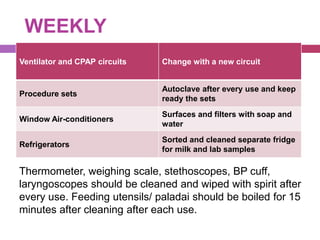
WEEKLY
Ventilator and CPAP circuits Change with a new circuit
Procedure sets
Autoclave after every use and keep
ready the sets
Window Air-conditioners
Surfaces and filters with soap and
water
Refrigerators
Sorted and cleaned separate fridge
for milk and lab samples
Thermometer, weighing scale, stethoscopes, BP cuff,
laryngoscopes should be cleaned and wiped with spirit after
every use. Feeding utensils/ paladai should be boiled for 15
minutes after cleaning after each use.
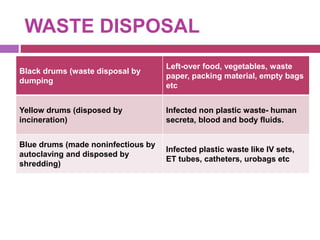
WASTE DISPOSAL
Black drums (waste disposal by
dumping
Left-over food, vegetables, waste
paper, packing material, empty bags
etc
Yellow drums (disposed by
incineration)
Infected non plastic waste- human
secreta, blood and body fluids.
Blue drums (made noninfectious by
autoclaving and disposed by
shredding)
Infected plastic waste like IV sets,
ET tubes, catheters, urobags etc
INFECTION CONTROL STEP
3
 PREVENTING INFECTION SPREAD FROM
PROLIFERATION SITES TO BABY AND
FROM ONE BABY TO OTHER
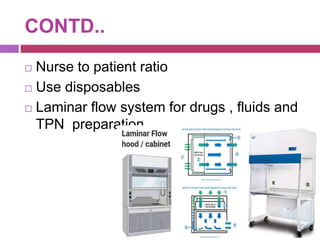
CONTD..
 Nurse to patient ratio
 Use disposables
 Laminar flow system for drugs , fluids and
TPN preparation
INFECTION CONTROL STEP
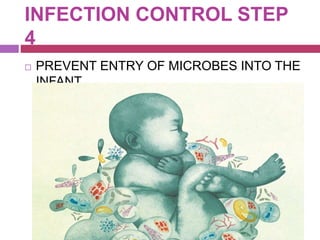
4
 PREVENT ENTRY OF MICROBES INTO THE
INFANT
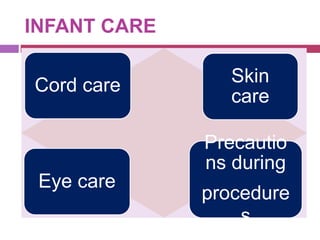
INFANT CARE
Cord care Skin
care
Eye care
Precautio
ns during
procedure
s
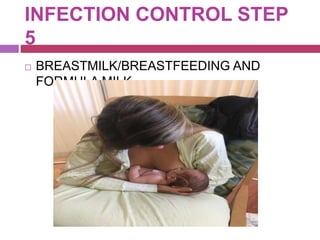
INFECTION CONTROL STEP
5
 BREASTMILK/BREASTFEEDING AND
FORMULA MILK
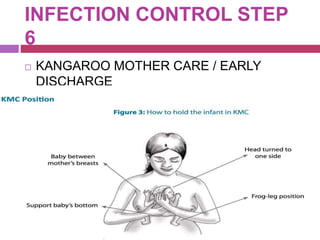
INFECTION CONTROL STEP
6
 KANGAROO MOTHER CARE / EARLY
DISCHARGE
INFECTION CONTROL STEP
7
 DECREASING SUSCEPTIBILITY OF THE
BABY TO INFECTIONS
Cont..
a. Early BF / use of colostrums/minimal entral
nutrition
b. Immunomodulators
c. Antifungal prophylaxis
INFECTION CONTROL STEP 8
 INFECTION CONTROL PROTOCOLS
Contd..
Infection control
committee
Role of hospital
management
Antibiotic usage and
microbial resistance
INFECTION CONTROL
COMMITTEE
1. Yearly programme of activity for surveillance
& prevention
2. Epidemiological surveillance data and identify
areas for intervention
3. Ensure appropriate staff training in infection
control and safety
4. Provide inputs into investigation of epidemics
CARE OF INFANTS AND
EQUIPMENTS
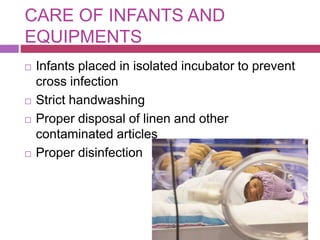
 Infants placed in isolated incubator to prevent
cross infection
 Strict handwashing
 Proper disposal of linen and other
contaminated articles
 Proper disinfection
STANDARD PRECAUTIONS IN
NICU
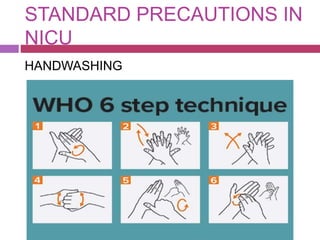
HANDWASHING
Contd..
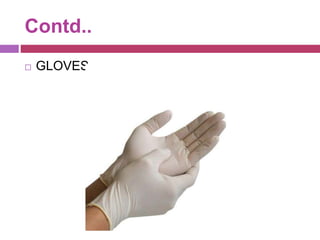
 GLOVES
Contd..
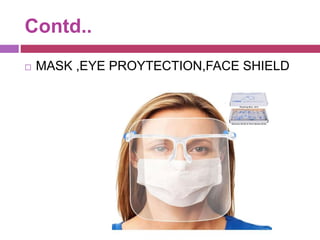
 MASK ,EYE PROYTECTION,FACE SHIELD
Contd..
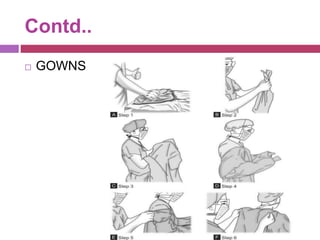
 GOWNS
Contd..
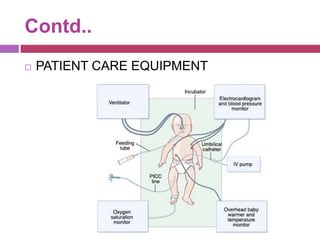
 PATIENT CARE EQUIPMENT
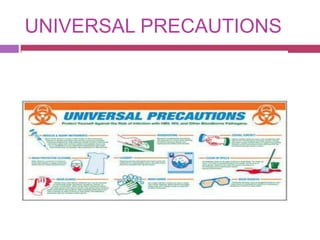
UNIVERSAL PRECAUTIONS
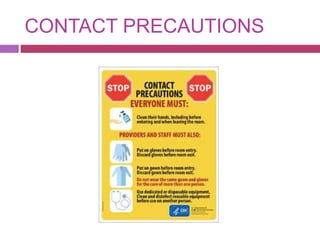
CONTACT PRECAUTIONS
DISINFECTIONS AND
GERMICIDES
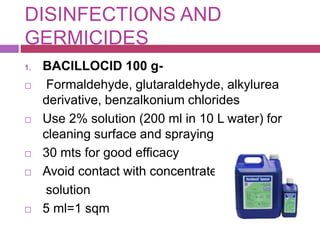
1. BACILLOCID 100 g-
 Formaldehyde, glutaraldehyde, alkylurea
derivative, benzalkonium chlorides
 Use 2% solution (200 ml in 10 L water) for
cleaning surface and spraying
 30 mts for good efficacy
 Avoid contact with concentrated
solution
 5 ml=1 sqm
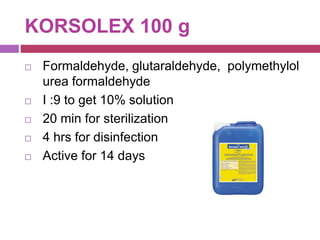
KORSOLEX 100 g
 Formaldehyde, glutaraldehyde, polymethylol
urea formaldehyde
 I :9 to get 10% solution
 20 min for sterilization
 4 hrs for disinfection
 Active for 14 days
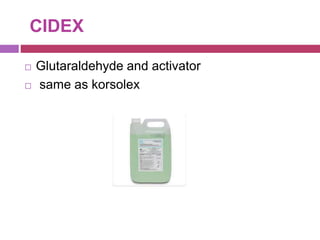
CIDEX
 Glutaraldehyde and activator
 same as korsolex
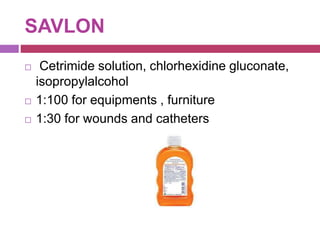
SAVLON
 Cetrimide solution, chlorhexidine gluconate,
isopropylalcohol
 1:100 for equipments , furniture
 1:30 for wounds and catheters
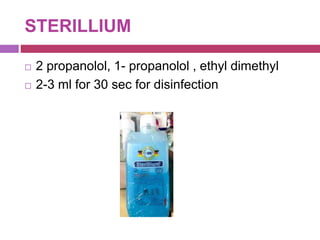
STERILLIUM
 2 propanolol, 1- propanolol , ethyl dimethyl
 2-3 ml for 30 sec for disinfection
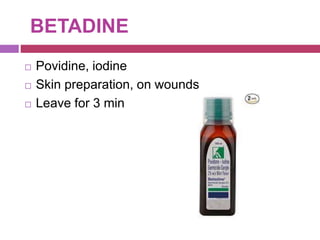
BETADINE
 Povidine, iodine
 Skin preparation, on wounds
 Leave for 3 min
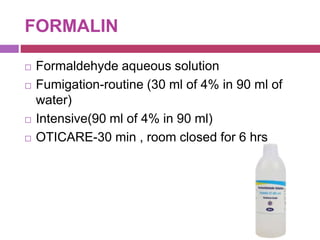
FORMALIN
 Formaldehyde aqueous solution
 Fumigation-routine (30 ml of 4% in 90 ml of
water)
 Intensive(90 ml of 4% in 90 ml)
 OTICARE-30 min , room closed for 6 hrs
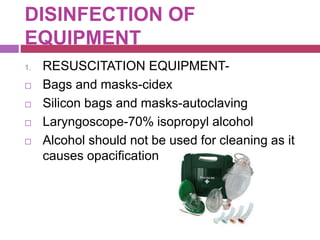
DISINFECTION OF
EQUIPMENT
1. RESUSCITATION EQUIPMENT-
 Bags and masks-cidex
 Silicon bags and masks-autoclaving
 Laryngoscope-70% isopropyl alcohol
 Alcohol should not be used for cleaning as it
causes opacification
Contd..
2.OPEN CARE SYSTEMS AND COTS
 Cleaned everyday with 3% phenol or 5% lysol
 Mattresses plastic cover should be intact to
clean with antiseptic solution
 Blankets for autoclaving
 Laminar air flow for drugs , fluids ,TPN
Contd..
3.INCUBATORS
 Thoroughly disinfected every 7th day
 After discharge or death -50 ml formalin in 50
ml water
 Canopy and mattress should be cleaned with
soap and water
 Humidification unit –disinfected with cidex for
10 min
Contd..
4.RUBBER AND PLASTIC TUBING
 Ventilator tubings-single use
 Infant face masks-70% isopropyl alcohol
Contd..
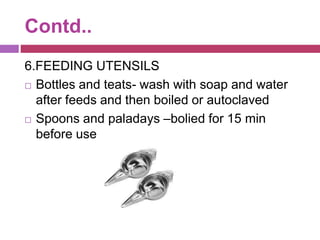
6.FEEDING UTENSILS
 Bottles and teats- wash with soap and water
after feeds and then boiled or autoclaved
 Spoons and paladays –bolied for 15 min
before use
Contd..
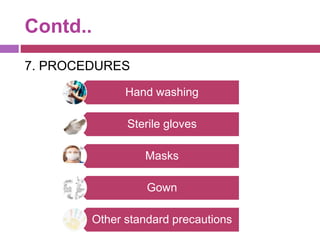
7. PROCEDURES
Hand washing
Sterile gloves
Masks
Gown
Other standard precautions
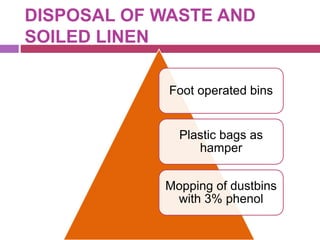
DISPOSAL OF WASTE AND
SOILED LINEN
Foot operated bins
Plastic bags as
hamper
Mopping of dustbins
with 3% phenol
SURVEILLANCE
 Monitoring of infections in unit by conducting
periodic surveys in order to identify unusual
pattern of flora and infections
ROLE OF NURSE
Infection control in NICU. pptx

Infection control in NICU. pptx

  • 1.
    INFECTION CONTROL POLICY IN NICU GUIDE:MAJ KIRTI MAAN PRESENTED BY: N/CDT TANVEER KAUR
  • 2.
    WHY NEONATES?  Lowbirth weight  Prematurity  Congenital malformations  Prolonged hospital stay  Frequent invasive procedures  Decrease immunity  Inadequate nursing staff/over crowding  Lapses in handwashing
  • 3.
    COMMON INFECTIONS  CentralLine Associated Blood Stream Infection(CLABSI)  Pneumonia  Neonatal sepsis  Device associated infections
  • 4.
  • 5.
  • 6.
    ASEPSIS  Asepsis isa state of being free from disease – causing microbes such as bacteria, viruses, fungi and parasites.
  • 7.
    PARTS OF ASEPSIS Practices that prevent entry of microbes into the nursery environment  Practices that prevent proliferation of microbes in nursery  Practices that prevent spread of microbes between babies  Practices that protect newborn from developing infections  Practices that enable better asepsis and administration
  • 8.
    INFECTION CONTROL STEP 1 PREVENT ENTRY OF MICROBES INTO THE NICU
  • 9.
    CLEAN IMMEDIATE ENVIRONMENT 6 C’s Clean perineum  Clean delivery surface  Clean cord  Cutting instrument  Clean cord care  Nothing unclean is introduced to vagina
  • 10.
    STANDARDIZE THE NICU DESIGN LOCATION Space-120 sq ft excluding the handwashing area and corridors  Two infants separated by min 4 ft
  • 11.
    Contd.. AIRBORNE INFECTION ISOLATION ROOM Atentrance-  Hand washing area  Gowning and storage of clean material
  • 12.
    Contd.. HANDWASHING  Before firstentry into the nursery, full surgical scrub upto elbows for a min of 2- 3 min with appropriate antimicrobial scrub  Washed between each infant contact (15-20 sec)  Jewellery must be removed
  • 13.
  • 14.
    VISITORS  Same asnon –nursery staff  Visitors fills out a health screen  Must be symptom free
  • 15.
    NURSERY ATTIRE  Standardsuniform or scrubs  Persons entering must remove outer coats and jackets and perform scrub  Non –nursery personnel must wear a gown
  • 16.
    Contd.. PERSONNEL  Prior toemployment,nurses will complete a pre-placement physical by Hospital Health Service  Any staff member with a known contagious illness is not permitted in NICU
  • 17.
    INFECTION CONTROL STEP 2 PREVENT PROLIFERATION OF MICROBES IN THE NICU
  • 18.
    HOUSEKEEPING ROUTINES  Avoiddry dusting and sweeping instead use vacuum cleaners  Wet mopping with soap and water (3% phenol) - 3 times/day
  • 19.
    DAILY Incubators, warmers, syringe pump,infusion pumps, phototherapy units, Mattress, Pulse oximeter, multichannel monitors, Oxygen hood, Ventilator, CPAP machine, Telephone Dry dusting, clean using a moist wipe Suction bottles, Humidifier chamber, water in Bubble CPAP Change with distilled water Ventilator filters Clean daily and dust off Bag and mask Immerse in 2% cidex for 6 to 8 hours after dismantling and cleaning with running water.
  • 20.
    DAILY Incubators / Radiantwarmers Clean with 2% Bacillocid if not occupied by an infant. Laryngoscopes, masks, stethoscopes, measuring tapes, Thermometer, BP cuff, temperature and Spo2 probes, Torches Wipe with spirit Walls, floor, Wash basins Clean with polysan or phenol or Lysol or 2% bacillocid or 0.5% chlorine (for walls only) in each shift Dust bins, buckets, waste Empty during each shift and clean with soap and water
  • 21.
    WEEKLY Ventilator and CPAPcircuits Change with a new circuit Procedure sets Autoclave after every use and keep ready the sets Window Air-conditioners Surfaces and filters with soap and water Refrigerators Sorted and cleaned separate fridge for milk and lab samples Thermometer, weighing scale, stethoscopes, BP cuff, laryngoscopes should be cleaned and wiped with spirit after every use. Feeding utensils/ paladai should be boiled for 15 minutes after cleaning after each use.
  • 22.
    WASTE DISPOSAL Black drums(waste disposal by dumping Left-over food, vegetables, waste paper, packing material, empty bags etc Yellow drums (disposed by incineration) Infected non plastic waste- human secreta, blood and body fluids. Blue drums (made noninfectious by autoclaving and disposed by shredding) Infected plastic waste like IV sets, ET tubes, catheters, urobags etc
  • 23.
    INFECTION CONTROL STEP 3 PREVENTING INFECTION SPREAD FROM PROLIFERATION SITES TO BABY AND FROM ONE BABY TO OTHER
  • 24.
    CONTD..  Nurse topatient ratio  Use disposables  Laminar flow system for drugs , fluids and TPN preparation
  • 25.
    INFECTION CONTROL STEP 4 PREVENT ENTRY OF MICROBES INTO THE INFANT
  • 26.
    INFANT CARE Cord careSkin care Eye care Precautio ns during procedure s
  • 27.
    INFECTION CONTROL STEP 5 BREASTMILK/BREASTFEEDING AND FORMULA MILK
  • 28.
    INFECTION CONTROL STEP 6 KANGAROO MOTHER CARE / EARLY DISCHARGE
  • 29.
    INFECTION CONTROL STEP 7 DECREASING SUSCEPTIBILITY OF THE BABY TO INFECTIONS
  • 30.
    Cont.. a. Early BF/ use of colostrums/minimal entral nutrition b. Immunomodulators c. Antifungal prophylaxis
  • 31.
    INFECTION CONTROL STEP8  INFECTION CONTROL PROTOCOLS
  • 32.
    Contd.. Infection control committee Role ofhospital management Antibiotic usage and microbial resistance
  • 33.
    INFECTION CONTROL COMMITTEE 1. Yearlyprogramme of activity for surveillance & prevention 2. Epidemiological surveillance data and identify areas for intervention 3. Ensure appropriate staff training in infection control and safety 4. Provide inputs into investigation of epidemics
  • 34.
    CARE OF INFANTSAND EQUIPMENTS  Infants placed in isolated incubator to prevent cross infection  Strict handwashing  Proper disposal of linen and other contaminated articles  Proper disinfection
  • 35.
  • 36.
  • 37.
    Contd..  MASK ,EYEPROYTECTION,FACE SHIELD
  • 38.
  • 39.
  • 40.
  • 41.
  • 42.
    DISINFECTIONS AND GERMICIDES 1. BACILLOCID100 g-  Formaldehyde, glutaraldehyde, alkylurea derivative, benzalkonium chlorides  Use 2% solution (200 ml in 10 L water) for cleaning surface and spraying  30 mts for good efficacy  Avoid contact with concentrated solution  5 ml=1 sqm
  • 43.
    KORSOLEX 100 g Formaldehyde, glutaraldehyde, polymethylol urea formaldehyde  I :9 to get 10% solution  20 min for sterilization  4 hrs for disinfection  Active for 14 days
  • 44.
    CIDEX  Glutaraldehyde andactivator  same as korsolex
  • 45.
    SAVLON  Cetrimide solution,chlorhexidine gluconate, isopropylalcohol  1:100 for equipments , furniture  1:30 for wounds and catheters
  • 46.
    STERILLIUM  2 propanolol,1- propanolol , ethyl dimethyl  2-3 ml for 30 sec for disinfection
  • 47.
    BETADINE  Povidine, iodine Skin preparation, on wounds  Leave for 3 min
  • 48.
    FORMALIN  Formaldehyde aqueoussolution  Fumigation-routine (30 ml of 4% in 90 ml of water)  Intensive(90 ml of 4% in 90 ml)  OTICARE-30 min , room closed for 6 hrs
  • 49.
    DISINFECTION OF EQUIPMENT 1. RESUSCITATIONEQUIPMENT-  Bags and masks-cidex  Silicon bags and masks-autoclaving  Laryngoscope-70% isopropyl alcohol  Alcohol should not be used for cleaning as it causes opacification
  • 50.
    Contd.. 2.OPEN CARE SYSTEMSAND COTS  Cleaned everyday with 3% phenol or 5% lysol  Mattresses plastic cover should be intact to clean with antiseptic solution  Blankets for autoclaving  Laminar air flow for drugs , fluids ,TPN
  • 51.
    Contd.. 3.INCUBATORS  Thoroughly disinfectedevery 7th day  After discharge or death -50 ml formalin in 50 ml water  Canopy and mattress should be cleaned with soap and water  Humidification unit –disinfected with cidex for 10 min
  • 52.
    Contd.. 4.RUBBER AND PLASTICTUBING  Ventilator tubings-single use  Infant face masks-70% isopropyl alcohol
  • 53.
    Contd.. 6.FEEDING UTENSILS  Bottlesand teats- wash with soap and water after feeds and then boiled or autoclaved  Spoons and paladays –bolied for 15 min before use
  • 54.
    Contd.. 7. PROCEDURES Hand washing Sterilegloves Masks Gown Other standard precautions
  • 55.
    DISPOSAL OF WASTEAND SOILED LINEN Foot operated bins Plastic bags as hamper Mopping of dustbins with 3% phenol
  • 56.
    SURVEILLANCE  Monitoring ofinfections in unit by conducting periodic surveys in order to identify unusual pattern of flora and infections
  • 57.