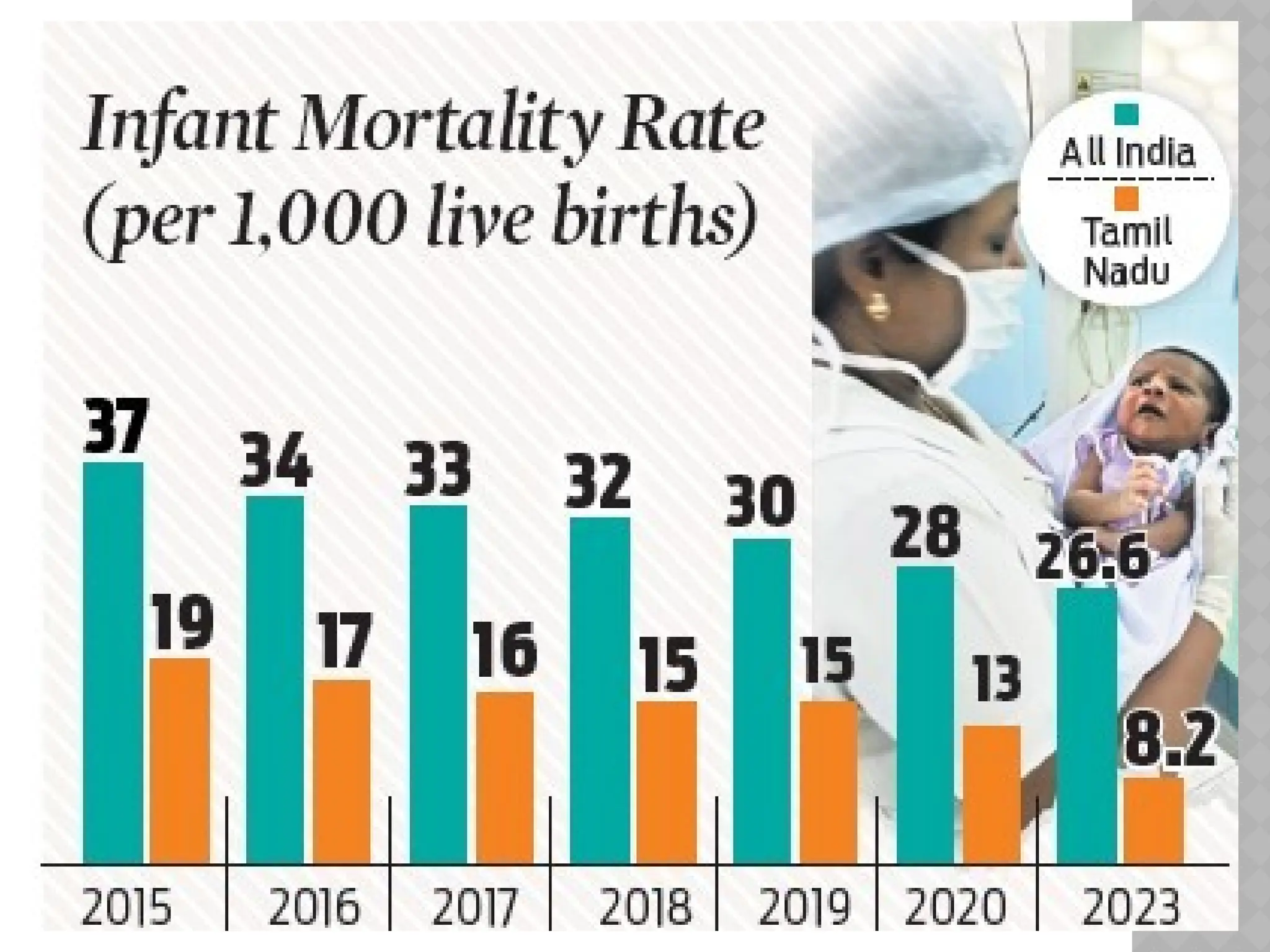
INFANT MORTALITY RATE (IMR)
R. GANESAN
MSc(N), MSc(Psy), MSc(C&P), MBA, MA, PhD Scholar
Dept. of Pediatric Nursing
College Of Nursing, Chengalpattu Govt. Medical College
DEFINITION - INFANT MORTALITY RATE (IMR)
IMR is the number of resident new-borns in a
specified geographic area (country, state, county, etc.) dying
under one year of age divided by the number of resident live
births for the same geographic area (for a specified time
period, usually a calendar year) and multiplied by 1,000.
The state's IMR has declined due to a number of
child health interventions, including:
Government schemes
Vaccinations
Infrastructure strengthening under the National Health
Mission (NHM)
Establishment of SNCUs, NBSUs, and NBCCs
The state government has set a goal of reducing the IMR to
zero within the next five years.
INDIA'S (IMR)
 In 2024, India's infant mortality rate is 25.799 deaths per 1,000
live births, which is a 3.08% decrease from 2023.
 Infant mortality rate is a population-related metric that measures
the number of infant deaths per 1,000 live births in a year. Some
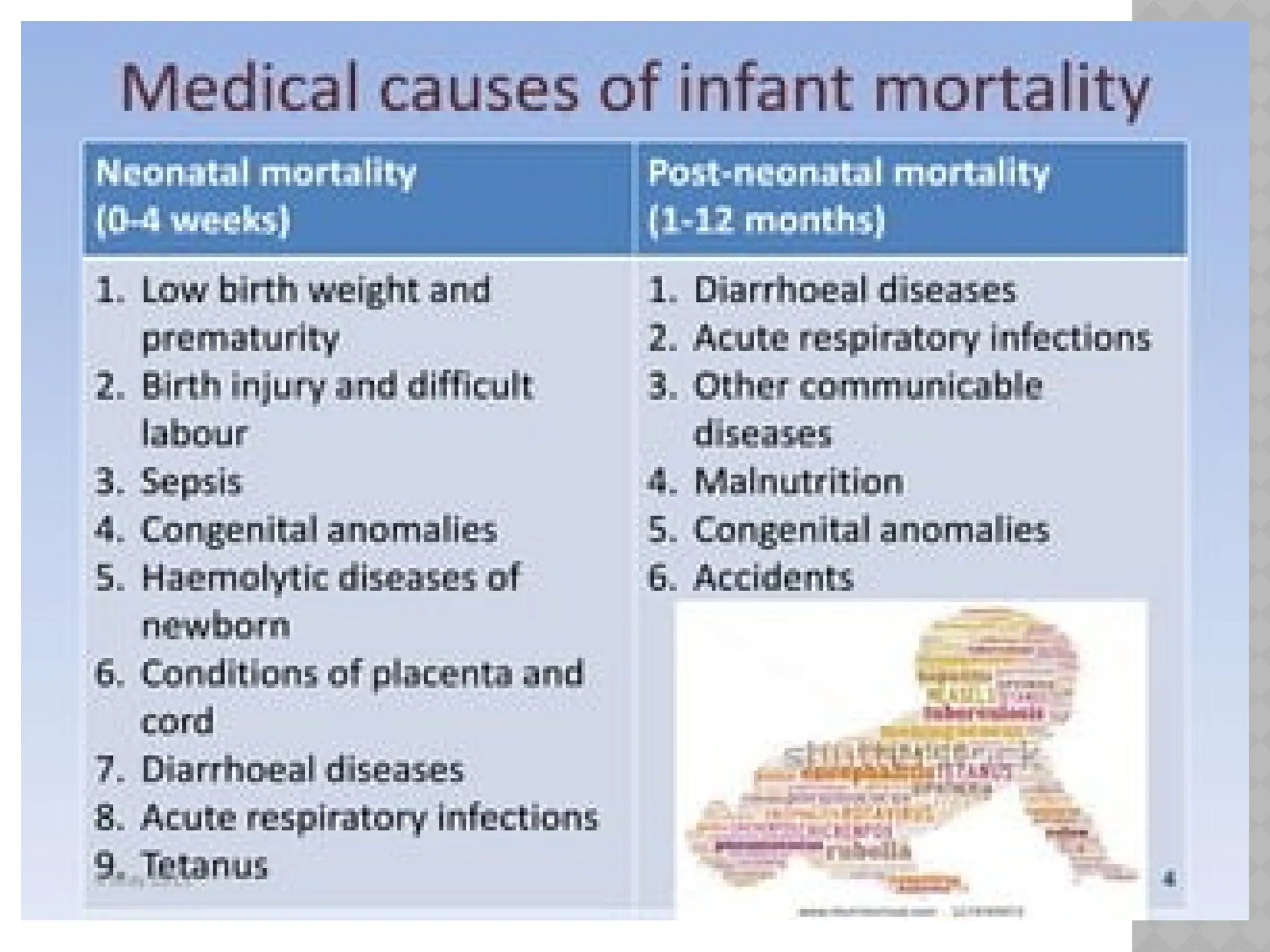
of the main causes of infant mortality include: Prematurity and
low birth weight, Pneumonia, Birth asphyxia and birth trauma,
Other non-communicable diseases, and Diarrheal diseases.
 The Swachh Bharat Mission (SBM), India's national sanitation
program, has contributed to reducing infant mortality rates. The
SBM's approach of combining toilet construction with
investments in information, education, and communication has
helped to reduce infant mortality
TAMIL NADU'S - IMR
 As of July 2024, Tamil Nadu's infant mortality rate
(IMR) was 8.9 per 1,000 live births, which is below the
state average of 13.7. The IMR in Tamil Nadu has been
decreasing due to various child health interventions,
including: Home-based young child care,
Strengthening human milk banks, Establishing
newborn stabilization units, and Launching a genetic
lab at the Institute of Child Health
TYPES OF INFANT MORTALITY
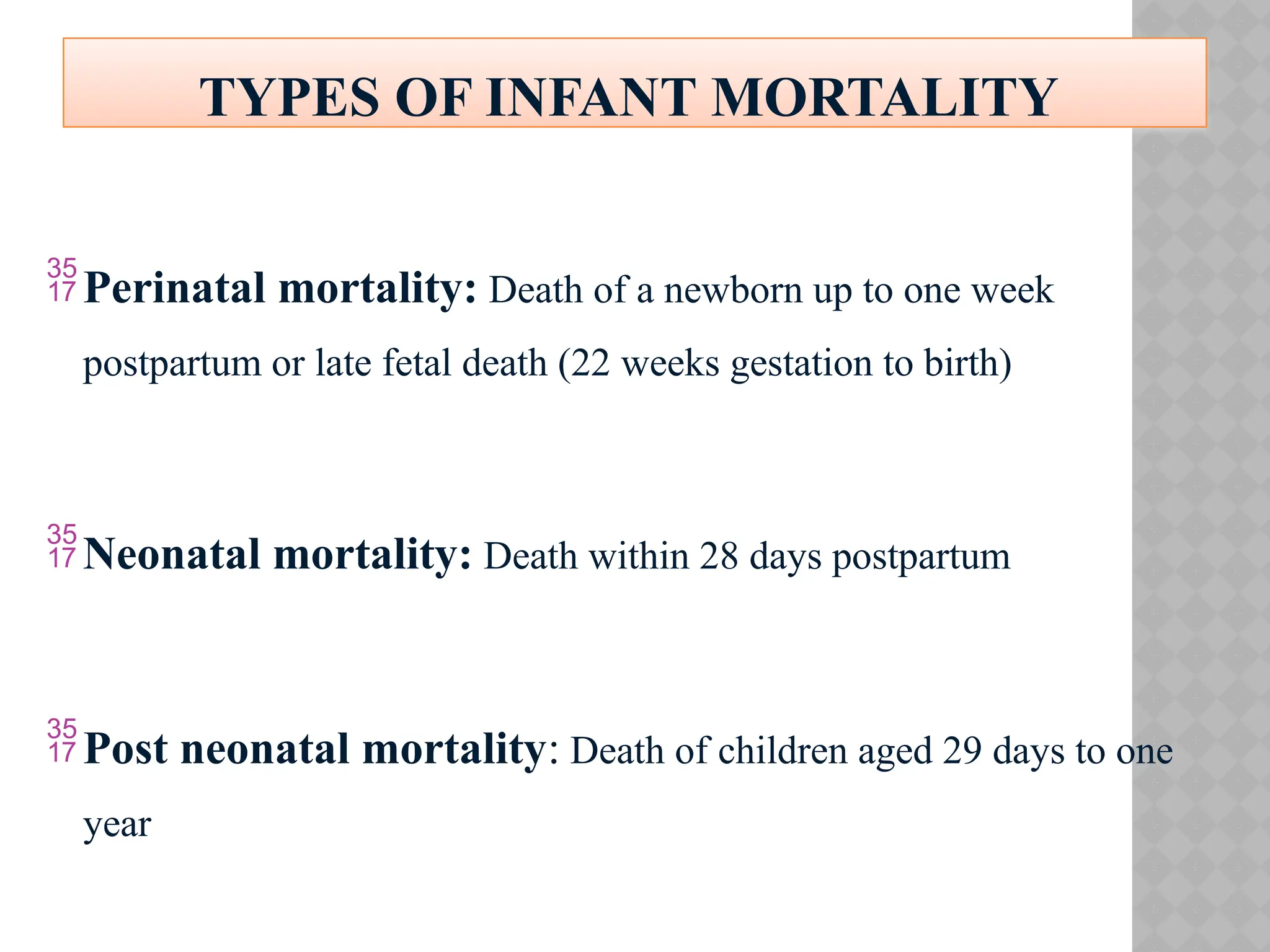
Perinatal mortality: Death of a newborn up to one week
postpartum or late fetal death (22 weeks gestation to birth)
Neonatal mortality: Death within 28 days postpartum
Post neonatal mortality: Death of children aged 29 days to one
year
• An infant mortality rate (or IMR) is considered a
primary and important indictor of a geographic area’s
(country, state, county) overall health status or quality of
life.
• There are some concerns about the quality of reporting
of infant mortality internationally and within states,
especially in terms of defining a live birth and/or
complete reporting of both birth and death certificates for
very low birth weight babies.
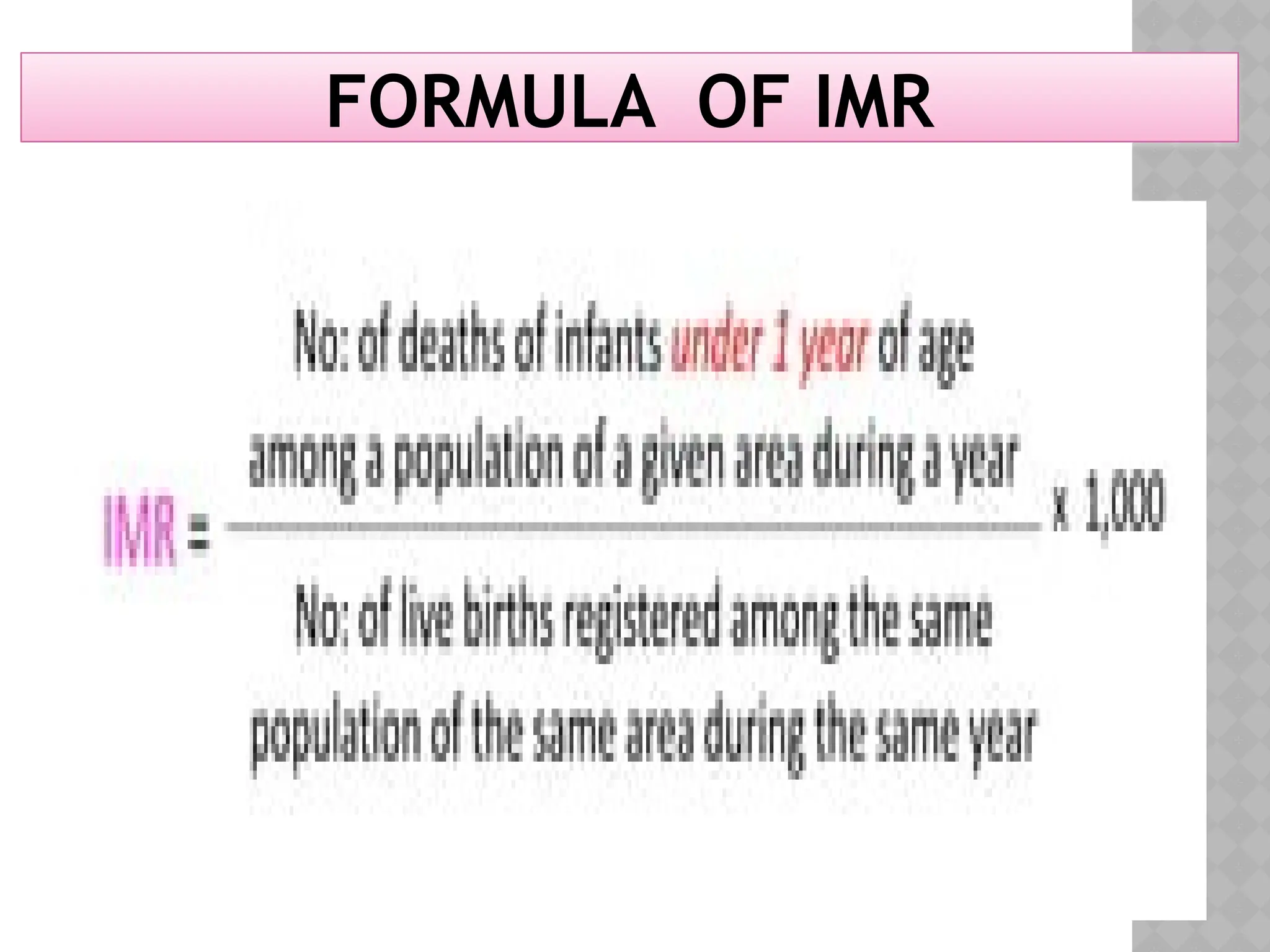
• The IMR is usually calculated using the annual number
of resident infants who died during a year in the
numerator and the total annual number of resident live
births during the same year in the denominator.
FORMULA OF IMR
THANK YOU

Infant Mortality Rate (IMR) 2024 - Vital Statistics.pptx

  • 1.
    INFANT MORTALITY RATE(IMR) R. GANESAN MSc(N), MSc(Psy), MSc(C&P), MBA, MA, PhD Scholar Dept. of Pediatric Nursing College Of Nursing, Chengalpattu Govt. Medical College
  • 2.
    DEFINITION - INFANTMORTALITY RATE (IMR) IMR is the number of resident new-borns in a specified geographic area (country, state, county, etc.) dying under one year of age divided by the number of resident live births for the same geographic area (for a specified time period, usually a calendar year) and multiplied by 1,000.
  • 5.
    The state's IMRhas declined due to a number of child health interventions, including: Government schemes Vaccinations Infrastructure strengthening under the National Health Mission (NHM) Establishment of SNCUs, NBSUs, and NBCCs The state government has set a goal of reducing the IMR to zero within the next five years.
  • 6.
    INDIA'S (IMR)  In2024, India's infant mortality rate is 25.799 deaths per 1,000 live births, which is a 3.08% decrease from 2023.  Infant mortality rate is a population-related metric that measures the number of infant deaths per 1,000 live births in a year. Some of the main causes of infant mortality include: Prematurity and low birth weight, Pneumonia, Birth asphyxia and birth trauma, Other non-communicable diseases, and Diarrheal diseases.  The Swachh Bharat Mission (SBM), India's national sanitation program, has contributed to reducing infant mortality rates. The SBM's approach of combining toilet construction with investments in information, education, and communication has helped to reduce infant mortality
  • 7.
    TAMIL NADU'S -IMR  As of July 2024, Tamil Nadu's infant mortality rate (IMR) was 8.9 per 1,000 live births, which is below the state average of 13.7. The IMR in Tamil Nadu has been decreasing due to various child health interventions, including: Home-based young child care, Strengthening human milk banks, Establishing newborn stabilization units, and Launching a genetic lab at the Institute of Child Health
  • 8.
    TYPES OF INFANTMORTALITY Perinatal mortality: Death of a newborn up to one week postpartum or late fetal death (22 weeks gestation to birth) Neonatal mortality: Death within 28 days postpartum Post neonatal mortality: Death of children aged 29 days to one year
  • 9.
    • An infantmortality rate (or IMR) is considered a primary and important indictor of a geographic area’s (country, state, county) overall health status or quality of life. • There are some concerns about the quality of reporting of infant mortality internationally and within states, especially in terms of defining a live birth and/or complete reporting of both birth and death certificates for very low birth weight babies. • The IMR is usually calculated using the annual number of resident infants who died during a year in the numerator and the total annual number of resident live births during the same year in the denominator.
  • 10.
  • 14.