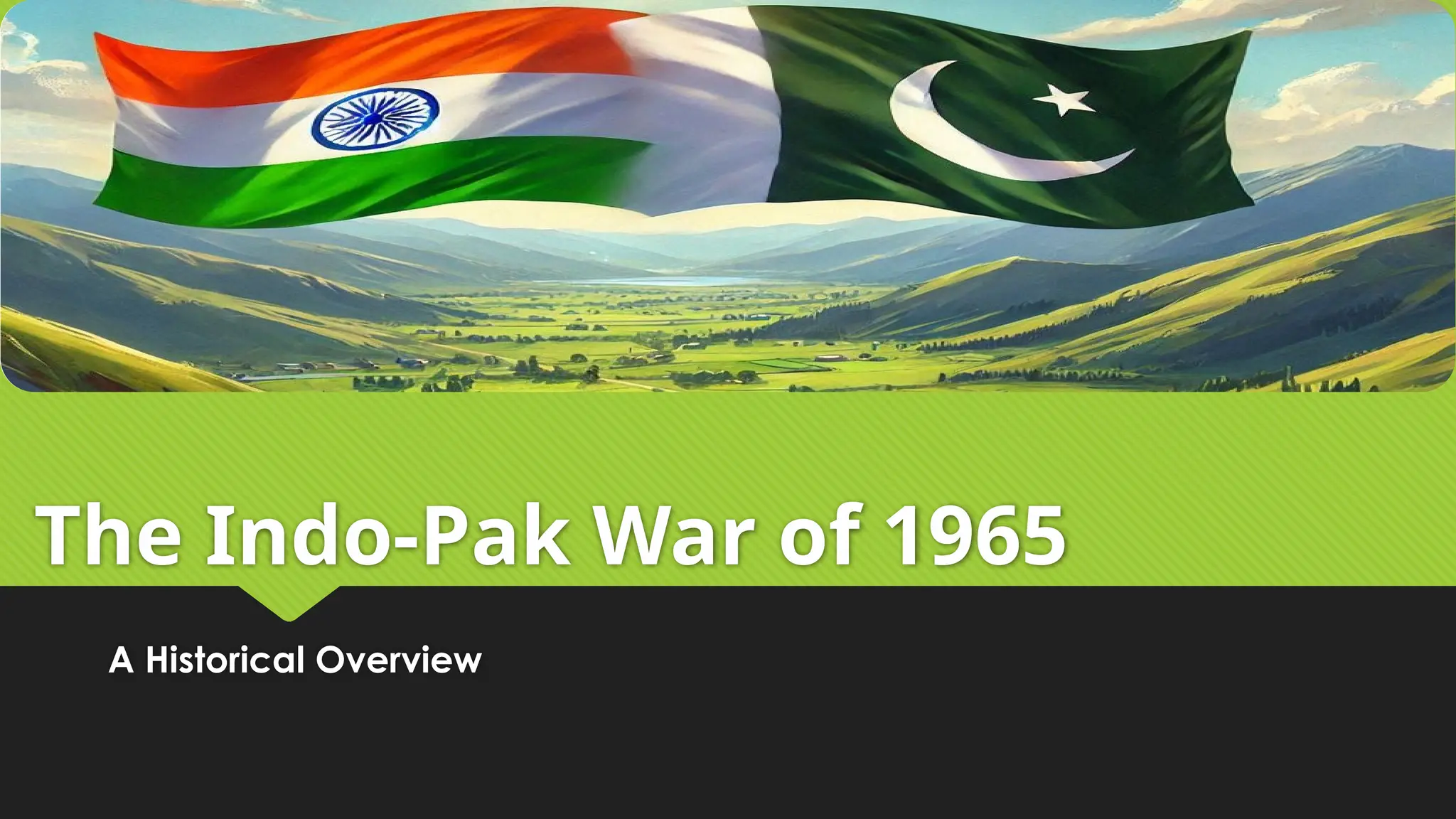
The Indo-Pak War of 1965
A Historical Overview
Introduction
 The Indo-Pak War of 1965, also known as
the Second Kashmir War, was a significant
military conflict between India and
Pakistan. The war lasted from August to
September 1965 and was primarily fought
over the disputed region of Kashmir. This
war marked a crucial chapter in the
history of both nations and had far-
reaching implications for their future
relations.
Background
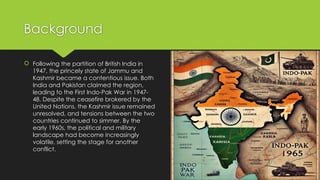
 Following the partition of British India in
1947, the princely state of Jammu and
Kashmir became a contentious issue. Both
India and Pakistan claimed the region,
leading to the First Indo-Pak War in 1947-
48. Despite the ceasefire brokered by the
United Nations, the Kashmir issue remained
unresolved, and tensions between the two
countries continued to simmer. By the
early 1960s, the political and military
landscape had become increasingly
volatile, setting the stage for another
conflict.
Causes of the War
 The primary cause of the Indo-Pak War of 1965 was the unresolved status of Kashmir. Both nations
had deep-rooted political and territorial disputes, and the skirmishes at the Rann of Kutch in April
1965 further escalated the situation. Pakistan launched Operation Gibraltar, hoping to incite
insurgency in Kashmir, which led to a series of retaliatory actions by India. The war was inevitable as
both countries sought to assert their claims over the disputed territory.
Major Battles
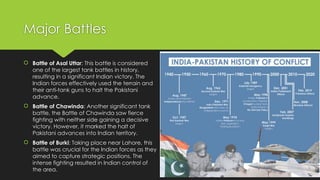
 Battle of Asal Uttar: This battle is considered
one of the largest tank battles in history,
resulting in a significant Indian victory. The
Indian forces effectively used the terrain and
their anti-tank guns to halt the Pakistani
advance.
 Battle of Chawinda: Another significant tank
battle, the Battle of Chawinda saw fierce
fighting with neither side gaining a decisive
victory. However, it marked the halt of
Pakistani advances into Indian territory.
 Battle of Burki: Taking place near Lahore, this
battle was crucial for the Indian forces as they
aimed to capture strategic positions. The
intense fighting resulted in Indian control of
the area.
Military Strategies
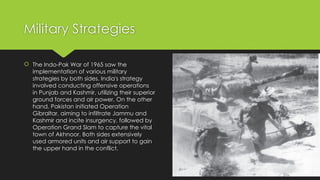
 The Indo-Pak War of 1965 saw the
implementation of various military
strategies by both sides. India's strategy
involved conducting offensive operations
in Punjab and Kashmir, utilizing their superior
ground forces and air power. On the other
hand, Pakistan initiated Operation
Gibraltar, aiming to infiltrate Jammu and
Kashmir and incite insurgency, followed by
Operation Grand Slam to capture the vital
town of Akhnoor. Both sides extensively
used armored units and air support to gain
the upper hand in the conflict.
Key Figures
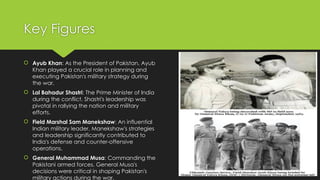
 Ayub Khan: As the President of Pakistan, Ayub
Khan played a crucial role in planning and
executing Pakistan's military strategy during
the war.
 Lal Bahadur Shastri: The Prime Minister of India
during the conflict, Shastri's leadership was
pivotal in rallying the nation and military
efforts.
 Field Marshal Sam Manekshaw: An influential
Indian military leader, Manekshaw's strategies
and leadership significantly contributed to
India's defense and counter-offensive
operations.
 General Muhammad Musa: Commanding the
Pakistani armed forces, General Musa's
decisions were critical in shaping Pakistan's
military actions during the war.
International Involvement
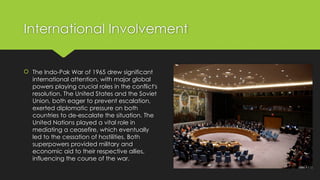
 The Indo-Pak War of 1965 drew significant
international attention, with major global
powers playing crucial roles in the conflict's
resolution. The United States and the Soviet
Union, both eager to prevent escalation,
exerted diplomatic pressure on both
countries to de-escalate the situation. The
United Nations played a vital role in
mediating a ceasefire, which eventually
led to the cessation of hostilities. Both
superpowers provided military and
economic aid to their respective allies,
influencing the course of the war.
Ceasefire and Tashkent Agreement
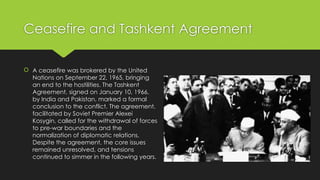
 A ceasefire was brokered by the United
Nations on September 22, 1965, bringing
an end to the hostilities. The Tashkent
Agreement, signed on January 10, 1966,
by India and Pakistan, marked a formal
conclusion to the conflict. The agreement,
facilitated by Soviet Premier Alexei
Kosygin, called for the withdrawal of forces
to pre-war boundaries and the
normalization of diplomatic relations.
Despite the agreement, the core issues
remained unresolved, and tensions
continued to simmer in the following years.
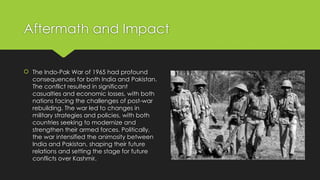
Aftermath and Impact
 The Indo-Pak War of 1965 had profound
consequences for both India and Pakistan.
The conflict resulted in significant
casualties and economic losses, with both
nations facing the challenges of post-war
rebuilding. The war led to changes in
military strategies and policies, with both
countries seeking to modernize and
strengthen their armed forces. Politically,
the war intensified the animosity between
India and Pakistan, shaping their future
relations and setting the stage for future
conflicts over Kashmir.
Analysis
 The Indo-Pak War of 1965 offers valuable insights into military and political strategies of the time. The
war highlighted the strengths and weaknesses of both sides, with India's effective use of armored
units and Pakistan's bold infiltration tactics. Politically, the conflict underscored the failure of
diplomatic efforts to resolve deep-rooted disputes, emphasizing the need for sustained and
meaningful dialogue. The lessons learned from this war continue to influence military strategies and
diplomatic relations in the region.
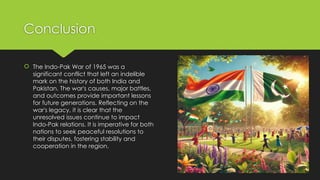
Conclusion
 The Indo-Pak War of 1965 was a
significant conflict that left an indelible
mark on the history of both India and
Pakistan. The war's causes, major battles,
and outcomes provide important lessons
for future generations. Reflecting on the
war's legacy, it is clear that the
unresolved issues continue to impact
Indo-Pak relations. It is imperative for both
nations to seek peaceful resolutions to
their disputes, fostering stability and
cooperation in the region.
Q&A
 Thank you for your attention. I now welcome any questions or comments you may have.
Let's engage in a thoughtful discussion on this significant chapter of history.

Indo-Pak War 1965 : A Historic Conflicts

  • 1.
    The Indo-Pak Warof 1965 A Historical Overview
  • 2.
    Introduction  The Indo-PakWar of 1965, also known as the Second Kashmir War, was a significant military conflict between India and Pakistan. The war lasted from August to September 1965 and was primarily fought over the disputed region of Kashmir. This war marked a crucial chapter in the history of both nations and had far- reaching implications for their future relations.
  • 3.
    Background  Following thepartition of British India in 1947, the princely state of Jammu and Kashmir became a contentious issue. Both India and Pakistan claimed the region, leading to the First Indo-Pak War in 1947- 48. Despite the ceasefire brokered by the United Nations, the Kashmir issue remained unresolved, and tensions between the two countries continued to simmer. By the early 1960s, the political and military landscape had become increasingly volatile, setting the stage for another conflict.
  • 4.
    Causes of theWar  The primary cause of the Indo-Pak War of 1965 was the unresolved status of Kashmir. Both nations had deep-rooted political and territorial disputes, and the skirmishes at the Rann of Kutch in April 1965 further escalated the situation. Pakistan launched Operation Gibraltar, hoping to incite insurgency in Kashmir, which led to a series of retaliatory actions by India. The war was inevitable as both countries sought to assert their claims over the disputed territory.
  • 5.
    Major Battles  Battleof Asal Uttar: This battle is considered one of the largest tank battles in history, resulting in a significant Indian victory. The Indian forces effectively used the terrain and their anti-tank guns to halt the Pakistani advance.  Battle of Chawinda: Another significant tank battle, the Battle of Chawinda saw fierce fighting with neither side gaining a decisive victory. However, it marked the halt of Pakistani advances into Indian territory.  Battle of Burki: Taking place near Lahore, this battle was crucial for the Indian forces as they aimed to capture strategic positions. The intense fighting resulted in Indian control of the area.
  • 6.
    Military Strategies  TheIndo-Pak War of 1965 saw the implementation of various military strategies by both sides. India's strategy involved conducting offensive operations in Punjab and Kashmir, utilizing their superior ground forces and air power. On the other hand, Pakistan initiated Operation Gibraltar, aiming to infiltrate Jammu and Kashmir and incite insurgency, followed by Operation Grand Slam to capture the vital town of Akhnoor. Both sides extensively used armored units and air support to gain the upper hand in the conflict.
  • 7.
    Key Figures  AyubKhan: As the President of Pakistan, Ayub Khan played a crucial role in planning and executing Pakistan's military strategy during the war.  Lal Bahadur Shastri: The Prime Minister of India during the conflict, Shastri's leadership was pivotal in rallying the nation and military efforts.  Field Marshal Sam Manekshaw: An influential Indian military leader, Manekshaw's strategies and leadership significantly contributed to India's defense and counter-offensive operations.  General Muhammad Musa: Commanding the Pakistani armed forces, General Musa's decisions were critical in shaping Pakistan's military actions during the war.
  • 8.
    International Involvement  TheIndo-Pak War of 1965 drew significant international attention, with major global powers playing crucial roles in the conflict's resolution. The United States and the Soviet Union, both eager to prevent escalation, exerted diplomatic pressure on both countries to de-escalate the situation. The United Nations played a vital role in mediating a ceasefire, which eventually led to the cessation of hostilities. Both superpowers provided military and economic aid to their respective allies, influencing the course of the war.
  • 9.
    Ceasefire and TashkentAgreement  A ceasefire was brokered by the United Nations on September 22, 1965, bringing an end to the hostilities. The Tashkent Agreement, signed on January 10, 1966, by India and Pakistan, marked a formal conclusion to the conflict. The agreement, facilitated by Soviet Premier Alexei Kosygin, called for the withdrawal of forces to pre-war boundaries and the normalization of diplomatic relations. Despite the agreement, the core issues remained unresolved, and tensions continued to simmer in the following years.
  • 10.
    Aftermath and Impact The Indo-Pak War of 1965 had profound consequences for both India and Pakistan. The conflict resulted in significant casualties and economic losses, with both nations facing the challenges of post-war rebuilding. The war led to changes in military strategies and policies, with both countries seeking to modernize and strengthen their armed forces. Politically, the war intensified the animosity between India and Pakistan, shaping their future relations and setting the stage for future conflicts over Kashmir.
  • 11.
    Analysis  The Indo-PakWar of 1965 offers valuable insights into military and political strategies of the time. The war highlighted the strengths and weaknesses of both sides, with India's effective use of armored units and Pakistan's bold infiltration tactics. Politically, the conflict underscored the failure of diplomatic efforts to resolve deep-rooted disputes, emphasizing the need for sustained and meaningful dialogue. The lessons learned from this war continue to influence military strategies and diplomatic relations in the region.
  • 12.
    Conclusion  The Indo-PakWar of 1965 was a significant conflict that left an indelible mark on the history of both India and Pakistan. The war's causes, major battles, and outcomes provide important lessons for future generations. Reflecting on the war's legacy, it is clear that the unresolved issues continue to impact Indo-Pak relations. It is imperative for both nations to seek peaceful resolutions to their disputes, fostering stability and cooperation in the region.
  • 13.
    Q&A  Thank youfor your attention. I now welcome any questions or comments you may have. Let's engage in a thoughtful discussion on this significant chapter of history.