OUR GROUP ARIFFIAN MIFTAHUR RAHMAN WAWAN SUDRAJAT ZAKA PRATAMA SITI JUMIYATI EKA YULIANA ARNITA DEWI FITRIYANI PURWATI NINGSIH JAYANTI NANDA SARI ASKING QUESTION WITH “INDIRECT QUESTIONS”
The indirect questions are not normal questions. They have the same word order as statements and we do not use  do  to form a question. They usually come after introductory phrases combined with interrogative pronouns and adjectives  (who, whom, what, which, whose) , adverbs  (when, where, how, why)  or  if, whether .   WHAT ARE INDIRECT    QUESTIONS?
Direct questions are often considered rude when speaking to strangers. If we want to be more polite, we can use “INDIRECT QUESTIONS” DID YOU KNOW ?
Do you know… Can/could you tell me… Can I ask… May I ask you… Do you mind if I ask you… I wonder if you could tell me… I’d like to know… Would you be able to… Do you remember… Have you any idea… Do you think… I can’t remember if/whether… Would it be possible for you to… Is it possible for me… I don’t suppose you could… I can’t imagine that you… SOME KIND OF POLITE REQUEST
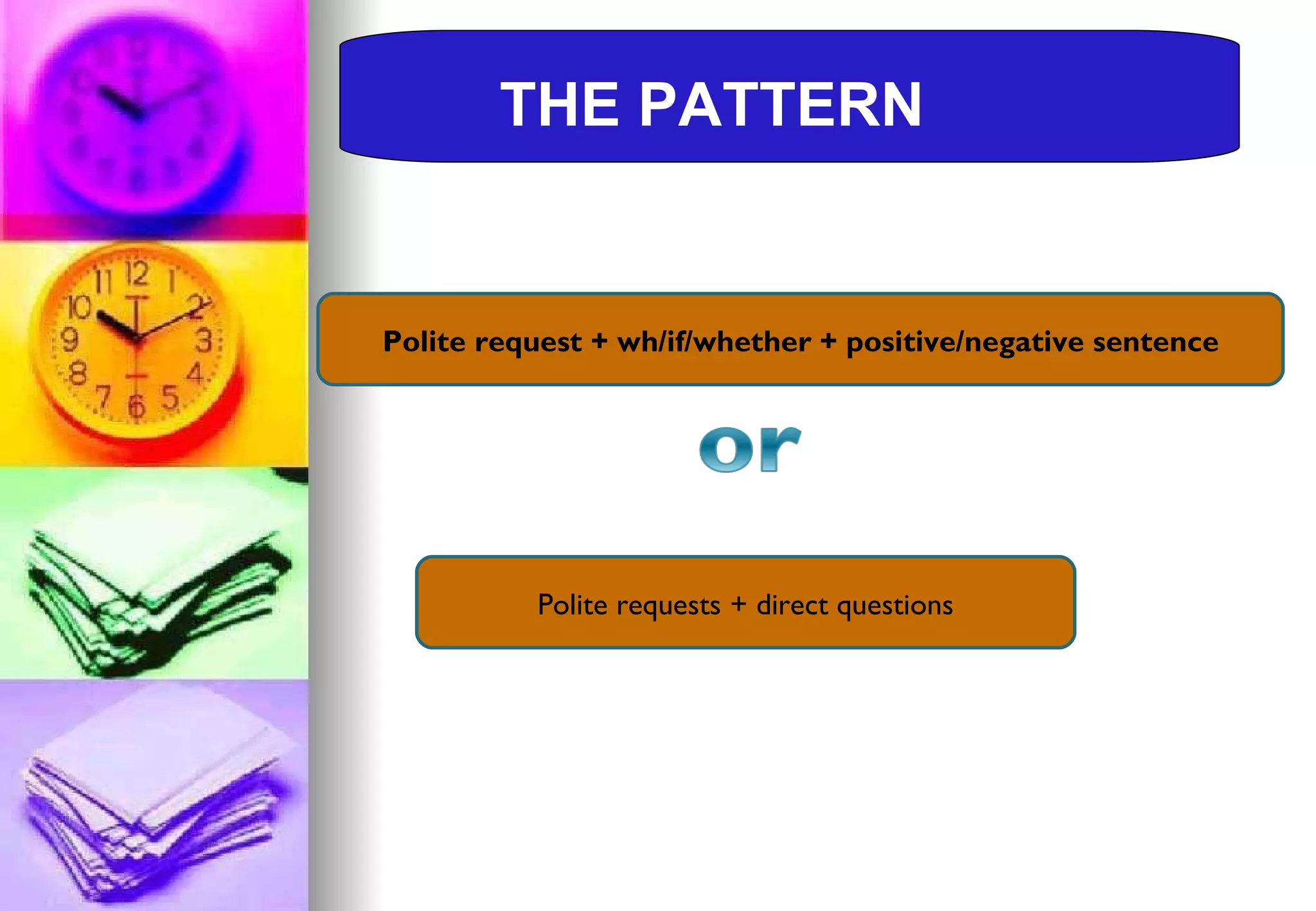
THE PATTERN Polite request + wh/if/whether + positive/negative sentence Polite requests + direct questions
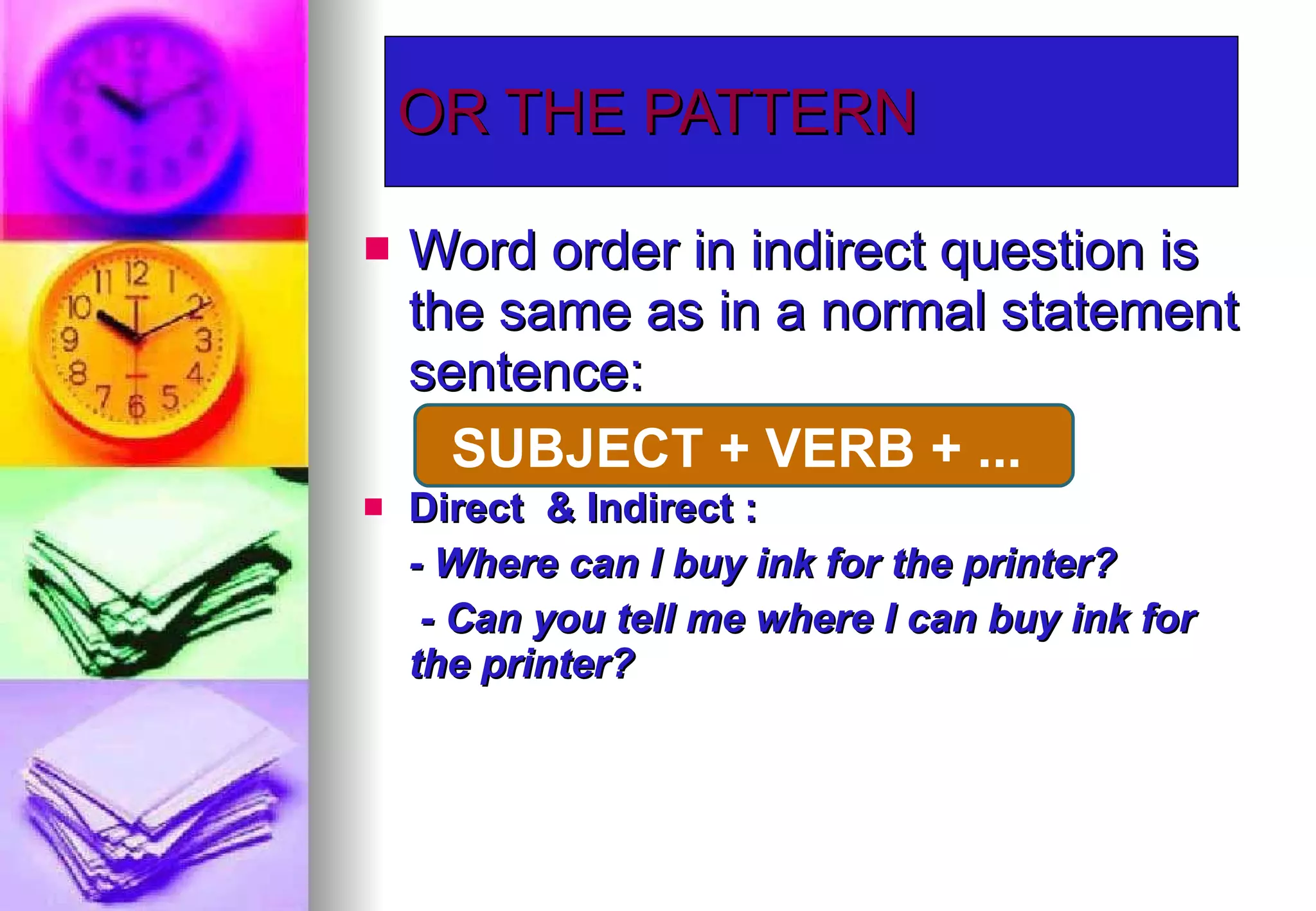
Word order in indirect question is the same as in a normal statement sentence: Direct  & Indirect : - Where can I buy ink for the printer? - Can you tell me where I can buy ink for  the printer? OR THE PATTERN SUBJECT + VERB + ...
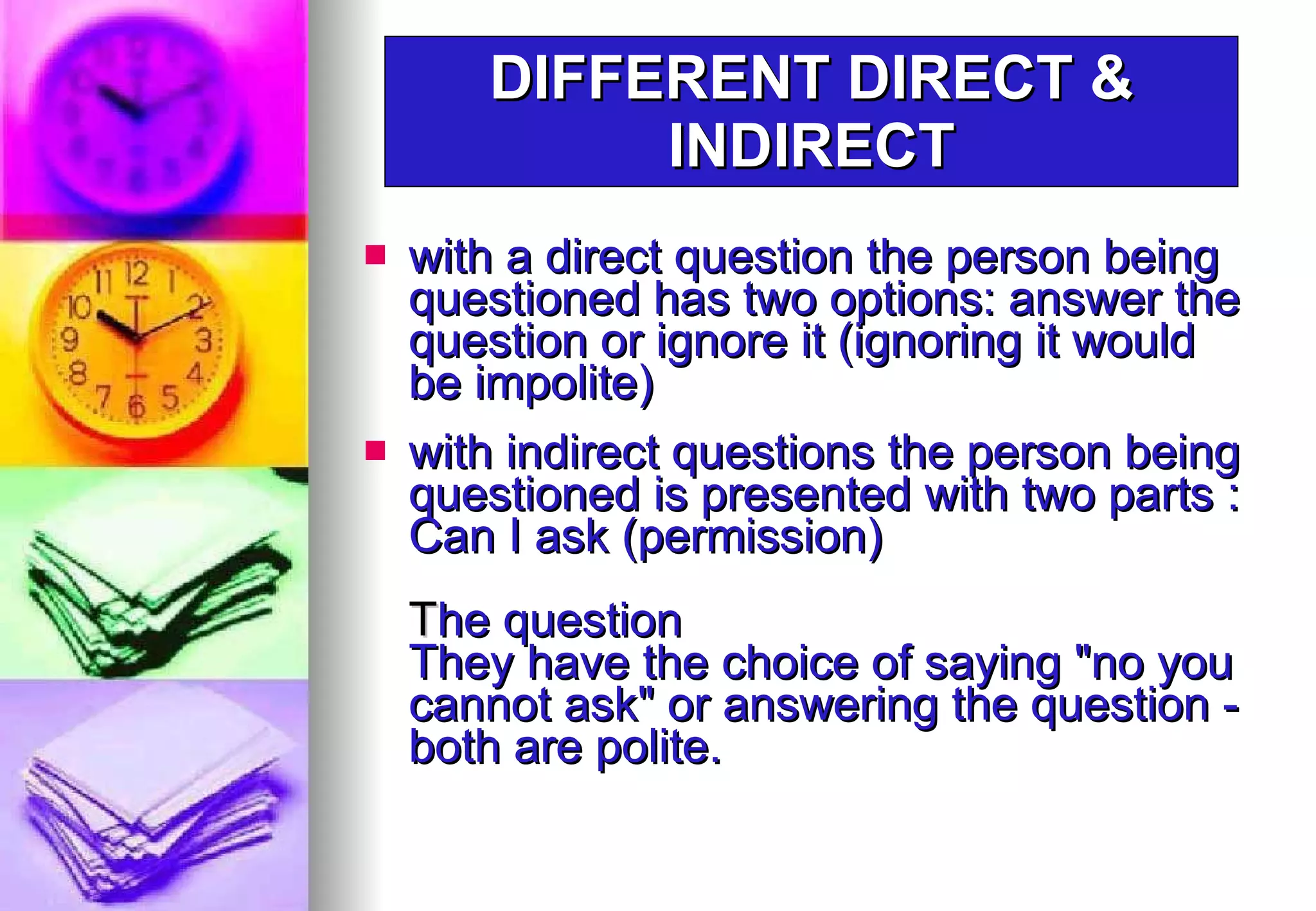
with a direct question the person being questioned has two options: answer the question or ignore it (ignoring it would be impolite) with indirect questions the person being questioned is presented with two parts : Can I ask (permission)  T he question They have the choice of saying "no you cannot ask" or answering the question - both are polite.  DIFFERENT DIRECT & INDIRECT
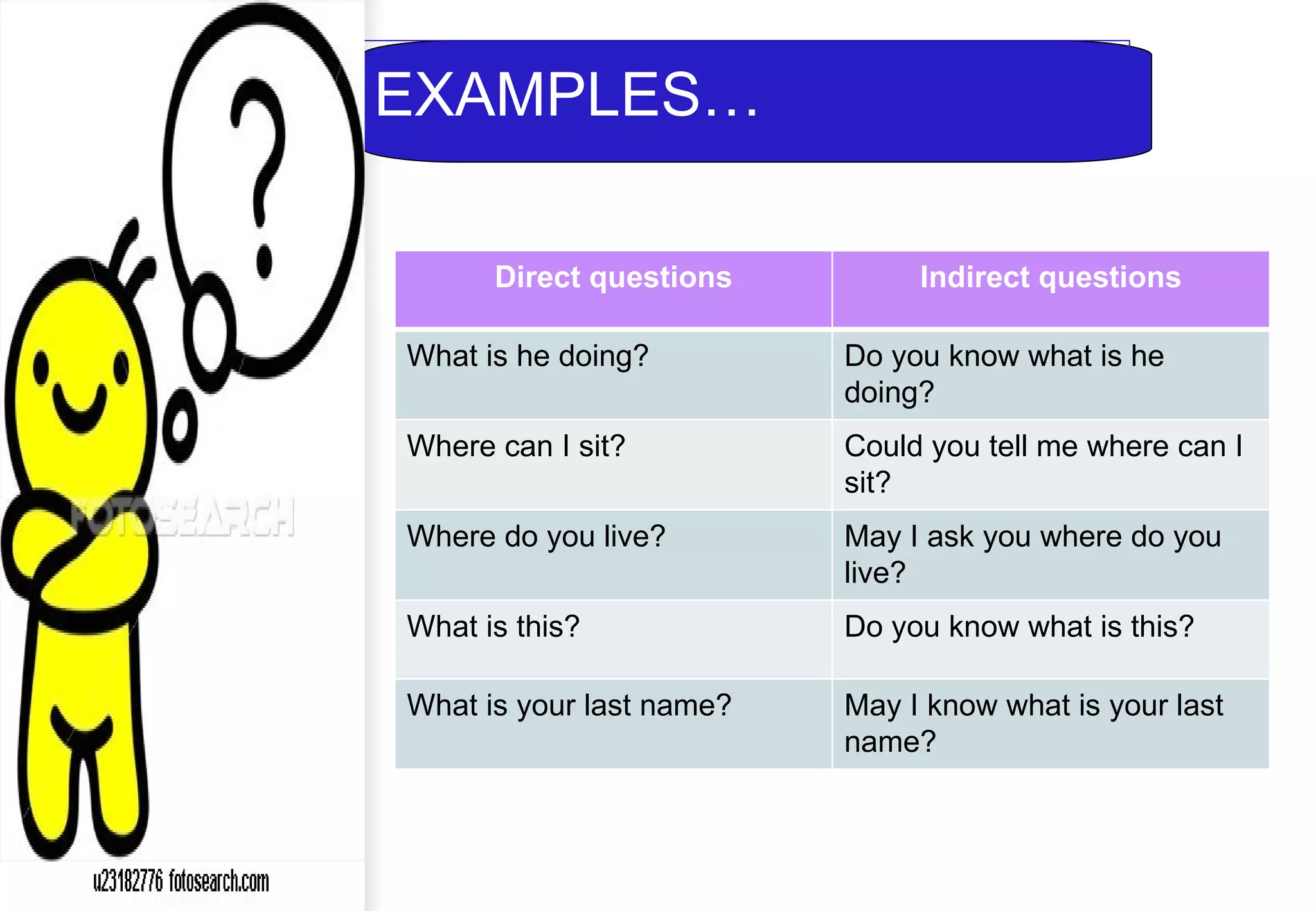
EXAMPLES… Direct questions Indirect questions What is he doing? Do you know what is he doing? Where can I sit? Could you tell me where can I sit? Where do you live? May I ask you where do you live? What is this? Do you know what is this? What is your last name? May I know what is your last name?
Usually, the direct question has no change when it changed to indirect question. But, we can also replace it according to the conditions.  CONCLUSION
THANKS FOR  U'RE  ATTENTION

Indirect question(1)

  • 1.
    OUR GROUP ARIFFIANMIFTAHUR RAHMAN WAWAN SUDRAJAT ZAKA PRATAMA SITI JUMIYATI EKA YULIANA ARNITA DEWI FITRIYANI PURWATI NINGSIH JAYANTI NANDA SARI ASKING QUESTION WITH “INDIRECT QUESTIONS”
  • 2.
    The indirect questionsare not normal questions. They have the same word order as statements and we do not use do to form a question. They usually come after introductory phrases combined with interrogative pronouns and adjectives (who, whom, what, which, whose) , adverbs (when, where, how, why) or if, whether . WHAT ARE INDIRECT QUESTIONS?
  • 3.
    Direct questions areoften considered rude when speaking to strangers. If we want to be more polite, we can use “INDIRECT QUESTIONS” DID YOU KNOW ?
  • 4.
    Do you know…Can/could you tell me… Can I ask… May I ask you… Do you mind if I ask you… I wonder if you could tell me… I’d like to know… Would you be able to… Do you remember… Have you any idea… Do you think… I can’t remember if/whether… Would it be possible for you to… Is it possible for me… I don’t suppose you could… I can’t imagine that you… SOME KIND OF POLITE REQUEST
  • 5.
    THE PATTERN Politerequest + wh/if/whether + positive/negative sentence Polite requests + direct questions
  • 6.
    Word order inindirect question is the same as in a normal statement sentence: Direct & Indirect : - Where can I buy ink for the printer? - Can you tell me where I can buy ink for the printer? OR THE PATTERN SUBJECT + VERB + ...
  • 7.
    with a directquestion the person being questioned has two options: answer the question or ignore it (ignoring it would be impolite) with indirect questions the person being questioned is presented with two parts : Can I ask (permission) T he question They have the choice of saying "no you cannot ask" or answering the question - both are polite. DIFFERENT DIRECT & INDIRECT
  • 8.
    EXAMPLES… Direct questionsIndirect questions What is he doing? Do you know what is he doing? Where can I sit? Could you tell me where can I sit? Where do you live? May I ask you where do you live? What is this? Do you know what is this? What is your last name? May I know what is your last name?
  • 9.
    Usually, the directquestion has no change when it changed to indirect question. But, we can also replace it according to the conditions. CONCLUSION
  • 10.
    THANKS FOR U'RE ATTENTION