Indigenous
Science and
Technology
in the Philippines
Learning Objectives
discuss the concept of indigenous science; and
discuss the contribution of indigenous science in
the development of science and technology in the
Philippines.
At the end of the lesson, the learners should be able
to;
Introduction
Filipinos, especially during the early times, tried
to invent tools that will help them in everyday life.
They also developed alternative ideas in explaining
various phenomena and in explaining the world
around them. This system of knowledge is called
indigenous knowledge, which is the foundation of
indigenous science.
Indigenous Knowledge System
-It is deeply ingrained in the daily lives of young children, who
grow up in a society where community members practice it.
-Parents and elders serve as their first teachers, effectively
transmitting cultural knowledge. These lessons are deeply
intertwined with their culture and environment, encompassing
values, life stories, and reflections on nature.
-These lessons are evident in their stories, poems, and songs,
highlighting their connection to their culture and environment.
Predicting weather conditions and seasons using
knowledge in observing animals' behavior and celestial
bodies;
Using herbal medicine
preserving foods
classifying plants and animals into families and groups
based on cultural properties
Some Examples of Indigenous Knowledge that are
taught and practiced by the indigenous people are:
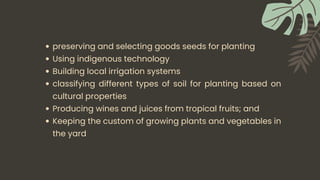
preserving and selecting goods seeds for planting
Using indigenous technology
Building local irrigation systems
classifying different types of soil for planting based on
cultural properties
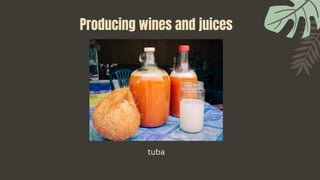
Producing wines and juices from tropical fruits; and
Keeping the custom of growing plants and vegetables in
the yard
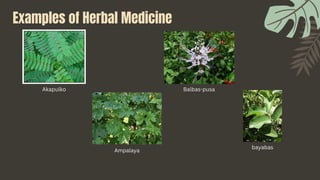
Akapulko
Ampalaya
Balbas-pusa
bayabas
Examples of Herbal Medicine
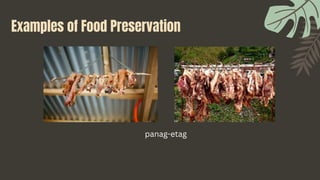
panag-etag
Examples of Food Preservation
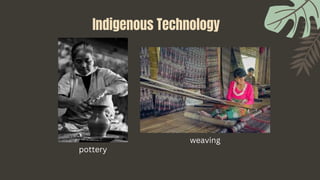
Indigenous Technology
pottery
weaving
stone tool
Producing wines and juices
tuba
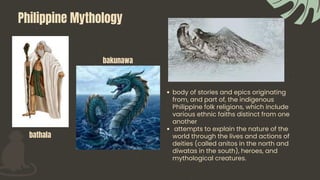
Philippine Mythology
body of stories and epics originating
from, and part of, the indigenous
Philippine folk religions, which include
various ethnic faiths distinct from one
another
attempts to explain the nature of the
world through the lives and actions of
deities (called anitos in the north and
diwatas in the south), heroes, and
mythological creatures.
bathala
bakunawa
Philippine Traditional Medicine
The evolution of Philippine traditional medicine is an interesting
study that isinfluenced by religion, mysticism, magic,
superstition, folkloric herbalism andwestern medicine
albularyo
pagtatawas
faith healing
paghilot
-Indigenous science is a part of the indigenous knowledge
system practiced by different groups of people and early
civilizations (Gribbin, 2001; MKapa, Sibisi, 2004).
-It includes complex arrays of knowledge, expertise, practices,
and representations that guide human societies in their
enumerable interactions with the natural milieu: agriculture,
medicine, naming and explaining natural phenomena, and
strategies for coping with changing environments (Pawilen,
2005).
Indigenous Science
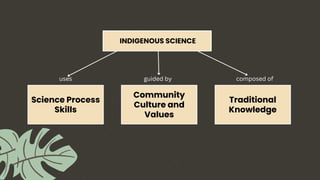
Indigenous Science composed of traditional knowledge that uses
science process skills and guided by community values and culture
(Pawilen, 2006)
Sibisi (2004) also pointed out that indigenous science provides the
basics of astronomy, pharmacology, food technology, or metallurgy,
which were derived from traditional knowledge and practices
INDIGENOUS SCIENCE
Science Process
Skills
Community
Culture and
Values
Traditional
Knowledge
uses guided by composed of
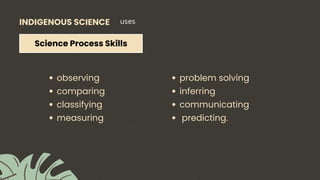
INDIGENOUS SCIENCE
Science Process Skills
uses
observing
comparing
classifying
measuring
problem solving
inferring
communicating
predicting.
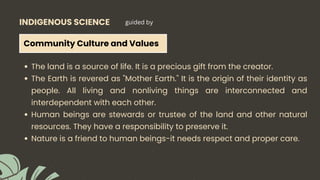
INDIGENOUS SCIENCE
Community Culture and Values
guided by
The land is a source of life. It is a precious gift from the creator.
The Earth is revered as "Mother Earth." It is the origin of their identity as
people. All living and nonliving things are interconnected and
interdependent with each other.
Human beings are stewards or trustee of the land and other natural
resources. They have a responsibility to preserve it.
Nature is a friend to human beings-it needs respect and proper care.
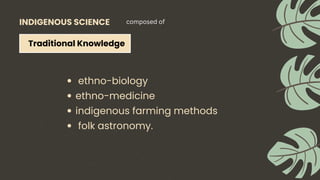
INDIGENOUS SCIENCE
Traditional Knowledge
composed of
ethno-biology
ethno-medicine
indigenous farming methods
folk astronomy.
Indigenous science is important in the development of
science and technology in the Philippines. Like the ancient
civilizations, indigenous science gave birth to the
development of science and technology as a field and as
a discipline.
It helped the people in understanding the natural
environment and in coping with everyday life. UNESCO's
Declaration on Science and the Use of Scientific
Knowledge (1999) recognized indigenous science as a
historical and valuable contribution to science and
technology.
1. Executive order no. 247 of 1995
PRESCRIBING GUIDELINES AND ESTABLISHING A REGULATORY
FRAMEWORK FOR THE PROSPECTING OF BIOLOGICAL AND
GENETIC RESOURCES, THEIR BY-PRODUCTS AND DERIVATIVES,
FOR SCIENTIFIC AND COMMERCIAL PURPOSES; AND
FOR OTHER PURPOSES
LAWS AND STRATEGIES IN THE PHILIPPINES IN CONSERVING
INDIGENOUS KNOWLEDGE (OFFICIAL GAZETTE OF THE REPUBLIC
OF THE PHILIPPINES)
2. REPUBLIC ACT NO. 8371
AN ACT TO RECOGNIZE, PROTECT AND PROMOTE THE RIGHTS
OF INDIGENOUS CULTURAL COMMUNITIES/INDIGENOUS PEOPLES,
CREATING A NATIONAL COMMISSION ON INDIGENOUS PEOPLES,
ESTABLISHING IMPLEMENTING MECHANISMS, APPROPRIATING
FUNDS THEREFOR, AND FOR OTHER PURPOSE
LAWS AND STRATEGIES IN THE PHILIPPINES IN CONSERVING
INDIGENOUS KNOWLEDGE (OFFICIAL GAZETTE OF THE REPUBLIC
OF THE PHILIPPINES)
3. Republic Act No. 8423
AN ACT CREATING THE PHILIPPINE INSTITUTE OF TRADITIONAL
AND ALTERNATIVE HEALTH CARE (PITAHC) TO ACCELERATE THE
DEVELOPMENT OF TRADITIONAL AND ALTERNATIVE HEALTH CARE
IN THE PHILIPPINES, PROVIDING FOR A TRADITIONAL AND
ALTERNATIVE HEALTH CARE DEVELOPMENT FUND AND FOR
OTHER PURPOSES
LAWS AND STRATEGIES IN THE PHILIPPINES IN CONSERVING
INDIGENOUS KNOWLEDGE (OFFICIAL GAZETTE OF THE REPUBLIC
OF THE PHILIPPINES)
4. REPUBLIC ACT NO. 9168
AN ACT TO PROVIDE PROTECTION TO NEW PLANT VARIETIES,
ESTABLISHING A NATIONAL PLANT VARIETY PROTECTION BOARD
AND FOR OTHER PURPOSES
LAWS AND STRATEGIES IN THE PHILIPPINES IN CONSERVING
INDIGENOUS KNOWLEDGE (OFFICIAL GAZETTE OF THE REPUBLIC
OF THE PHILIPPINES)
Assessment
1. What is the role of indigenous knowledge in the
development of indigenous science?
2. What is the role of indigenous science in the
development of science and technology in the
Philippines?
3. How do society and culture influence the
development of science and technology?
Reference
https://www.studocu.com/ph/document/ateneo-de-davao-
university/science-technology-and-society-for-biology/pdfcoffee-a-pdf-
copy-of-sts-book/32567549

Indigenous Science and Technology in the Philippines

  • 1.
  • 2.
    Learning Objectives discuss theconcept of indigenous science; and discuss the contribution of indigenous science in the development of science and technology in the Philippines. At the end of the lesson, the learners should be able to;
  • 3.
    Introduction Filipinos, especially duringthe early times, tried to invent tools that will help them in everyday life. They also developed alternative ideas in explaining various phenomena and in explaining the world around them. This system of knowledge is called indigenous knowledge, which is the foundation of indigenous science.

  • 4.
    Indigenous Knowledge System -Itis deeply ingrained in the daily lives of young children, who grow up in a society where community members practice it. -Parents and elders serve as their first teachers, effectively transmitting cultural knowledge. These lessons are deeply intertwined with their culture and environment, encompassing values, life stories, and reflections on nature. -These lessons are evident in their stories, poems, and songs, highlighting their connection to their culture and environment.
  • 5.
    Predicting weather conditionsand seasons using knowledge in observing animals' behavior and celestial bodies; Using herbal medicine preserving foods classifying plants and animals into families and groups based on cultural properties Some Examples of Indigenous Knowledge that are taught and practiced by the indigenous people are:
  • 6.
    preserving and selectinggoods seeds for planting Using indigenous technology Building local irrigation systems classifying different types of soil for planting based on cultural properties Producing wines and juices from tropical fruits; and Keeping the custom of growing plants and vegetables in the yard
  • 7.
  • 8.
  • 9.
  • 10.
  • 11.
  • 12.
    Philippine Mythology body ofstories and epics originating from, and part of, the indigenous Philippine folk religions, which include various ethnic faiths distinct from one another attempts to explain the nature of the world through the lives and actions of deities (called anitos in the north and diwatas in the south), heroes, and mythological creatures. bathala bakunawa
  • 13.
    Philippine Traditional Medicine Theevolution of Philippine traditional medicine is an interesting study that isinfluenced by religion, mysticism, magic, superstition, folkloric herbalism andwestern medicine albularyo pagtatawas faith healing paghilot
  • 14.
    -Indigenous science isa part of the indigenous knowledge system practiced by different groups of people and early civilizations (Gribbin, 2001; MKapa, Sibisi, 2004). -It includes complex arrays of knowledge, expertise, practices, and representations that guide human societies in their enumerable interactions with the natural milieu: agriculture, medicine, naming and explaining natural phenomena, and strategies for coping with changing environments (Pawilen, 2005). Indigenous Science
  • 15.
    Indigenous Science composedof traditional knowledge that uses science process skills and guided by community values and culture (Pawilen, 2006) Sibisi (2004) also pointed out that indigenous science provides the basics of astronomy, pharmacology, food technology, or metallurgy, which were derived from traditional knowledge and practices
  • 16.
    INDIGENOUS SCIENCE Science Process Skills Community Cultureand Values Traditional Knowledge uses guided by composed of
  • 17.
    INDIGENOUS SCIENCE Science ProcessSkills uses observing comparing classifying measuring problem solving inferring communicating predicting.
  • 18.
    INDIGENOUS SCIENCE Community Cultureand Values guided by The land is a source of life. It is a precious gift from the creator. The Earth is revered as "Mother Earth." It is the origin of their identity as people. All living and nonliving things are interconnected and interdependent with each other. Human beings are stewards or trustee of the land and other natural resources. They have a responsibility to preserve it. Nature is a friend to human beings-it needs respect and proper care.
  • 19.
    INDIGENOUS SCIENCE Traditional Knowledge composedof ethno-biology ethno-medicine indigenous farming methods folk astronomy.
  • 20.
    Indigenous science isimportant in the development of science and technology in the Philippines. Like the ancient civilizations, indigenous science gave birth to the development of science and technology as a field and as a discipline. It helped the people in understanding the natural environment and in coping with everyday life. UNESCO's Declaration on Science and the Use of Scientific Knowledge (1999) recognized indigenous science as a historical and valuable contribution to science and technology.
  • 21.
    1. Executive orderno. 247 of 1995 PRESCRIBING GUIDELINES AND ESTABLISHING A REGULATORY FRAMEWORK FOR THE PROSPECTING OF BIOLOGICAL AND GENETIC RESOURCES, THEIR BY-PRODUCTS AND DERIVATIVES, FOR SCIENTIFIC AND COMMERCIAL PURPOSES; AND FOR OTHER PURPOSES LAWS AND STRATEGIES IN THE PHILIPPINES IN CONSERVING INDIGENOUS KNOWLEDGE (OFFICIAL GAZETTE OF THE REPUBLIC OF THE PHILIPPINES)
  • 22.
    2. REPUBLIC ACTNO. 8371 AN ACT TO RECOGNIZE, PROTECT AND PROMOTE THE RIGHTS OF INDIGENOUS CULTURAL COMMUNITIES/INDIGENOUS PEOPLES, CREATING A NATIONAL COMMISSION ON INDIGENOUS PEOPLES, ESTABLISHING IMPLEMENTING MECHANISMS, APPROPRIATING FUNDS THEREFOR, AND FOR OTHER PURPOSE LAWS AND STRATEGIES IN THE PHILIPPINES IN CONSERVING INDIGENOUS KNOWLEDGE (OFFICIAL GAZETTE OF THE REPUBLIC OF THE PHILIPPINES)
  • 23.
    3. Republic ActNo. 8423 AN ACT CREATING THE PHILIPPINE INSTITUTE OF TRADITIONAL AND ALTERNATIVE HEALTH CARE (PITAHC) TO ACCELERATE THE DEVELOPMENT OF TRADITIONAL AND ALTERNATIVE HEALTH CARE IN THE PHILIPPINES, PROVIDING FOR A TRADITIONAL AND ALTERNATIVE HEALTH CARE DEVELOPMENT FUND AND FOR OTHER PURPOSES LAWS AND STRATEGIES IN THE PHILIPPINES IN CONSERVING INDIGENOUS KNOWLEDGE (OFFICIAL GAZETTE OF THE REPUBLIC OF THE PHILIPPINES)
  • 24.
    4. REPUBLIC ACTNO. 9168 AN ACT TO PROVIDE PROTECTION TO NEW PLANT VARIETIES, ESTABLISHING A NATIONAL PLANT VARIETY PROTECTION BOARD AND FOR OTHER PURPOSES LAWS AND STRATEGIES IN THE PHILIPPINES IN CONSERVING INDIGENOUS KNOWLEDGE (OFFICIAL GAZETTE OF THE REPUBLIC OF THE PHILIPPINES)
  • 25.
    Assessment 1. What isthe role of indigenous knowledge in the development of indigenous science? 2. What is the role of indigenous science in the development of science and technology in the Philippines? 3. How do society and culture influence the development of science and technology?
  • 26.