Opening
Prayer
INDIGENOUS SCIENCE
AND TECHNOLOGY IN
THE PHILIPPINES
Presented By:
Robin Aguas
Agelica Claire Buco
Reimon Bonaobra
Presented To:
Mr.Marlowe Louis Fabunan
Objectives
discuss the
concept of
indigenous
science;
discuss the
contribution of
indigenous science
in the development
of science and
technology in the
Philippines.
Introducti
on
This lesson focuses on indigenous science and technology in the
Philippines. Filipinos, especially during the early times, tried to
invent tools that will help them in everyday life.
They also developed alternative ideas in explaining various
phenomena and in explaining the world around them.
This system of knowledge is called indigenous knowledge,
which is the foundation of indigenous science.
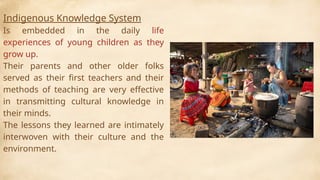
Indigenous Knowledge System
Is embedded in the daily life
experiences of young children as they
grow up.
Their parents and other older folks
served as their first teachers and their
methods of teaching are very effective
in transmitting cultural knowledge in
their minds.
The lessons they learned are intimately
interwoven with their culture and the
environment.
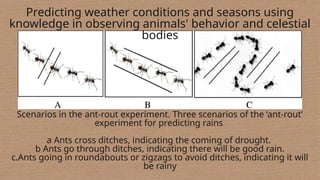
Predicting weather conditions and seasons using
knowledge in observing animals' behavior and celestial
bodies
Scenarios in the ant-rout experiment. Three scenarios of the ‘ant-rout’
experiment for predicting rains
a Ants cross ditches, indicating the coming of drought.
b Ants go through ditches, indicating there will be good rain.
c.Ants going in roundabouts or zigzags to avoid ditches, indicating it will
be rainy
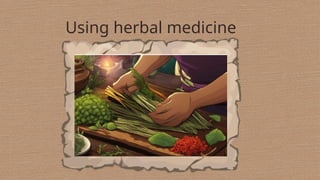
Using herbal medicine
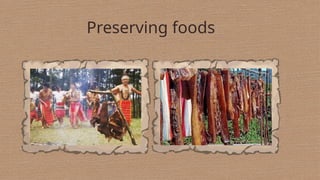
Preserving foods
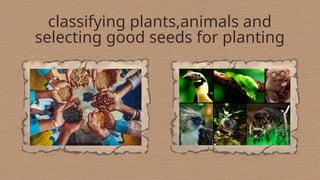
classifying plants,animals and
selecting good seeds for planting
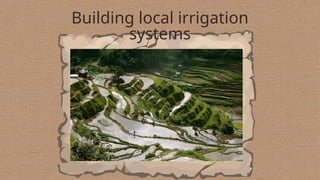
Building local irrigation
systems
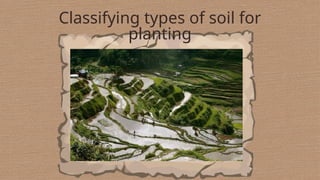
Classifying types of soil for
planting
Some
examples of
indigenous
knowledge
that are
taught and
practiced by
the
indigenous
people are;
• predicting weather conditions and seasons using
knowledge in observing animals' behavior and
celestial bodies
• using herbal medicine; '
• preserving foods;
• classifying plants and animals into families and
groups based on cultural properties; - preserving
and selecting good seeds for planting;
• using indigenous technology in daily lives; - building
local irrigation systems;
• classifying different types of soil for planting based
on cultural properties; -
• producing wines and juices from tropical fruits; and
• keeping the custom of growing plants and
vegetables in the yard.
Analysis
and
Finding
s
Identification of patterns
Emergence of themes
Variations and anomalies
Correlations and relationships
Relate
d
Photo
s
Chart
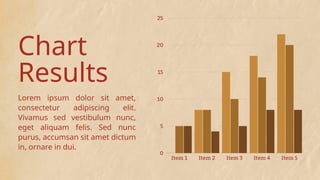
Results
Lorem ipsum dolor sit amet,
consectetur adipiscing elit.
Vivamus sed vestibulum nunc,
eget aliquam felis. Sed nunc
purus, accumsan sit amet dictum
in, ornare in dui.
Conclusio
n
Lorem ipsum dolor sit amet, consectetur
adipiscing elit. Vivamus sed vestibulum nunc,
eget aliquam felis. Sed nunc purus, accumsan
sit amet dictum in, ornare in dui. Ut imperdiet
ante eros, sed porta ex eleifend ac. Donec non
porttitor leo. Nulla luctus ex lacus, ut
scelerisque odio semper nec.
Question
s and
Discussio
ns
Reference
s
Thank
You!

indigenous science and opening prayer sts

  • 1.
  • 2.
    INDIGENOUS SCIENCE AND TECHNOLOGYIN THE PHILIPPINES Presented By: Robin Aguas Agelica Claire Buco Reimon Bonaobra Presented To: Mr.Marlowe Louis Fabunan
  • 3.
    Objectives discuss the concept of indigenous science; discussthe contribution of indigenous science in the development of science and technology in the Philippines.
  • 4.
    Introducti on This lesson focuseson indigenous science and technology in the Philippines. Filipinos, especially during the early times, tried to invent tools that will help them in everyday life. They also developed alternative ideas in explaining various phenomena and in explaining the world around them. This system of knowledge is called indigenous knowledge, which is the foundation of indigenous science.
  • 5.
    Indigenous Knowledge System Isembedded in the daily life experiences of young children as they grow up. Their parents and other older folks served as their first teachers and their methods of teaching are very effective in transmitting cultural knowledge in their minds. The lessons they learned are intimately interwoven with their culture and the environment.
  • 6.
    Predicting weather conditionsand seasons using knowledge in observing animals' behavior and celestial bodies Scenarios in the ant-rout experiment. Three scenarios of the ‘ant-rout’ experiment for predicting rains a Ants cross ditches, indicating the coming of drought. b Ants go through ditches, indicating there will be good rain. c.Ants going in roundabouts or zigzags to avoid ditches, indicating it will be rainy
  • 7.
  • 8.
  • 9.
  • 10.
  • 11.
    Classifying types ofsoil for planting
  • 12.
    Some examples of indigenous knowledge that are taughtand practiced by the indigenous people are; • predicting weather conditions and seasons using knowledge in observing animals' behavior and celestial bodies • using herbal medicine; ' • preserving foods; • classifying plants and animals into families and groups based on cultural properties; - preserving and selecting good seeds for planting; • using indigenous technology in daily lives; - building local irrigation systems; • classifying different types of soil for planting based on cultural properties; - • producing wines and juices from tropical fruits; and • keeping the custom of growing plants and vegetables in the yard.
  • 13.
    Analysis and Finding s Identification of patterns Emergenceof themes Variations and anomalies Correlations and relationships
  • 14.
  • 15.
    Chart Results Lorem ipsum dolorsit amet, consectetur adipiscing elit. Vivamus sed vestibulum nunc, eget aliquam felis. Sed nunc purus, accumsan sit amet dictum in, ornare in dui.
  • 16.
    Conclusio n Lorem ipsum dolorsit amet, consectetur adipiscing elit. Vivamus sed vestibulum nunc, eget aliquam felis. Sed nunc purus, accumsan sit amet dictum in, ornare in dui. Ut imperdiet ante eros, sed porta ex eleifend ac. Donec non porttitor leo. Nulla luctus ex lacus, ut scelerisque odio semper nec.
  • 17.
  • 18.
  • 19.