INDIAN
SYSTEM OF
MEDICINE
UNIT 2
S. PRITHIVIRAJAN., M. Pharm
Dept. of Pharmacognosy, COP,
Madurai Medical College,
Madurai-20
M PHARM – PHARMACOGNOSY
SEM 2
CONTENTS
Naturopathy Yoga and Aromatherapy practices
a) Naturopathy Introduction, basic principles and treatment Hrs
modalities.
b) Yoga - Introduction and Streams of Yoga. Asanas, Pranayama,
Meditations and Relaxation techniques
c) Aromatherapy - Introduction, aroma oils for common problems,
carrier oils.
NATUROPATHY
‘Nature cure’ is a constructive method of
treatment which aims at removing the basic cause of
disease through the rational use of the elements freely
available in nature.
It is not only a system of healing, but also a
way of life, in tune with the internal vital forces or
natural elements comprising the human body. It is a
complete revolution in the art and science of living.
Although the term ‘ naturopathy’ is of relatively
recent origin, the philosophical basis and several of
the methods of nature cure treatments are ancient. It
was practised in ancient Egypt, Greece and Rome.
Basic Principles of Naturopathy
The whole philosophy and practice of nature cure is built on three
basic principles
1) All forms of disease are due to accumulations of waste materials and
bodily refuse in the system. These waste materials in the healthy individual
are removed from the system through the organs of elimination. But in the
diseased person, they are steadily piling up in the body through years of
faulty habits of living such as wrong feeding, improper care of the body and
habits contributing to enervation and nervous exhaustion such as worry,
overwork and excesses of all kinds.
The only way to cure disease is to employ methods which will enable
the system to throw off these toxic accumulations. All natural treatments are
actually directed towards this end.
2) All acute diseases such as fevers, colds, inflammations, digestive
disturbances and skin eruptions are nothing more than self-initiated efforts on
the part of the body to throw off the accumulated waste materials and that all
chronic diseases such as heart disease, diabetes, rheumatism, asthma, kidney
disorders, are the results of continued suppression of the acute diseases
through harmful methods such as drugs, vaccines, narcotics and gland
extracts.
3) The body contains an elaborate healing mechanism which has the power
to bring about a return to normal condition of health, provided right methods
are employed to enable it to do so. In other words, the power to cure disease
lies within the body itself and not in the hands of the doctor.
Treatment Modalities
1) Fasting
Fasting refers to complete abstinence from food for a short or long
period for a specific purpose. It is highly beneficial in practically all kinds of
stomach and intestinal disorders and in serious conditions of the kidneys and
liver. It is a miracle cure for eczema and other skin diseases and offers the
only hope of permanent cure in many cases.
This will enable the chronically sick body to gradually and slowly
eliminate toxic waste matter without seriously affecting the natural
functioning of the body. A correct mode of living and a balanced diet after the
fast will restore vigour and vitality to the individual.
The duration of the fast depends upon the age of the patient, the nature
of the disease and the amount and type of drugs previously used. It is
advisable to undertake a professional guidance.
2) Therapeutic baths
Water has been used as a valuable therapeutic agent since time
immemorial. In all major ancient civilizations, bathing was considered an
important measure for the maintenance of health and prevention of disease. It
was also valued for its remedial properties.
It equalises circulation, boosts muscular tone and aids digestion and
nutrition. It also tones up the activity of perspiratory gland and in the process
eliminates the damaged cells and toxic matter from the system.
The common water temperature chart is : cold 100C to 180C, neutral
32°C to 36°C and hot 40°C to 45°C. Above 45°C, water loses its therapeutic
value and is destructive. The main methods of water treatment which can be
employed in the healing of various diseases in a do-it-yourself manner are
described below.
i. Enema
ii. Hip bath (Hot / Cold)
iii. Cold compress
iv. Heat compress
v. Spine bath
vi. Foot bath (Hot / Cold)
vii. Immersion bath (Hot / Cold)
viii.Steam bath
ix. Epsom salt bath
x. Mud bath
3) Exercise (Physio)
Regular exercise taken properly can achieve the increased use of food
by the body, which contributes to health and fitness. The basal metabolic rate
and habitual body temperature will slowly rise during several weeks of
physical exercise, if the programme is not too hard. The healthy person
usually has abundant body heat and a warm radiant glow.
Regular progressive physical exercise can bring about the balance of
automatic, or involuntary , nervous system. The tone of the vagus nerve, one
of the nerves that control sensation and motion, is strengthened. This accounts
for stronger pulse waves, higher metabolism and better circulation.
4) Massage
The general massage, dealing with all parts of the body, is highly
beneficial in many ways. It tones up the nervous system, influences
respiration and quickens the elimination of poisons and waste material from
the body through the various eliminative organs such as the lungs, skin,
kidneys and bowels.
It also boosts blood circulation and metabolic processes. A massage
removes facial wrinkles , helps to fill out hollow cheeks and neck and eases
stiffness, sore muscles and numbness.
There are five fundamental modes of manipulation in massage they are,
Effleurage (stroking), Friction ( rubbing), Petrissage ( kneading), Tapotment
(percussion) and Vibration (shaking or trembling)
5) Yoga therapy
Yoga is a means of attaining perfect health by maintaining harmony
and achieving optimum functioning on all three levels through complete
self-control.
Yogic kriyas, Asanas and Pranayama constitute the physical basis of
yoga. which have specific therapeutic values and are highly beneficial in the
maintenance of health and the healing of diseases.
The practice of Kriyas and Asanas leads to excellent circulation. It
also energises and stimulates major endocrine glands of the body. Yogic
exercises promote inner health and harmony, and their regular practice helps
prevent and cure many common ailments. They also help eliminate tensions,
be they physical, mental or emotional.
6) Sleep
Sleep repairs the wear and tear of the body and mind incurred during
waking hours. Nothing is so restorative to the nerves as sound and
uninterrupted sleep. Sleep is thus a vital element in a total way of life. It is a
basic need in man’s mental as well as physical life.
During sleep most of the functions of the body are carried on at the
lowest level possible in health. Heat production is from 10 to 15 per cent
below the basal level.
The mechanism regulating the body temperature are less sensitive
than in the waking state and are depressed by 0.5 to 1.0 degree F.
The rate of the heart is reduced by 10 to 30 beats per minute and a
decline in blood pressure of about 20 mm occurs in quiet restful sleep. The
urine volume is considerably reduced, but its concentration in solids is
increased.
The tone of all the skeletal muscles is lessened. The eyes are usually
rolled upward and the pupils constricted.
Loss of sleep exerts seriously detrimental effects upon the nervous
system. Long periods of wakefulness may cause profound psychological
changes such as loss of memory, irritability, hallucination and even
schizophrenic manifestations
7) Other Treatment methods
- Aromatherapy
- Chromatherapy
- Accupressure
- Accupuncture
YOGA THERAPY
The Yoga Therapy or ‘ yoga-chikitsa’ refers to the treatment of diseases
by means of yogic exercises which may be physical or mental or both. Yoga is
a means of attaining perfect health by maintaining harmony and achieving
optimum functioning on all three levels through complete self-control.
Yogic kriyas, Asanas and Pranayama constitute the physical basis of
yoga. which have specific therapeutic values and are highly beneficial in the
maintenance of health and the healing of diseases.
The practice of Kriyas and Asanas leads to excellent circulation. It also
energises and stimulates major endocrine glands of the body. Yogic exercises
promote inner health and harmony, and their regular practice helps prevent
and cure many common ailments. They also help eliminate tensions, be they
physical, mental or emotional.
All yogic exercises should be performed on a clean mat, a carpet or a
blanket covered with a cotton sheet. Clothing should be light and loose-fitting
to allow free movement of the limbs.
The mind should be kept off all disturbances and tensions. Regularity
and punctuality in practising yogic exercises is essential. Generally, 5 a.m. to
8 a.m. is the ideal time for yoga practices.
There are four Streams of Yoga namely,
1. Karma yoga
2. Bhakti yoga
3. Jnana yoga
4. Raja yoga
Kriyas
A disease-free system should be the starting ground for yogasanas and
pranayama. There are six specific cleansing techniques, known as Shat
Kriyas, which eliminate impurities and help cure many ailments. Of these,
the following four can be practised safely
1. Jalaneti - Jalaneti is a process of cleansing the air passage of the nostrils
and the throat by washing them with tepid saline water
2. Vamana Dhouti or Kunjal - This is a process of cleansing the interior of
the stomach. Drink four to six glasses of tepid water, with a little salt
added to it, early in the morning on an empty stomach
3. Kapalbhati - This is a respiratory exercise for the abdomen and
diaphragm. Exercise the diaphragm by exhaling suddenly and quickly
through both nostrils, producing a hissing sound.
4. Trataka - looking at an object with awareness at four sides
Asanas
Asanas should always be practiced on an empty stomach. Shavasana
should be practiced for a brief period before starting the rest of the exercises
as this will create the right mental condition. Asanas should be performed at a
leisurely slow-motion pace, maintaining poise and balance
1. Shavasana ( Corpse pose )
This asana helps bring down high blood pressure, and relieves the
mind, particularly for those who are engaged in excessive mental activity.
This exercise should be done both at the beginning and at the end of the daily
round of yogic asanas. During a fast, shavasana soothes the nervous system.
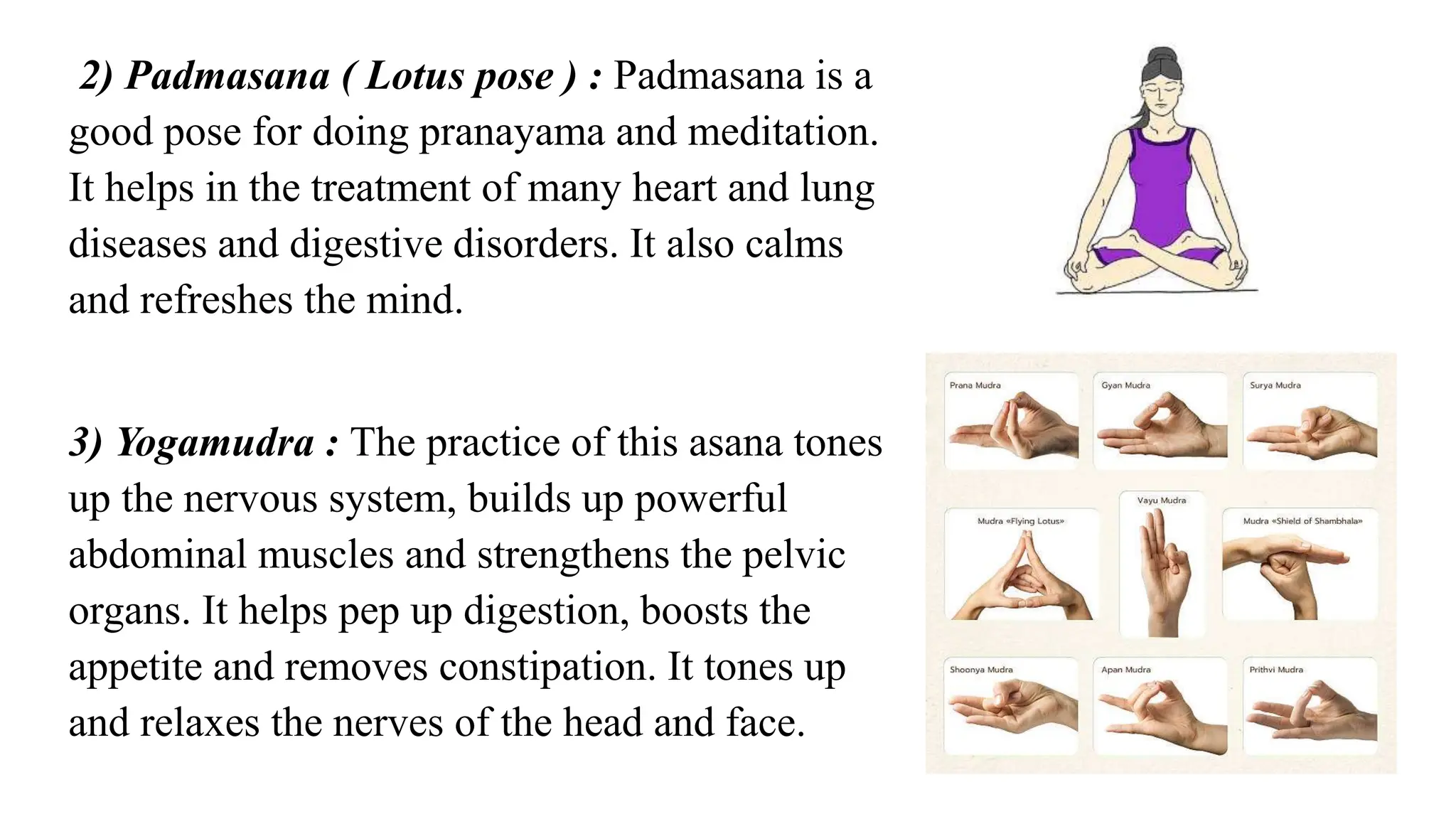
2) Padmasana ( Lotus pose ) : Padmasana is a
good pose for doing pranayama and meditation.
It helps in the treatment of many heart and lung
diseases and digestive disorders. It also calms
and refreshes the mind.
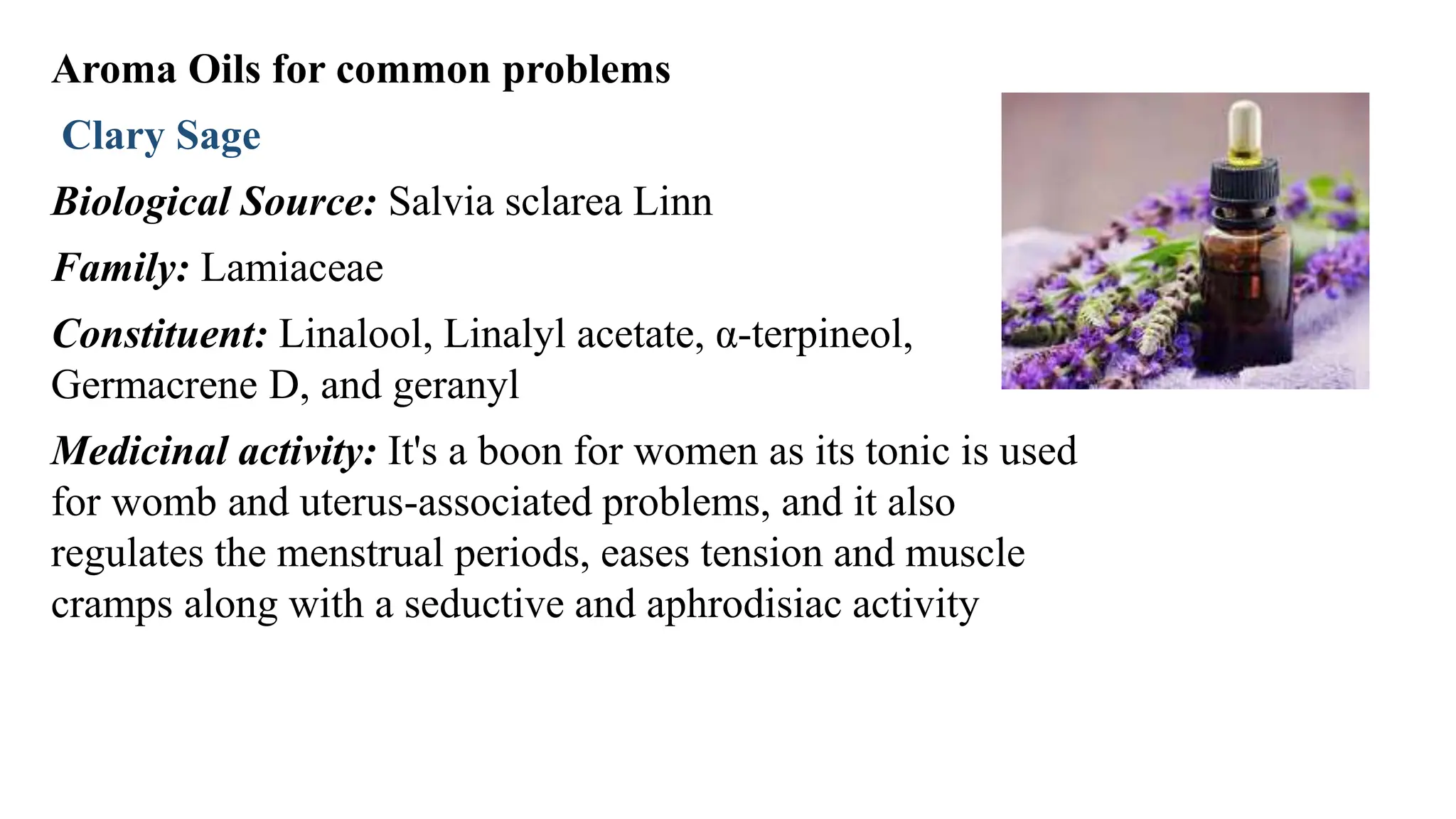
3) Yogamudra : The practice of this asana tones
up the nervous system, builds up powerful
abdominal muscles and strengthens the pelvic
organs. It helps pep up digestion, boosts the
appetite and removes constipation. It tones up
and relaxes the nerves of the head and face.
4) Vajrasana ( Pelvic pose ) - Vajrasana can be performed
even after meals. It improves the digestion and is beneficial
in cases of dyspepsia, constipation, colitis, seminal weakness
and stiffness of the legs. It strengthens the hips, thighs,
knees, calves, ankles and toes
Pranayama
Prana means ‘ vital force ‘ and Ayama means ‘ control
‘ in Sanskrit. Thus Pranayama means the control of the vital
force through concentration and regulated breathing.
By means of controlled breathing that is, inhaling and
exhaling by holding the breath for a fixed time and changing
the rhythm of inspiration and expiration, it is possible to
influence the life-force in the body.
• Pranayama is the process by which such conscious
control is achieved through controlled and
rhythmical breathing . Pranayama purifies the
channels along which the life stream of ‘Prana’
flows in the body and prevents various disorders.
• It increases one’s resistance to respiratory diseases.
The best position in which to practice pranayama is
the Padmasana or lotus pose.
• If for some reason that position is difficult to adopt,
it can be done while sitting in any comfortable pose.
The important thing is to keep the back, neck and
head in a straight line. The body should be in its
natural relaxed condition and this can be achieved by
resting a few minutes in Shavasana.
If necessary, use your right finger and thumb on either side of the nose
to control the right and left nostrils during inhalation and exhalation. In
practicising pranayama, a ratio of two to one should be maintained
throughout, that is, the exhalation time should be double that required for
inhalation. For instance, if inhalation takes 5 seconds, exhalation should take
10 seconds. Both inhalation and exhalation should be smooth and quiet.
Some varieties of pranayama beneficial in the treatment of common
ailments are as follows
Relaxation Techniques
Relaxation techniques are practices to help bring about the body’s
“relaxation response,” which is characterized by slower breathing, lower blood
pressure, and a reduced heart rate. The relaxation response is the opposite of the
stress response.
• Progressive Relaxation: Also called progressive muscle relaxation, this
technique involves tensing different muscles in your body and then releasing
the tension.
• Autogenic Training: Through a series of mental exercises involving
relaxation and ideas you suggest to yourself (autosuggestion), your mind
focuses on your body’s experience of relaxation.
• Guided Imagery or “Visualization”: In guided imagery, you picture objects,
scenes, or events that are associated with relaxation or calmness and attempt
to produce a similar feeling in your body.
• Biofeedback-Assisted Relaxation: Through feedback that is usually
provided by an electronic device, you learn how to recognize and manage
how your body responds. The electronic device lets you see how your heart
rate, blood pressure, or muscle tension changes in response to feeling
stressed or relaxed.
• Self-Hypnosis: In self-hypnosis programs, people learn to produce the
relaxation response when prompted by a phrase or nonverbal cue (called a
“suggestion”) of their own.
• Breathing Exercises: For breathing exercises, you might focus on taking
slow, deep breaths—also called diaphragmatic breathing
AROMA THERAPY
Aromatherapy derived its name from the word aroma, which means
fragrance or smell, and therapy which means treatment. This therapy is a
natural way of healing a person's mind, body, and soul.
Essential oils or volatile oils are extracted from the flowers, barks,
stems, leaves, roots, fruits, and other parts of the plant. These are a mixture
of saturated and unsaturated hydrocarbons, alcohol, aldehydes, esters,
ethers, ketones, oxides phenols, and terpenes, which may produce
characteristic odors
When inhaled, the scent molecules in essential oils travel from the
olfactory nerves directly to the brain and especially impact the amygdala,
the emotional center of the brain
Classification of Aromatherapy
1) Cosmetic aromatherapy: These products are used for their various effects
such as cleansing, moisturizing, drying, and toning. Healthy skin can be
obtained by the use of essential oils in facial
2) Massage aromatherapy: The use of the grape seed, almond, or jojoba oil
in pure vegetable oil during a massage has been shown to have wonderful
effects. This is also known as the healing touch of massage therapy.
Classification of Aromatherapy
3) Medical aromatherapy: Utilizing the medical aroma therapy knowledge
of the effect of essential oils on promoting and treating clinically diagnosed
medical ailments. Classification of Aromatherapy
4) Olfactory aromatherapy: Inhalation of essential oils has given rise to
olfactory aromatherapy, where simple inhalation has resulted in enhanced
emotional wellness, calmness, relaxation, or rejuvenation of the human body.
5) Psycho-aromatherapy: Psycho-aromatherapy, certain states of moods and
emotions can be obtained by these oils giving the pleasure of relaxation,
invigoration, or a pleasant memory.
Mechanism of Aroma therapy
The mechanism of their action involves the integration of essential oils
into a biological signal of the receptor cells in the nose when inhaled. The
signal is transmitted to limbic and hypothalamus parts of the brain via the
olfactory bulb. These signals cause the brain to release neuro messengers like
serotonin, endorphin, etc., to link our nervous and other body systems assuring
the desired change and providing a feeling of relief.
Aroma Oils for common problems
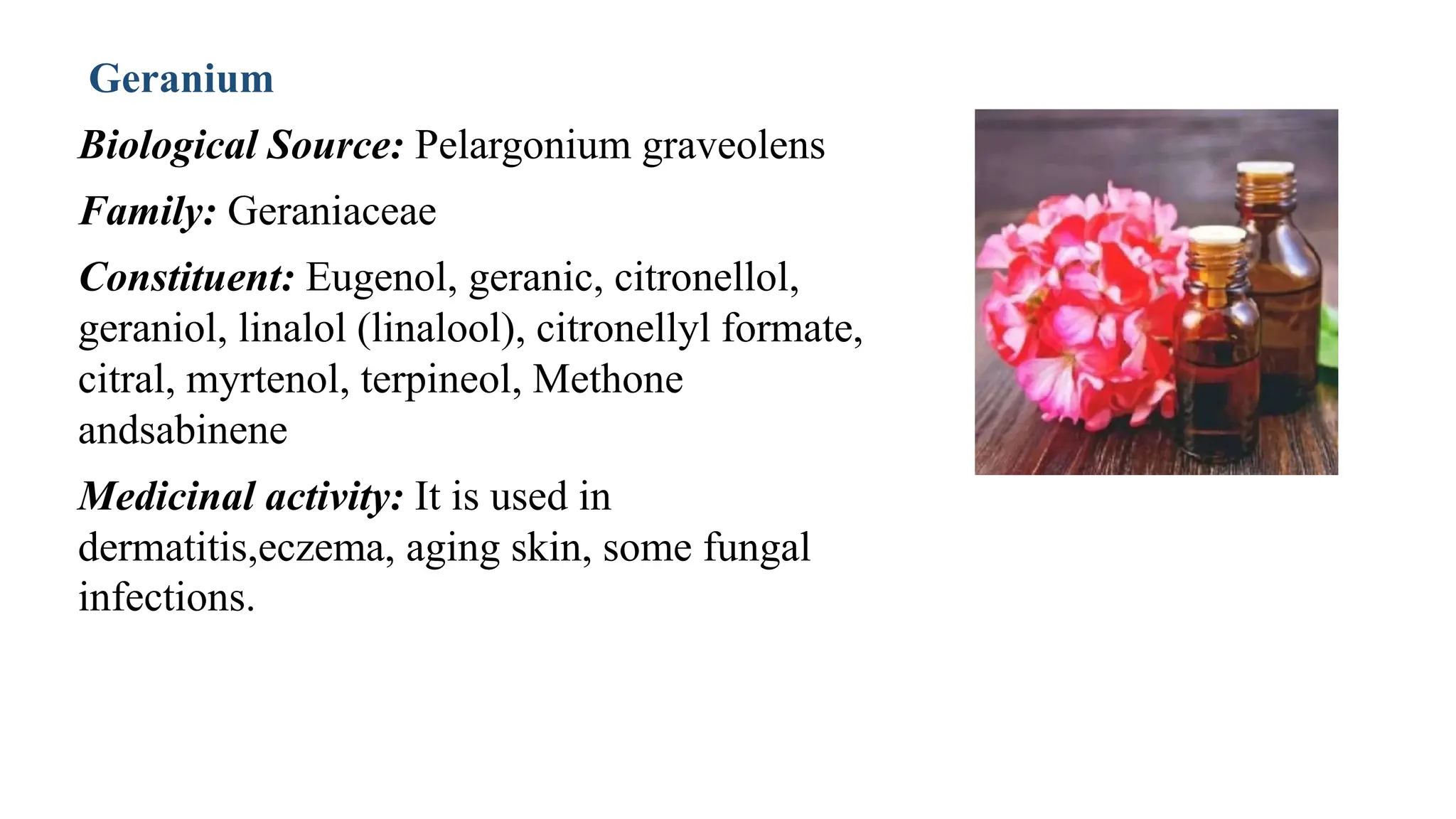
Clary Sage
Biological Source: Salvia sclarea Linn
Family: Lamiaceae
Constituent: Linalool, Linalyl acetate, α-terpineol,
Germacrene D, and geranyl
Medicinal activity: It's a boon for women as its tonic is used
for womb and uterus-associated problems, and it also
regulates the menstrual periods, eases tension and muscle
cramps along with a seductive and aphrodisiac activity
Eucalyptus
Biological Source: Eucalyptus globulus Labill
Family: Myrtaceae
Constituent: Cineole (70%-85%),
Aromadendrene, limonene, terpinene, cymene,
phellandrene, and pinene
Medicinal activity: Its oils have been used to
regulate and activate the various systems like the
nervous system for neuralgia, headache, and
debility
Geranium
Biological Source: Pelargonium graveolens
Family: Geraniaceae
Constituent: Eugenol, geranic, citronellol,
geraniol, linalol (linalool), citronellyl formate,
citral, myrtenol, terpineol, Methone
andsabinene
Medicinal activity: It is used in
dermatitis,eczema, aging skin, some fungal
infections.
Lavender
Biological Source: Lavandula officinalis
Family: Lamiaceae
Constituent: Camphor, terpinen-4-ol, linalool,
Linatyl acetate, beta-ocimene, and 1,8-cineole
Medicinal activity: In the treatment of abrasions,
burns, stress, headaches, in promotion of new
cell growth, skin problems, painful muscles, and
boosting an immune system.
Peppermint
Biological Source: Mentha piperita
Family: Lamiaceae
Constituent: Carvacrol, Menthol, Carvone,
Methyl acetate, limonene, and menthone
Medicinal activity: Anti-inflammatory,
Analgesic, Anti-infectious, Antimicrobial,
Antiseptic, Antispasmodic, Astringent,
Digestive, Carminative, Fungicidal Effects,
Nervine Stimulant, Vasoconstrictor,
Decongestant, and Stomachic Properties.
Lemon
Biological Source: Citrus limon
Family: Rutaceae
Constituent: Terpenes, D-limonene, and L-
limonene, together form about 90 percent of
the bulk of the oil
Medicinal activity: Used to boost the
immunesystem and to accelerate the white
corpuscleproduction along with counteracting
acidity andulcers through citric acid, which
helpsdigestion, by forming carbonates
andbicarbonates of potassium and calcium
Extraction of Essential oils
The extraction of essential oils is generally carried out by two main
techniques; Azeotropic distillation (hydro-distillation, Hydro diffusion, and
steam distillation) and extraction with solvents.
Essential Oil Blending
A blended oil is simply a combination of two or more types of oil. The
synergistic blending of pure essential oils can be carried out for both aromatic
and therapeutic purposes.
Essential oils are dynamic organic liquids that work in synergy with
each other. Synergy means working together in harmony. In general, essential
oils work better when mixed with other essential oils. When blending essential
oils, one oil can actually balance out the weaker parts of another, and even the
possible side effects that oil could have if applied on its own.
Hydrosols
• Hydrosols are water-based products madefrom the distillation of fresh
flowers, leaves, fruits, and other plant materials.
• They're a byproduct of the essential oilmanufacturing process and share
many ofthe same properties as essential oils.
• The difference is that hydrosols are mostly water.Hydrosols• Hydrosols are
used for face masks, hair care, facial toners, body sprays, and room sprays,
such as this sage room spray recipe.
• The main difference between the two is in their names - oil and hydro- one
is oil soluble, and one is water-soluble.
• Our essential oils and hydrosols are made through a process called
distillation.
Carrier oils
Carrier oils are a key part of aromatherapy. which is a complementary
therapy that involves using essential oils to aid physical and emotional health.
Carrier oils dilute concentrated essential oils so that people can apply
them to the skin without experiencing side effects.
People make essential oils through the distillation of the aromatic
leaves, flowers, barks, and roots of plants. If they apply these oils directly to
the skin, however, they can cause reaction, such as severe irritation, flushing,
or burning.
Carrier oils dilute the essential oils and help "carry" them into the skin.
People also sometimes use aloe-vera gels and unscented body lotions as
carriers
There are some factors to be considered for choosing carrier oils,
Odour: A few carrier oils have a distinct odor. When added to essential oil, it
may alter the aroma.
Absorption: Your skin can absorb some carrier oils better than others.
Skin type: Depending on your skin type, some oils may irritate skin or
worsen a skin condition such as acne
Shelf life: Some carrier oils can be stored for longer periods than others
without going bad
Some Important carrier oils used are listed as follows,
• Coconut oil
• Jojoba oil
• Blackseed oil
• Rosehip oil
• Apricot Kernel oil
• Sun flower oil
• Olive oil
• Avacado oil
• Argan oil
• Sweet almond oil
INDIAN SYSTEM OF MEDICINE, UNIT2,PCG SEM2.pptx

INDIAN SYSTEM OF MEDICINE, UNIT2,PCG SEM2.pptx

  • 1.
    INDIAN SYSTEM OF MEDICINE UNIT 2 S.PRITHIVIRAJAN., M. Pharm Dept. of Pharmacognosy, COP, Madurai Medical College, Madurai-20 M PHARM – PHARMACOGNOSY SEM 2
  • 2.
    CONTENTS Naturopathy Yoga andAromatherapy practices a) Naturopathy Introduction, basic principles and treatment Hrs modalities. b) Yoga - Introduction and Streams of Yoga. Asanas, Pranayama, Meditations and Relaxation techniques c) Aromatherapy - Introduction, aroma oils for common problems, carrier oils.
  • 3.
    NATUROPATHY ‘Nature cure’ isa constructive method of treatment which aims at removing the basic cause of disease through the rational use of the elements freely available in nature. It is not only a system of healing, but also a way of life, in tune with the internal vital forces or natural elements comprising the human body. It is a complete revolution in the art and science of living. Although the term ‘ naturopathy’ is of relatively recent origin, the philosophical basis and several of the methods of nature cure treatments are ancient. It was practised in ancient Egypt, Greece and Rome.
  • 4.
    Basic Principles ofNaturopathy The whole philosophy and practice of nature cure is built on three basic principles 1) All forms of disease are due to accumulations of waste materials and bodily refuse in the system. These waste materials in the healthy individual are removed from the system through the organs of elimination. But in the diseased person, they are steadily piling up in the body through years of faulty habits of living such as wrong feeding, improper care of the body and habits contributing to enervation and nervous exhaustion such as worry, overwork and excesses of all kinds. The only way to cure disease is to employ methods which will enable the system to throw off these toxic accumulations. All natural treatments are actually directed towards this end.
  • 5.
    2) All acutediseases such as fevers, colds, inflammations, digestive disturbances and skin eruptions are nothing more than self-initiated efforts on the part of the body to throw off the accumulated waste materials and that all chronic diseases such as heart disease, diabetes, rheumatism, asthma, kidney disorders, are the results of continued suppression of the acute diseases through harmful methods such as drugs, vaccines, narcotics and gland extracts. 3) The body contains an elaborate healing mechanism which has the power to bring about a return to normal condition of health, provided right methods are employed to enable it to do so. In other words, the power to cure disease lies within the body itself and not in the hands of the doctor.
  • 6.
    Treatment Modalities 1) Fasting Fastingrefers to complete abstinence from food for a short or long period for a specific purpose. It is highly beneficial in practically all kinds of stomach and intestinal disorders and in serious conditions of the kidneys and liver. It is a miracle cure for eczema and other skin diseases and offers the only hope of permanent cure in many cases. This will enable the chronically sick body to gradually and slowly eliminate toxic waste matter without seriously affecting the natural functioning of the body. A correct mode of living and a balanced diet after the fast will restore vigour and vitality to the individual. The duration of the fast depends upon the age of the patient, the nature of the disease and the amount and type of drugs previously used. It is advisable to undertake a professional guidance.
  • 7.
    2) Therapeutic baths Waterhas been used as a valuable therapeutic agent since time immemorial. In all major ancient civilizations, bathing was considered an important measure for the maintenance of health and prevention of disease. It was also valued for its remedial properties. It equalises circulation, boosts muscular tone and aids digestion and nutrition. It also tones up the activity of perspiratory gland and in the process eliminates the damaged cells and toxic matter from the system. The common water temperature chart is : cold 100C to 180C, neutral 32°C to 36°C and hot 40°C to 45°C. Above 45°C, water loses its therapeutic value and is destructive. The main methods of water treatment which can be employed in the healing of various diseases in a do-it-yourself manner are described below.
  • 8.
    i. Enema ii. Hipbath (Hot / Cold) iii. Cold compress iv. Heat compress v. Spine bath vi. Foot bath (Hot / Cold) vii. Immersion bath (Hot / Cold) viii.Steam bath ix. Epsom salt bath x. Mud bath
  • 9.
    3) Exercise (Physio) Regularexercise taken properly can achieve the increased use of food by the body, which contributes to health and fitness. The basal metabolic rate and habitual body temperature will slowly rise during several weeks of physical exercise, if the programme is not too hard. The healthy person usually has abundant body heat and a warm radiant glow. Regular progressive physical exercise can bring about the balance of automatic, or involuntary , nervous system. The tone of the vagus nerve, one of the nerves that control sensation and motion, is strengthened. This accounts for stronger pulse waves, higher metabolism and better circulation.
  • 10.
    4) Massage The generalmassage, dealing with all parts of the body, is highly beneficial in many ways. It tones up the nervous system, influences respiration and quickens the elimination of poisons and waste material from the body through the various eliminative organs such as the lungs, skin, kidneys and bowels. It also boosts blood circulation and metabolic processes. A massage removes facial wrinkles , helps to fill out hollow cheeks and neck and eases stiffness, sore muscles and numbness. There are five fundamental modes of manipulation in massage they are, Effleurage (stroking), Friction ( rubbing), Petrissage ( kneading), Tapotment (percussion) and Vibration (shaking or trembling)
  • 11.
    5) Yoga therapy Yogais a means of attaining perfect health by maintaining harmony and achieving optimum functioning on all three levels through complete self-control. Yogic kriyas, Asanas and Pranayama constitute the physical basis of yoga. which have specific therapeutic values and are highly beneficial in the maintenance of health and the healing of diseases. The practice of Kriyas and Asanas leads to excellent circulation. It also energises and stimulates major endocrine glands of the body. Yogic exercises promote inner health and harmony, and their regular practice helps prevent and cure many common ailments. They also help eliminate tensions, be they physical, mental or emotional.
  • 12.
    6) Sleep Sleep repairsthe wear and tear of the body and mind incurred during waking hours. Nothing is so restorative to the nerves as sound and uninterrupted sleep. Sleep is thus a vital element in a total way of life. It is a basic need in man’s mental as well as physical life. During sleep most of the functions of the body are carried on at the lowest level possible in health. Heat production is from 10 to 15 per cent below the basal level. The mechanism regulating the body temperature are less sensitive than in the waking state and are depressed by 0.5 to 1.0 degree F. The rate of the heart is reduced by 10 to 30 beats per minute and a decline in blood pressure of about 20 mm occurs in quiet restful sleep. The urine volume is considerably reduced, but its concentration in solids is increased.
  • 13.
    The tone ofall the skeletal muscles is lessened. The eyes are usually rolled upward and the pupils constricted. Loss of sleep exerts seriously detrimental effects upon the nervous system. Long periods of wakefulness may cause profound psychological changes such as loss of memory, irritability, hallucination and even schizophrenic manifestations 7) Other Treatment methods - Aromatherapy - Chromatherapy - Accupressure - Accupuncture
  • 14.
    YOGA THERAPY The YogaTherapy or ‘ yoga-chikitsa’ refers to the treatment of diseases by means of yogic exercises which may be physical or mental or both. Yoga is a means of attaining perfect health by maintaining harmony and achieving optimum functioning on all three levels through complete self-control. Yogic kriyas, Asanas and Pranayama constitute the physical basis of yoga. which have specific therapeutic values and are highly beneficial in the maintenance of health and the healing of diseases. The practice of Kriyas and Asanas leads to excellent circulation. It also energises and stimulates major endocrine glands of the body. Yogic exercises promote inner health and harmony, and their regular practice helps prevent and cure many common ailments. They also help eliminate tensions, be they physical, mental or emotional.
  • 15.
    All yogic exercisesshould be performed on a clean mat, a carpet or a blanket covered with a cotton sheet. Clothing should be light and loose-fitting to allow free movement of the limbs. The mind should be kept off all disturbances and tensions. Regularity and punctuality in practising yogic exercises is essential. Generally, 5 a.m. to 8 a.m. is the ideal time for yoga practices. There are four Streams of Yoga namely, 1. Karma yoga 2. Bhakti yoga 3. Jnana yoga 4. Raja yoga
  • 17.
    Kriyas A disease-free systemshould be the starting ground for yogasanas and pranayama. There are six specific cleansing techniques, known as Shat Kriyas, which eliminate impurities and help cure many ailments. Of these, the following four can be practised safely 1. Jalaneti - Jalaneti is a process of cleansing the air passage of the nostrils and the throat by washing them with tepid saline water 2. Vamana Dhouti or Kunjal - This is a process of cleansing the interior of the stomach. Drink four to six glasses of tepid water, with a little salt added to it, early in the morning on an empty stomach 3. Kapalbhati - This is a respiratory exercise for the abdomen and diaphragm. Exercise the diaphragm by exhaling suddenly and quickly through both nostrils, producing a hissing sound. 4. Trataka - looking at an object with awareness at four sides
  • 18.
    Asanas Asanas should alwaysbe practiced on an empty stomach. Shavasana should be practiced for a brief period before starting the rest of the exercises as this will create the right mental condition. Asanas should be performed at a leisurely slow-motion pace, maintaining poise and balance 1. Shavasana ( Corpse pose ) This asana helps bring down high blood pressure, and relieves the mind, particularly for those who are engaged in excessive mental activity. This exercise should be done both at the beginning and at the end of the daily round of yogic asanas. During a fast, shavasana soothes the nervous system.
  • 19.
    2) Padmasana (Lotus pose ) : Padmasana is a good pose for doing pranayama and meditation. It helps in the treatment of many heart and lung diseases and digestive disorders. It also calms and refreshes the mind. 3) Yogamudra : The practice of this asana tones up the nervous system, builds up powerful abdominal muscles and strengthens the pelvic organs. It helps pep up digestion, boosts the appetite and removes constipation. It tones up and relaxes the nerves of the head and face.
  • 20.
    4) Vajrasana (Pelvic pose ) - Vajrasana can be performed even after meals. It improves the digestion and is beneficial in cases of dyspepsia, constipation, colitis, seminal weakness and stiffness of the legs. It strengthens the hips, thighs, knees, calves, ankles and toes Pranayama Prana means ‘ vital force ‘ and Ayama means ‘ control ‘ in Sanskrit. Thus Pranayama means the control of the vital force through concentration and regulated breathing. By means of controlled breathing that is, inhaling and exhaling by holding the breath for a fixed time and changing the rhythm of inspiration and expiration, it is possible to influence the life-force in the body.
  • 21.
    • Pranayama isthe process by which such conscious control is achieved through controlled and rhythmical breathing . Pranayama purifies the channels along which the life stream of ‘Prana’ flows in the body and prevents various disorders. • It increases one’s resistance to respiratory diseases. The best position in which to practice pranayama is the Padmasana or lotus pose. • If for some reason that position is difficult to adopt, it can be done while sitting in any comfortable pose. The important thing is to keep the back, neck and head in a straight line. The body should be in its natural relaxed condition and this can be achieved by resting a few minutes in Shavasana.
  • 22.
    If necessary, useyour right finger and thumb on either side of the nose to control the right and left nostrils during inhalation and exhalation. In practicising pranayama, a ratio of two to one should be maintained throughout, that is, the exhalation time should be double that required for inhalation. For instance, if inhalation takes 5 seconds, exhalation should take 10 seconds. Both inhalation and exhalation should be smooth and quiet. Some varieties of pranayama beneficial in the treatment of common ailments are as follows
  • 23.
    Relaxation Techniques Relaxation techniquesare practices to help bring about the body’s “relaxation response,” which is characterized by slower breathing, lower blood pressure, and a reduced heart rate. The relaxation response is the opposite of the stress response. • Progressive Relaxation: Also called progressive muscle relaxation, this technique involves tensing different muscles in your body and then releasing the tension. • Autogenic Training: Through a series of mental exercises involving relaxation and ideas you suggest to yourself (autosuggestion), your mind focuses on your body’s experience of relaxation. • Guided Imagery or “Visualization”: In guided imagery, you picture objects, scenes, or events that are associated with relaxation or calmness and attempt to produce a similar feeling in your body.
  • 24.
    • Biofeedback-Assisted Relaxation:Through feedback that is usually provided by an electronic device, you learn how to recognize and manage how your body responds. The electronic device lets you see how your heart rate, blood pressure, or muscle tension changes in response to feeling stressed or relaxed. • Self-Hypnosis: In self-hypnosis programs, people learn to produce the relaxation response when prompted by a phrase or nonverbal cue (called a “suggestion”) of their own. • Breathing Exercises: For breathing exercises, you might focus on taking slow, deep breaths—also called diaphragmatic breathing
  • 25.
    AROMA THERAPY Aromatherapy derivedits name from the word aroma, which means fragrance or smell, and therapy which means treatment. This therapy is a natural way of healing a person's mind, body, and soul. Essential oils or volatile oils are extracted from the flowers, barks, stems, leaves, roots, fruits, and other parts of the plant. These are a mixture of saturated and unsaturated hydrocarbons, alcohol, aldehydes, esters, ethers, ketones, oxides phenols, and terpenes, which may produce characteristic odors When inhaled, the scent molecules in essential oils travel from the olfactory nerves directly to the brain and especially impact the amygdala, the emotional center of the brain
  • 26.
    Classification of Aromatherapy 1)Cosmetic aromatherapy: These products are used for their various effects such as cleansing, moisturizing, drying, and toning. Healthy skin can be obtained by the use of essential oils in facial 2) Massage aromatherapy: The use of the grape seed, almond, or jojoba oil in pure vegetable oil during a massage has been shown to have wonderful effects. This is also known as the healing touch of massage therapy. Classification of Aromatherapy 3) Medical aromatherapy: Utilizing the medical aroma therapy knowledge of the effect of essential oils on promoting and treating clinically diagnosed medical ailments. Classification of Aromatherapy
  • 27.
    4) Olfactory aromatherapy:Inhalation of essential oils has given rise to olfactory aromatherapy, where simple inhalation has resulted in enhanced emotional wellness, calmness, relaxation, or rejuvenation of the human body. 5) Psycho-aromatherapy: Psycho-aromatherapy, certain states of moods and emotions can be obtained by these oils giving the pleasure of relaxation, invigoration, or a pleasant memory. Mechanism of Aroma therapy The mechanism of their action involves the integration of essential oils into a biological signal of the receptor cells in the nose when inhaled. The signal is transmitted to limbic and hypothalamus parts of the brain via the olfactory bulb. These signals cause the brain to release neuro messengers like serotonin, endorphin, etc., to link our nervous and other body systems assuring the desired change and providing a feeling of relief.
  • 28.
    Aroma Oils forcommon problems Clary Sage Biological Source: Salvia sclarea Linn Family: Lamiaceae Constituent: Linalool, Linalyl acetate, α-terpineol, Germacrene D, and geranyl Medicinal activity: It's a boon for women as its tonic is used for womb and uterus-associated problems, and it also regulates the menstrual periods, eases tension and muscle cramps along with a seductive and aphrodisiac activity
  • 29.
    Eucalyptus Biological Source: Eucalyptusglobulus Labill Family: Myrtaceae Constituent: Cineole (70%-85%), Aromadendrene, limonene, terpinene, cymene, phellandrene, and pinene Medicinal activity: Its oils have been used to regulate and activate the various systems like the nervous system for neuralgia, headache, and debility
  • 30.
    Geranium Biological Source: Pelargoniumgraveolens Family: Geraniaceae Constituent: Eugenol, geranic, citronellol, geraniol, linalol (linalool), citronellyl formate, citral, myrtenol, terpineol, Methone andsabinene Medicinal activity: It is used in dermatitis,eczema, aging skin, some fungal infections.
  • 31.
    Lavender Biological Source: Lavandulaofficinalis Family: Lamiaceae Constituent: Camphor, terpinen-4-ol, linalool, Linatyl acetate, beta-ocimene, and 1,8-cineole Medicinal activity: In the treatment of abrasions, burns, stress, headaches, in promotion of new cell growth, skin problems, painful muscles, and boosting an immune system.
  • 32.
    Peppermint Biological Source: Menthapiperita Family: Lamiaceae Constituent: Carvacrol, Menthol, Carvone, Methyl acetate, limonene, and menthone Medicinal activity: Anti-inflammatory, Analgesic, Anti-infectious, Antimicrobial, Antiseptic, Antispasmodic, Astringent, Digestive, Carminative, Fungicidal Effects, Nervine Stimulant, Vasoconstrictor, Decongestant, and Stomachic Properties.
  • 33.
    Lemon Biological Source: Citruslimon Family: Rutaceae Constituent: Terpenes, D-limonene, and L- limonene, together form about 90 percent of the bulk of the oil Medicinal activity: Used to boost the immunesystem and to accelerate the white corpuscleproduction along with counteracting acidity andulcers through citric acid, which helpsdigestion, by forming carbonates andbicarbonates of potassium and calcium
  • 34.
    Extraction of Essentialoils The extraction of essential oils is generally carried out by two main techniques; Azeotropic distillation (hydro-distillation, Hydro diffusion, and steam distillation) and extraction with solvents. Essential Oil Blending A blended oil is simply a combination of two or more types of oil. The synergistic blending of pure essential oils can be carried out for both aromatic and therapeutic purposes. Essential oils are dynamic organic liquids that work in synergy with each other. Synergy means working together in harmony. In general, essential oils work better when mixed with other essential oils. When blending essential oils, one oil can actually balance out the weaker parts of another, and even the possible side effects that oil could have if applied on its own.
  • 35.
    Hydrosols • Hydrosols arewater-based products madefrom the distillation of fresh flowers, leaves, fruits, and other plant materials. • They're a byproduct of the essential oilmanufacturing process and share many ofthe same properties as essential oils. • The difference is that hydrosols are mostly water.Hydrosols• Hydrosols are used for face masks, hair care, facial toners, body sprays, and room sprays, such as this sage room spray recipe. • The main difference between the two is in their names - oil and hydro- one is oil soluble, and one is water-soluble. • Our essential oils and hydrosols are made through a process called distillation.
  • 36.
    Carrier oils Carrier oilsare a key part of aromatherapy. which is a complementary therapy that involves using essential oils to aid physical and emotional health. Carrier oils dilute concentrated essential oils so that people can apply them to the skin without experiencing side effects. People make essential oils through the distillation of the aromatic leaves, flowers, barks, and roots of plants. If they apply these oils directly to the skin, however, they can cause reaction, such as severe irritation, flushing, or burning. Carrier oils dilute the essential oils and help "carry" them into the skin. People also sometimes use aloe-vera gels and unscented body lotions as carriers
  • 37.
    There are somefactors to be considered for choosing carrier oils, Odour: A few carrier oils have a distinct odor. When added to essential oil, it may alter the aroma. Absorption: Your skin can absorb some carrier oils better than others. Skin type: Depending on your skin type, some oils may irritate skin or worsen a skin condition such as acne Shelf life: Some carrier oils can be stored for longer periods than others without going bad Some Important carrier oils used are listed as follows, • Coconut oil • Jojoba oil • Blackseed oil • Rosehip oil • Apricot Kernel oil • Sun flower oil • Olive oil • Avacado oil • Argan oil • Sweet almond oil