Short FMCG Analysis Date: 29/09/2015
Swaroop Pandao swarooppandao@gmail.com
Indian FMCG Industry
 In the Economy, India’s FMCG is fourth largest.
 CAGR = 16.2%
 FMCG to GDP = 2.6%
 100% FDI in electronic hardware manufacturing sector
 FMCG maintained margins at 15.8% despite rising raw material costs
Segments Food and
Beverages
Personal
Care
Household
Care
Tobacco Other
Products
CAGR 13.4% 10.12% 9.23% 8.84% 7.94%
Share (%) 52% 20% 10% 15% 3%
Products Vegetables,
Fruit, grain,
dairy
products, etc.
Face wash,
Powder,
Cream oil,
Razors,
Shampoo,
etc.
Laundry
Soaps,
Detergents,
Air
fresheners,
Floor
cleaners, etc.
Tobacco,
Cigarettes,
etc.
Market
Leaders
Nestle, Dabur
India,
Britannia
Hindustan
Unilever
Limited
Hindustan
Unilever
Limited,
P&G
Hygiene
ITC
SWOT Analysis:
Strengths
 Low operational costs
 Distribution network
 Presence of well-known brands
 Favourable Government policies
Opportunities
 Untapped rural market
 Increasing purchasing power
 Large domestic market
 Export potential
Weaknesses
 Low scope of technical investments
 Low export levels
Threats
 Removal of import restrictions
 Slowdown in rural demand
Growth Engines Growth Inhibitors
 Growing Rural and urban market
 FDI support
 Advertising and media coverage
 Innovation in core products
 Rising per capita disposable income
 Wide distribution network
 High competition between large and
small players
 Ineffective use of technology
 Taylor made products with attractive
packaging
 Reach and role of distribution

Indian FMCG Industry Short

  • 1.
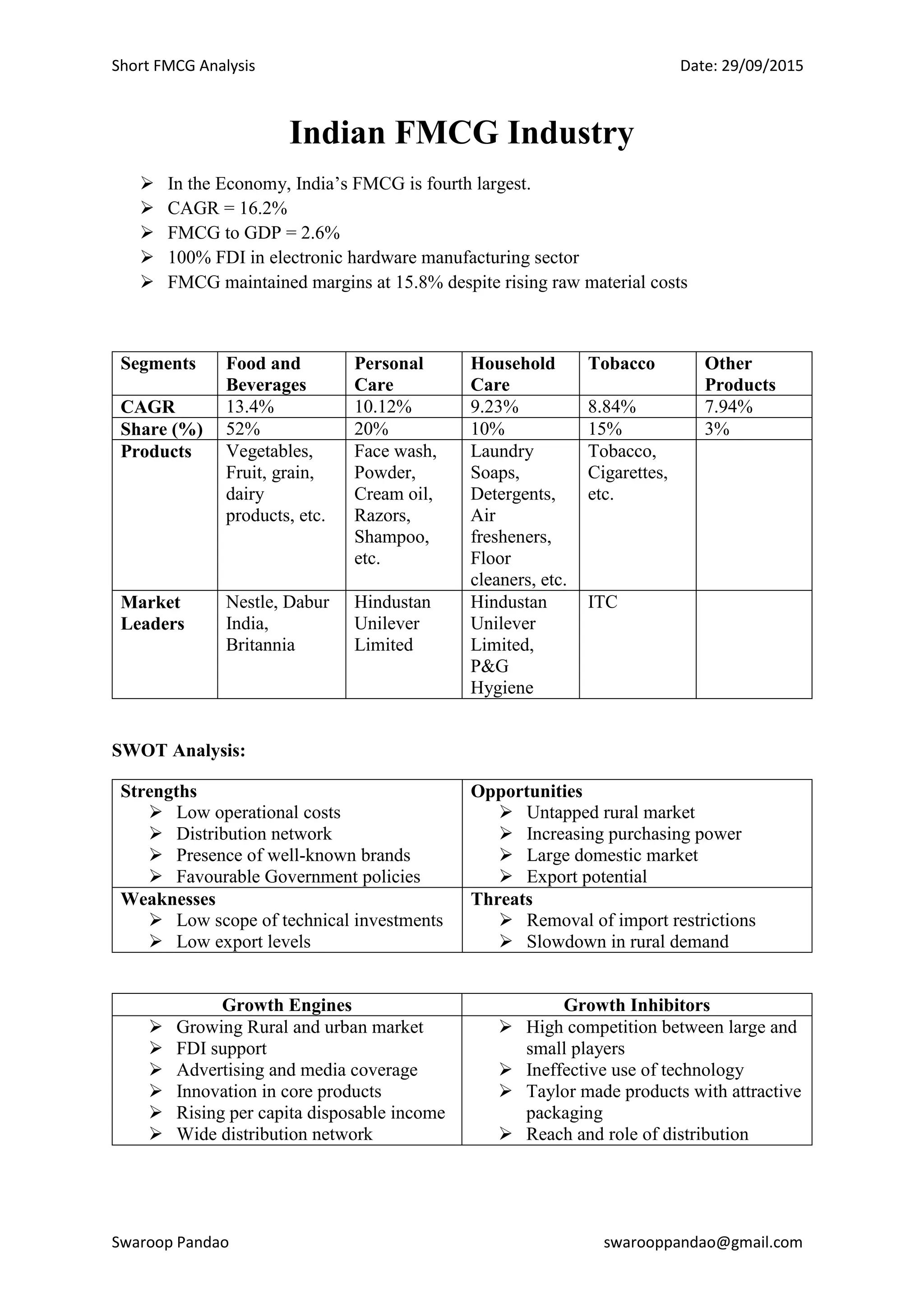
    Short FMCG AnalysisDate: 29/09/2015 Swaroop Pandao swarooppandao@gmail.com Indian FMCG Industry  In the Economy, India’s FMCG is fourth largest.  CAGR = 16.2%  FMCG to GDP = 2.6%  100% FDI in electronic hardware manufacturing sector  FMCG maintained margins at 15.8% despite rising raw material costs Segments Food and Beverages Personal Care Household Care Tobacco Other Products CAGR 13.4% 10.12% 9.23% 8.84% 7.94% Share (%) 52% 20% 10% 15% 3% Products Vegetables, Fruit, grain, dairy products, etc. Face wash, Powder, Cream oil, Razors, Shampoo, etc. Laundry Soaps, Detergents, Air fresheners, Floor cleaners, etc. Tobacco, Cigarettes, etc. Market Leaders Nestle, Dabur India, Britannia Hindustan Unilever Limited Hindustan Unilever Limited, P&G Hygiene ITC SWOT Analysis: Strengths  Low operational costs  Distribution network  Presence of well-known brands  Favourable Government policies Opportunities  Untapped rural market  Increasing purchasing power  Large domestic market  Export potential Weaknesses  Low scope of technical investments  Low export levels Threats  Removal of import restrictions  Slowdown in rural demand Growth Engines Growth Inhibitors  Growing Rural and urban market  FDI support  Advertising and media coverage  Innovation in core products  Rising per capita disposable income  Wide distribution network  High competition between large and small players  Ineffective use of technology  Taylor made products with attractive packaging  Reach and role of distribution