SINDH AGRICULTURE UNIVERSITY
TANDOJAM
DEPARTMENT OF SOIL SCIENCE
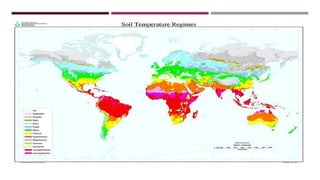
SOIL TEMPERATURE REGIME
SANJAY KUMAR GANESHANI
MSC SOIL SCIENCE
DEPARTMENT OF SOIL SCIENCE
SOIL TEMPERATURE REGIME
 The temperature is the most important properties of soil, it control the
possibilities of plant growth and soil formation.
 In Soil Taxonomy, soil temperature regime are based on mean annual soil
temperature (MAST).
 In tropical soils the change is minimal, the difference between mean
summer temperature (MST) and mean winter temperature (MWT) of soil
being less 50 O
C.
 Temperature varies from soil horizon to horizon.
SOIL TEMPERATURE REGIME
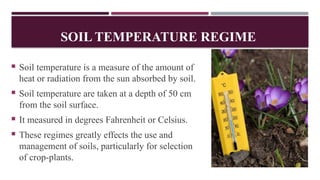
 Soil temperature is a measure of the amount of
heat or radiation from the sun absorbed by soil.
 Soil temperature are taken at a depth of 50 cm
from the soil surface.
 It measured in degrees Fahrenheit or Celsius.
 These regimes greatly effects the use and
management of soils, particularly for selection
of crop-plants.
IMPORTANCE OF SOIL TEMPERATURE REGIME
 Soil temperature influences the rate of weathering in soil, when the soil is
frozen or dry biological activity and chemical activity nearly stop.
 During a soil survey, the temperature of soils are recorded as one of the
properties both in soil genesis, classification and in soil use.
 Soil temperature regime is a soil classification creation (USDA Soil
Taxonomy).
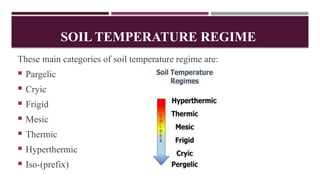
These main categories of soil temperature regime are:
 Pargelic
 Cryic
 Frigid
 Mesic
 Thermic
 Hyperthermic
 Iso-(prefix)
SOIL TEMPERATURE REGIME
PARGELIC
 Pergelic temperature regime have a mean annual soil temperature lower
than 0 O
C These are soils that have permafrost.
CRYIC
 Soils in this temperature regime have a mean annual temperature lower
than 8 O
C but do not have permafrost.
FRIGID
 A soil with a frigid temperature regime is warmer in summer than a soil
with a cryic regime, but its mean annual temperature is lower than 8 O
C
and the difference between mean summer and mean winter soil
temperatures is more than 6 O
C.
MESIC
 The mean annual soil temperature is 8 O
C or higher but lower than 15 O
C,
and the difference between mean summer and mean winter soil
temperatures is more than 6 O
C.
THERMIC
 The mean annual soil temperature is 15 O
C or higher but lower than 22
O
C, and the difference between mean summer and mean winter soil
temperatures is more than 6 O
C.
HYPERTHERMIC
 The mean annual soil temperature is 22 O
C or higher, and the difference
between mean summer and mean winter soil temperatures is more than 6
O
C.
ISO
 If the name of a soil temperature regime has the prefix iso, the mean
summer and mean winter soil temperatures difference by less than 6O
C.
In Soil Taxonomy, Soil temperature regime

In Soil Taxonomy, Soil temperature regime

  • 2.
    SINDH AGRICULTURE UNIVERSITY TANDOJAM DEPARTMENTOF SOIL SCIENCE SOIL TEMPERATURE REGIME SANJAY KUMAR GANESHANI MSC SOIL SCIENCE DEPARTMENT OF SOIL SCIENCE
  • 3.
    SOIL TEMPERATURE REGIME The temperature is the most important properties of soil, it control the possibilities of plant growth and soil formation.  In Soil Taxonomy, soil temperature regime are based on mean annual soil temperature (MAST).  In tropical soils the change is minimal, the difference between mean summer temperature (MST) and mean winter temperature (MWT) of soil being less 50 O C.  Temperature varies from soil horizon to horizon.
  • 4.
    SOIL TEMPERATURE REGIME Soil temperature is a measure of the amount of heat or radiation from the sun absorbed by soil.  Soil temperature are taken at a depth of 50 cm from the soil surface.  It measured in degrees Fahrenheit or Celsius.  These regimes greatly effects the use and management of soils, particularly for selection of crop-plants.
  • 5.
    IMPORTANCE OF SOILTEMPERATURE REGIME  Soil temperature influences the rate of weathering in soil, when the soil is frozen or dry biological activity and chemical activity nearly stop.  During a soil survey, the temperature of soils are recorded as one of the properties both in soil genesis, classification and in soil use.  Soil temperature regime is a soil classification creation (USDA Soil Taxonomy).
  • 7.
    These main categoriesof soil temperature regime are:  Pargelic  Cryic  Frigid  Mesic  Thermic  Hyperthermic  Iso-(prefix) SOIL TEMPERATURE REGIME
  • 8.
    PARGELIC  Pergelic temperatureregime have a mean annual soil temperature lower than 0 O C These are soils that have permafrost.
  • 9.
    CRYIC  Soils inthis temperature regime have a mean annual temperature lower than 8 O C but do not have permafrost.
  • 10.
    FRIGID  A soilwith a frigid temperature regime is warmer in summer than a soil with a cryic regime, but its mean annual temperature is lower than 8 O C and the difference between mean summer and mean winter soil temperatures is more than 6 O C.
  • 11.
    MESIC  The meanannual soil temperature is 8 O C or higher but lower than 15 O C, and the difference between mean summer and mean winter soil temperatures is more than 6 O C.
  • 12.
    THERMIC  The meanannual soil temperature is 15 O C or higher but lower than 22 O C, and the difference between mean summer and mean winter soil temperatures is more than 6 O C.
  • 13.
    HYPERTHERMIC  The meanannual soil temperature is 22 O C or higher, and the difference between mean summer and mean winter soil temperatures is more than 6 O C.
  • 14.
    ISO  If thename of a soil temperature regime has the prefix iso, the mean summer and mean winter soil temperatures difference by less than 6O C.