Case Study 2
Case presentation : Patient profile 2
Patient: 48 year old male
Occupation: Digital marketing specialist
Chief complaints:
● Exertional dyspnea since a week
● Swelling in feet
● Dizziness since a week
● Fatigue
https://www.dreamstime.com/illustration/diabetes-woman.html
Case Presentation : Patient profile 2
H/O :
Long standing T2DM for past 10 years
Dyslipidemia
Long standing hypertension for past 6-7 years
Established STEMI - PCI done 9 months ago
Family history: Grandma passed away due to CV stroke.
Habits : Drinks alcohol occasionally. Imbalanced diet.
No tobacco use. Lifestyle: Sedentary
The Clinical
examination
Height: 181 cms
Weight: 94 kgs
BMI: 29 kg/m2
Vitals: Pulse rate- 78/min, BP- 140/80
mm/Hg, Temp: 38.2 degree Celsius
Pedal edema, Increased JVP
No retinopathy
Echo 2D : EF 45%
Current Investigations
Hb: 12 g/dl,
ESR: 20 mm/hr
FPG:180mg/dl , PPG-260 mg/dl, HbA1c-8.8 %
Urine R/M: Normal
UACR: 45 mg/g,
eGFR-72.6 ml/min/1.73sq m
Lipid profile: TC-260, LDL-139,TG-165,HDL- 35
NT- Pro BNP 950 pg/mL
ECG
Current medications
● Tab Metformin 1000 mg BD
● Tab Glimepiride 1 mg BD
● Tab Teneligliptin 20 mg BD
● Tab Ramipril 5 mg BD
● Ecosprin AV 75
● D-Rise 60,000 IU weekly
Uncontrolled Type 2 diabetes mellitus with established CVD with possibly
HFrEF
Impression:
8. What will be the aim of the treatment, in the patient
having established CVD? (you may select more than one option)
1. Glycemic control
2. Weight reduction
3. Lipid control
4. Halting progression of CVD
5. Prevention of CKD
6. Lowering the blood pressure
Treatment choices
1. Uptitration of existing OADs
2. Changing DPP4i or/+ GLP-1 analogues/Pioglitazone
3. Discontinue SU, teneligliptin and +SGLT2i + newer DPP4i + metformin
4. Decrease SU dose, discontinue teneligliptin and + SGLT2i + newer DPP4i + metformin
5. Dietary changes
6. Halting alcohol intake
7. Addition of ACE inhibitor/ B blockers/ Diuretics
Burden of T2DM on CVD
• CVD is a significant cause of morbidity and mortality globally and is the leading cause of
death in people with T2D
• T2D is a major independent risk factor for CVD
• Endothelial dysfunction:
– Affects microvascular and macrovascular risk
– Drives atherosclerosis
• Atherosclerosis is accelerated in patients with T2D
• Visceral adiposity is associated with increased insulin resistance, inflammation and
atherogenic dyslipidemia.
1. http://www.who.int/mediacentre/factsheets/fs317/en/#. 2. http://www.idf.org/diabetesatlas.
36.8%
16.8%
E/e’>15
HF
0.5
0.4
0.3
0.2
0.1
0
0 1 2 3 4 5
Yr
s
N=1794
Community-based epidemiologic Study from Olmsted County
25% patients with diabetes develop HF over 5 yrs
From AM, et al. J Am Coll Cardiol. 2010 Jan 26;55(4):300-5.
DECLARE-TIMI 58 summary
Verma S, McMurray JJV. The Serendipitous Story of SGLT2 Inhibitors in Heart Failure. Circulation. 2019 May 28;139(22):2537-2541.
DAPA-HF Summary
Resulting in approval for
Dapagliflozin for the
treatment of HFreF
nephjc.com/news/2020/5/26/dapa-hf-the-visual-abstract
The
DELIVER
Trial
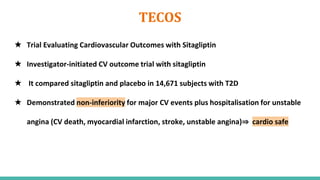
The TECOS trial
TECOS
★ Trial Evaluating Cardiovascular Outcomes with Sitagliptin
★ Investigator-initiated CV outcome trial with sitagliptin
★ It compared sitagliptin and placebo in 14,671 subjects with T2D
★ Demonstrated non-inferiority for major CV events plus hospitalisation for unstable
angina (CV death, myocardial infarction, stroke, unstable angina)⇒ cardio safe
TECOS
★ Rates of hospitalisation for heart failure did not differ between the sitagliptin and
placebo groups
★ If a DPP-4 inhibitor is indicated, the results of TECOS show that sitagliptin appears
safe in patients with high CV risk
9. Is CKD evaluation, vital in a patient with established CVD ?
★ Yes, in every patient
★ No, not required
★ Based on eGFR levels
★ Only in patients with clinical symptoms
★ An association between decline in cardiac function and renal function is well
documented
★ Changes in renal perfusion are likely to account for much of the renal deterioration in
patients with heart failure
★ Drugs used to manage heart failure can reduce renal function by various mechanisms.
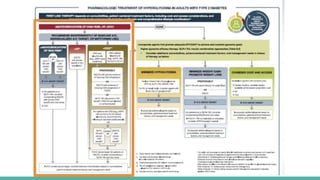
★ As heart failure progresses in patients, it is often accompanied by progressive CKD
with a fall in eGFR
The need of CKD evaluation
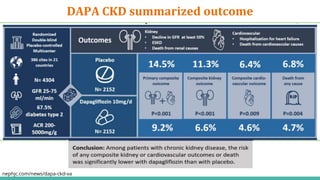
DAPA CKD summarized outcome
nephjc.com/news/dapa-ckd-va
T
Chadha, M., Das, A.K., Deb, P. et al. Expert Opinion: Optimum Clinical Approach to Combination-Use of SGLT2i + DPP4i in the Indian
Diabetes Setting. Diabetes Ther 13, 1097–1114 (2022)
T
10. In patients with established CVD, uncontrolled T2DM
would you prefer Dapagliflozin + Sitagliptin ?
★ Yes
★ No
★ Other OAD’s
11. With availability of branded generic Dapa + Sita, would
you recommend this for T2DM for cardio-renal protection ?
★ Definitely, yes
★ Most likely
★ May be
★ Not likely
12. According to you, will branded generic Dapa + Sita’s
cost effectiveness help increase compliance by the
patients?
★ Definitely, yes
★ Most likely
★ May be
★ Not likely
Post 6 months treatment
★ Decrease in pedal edema
★ FPG reduced from 180 mg/dL to 110 mg/dL
★ PPG reduced from 260 mg/dL to 155 mg/dL
★ HbA1C decreased to 6.9 %
★ UACR decreased to 25 mg/g
★ Weight has been reduced by 3.6 kgs.
★ Controlled lipid profile
★ eGFR has improved to 70.8 ml/min/1.73 sq m
Getting in range with ‘DAPA+SITA’
★ Dapagliflozin exhibits cardioprotective actions while Sitagliptin is
cardiosafe.
★ Dapagliflozin also provides renoprotective actions and helps in
improving the eGFR.
★ Reduction of hospitalisation rates in CVD in patients with T2DM
★ CKD evaluation is vital in all patients, specially patients with long
standing T2DM
IN RANGE Case -Cardio.pptx

IN RANGE Case -Cardio.pptx

  • 1.
  • 2.
    Case presentation :Patient profile 2 Patient: 48 year old male Occupation: Digital marketing specialist Chief complaints: ● Exertional dyspnea since a week ● Swelling in feet ● Dizziness since a week ● Fatigue https://www.dreamstime.com/illustration/diabetes-woman.html
  • 3.
    Case Presentation :Patient profile 2 H/O : Long standing T2DM for past 10 years Dyslipidemia Long standing hypertension for past 6-7 years Established STEMI - PCI done 9 months ago Family history: Grandma passed away due to CV stroke. Habits : Drinks alcohol occasionally. Imbalanced diet. No tobacco use. Lifestyle: Sedentary
  • 4.
    The Clinical examination Height: 181cms Weight: 94 kgs BMI: 29 kg/m2 Vitals: Pulse rate- 78/min, BP- 140/80 mm/Hg, Temp: 38.2 degree Celsius Pedal edema, Increased JVP No retinopathy Echo 2D : EF 45%
  • 5.
    Current Investigations Hb: 12g/dl, ESR: 20 mm/hr FPG:180mg/dl , PPG-260 mg/dl, HbA1c-8.8 % Urine R/M: Normal UACR: 45 mg/g, eGFR-72.6 ml/min/1.73sq m Lipid profile: TC-260, LDL-139,TG-165,HDL- 35 NT- Pro BNP 950 pg/mL
  • 6.
  • 8.
    Current medications ● TabMetformin 1000 mg BD ● Tab Glimepiride 1 mg BD ● Tab Teneligliptin 20 mg BD ● Tab Ramipril 5 mg BD ● Ecosprin AV 75 ● D-Rise 60,000 IU weekly
  • 9.
    Uncontrolled Type 2diabetes mellitus with established CVD with possibly HFrEF Impression:
  • 10.
    8. What willbe the aim of the treatment, in the patient having established CVD? (you may select more than one option) 1. Glycemic control 2. Weight reduction 3. Lipid control 4. Halting progression of CVD 5. Prevention of CKD 6. Lowering the blood pressure
  • 11.
    Treatment choices 1. Uptitrationof existing OADs 2. Changing DPP4i or/+ GLP-1 analogues/Pioglitazone 3. Discontinue SU, teneligliptin and +SGLT2i + newer DPP4i + metformin 4. Decrease SU dose, discontinue teneligliptin and + SGLT2i + newer DPP4i + metformin 5. Dietary changes 6. Halting alcohol intake 7. Addition of ACE inhibitor/ B blockers/ Diuretics
  • 12.
    Burden of T2DMon CVD • CVD is a significant cause of morbidity and mortality globally and is the leading cause of death in people with T2D • T2D is a major independent risk factor for CVD • Endothelial dysfunction: – Affects microvascular and macrovascular risk – Drives atherosclerosis • Atherosclerosis is accelerated in patients with T2D • Visceral adiposity is associated with increased insulin resistance, inflammation and atherogenic dyslipidemia. 1. http://www.who.int/mediacentre/factsheets/fs317/en/#. 2. http://www.idf.org/diabetesatlas.
  • 13.
    36.8% 16.8% E/e’>15 HF 0.5 0.4 0.3 0.2 0.1 0 0 1 23 4 5 Yr s N=1794 Community-based epidemiologic Study from Olmsted County 25% patients with diabetes develop HF over 5 yrs From AM, et al. J Am Coll Cardiol. 2010 Jan 26;55(4):300-5.
  • 14.
    DECLARE-TIMI 58 summary VermaS, McMurray JJV. The Serendipitous Story of SGLT2 Inhibitors in Heart Failure. Circulation. 2019 May 28;139(22):2537-2541.
  • 15.
    DAPA-HF Summary Resulting inapproval for Dapagliflozin for the treatment of HFreF nephjc.com/news/2020/5/26/dapa-hf-the-visual-abstract
  • 16.
  • 18.
  • 19.
    TECOS ★ Trial EvaluatingCardiovascular Outcomes with Sitagliptin ★ Investigator-initiated CV outcome trial with sitagliptin ★ It compared sitagliptin and placebo in 14,671 subjects with T2D ★ Demonstrated non-inferiority for major CV events plus hospitalisation for unstable angina (CV death, myocardial infarction, stroke, unstable angina)⇒ cardio safe
  • 21.
    TECOS ★ Rates ofhospitalisation for heart failure did not differ between the sitagliptin and placebo groups ★ If a DPP-4 inhibitor is indicated, the results of TECOS show that sitagliptin appears safe in patients with high CV risk
  • 22.
    9. Is CKDevaluation, vital in a patient with established CVD ? ★ Yes, in every patient ★ No, not required ★ Based on eGFR levels ★ Only in patients with clinical symptoms
  • 23.
    ★ An associationbetween decline in cardiac function and renal function is well documented ★ Changes in renal perfusion are likely to account for much of the renal deterioration in patients with heart failure ★ Drugs used to manage heart failure can reduce renal function by various mechanisms. ★ As heart failure progresses in patients, it is often accompanied by progressive CKD with a fall in eGFR The need of CKD evaluation
  • 24.
    DAPA CKD summarizedoutcome nephjc.com/news/dapa-ckd-va
  • 25.
    T Chadha, M., Das,A.K., Deb, P. et al. Expert Opinion: Optimum Clinical Approach to Combination-Use of SGLT2i + DPP4i in the Indian Diabetes Setting. Diabetes Ther 13, 1097–1114 (2022)
  • 26.
  • 27.
    10. In patientswith established CVD, uncontrolled T2DM would you prefer Dapagliflozin + Sitagliptin ? ★ Yes ★ No ★ Other OAD’s
  • 28.
    11. With availabilityof branded generic Dapa + Sita, would you recommend this for T2DM for cardio-renal protection ? ★ Definitely, yes ★ Most likely ★ May be ★ Not likely
  • 29.
    12. According toyou, will branded generic Dapa + Sita’s cost effectiveness help increase compliance by the patients? ★ Definitely, yes ★ Most likely ★ May be ★ Not likely
  • 30.
    Post 6 monthstreatment ★ Decrease in pedal edema ★ FPG reduced from 180 mg/dL to 110 mg/dL ★ PPG reduced from 260 mg/dL to 155 mg/dL ★ HbA1C decreased to 6.9 % ★ UACR decreased to 25 mg/g ★ Weight has been reduced by 3.6 kgs. ★ Controlled lipid profile ★ eGFR has improved to 70.8 ml/min/1.73 sq m
  • 31.
    Getting in rangewith ‘DAPA+SITA’ ★ Dapagliflozin exhibits cardioprotective actions while Sitagliptin is cardiosafe. ★ Dapagliflozin also provides renoprotective actions and helps in improving the eGFR. ★ Reduction of hospitalisation rates in CVD in patients with T2DM ★ CKD evaluation is vital in all patients, specially patients with long standing T2DM