OPTIMIZING
BP CONTROL
IN INDIA
THE ROLE OF
DIURETICS,
AND WHICH
ONE?
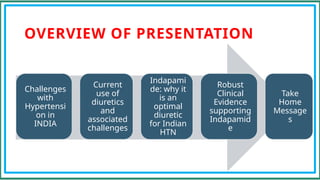
Challenges
with
Hypertensi
on in
INDIA
Current
use of
diuretics
and
associated
challenges
Indapami
de: why it
is an
optimal
diuretic
for Indian
HTN
Robust
Clinical
Evidence
supporting
Indapamid
e
Take
Home
Message
s
OVERVIEW OF PRESENTATION
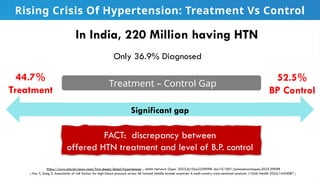
Rising Crisis Of Hypertension: Treatment Vs Control
https://www.who.int/news-room/fact-sheets/detail/hypertension ; JAMA Network Open. 2023;6(10):e2339098. doi:10.1001/jamanetworkopen.2023.39098
; Hou Y, Xang S. Association of risk factors for high blood pressure across 46 lowand middle-income countries: A multi-country cross-sectional analysis. J Glob Health 2024;14:04087 ;
In India, 220 Million having HTN
Only 36.9% Diagnosed
Significant gap
44.7%
Treatment
52.5%
BP Control
Treatment – Control Gap
FACT: discrepancy between
offered HTN treatment and level of B.P. control
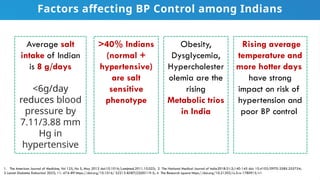
Average salt
intake of Indian
is 8 g/days
<6g/day
reduces blood
pressure by
7.11/3.88 mm
Hg in
hypertensive
>40% Indians
(normal +
hypertensive)
are salt
sensitive
phenotype
1. The American Journal of Medicine, Vol 125, No 5, May 2012 doi:10.1016/j.amjmed.2011.10.023; 2 The National Medical Journal of India2018:31:3;140-145 doi: 10.4103/0970-258X.255754;
3 Lancet Diabetes Endocrinol 2023; 11: 474–89 https://doi.org/10.1016/ S2213-8587(23)00119-5; 4 The Research square https://doi.org/10.21203/rs.3.rs-1780915/v1
Obesity,
Dysglycemia,
Hypercholester
olemia are the
rising
Metabolic trios
in India
Rising average
temperature and
more hotter days
have strong
impact on risk of
hypertension and
poor BP control
Factors affecting BP Control among Indians
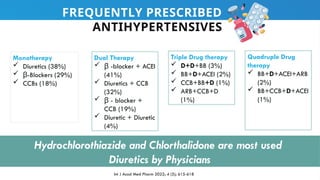
Hydrochlorothiazide and Chlorthalidone are most used
Diuretics by Physicians
Quadruple Drug
therapy
 BB+D+ACEI+ARB
(2%)
 BB+CCB+D+ACEI
(1%)
Monotherapy
 Diuretics (38%)
 -
β Blockers (29%)
 CCBs (18%)
Dual Therapy
 -
β blocker + ACEI
(41%)
 Diuretics + CCB
(32%)
 -
β blocker +
CCB (19%)
 Diuretic + Diuretic
(4%)
Triple Drug therapy
 D+D+BB (3%)
 BB+D+ACEI (2%)
 CCB+BB+D (1%)
 ARB+CCB+D
(1%)
Int J Acad Med Pharm 2022; 4 (5); 615-618
FREQUENTLY PRESCRIBED
ANTIHYPERTENSIVES
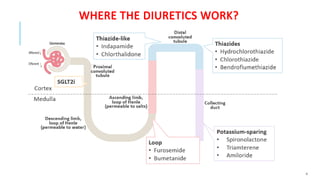
WHERE THE DIURETICS WORK?
6
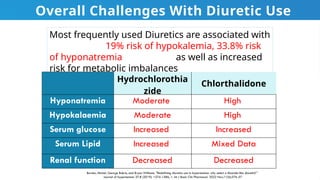
Overall Challenges With Diuretic Use
Burnier, Michel, George Bakris, and Bryan Williams. "Redefining diuretics use in hypertension: why select a thiazide-like diuretic?."
Journal of hypertension 37.8 (2019): 1574-1586, 1. Int J Basic Clin Pharmacol. 2022 Nov;11(6):576-57
Most frequently used Diuretics are associated with
19% risk of hypokalemia, 33.8% risk
of hyponatremia as well as increased
risk for metabolic imbalances
Hydrochlorothia
zide
Chlorthalidone
Hyponatremia Moderate High
Hypokalaemia Moderate High
Serum glucose Increased Increased
Serum Lipid Increased Mixed Data
Renal function Decreased Decreased
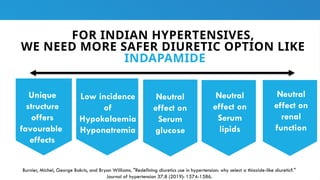
FOR INDIAN HYPERTENSIVES,
WE NEED MORE SAFER DIURETIC OPTION LIKE
INDAPAMIDE
Unique
structure
offers
favourable
effects
Low incidence
of
Hypokalaemia
Hyponatremia
Neutral
effect on
Serum
glucose
Neutral
effect on
renal
function
Neutral
effect on
Serum
lipids
Burnier, Michel, George Bakris, and Bryan Williams. "Redefining diuretics use in hypertension: why select a thiazide-like diuretic?."
Journal of hypertension 37.8 (2019): 1574-1586.
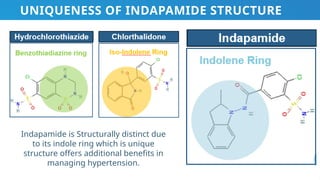
Indapamide is Structurally distinct due
to its indole ring which is unique
structure offers additional benefits in
managing hypertension.
UNIQUENESS OF INDAPAMIDE STRUCTURE
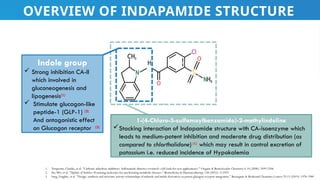
OVERVIEW OF INDAPAMIDE STRUCTURE
Indole group
 Strong inhibition CA-II
which involved in
gluconeogenesis and
lipogenesis(1)
 Stimulate glucagon-like
peptide-1 (GLP-1) (2)
And antagonistic effect
on Glucagon receptor (3)
1-(4-Chloro-3-sulfamoylbenzamido)-2-methylindoline
Stacking interaction of Indapamide structure with CA-isoenzyme which
leads to medium-potent inhibition and moderate drug distribution (as
compared to chlorthalidone) (1) which may result in control excretion of
potassium i.e. reduced incidence of Hypokalemia
1. Temperini, Claudia, et al. "Carbonic anhydrase inhibitors. Sulfonamide diuretics revisited—old leads for new applications?." Organic & Biomolecular Chemistry 6.14 (2008): 2499-2506.
2. Hu,Wei, et al. "Update of Indoles: Promising molecules for ameliorating metabolic diseases." Biomedicine & Pharmacotherapy 150 (2022): 112957.
3. Song, Fengbin, et al. "Design, synthesis and structure activity relationships of indazole and indole derivatives as potent glucagon receptor antagonists." Bioorganic & Medicinal Chemistry Letters 29.15 (2019): 1974-1980
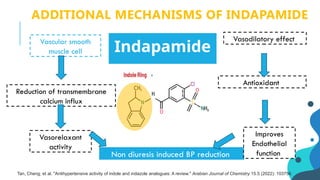
Indapamide
Vascular smooth
muscle cell
Reduction of transmembrane
calcium influx
Vasorelaxant
activity
Non diuresis induced BP reduction
Improves
Endothelial
function
Antioxidant
Vasodilatory effect
ADDITIONAL MECHANISMS OF INDAPAMIDE
Tan, Cheng, et al. "Antihypertensive activity of indole and indazole analogues: A review." Arabian Journal of Chemistry 15.5 (2022): 103756.
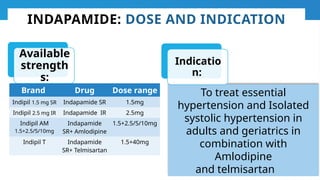
Brand Drug Dose range
Indipil 1.5 mg SR Indapamide SR 1.5mg
Indipil 2.5 mg IR Indapamide IR 2.5mg
Indipil AM
1.5+2.5/5/10mg
Indapamide
SR+ Amlodipine
1.5+2.5/5/10mg
Indipil T Indapamide
SR+ Telmisartan
1.5+40mg
To treat essential
hypertension and Isolated
systolic hypertension in
adults and geriatrics in
combination with
Amlodipine
and telmisartan
Available
strength
s:
Indicatio
n:
INDAPAMIDE: DOSE AND INDICATION
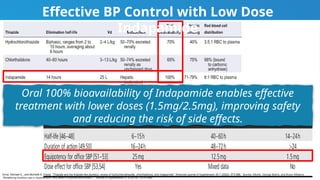
Oral 100% bioavailability of Indapamide enables effective
treatment with lower doses (1.5mg/2.5mg), improving safety
and reducing the risk of side effects.
Effective BP Control with Low Dose
Indapamide
Ernst, Michael E., and Michelle A. Fravel. "Thiazide and the thiazide-like diuretics: review of hydrochlorothiazide, chlorthalidone, and indapamide." American journal of hypertension 35.7 (2022): 573-586.: Burnier, Michel, George Bakris, and Bryan Williams.
"Redefining diuretics use in hypertension: why select a thiazide-like diuretic?." Journal of hypertension 37.8 (2019): 1574-1586..
14
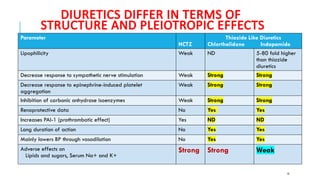
Parameter
HCTZ
Thiazide Like Diuretics
Chlorthalidone Indapamide
Lipophilicity Weak ND 5-80 fold higher
than thiazide
diuretics
Decrease response to sympathetic nerve stimulation Weak Strong Strong
Decrease response to epinephrine-induced platelet
aggregation
Weak Strong Strong
Inhibition of carbonic anhydrase isoenzymes Weak Strong Strong
Renoprotective data No Yes Yes
Increases PAI-1 (prothrombotic effect) Yes ND ND
Long duration of action No Yes Yes
Mainly lowers BP through vasodilation No Yes Yes
Adverse effects on
Lipids and sugars, Serum Na+ and K+
Strong Strong Weak
DIURETICS DIFFER IN TERMS OF
STRUCTURE AND PLEIOTROPIC EFFECTS
Exploring the Clinical
Evidence of
Indapamide
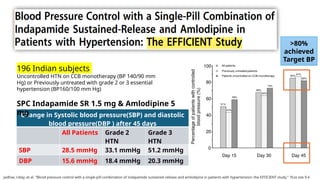
196 Indian subjects
Uncontrolled HTN on CCB monotherapy (BP 140/90 mm
Hg) or Previously untreated with grade 2 or 3 essential
hypertension (BP160/100 mm Hg)
Change in Systolic blood pressure(SBP) and diastolic
blood pressure(DBP ) after 45 days
All Patients Grade 2
HTN
Grade 3
HTN
SBP 28.5 mmHg 33.1 mmHg 51.2 mmHg
DBP 15.6 mmHg 18.4 mmHg 20.3 mmHg
Jadhav, Uday, et al. "Blood pressure control with a single-pill combination of indapamide sustained-release and amlodipine in patients with hypertension: the EFFICIENT study." PLos one 9.4
>80%
achieved
Target BP
SPC Indapamide SR 1.5 mg & Amlodipine 5
mg
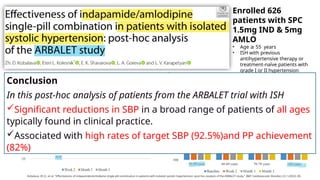
Changes in mean Systolic blood pressure
during the treatment in different age
group
Changes in blood pressure (BP)
during the study
Enrolled 626
patients with SPC
1.5mg IND & 5mg
AMLO
• Age 55 years
≥
• ISH with previous
antihypertensive therapy or
treatment-naïve patients with
grade I or II hypertension
Kobalava, Zh D., et al. "Effectiveness of indapamide/amlodipine single-pill combination in patients with isolated systolic hypertension: post-hoc analysis of the ARBALET study." BMC Cardiovascular Disorders 22.1 (2022): 85.
Conclusion
In this post-hoc analysis of patients from the ARBALET trial with ISH
Significant reductions in SBP in a broad range of patients of all ages
typically found in clinical practice.
Associated with high rates of target SBP (92.5%)and PP achievement
(82%)
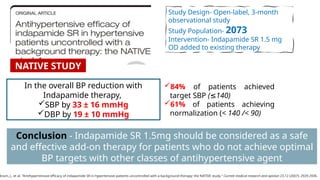
Study Design- Open-label, 3-month
observational study
Study Population- 2073
Intervention- Indapamide SR 1.5 mg
OD added to existing therapy
In the overall BP reduction with
Indapamide therapy,
SBP by 33 ± 16 mmHg
DBP by 19 ± 10 mmHg
kram, J., et al. "Antihypertensive efficacy of indapamide SR in hypertensive patients uncontrolled with a background therapy: the NATIVE study." Current medical research and opinion 23.12 (2007): 2929-2936.
Conclusion - Indapamide SR 1.5mg should be considered as a safe
and effective add-on therapy for patients who do not achieve optimal
BP targets with other classes of antihypertensive agent
84% of patients achieved
target SBP ( 140)
≤
61% of patients achieving
normalization (< 140 /< 90)
NATIVE STUDY
Journal of hypertension. 2001 Feb 1;19(2):343-50. Fundamental & clinical pharmacology. 2005 Dec;19(6):637-45.
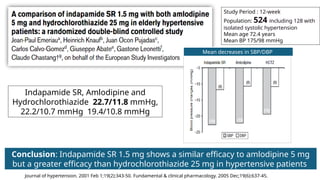
Study Period : 12-week
Population: 524 including 128 with
isolated systolic hypertension
Mean age 72.4 years
Mean BP 175/98 mmHg
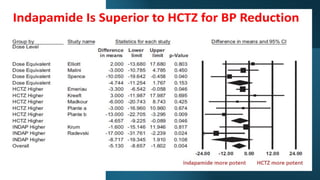
Indapamide SR, Amlodipine and
Hydrochlorothiazide 22.7/11.8 mmHg,
22.2/10.7 mmHg 19.4/10.8 mmHg
Mean decreases in SBP/DBP
Conclusion: Indapamide SR 1.5 mg shows a similar efficacy to amlodipine 5 mg
but a greater efficacy than hydrochlorothiazide 25 mg in hypertensive patients
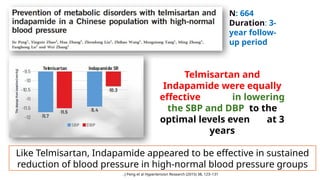
Telmisartan and
Indapamide were equally
effective in lowering
the SBP and DBP to the
optimal levels even at 3
years
Like Telmisartan, Indapamide appeared to be effective in sustained
reduction of blood pressure in high-normal blood pressure groups
. J Peng et al Hypertension Research (2015) 38, 123–131
N: 664
Duration: 3-
year follow-
up period
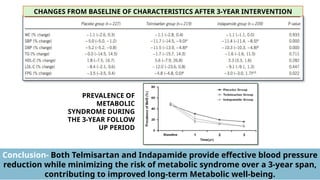
CHANGES FROM BASELINE OF CHARACTERISTICS AFTER 3-YEAR INTERVENTION
Conclusion- Both Telmisartan and Indapamide provide effective blood pressure
reduction while minimizing the risk of metabolic syndrome over a 3-year span,
contributing to improved long-term Metabolic well-being.
PREVALENCE OF
METABOLIC
SYNDROME DURING
THE 3-YEAR FOLLOW
UP PERIOD
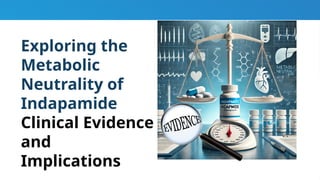
Exploring the
Metabolic
Neutrality of
Indapamide
Clinical Evidence
and
Implications
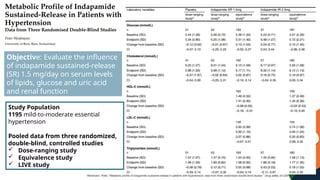
Objective: Evaluate the influence
of indapamide sustained-release
(SR) 1.5 mg/day on serum levels
of lipids, glucose and uric acid
and renal function
Study Population
1195 mild-to-moderate essential
hypertension
Pooled data from three randomized,
double-blind, controlled studies
 Dose-ranging study
 Equivalence study
 LIVE study
Weidmann, Peter. "Metabolic profile of indapamide sustained-release in patients with hypertension: data from three randomised double-blind studies." Drug safety 24 (2001): 1155-1165.
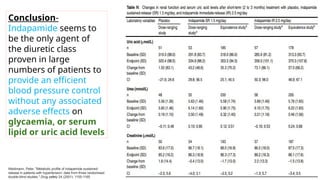
Conclusion-
Indapamide seems to
be the only agent of
the diuretic class
proven in large
numbers of patients to
provide an efficient
blood pressure control
without any associated
adverse effects on
glycaemia, or serum
lipid or uric acid levels
Weidmann, Peter. "Metabolic profile of indapamide sustained-
release in patients with hypertension: data from three randomised
double-blind studies." Drug safety 24 (2001): 1155-1165.
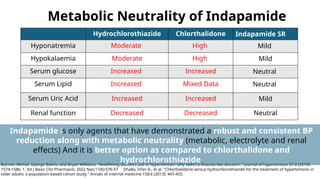
Metabolic Neutrality of Indapamide
Hydrochlorothiazide Chlorthalidone Indapamide SR
Hyponatremia Moderate High Mild
Hypokalaemia Moderate High Mild
Serum glucose Increased Increased Neutral
Serum Lipid Increased Mixed Data Neutral
Serum Uric Acid Increased Increased Mild
Renal function Decreased Decreased Neutral
Burnier, Michel, George Bakris, and Bryan Williams. "Redefining diuretics use in hypertension: why select a thiazide-like diuretic?." Journal of hypertension 37.8 (2019):
1574-1586, 1. Int J Basic Clin Pharmacol. 2022 Nov;11(6):576-57 Dhalla, Irfan A., et al. "Chlorthalidone versus hydrochlorothiazide for the treatment of hypertension in
older adults: a population-based cohort study." Annals of internal medicine 158.6 (2013): 447-455.
Indapamide is only agents that have demonstrated a robust and consistent BP
reduction along with metabolic neutrality (metabolic, electrolyte and renal
effects) And it is better option as compared to chlorthalidone and
hydrochlorothiazide
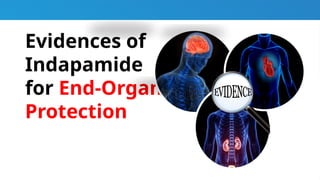
Evidences of
Indapamide
for End-Organ
Protection
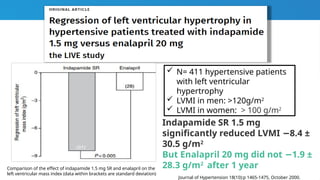
Comparison of the effect of indapamide 1.5 mg SR and enalapril on the
left ventricular mass index (data within brackets are standard deviation)
Indapamide SR 1.5 mg
significantly reduced LVMI 8.4 ±
−
30.5 g/m2
But Enalapril 20 mg did not 1.9 ±
−
28.3 g/m2
after 1 year
 N= 411 hypertensive patients
with left ventricular
hypertrophy
 LVMI in men: >120g/m2
 LVMI in women: > 100 g/m2
Journal of Hypertension 18(10):p 1465-1475, October 2000.
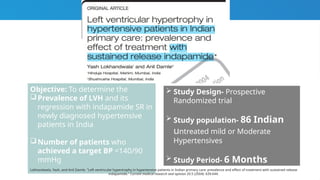
 Study Design- Prospective
Randomized trial
 Study population- 86 Indian
untreated mild or Moderate
Hypertensives
 Study Period- 6 Months
Objective: To determine the
Prevalence of LVH and its
regression with indapamide SR in
newly diagnosed hypertensive
patients in India
Number of patients who
achieved a target BP <140/90
mmHg
Lokhandwala, Yash, and Anil Damle. "Left ventricular hypertrophy in hypertensive patients in Indian primary care: prevalence and effect of treatment with sustained release
indapamide." Current medical research and opinion 20.5 (2004): 639-644.
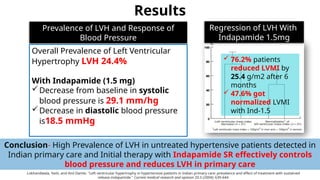
Results
Prevalence of LVH and Response of
Blood Pressure
Regression of LVH With
Indapamide 1.5mg
Overall Prevalence of Left Ventricular
Hypertrophy LVH 24.4%
With Indapamide (1.5 mg)
Decrease from baseline in systolic
blood pressure is 29.1 mm/hg
Decrease in diastolic blood pressure
is18.5 mmHg
 76.2% patients
reduced LVMI by
25.4 g/m2 after 6
months
 47.6% got
normalized LVMI
with Ind-1.5
Conclusion- High Prevalence of LVH in untreated hypertensive patients detected in
Indian primary care and Initial therapy with Indapamide SR effectively controls
blood pressure and reduces LVH in primary care
Lokhandwala, Yash, and Anil Damle. "Left ventricular hypertrophy in hypertensive patients in Indian primary care: prevalence and effect of treatment with sustained
release indapamide." Current medical research and opinion 20.5 (2004): 639-644.
Hypertens. 2004 Aug;22(8):1613-22
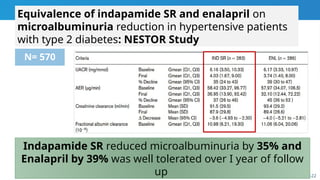
Equivalence of indapamide SR and enalapril on
microalbuminuria reduction in hypertensive patients
with type 2 diabetes: NESTOR Study
Indapamide SR reduced microalbuminuria by 35% and
Enalapril by 39% was well tolerated over I year of follow
up
N= 570
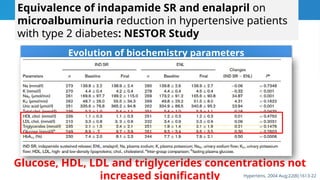
Equivalence of indapamide SR and enalapril on
microalbuminuria reduction in hypertensive patients
with type 2 diabetes: NESTOR Study
Evolution of biochemistry parameters
Glucose, HDL, LDL and triglycerides concentrations not
increased significantly Hypertens. 2004 Aug;22(8):1613-22
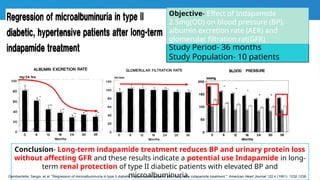
Study Period- 36 months
Study Population- 10 patients
Objective- Effect of Indapamide
2.5mg(OD) on blood pressure (BP),
albumin excretion rate (AER) and
glomerular filtration rat(GFR)
Conclusion- Long-term indapamide treatment reduces BP and urinary protein loss
without affecting GFR and these results indicate a potential use Indapamide in long-
term renal protection of type II diabetic patients with elevated BP and
microalbuminuria.
Gambardella, Sergio, et al. "Regression of microalbuminuria in type II diabetic, hypertensive patients after long-term indapamide treatment." American Heart Journal 122.4 (1991): 1232-1238.
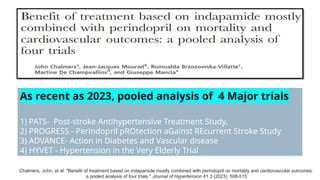
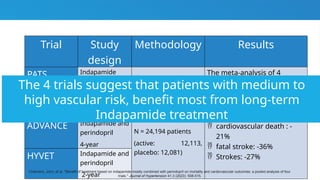
As recent as 2023, pooled analysis of 4 Major trials
1) PATS- Post-stroke Antihypertensive Treatment Study,
2) PROGRESS - Perindopril pROtection aGainst REcurrent Stroke Study
3) ADVANCE- Action in Diabetes and Vascular disease
4) HYVET - Hypertension in the Very Elderly Trial
Chalmers, John, et al. "Benefit of treatment based on indapamide mostly combined with perindopril on mortality and cardiovascular outcomes:
a pooled analysis of four trials." Journal of Hypertension 41.3 (2023): 508-515.
Trial Study
design
Methodology Results
PATS Indapamide
2 years
N = 24,194 patients
(active: 12,113,
placebo: 12,081)
The meta-analysis of 4
studies resulted in
statistically significant risk
reductions
 All cause death: -15%
 cardiovascular death : -
21%
 fatal stroke: -36%
 Strokes: -27%
PROGRESS Indapamide and
perindopril
4-year
ADVANCE Indapamide and
perindopril
4-year
HYVET Indapamide and
perindopril
2-year
The 4 trials suggest that patients with medium to
high vascular risk, benefit most from long-term
Indapamide treatment
Chalmers, John, et al. "Benefit of treatment based on indapamide mostly combined with perindopril on mortality and cardiovascular outcomes: a pooled analysis of four
trials." Journal of Hypertension 41.3 (2023): 508-515.
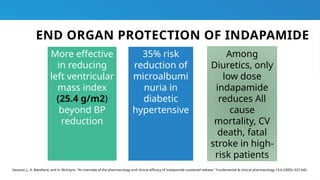
END ORGAN PROTECTION OF INDAPAMIDE
Among
Diuretics, only
low dose
indapamide
reduces All
cause
mortality, CV
death, fatal
stroke in high-
risk patients
35% risk
reduction of
microalbumi
nuria in
diabetic
hypertensive
More effective
in reducing
left ventricular
mass index
(25.4 g/m2)
beyond BP
reduction
Sassard, J., A. Bataillard, and H. McIntyre. "An overview of the pharmacology and clinical efficacy of indapamide sustained release." Fundamental & clinical pharmacology 19.6 (2005): 637-645.
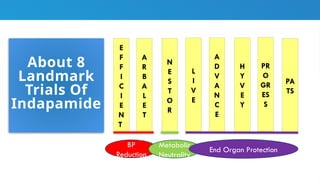
About 8
Landmark
Trials Of
Indapamide
E
F
F
I
C
I
E
N
T
A
R
B
A
L
E
T
N
E
S
T
O
R
A
D
V
A
N
C
E
PR
O
GR
ES
S
L
I
V
E
H
Y
V
E
Y
PA
TS
BP
Reduction
Metabolic
Neutrality
End Organ Protection
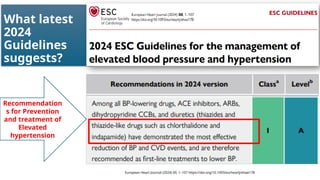
What latest
2024
Guidelines
suggests?
Recommendation
s for Prevention
and treatment of
Elevated
hypertension
European Heart Journal (2024) 00, 1–107 https://doi.org/10.1093/eurheartj/ehae178
What latest
2024
Guidelines
suggests?
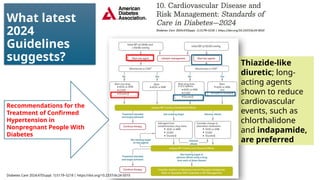
Recommendations for the
Treatment of Confirmed
Hypertension in
Nonpregnant People With
Diabetes
Thiazide-like
diuretic; long-
acting agents
shown to reduce
cardiovascular
events, such as
chlorthalidone
and indapamide,
are preferred
Diabetes Care 2024;47(Suppl. 1):S179–S218 | https://doi.org/10.2337/dc24-S010
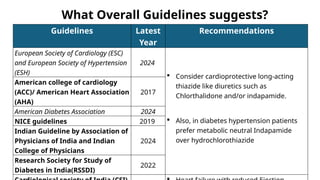
Guidelines Latest
Year
Recommendations
European Society of Cardiology (ESC)
and European Society of Hypertension
(ESH)
2024
 Consider cardioprotective long-acting
thiazide like diuretics such as
Chlorthalidone and/or indapamide.
 Also, in diabetes hypertension patients
prefer metabolic neutral Indapamide
over hydrochlorothiazide
American college of cardiology
(ACC)/ American Heart Association
(AHA)
2017
American Diabetes Association 2024
NICE guidelines 2019
Indian Guideline by Association of
Physicians of India and Indian
College of Physicians
2024
Research Society for Study of
Diabetes in India(RSSDI)
2022
What Overall Guidelines suggests?
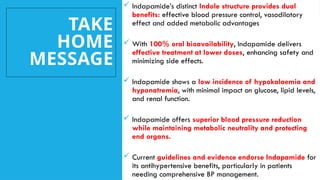
TAKE
HOME
MESSAGE
 Indapamide’s distinct Indole structure provides dual
benefits: effective blood pressure control, vasodilatory
effect and added metabolic advantages
 With 100% oral bioavailability, Indapamide delivers
effective treatment at lower doses, enhancing safety and
minimizing side effects.
 Indapamide shows a low incidence of hypokalaemia and
hyponatremia, with minimal impact on glucose, lipid levels,
and renal function.
 Indapamide offers superior blood pressure reduction
while maintaining metabolic neutrality and protecting
end organs.
 Current guidelines and evidence endorse Indapamide for
its antihypertensive benefits, particularly in patients
needing comprehensive BP management.
THANK YOU

Indipil-RTM.pptx.INDIPILL HYPERTENSION USAGE

  • 1.
    OPTIMIZING BP CONTROL IN INDIA THEROLE OF DIURETICS, AND WHICH ONE?
  • 2.
    Challenges with Hypertensi on in INDIA Current use of diuretics and associated challenges Indapami de:why it is an optimal diuretic for Indian HTN Robust Clinical Evidence supporting Indapamid e Take Home Message s OVERVIEW OF PRESENTATION
  • 3.
    Rising Crisis OfHypertension: Treatment Vs Control https://www.who.int/news-room/fact-sheets/detail/hypertension ; JAMA Network Open. 2023;6(10):e2339098. doi:10.1001/jamanetworkopen.2023.39098 ; Hou Y, Xang S. Association of risk factors for high blood pressure across 46 lowand middle-income countries: A multi-country cross-sectional analysis. J Glob Health 2024;14:04087 ; In India, 220 Million having HTN Only 36.9% Diagnosed Significant gap 44.7% Treatment 52.5% BP Control Treatment – Control Gap FACT: discrepancy between offered HTN treatment and level of B.P. control
  • 4.
    Average salt intake ofIndian is 8 g/days <6g/day reduces blood pressure by 7.11/3.88 mm Hg in hypertensive >40% Indians (normal + hypertensive) are salt sensitive phenotype 1. The American Journal of Medicine, Vol 125, No 5, May 2012 doi:10.1016/j.amjmed.2011.10.023; 2 The National Medical Journal of India2018:31:3;140-145 doi: 10.4103/0970-258X.255754; 3 Lancet Diabetes Endocrinol 2023; 11: 474–89 https://doi.org/10.1016/ S2213-8587(23)00119-5; 4 The Research square https://doi.org/10.21203/rs.3.rs-1780915/v1 Obesity, Dysglycemia, Hypercholester olemia are the rising Metabolic trios in India Rising average temperature and more hotter days have strong impact on risk of hypertension and poor BP control Factors affecting BP Control among Indians
  • 5.
    Hydrochlorothiazide and Chlorthalidoneare most used Diuretics by Physicians Quadruple Drug therapy  BB+D+ACEI+ARB (2%)  BB+CCB+D+ACEI (1%) Monotherapy  Diuretics (38%)  - β Blockers (29%)  CCBs (18%) Dual Therapy  - β blocker + ACEI (41%)  Diuretics + CCB (32%)  - β blocker + CCB (19%)  Diuretic + Diuretic (4%) Triple Drug therapy  D+D+BB (3%)  BB+D+ACEI (2%)  CCB+BB+D (1%)  ARB+CCB+D (1%) Int J Acad Med Pharm 2022; 4 (5); 615-618 FREQUENTLY PRESCRIBED ANTIHYPERTENSIVES
  • 6.
  • 7.
    Overall Challenges WithDiuretic Use Burnier, Michel, George Bakris, and Bryan Williams. "Redefining diuretics use in hypertension: why select a thiazide-like diuretic?." Journal of hypertension 37.8 (2019): 1574-1586, 1. Int J Basic Clin Pharmacol. 2022 Nov;11(6):576-57 Most frequently used Diuretics are associated with 19% risk of hypokalemia, 33.8% risk of hyponatremia as well as increased risk for metabolic imbalances Hydrochlorothia zide Chlorthalidone Hyponatremia Moderate High Hypokalaemia Moderate High Serum glucose Increased Increased Serum Lipid Increased Mixed Data Renal function Decreased Decreased
  • 8.
    FOR INDIAN HYPERTENSIVES, WENEED MORE SAFER DIURETIC OPTION LIKE INDAPAMIDE Unique structure offers favourable effects Low incidence of Hypokalaemia Hyponatremia Neutral effect on Serum glucose Neutral effect on renal function Neutral effect on Serum lipids Burnier, Michel, George Bakris, and Bryan Williams. "Redefining diuretics use in hypertension: why select a thiazide-like diuretic?." Journal of hypertension 37.8 (2019): 1574-1586.
  • 9.
    Indapamide is Structurallydistinct due to its indole ring which is unique structure offers additional benefits in managing hypertension. UNIQUENESS OF INDAPAMIDE STRUCTURE
  • 10.
    OVERVIEW OF INDAPAMIDESTRUCTURE Indole group  Strong inhibition CA-II which involved in gluconeogenesis and lipogenesis(1)  Stimulate glucagon-like peptide-1 (GLP-1) (2) And antagonistic effect on Glucagon receptor (3) 1-(4-Chloro-3-sulfamoylbenzamido)-2-methylindoline Stacking interaction of Indapamide structure with CA-isoenzyme which leads to medium-potent inhibition and moderate drug distribution (as compared to chlorthalidone) (1) which may result in control excretion of potassium i.e. reduced incidence of Hypokalemia 1. Temperini, Claudia, et al. "Carbonic anhydrase inhibitors. Sulfonamide diuretics revisited—old leads for new applications?." Organic & Biomolecular Chemistry 6.14 (2008): 2499-2506. 2. Hu,Wei, et al. "Update of Indoles: Promising molecules for ameliorating metabolic diseases." Biomedicine & Pharmacotherapy 150 (2022): 112957. 3. Song, Fengbin, et al. "Design, synthesis and structure activity relationships of indazole and indole derivatives as potent glucagon receptor antagonists." Bioorganic & Medicinal Chemistry Letters 29.15 (2019): 1974-1980
  • 11.
    Indapamide Vascular smooth muscle cell Reductionof transmembrane calcium influx Vasorelaxant activity Non diuresis induced BP reduction Improves Endothelial function Antioxidant Vasodilatory effect ADDITIONAL MECHANISMS OF INDAPAMIDE Tan, Cheng, et al. "Antihypertensive activity of indole and indazole analogues: A review." Arabian Journal of Chemistry 15.5 (2022): 103756.
  • 12.
    Brand Drug Doserange Indipil 1.5 mg SR Indapamide SR 1.5mg Indipil 2.5 mg IR Indapamide IR 2.5mg Indipil AM 1.5+2.5/5/10mg Indapamide SR+ Amlodipine 1.5+2.5/5/10mg Indipil T Indapamide SR+ Telmisartan 1.5+40mg To treat essential hypertension and Isolated systolic hypertension in adults and geriatrics in combination with Amlodipine and telmisartan Available strength s: Indicatio n: INDAPAMIDE: DOSE AND INDICATION
  • 13.
    Oral 100% bioavailabilityof Indapamide enables effective treatment with lower doses (1.5mg/2.5mg), improving safety and reducing the risk of side effects. Effective BP Control with Low Dose Indapamide Ernst, Michael E., and Michelle A. Fravel. "Thiazide and the thiazide-like diuretics: review of hydrochlorothiazide, chlorthalidone, and indapamide." American journal of hypertension 35.7 (2022): 573-586.: Burnier, Michel, George Bakris, and Bryan Williams. "Redefining diuretics use in hypertension: why select a thiazide-like diuretic?." Journal of hypertension 37.8 (2019): 1574-1586..
  • 14.
    14 Parameter HCTZ Thiazide Like Diuretics ChlorthalidoneIndapamide Lipophilicity Weak ND 5-80 fold higher than thiazide diuretics Decrease response to sympathetic nerve stimulation Weak Strong Strong Decrease response to epinephrine-induced platelet aggregation Weak Strong Strong Inhibition of carbonic anhydrase isoenzymes Weak Strong Strong Renoprotective data No Yes Yes Increases PAI-1 (prothrombotic effect) Yes ND ND Long duration of action No Yes Yes Mainly lowers BP through vasodilation No Yes Yes Adverse effects on Lipids and sugars, Serum Na+ and K+ Strong Strong Weak DIURETICS DIFFER IN TERMS OF STRUCTURE AND PLEIOTROPIC EFFECTS
  • 15.
  • 16.
    196 Indian subjects UncontrolledHTN on CCB monotherapy (BP 140/90 mm Hg) or Previously untreated with grade 2 or 3 essential hypertension (BP160/100 mm Hg) Change in Systolic blood pressure(SBP) and diastolic blood pressure(DBP ) after 45 days All Patients Grade 2 HTN Grade 3 HTN SBP 28.5 mmHg 33.1 mmHg 51.2 mmHg DBP 15.6 mmHg 18.4 mmHg 20.3 mmHg Jadhav, Uday, et al. "Blood pressure control with a single-pill combination of indapamide sustained-release and amlodipine in patients with hypertension: the EFFICIENT study." PLos one 9.4 >80% achieved Target BP SPC Indapamide SR 1.5 mg & Amlodipine 5 mg
  • 17.
    Changes in meanSystolic blood pressure during the treatment in different age group Changes in blood pressure (BP) during the study Enrolled 626 patients with SPC 1.5mg IND & 5mg AMLO • Age 55 years ≥ • ISH with previous antihypertensive therapy or treatment-naïve patients with grade I or II hypertension Kobalava, Zh D., et al. "Effectiveness of indapamide/amlodipine single-pill combination in patients with isolated systolic hypertension: post-hoc analysis of the ARBALET study." BMC Cardiovascular Disorders 22.1 (2022): 85. Conclusion In this post-hoc analysis of patients from the ARBALET trial with ISH Significant reductions in SBP in a broad range of patients of all ages typically found in clinical practice. Associated with high rates of target SBP (92.5%)and PP achievement (82%)
  • 18.
    Study Design- Open-label,3-month observational study Study Population- 2073 Intervention- Indapamide SR 1.5 mg OD added to existing therapy In the overall BP reduction with Indapamide therapy, SBP by 33 ± 16 mmHg DBP by 19 ± 10 mmHg kram, J., et al. "Antihypertensive efficacy of indapamide SR in hypertensive patients uncontrolled with a background therapy: the NATIVE study." Current medical research and opinion 23.12 (2007): 2929-2936. Conclusion - Indapamide SR 1.5mg should be considered as a safe and effective add-on therapy for patients who do not achieve optimal BP targets with other classes of antihypertensive agent 84% of patients achieved target SBP ( 140) ≤ 61% of patients achieving normalization (< 140 /< 90) NATIVE STUDY
  • 19.
    Journal of hypertension.2001 Feb 1;19(2):343-50. Fundamental & clinical pharmacology. 2005 Dec;19(6):637-45. Study Period : 12-week Population: 524 including 128 with isolated systolic hypertension Mean age 72.4 years Mean BP 175/98 mmHg Indapamide SR, Amlodipine and Hydrochlorothiazide 22.7/11.8 mmHg, 22.2/10.7 mmHg 19.4/10.8 mmHg Mean decreases in SBP/DBP Conclusion: Indapamide SR 1.5 mg shows a similar efficacy to amlodipine 5 mg but a greater efficacy than hydrochlorothiazide 25 mg in hypertensive patients
  • 20.
    Telmisartan and Indapamide wereequally effective in lowering the SBP and DBP to the optimal levels even at 3 years Like Telmisartan, Indapamide appeared to be effective in sustained reduction of blood pressure in high-normal blood pressure groups . J Peng et al Hypertension Research (2015) 38, 123–131 N: 664 Duration: 3- year follow- up period
  • 21.
    CHANGES FROM BASELINEOF CHARACTERISTICS AFTER 3-YEAR INTERVENTION Conclusion- Both Telmisartan and Indapamide provide effective blood pressure reduction while minimizing the risk of metabolic syndrome over a 3-year span, contributing to improved long-term Metabolic well-being. PREVALENCE OF METABOLIC SYNDROME DURING THE 3-YEAR FOLLOW UP PERIOD
  • 23.
  • 24.
    Objective: Evaluate theinfluence of indapamide sustained-release (SR) 1.5 mg/day on serum levels of lipids, glucose and uric acid and renal function Study Population 1195 mild-to-moderate essential hypertension Pooled data from three randomized, double-blind, controlled studies  Dose-ranging study  Equivalence study  LIVE study Weidmann, Peter. "Metabolic profile of indapamide sustained-release in patients with hypertension: data from three randomised double-blind studies." Drug safety 24 (2001): 1155-1165.
  • 25.
    Conclusion- Indapamide seems to bethe only agent of the diuretic class proven in large numbers of patients to provide an efficient blood pressure control without any associated adverse effects on glycaemia, or serum lipid or uric acid levels Weidmann, Peter. "Metabolic profile of indapamide sustained- release in patients with hypertension: data from three randomised double-blind studies." Drug safety 24 (2001): 1155-1165.
  • 26.
    Metabolic Neutrality ofIndapamide Hydrochlorothiazide Chlorthalidone Indapamide SR Hyponatremia Moderate High Mild Hypokalaemia Moderate High Mild Serum glucose Increased Increased Neutral Serum Lipid Increased Mixed Data Neutral Serum Uric Acid Increased Increased Mild Renal function Decreased Decreased Neutral Burnier, Michel, George Bakris, and Bryan Williams. "Redefining diuretics use in hypertension: why select a thiazide-like diuretic?." Journal of hypertension 37.8 (2019): 1574-1586, 1. Int J Basic Clin Pharmacol. 2022 Nov;11(6):576-57 Dhalla, Irfan A., et al. "Chlorthalidone versus hydrochlorothiazide for the treatment of hypertension in older adults: a population-based cohort study." Annals of internal medicine 158.6 (2013): 447-455. Indapamide is only agents that have demonstrated a robust and consistent BP reduction along with metabolic neutrality (metabolic, electrolyte and renal effects) And it is better option as compared to chlorthalidone and hydrochlorothiazide
  • 27.
  • 28.
    Comparison of theeffect of indapamide 1.5 mg SR and enalapril on the left ventricular mass index (data within brackets are standard deviation) Indapamide SR 1.5 mg significantly reduced LVMI 8.4 ± − 30.5 g/m2 But Enalapril 20 mg did not 1.9 ± − 28.3 g/m2 after 1 year  N= 411 hypertensive patients with left ventricular hypertrophy  LVMI in men: >120g/m2  LVMI in women: > 100 g/m2 Journal of Hypertension 18(10):p 1465-1475, October 2000.
  • 29.
     Study Design-Prospective Randomized trial  Study population- 86 Indian untreated mild or Moderate Hypertensives  Study Period- 6 Months Objective: To determine the Prevalence of LVH and its regression with indapamide SR in newly diagnosed hypertensive patients in India Number of patients who achieved a target BP <140/90 mmHg Lokhandwala, Yash, and Anil Damle. "Left ventricular hypertrophy in hypertensive patients in Indian primary care: prevalence and effect of treatment with sustained release indapamide." Current medical research and opinion 20.5 (2004): 639-644.
  • 30.
    Results Prevalence of LVHand Response of Blood Pressure Regression of LVH With Indapamide 1.5mg Overall Prevalence of Left Ventricular Hypertrophy LVH 24.4% With Indapamide (1.5 mg) Decrease from baseline in systolic blood pressure is 29.1 mm/hg Decrease in diastolic blood pressure is18.5 mmHg  76.2% patients reduced LVMI by 25.4 g/m2 after 6 months  47.6% got normalized LVMI with Ind-1.5 Conclusion- High Prevalence of LVH in untreated hypertensive patients detected in Indian primary care and Initial therapy with Indapamide SR effectively controls blood pressure and reduces LVH in primary care Lokhandwala, Yash, and Anil Damle. "Left ventricular hypertrophy in hypertensive patients in Indian primary care: prevalence and effect of treatment with sustained release indapamide." Current medical research and opinion 20.5 (2004): 639-644.
  • 31.
    Hypertens. 2004 Aug;22(8):1613-22 Equivalenceof indapamide SR and enalapril on microalbuminuria reduction in hypertensive patients with type 2 diabetes: NESTOR Study Indapamide SR reduced microalbuminuria by 35% and Enalapril by 39% was well tolerated over I year of follow up N= 570
  • 32.
    Equivalence of indapamideSR and enalapril on microalbuminuria reduction in hypertensive patients with type 2 diabetes: NESTOR Study Evolution of biochemistry parameters Glucose, HDL, LDL and triglycerides concentrations not increased significantly Hypertens. 2004 Aug;22(8):1613-22
  • 33.
    Study Period- 36months Study Population- 10 patients Objective- Effect of Indapamide 2.5mg(OD) on blood pressure (BP), albumin excretion rate (AER) and glomerular filtration rat(GFR) Conclusion- Long-term indapamide treatment reduces BP and urinary protein loss without affecting GFR and these results indicate a potential use Indapamide in long- term renal protection of type II diabetic patients with elevated BP and microalbuminuria. Gambardella, Sergio, et al. "Regression of microalbuminuria in type II diabetic, hypertensive patients after long-term indapamide treatment." American Heart Journal 122.4 (1991): 1232-1238.
  • 34.
    As recent as2023, pooled analysis of 4 Major trials 1) PATS- Post-stroke Antihypertensive Treatment Study, 2) PROGRESS - Perindopril pROtection aGainst REcurrent Stroke Study 3) ADVANCE- Action in Diabetes and Vascular disease 4) HYVET - Hypertension in the Very Elderly Trial Chalmers, John, et al. "Benefit of treatment based on indapamide mostly combined with perindopril on mortality and cardiovascular outcomes: a pooled analysis of four trials." Journal of Hypertension 41.3 (2023): 508-515.
  • 35.
    Trial Study design Methodology Results PATSIndapamide 2 years N = 24,194 patients (active: 12,113, placebo: 12,081) The meta-analysis of 4 studies resulted in statistically significant risk reductions  All cause death: -15%  cardiovascular death : - 21%  fatal stroke: -36%  Strokes: -27% PROGRESS Indapamide and perindopril 4-year ADVANCE Indapamide and perindopril 4-year HYVET Indapamide and perindopril 2-year The 4 trials suggest that patients with medium to high vascular risk, benefit most from long-term Indapamide treatment Chalmers, John, et al. "Benefit of treatment based on indapamide mostly combined with perindopril on mortality and cardiovascular outcomes: a pooled analysis of four trials." Journal of Hypertension 41.3 (2023): 508-515.
  • 36.
    END ORGAN PROTECTIONOF INDAPAMIDE Among Diuretics, only low dose indapamide reduces All cause mortality, CV death, fatal stroke in high- risk patients 35% risk reduction of microalbumi nuria in diabetic hypertensive More effective in reducing left ventricular mass index (25.4 g/m2) beyond BP reduction Sassard, J., A. Bataillard, and H. McIntyre. "An overview of the pharmacology and clinical efficacy of indapamide sustained release." Fundamental & clinical pharmacology 19.6 (2005): 637-645.
  • 37.
  • 38.
    What latest 2024 Guidelines suggests? Recommendation s forPrevention and treatment of Elevated hypertension European Heart Journal (2024) 00, 1–107 https://doi.org/10.1093/eurheartj/ehae178
  • 39.
    What latest 2024 Guidelines suggests? Recommendations forthe Treatment of Confirmed Hypertension in Nonpregnant People With Diabetes Thiazide-like diuretic; long- acting agents shown to reduce cardiovascular events, such as chlorthalidone and indapamide, are preferred Diabetes Care 2024;47(Suppl. 1):S179–S218 | https://doi.org/10.2337/dc24-S010
  • 40.
    Guidelines Latest Year Recommendations European Societyof Cardiology (ESC) and European Society of Hypertension (ESH) 2024  Consider cardioprotective long-acting thiazide like diuretics such as Chlorthalidone and/or indapamide.  Also, in diabetes hypertension patients prefer metabolic neutral Indapamide over hydrochlorothiazide American college of cardiology (ACC)/ American Heart Association (AHA) 2017 American Diabetes Association 2024 NICE guidelines 2019 Indian Guideline by Association of Physicians of India and Indian College of Physicians 2024 Research Society for Study of Diabetes in India(RSSDI) 2022 What Overall Guidelines suggests?
  • 41.
    TAKE HOME MESSAGE  Indapamide’s distinctIndole structure provides dual benefits: effective blood pressure control, vasodilatory effect and added metabolic advantages  With 100% oral bioavailability, Indapamide delivers effective treatment at lower doses, enhancing safety and minimizing side effects.  Indapamide shows a low incidence of hypokalaemia and hyponatremia, with minimal impact on glucose, lipid levels, and renal function.  Indapamide offers superior blood pressure reduction while maintaining metabolic neutrality and protecting end organs.  Current guidelines and evidence endorse Indapamide for its antihypertensive benefits, particularly in patients needing comprehensive BP management.
  • 42.
Editor's Notes

  • #6 Reference Roush GC, Kaur R, Ernst ME. Diuretics: a review and update. J Cardiovasc Pharmacol Ther 2014;19(1):5-13.