What is the European
Union?
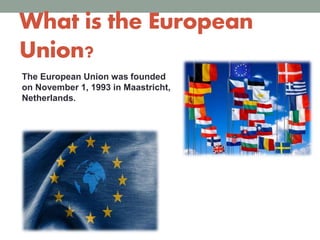
The European Union was founded
on November 1, 1993 in Maastricht,
Netherlands.
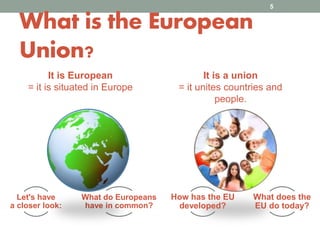
It is a union
= it unites countries and
people.
It is European
= it is situated in Europe
What is the European
Union?
5
Let's have
a closer look:
What do Europeans
have in common?
How has the EU
developed?
What does the
EU do today?
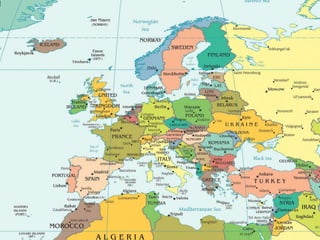
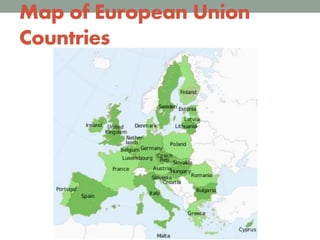
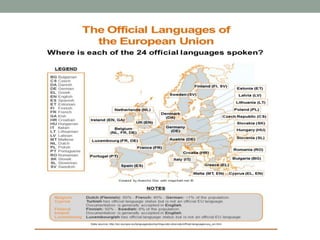
Map of European Union
Countries
What the European
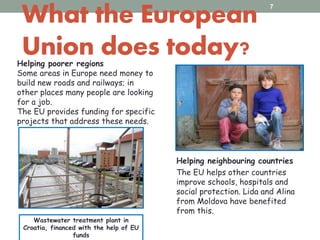
Union does today?Helping poorer regions
Some areas in Europe need money to
build new roads and railways; in
other places many people are looking
for a job.
The EU provides funding for specific
projects that address these needs.
7
Helping neighbouring countries
The EU helps other countries
improve schools, hospitals and
social protection. Lida and Alina
from Moldova have benefited
from this.
Wastewater treatment plant in
Croatia, financed with the help of EU
funds
8
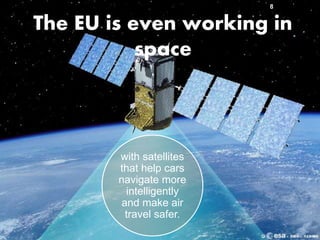
The EU is even working in
space
with satellites
that help cars
navigate more
intelligently
and make air
travel safer.
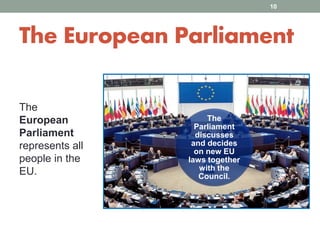
The European Parliament
The
European
Parliament
represents all
people in the
EU.
10
The
Parliament
discusses
and decides
on new EU
laws together
with the
Council.
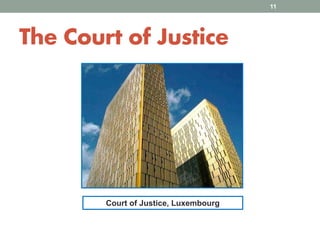
The Court of Justice
11
Court of Justice, Luxembourg
Most Famous Leaders Of
Europe
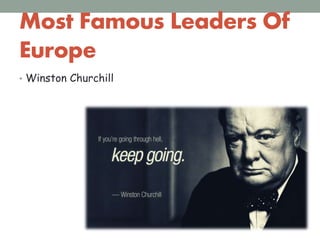
• Winston Churchill
Most Famous Leaders Of
Europe
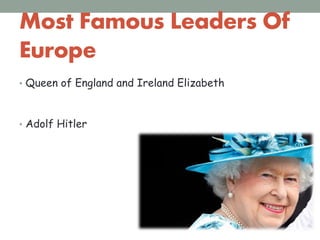
• Queen of England and Ireland Elizabeth
• Adolf Hitler
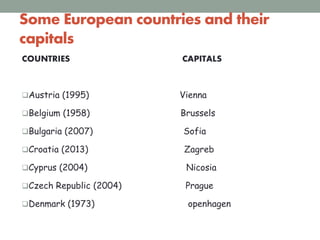
Some European countries and their
capitals
COUNTRIES CAPITALS
Austria (1995) Vienna
Belgium (1958) Brussels
Bulgaria (2007) Sofia
Croatia (2013) Zagreb
Cyprus (2004) Nicosia
Czech Republic (2004) Prague
Denmark (1973) openhagen
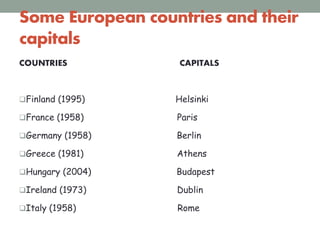
Some European countries and their
capitals
COUNTRIES CAPITALS
Finland (1995) Helsinki
France (1958) Paris
Germany (1958) Berlin
Greece (1981) Athens
Hungary (2004) Budapest
Ireland (1973) Dublin
Italy (1958) Rome
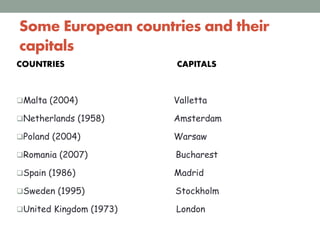
Some European countries and their
capitals
COUNTRIES CAPITALS
Malta (2004) Valletta
Netherlands (1958) Amsterdam
Poland (2004) Warsaw
Romania (2007) Bucharest
Spain (1986) Madrid
Sweden (1995) Stockholm
United Kingdom (1973) London
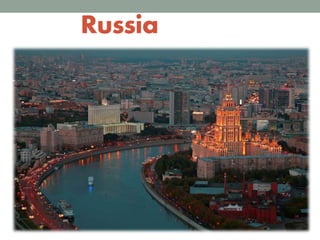
Russia
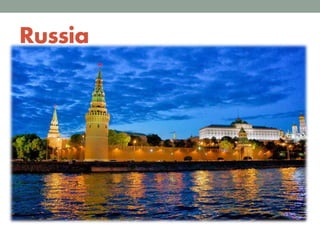
Russia
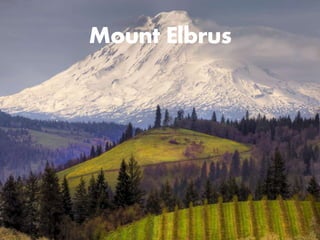
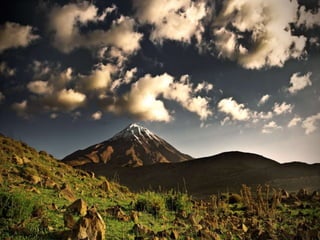
Mount Elbrus
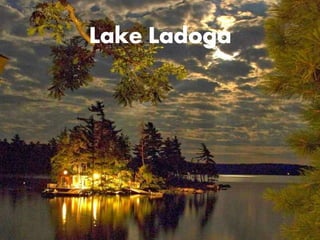
Lake Ladoga
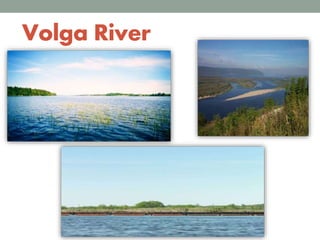
Volga River
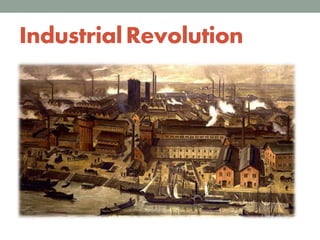
IndustrialRevolution
Transcontinental
Countries
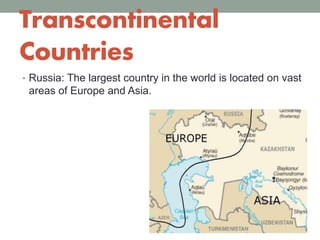
• Russia: The largest country in the world is located on vast
areas of Europe and Asia.
Istanbul
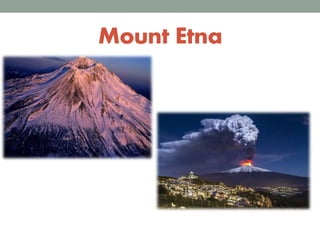
Mount Etna
Mount Etna
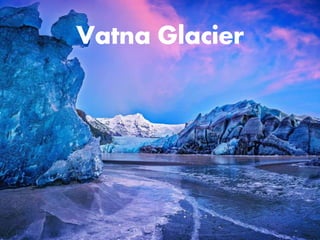
Vatna Glacier
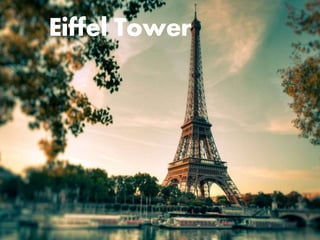
Eiffel Tower
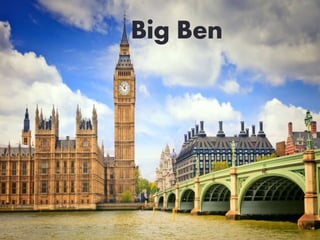
Big Ben
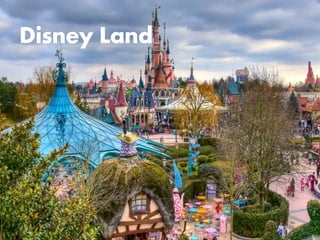
Disney Land
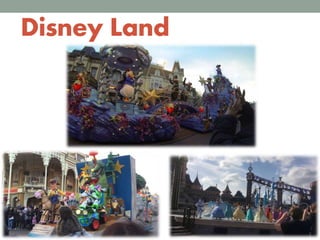
Disney Land
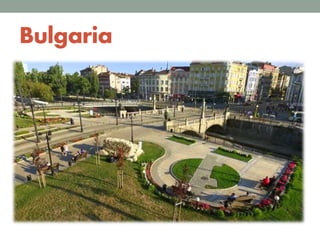
Bulgaria
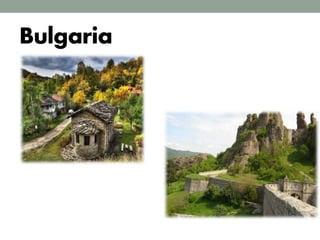
Bulgaria
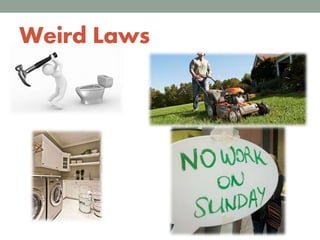
Weird Laws
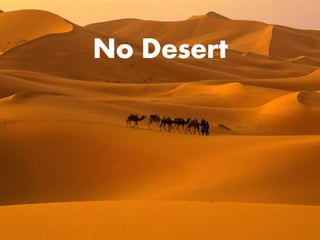
No Desert
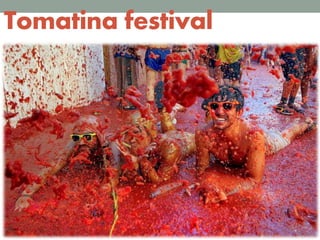
Tomatina festival
European wars
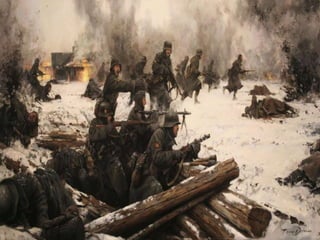
Sadly, the story of Europe is
not all about great
achievements of which we
can be proud.
Throughout history,
European nations have
fought terrible wars against
each other.
In the 20th century, two wars
that started on this continent
spread and involved
countries all over the world.
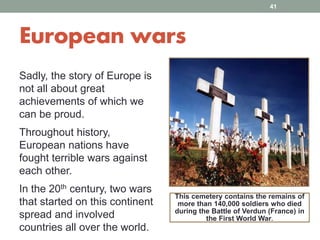
This cemetery contains the remains of
more than 140,000 soldiers who died
during the Battle of Verdun (France) in
the First World War.
41
CONCLUSION

Important facts about Europe

  • 4.
    What is theEuropean Union? The European Union was founded on November 1, 1993 in Maastricht, Netherlands.
  • 5.
    It is aunion = it unites countries and people. It is European = it is situated in Europe What is the European Union? 5 Let's have a closer look: What do Europeans have in common? How has the EU developed? What does the EU do today?
  • 6.
    Map of EuropeanUnion Countries
  • 7.
    What the European Uniondoes today?Helping poorer regions Some areas in Europe need money to build new roads and railways; in other places many people are looking for a job. The EU provides funding for specific projects that address these needs. 7 Helping neighbouring countries The EU helps other countries improve schools, hospitals and social protection. Lida and Alina from Moldova have benefited from this. Wastewater treatment plant in Croatia, financed with the help of EU funds
  • 8.
    8 The EU iseven working in space with satellites that help cars navigate more intelligently and make air travel safer.
  • 10.
    The European Parliament The European Parliament representsall people in the EU. 10 The Parliament discusses and decides on new EU laws together with the Council.
  • 11.
    The Court ofJustice 11 Court of Justice, Luxembourg
  • 12.
    Most Famous LeadersOf Europe • Winston Churchill
  • 13.
    Most Famous LeadersOf Europe • Queen of England and Ireland Elizabeth • Adolf Hitler
  • 14.
    Some European countriesand their capitals COUNTRIES CAPITALS Austria (1995) Vienna Belgium (1958) Brussels Bulgaria (2007) Sofia Croatia (2013) Zagreb Cyprus (2004) Nicosia Czech Republic (2004) Prague Denmark (1973) openhagen
  • 15.
    Some European countriesand their capitals COUNTRIES CAPITALS Finland (1995) Helsinki France (1958) Paris Germany (1958) Berlin Greece (1981) Athens Hungary (2004) Budapest Ireland (1973) Dublin Italy (1958) Rome
  • 16.
    Some European countriesand their capitals COUNTRIES CAPITALS Malta (2004) Valletta Netherlands (1958) Amsterdam Poland (2004) Warsaw Romania (2007) Bucharest Spain (1986) Madrid Sweden (1995) Stockholm United Kingdom (1973) London
  • 17.
  • 18.
  • 20.
  • 22.
  • 23.
  • 24.
  • 26.
    Transcontinental Countries • Russia: Thelargest country in the world is located on vast areas of Europe and Asia.
  • 27.
  • 28.
  • 29.
  • 30.
  • 31.
  • 32.
  • 33.
  • 34.
  • 35.
  • 36.
  • 37.
  • 38.
  • 39.
  • 41.
    European wars Sadly, thestory of Europe is not all about great achievements of which we can be proud. Throughout history, European nations have fought terrible wars against each other. In the 20th century, two wars that started on this continent spread and involved countries all over the world. This cemetery contains the remains of more than 140,000 soldiers who died during the Battle of Verdun (France) in the First World War. 41
  • 42.

Editor's Notes

  • #6 1) © Wikimedia Commons/Ssolbergj 2) © fotolia/FotolEdhar Background information: The European Union counts nine Outermost Regions, which are geographically very distant from the European continent: http://ec.europa.eu/regional_policy/en/policy/themes/outermost-regions/
  • #11 © European Union 2015 - European Parliament Background information: http://www.europarl.europa.eu/portal/en
  • #12 © Wikimedia Commons/sprklg Background information: http://europa.eu/about-eu/institutions-bodies/court-justice/index_en.htm