Importance of Nonverbal Communication
Verbal & nonverbal Communication plays an important role in how people interact
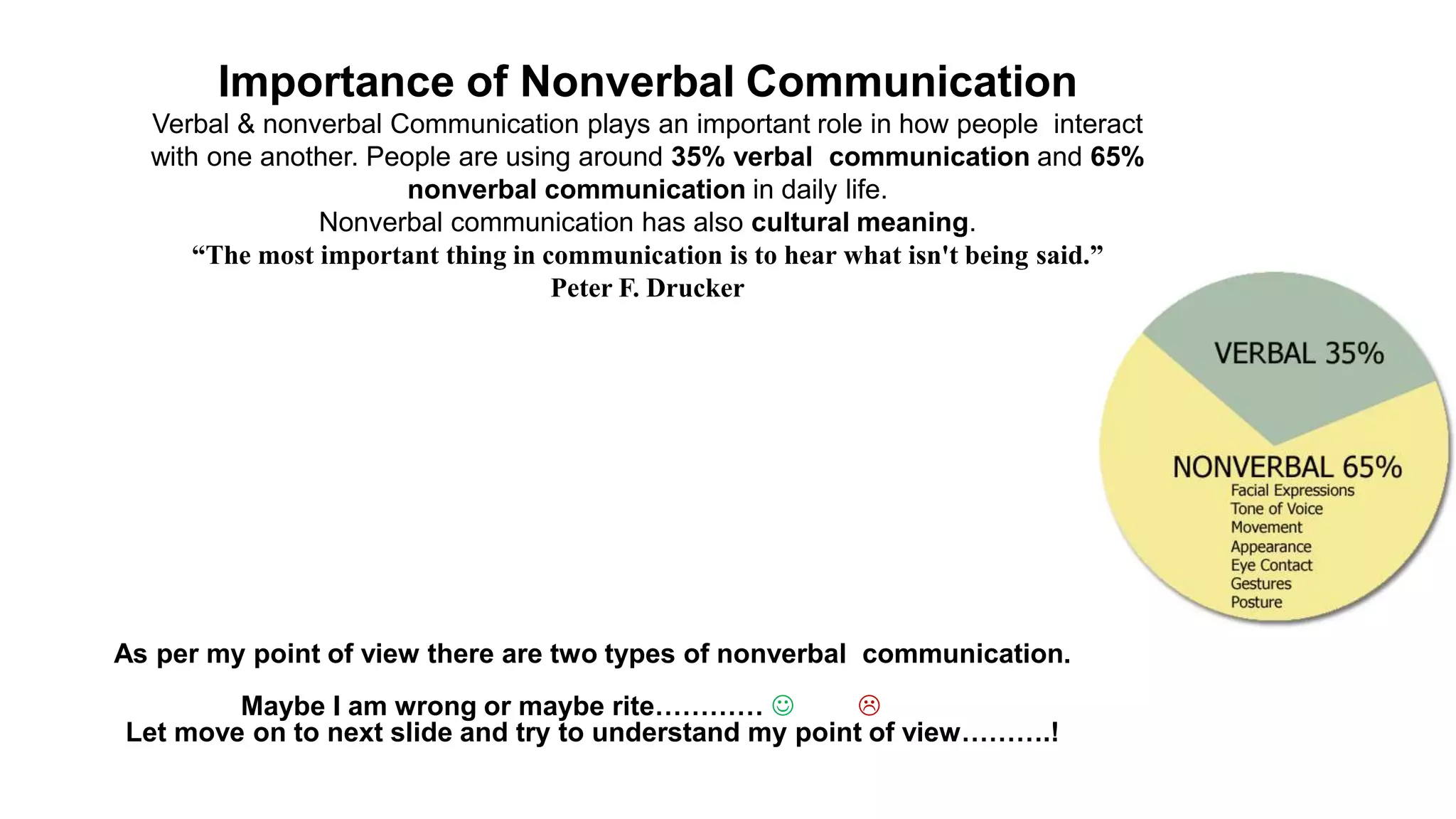
with one another. People are using around 35% verbal communication and 65%
nonverbal communication in daily life.
Nonverbal communication has also cultural meaning.
“The most important thing in communication is to hear what isn't being said.”
Peter F. Drucker
As per my point of view there are two types of nonverbal communication.
Maybe I am wrong or maybe rite…………  
Let move on to next slide and try to understand my point of view……….!
Types of Nonverbal Communication
There are two types of nonverbal communication:-
•Intentional nonverbal communication
Example: Pointing out the finger, giving smile and clapping.
•Unintentional nonverbal communication
Example: ……………….?
This may be intentional or unintentional
nonverbal communication message.
Nonverbal Communication Around
the World
Nonverbal
Communication
in
Pakistan
Expressing
happiness,
respect and
love for others.
Cultural effect
Nonverbal
Communication in
China
The Chinese don't like
being touched by
strangers. Therefore
don’t make any body
contact.
Nonverbal Communication in
Argentina
A handshake and nod show
respect when greeting someone.
Nonverbal Communication
in
India
Greeting with 'namaste'
- placing both hands
together with a slight
bow is a very common
nonverbal
communication and
shows respect.
Nonverbal
Communication in the
U.S.A
Quite Informal way of
nonverbal communication
- A handshake, a smile,
and 'hello'.
Nonverbal Communication must be understandable
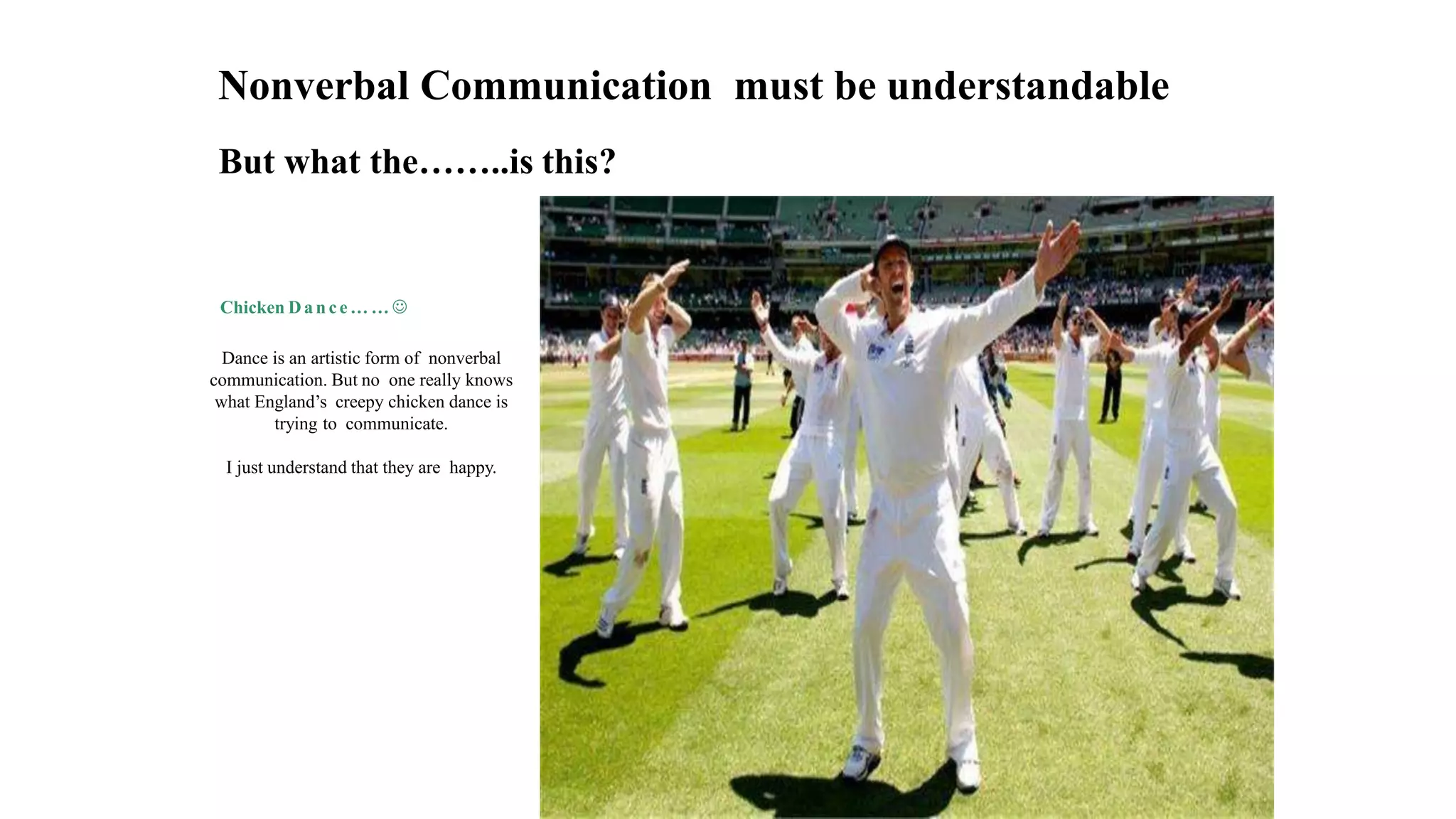
But what the……..is this?
Chicken Dan ce…… 
Dance is an artistic form of nonverbal
communication. But no one really knows
what England’s creepy chicken dance is
trying to communicate.
I just understand that they are happy.
Conclusion
• Non verbal communication is a very important form of
communication
• Way of expressing your feelings is very effective
• It is an efficient way to convey your message.
• Expression, Eye Contact are most important.

Importance of nonverbal communication

  • 1.
    Importance of NonverbalCommunication Verbal & nonverbal Communication plays an important role in how people interact with one another. People are using around 35% verbal communication and 65% nonverbal communication in daily life. Nonverbal communication has also cultural meaning. “The most important thing in communication is to hear what isn't being said.” Peter F. Drucker As per my point of view there are two types of nonverbal communication. Maybe I am wrong or maybe rite…………   Let move on to next slide and try to understand my point of view……….!
  • 2.
    Types of NonverbalCommunication There are two types of nonverbal communication:- •Intentional nonverbal communication Example: Pointing out the finger, giving smile and clapping. •Unintentional nonverbal communication Example: ……………….? This may be intentional or unintentional nonverbal communication message.
  • 3.
    Nonverbal Communication Around theWorld Nonverbal Communication in Pakistan Expressing happiness, respect and love for others. Cultural effect Nonverbal Communication in China The Chinese don't like being touched by strangers. Therefore don’t make any body contact. Nonverbal Communication in Argentina A handshake and nod show respect when greeting someone. Nonverbal Communication in India Greeting with 'namaste' - placing both hands together with a slight bow is a very common nonverbal communication and shows respect. Nonverbal Communication in the U.S.A Quite Informal way of nonverbal communication - A handshake, a smile, and 'hello'.
  • 4.
    Nonverbal Communication mustbe understandable But what the……..is this? Chicken Dan ce……  Dance is an artistic form of nonverbal communication. But no one really knows what England’s creepy chicken dance is trying to communicate. I just understand that they are happy.
  • 5.
    Conclusion • Non verbalcommunication is a very important form of communication • Way of expressing your feelings is very effective • It is an efficient way to convey your message. • Expression, Eye Contact are most important.