Implementating UnBalanced
        Scorecard	

      – A Case Study	

                                   Tathagat Varma,
         Strategy Execution 2013
                                       Sr. Director,
              Conference (c)                Yahoo!
Discussion Topics


•    Balanced Scorecard
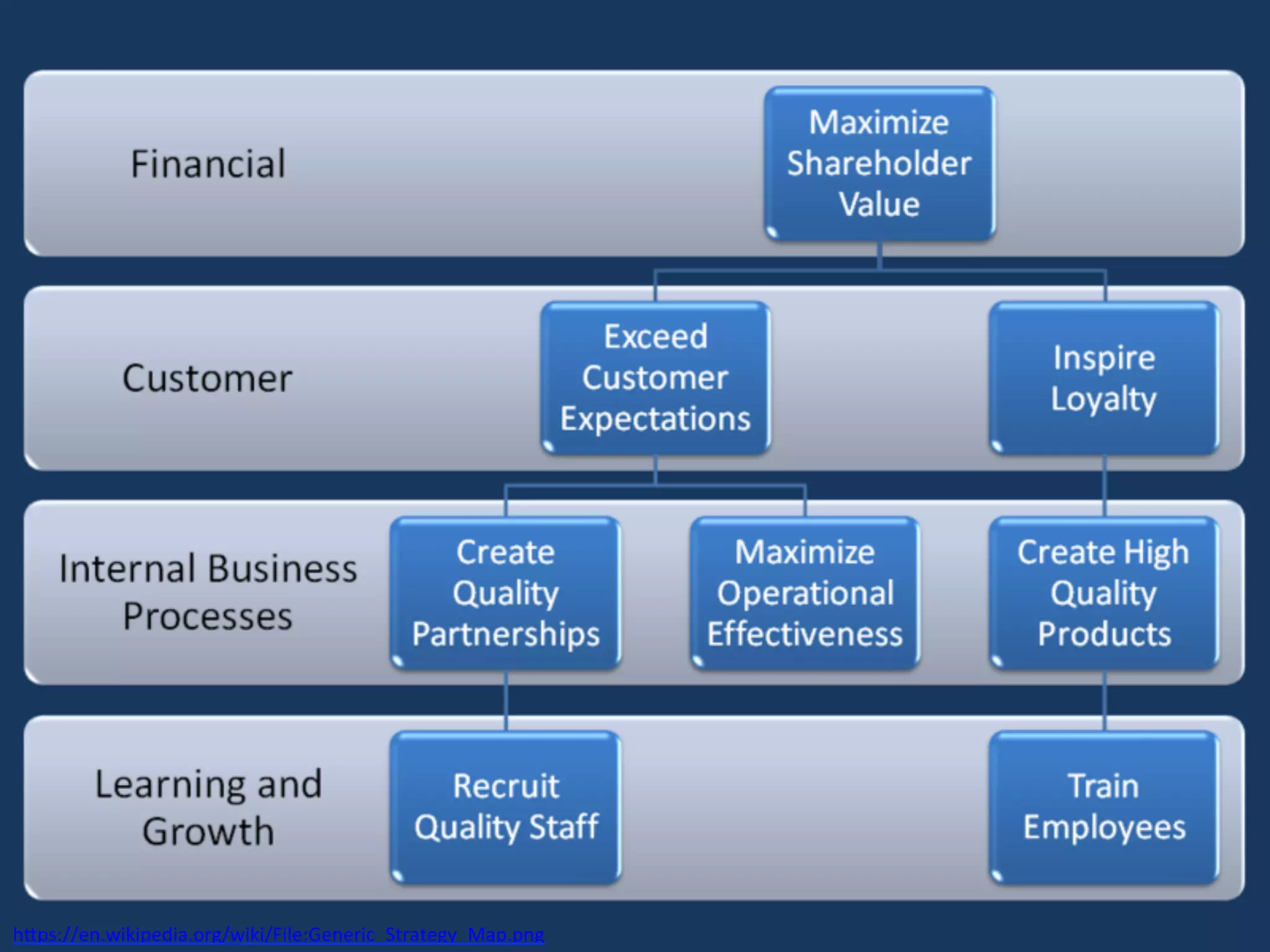
•    Strategy Map
•    Our Journey
•    Challenges
•    Results
•    Learnings


                Strategy Execution 2013
                     Conference (c)
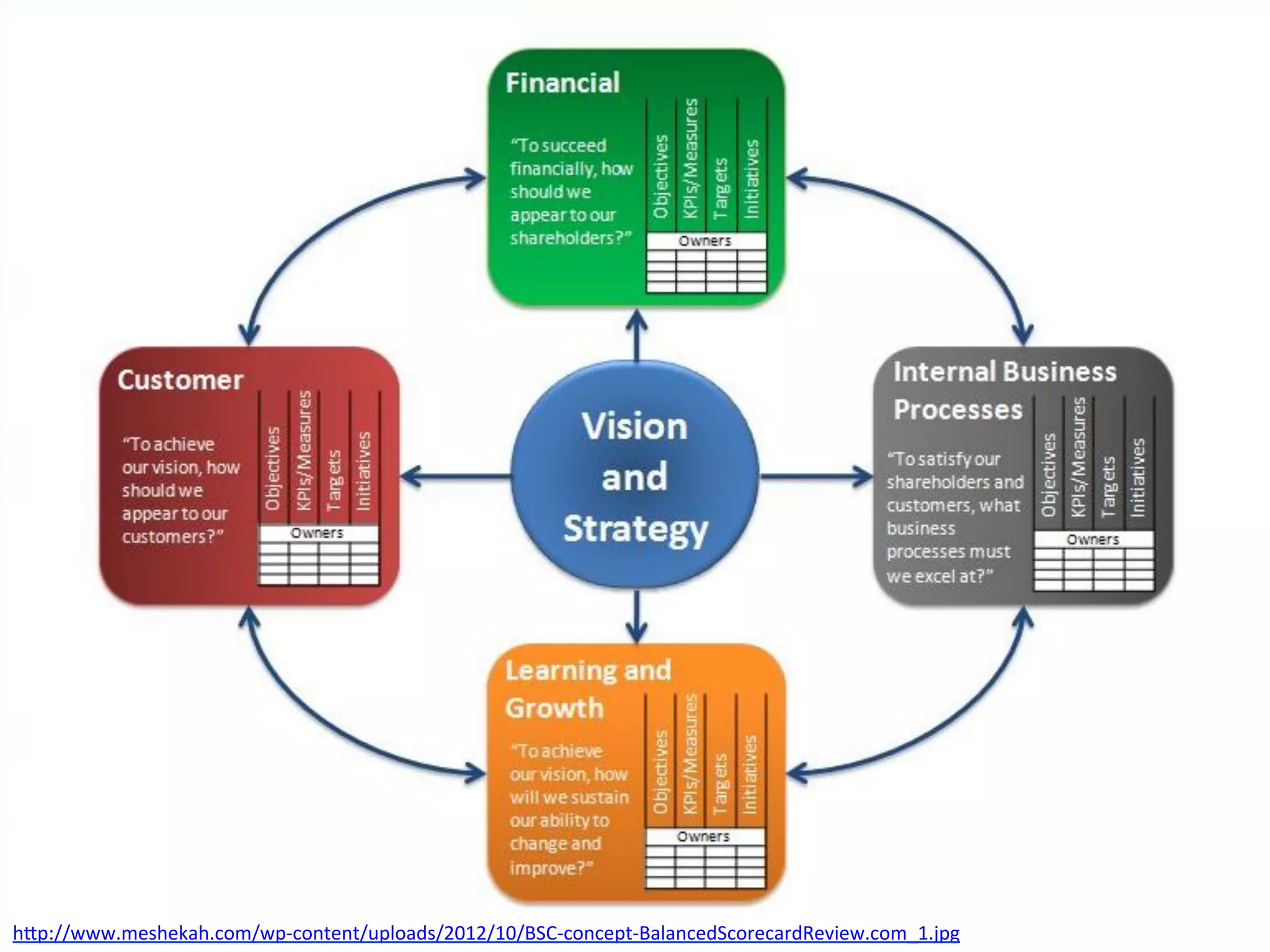
Balanced Scorecard


                                                  Strategy Execution 2013
                                                       Conference (c)
h"p://www.meshekah.com/wp-­‐content/uploads/2012/10/BSC-­‐concept-­‐BalancedScorecardReview.com_1.jpg	
  	
  
Next Generation Testing Conference (c)
h"ps://en.wikipedia.org/wiki/File:Generic_Strategy_Map.png	
  	
  
Our Journey

•    Started in mid-2010 through 2012
•    Pragmatic and empirical approach
•    Excellence program to reflect KRAs
•    KPIs aligned with priorities and goals
•    Goals for product and support groups
•    QBRs to track and review


                  Strategy Execution 2013
                       Conference (c)
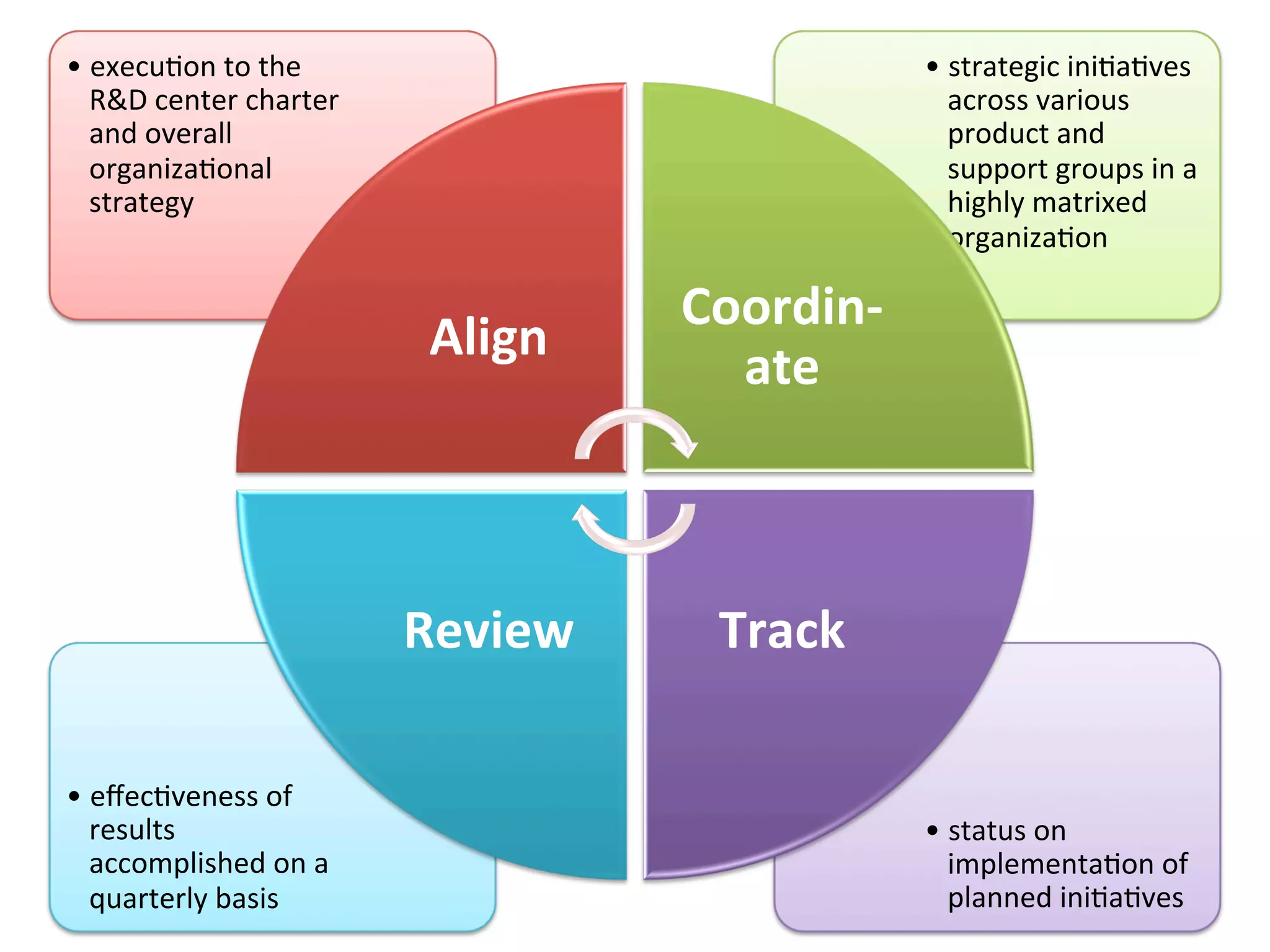
•  execuHon	
  to	
  the	
                                  •  strategic	
  iniHaHves	
  
   R&D	
  center	
  charter	
                                  across	
  various	
  
   and	
  overall	
                                            product	
  and	
  
   organizaHonal	
                                             support	
  groups	
  in	
  a	
  
   strategy	
                                                  highly	
  matrixed	
  
                                                               organizaHon	
  

                                               Coordin-­‐
                                   Align	
  
                                                 ate	


                                  Review	
      Track	
  

•  effecHveness	
  of	
  
   results	
                                                •  status	
  on	
  
   accomplished	
  on	
  a	
                                   implementaHon	
  of	
  
   quarterly	
  basis	
                                        planned	
  iniHaHves	
  
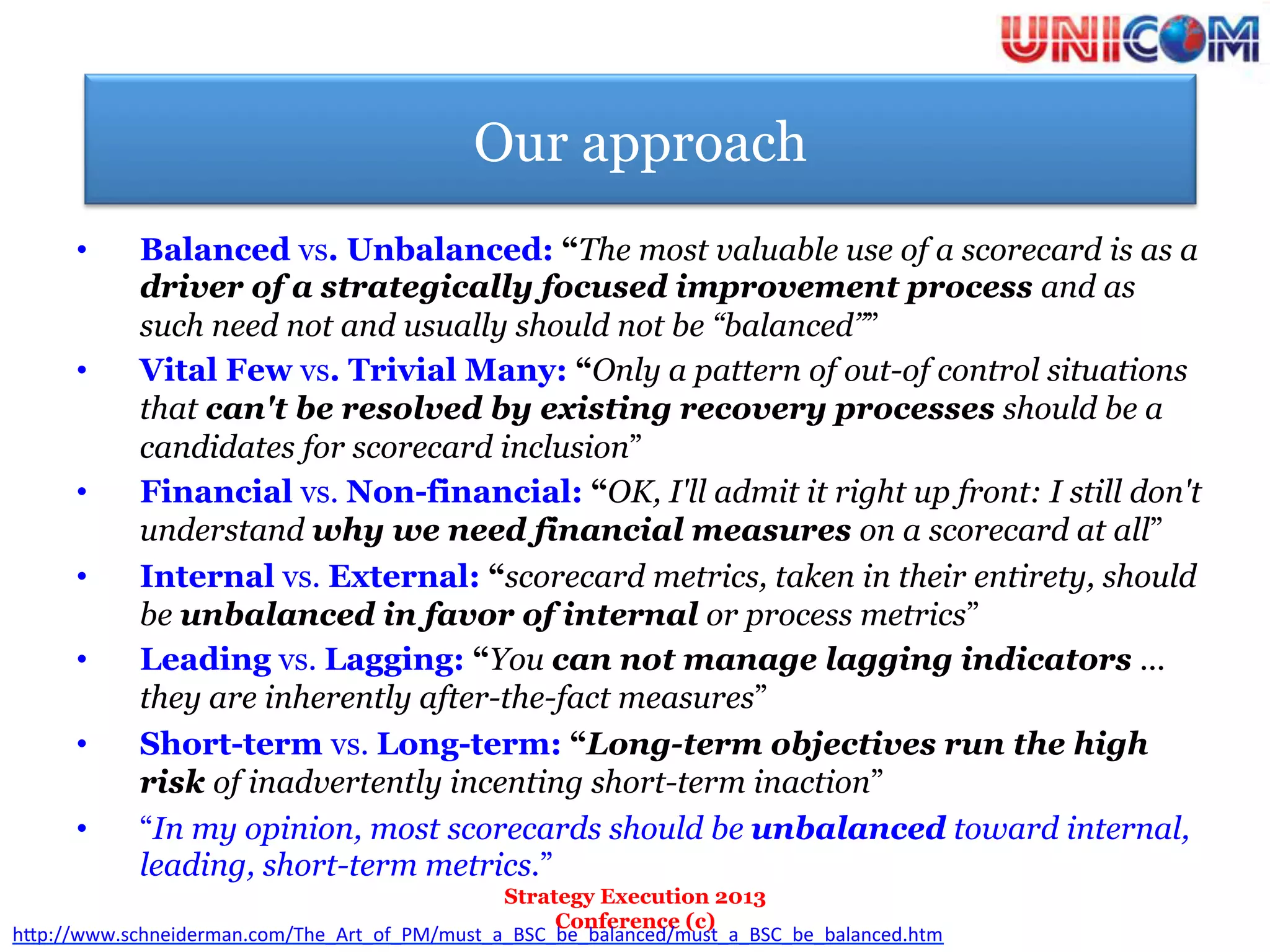
Our approach
      •      Balanced vs. Unbalanced: “The most valuable use of a scorecard is as a
             driver of a strategically focused improvement process and as
             such need not and usually should not be “balanced””
      •      Vital Few vs. Trivial Many: “Only a pattern of out-of control situations
             that can't be resolved by existing recovery processes should be a
             candidates for scorecard inclusion”
      •      Financial vs. Non-financial: “OK, I'll admit it right up front: I still don't
             understand why we need financial measures on a scorecard at all”
      •      Internal vs. External: “scorecard metrics, taken in their entirety, should
             be unbalanced in favor of internal or process metrics”
      •      Leading vs. Lagging: “You can not manage lagging indicators ...
             they are inherently after-the-fact measures”
      •      Short-term vs. Long-term: “Long-term objectives run the high
             risk of inadvertently incenting short-term inaction”
      •      “In my opinion, most scorecards should be unbalanced toward internal,
             leading, short-term metrics.”
                                               Strategy Execution 2013
                                                    Conference (c)
h"p://www.schneiderman.com/The_Art_of_PM/must_a_BSC_be_balanced/must_a_BSC_be_balanced.htm	
  	
  
Excellence Program
•    Delivering world-class performance by applying
     systems thinking approach to achieve
     •  a winning culture that promotes continuous
        learning, personal growth and inter-group
        collaboration, and makes us “Proud to be a Yahoo!”
     •  an execution system that supports operating as
        one product team to achieve agility, faster
        innovation, meaningful risk-taking and consistent
        delivery of world-class products with “wow” user
        experience
     •  an operational model that makes best usage of
        company resources to provide a wow experience to
        employees and leaders
                      Strategy Execution 2013
                           Conference (c)
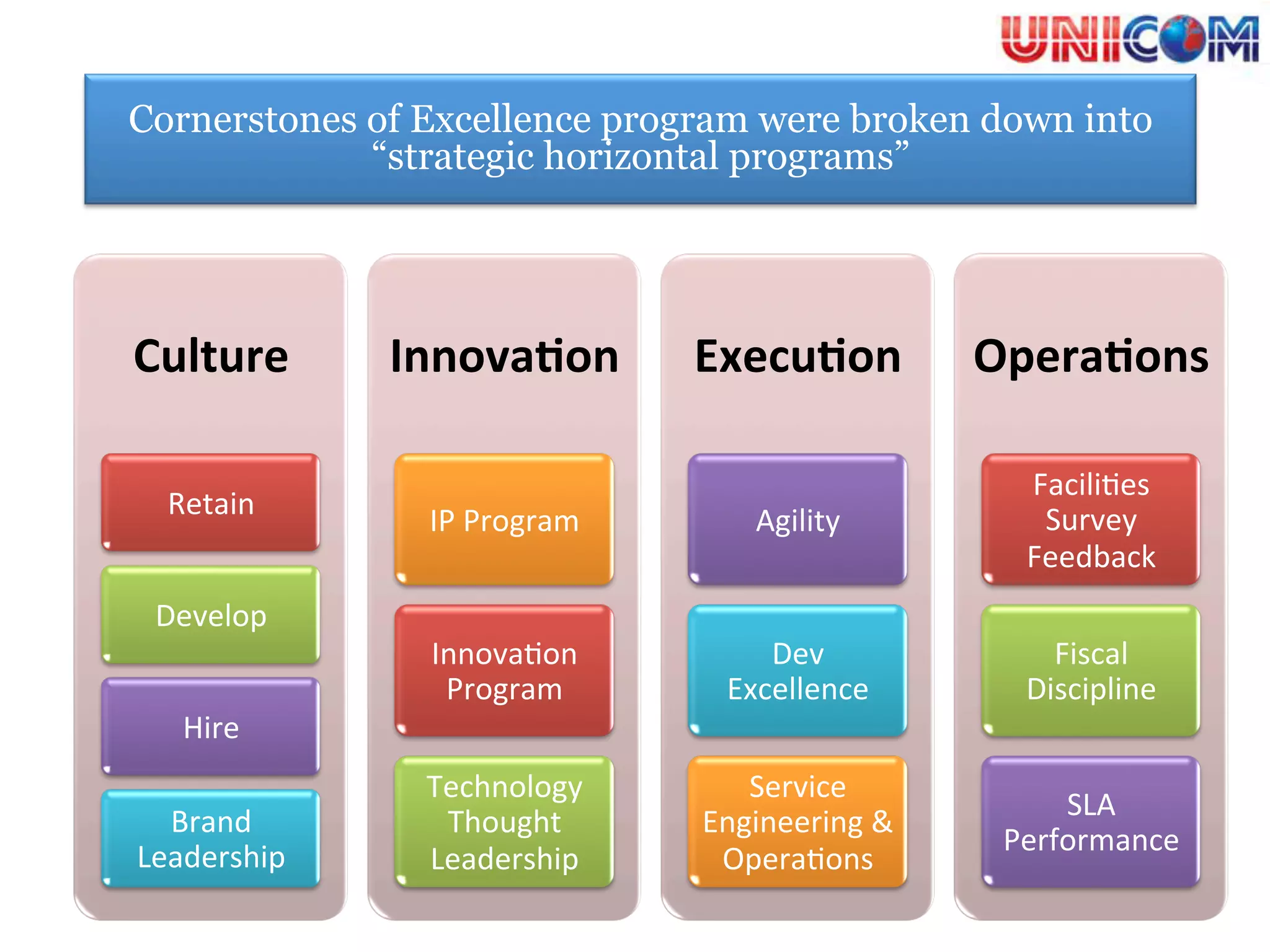
Cornerstones of Excellence program were broken down into
             “strategic horizontal programs”


Culture	
        Innova6on	
           Execu6on	
             Opera6ons	
  

                                                                FaciliHes	
  
  Retain	
                                                       Survey	
  
                   IP	
  Program	
          Agility	
  
                                                                Feedback	
  
 Develop	
  
                   InnovaHon	
              Dev	
                 Fiscal	
  
                    Program	
            Excellence	
           Discipline	
  
    Hire	
  
                  Technology	
            Service	
  
                                                                   SLA	
  
  Brand	
          Thought	
           Engineering	
  &	
  
                                                               Performance	
  
Leadership	
      Leadership	
          OperaHons	
  
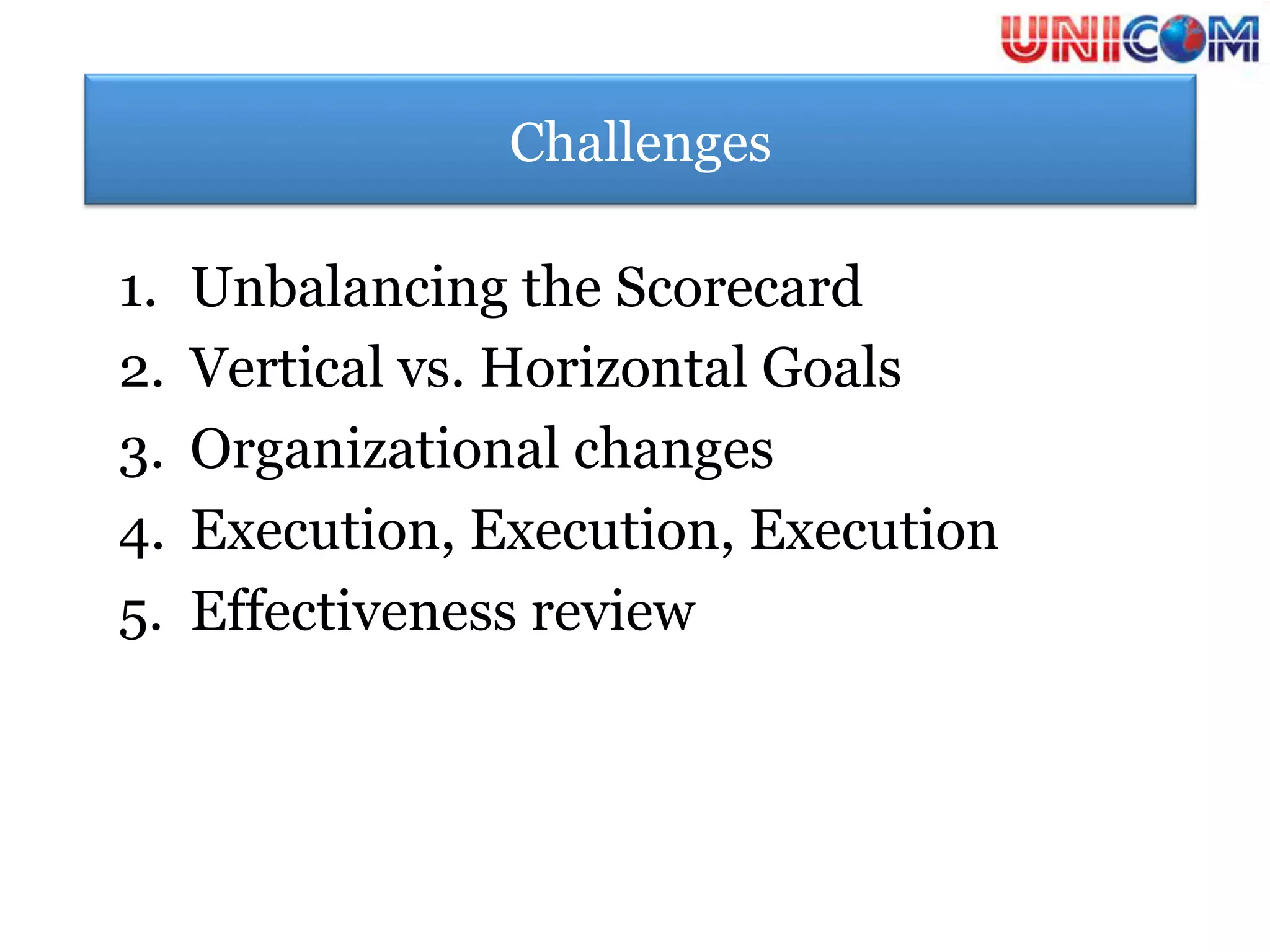
Challenges

1.  Unbalancing the Scorecard
2.  Vertical vs. Horizontal Goals
3.  Organizational changes
4.  Execution, Execution, Execution
5.  Effectiveness review
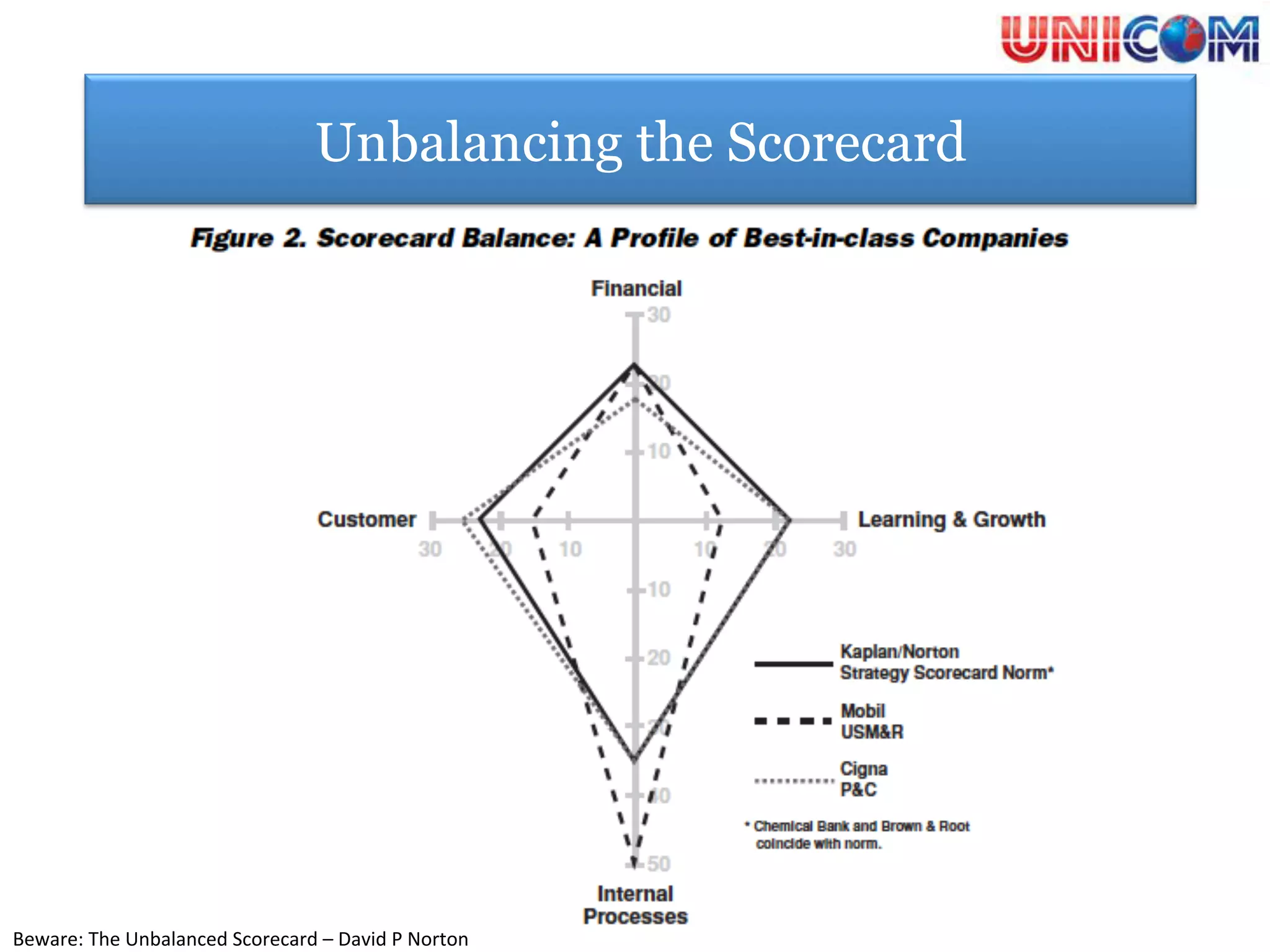
Unbalancing the Scorecard


Beware:	
  The	
  Unbalanced	
  Scorecard	
  –	
  David	
  P	
  Norton	
  
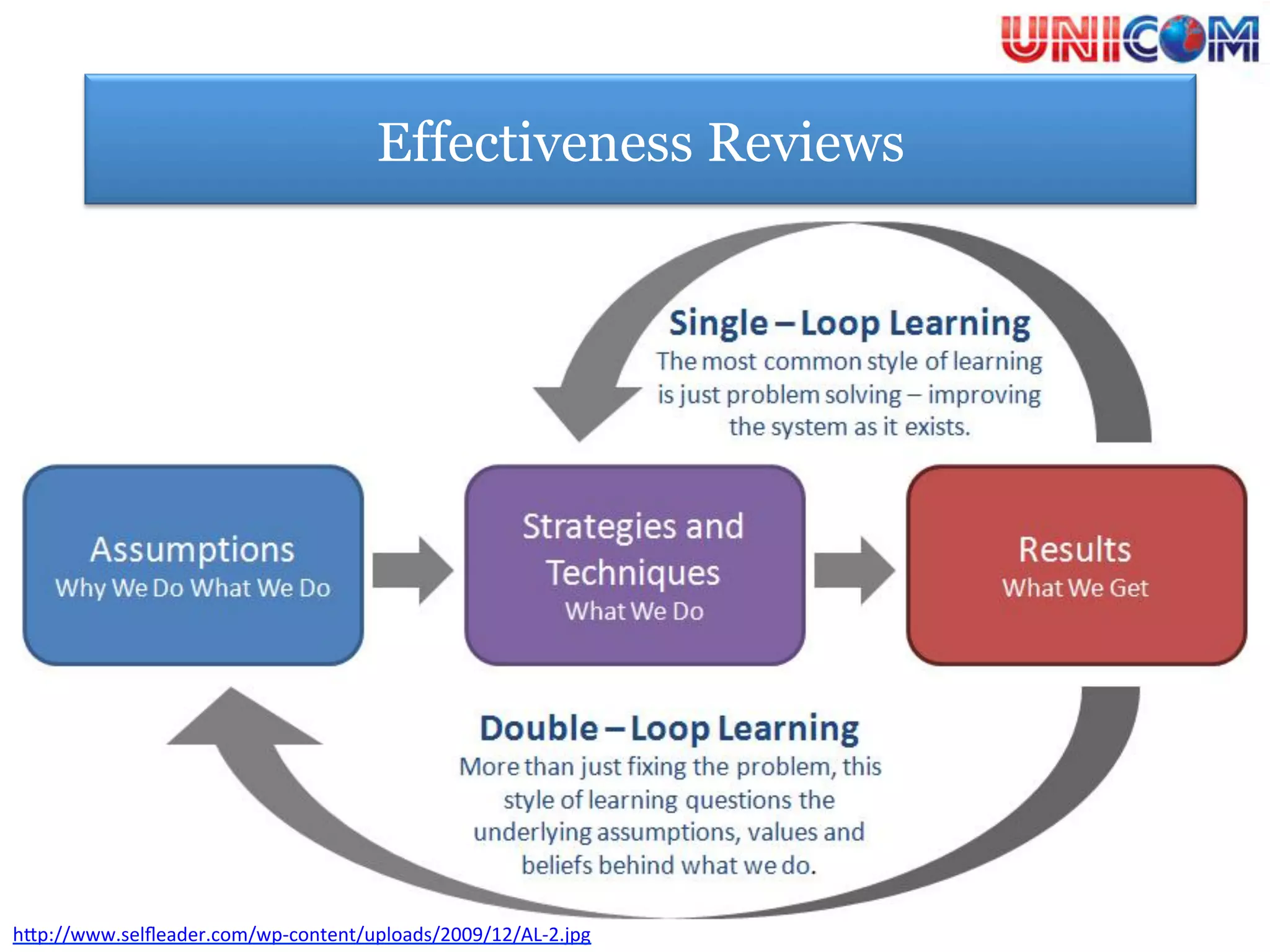
Effectiveness Reviews


h"p://www.selfleader.com/wp-­‐content/uploads/2009/12/AL-­‐2.jpg	
  	
  
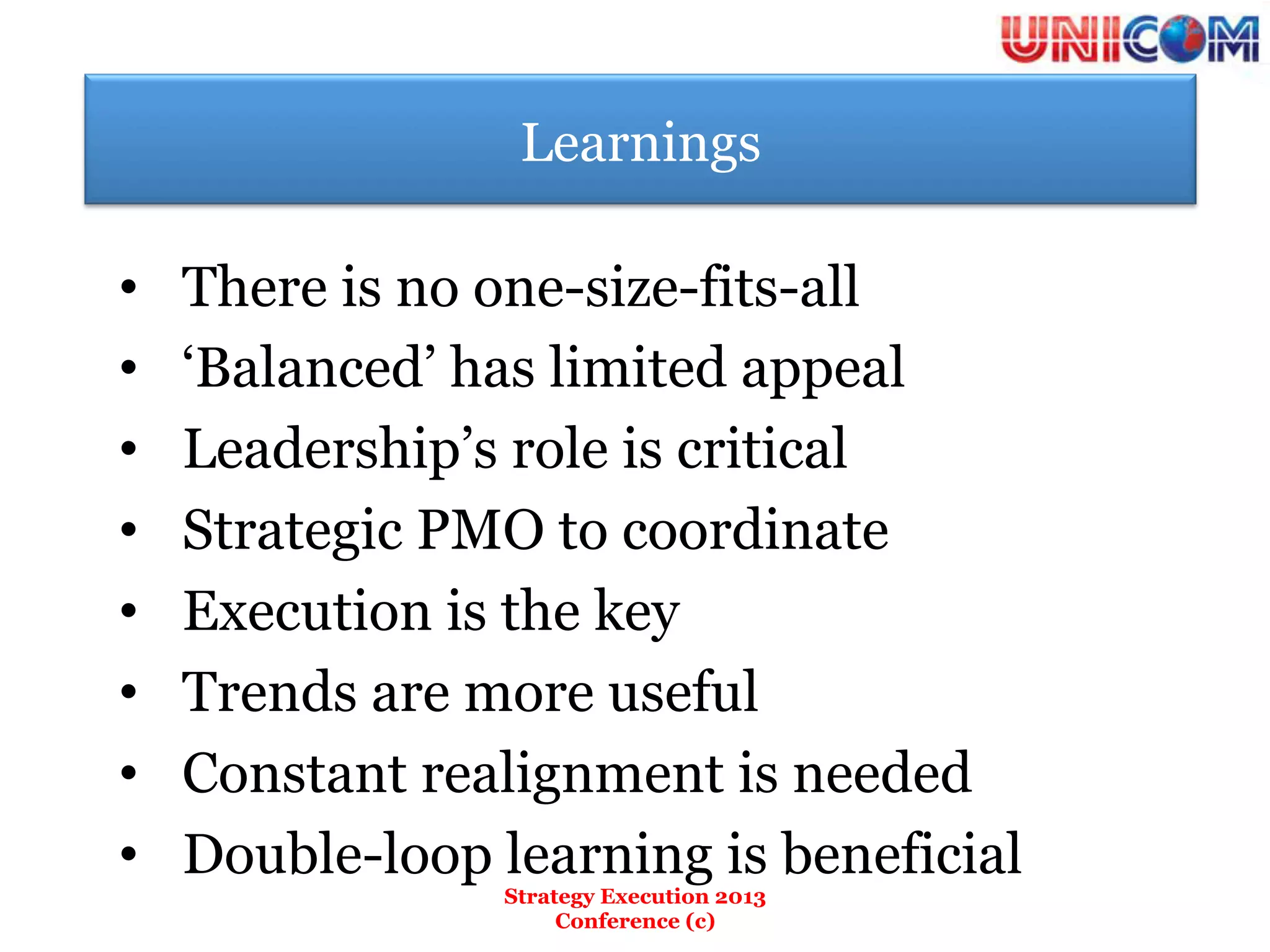
Learnings

•    There is no one-size-fits-all
•    ‘Balanced’ has limited appeal
•    Leadership’s role is critical
•    Strategic PMO to coordinate
•    Execution is the key
•    Trends are more useful
•    Constant realignment is needed
•    Double-loop learning is beneficial
                  Strategy Execution 2013
                       Conference (c)
Some parting thoughts

•  “If a good scorecard consists of 23–25
   measures, all but five of them should focus
   on customers, internal processes,
   and learning and growth.” – David P.
   Norton, 2000
•  “Our work in innovation makes clear that
   unless companies differentiate beyond
   the norms of the competitive set in
   which they participate, they cannot get
   paid a differential return.” – Geoffrey
   Moore, 2005
References

•    http://www.schneiderman.com/Concepts/
     The_First_Balanced_Scorecard/
     How_the_Scorecard_Became_Balanced.htm
•    http://www.slideshare.net/Managewell/strategic-alignment-
     of-horizontal-and-vertical-pmo-goals-final
•    http://www.schneiderman.com/AMS_publications/
     Unbalanced%20Scorecard/unbalanced_scorecard.htm
•    http://www.schneiderman.com/Concepts/
     The_First_Balanced_Scorecard/
     BSC_INTRO_AND_CONTENTS.htm
•    http://geoffmoore.blogs.com/my_weblog/2005/11/
     unbalanced_scor.html


                        Strategy Execution 2013
                             Conference (c)
Tathagat Varma
http://managewell.net
    Strategy Execution 2013
         Conference (c)

Implementing UnBalanced Scorecard

  • 1.
    Implementating UnBalanced Scorecard – A Case Study Tathagat Varma, Strategy Execution 2013 Sr. Director, Conference (c) Yahoo!
  • 2.
    Discussion Topics •  Balanced Scorecard •  Strategy Map •  Our Journey •  Challenges •  Results •  Learnings Strategy Execution 2013 Conference (c)
  • 3.
    Balanced Scorecard Strategy Execution 2013 Conference (c) h"p://www.meshekah.com/wp-­‐content/uploads/2012/10/BSC-­‐concept-­‐BalancedScorecardReview.com_1.jpg    
  • 4.
    Next Generation TestingConference (c) h"ps://en.wikipedia.org/wiki/File:Generic_Strategy_Map.png    
  • 5.
    Our Journey •  Started in mid-2010 through 2012 •  Pragmatic and empirical approach •  Excellence program to reflect KRAs •  KPIs aligned with priorities and goals •  Goals for product and support groups •  QBRs to track and review Strategy Execution 2013 Conference (c)
  • 6.
    •  execuHon  to  the   •  strategic  iniHaHves   R&D  center  charter   across  various   and  overall   product  and   organizaHonal   support  groups  in  a   strategy   highly  matrixed   organizaHon   Coordin-­‐ Align   ate   Review   Track   •  effecHveness  of   results   •  status  on   accomplished  on  a   implementaHon  of   quarterly  basis   planned  iniHaHves  
  • 7.
    Our approach •  Balanced vs. Unbalanced: “The most valuable use of a scorecard is as a driver of a strategically focused improvement process and as such need not and usually should not be “balanced”” •  Vital Few vs. Trivial Many: “Only a pattern of out-of control situations that can't be resolved by existing recovery processes should be a candidates for scorecard inclusion” •  Financial vs. Non-financial: “OK, I'll admit it right up front: I still don't understand why we need financial measures on a scorecard at all” •  Internal vs. External: “scorecard metrics, taken in their entirety, should be unbalanced in favor of internal or process metrics” •  Leading vs. Lagging: “You can not manage lagging indicators ... they are inherently after-the-fact measures” •  Short-term vs. Long-term: “Long-term objectives run the high risk of inadvertently incenting short-term inaction” •  “In my opinion, most scorecards should be unbalanced toward internal, leading, short-term metrics.” Strategy Execution 2013 Conference (c) h"p://www.schneiderman.com/The_Art_of_PM/must_a_BSC_be_balanced/must_a_BSC_be_balanced.htm    
  • 8.
    Excellence Program •  Delivering world-class performance by applying systems thinking approach to achieve •  a winning culture that promotes continuous learning, personal growth and inter-group collaboration, and makes us “Proud to be a Yahoo!” •  an execution system that supports operating as one product team to achieve agility, faster innovation, meaningful risk-taking and consistent delivery of world-class products with “wow” user experience •  an operational model that makes best usage of company resources to provide a wow experience to employees and leaders Strategy Execution 2013 Conference (c)
  • 9.
    Cornerstones of Excellenceprogram were broken down into “strategic horizontal programs” Culture   Innova6on   Execu6on   Opera6ons   FaciliHes   Retain   Survey   IP  Program   Agility   Feedback   Develop   InnovaHon   Dev   Fiscal   Program   Excellence   Discipline   Hire   Technology   Service   SLA   Brand   Thought   Engineering  &   Performance   Leadership   Leadership   OperaHons  
  • 10.
    Challenges 1.  Unbalancing theScorecard 2.  Vertical vs. Horizontal Goals 3.  Organizational changes 4.  Execution, Execution, Execution 5.  Effectiveness review
  • 11.
    Unbalancing the Scorecard Beware:  The  Unbalanced  Scorecard  –  David  P  Norton  
  • 12.
  • 13.
    Learnings •  There is no one-size-fits-all •  ‘Balanced’ has limited appeal •  Leadership’s role is critical •  Strategic PMO to coordinate •  Execution is the key •  Trends are more useful •  Constant realignment is needed •  Double-loop learning is beneficial Strategy Execution 2013 Conference (c)
  • 14.
    Some parting thoughts • “If a good scorecard consists of 23–25 measures, all but five of them should focus on customers, internal processes, and learning and growth.” – David P. Norton, 2000 •  “Our work in innovation makes clear that unless companies differentiate beyond the norms of the competitive set in which they participate, they cannot get paid a differential return.” – Geoffrey Moore, 2005
  • 15.
    References •  http://www.schneiderman.com/Concepts/ The_First_Balanced_Scorecard/ How_the_Scorecard_Became_Balanced.htm •  http://www.slideshare.net/Managewell/strategic-alignment- of-horizontal-and-vertical-pmo-goals-final •  http://www.schneiderman.com/AMS_publications/ Unbalanced%20Scorecard/unbalanced_scorecard.htm •  http://www.schneiderman.com/Concepts/ The_First_Balanced_Scorecard/ BSC_INTRO_AND_CONTENTS.htm •  http://geoffmoore.blogs.com/my_weblog/2005/11/ unbalanced_scor.html Strategy Execution 2013 Conference (c)
  • 16.
    Tathagat Varma http://managewell.net Strategy Execution 2013 Conference (c)