Implementing the READ
Scale©:
An Additional Measure
of Reference
Interactions
Kelsey Cheshire and Emily Porter-Fyke
What is READ©?
Reference Effort Assessment Data
Available at readscale.org
Developed by Dr. Bella Karr Gerlich
6-point scale based on effort of interaction
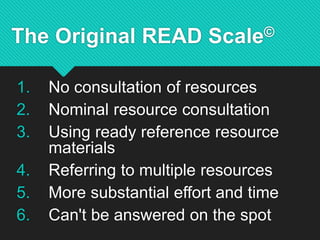
The Original READ Scale©
1. No consultation of resources
2. Nominal resource consultation
3. Using ready reference resource
materials
4. Referring to multiple resources
5. More substantial effort and time
6. Can't be answered on the spot
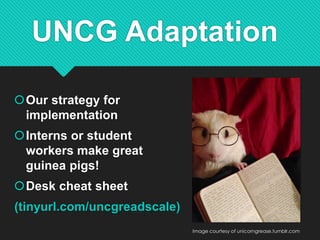
UNCG Adaptation
Our strategy for
implementation
Interns or student
workers make great
guinea pigs!
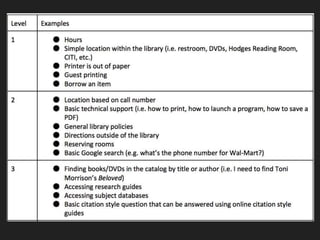
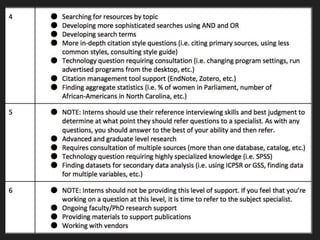
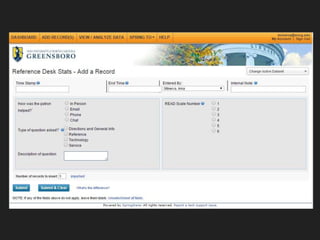
Desk cheat sheet
(tinyurl.com/uncgreadscale)
Image courtesy of unicorngrease.tumblr.com
UNCG Data
• Almost 12,000
READ reference
transactions
logged so far
• How does it give
perspective to
reference
interactions?
• How can we
apply it in the
future?
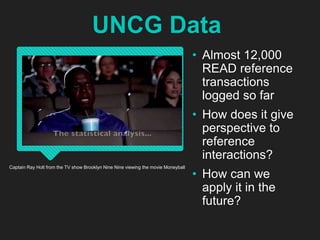
Captain Ray Holt from the TV show Brooklyn Nine Nine viewing the movie Moneyball
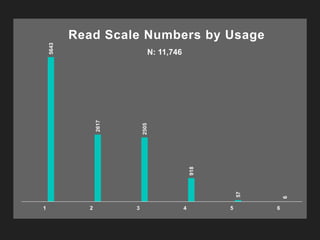
5643
2617
2505
918
57
6
1 2 3 4 5 6
Read Scale Numbers by Usage
N: 11,746
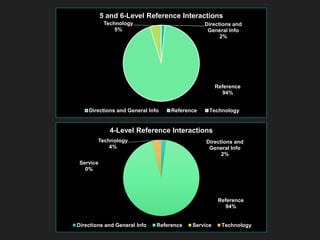
Directions and
General Info
2%
Reference
94%
Service
0%
Technology
4%
4-Level Reference Interactions
Directions and General Info Reference Service Technology
Directions and
General Info
2%
Reference
94%
Technology
5%
5 and 6-Level Reference Interactions
Directions and General Info Reference Technology
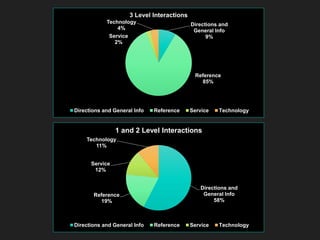
Directions and
General Info
58%
Reference
19%
Service
12%
Technology
11%
1 and 2 Level Interactions
Directions and General Info Reference Service Technology
Directions and
General Info
9%
Reference
85%
Service
2%
Technology
4%
3 Level Interactions
Directions and General Info Reference Service Technology
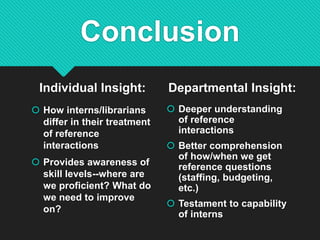
Conclusion
Individual Insight:
 How interns/librarians
differ in their treatment
of reference
interactions
 Provides awareness of
skill levels--where are
we proficient? What do
we need to improve
on?
Departmental Insight:
 Deeper understanding
of reference
interactions
 Better comprehension
of how/when we get
reference questions
(staffing, budgeting,
etc.)
 Testament to capability
of interns
Any
Questions?
Special Thanks:
Kathy Shields, Jenny
Dale, Amy Harris Houk,
and of course, Dr. Bella
Karr Gerlich
Contact Information:
Kelsey Cheshire
kmcheshi@uncg.edu
Emily Porter-Fyke
eiporter@uncg.edu

Implementing the READ (Reference Effort Assessment Data) as an Additional Measure of Reference Interactions

  • 1.
    Implementing the READ Scale©: AnAdditional Measure of Reference Interactions Kelsey Cheshire and Emily Porter-Fyke
  • 2.
    What is READ©? ReferenceEffort Assessment Data Available at readscale.org Developed by Dr. Bella Karr Gerlich 6-point scale based on effort of interaction
  • 3.
    The Original READScale© 1. No consultation of resources 2. Nominal resource consultation 3. Using ready reference resource materials 4. Referring to multiple resources 5. More substantial effort and time 6. Can't be answered on the spot
  • 4.
    UNCG Adaptation Our strategyfor implementation Interns or student workers make great guinea pigs! Desk cheat sheet (tinyurl.com/uncgreadscale) Image courtesy of unicorngrease.tumblr.com
  • 8.
    UNCG Data • Almost12,000 READ reference transactions logged so far • How does it give perspective to reference interactions? • How can we apply it in the future? Captain Ray Holt from the TV show Brooklyn Nine Nine viewing the movie Moneyball
  • 9.
    5643 2617 2505 918 57 6 1 2 34 5 6 Read Scale Numbers by Usage N: 11,746
  • 10.
    Directions and General Info 2% Reference 94% Service 0% Technology 4% 4-LevelReference Interactions Directions and General Info Reference Service Technology Directions and General Info 2% Reference 94% Technology 5% 5 and 6-Level Reference Interactions Directions and General Info Reference Technology
  • 11.
    Directions and General Info 58% Reference 19% Service 12% Technology 11% 1and 2 Level Interactions Directions and General Info Reference Service Technology Directions and General Info 9% Reference 85% Service 2% Technology 4% 3 Level Interactions Directions and General Info Reference Service Technology
  • 12.
    Conclusion Individual Insight:  Howinterns/librarians differ in their treatment of reference interactions  Provides awareness of skill levels--where are we proficient? What do we need to improve on? Departmental Insight:  Deeper understanding of reference interactions  Better comprehension of how/when we get reference questions (staffing, budgeting, etc.)  Testament to capability of interns
  • 13.
    Any Questions? Special Thanks: Kathy Shields,Jenny Dale, Amy Harris Houk, and of course, Dr. Bella Karr Gerlich Contact Information: Kelsey Cheshire kmcheshi@uncg.edu Emily Porter-Fyke eiporter@uncg.edu