www.marsbiminternational.com
Implementing 5D BIM for
Quantity Surveying &
Cost Estimation
Introduction
Learn More
Integration of cost estimation with 3D BIM model and time scheduling (4D)
Importance of accurate quantity surveying and cost estimation in construction projects
Purpose of the presentation: Discuss challenges and strategies for implementing 5D BIM
Benefits of 5D BIM
Enables detailed quantity take-offs and
precise cost estimates by linking geometric
and non-geometric data.
Provides a comprehensive view of project
timelines, enabling better understanding
and communication of cost implications.
Enhanced Visualization:
Improved Accuracy:
Challenges
Data Integration and Interoperability: Ensuring compatibility and smooth exchange
of data between various BIM software and cost estimation tools.
Skill and Knowledge Gaps: Training personnel in both BIM technologies and cost
estimation methodologies to effectively utilize 5D BIM in Quantity Surveying.
Managing Project Scope Changes: Adapting cost estimates in real-time to reflect
design changes and managing the impact on project budgets.
Cost Database Management: Developing and maintaining a centralized and
updated database of cost information for accurate estimations.
Initial Investment vs. ROI: Evaluating the costs associated with implementing 5D
BIM against the long-term benefits and returns on investment.
Strategies
Early Stakeholder Engagement: Involving all relevant parties from the beginning to align
goals and ensure commitment to the 5D BIM implementation.
Standardization of Processes: Establishing protocols and standards for data exchange,
workflows, and methodologies across all project phases.
Continuous Training and Development: Providing ongoing education and support to staff
to enhance their proficiency in using 5D BIM tools effectively.
Utilization of Cloud-Based Platforms: Leveraging cloud technology for enhanced
accessibility, data security, and collaboration among distributed teams.
Monitoring and Evaluation: Implementing regular assessments and feedback mechanisms
to measure the success and refine the implementation of 5D BIM.
Case Studies
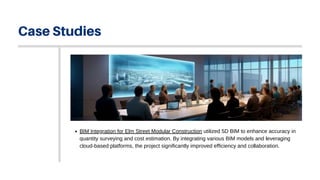
BIM Integration for Elm Street Modular Construction utilized 5D BIM to enhance accuracy in
quantity surveying and cost estimation. By integrating various BIM models and leveraging
cloud-based platforms, the project significantly improved efficiency and collaboration.
Conclusion
recap of Benefits: Summarize the advantages of implementing 5D BIM for
quantity surveying and cost estimation.
Addressing Challenges: Emphasize the importance of overcoming
challenges through strategic planning and adoption of best practices.
Future Outlook: Discuss the evolving role of 5D BIM in construction
industry practices and its potential impact on project efficiency and
profitability.
Contact Us
Phone : +1 214-431-5215
Email : info@marsbiminternational.com
Website: www.marsbiminternational.com
For more information, please reach out to our team.
Thank You

Implementing 5D BIM for Quantity Surveying and Cost Estimation

  • 1.
    www.marsbiminternational.com Implementing 5D BIMfor Quantity Surveying & Cost Estimation
  • 2.
    Introduction Learn More Integration ofcost estimation with 3D BIM model and time scheduling (4D) Importance of accurate quantity surveying and cost estimation in construction projects Purpose of the presentation: Discuss challenges and strategies for implementing 5D BIM
  • 3.
    Benefits of 5DBIM Enables detailed quantity take-offs and precise cost estimates by linking geometric and non-geometric data. Provides a comprehensive view of project timelines, enabling better understanding and communication of cost implications. Enhanced Visualization: Improved Accuracy:
  • 4.
    Challenges Data Integration andInteroperability: Ensuring compatibility and smooth exchange of data between various BIM software and cost estimation tools. Skill and Knowledge Gaps: Training personnel in both BIM technologies and cost estimation methodologies to effectively utilize 5D BIM in Quantity Surveying. Managing Project Scope Changes: Adapting cost estimates in real-time to reflect design changes and managing the impact on project budgets. Cost Database Management: Developing and maintaining a centralized and updated database of cost information for accurate estimations. Initial Investment vs. ROI: Evaluating the costs associated with implementing 5D BIM against the long-term benefits and returns on investment.
  • 5.
    Strategies Early Stakeholder Engagement:Involving all relevant parties from the beginning to align goals and ensure commitment to the 5D BIM implementation. Standardization of Processes: Establishing protocols and standards for data exchange, workflows, and methodologies across all project phases. Continuous Training and Development: Providing ongoing education and support to staff to enhance their proficiency in using 5D BIM tools effectively. Utilization of Cloud-Based Platforms: Leveraging cloud technology for enhanced accessibility, data security, and collaboration among distributed teams. Monitoring and Evaluation: Implementing regular assessments and feedback mechanisms to measure the success and refine the implementation of 5D BIM.
  • 6.
    Case Studies BIM Integrationfor Elm Street Modular Construction utilized 5D BIM to enhance accuracy in quantity surveying and cost estimation. By integrating various BIM models and leveraging cloud-based platforms, the project significantly improved efficiency and collaboration.
  • 7.
    Conclusion recap of Benefits:Summarize the advantages of implementing 5D BIM for quantity surveying and cost estimation. Addressing Challenges: Emphasize the importance of overcoming challenges through strategic planning and adoption of best practices. Future Outlook: Discuss the evolving role of 5D BIM in construction industry practices and its potential impact on project efficiency and profitability.
  • 8.
    Contact Us Phone :+1 214-431-5215 Email : info@marsbiminternational.com Website: www.marsbiminternational.com For more information, please reach out to our team.
  • 9.