Enhancing Project
E ciency: The Role
of Business
Information
Modeling (BIM) in
Modern
Construction
Introduction to
BIM In today's construction
industry, Business Information
Modeling (BIM) serves as a pivotal
tool that enhances project efficiency.
This presentation will explore the
benefits and applications of BIM in
modern construction practices.
What is
BIM?
Business Information Modeling (BIM)
is a digital representation of the
physical and functional
characteristics of a facility. It serves
as a shared knowledge resource for
information about a facility, forming
a reliable basis for decisions during
its lifecycle.
Key Components of BIM
BIM encompasses various components such
as 3D modeling, data management, and
collaboration tools. These elements work
together to streamline processes and improve
overall project coordination.
Benefits of BIM
The use of BIM provides numerous benefits,
including enhanced visualization, improved
collaboration among stakeholders, and
increased efficiency in project execution. These
advantages lead to reduced costs and time
savings.
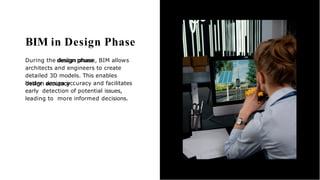
BIM in Design Phase
During the design phase, BIM allows
architects and engineers to create
detailed 3D models. This enables
better design accuracy and facilitates
early detection of potential issues,
leading to more informed decisions.
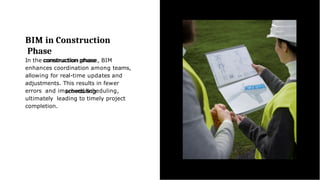
BIM in Construction
Phase
In the construction phase, BIM
enhances coordination among teams,
allowing for real-time updates and
adjustments. This results in fewer
errors and improved scheduling,
ultimately leading to timely project
completion.
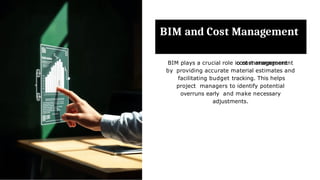
BIM and Cost Management
BIM plays a crucial role in cost management
by providing accurate material estimates and
facilitating budget tracking. This helps
project managers to identify potential
overruns early and make necessary
adjustments.
Collaboration through BIM
BIM fosters collaboration among
various stakeholders, including
architects, engineers, and
contractors. This integrated
approach ensures that everyone is
on the same page, reducing
miscommunication and
enhancing project outcomes.
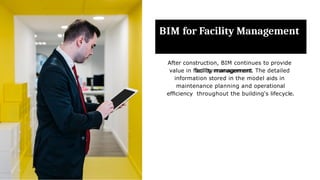
BIM for Facility Management
After construction, BIM continues to provide
value in facility management. The detailed
information stored in the model aids in
maintenance planning and operational
efficiency throughout the building's lifecycle.
Challenges of
Implementing BIM
Despite its advantages,
implementing BIM can present
challenges such as high initial costs,
the need for specialized training,
and resistance to change from
traditional practices.
Addressing these issues is crucial
for successful adoption.
BIM Software Tools
Several software tools are available
for BIM, including Autodesk Revit,
ArchiCAD, and Navisworks. Each tool
offers unique features that cater to
different aspects of the BIM process,
enhancing user experience and
project
efficiency.
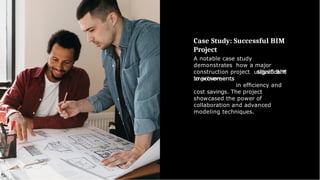
Case Study: Successful BIM
Project
A notable case study
demonstrates how a major
construction project utilized BIM
to achieve ficant
improvements in efficiency and
cost savings. The project
showcased the power of
collaboration and advanced
modeling techniques.
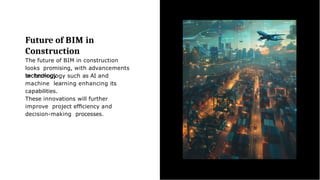
Future of BIM in
Construction
The future of BIM in construction
looks promising, with advancements
in technology such as AI and
machine learning enhancing its
capabilities.
These innovations will further
improve project efficiency and
decision-making processes.
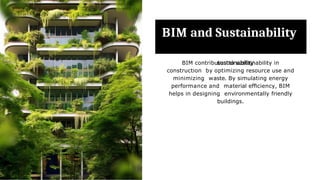
BIM and Sustainability
BIM contributes to sustainability in
construction by optimizing resource use and
minimizing waste. By simulating energy
performance and material efficiency, BIM
helps in designing environmentally friendly
buildings.
Conclusion
In conclusion, Business Information Modeling (BIM) is
transforming the construction industry by enhancing
project efficiency, fostering collaboration, and providing
valuable insights throughout the project lifecycle. Its
continued evolution will shape the future of construction.
Thanks!
Do you have any
questions?
youremail@email.com
+91 620 421 838
www.yourwebsite.co
m @yourusername

Pengenalan Building Information Modelling (BIM)

  • 1.
    Enhancing Project E ciency:The Role of Business Information Modeling (BIM) in Modern Construction
  • 2.
    Introduction to BIM Intoday's construction industry, Business Information Modeling (BIM) serves as a pivotal tool that enhances project efficiency. This presentation will explore the benefits and applications of BIM in modern construction practices.
  • 3.
    What is BIM? Business InformationModeling (BIM) is a digital representation of the physical and functional characteristics of a facility. It serves as a shared knowledge resource for information about a facility, forming a reliable basis for decisions during its lifecycle.
  • 4.
    Key Components ofBIM BIM encompasses various components such as 3D modeling, data management, and collaboration tools. These elements work together to streamline processes and improve overall project coordination.
  • 5.
    Benefits of BIM Theuse of BIM provides numerous benefits, including enhanced visualization, improved collaboration among stakeholders, and increased efficiency in project execution. These advantages lead to reduced costs and time savings.
  • 6.
    BIM in DesignPhase During the design phase, BIM allows architects and engineers to create detailed 3D models. This enables better design accuracy and facilitates early detection of potential issues, leading to more informed decisions.
  • 7.
    BIM in Construction Phase Inthe construction phase, BIM enhances coordination among teams, allowing for real-time updates and adjustments. This results in fewer errors and improved scheduling, ultimately leading to timely project completion.
  • 8.
    BIM and CostManagement BIM plays a crucial role in cost management by providing accurate material estimates and facilitating budget tracking. This helps project managers to identify potential overruns early and make necessary adjustments.
  • 9.
    Collaboration through BIM BIMfosters collaboration among various stakeholders, including architects, engineers, and contractors. This integrated approach ensures that everyone is on the same page, reducing miscommunication and enhancing project outcomes.
  • 10.
    BIM for FacilityManagement After construction, BIM continues to provide value in facility management. The detailed information stored in the model aids in maintenance planning and operational efficiency throughout the building's lifecycle.
  • 11.
    Challenges of Implementing BIM Despiteits advantages, implementing BIM can present challenges such as high initial costs, the need for specialized training, and resistance to change from traditional practices. Addressing these issues is crucial for successful adoption.
  • 12.
    BIM Software Tools Severalsoftware tools are available for BIM, including Autodesk Revit, ArchiCAD, and Navisworks. Each tool offers unique features that cater to different aspects of the BIM process, enhancing user experience and project efficiency.
  • 13.
    Case Study: SuccessfulBIM Project A notable case study demonstrates how a major construction project utilized BIM to achieve ficant improvements in efficiency and cost savings. The project showcased the power of collaboration and advanced modeling techniques.
  • 14.
    Future of BIMin Construction The future of BIM in construction looks promising, with advancements in technology such as AI and machine learning enhancing its capabilities. These innovations will further improve project efficiency and decision-making processes.
  • 15.
    BIM and Sustainability BIMcontributes to sustainability in construction by optimizing resource use and minimizing waste. By simulating energy performance and material efficiency, BIM helps in designing environmentally friendly buildings.
  • 16.
    Conclusion In conclusion, BusinessInformation Modeling (BIM) is transforming the construction industry by enhancing project efficiency, fostering collaboration, and providing valuable insights throughout the project lifecycle. Its continued evolution will shape the future of construction.
  • 17.
    Thanks! Do you haveany questions? youremail@email.com +91 620 421 838 www.yourwebsite.co m @yourusername