BACKGROUND
While in 2010, the University of Kansas received a B on the College Sustainability
Report Card1, we are now giving back to the environment through water
conservation projects like:
LOT 54
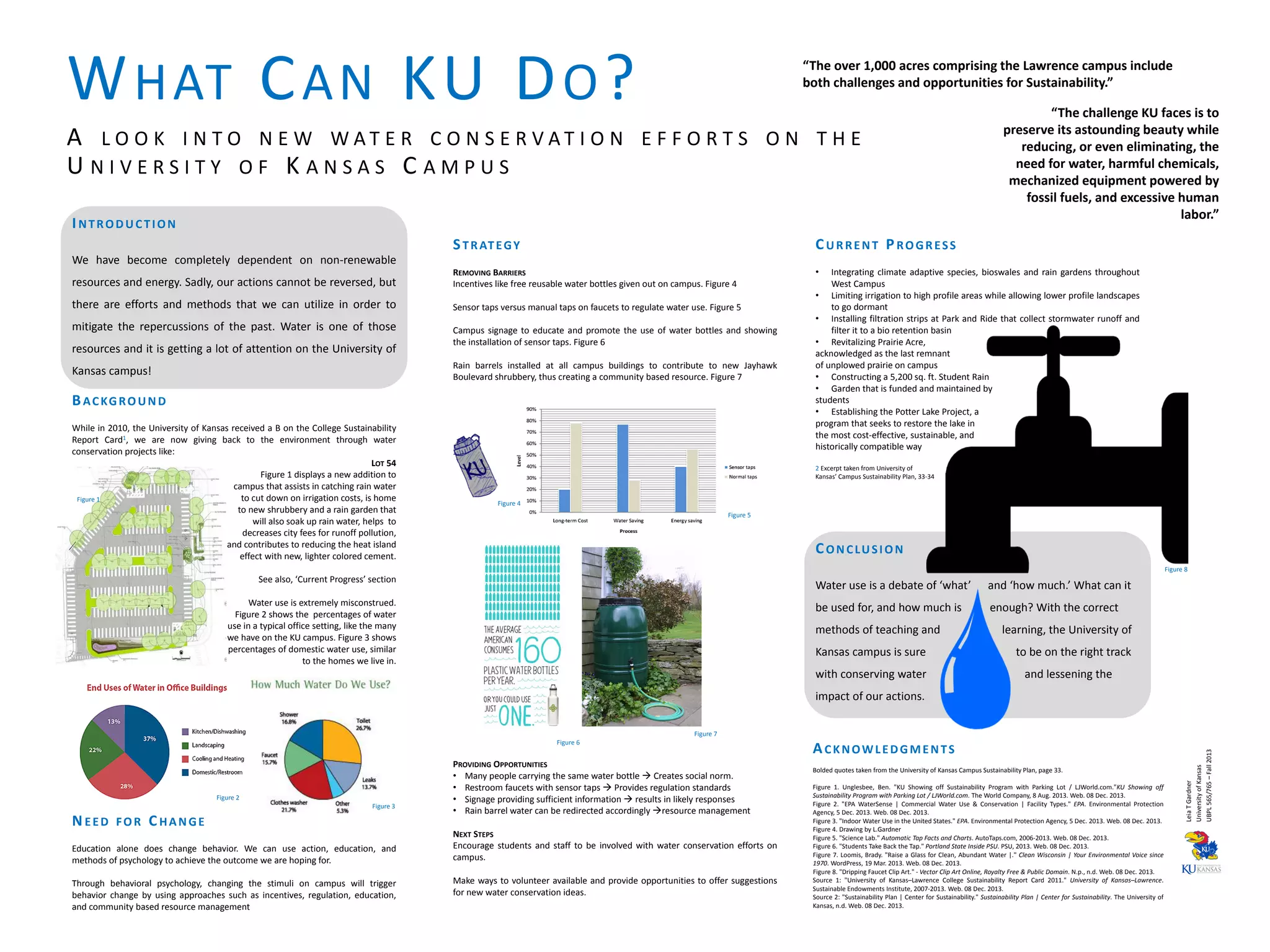
Figure 1 displays a new addition to
campus that assists in catching rain water
to cut down on irrigation costs, is home
to new shrubbery and a rain garden that
will also soak up rain water, helps to
decreases city fees for runoff pollution,
and contributes to reducing the heat island
effect with new, lighter colored cement.
See also, ‘Current Progress’ section
Water use is extremely misconstrued.
Figure 2 shows the percentages of water
use in a typical office setting, like the many
we have on the KU campus. Figure 3 shows
the percentages of domestic water use, similar
to the homes we live in.
Figure 2
Figure 3
LeiaTGardner
UniversityofKansas
UBPL565/765–Fall2013
WHAT CAN KU DO?
A L O O K I N T O N E W W A T E R C O N S E R V A T I O N E F F O R T S O N T H E
U N I V E R S I T Y O F K A N S A S C A M P U S
Figure 8
INTRODUCTION
We have become completely dependent on non-renewable
resources and energy. Sadly, our actions cannot be reversed, but
there are efforts and methods that we can utilize in order to
mitigate the repercussions of the past. Water is one of those
resources and it is getting a lot of attention on the University of
Kansas campus!
CONCLUSION
Water use is a debate of ‘what’ and ‘how much.’ What can it
be used for, and how much is enough? With the correct
methods of teaching and learning, the University of
Kansas campus is sure to be on the right track
with conserving water and lessening the
impact of our actions.
NEED FOR CHANGE
Education alone does change behavior. We can use action, education, and
methods of psychology to achieve the outcome we are hoping for.
Through behavioral psychology, changing the stimuli on campus will trigger
behavior change by using approaches such as incentives, regulation, education,
and community based resource management
CURRENT PROGRESS
• Integrating climate adaptive species, bioswales and rain gardens throughout
West Campus
• Limiting irrigation to high profile areas while allowing lower profile landscapes
to go dormant
• Installing filtration strips at Park and Ride that collect stormwater runoff and
filter it to a bio retention basin
• Revitalizing Prairie Acre,
acknowledged as the last remnant
of unplowed prairie on campus
• Constructing a 5,200 sq. ft. Student Rain
• Garden that is funded and maintained by
students
• Establishing the Potter Lake Project, a
program that seeks to restore the lake in
the most cost-effective, sustainable, and
historically compatible way
2 Excerpt taken from University of
Kansas’ Campus Sustainability Plan, 33-34
ACKNOWLEDGMENTS
Bolded quotes taken from the University of Kansas Campus Sustainability Plan, page 33.
Figure 1. Unglesbee, Ben. "KU Showing off Sustainability Program with Parking Lot / LJWorld.com."KU Showing off
Sustainability Program with Parking Lot / LJWorld.com. The World Company, 8 Aug. 2013. Web. 08 Dec. 2013.
Figure 2. "EPA WaterSense | Commercial Water Use & Conservation | Facility Types." EPA. Environmental Protection
Agency, 5 Dec. 2013. Web. 08 Dec. 2013.
Figure 3. "Indoor Water Use in the United States." EPA. Environmental Protection Agency, 5 Dec. 2013. Web. 08 Dec. 2013.
Figure 4. Drawing by L.Gardner
Figure 5. "Science Lab." Automatic Tap Facts and Charts. AutoTaps.com, 2006-2013. Web. 08 Dec. 2013.
Figure 6. "Students Take Back the Tap." Portland State Inside PSU. PSU, 2013. Web. 08 Dec. 2013.
Figure 7. Loomis, Brady. "Raise a Glass for Clean, Abundant Water |." Clean Wisconsin | Your Environmental Voice since
1970. WordPress, 19 Mar. 2013. Web. 08 Dec. 2013.
Figure 8. "Dripping Faucet Clip Art." - Vector Clip Art Online, Royalty Free & Public Domain. N.p., n.d. Web. 08 Dec. 2013.
Source 1: "University of Kansas–Lawrence College Sustainability Report Card 2011." University of Kansas–Lawrence.
Sustainable Endowments Institute, 2007-2013. Web. 08 Dec. 2013.
Source 2: "Sustainability Plan | Center for Sustainability." Sustainability Plan | Center for Sustainability. The University of
Kansas, n.d. Web. 08 Dec. 2013.
“The challenge KU faces is to
preserve its astounding beauty while
reducing, or even eliminating, the
need for water, harmful chemicals,
mechanized equipment powered by
fossil fuels, and excessive human
labor.”
“The over 1,000 acres comprising the Lawrence campus include
both challenges and opportunities for Sustainability.”
Figure 1
STRATEGY
REMOVING BARRIERS
Incentives like free reusable water bottles given out on campus. Figure 4
Sensor taps versus manual taps on faucets to regulate water use. Figure 5
Campus signage to educate and promote the use of water bottles and showing
the installation of sensor taps. Figure 6
Rain barrels installed at all campus buildings to contribute to new Jayhawk
Boulevard shrubbery, thus creating a community based resource. Figure 7
Figure 4
Figure 5
Figure 7
Figure 6
PROVIDING OPPORTUNITIES
• Many people carrying the same water bottle  Creates social norm.
• Restroom faucets with sensor taps  Provides regulation standards
• Signage providing sufficient information  results in likely responses
• Rain barrel water can be redirected accordingly resource management
NEXT STEPS
Encourage students and staff to be involved with water conservation efforts on
campus.
Make ways to volunteer available and provide opportunities to offer suggestions
for new water conservation ideas.

Implementation Strategy Poster

  • 1.
    BACKGROUND While in 2010,the University of Kansas received a B on the College Sustainability Report Card1, we are now giving back to the environment through water conservation projects like: LOT 54 Figure 1 displays a new addition to campus that assists in catching rain water to cut down on irrigation costs, is home to new shrubbery and a rain garden that will also soak up rain water, helps to decreases city fees for runoff pollution, and contributes to reducing the heat island effect with new, lighter colored cement. See also, ‘Current Progress’ section Water use is extremely misconstrued. Figure 2 shows the percentages of water use in a typical office setting, like the many we have on the KU campus. Figure 3 shows the percentages of domestic water use, similar to the homes we live in. Figure 2 Figure 3 LeiaTGardner UniversityofKansas UBPL565/765–Fall2013 WHAT CAN KU DO? A L O O K I N T O N E W W A T E R C O N S E R V A T I O N E F F O R T S O N T H E U N I V E R S I T Y O F K A N S A S C A M P U S Figure 8 INTRODUCTION We have become completely dependent on non-renewable resources and energy. Sadly, our actions cannot be reversed, but there are efforts and methods that we can utilize in order to mitigate the repercussions of the past. Water is one of those resources and it is getting a lot of attention on the University of Kansas campus! CONCLUSION Water use is a debate of ‘what’ and ‘how much.’ What can it be used for, and how much is enough? With the correct methods of teaching and learning, the University of Kansas campus is sure to be on the right track with conserving water and lessening the impact of our actions. NEED FOR CHANGE Education alone does change behavior. We can use action, education, and methods of psychology to achieve the outcome we are hoping for. Through behavioral psychology, changing the stimuli on campus will trigger behavior change by using approaches such as incentives, regulation, education, and community based resource management CURRENT PROGRESS • Integrating climate adaptive species, bioswales and rain gardens throughout West Campus • Limiting irrigation to high profile areas while allowing lower profile landscapes to go dormant • Installing filtration strips at Park and Ride that collect stormwater runoff and filter it to a bio retention basin • Revitalizing Prairie Acre, acknowledged as the last remnant of unplowed prairie on campus • Constructing a 5,200 sq. ft. Student Rain • Garden that is funded and maintained by students • Establishing the Potter Lake Project, a program that seeks to restore the lake in the most cost-effective, sustainable, and historically compatible way 2 Excerpt taken from University of Kansas’ Campus Sustainability Plan, 33-34 ACKNOWLEDGMENTS Bolded quotes taken from the University of Kansas Campus Sustainability Plan, page 33. Figure 1. Unglesbee, Ben. "KU Showing off Sustainability Program with Parking Lot / LJWorld.com."KU Showing off Sustainability Program with Parking Lot / LJWorld.com. The World Company, 8 Aug. 2013. Web. 08 Dec. 2013. Figure 2. "EPA WaterSense | Commercial Water Use & Conservation | Facility Types." EPA. Environmental Protection Agency, 5 Dec. 2013. Web. 08 Dec. 2013. Figure 3. "Indoor Water Use in the United States." EPA. Environmental Protection Agency, 5 Dec. 2013. Web. 08 Dec. 2013. Figure 4. Drawing by L.Gardner Figure 5. "Science Lab." Automatic Tap Facts and Charts. AutoTaps.com, 2006-2013. Web. 08 Dec. 2013. Figure 6. "Students Take Back the Tap." Portland State Inside PSU. PSU, 2013. Web. 08 Dec. 2013. Figure 7. Loomis, Brady. "Raise a Glass for Clean, Abundant Water |." Clean Wisconsin | Your Environmental Voice since 1970. WordPress, 19 Mar. 2013. Web. 08 Dec. 2013. Figure 8. "Dripping Faucet Clip Art." - Vector Clip Art Online, Royalty Free & Public Domain. N.p., n.d. Web. 08 Dec. 2013. Source 1: "University of Kansas–Lawrence College Sustainability Report Card 2011." University of Kansas–Lawrence. Sustainable Endowments Institute, 2007-2013. Web. 08 Dec. 2013. Source 2: "Sustainability Plan | Center for Sustainability." Sustainability Plan | Center for Sustainability. The University of Kansas, n.d. Web. 08 Dec. 2013. “The challenge KU faces is to preserve its astounding beauty while reducing, or even eliminating, the need for water, harmful chemicals, mechanized equipment powered by fossil fuels, and excessive human labor.” “The over 1,000 acres comprising the Lawrence campus include both challenges and opportunities for Sustainability.” Figure 1 STRATEGY REMOVING BARRIERS Incentives like free reusable water bottles given out on campus. Figure 4 Sensor taps versus manual taps on faucets to regulate water use. Figure 5 Campus signage to educate and promote the use of water bottles and showing the installation of sensor taps. Figure 6 Rain barrels installed at all campus buildings to contribute to new Jayhawk Boulevard shrubbery, thus creating a community based resource. Figure 7 Figure 4 Figure 5 Figure 7 Figure 6 PROVIDING OPPORTUNITIES • Many people carrying the same water bottle  Creates social norm. • Restroom faucets with sensor taps  Provides regulation standards • Signage providing sufficient information  results in likely responses • Rain barrel water can be redirected accordingly resource management NEXT STEPS Encourage students and staff to be involved with water conservation efforts on campus. Make ways to volunteer available and provide opportunities to offer suggestions for new water conservation ideas.