Impact reporting for
continued success
Making your annual report work for your
organisation
Bryan Collis 15 March 2016
 www.wcva.org.uk  0800 2888 329  help@wcva.org.uk
Introductions
Introduce yourself to your neighbour.
Why are they here?
What is Impact?
• How would the world look if my
organisation/project was not here?
• What difference does my organisation/project/
event/activity make?
• Positive and negative (Wylfa power station)
• Planned or unplanned (speed bumps)
• Can be quick or slow (wikileak vs Families First)
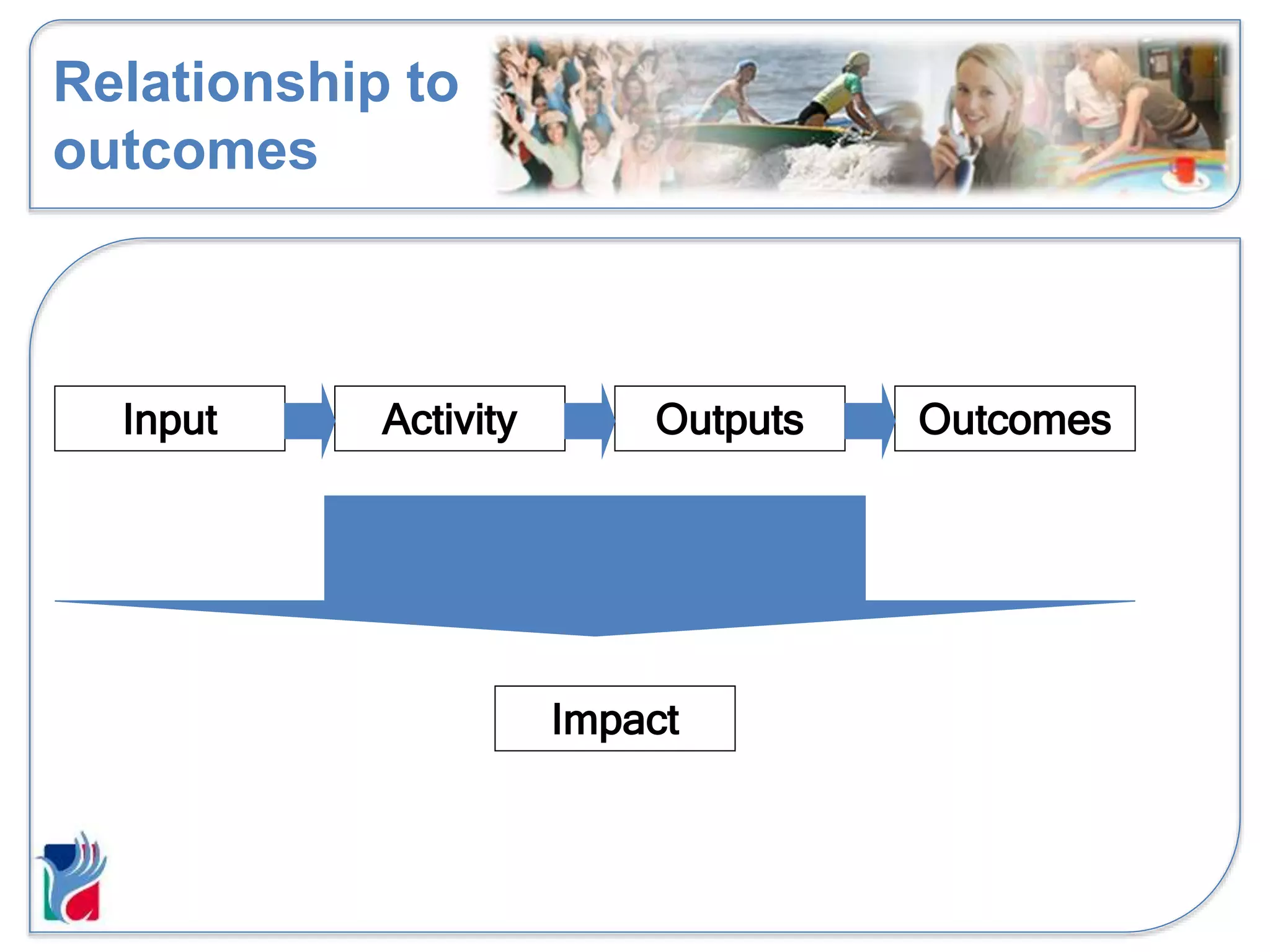
Relationship to
outcomes
Input Activity Outputs Outcomes
Impact
Impact
for whom?
• There can be a number of different people or
groups or the environment affected by your work –
list them
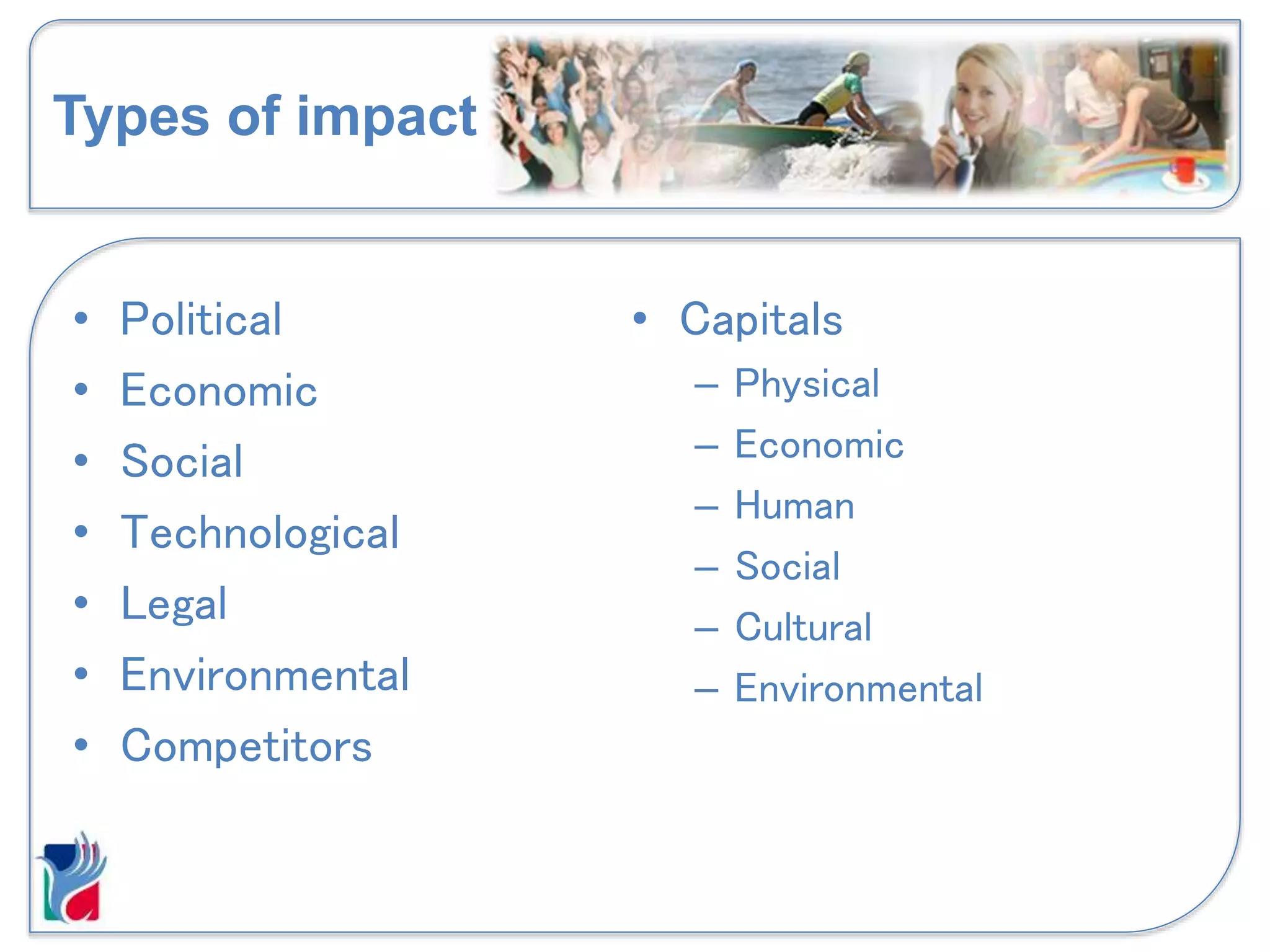
Types of impact
• Political
• Economic
• Social
• Technological
• Legal
• Environmental
• Competitors
• Capitals
– Physical
– Economic
– Human
– Social
– Cultural
– Environmental
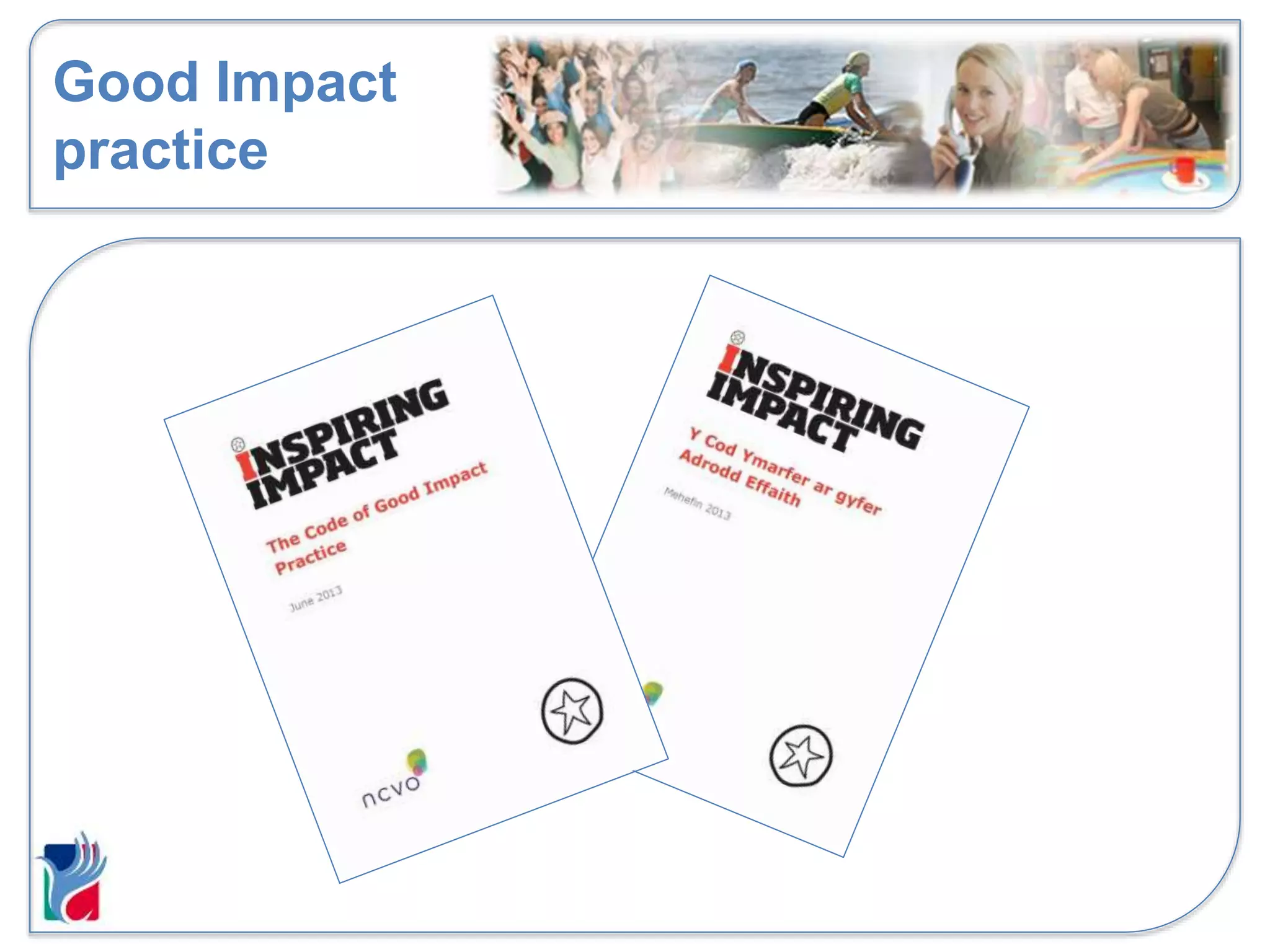
Good Impact
practice
Business
processes
Impact
principles
1. Take responsibility for impact and encourage others to do so
too.
2. Focus on purpose.
3. Involve others in your impact practice.
4. Apply proportionate and appropriate methods and resources.
Impact
principles
5. Consider the full range of the difference you actually make.
6. Be honest and open.
7. Be willing to change and act on what you find.
8. Actively share your impact plans, methods, findings and
learning.
Annual report
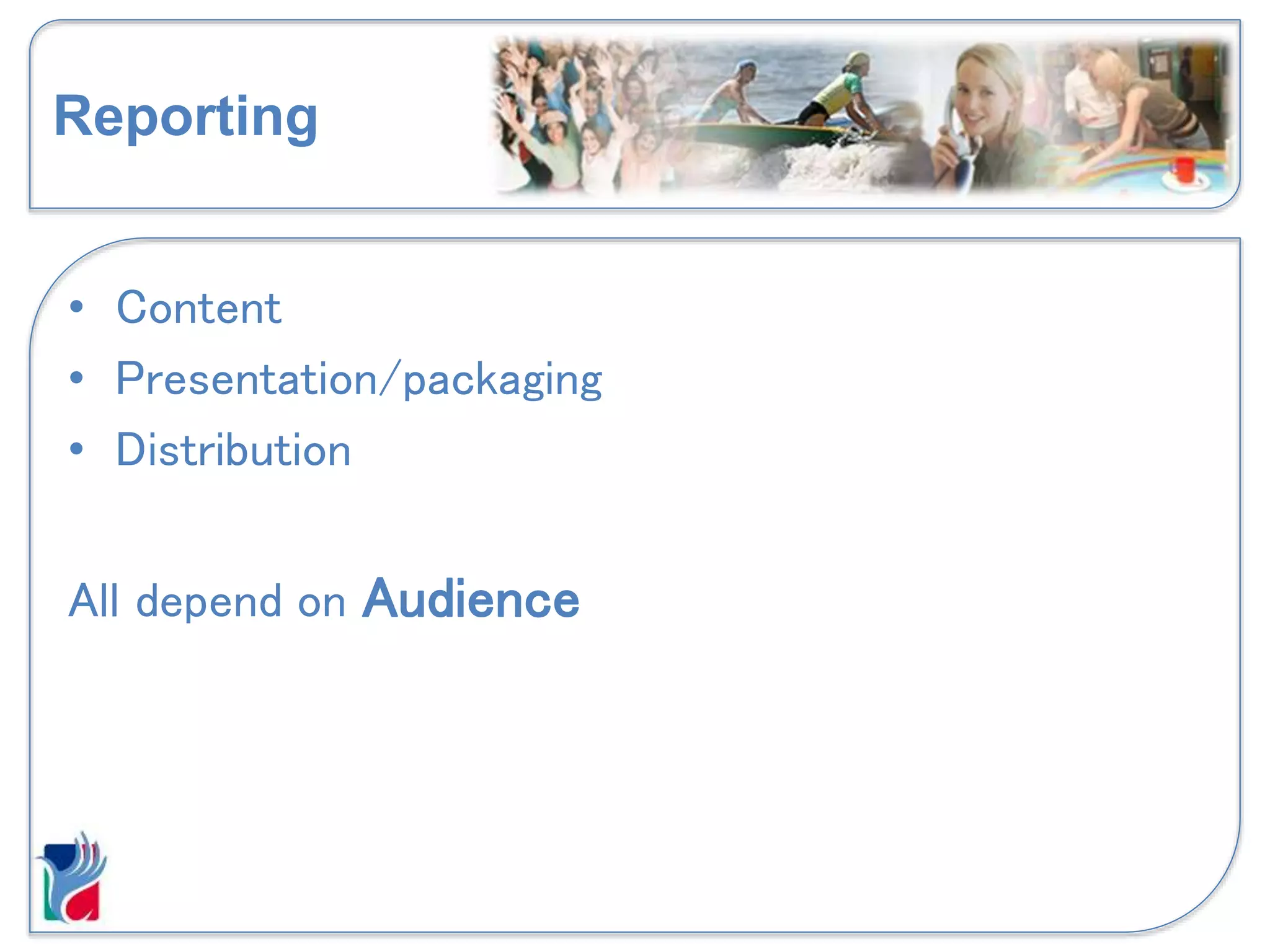
Reporting
• Content
• Presentation/packaging
• Distribution
All depend on Audience
Audience(s)
• How many audiences do you have?
• Which ones are critical for continued success?
Audience(s)
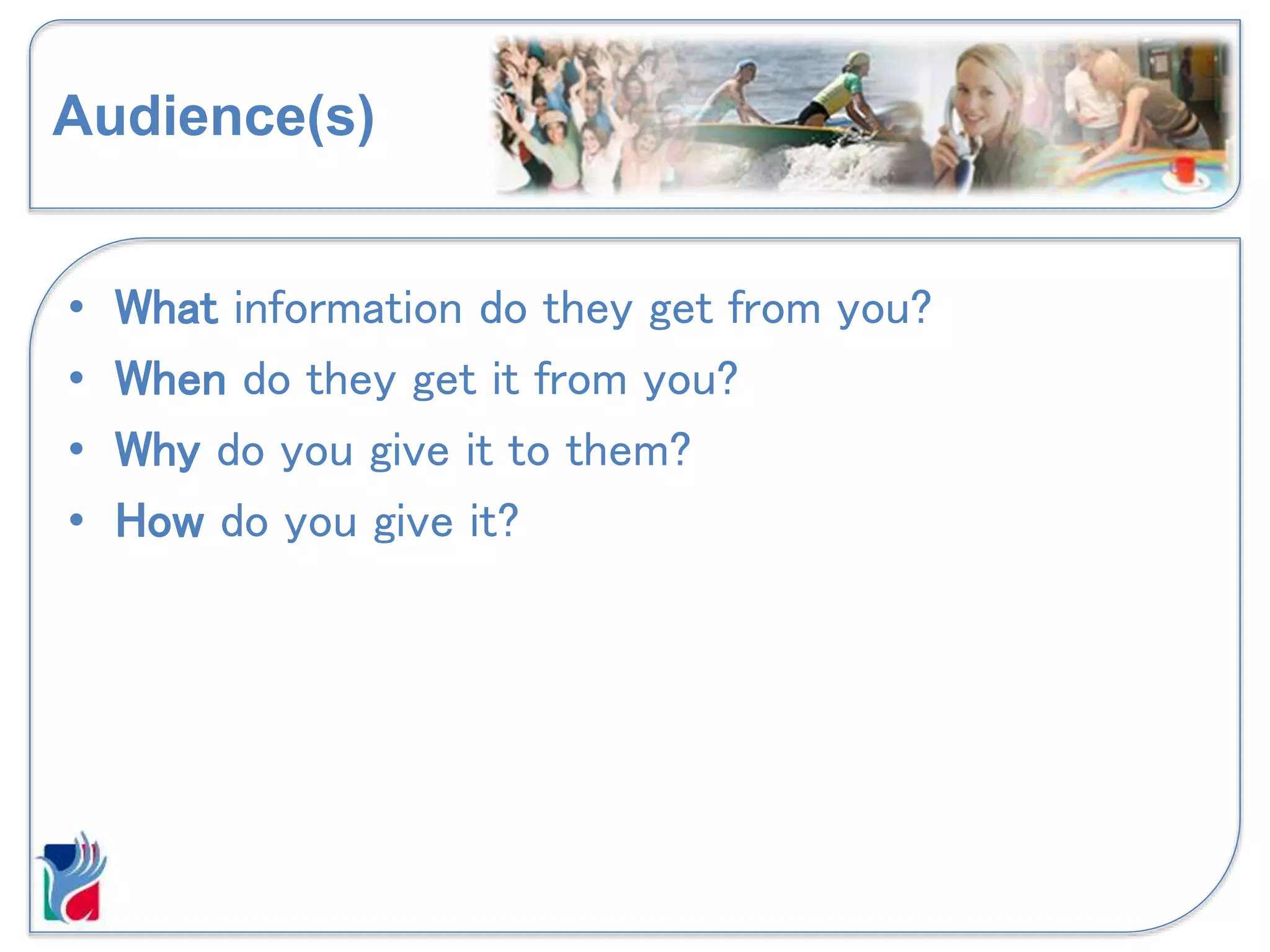
• What information do they get from you?
• When do they get it from you?
• Why do you give it to them?
• How do you give it?
Audience(s)
• What information do they get from you?
• When do they get it from you?
• Why do you give it to them?
• How do you give it?
• Does the Annual Report feature in any way in these
processes?
Impact
information
• Good impact information is?
Impact
information
• Good impact information is?
– Relevant
– Reliable
– Of known quality (fit for purpose)
– Qualitative and quantitative (stories and numbers)
– Understood by the audience
– Leads to a decision
– Appropriate (tabloid test)
– Honest/transparent
– Capable of showing negative results
– Involves the people affected
– Ethical (data protection, confidentiality)
Impact
information
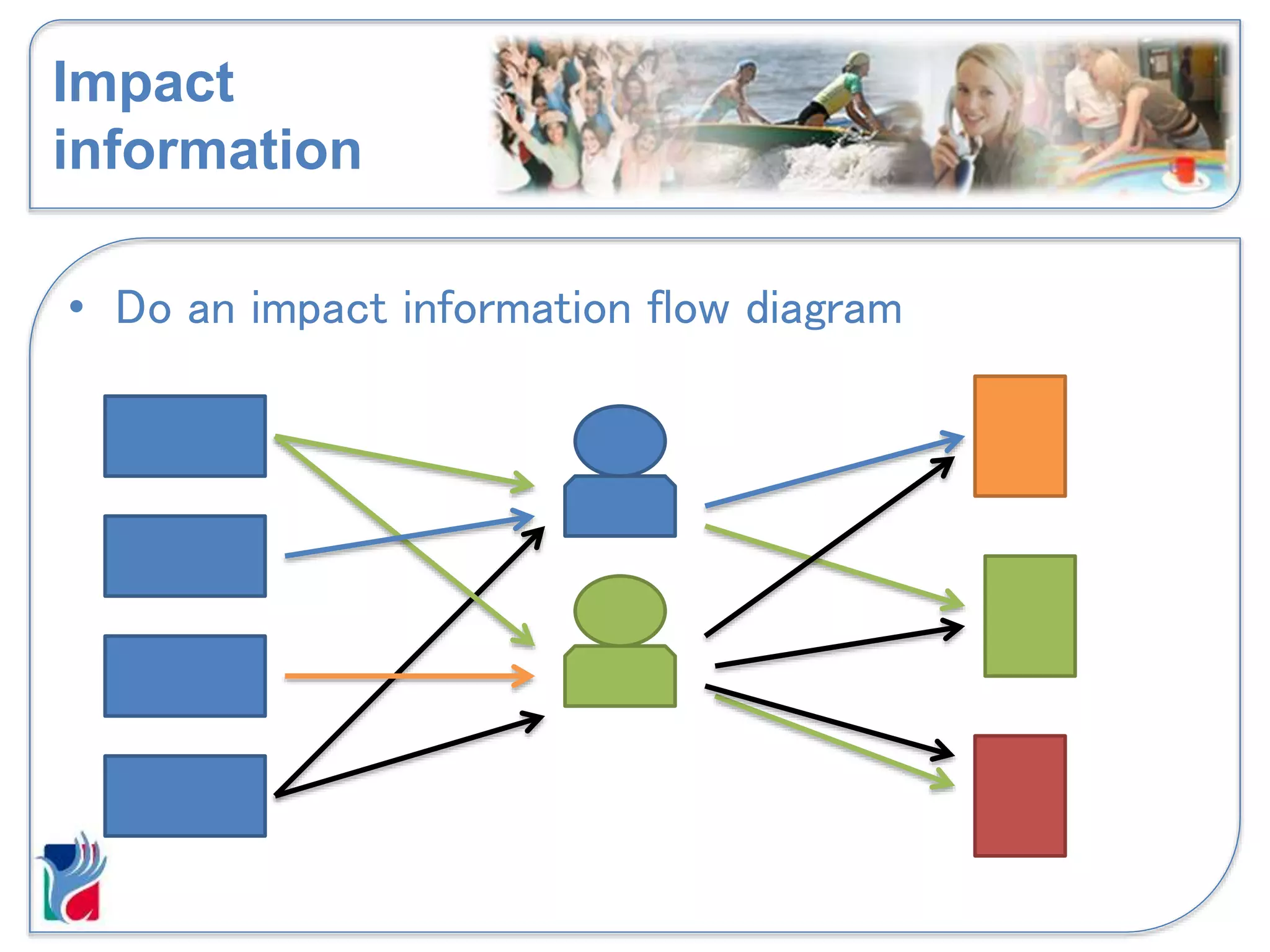
• Do an impact information flow diagram
Reporting
• What is the core information?
(information that goes everywhere)
• Are there any wasted information?
(information with no destination)
• Is there any underuse of information?
(information not reaching all its potential destinations)
• Is there any missing information?
(information you don’t currently collect)
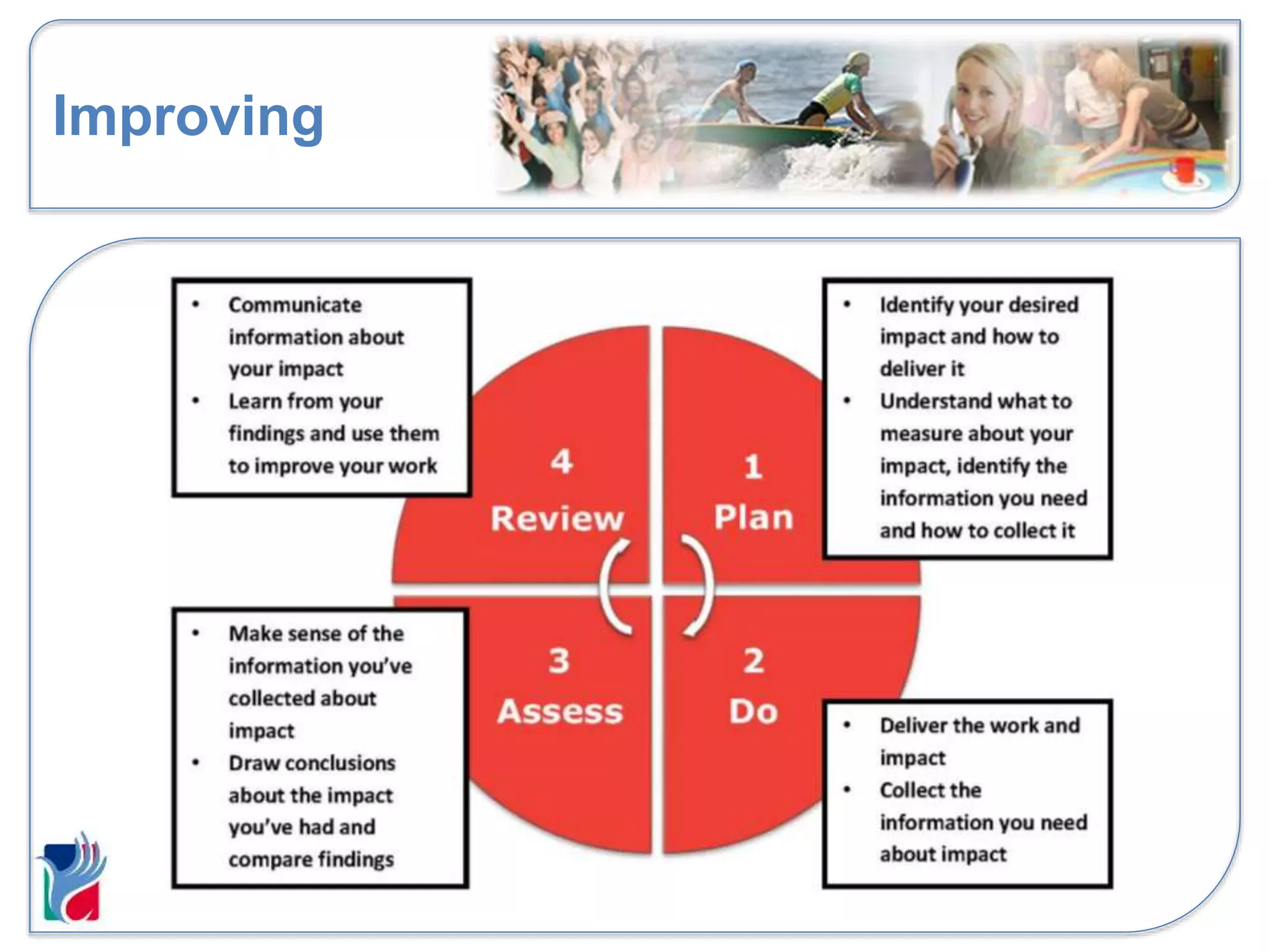
Improving
Thank You – Diolch!
Any questions?
bcollis@wcva.org.uk
 www.wcva.org.uk  0800 2888 329  help@wcva.org.uk

Impact reporting for continued success

  • 1.
    Impact reporting for continuedsuccess Making your annual report work for your organisation Bryan Collis 15 March 2016  www.wcva.org.uk  0800 2888 329  help@wcva.org.uk
  • 2.
    Introductions Introduce yourself toyour neighbour. Why are they here?
  • 6.
    What is Impact? •How would the world look if my organisation/project was not here? • What difference does my organisation/project/ event/activity make? • Positive and negative (Wylfa power station) • Planned or unplanned (speed bumps) • Can be quick or slow (wikileak vs Families First)
  • 7.
  • 8.
    Impact for whom? • Therecan be a number of different people or groups or the environment affected by your work – list them
  • 9.
    Types of impact •Political • Economic • Social • Technological • Legal • Environmental • Competitors • Capitals – Physical – Economic – Human – Social – Cultural – Environmental
  • 10.
  • 11.
  • 12.
    Impact principles 1. Take responsibilityfor impact and encourage others to do so too. 2. Focus on purpose. 3. Involve others in your impact practice. 4. Apply proportionate and appropriate methods and resources.
  • 13.
    Impact principles 5. Consider thefull range of the difference you actually make. 6. Be honest and open. 7. Be willing to change and act on what you find. 8. Actively share your impact plans, methods, findings and learning.
  • 14.
  • 15.
    Reporting • Content • Presentation/packaging •Distribution All depend on Audience
  • 16.
    Audience(s) • How manyaudiences do you have? • Which ones are critical for continued success?
  • 17.
    Audience(s) • What informationdo they get from you? • When do they get it from you? • Why do you give it to them? • How do you give it?
  • 18.
    Audience(s) • What informationdo they get from you? • When do they get it from you? • Why do you give it to them? • How do you give it? • Does the Annual Report feature in any way in these processes?
  • 19.
  • 20.
    Impact information • Good impactinformation is? – Relevant – Reliable – Of known quality (fit for purpose) – Qualitative and quantitative (stories and numbers) – Understood by the audience – Leads to a decision – Appropriate (tabloid test) – Honest/transparent – Capable of showing negative results – Involves the people affected – Ethical (data protection, confidentiality)
  • 21.
    Impact information • Do animpact information flow diagram
  • 22.
    Reporting • What isthe core information? (information that goes everywhere) • Are there any wasted information? (information with no destination) • Is there any underuse of information? (information not reaching all its potential destinations) • Is there any missing information? (information you don’t currently collect)
  • 23.
  • 24.
    Thank You –Diolch! Any questions? bcollis@wcva.org.uk  www.wcva.org.uk  0800 2888 329  help@wcva.org.uk