Aasma nawaz
introduction
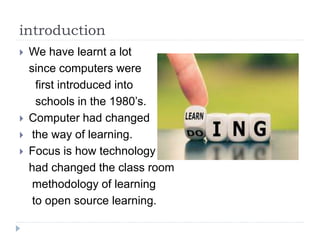
 We have learnt a lot
since computers were
first introduced into
schools in the 1980’s.
 Computer had changed
 the way of learning.
 Focus is how technology
had changed the class room
methodology of learning
to open source learning.
TECHNOLOGY DEVELOPMENT IN
LEARNING
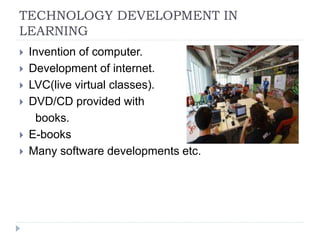
 Invention of computer.
 Development of internet.
 LVC(live virtual classes).
 DVD/CD provided with
books.
 E-books
 Many software developments etc.
HOW STUDENTS LEARN?
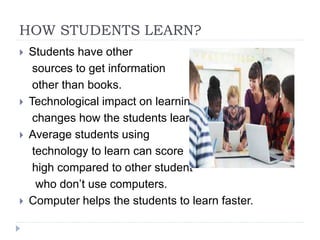
 Students have other
sources to get information
other than books.
 Technological impact on learning
changes how the students learn.
 Average students using
technology to learn can score
high compared to other student
who don’t use computers.
 Computer helps the students to learn faster.
COMPUTER
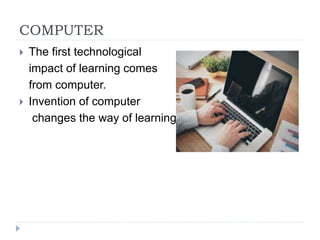
 The first technological
impact of learning comes
from computer.
 Invention of computer
changes the way of learning.
internet
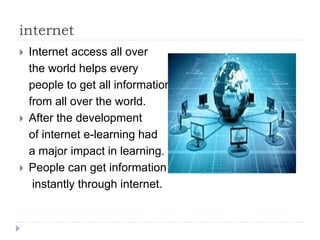
 Internet access all over
the world helps every
people to get all information
from all over the world.
 After the development
of internet e-learning had
a major impact in learning.
 People can get information
instantly through internet.
CDs WITH BOOKS
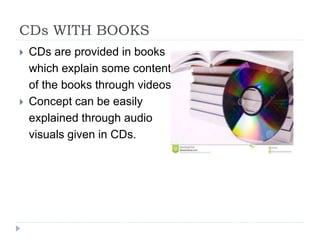
 CDs are provided in books
which explain some contents
of the books through videos.
 Concept can be easily
explained through audio
visuals given in CDs.
E-BOOKs
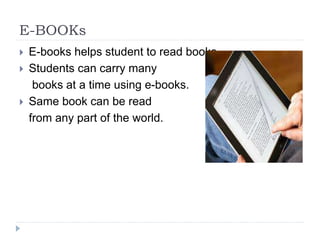
 E-books helps student to read books.
 Students can carry many
books at a time using e-books.
 Same book can be read
from any part of the world.
VIRTUAL CLASS
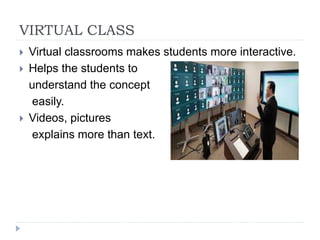
 Virtual classrooms makes students more interactive.
 Helps the students to
understand the concept
easily.
 Videos, pictures
explains more than text.
LIVE VIRTUAL CLASSES
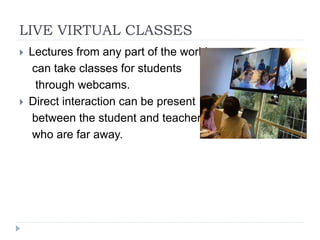
 Lectures from any part of the world
can take classes for students
through webcams.
 Direct interaction can be present
between the student and teacher
who are far away.
AUDIO BOOKS
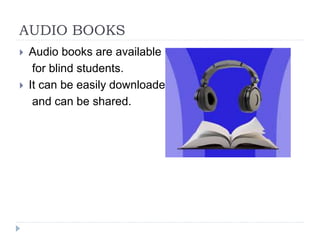
 Audio books are available
for blind students.
 It can be easily downloaded
and can be shared.
POSITIVE FINDINGS
 Makes learning easier.
 Understand the concept easily.
 Time consumption to learn is less.
 Information comes handy when
ever needed.
 Helps the students to
score high marks.
NEGATIVE FINDINGS
 Deteriorated patience.
 Lack of physical interactivity.
 Declining writing skills.
 Computer base education
cannot be provided in all
the places.
 Children often using
computers gets physically affected.
CONCLUSION
 Technology has mainly positive effects on learning in
the recent 40 years.
 It enhance the way of learning and makes the
students to gain knowledge easily.
 Thus the impact on technology makes the stepping
stone to nest level of learning in future.

IMPACT OF TECHNOLOGY ON LEARNING.pptx

  • 1.
  • 2.
    introduction  We havelearnt a lot since computers were first introduced into schools in the 1980’s.  Computer had changed  the way of learning.  Focus is how technology had changed the class room methodology of learning to open source learning.
  • 3.
    TECHNOLOGY DEVELOPMENT IN LEARNING Invention of computer.  Development of internet.  LVC(live virtual classes).  DVD/CD provided with books.  E-books  Many software developments etc.
  • 4.
    HOW STUDENTS LEARN? Students have other sources to get information other than books.  Technological impact on learning changes how the students learn.  Average students using technology to learn can score high compared to other student who don’t use computers.  Computer helps the students to learn faster.
  • 5.
    COMPUTER  The firsttechnological impact of learning comes from computer.  Invention of computer changes the way of learning.
  • 6.
    internet  Internet accessall over the world helps every people to get all information from all over the world.  After the development of internet e-learning had a major impact in learning.  People can get information instantly through internet.
  • 7.
    CDs WITH BOOKS CDs are provided in books which explain some contents of the books through videos.  Concept can be easily explained through audio visuals given in CDs.
  • 8.
    E-BOOKs  E-books helpsstudent to read books.  Students can carry many books at a time using e-books.  Same book can be read from any part of the world.
  • 9.
    VIRTUAL CLASS  Virtualclassrooms makes students more interactive.  Helps the students to understand the concept easily.  Videos, pictures explains more than text.
  • 10.
    LIVE VIRTUAL CLASSES Lectures from any part of the world can take classes for students through webcams.  Direct interaction can be present between the student and teacher who are far away.
  • 11.
    AUDIO BOOKS  Audiobooks are available for blind students.  It can be easily downloaded and can be shared.
  • 12.
    POSITIVE FINDINGS  Makeslearning easier.  Understand the concept easily.  Time consumption to learn is less.  Information comes handy when ever needed.  Helps the students to score high marks.
  • 13.
    NEGATIVE FINDINGS  Deterioratedpatience.  Lack of physical interactivity.  Declining writing skills.  Computer base education cannot be provided in all the places.  Children often using computers gets physically affected.
  • 14.
    CONCLUSION  Technology hasmainly positive effects on learning in the recent 40 years.  It enhance the way of learning and makes the students to gain knowledge easily.  Thus the impact on technology makes the stepping stone to nest level of learning in future.