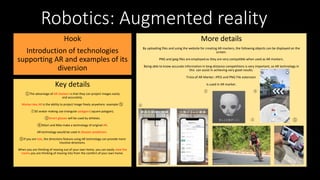
1) Augmented reality (AR) uses markers or marker-less detection to project digital images into the real world. Examples include using triangular polygons to create 3D avatars or smart glasses to assist athletes.
2) AR has various applications such as disaster prediction, virtual home tours, and intuitive navigation. It can use files like JPEG and PNG as markers.
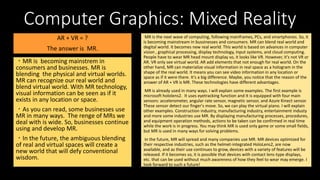
3) Mixed reality (MR) blends the physical and virtual worlds by recognizing and overlaying digital objects onto the real world through head-mounted displays. Unlike virtual reality, MR maintains awareness of the physical environment. It is being adopted in various industries like construction, manufacturing, and entertainment.