NAME; AHMAD AIMAN, MUHAMMAD HAFIZI
MUHAMMAD IQBAL
INFORMATION SECURITY
MANAGEMENT MODELS
In today's digital era, libraries serve as essential stewards of knowledge, offering extensive resources that enhance
education, research, and community connections. With the integration of digital platforms, these institutions now provide
convenient access to e-books, journals, databases, and other online materials. However, this technological evolution also
brings challenges and responsibilities, particularly in safeguarding sensitive data and systems.
Library information security encompasses strategies and practices designed to protect data, systems, and resources from
threats like unauthorized access, cyberattacks, and data breaches. It aims to maintain the confidentiality, integrity, and
availability of information. Confidentiality focuses on shielding user data and proprietary resources from unauthorized
disclosure. Integrity ensures that data remains accurate and unaltered, while availability ensures uninterrupted access to
resources and systems for users.
Introduction
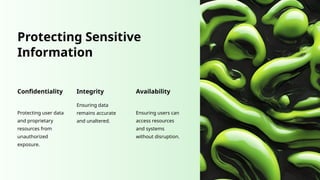
Protecting Sensitive
Information
Confidentiality
Protecting user data
and proprietary
resources from
unauthorized
exposure.
Integrity
Ensuring data
remains accurate
and unaltered.
Availability
Ensuring users can
access resources
and systems
without disruption.
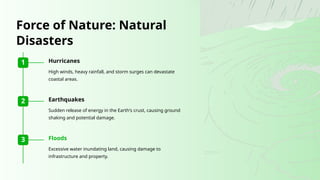
1 Hurricanes
High winds, heavy rainfall, and storm surges can devastate
coastal areas.
2 Earthquakes
Sudden release of energy in the Earth's crust, causing ground
shaking and potential damage.
3 Floods
Excessive water inundating land, causing damage to
infrastructure and property.
Force of Nature: Natural
Disasters
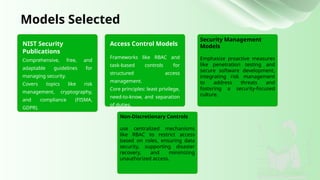
NIST Security
Publications
Comprehensive, free, and
adaptable guidelines for
managing security.
Covers topics like risk
management, cryptography,
and compliance (FISMA,
GDPR).
Models Selected
Access Control Models
Security Management
Models
Emphasize proactive measures
like penetration testing and
secure software development,
integrating risk management
to address threats and
fostering a security-focused
culture.
Non-Discretionary Controls
use centralized mechanisms
like RBAC to restrict access
based on roles, ensuring data
security, supporting disaster
recovery, and minimizing
unauthorized access.
Frameworks like RBAC and
task-based controls for
structured access
management.
Core principles: least privilege,
need-to-know, and separation
of duties.
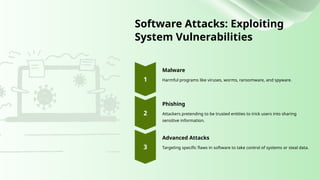
Software Attacks: Exploiting
System Vulnerabilities
Malware
Harmful programs like viruses, worms, ransomware, and spyware.
Phishing
Attackers pretending to be trusted entities to trick users into sharing
sensitive information.
Advanced Attacks
Targeting specific flaws in software to take control of systems or steal data.
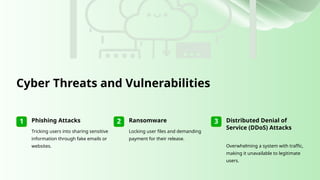
Cyber Threats and Vulnerabilities
1 Phishing Attacks
Tricking users into sharing sensitive
information through fake emails or
websites.
2 Ransomware
Locking user files and demanding
payment for their release.
3 Distributed Denial of
Service (DDoS) Attacks
Overwhelming a system with traffic,
making it unavailable to legitimate
users.
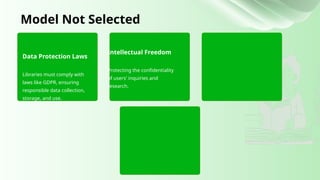
Data Protection Laws
Libraries must comply with
laws like GDPR, ensuring
responsible data collection,
storage, and use.
Intellectual Freedom
Protecting the confidentiality
of users' inquiries and
research.
Model Not Selected
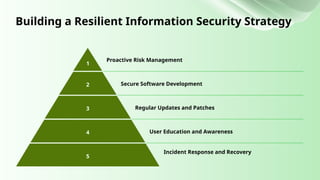
Building a Resilient Information Security Strategy
1
Proactive Risk Management
2 Secure Software Development
3 Regular Updates and Patches
4 User Education and Awareness
5
Incident Response and Recovery
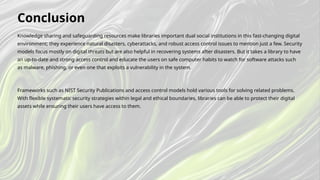
Knowledge sharing and safeguarding resources make libraries important dual social institutions in this fast-changing digital
environment; they experience natural disasters, cyberattacks, and robust access control issues to mention just a few. Security
models focus mostly on digital threats but are also helpful in recovering systems after disasters. But it takes a library to have
an up-to-date and strong access control and educate the users on safe computer habits to watch for software attacks such
as malware, phishing, or even one that exploits a vulnerability in the system.
Frameworks such as NIST Security Publications and access control models hold various tools for solving related problems.
With flexible systematic security strategies within legal and ethical boundaries, libraries can be able to protect their digital
assets while ensuring their users have access to them.
Conclusion
IML 207 GP Slide Presentation siuu.pptx

  • 1.
    NAME; AHMAD AIMAN,MUHAMMAD HAFIZI MUHAMMAD IQBAL INFORMATION SECURITY MANAGEMENT MODELS
  • 2.
    In today's digitalera, libraries serve as essential stewards of knowledge, offering extensive resources that enhance education, research, and community connections. With the integration of digital platforms, these institutions now provide convenient access to e-books, journals, databases, and other online materials. However, this technological evolution also brings challenges and responsibilities, particularly in safeguarding sensitive data and systems. Library information security encompasses strategies and practices designed to protect data, systems, and resources from threats like unauthorized access, cyberattacks, and data breaches. It aims to maintain the confidentiality, integrity, and availability of information. Confidentiality focuses on shielding user data and proprietary resources from unauthorized disclosure. Integrity ensures that data remains accurate and unaltered, while availability ensures uninterrupted access to resources and systems for users. Introduction
  • 3.
    Protecting Sensitive Information Confidentiality Protecting userdata and proprietary resources from unauthorized exposure. Integrity Ensuring data remains accurate and unaltered. Availability Ensuring users can access resources and systems without disruption.
  • 4.
    1 Hurricanes High winds,heavy rainfall, and storm surges can devastate coastal areas. 2 Earthquakes Sudden release of energy in the Earth's crust, causing ground shaking and potential damage. 3 Floods Excessive water inundating land, causing damage to infrastructure and property. Force of Nature: Natural Disasters
  • 5.
    NIST Security Publications Comprehensive, free,and adaptable guidelines for managing security. Covers topics like risk management, cryptography, and compliance (FISMA, GDPR). Models Selected Access Control Models Security Management Models Emphasize proactive measures like penetration testing and secure software development, integrating risk management to address threats and fostering a security-focused culture. Non-Discretionary Controls use centralized mechanisms like RBAC to restrict access based on roles, ensuring data security, supporting disaster recovery, and minimizing unauthorized access. Frameworks like RBAC and task-based controls for structured access management. Core principles: least privilege, need-to-know, and separation of duties.
  • 6.
    Software Attacks: Exploiting SystemVulnerabilities Malware Harmful programs like viruses, worms, ransomware, and spyware. Phishing Attackers pretending to be trusted entities to trick users into sharing sensitive information. Advanced Attacks Targeting specific flaws in software to take control of systems or steal data.
  • 7.
    Cyber Threats andVulnerabilities 1 Phishing Attacks Tricking users into sharing sensitive information through fake emails or websites. 2 Ransomware Locking user files and demanding payment for their release. 3 Distributed Denial of Service (DDoS) Attacks Overwhelming a system with traffic, making it unavailable to legitimate users.
  • 8.
    Data Protection Laws Librariesmust comply with laws like GDPR, ensuring responsible data collection, storage, and use. Intellectual Freedom Protecting the confidentiality of users' inquiries and research. Model Not Selected
  • 9.
    Building a ResilientInformation Security Strategy 1 Proactive Risk Management 2 Secure Software Development 3 Regular Updates and Patches 4 User Education and Awareness 5 Incident Response and Recovery
  • 10.
    Knowledge sharing andsafeguarding resources make libraries important dual social institutions in this fast-changing digital environment; they experience natural disasters, cyberattacks, and robust access control issues to mention just a few. Security models focus mostly on digital threats but are also helpful in recovering systems after disasters. But it takes a library to have an up-to-date and strong access control and educate the users on safe computer habits to watch for software attacks such as malware, phishing, or even one that exploits a vulnerability in the system. Frameworks such as NIST Security Publications and access control models hold various tools for solving related problems. With flexible systematic security strategies within legal and ethical boundaries, libraries can be able to protect their digital assets while ensuring their users have access to them. Conclusion