Progress towards the OpenAI mission
Ilya Sutskever
Co-founder and Chief Scientist, OpenAI
NOVEMBER 9, 2018
OpenAI’s mission
OpenAI’s mission is to ensure that artificial general intelligence
(AGI) — by which we mean highly autonomous systems that
outperform humans at most economically valuable work —
benefits all of humanity.
— The OpenAI Charter
Technical progress from OpenAI
OpenAI Five
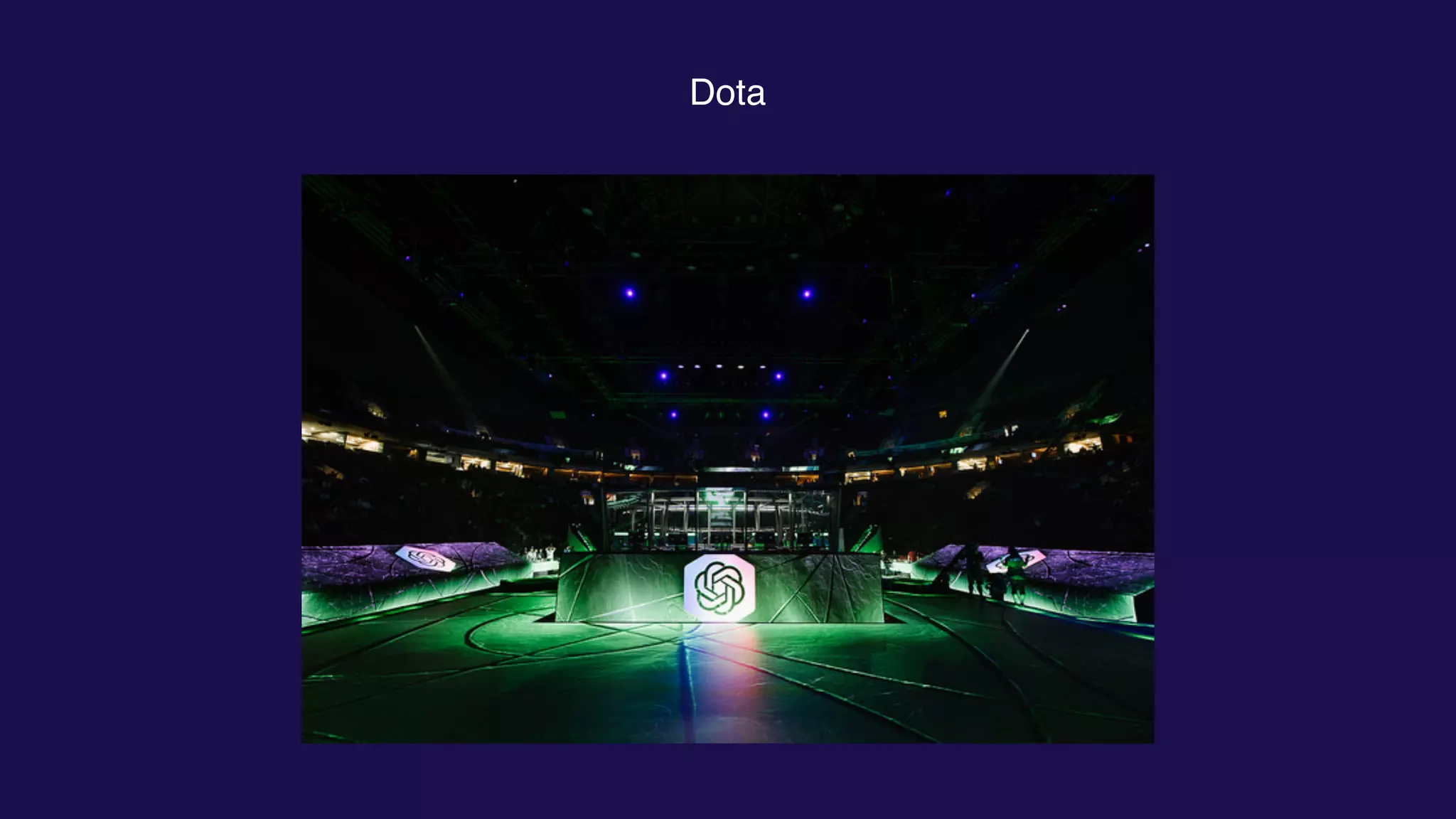
Dota
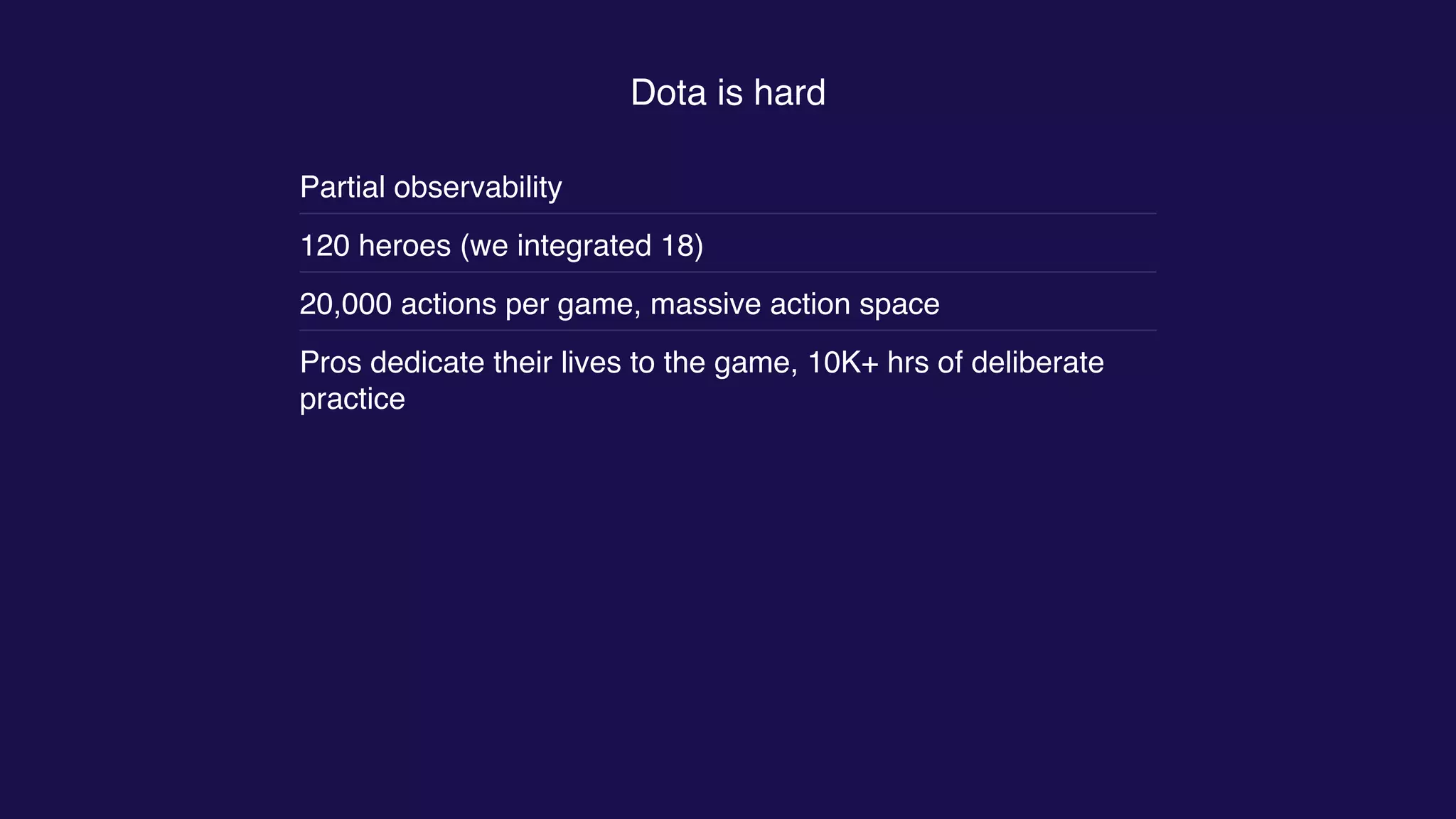
Dota is hard
Partial observability
120 heroes (we integrated 18)
20,000 actions per game, massive action space
Pros dedicate their lives to the game, 10K+ hrs of deliberate
practice
Dota is popular
Largest professional scene
Annual prize pool of $40M+
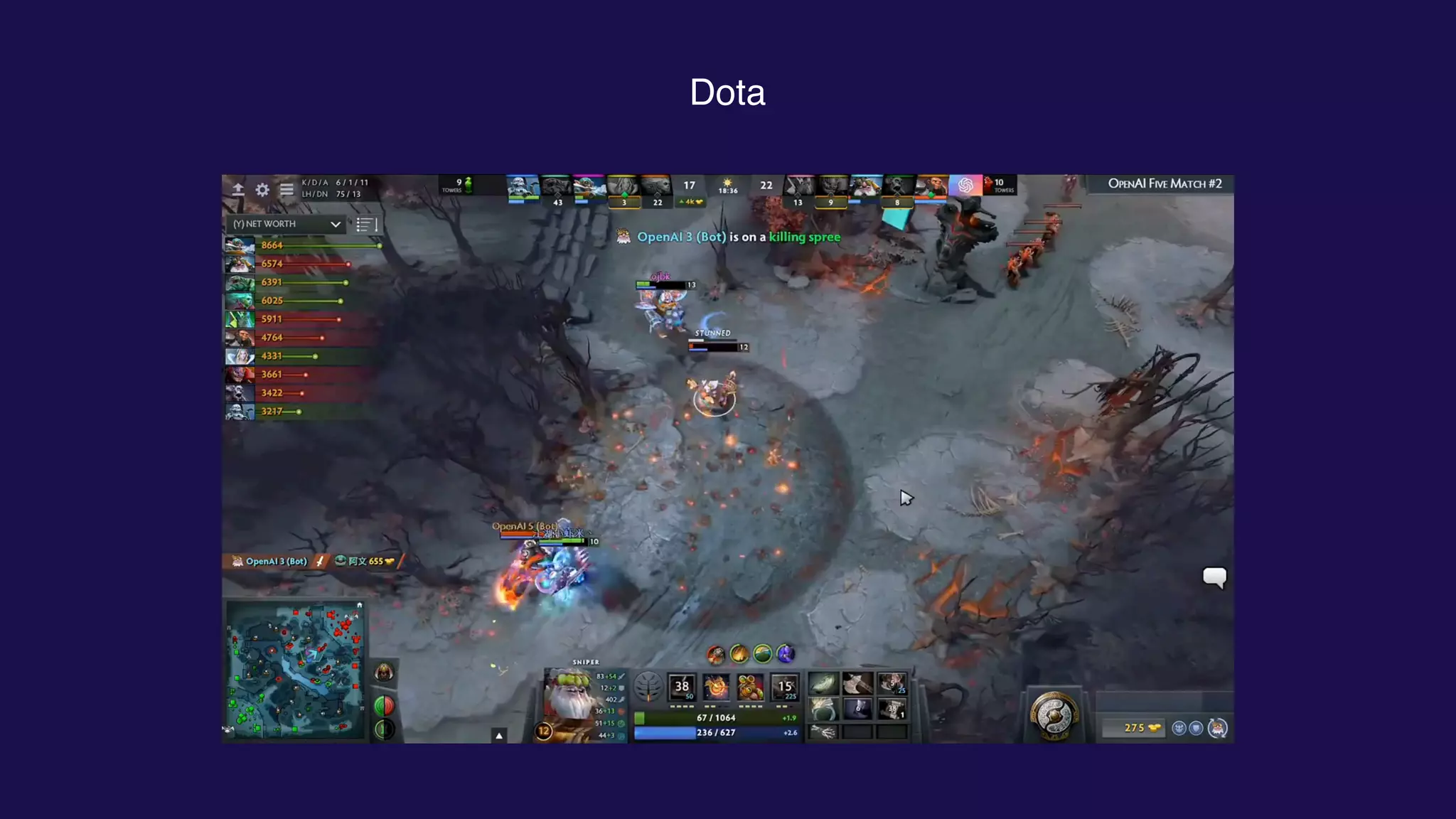
Dota
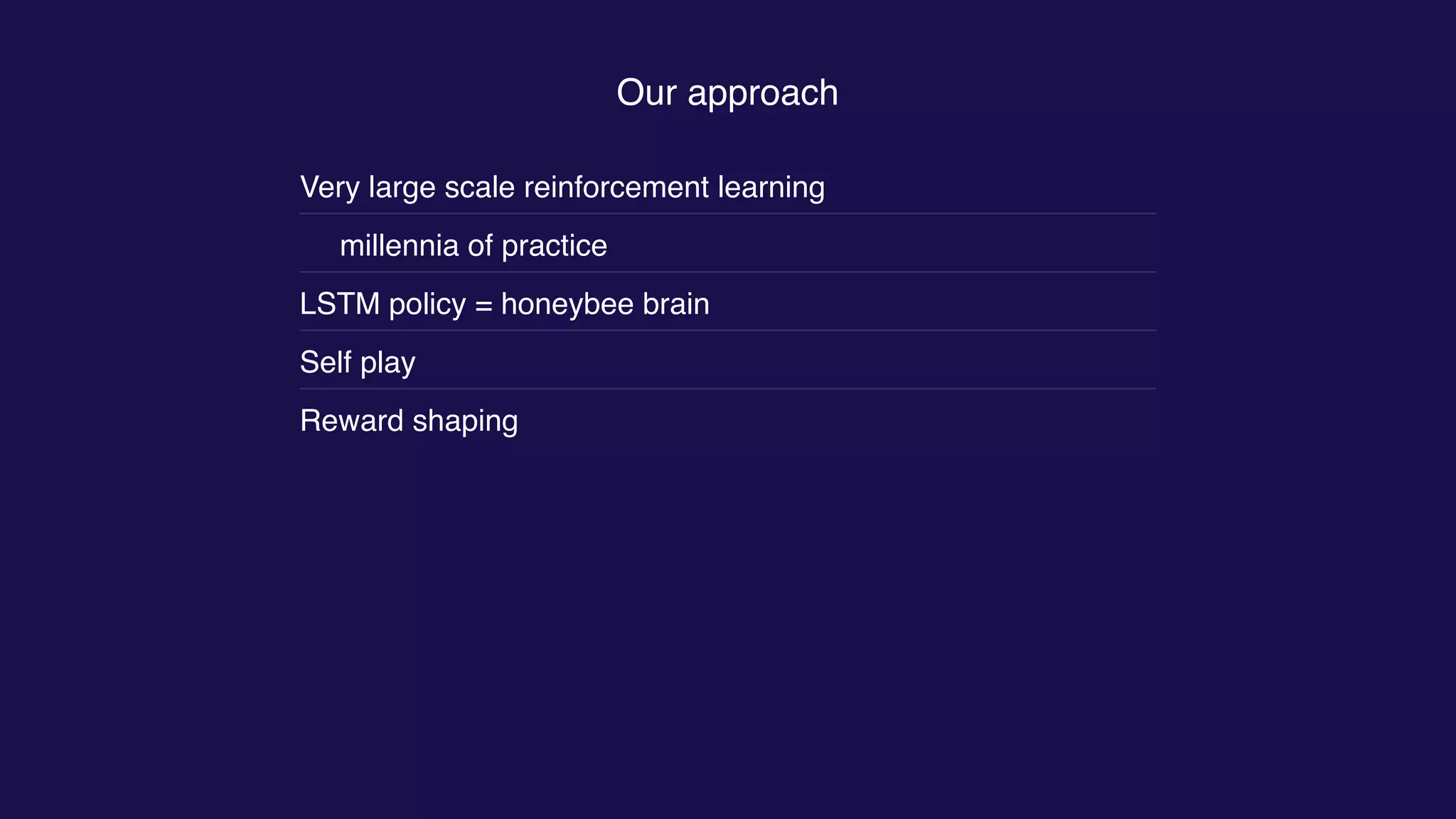
Our approach
Very large scale reinforcement learning
millennia of practice
LSTM policy = honeybee brain
Self play
Reward shaping
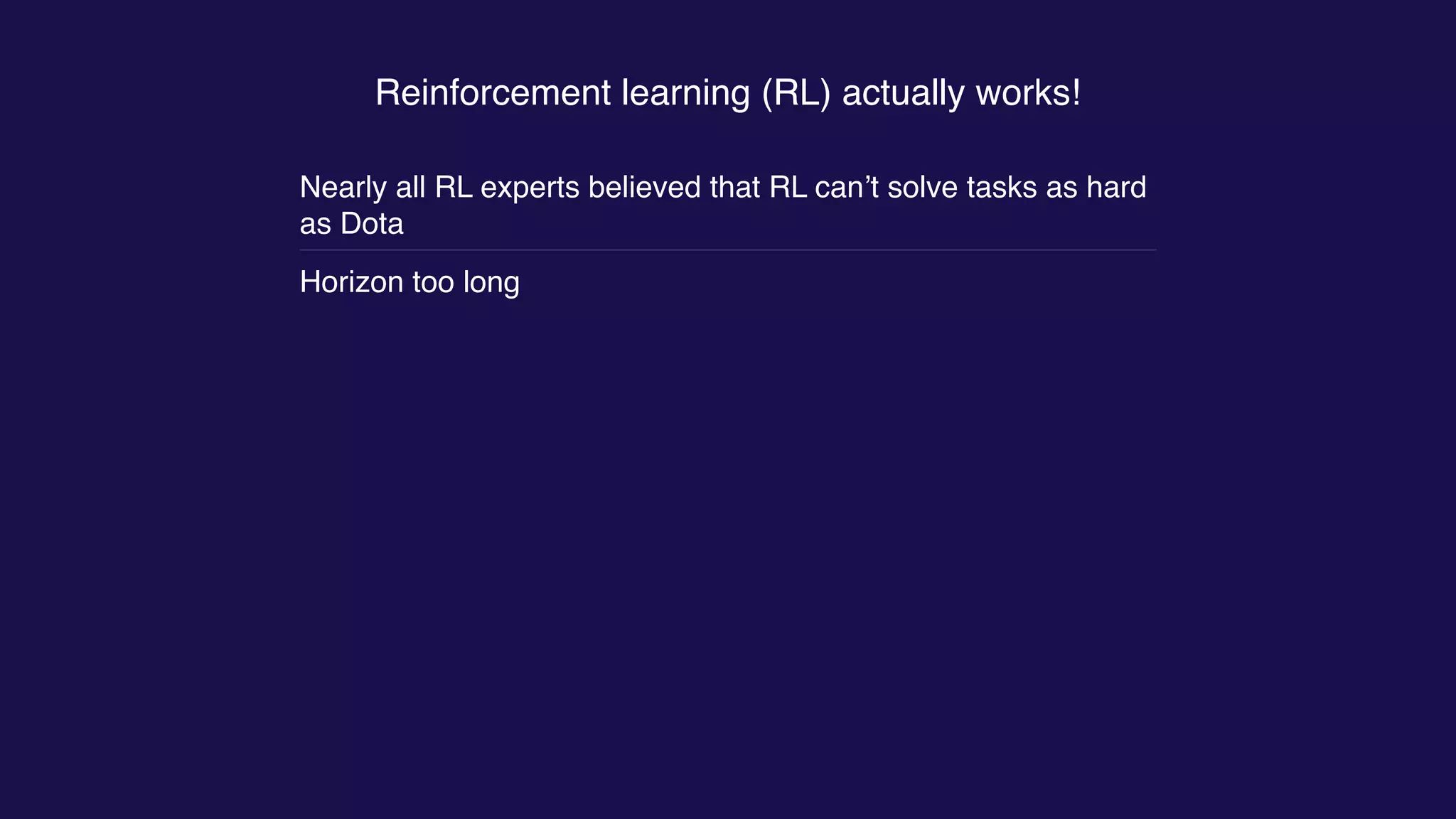
Reinforcement learning (RL) actually works!
Nearly all RL experts believed that RL can’t solve tasks as hard
as Dota
Horizon too long
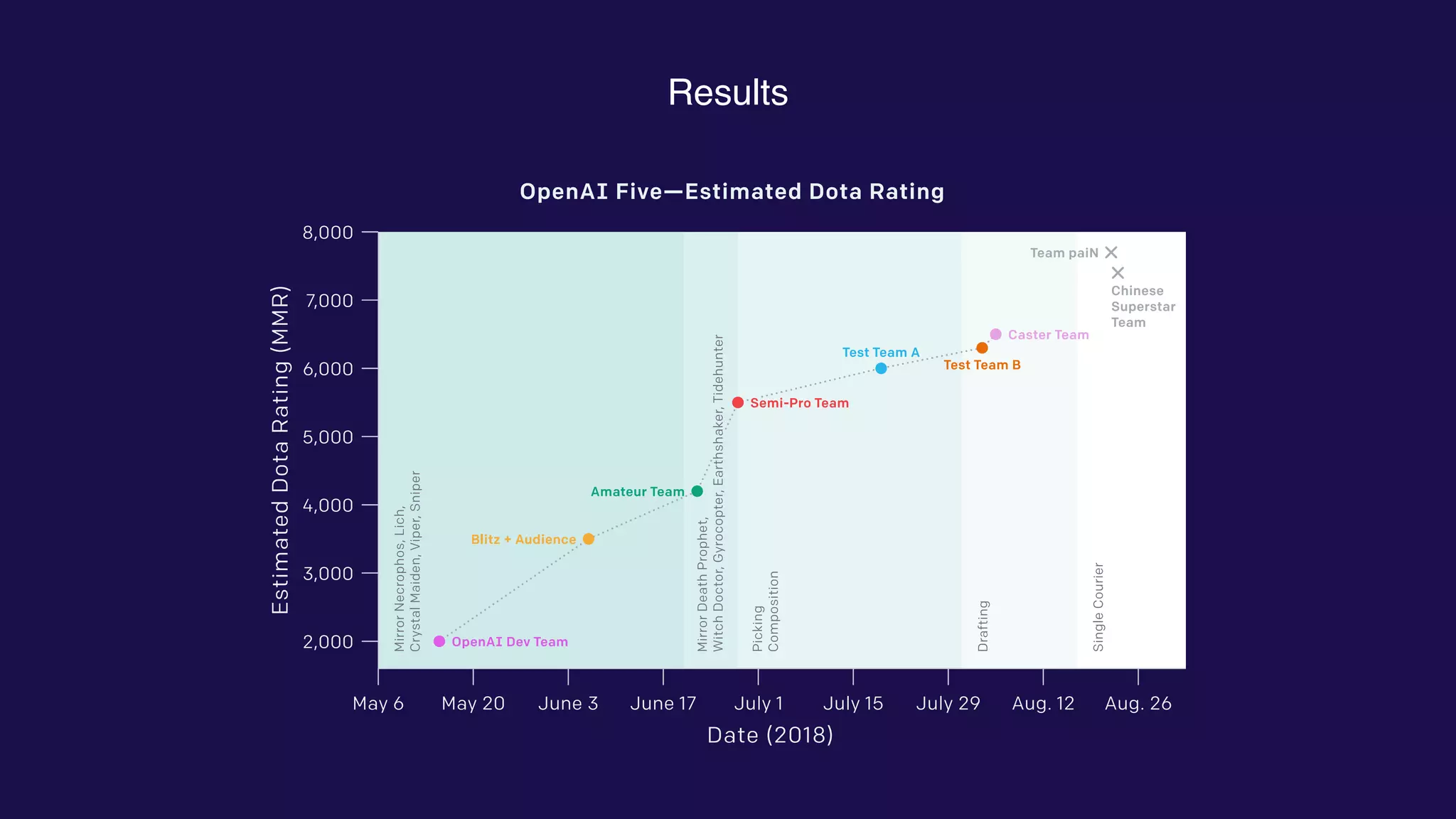
Results
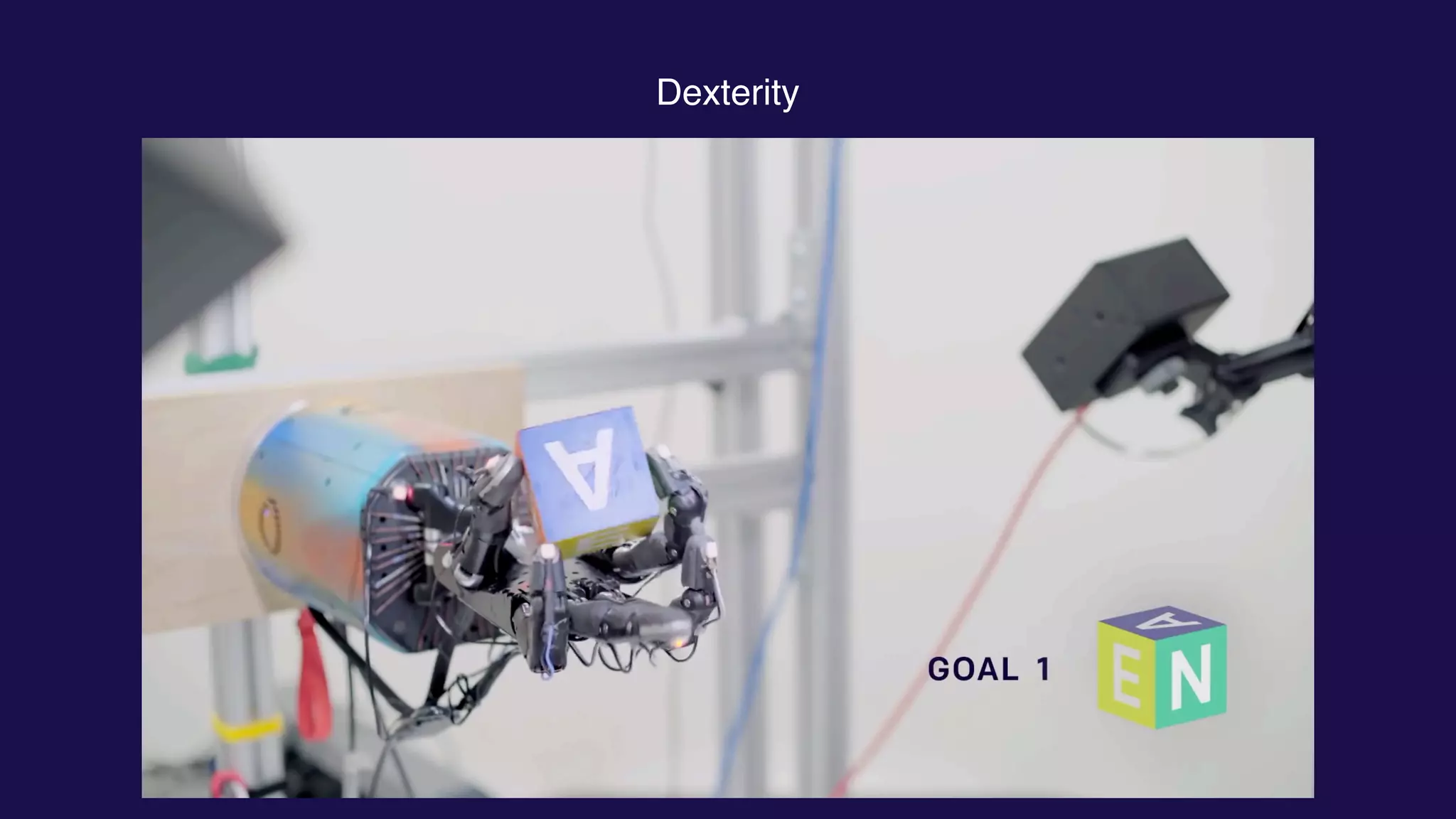
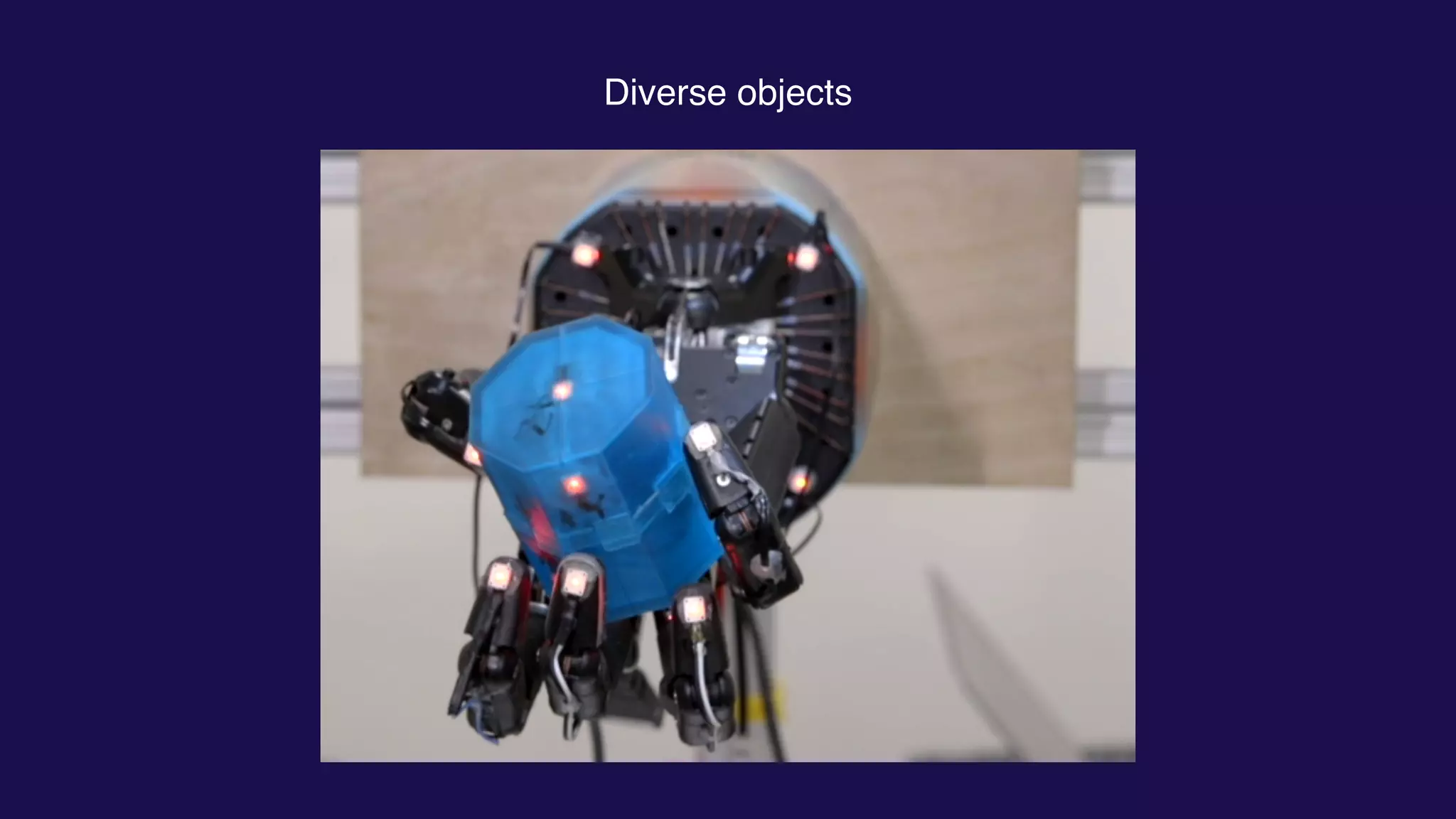
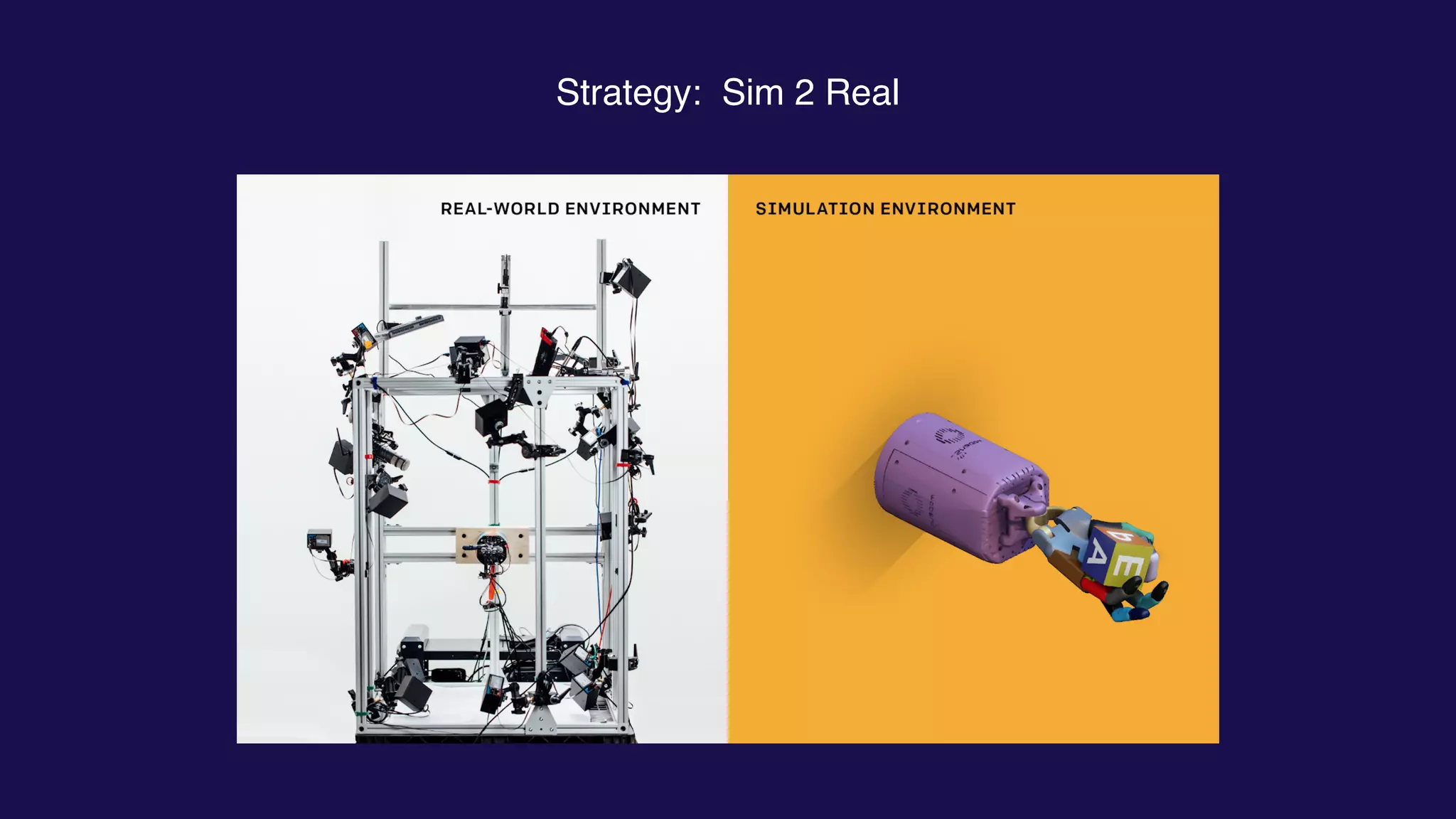
Dactyl
Dexterity
Diverse objects
Strategy: Sim 2 Real
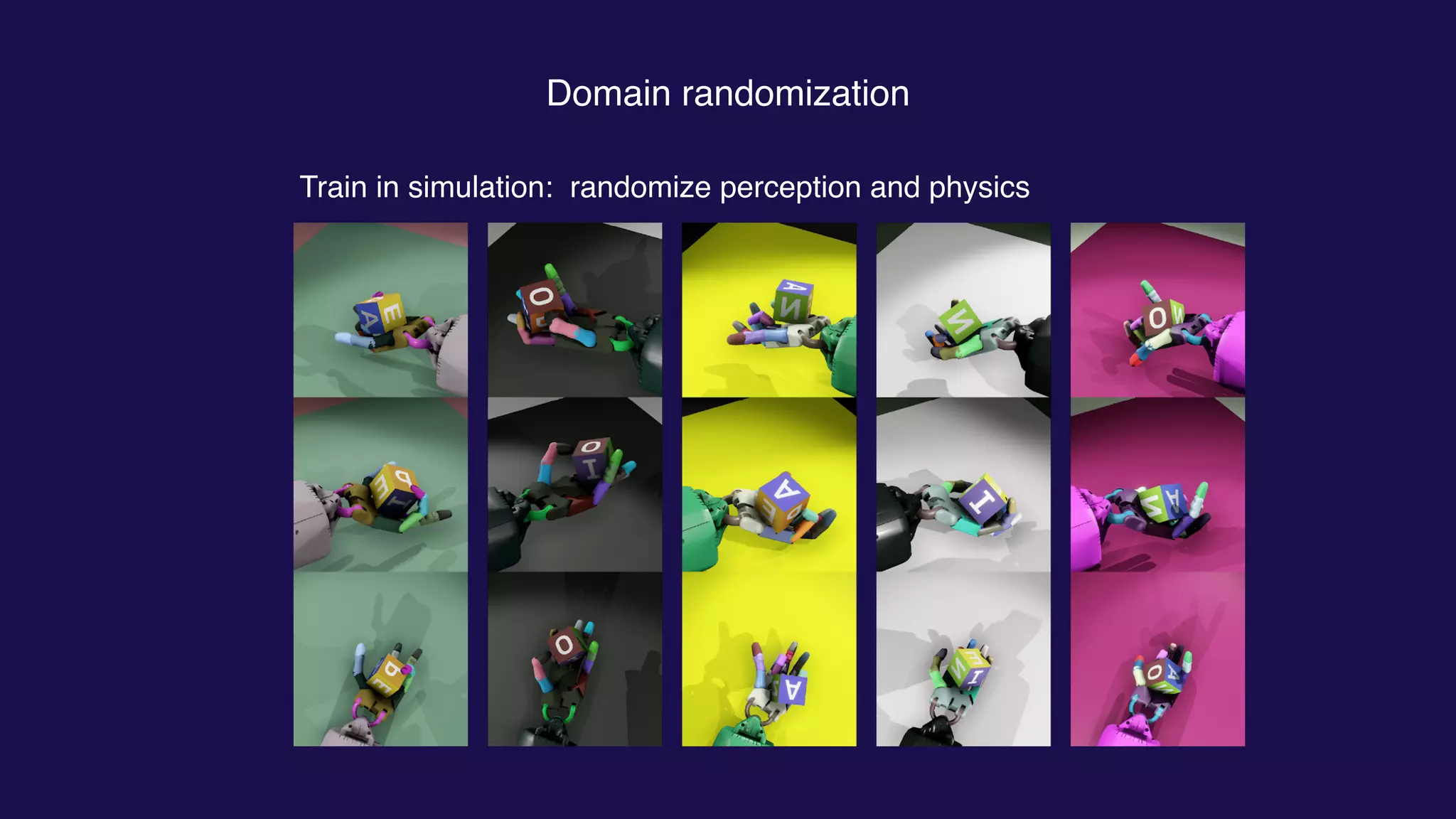
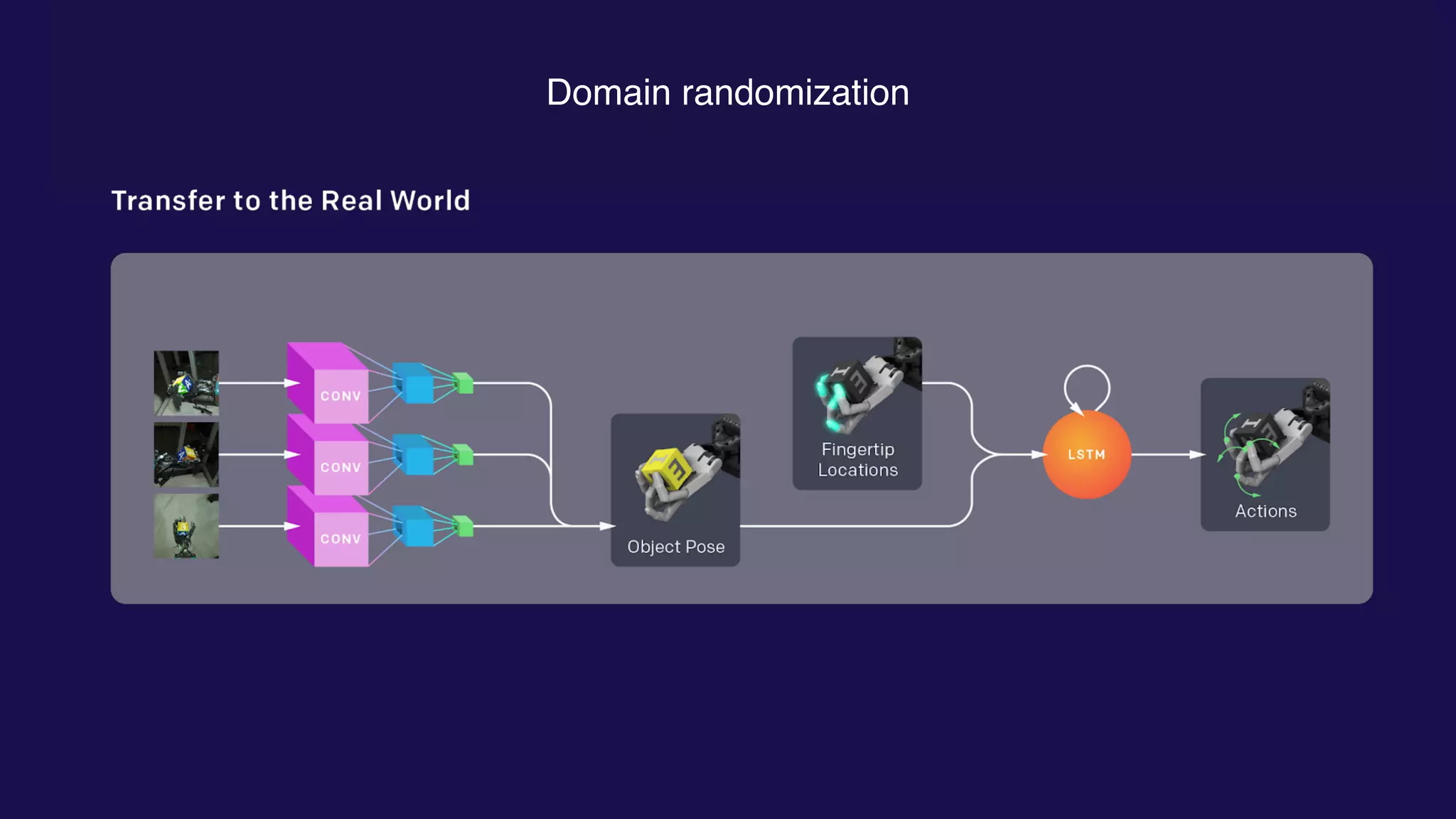
Domain randomization
Train in simulation: randomize perception and physics
Domain randomization
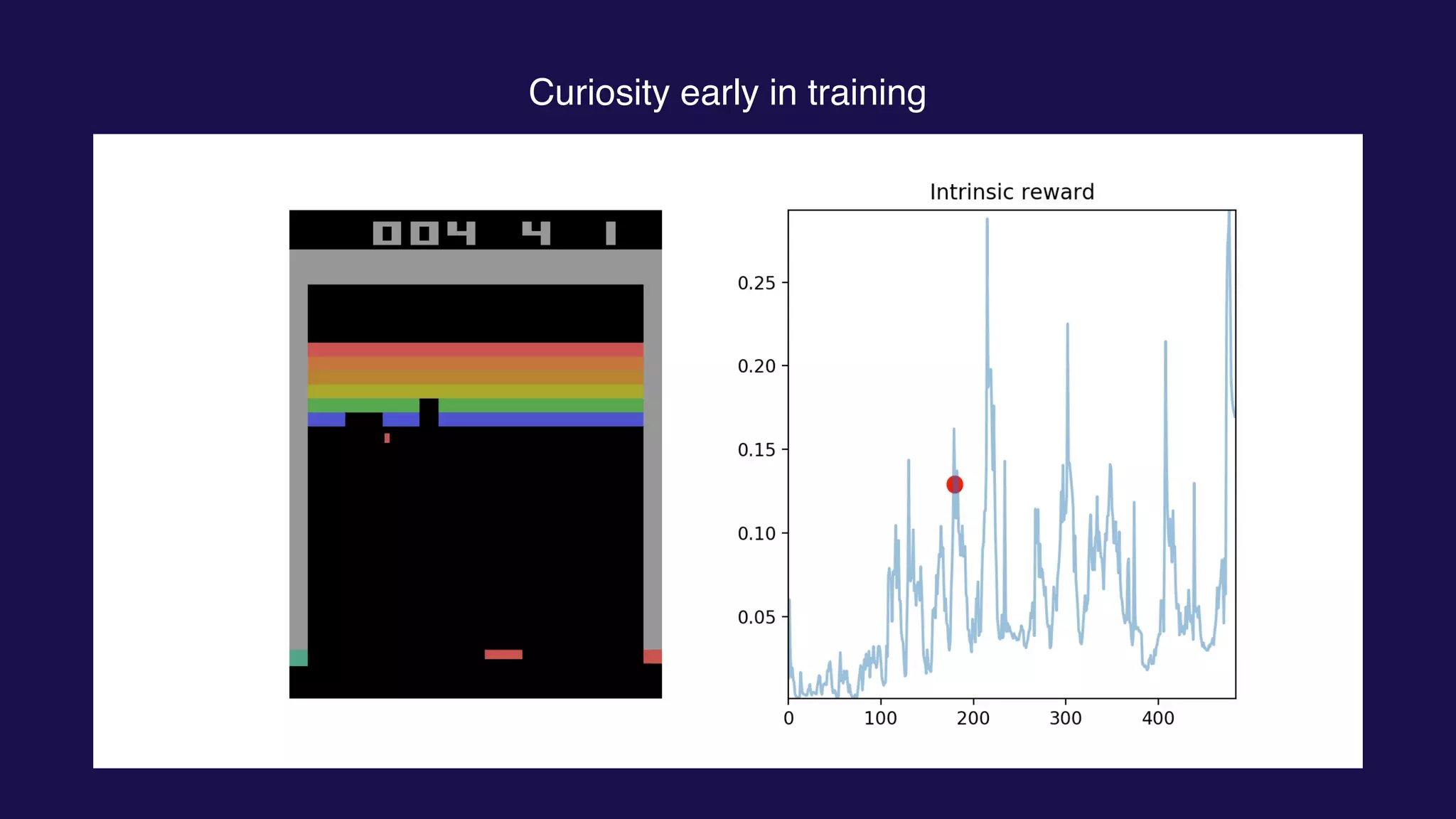
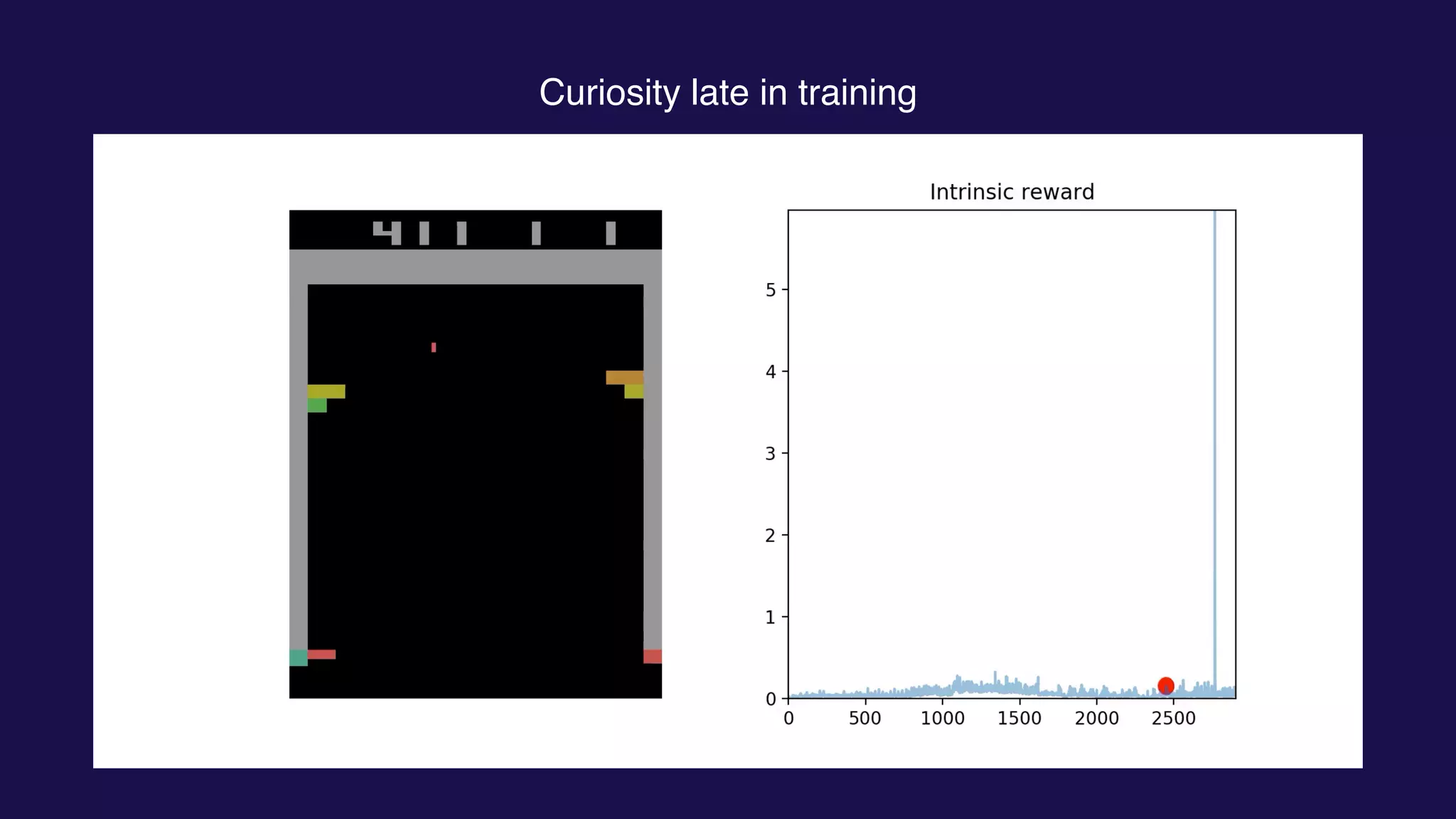
Curiosity-based exploration
Core idea
Novel states = reward
Fix all bugs
Very hard to do
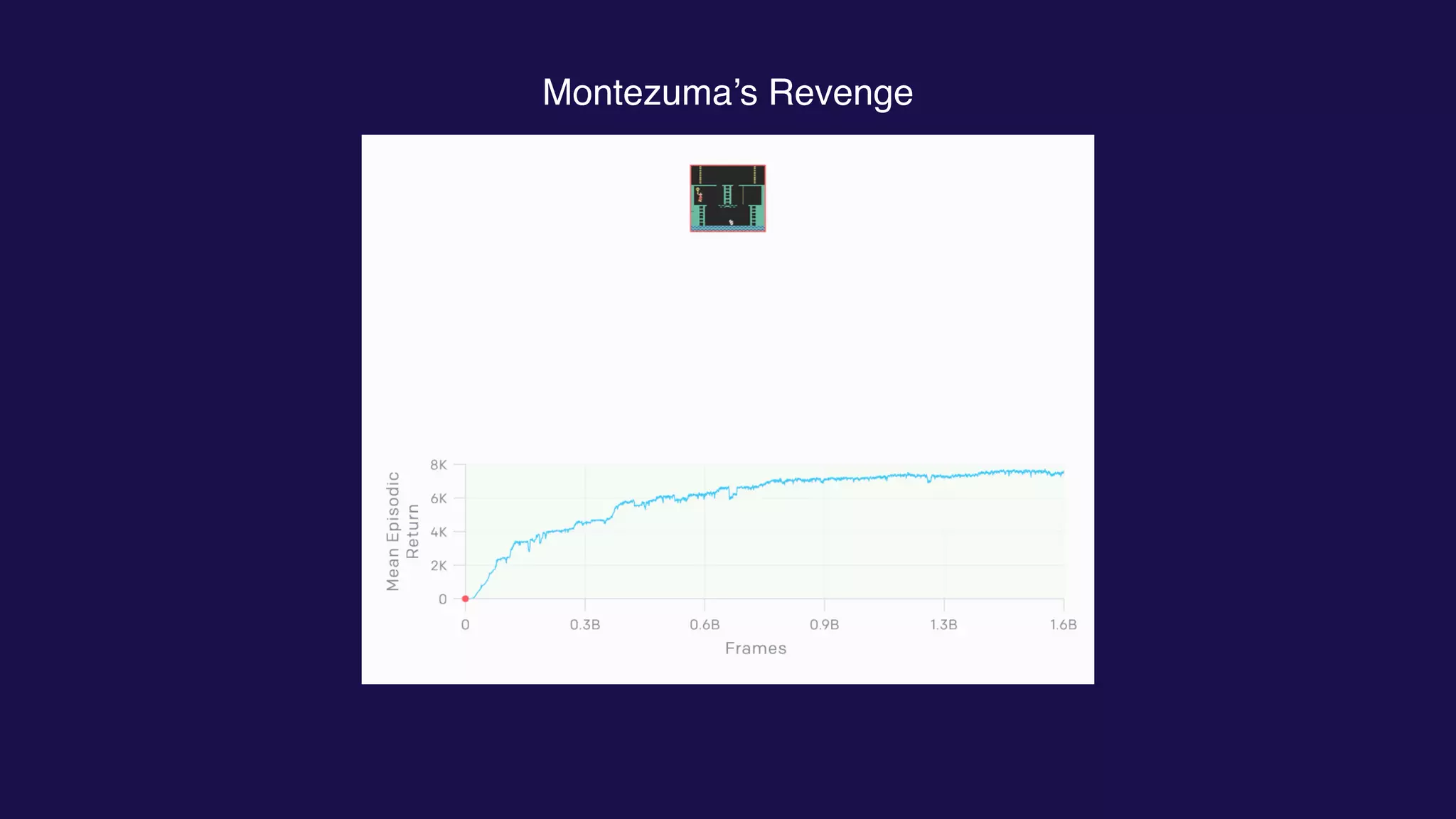
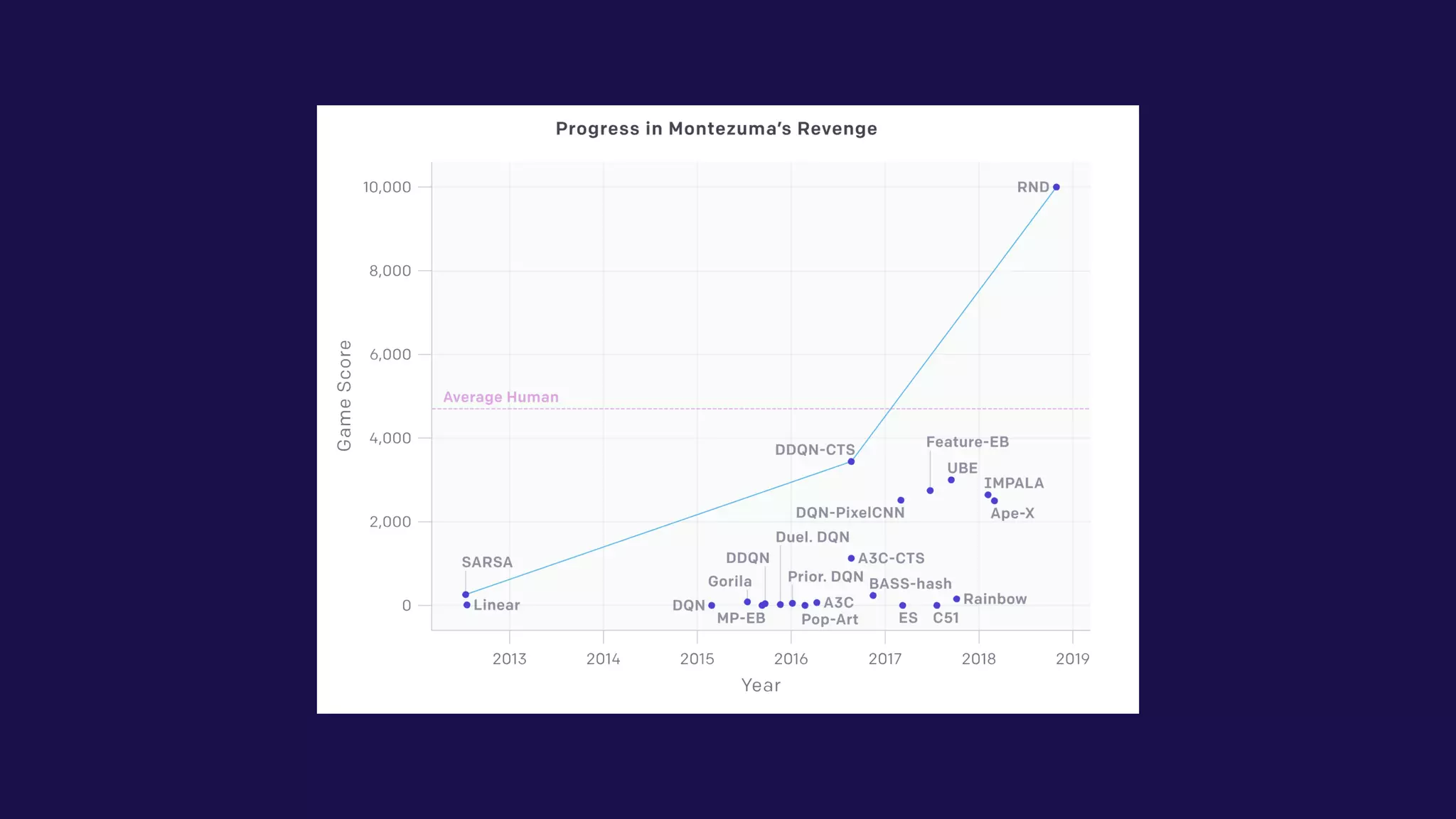
Montezuma’s Revenge
Montezuma’s Revenge
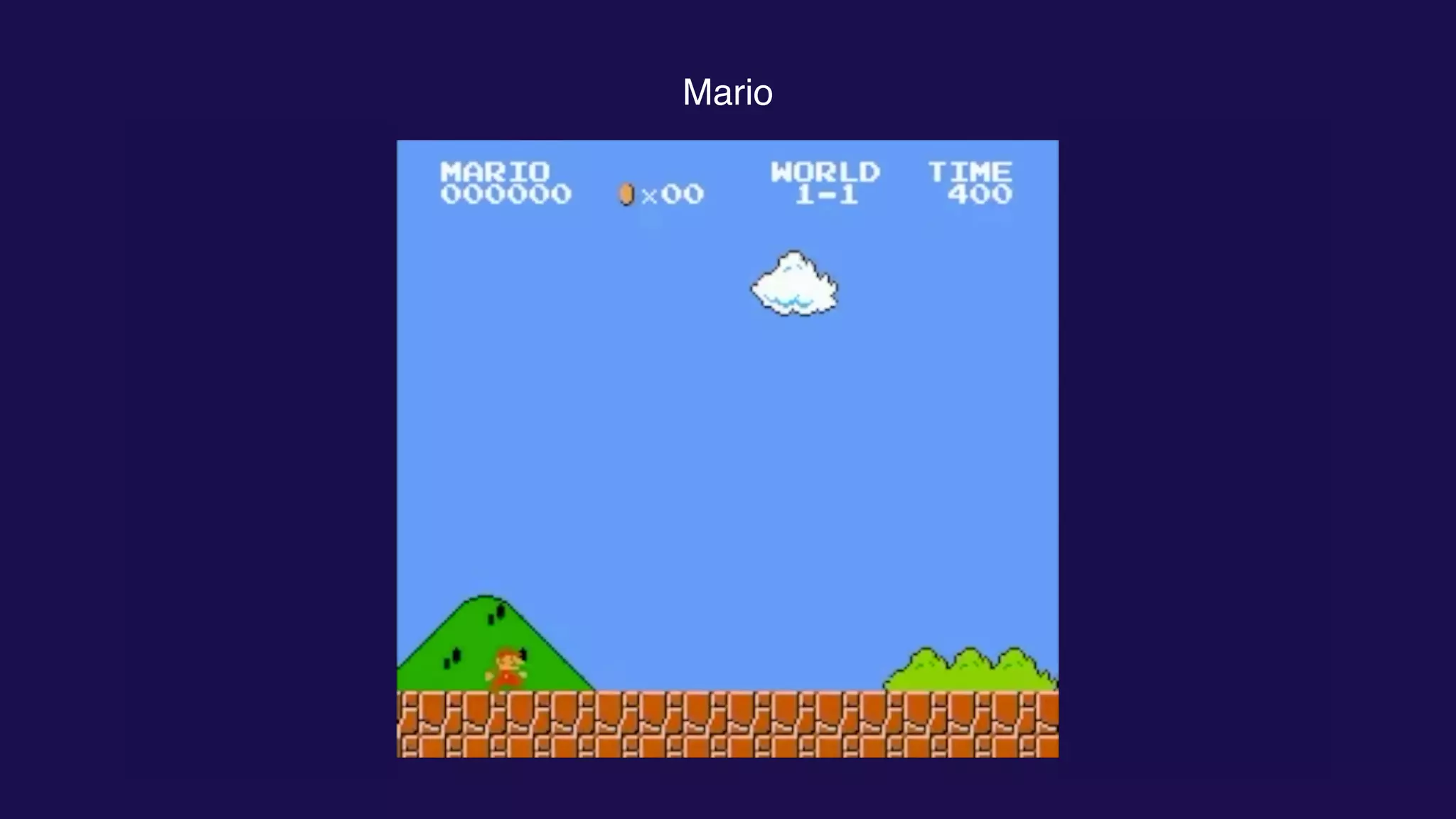
Mario
Curiosity early in training
Curiosity late in training
The OpenAI Mission
OpenAI’s mission
OpenAI’s mission is to ensure that artificial general intelligence
(AGI) — by which we mean highly autonomous systems that
outperform humans at most economically valuable work —
benefits all of humanity.
— The OpenAI Charter
Impact of AGI
Generate massive wealth
Potential to end poverty, achieve material abundance
Impact of AGI
Generate massive wealth
Potential to end poverty, achieve material abundance
Generate science and technology
cure disease, extend life, superhuman healthcare
mitigate global warming, clean the oceans, etc
massively improve education and psychological well being
Why is OpenAI’s mission relevant today?
We review progress in the field over the past 6 years
Our conclusion: near term AGI should be taken as a serious
possibility
Algorithms
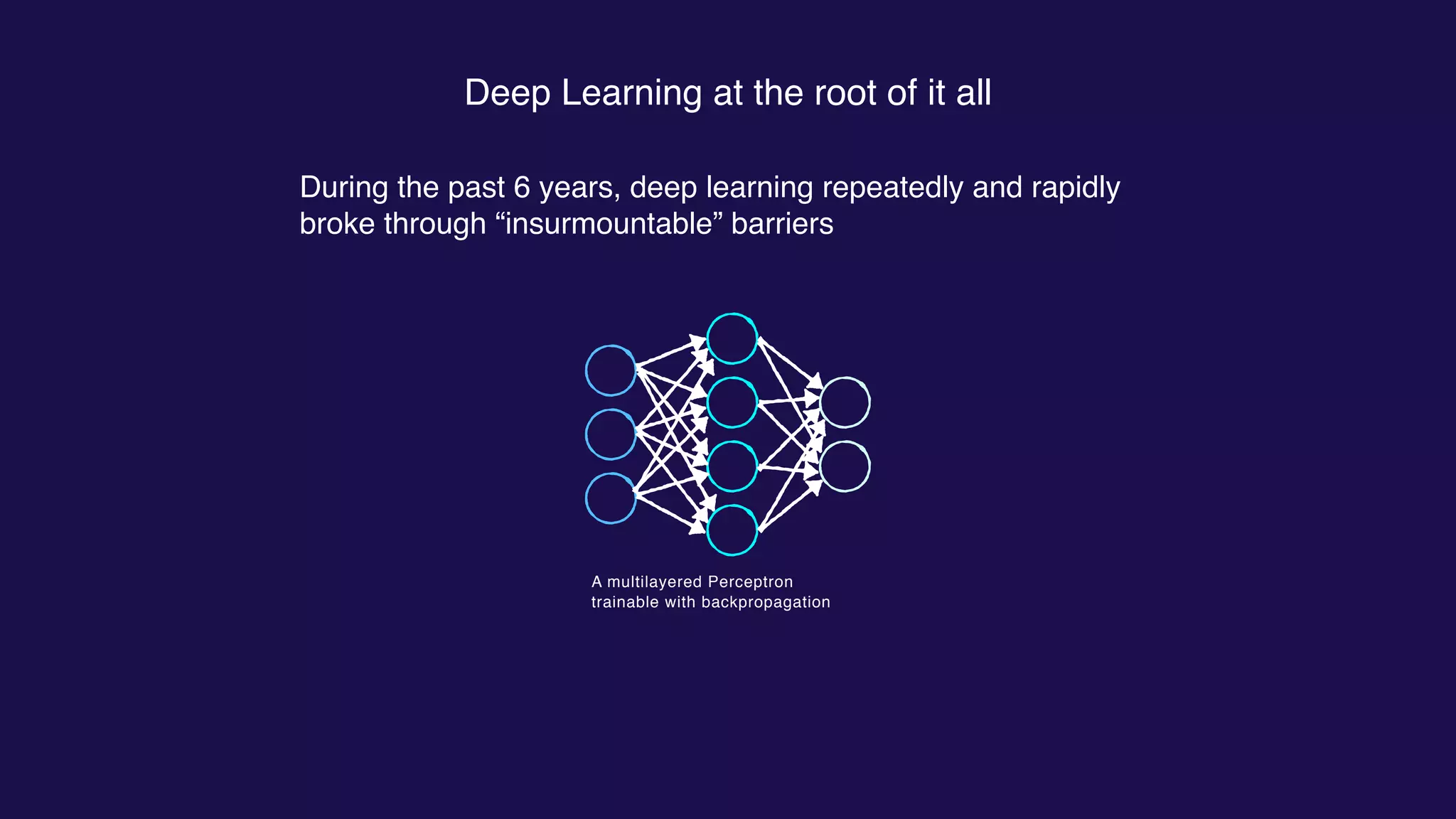
Deep Learning at the root of it all
During the past 6 years, deep learning repeatedly and rapidly
broke through “insurmountable” barriers
A multilayered Perceptron
trainable with backpropagation
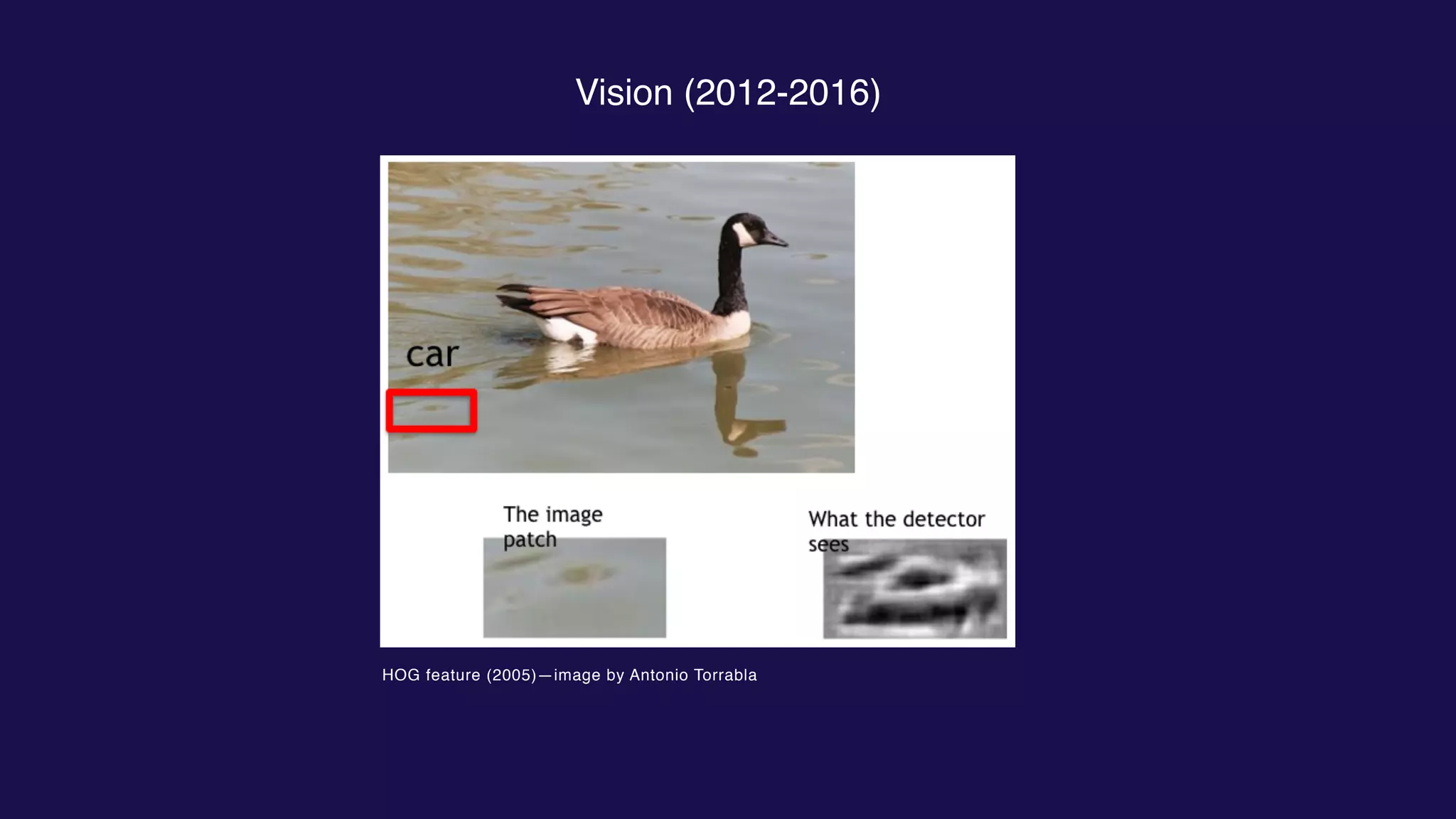
Vision (2012-2016)
HOG feature (2005)—image by Antonio Torrabla
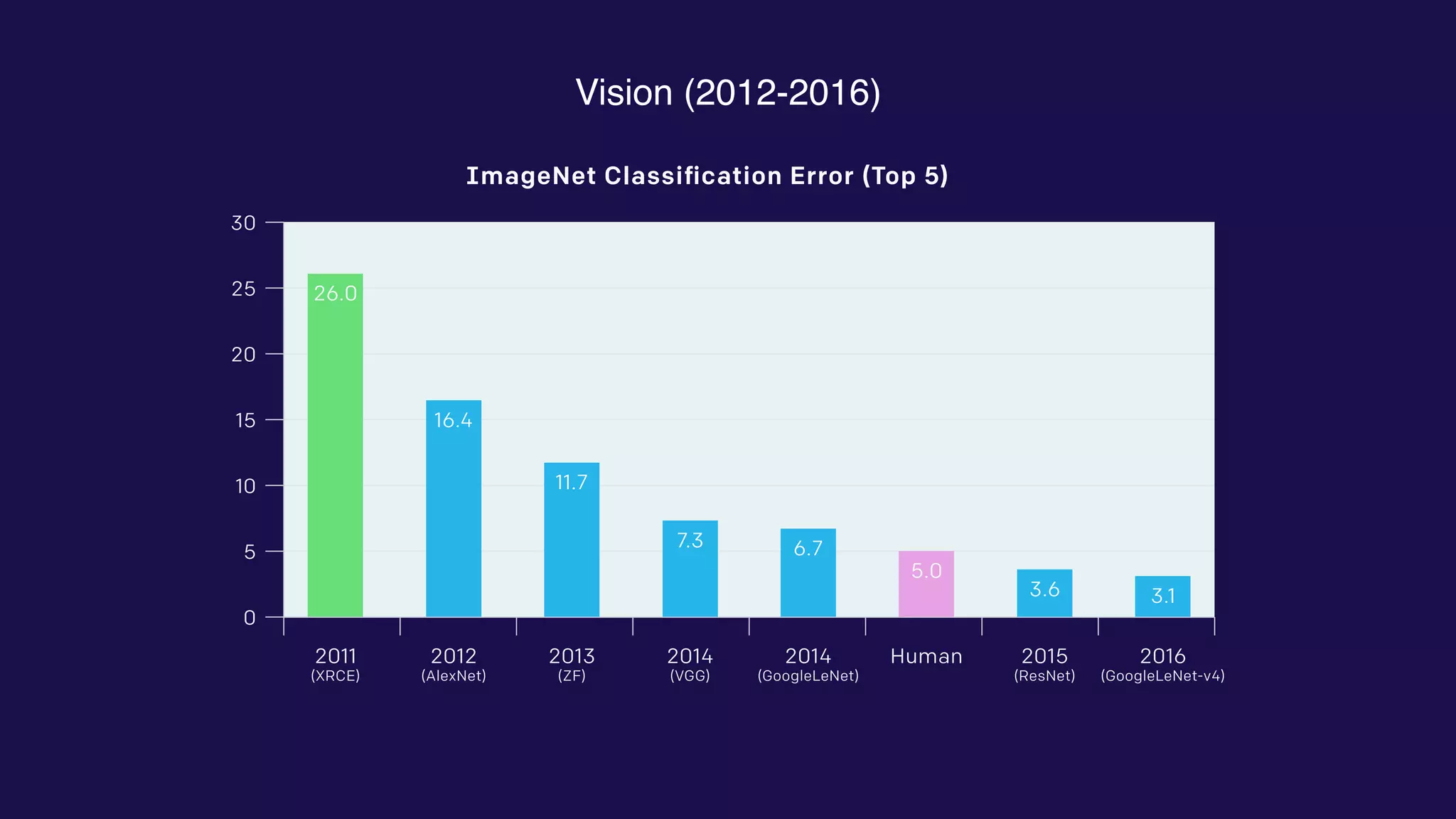
Vision (2012-2016)
ImageNet Classification Error (Top 5)
Human 2015
(ResNet)
2016
(GoogleLeNet-v4)
0
5
10
15
20
25
30
3.13.6
5.0
2011
(XRCE)
2012
(AlexNet)
2013
(ZF)
2014
(VGG)
2014
(GoogleLeNet)
26.0
16.4
11.7
7.3 6.7
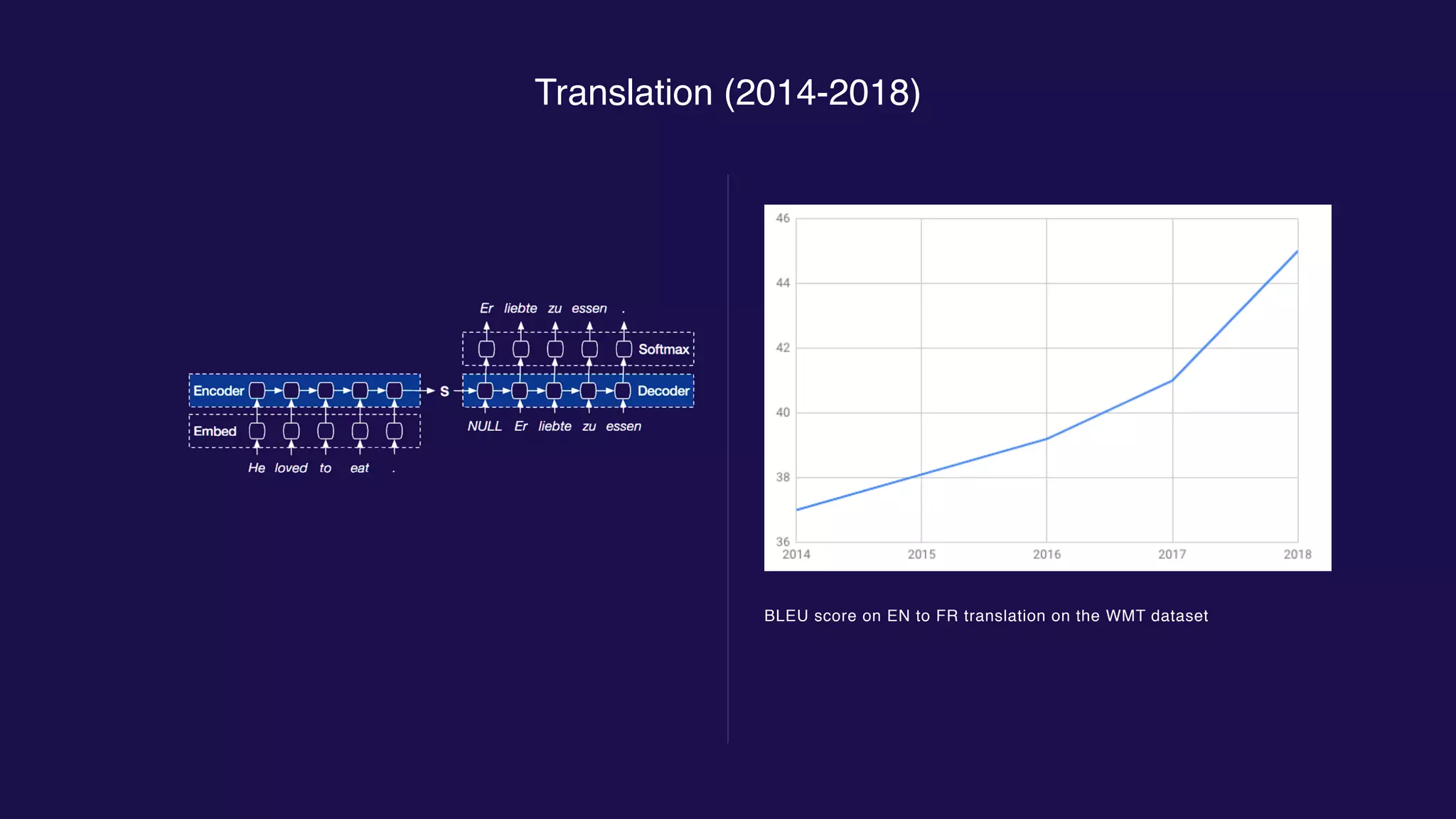
Translation (2014-2018)
BLEU score on EN to FR translation on the WMT dataset
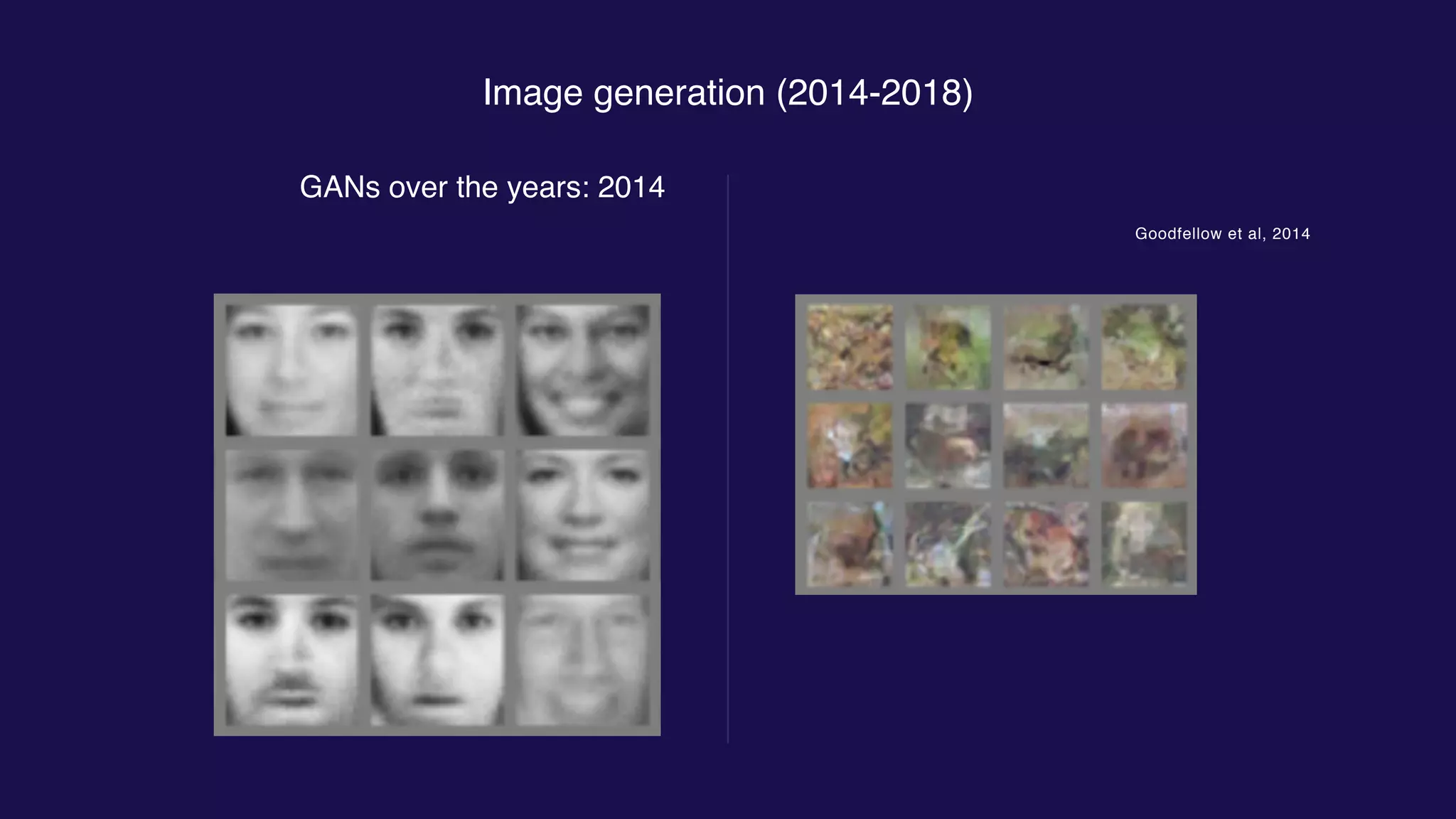
Image generation (2014-2018)
GANs over the years: 2014
Goodfellow et al, 2014
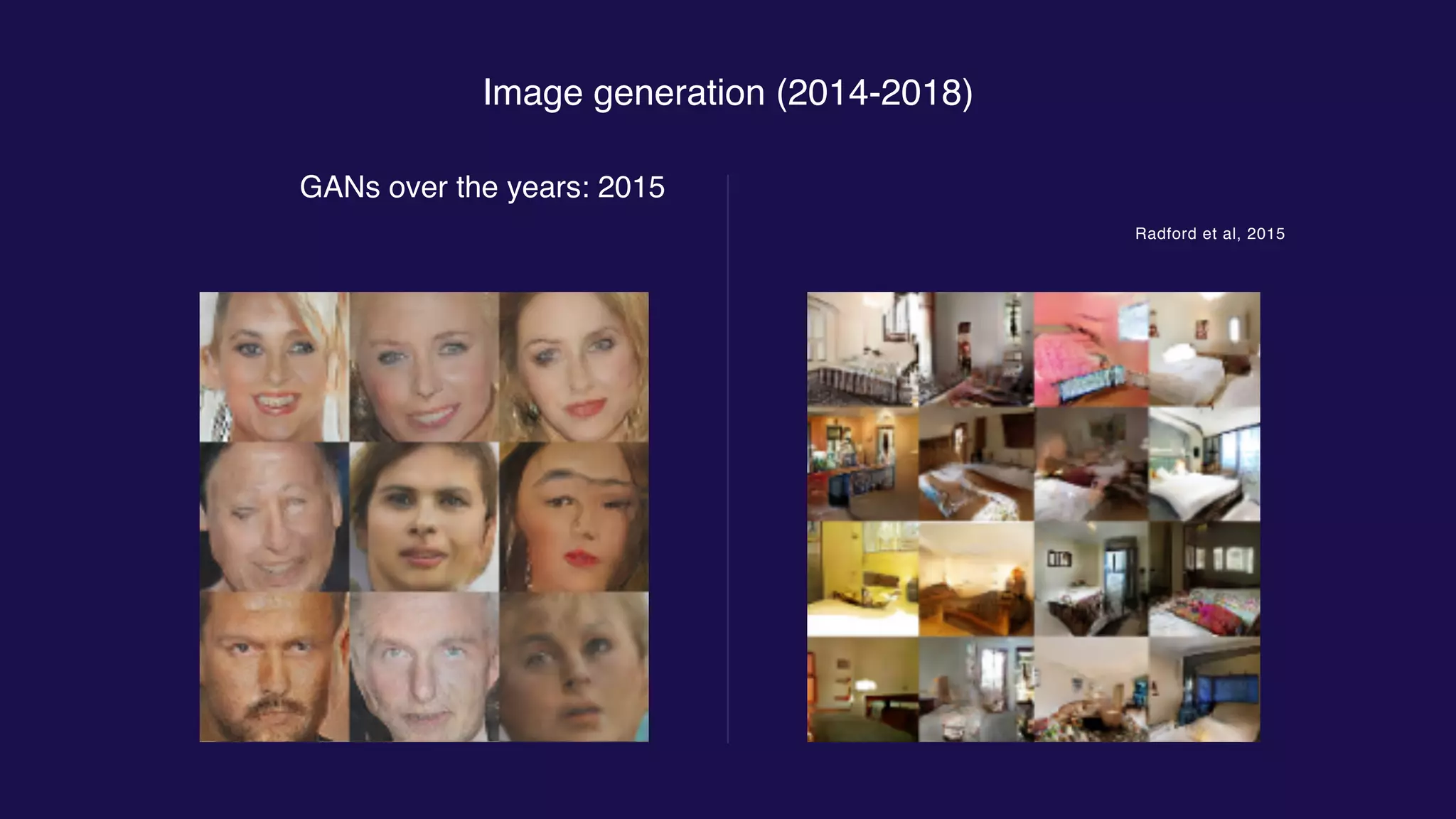
Image generation (2014-2018)
GANs over the years: 2015
Radford et al, 2015
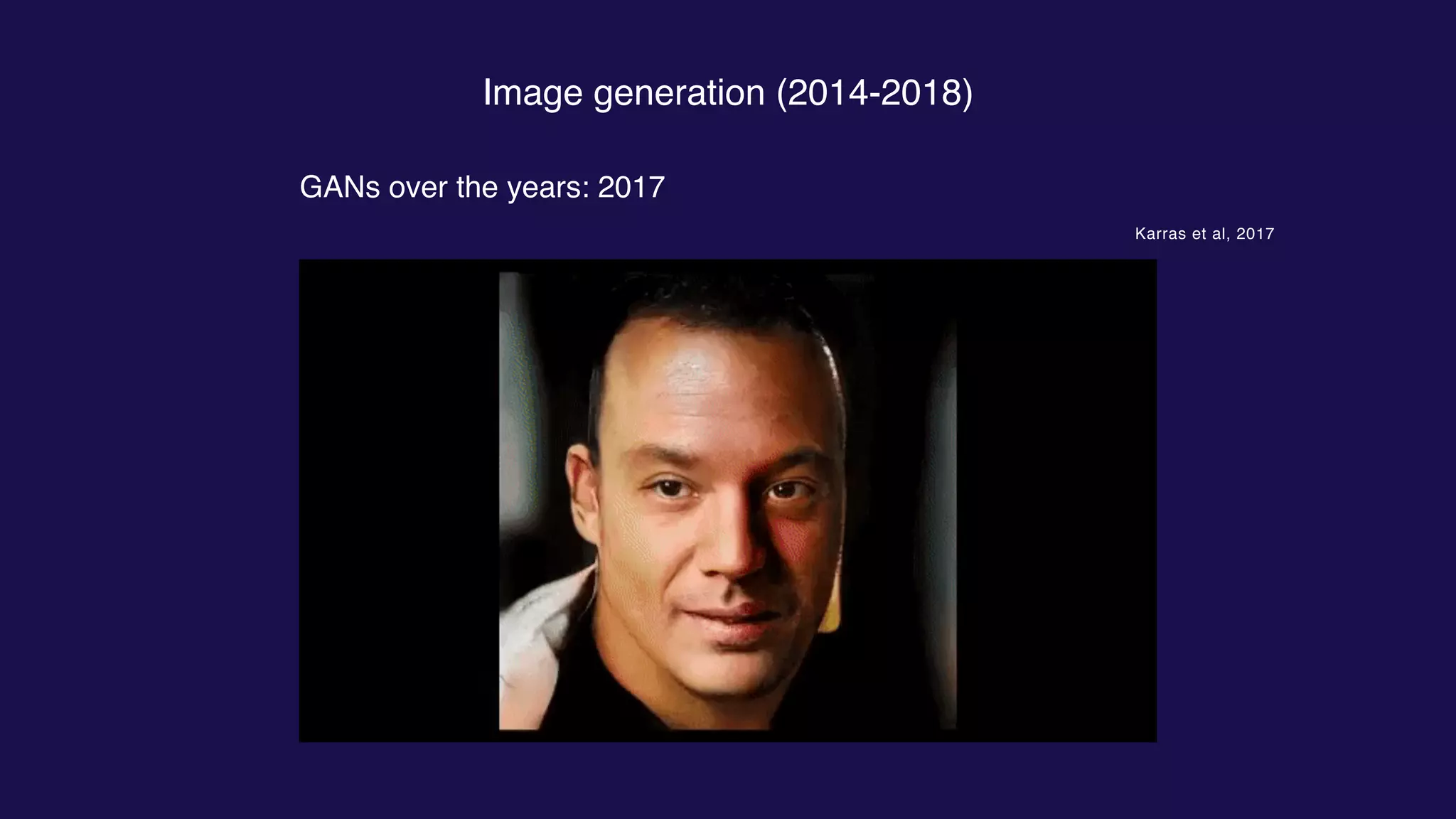
Image generation (2014-2018)
GANs over the years: 2017
Karras et al, 2017
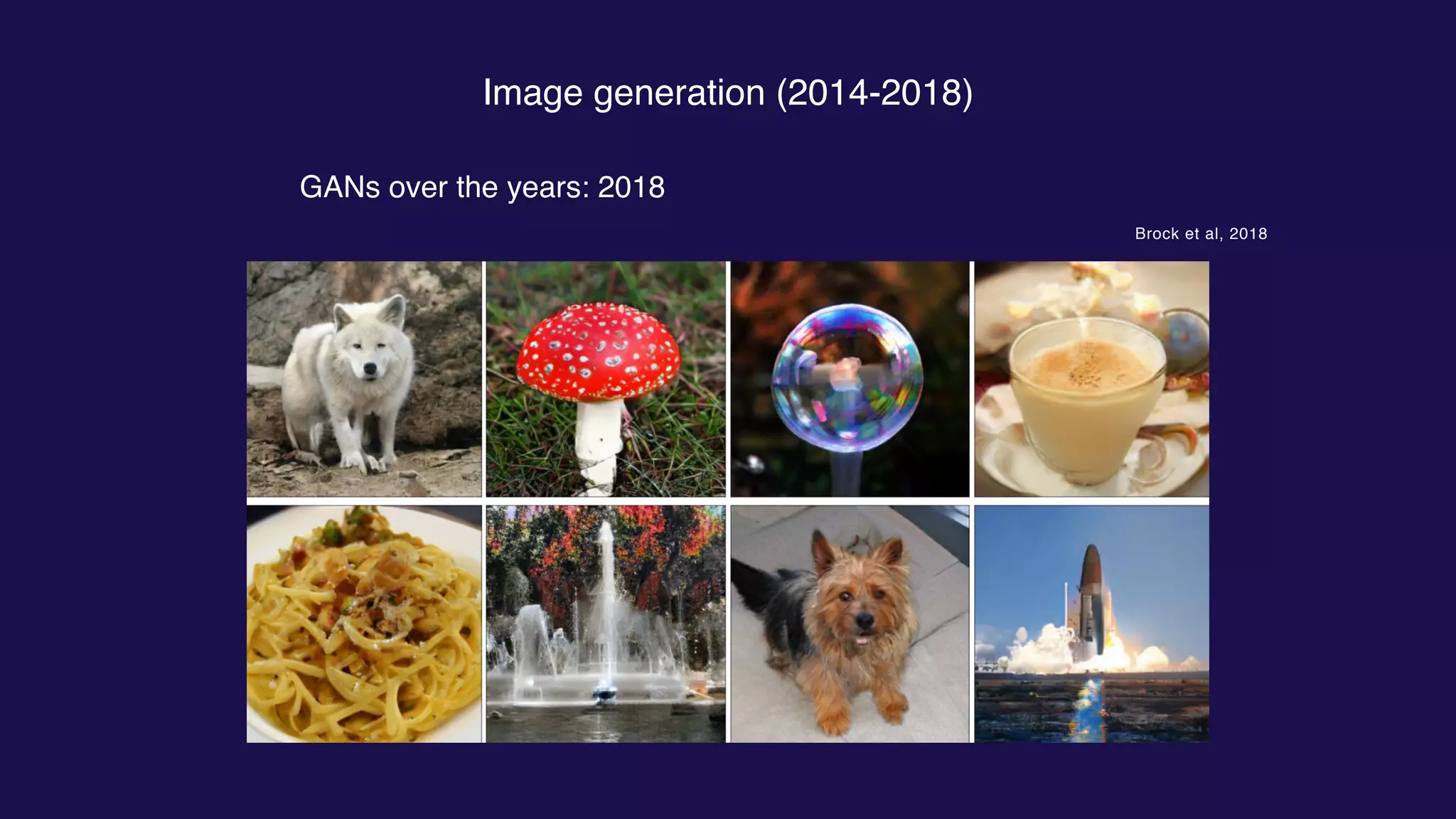
Image generation (2014-2018)
GANs over the years: 2018
Brock et al, 2018
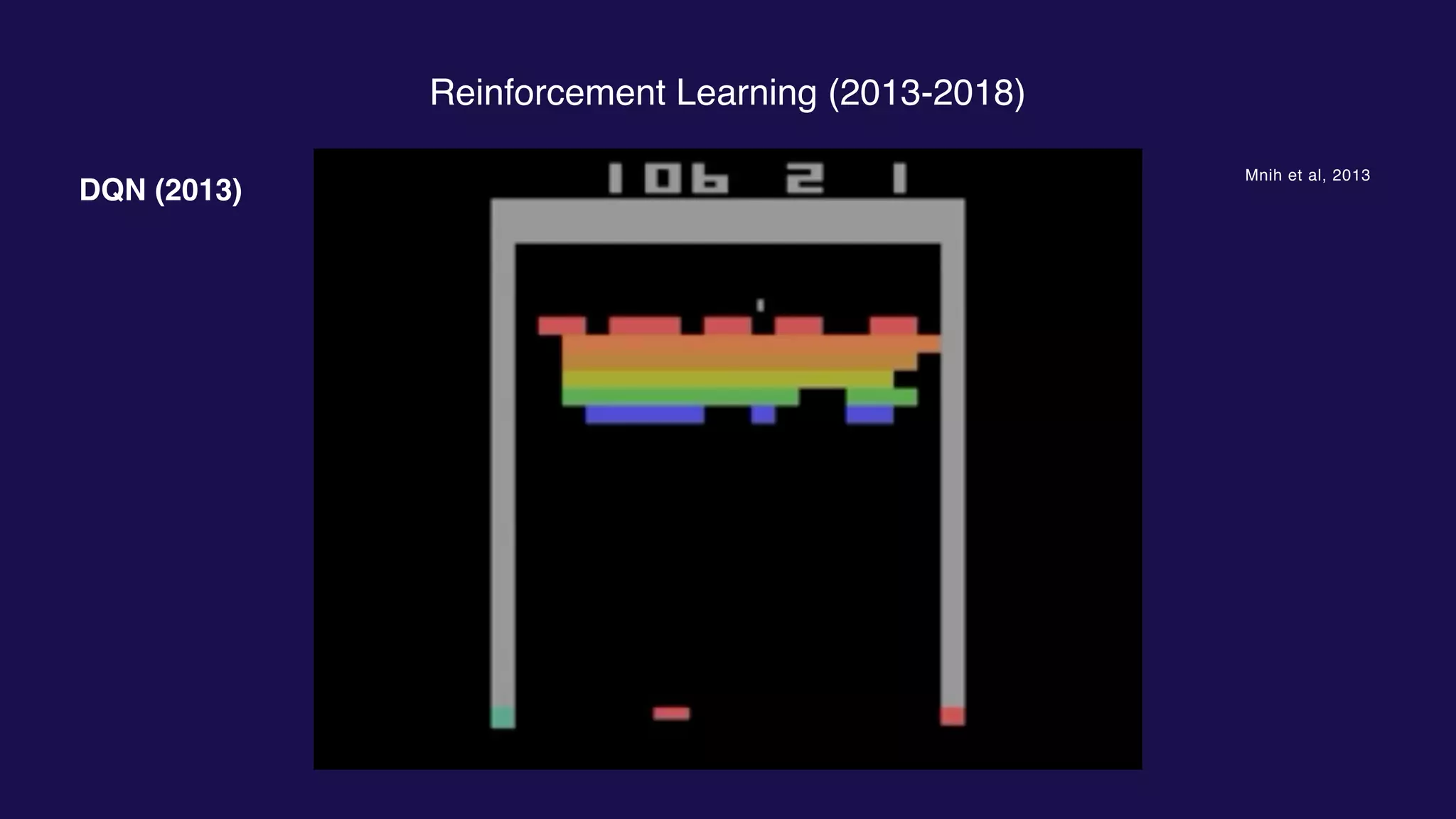
Reinforcement Learning (2013-2018)
DQN (2013)
Mnih et al, 2013
Reinforcement Learning (2013-2018)
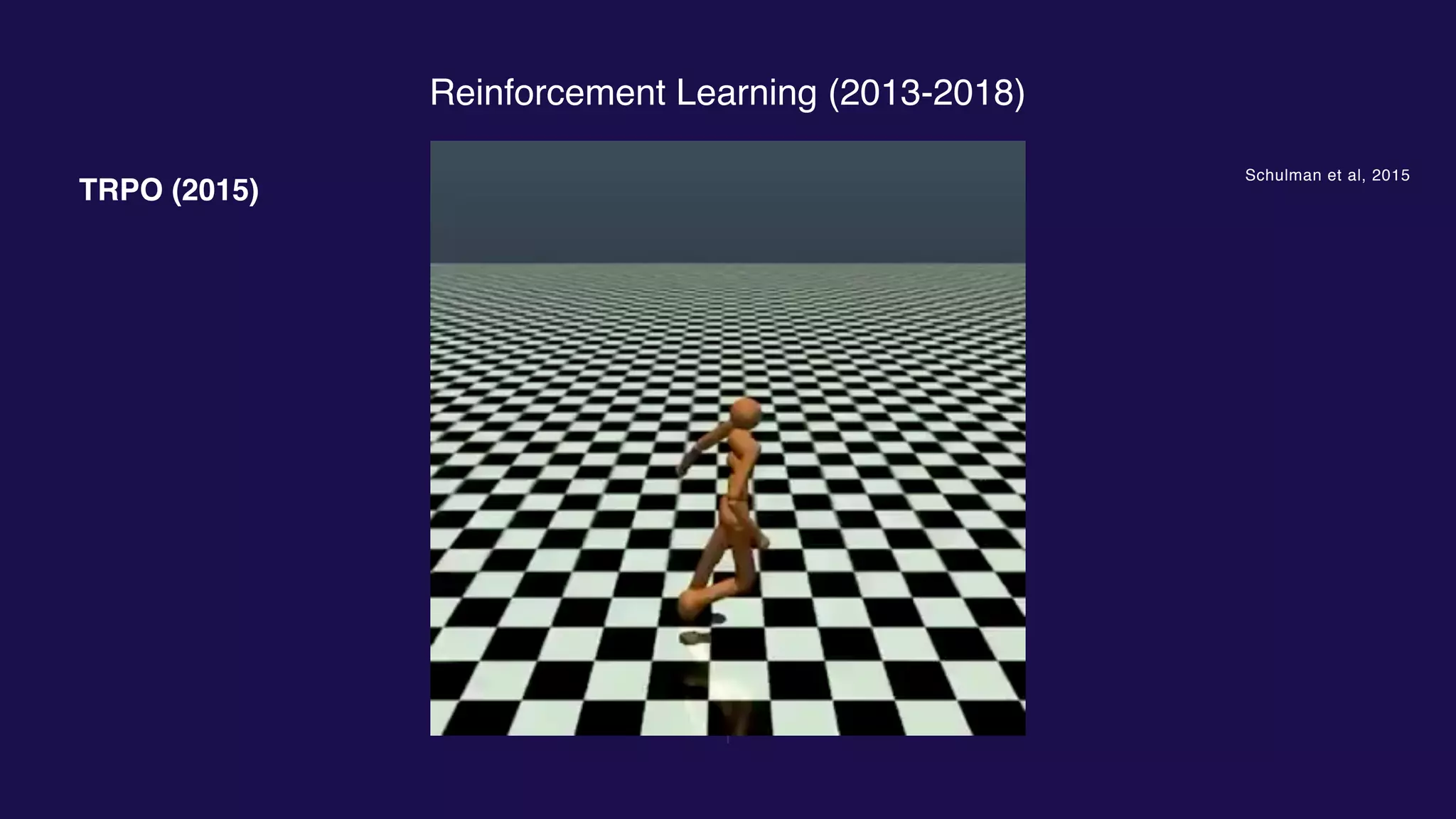
TRPO (2015)
Schulman et al, 2015
Reinforcement Learning (2013-2018)
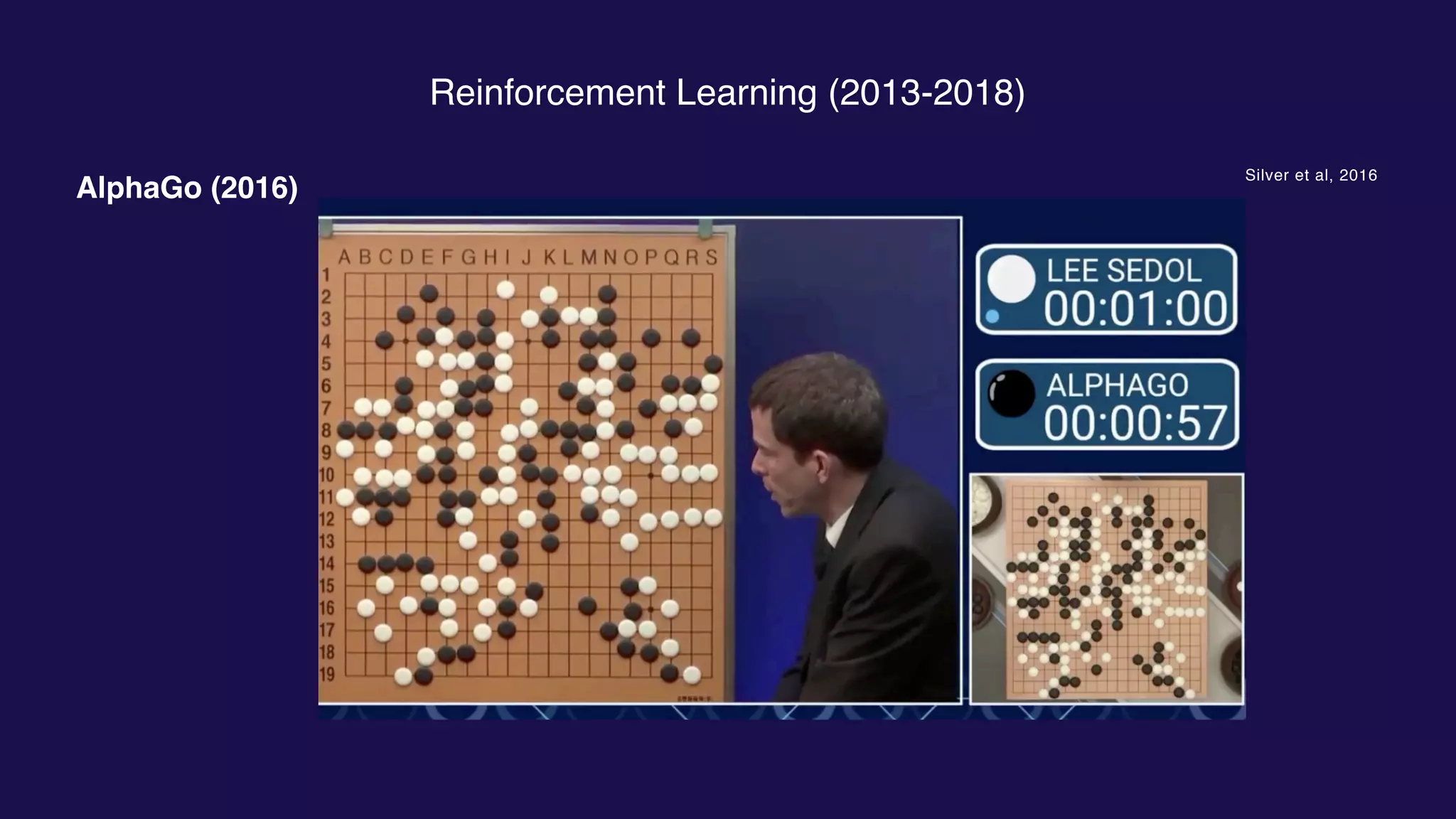
AlphaGo (2016)
Silver et al, 2016
Reinforcement Learning (2013-2018)
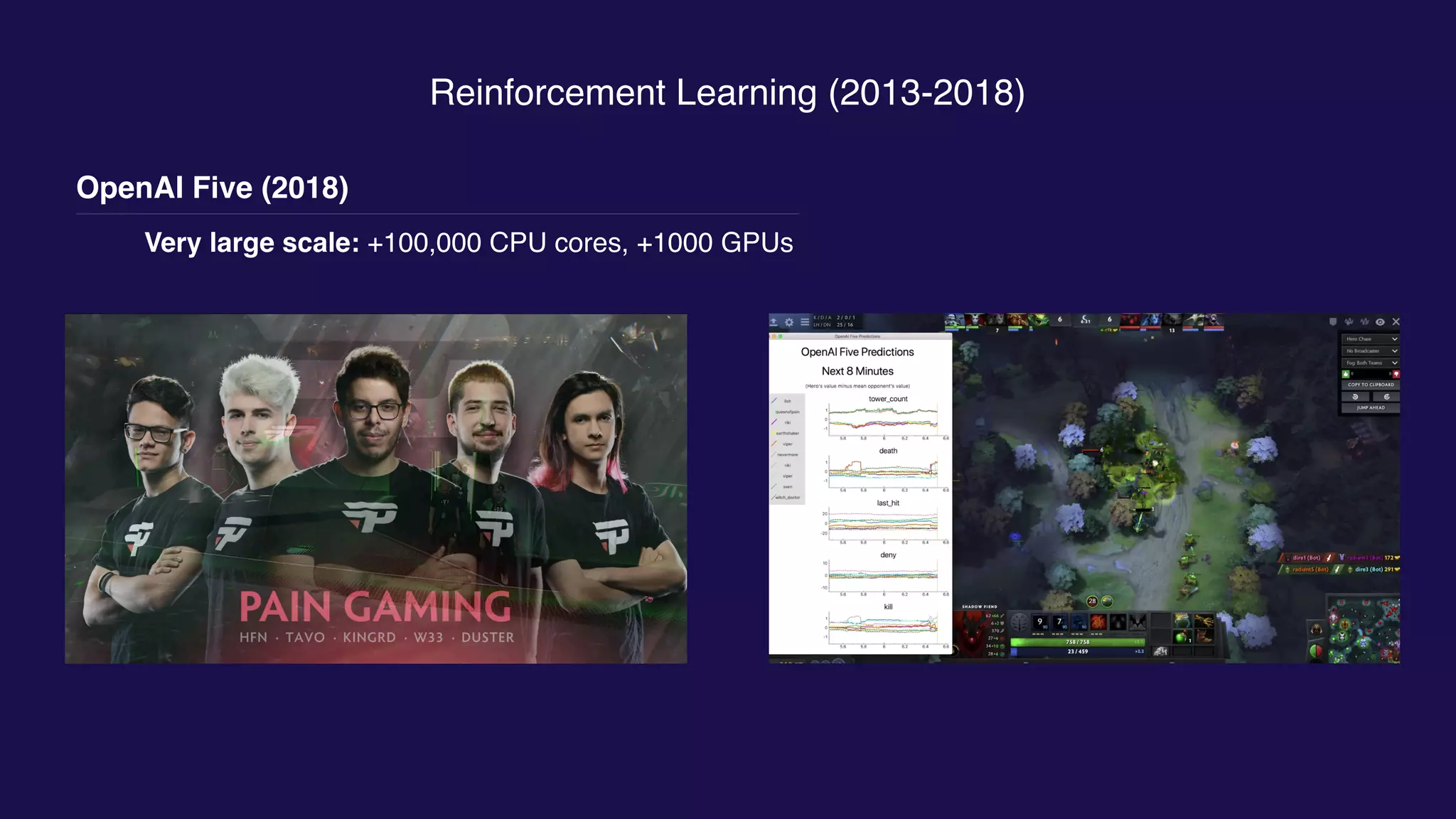
OpenAI Five (2018)
Very large scale: +100,000 CPU cores, +1000 GPUs
Reinforcement Learning (2013-2018)
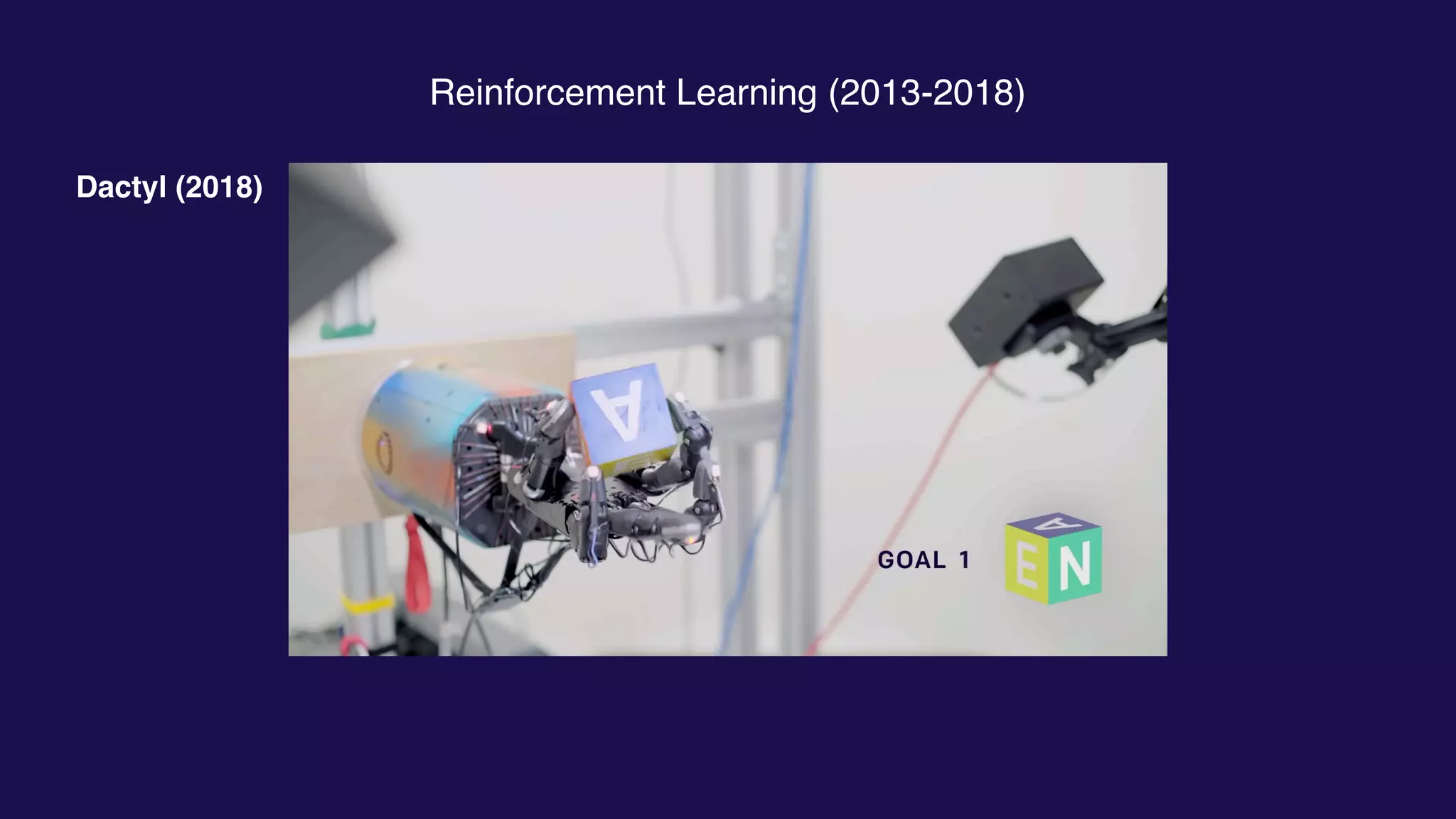
Dactyl (2018)
Compute
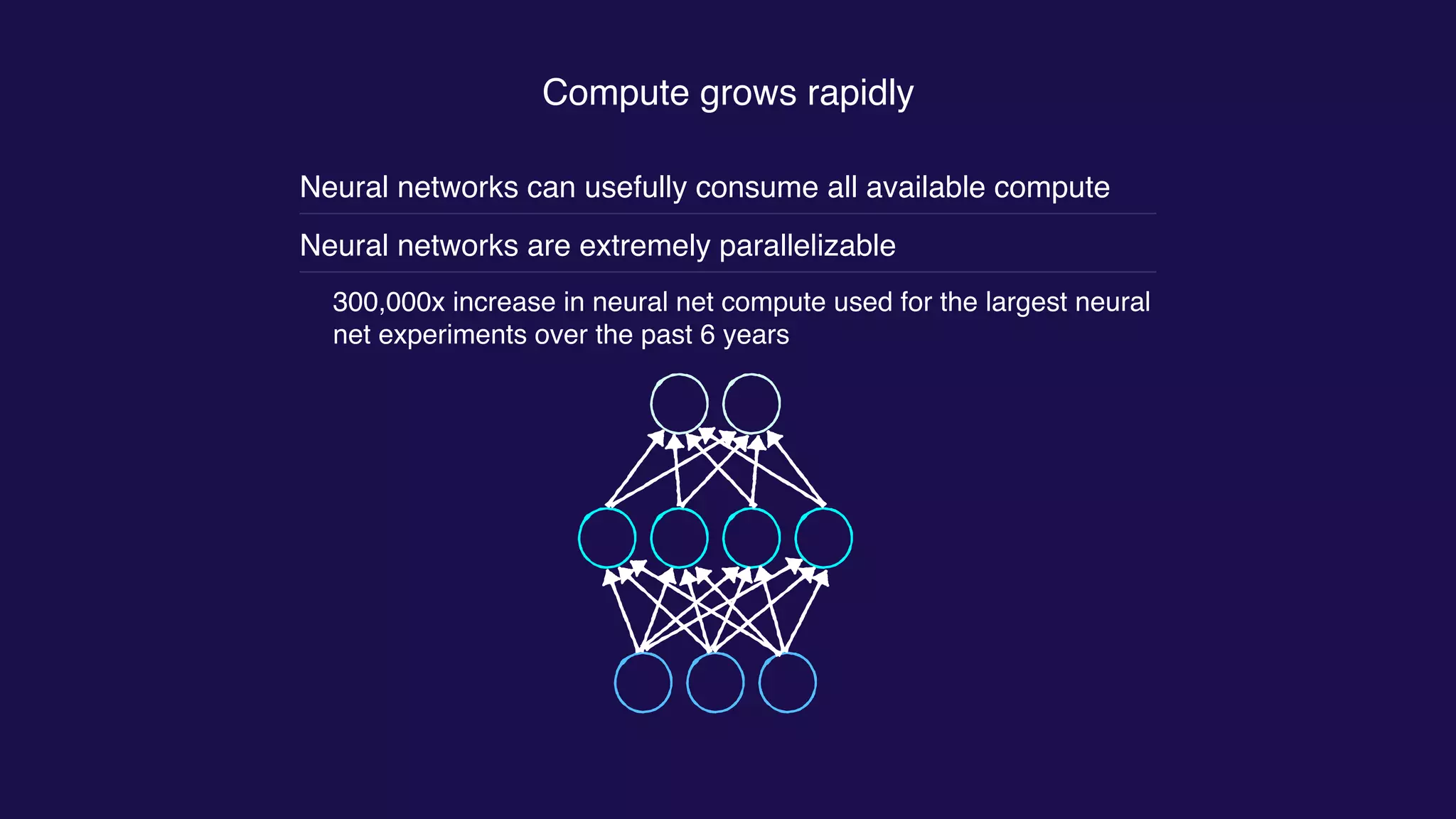
Compute grows rapidly
Neural networks can usefully consume all available compute
Neural networks are extremely parallelizable
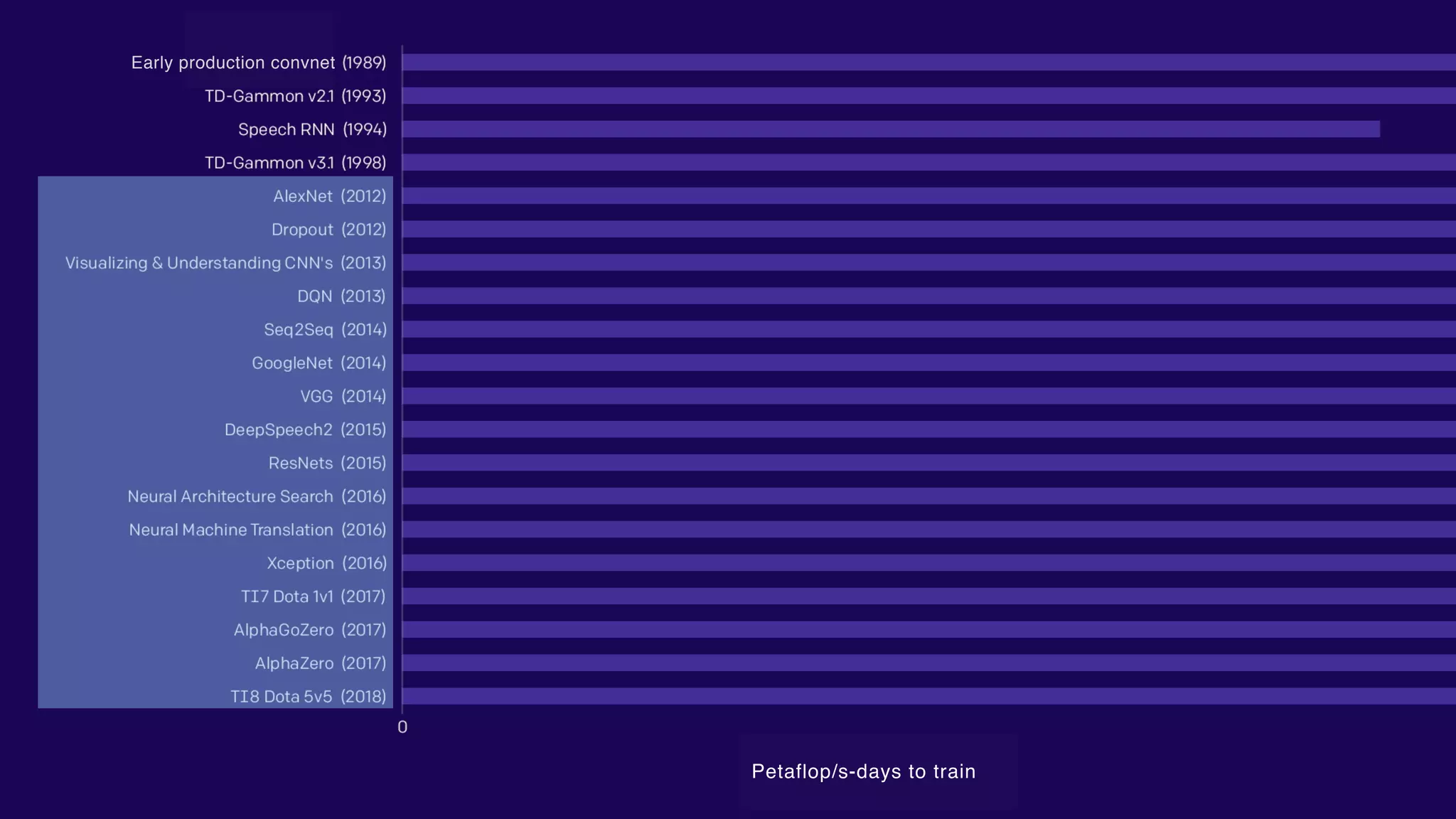
300,000x increase in neural net compute used for the largest neural
net experiments over the past 6 years
Petaflop/s-days to train
Early production convnet
Conclusion
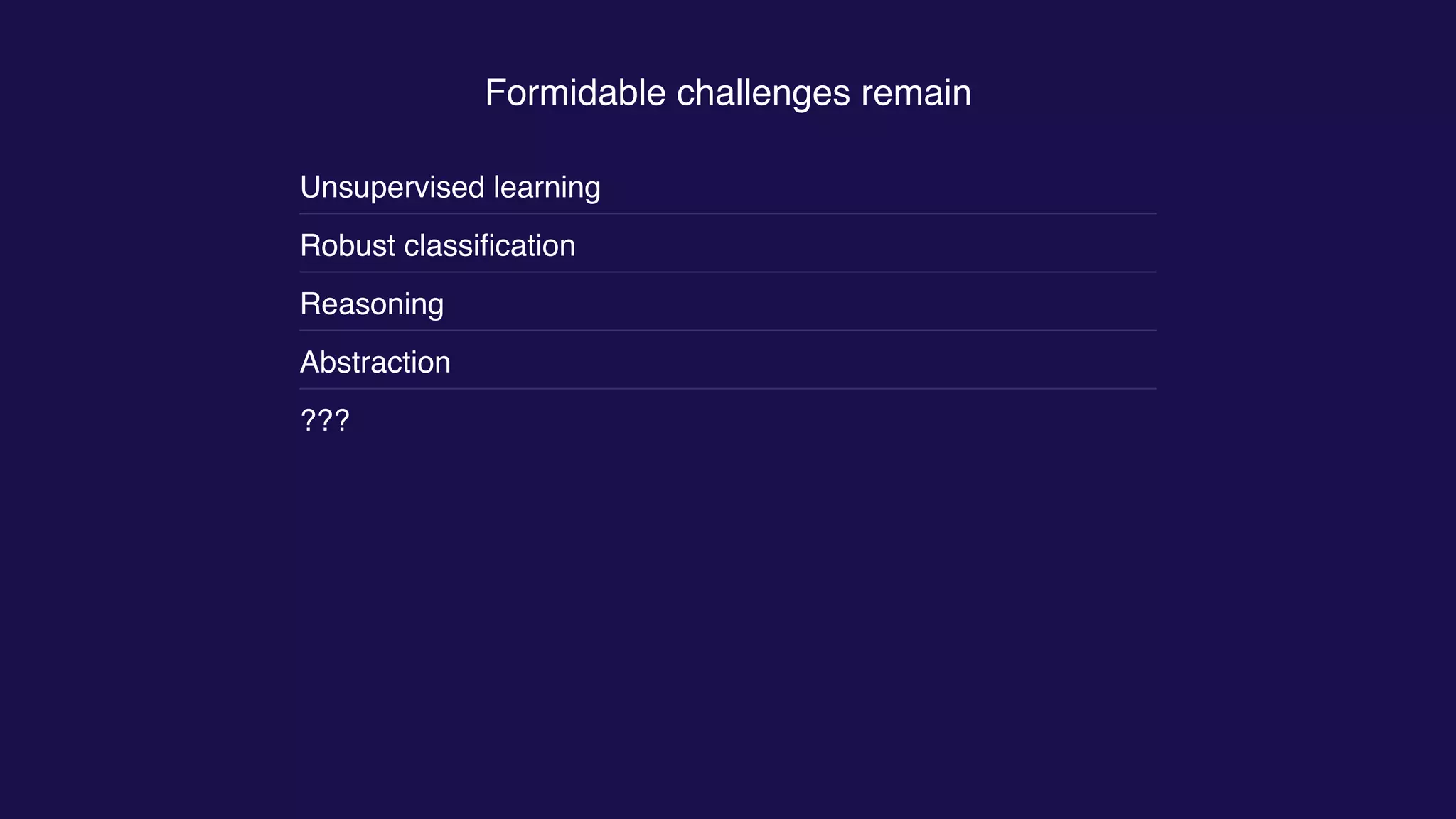
Formidable challenges remain
Unsupervised learning
Robust classification
Reasoning
Abstraction
???
We’ve been breaking through barriers for 6 years
Will this trend continue, or will it stop?
And if so, when?
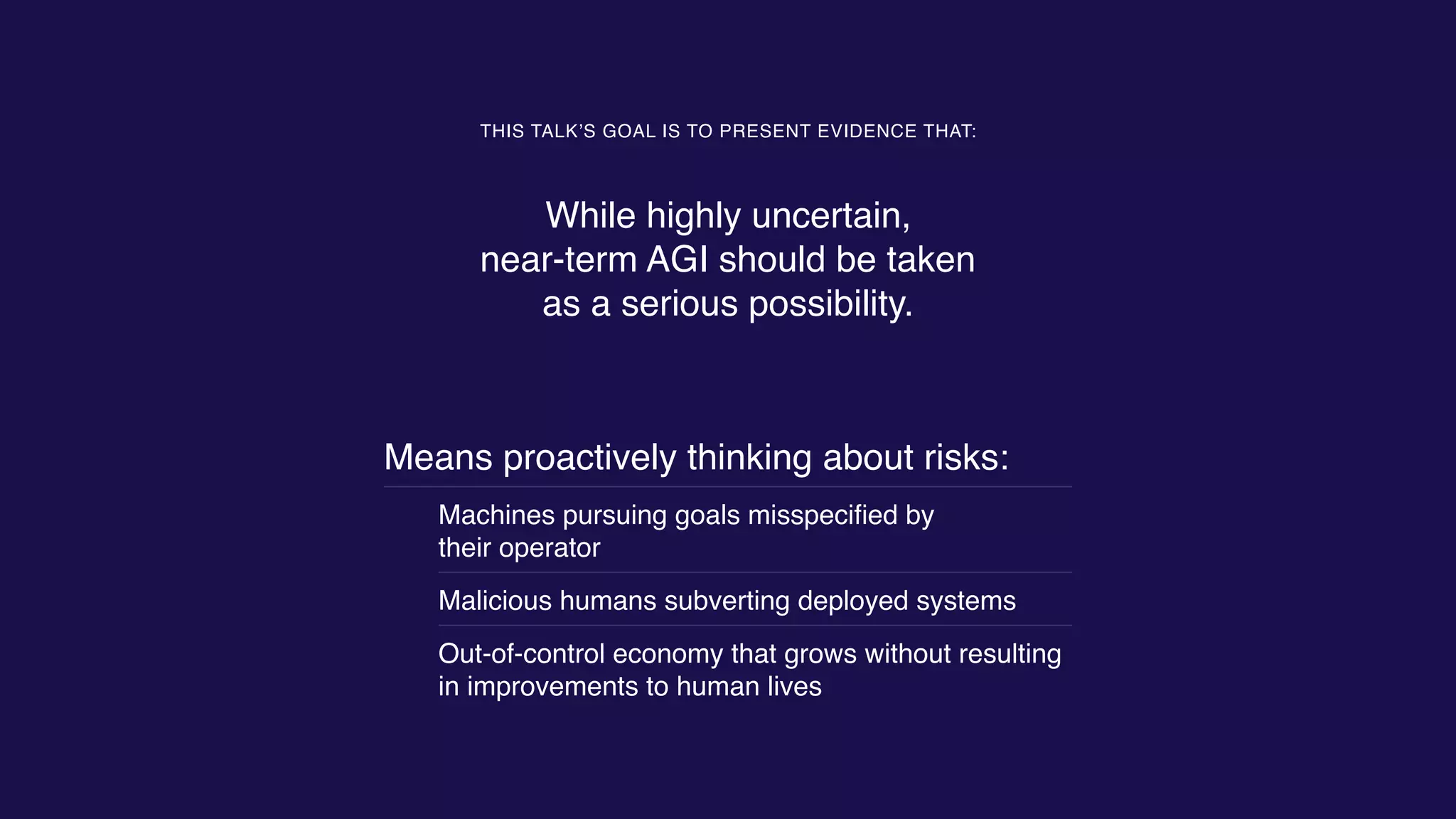
Means proactively thinking about risks:
Machines pursuing goals misspecified by 

their operator
Malicious humans subverting deployed systems
Out-of-control economy that grows without resulting
in improvements to human lives
THIS TALK’S GOAL IS TO PRESENT EVIDENCE THAT:
While highly uncertain, 

near-term AGI should be taken 

as a serious possibility.
Thank you

Ilya Sutskever at AI Frontiers : Progress towards the OpenAI mission