IELTS Speaking Part 3
I suppose… It’s possible…
I presume… I’m pretty sure…
I expect … I guess that…
It’s probable that… I’d say… (I would)
I imagine that… Bound to…
Perhaps / maybe… I’m sure/I’m convinced that …
I think it’s likely that… It is unlikely that …
Some people would say that … I doubt that …
It is improbable that … I can’t see …
There’s no way… You can also use verbs like may/could/might
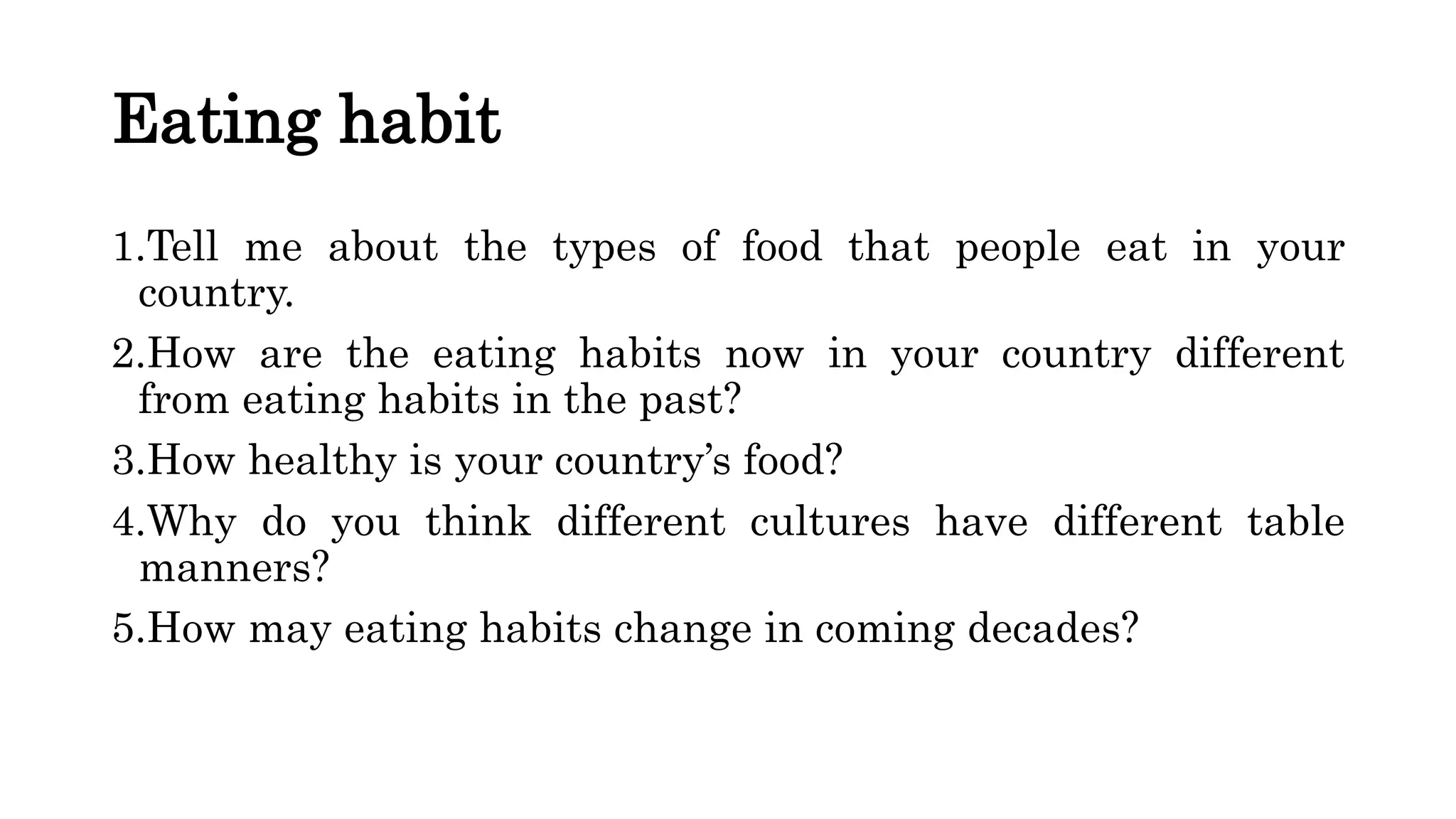
Eating habit
1.Tell me about the types of food that people eat in your
country.
2.How are the eating habits now in your country different
from eating habits in the past?
3.How healthy is your country’s food?
4.Why do you think different cultures have different table
manners?
5.How may eating habits change in coming decades?
Education
1.How are education priorities today different from those in
the past?
2.What is your opinion on the way languages are taught in
schools?
3.How can the type of school you go to affect career success?
4.What changes do you think will happen in the classroom in
the near future?
Influences on the young
1.What type of people influence the young in your country?
2.Why it is important to have role models?
3.Do you think the education system in your country
influences young people’s behaviour?
4.What type of person (parents, teachers, friends etc) are best
to influence young people’s behaviour?
5.What do you think young people will be most influenced by
it the future?
Leisure activities
1.What types of leisure activities are popular in your country?
2.Why it is important for people to have time for leisure
activities?
3.Why are some activities more popular than others?
4.Are the types of leisure activities that are popular today the
same as those that were popular when your parents were
young?
5.What types of leisure activities may become more popular in
the future?
Influence of television
1.How popular is watching television in your country?
2.Tell me about the types of programme that are generally on
television in your country.
3.Why do people like watching television?
4.Do you think state or private television is better?
5.What effects can watching television have on children?
Leisure activities
1.What types of leisure activities are popular in your country?
2.Why it is important for people to have time for leisure
activities?
3.Why are some activities more popular than others?
4.Are the types of leisure activities that are popular today the
same as those that were popular when your parents were
young?
5.What types of leisure activities may become more popular in
the future?

IELTS Speaking Part 3.pptx

  • 1.
  • 5.
    I suppose… It’spossible… I presume… I’m pretty sure… I expect … I guess that… It’s probable that… I’d say… (I would) I imagine that… Bound to… Perhaps / maybe… I’m sure/I’m convinced that … I think it’s likely that… It is unlikely that … Some people would say that … I doubt that … It is improbable that … I can’t see … There’s no way… You can also use verbs like may/could/might
  • 9.
    Eating habit 1.Tell meabout the types of food that people eat in your country. 2.How are the eating habits now in your country different from eating habits in the past? 3.How healthy is your country’s food? 4.Why do you think different cultures have different table manners? 5.How may eating habits change in coming decades?
  • 10.
    Education 1.How are educationpriorities today different from those in the past? 2.What is your opinion on the way languages are taught in schools? 3.How can the type of school you go to affect career success? 4.What changes do you think will happen in the classroom in the near future?
  • 11.
    Influences on theyoung 1.What type of people influence the young in your country? 2.Why it is important to have role models? 3.Do you think the education system in your country influences young people’s behaviour? 4.What type of person (parents, teachers, friends etc) are best to influence young people’s behaviour? 5.What do you think young people will be most influenced by it the future?
  • 12.
    Leisure activities 1.What typesof leisure activities are popular in your country? 2.Why it is important for people to have time for leisure activities? 3.Why are some activities more popular than others? 4.Are the types of leisure activities that are popular today the same as those that were popular when your parents were young? 5.What types of leisure activities may become more popular in the future?
  • 13.
    Influence of television 1.Howpopular is watching television in your country? 2.Tell me about the types of programme that are generally on television in your country. 3.Why do people like watching television? 4.Do you think state or private television is better? 5.What effects can watching television have on children?
  • 14.
    Leisure activities 1.What typesof leisure activities are popular in your country? 2.Why it is important for people to have time for leisure activities? 3.Why are some activities more popular than others? 4.Are the types of leisure activities that are popular today the same as those that were popular when your parents were young? 5.What types of leisure activities may become more popular in the future?