From authentication
to identity
management
Mehdi Medjaoui
Mehdi
Medjaoui
@medjawi
webshell.io
oauth.io
Authentication
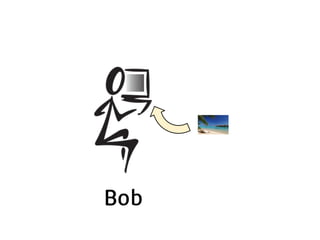
Bob
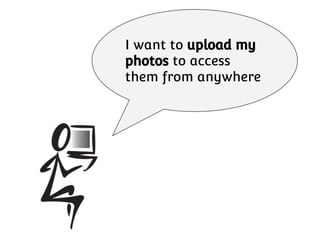
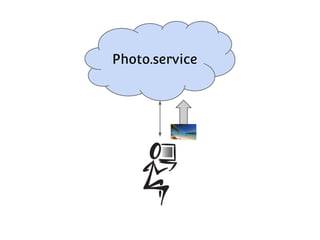
I want to upload my
photos to access
them from anywhere
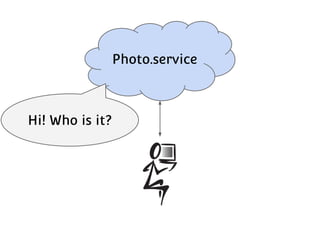
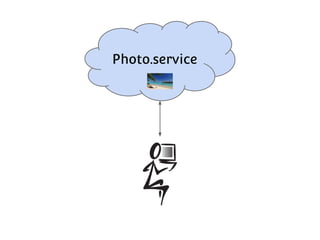
Photo.service
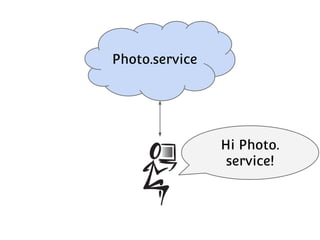
Photo.service

Hi Photo.
service!
Photo.service

Hi! Who is it?
Photo.service

I’m Bob
Photo.service

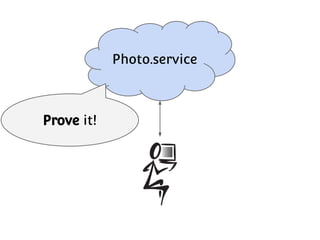
Prove it!
Photo.service

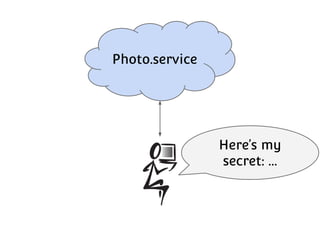
Here’s my
secret: ...
Photo.service

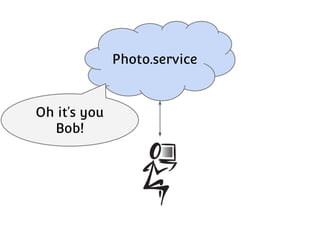
Oh it’s you
Bob!
Photo.service
Photo.service
Here’s my
secret: ...
Here’s my
password
Why passwords?
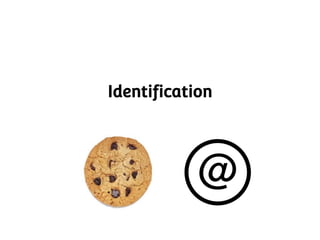
Identification
Authentication = Identification + Verification
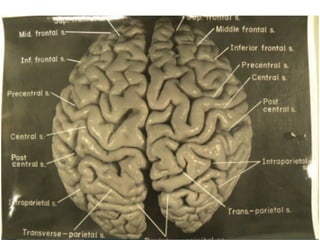
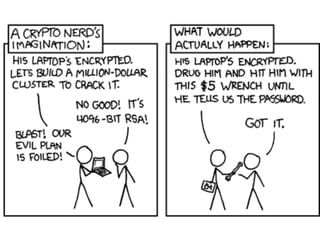
To correctly verify someone,
a secret must relate to:
- what they know
- what they have
- what they are
- what they can do
But why passwords???
In theory
Security vs Convenience
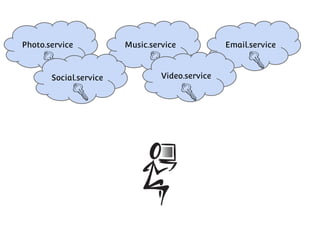
Photo.service
Photo.service

Music.service
Photo.service

Music.service
Photo.service

Social.service

Music.service

Video.service

Email.service
Photo.service

Social.service

Photo.service

Social.service

Photo.service

Social.service

Music.service

Email.service

Video.service

Music.service

Email.service

Video.service

Music.service

Video.service

Email.service
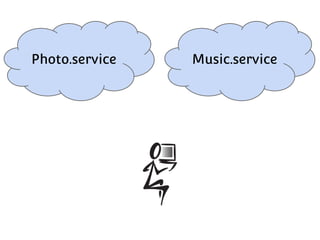
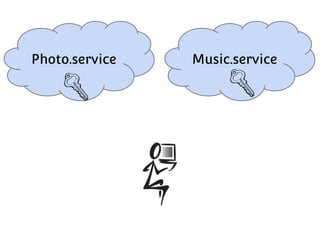
Got cloudy these days...
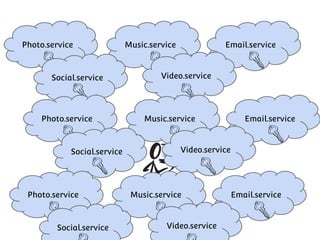
Multiplication of web services have
made passwords
- hard to remember if unique
Multiplication of web services have
made passwords
- hard to remember if unique
- annoying to type all day if strong
password hell
Multiplication of web services have
made passwords
- hard to remember if unique
- annoying to type all day if strong
- weak if not unique
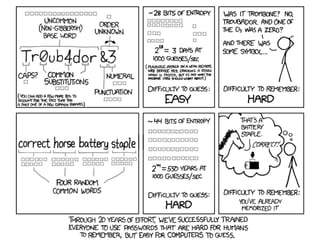
Passwords (even strong)
do not scale
with a growing number of services
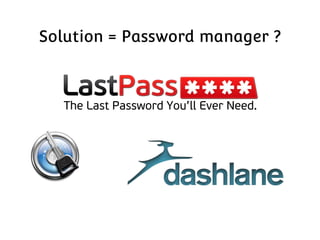
Solution = Password manager ?
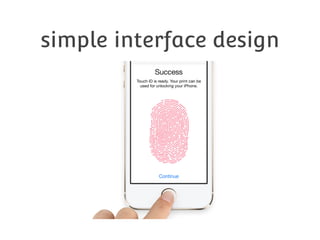
simple interface design
Single Sign-On
Single Sign-On

Single sign-on (SSO) is a property of
access control of multiple related,
but independent software systems.
The promise of SSO:
- UX with frictionless sign in and higher conversion
- Reduced IT costs
- Retrieving data with user’s consent but without annoying
forms
- Reduced password leak risks
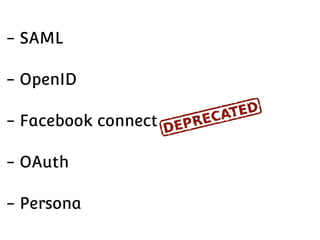
- SAML
- OpenID
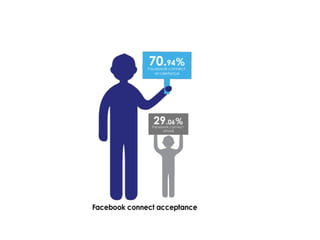
- Facebook connect
- OAuth
- Persona
IDP
Identity
provider
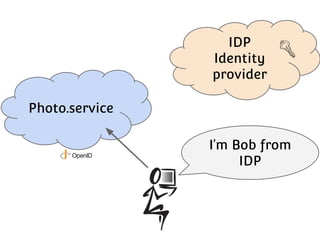
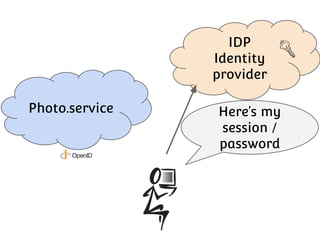
Photo.service
I’m Bob from
IDP
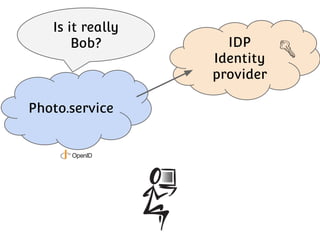
Is it really
Bob?

Photo.service

IDP
Identity
provider
IDP
Identity
provider
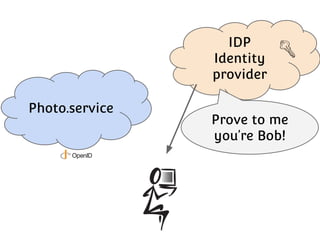
Photo.service

Prove to me
you’re Bob!
IDP
Identity
provider
Photo.service

Here’s my
session /
password
IDP
Identity
provider
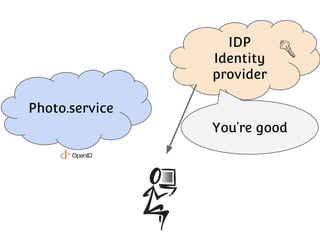
Photo.service
You’re good
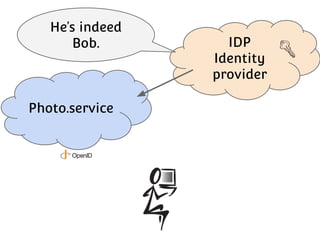
He’s indeed
Bob.

Photo.service

IDP
Identity
provider
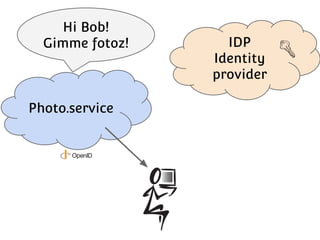
Hi Bob!
Gimme fotoz!

Photo.service

IDP
Identity
provider
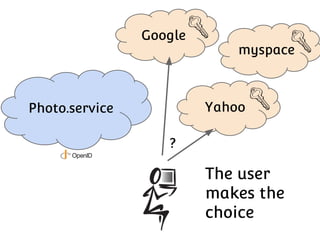
Google

myspace

Yahoo

Photo.service
?

The user
makes the
choice
-

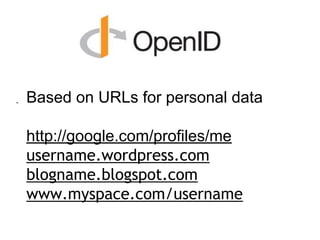
Based on URLs for personal data
http://google.com/profiles/me
username.wordpress.com
blogname.blogspot.com
www.myspace.com/username
Authorization
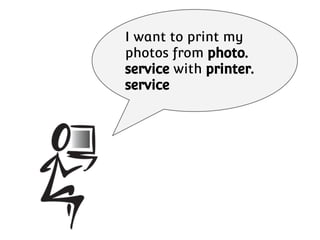
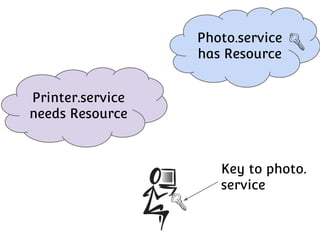
I want to print my
photos from photo.
service with printer.
service
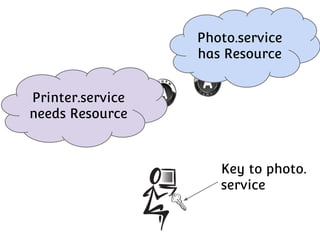
The wrong way:
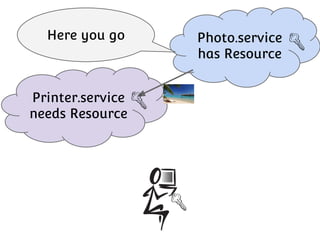
Photo.service
has Resource
Printer.service
needs Resource

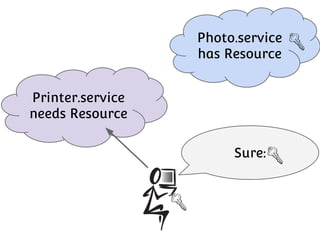
Key to photo.
service
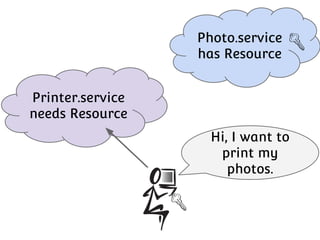
Photo.service
has Resource
Printer.service
needs Resource
Hi, I want to
print my
photos.
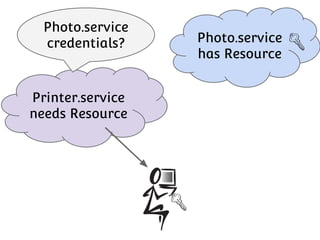
Photo.service
credentials?

Printer.service
needs Resource

Photo.service
has Resource
Photo.service
has Resource
Printer.service
needs Resource
Sure:
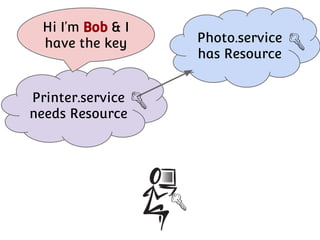
Hi I’m Bob & I
have the key

Printer.service
needs Resource

Photo.service
has Resource
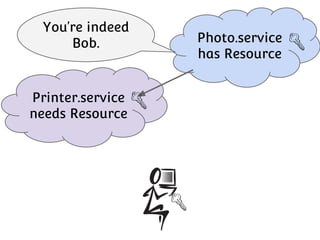
You’re indeed
Bob.

Printer.service
needs Resource

Photo.service
has Resource
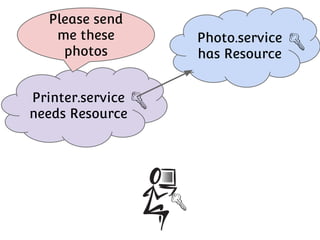
Please send
me these
photos
Printer.service
needs Resource

Photo.service
has Resource
Here you go

Printer.service
needs Resource

Photo.service
has Resource
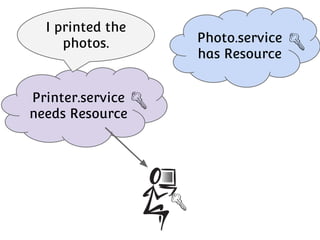
I printed the
photos.

Printer.service
needs Resource

Photo.service
has Resource
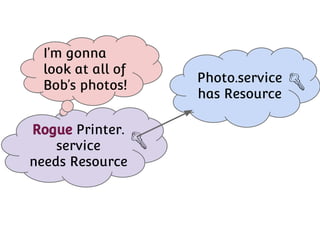
I’m gonna
look at all of
Bob’s photos!
Rogue Printer.
service
needs Resource

Photo.service
has Resource
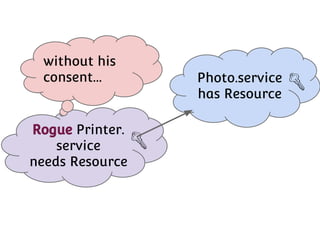
without his
consent...

Rogue Printer.
service
needs Resource

Photo.service
has Resource
Never give your
password to
other services
Authorization is
the solution
2008
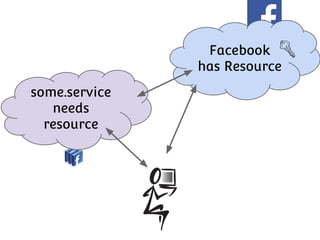
Facebook
has Resource
some.service
needs
resource
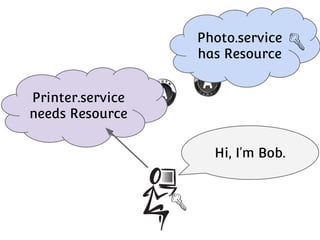
Photo.service
has Resource
Printer.service
needs Resource

Key to photo.
service
Photo.service
has Resource
Printer.service
needs Resource
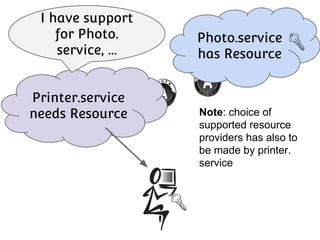
Hi, I’m Bob.
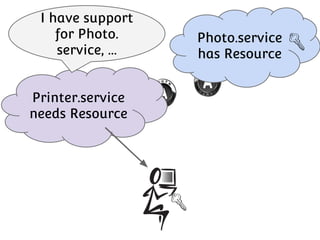
I have support
for Photo.
service, ...
Printer.service
needs Resource

Photo.service
has Resource
I have support
for Photo.
service, ...
Printer.service
needs Resource

Photo.service
has Resource

Note: choice of
supported resource
providers has also to
be made by printer.
service
Photo.service
has Resource
Printer.service
needs Resource
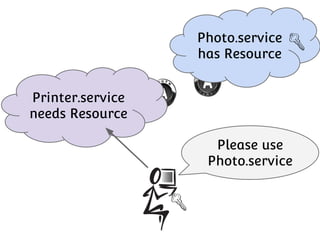
Please use
Photo.service
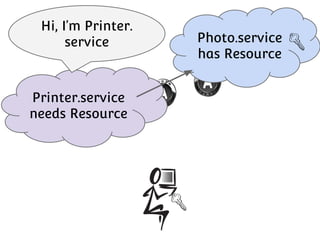
Hi, I’m Printer.
service

Printer.service
needs Resource

Photo.service
has Resource
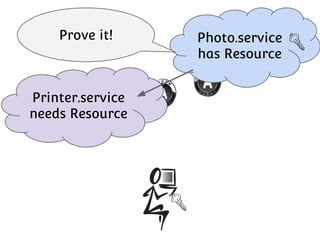
Prove it!

Printer.service
needs Resource

Photo.service
has Resource
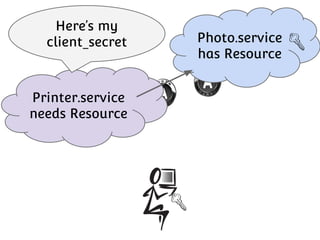
Here’s my
client_secret

Printer.service
needs Resource

Photo.service
has Resource
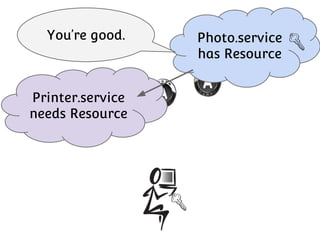
You’re good.

Printer.service
needs Resource

Photo.service
has Resource
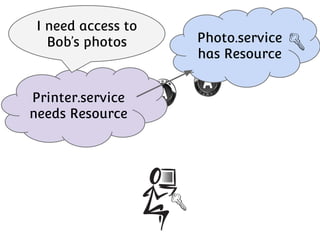
I need access to
Bob’s photos

Printer.service
needs Resource

Photo.service
has Resource
Photo.service
has Resource
Printer.service
needs Resource

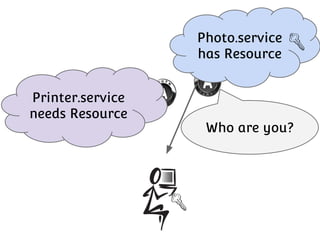
Who are you?
Photo.service
has Resource
Printer.service
needs Resource
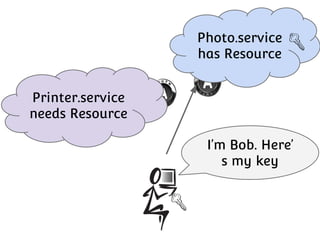
I’m Bob. Here’
s my key
Photo.service
has Resource
Printer.service
needs Resource

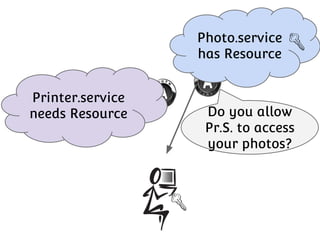
Do you allow
Pr.S. to access
your photos?
Photo.service
has Resource
Printer.service
needs Resource
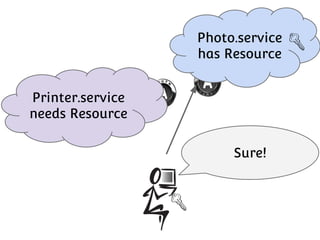
Sure!
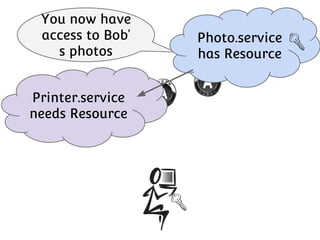
You now have
access to Bob’
s photos
Printer.service
needs Resource

Photo.service
has Resource
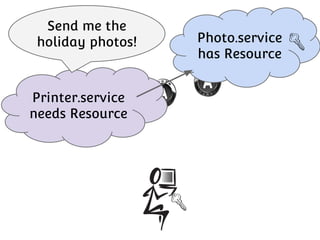
Send me the
holiday photos!

Printer.service
needs Resource

Photo.service
has Resource
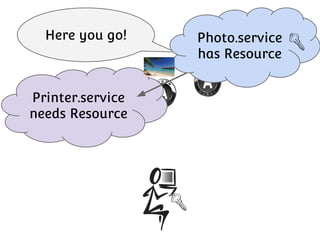
Here you go!

Printer.service
needs Resource

Photo.service
has Resource
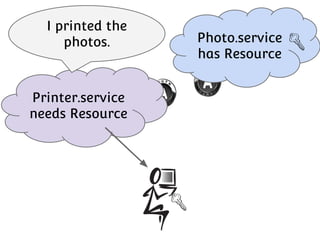
I printed the
photos.

Printer.service
needs Resource

Photo.service
has Resource
Photo.service
has Resource
Printer.service
needs Resource
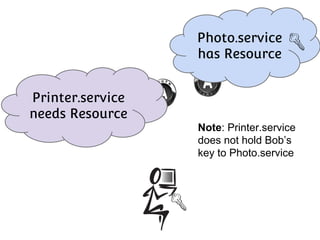
Note: Printer.service
does not hold Bob’s
key to Photo.service
The PHOTO app chooses and
control what OAuth provider to
integrate, so the user cannot
choose the identity he wants
Based on API authorizations and
endpoints between applications
-
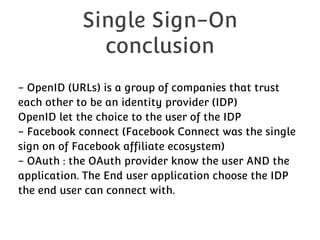
Single Sign-On
conclusion
- OpenID (URLs) is a group of companies that trust
each other to be an identity provider (IDP)
OpenID let the choice to the user of the IDP
- Facebook connect (Facebook Connect was the single
sign on of Facebook affiliate ecosystem)
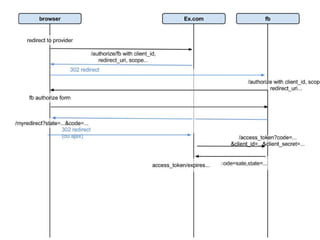
- OAuth : the OAuth provider know the user AND the
application. The End user application choose the IDP
the end user can connect with.
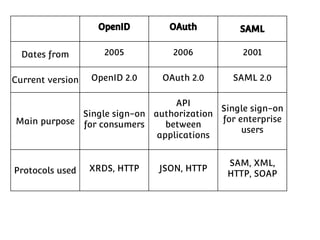
OpenID

OAuth

SAML

Dates from

2005

2006

2001

Current version

OpenID 2.0

OAuth 2.0

SAML 2.0

API
Single sign-on
Single sign-on authorization
for enterprise
Main purpose for consumers
between
users
applications

Protocols used

XRDS, HTTP

JSON, HTTP

SAM, XML,
HTTP, SOAP
OAuth and the
Highway to Hell
OAuth 2.0 and the
Road to Hell
(Eran Hammer)
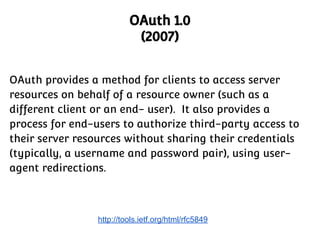
OAuth 1.0
(2007)
OAuth provides a method for clients to access server
resources on behalf of a resource owner (such as a
different client or an end- user). It also provides a
process for end-users to authorize third-party access to
their server resources without sharing their credentials
(typically, a username and password pair), using useragent redirections.

http://tools.ietf.org/html/rfc5849
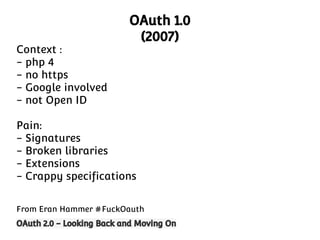
Context :
- php 4
- no https
- Google involved
- not Open ID

OAuth 1.0
(2007)

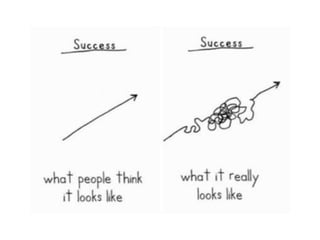
Pain:
- Signatures
- Broken libraries
- Extensions
- Crappy specifications
From Eran Hammer #FuckOauth
OAuth 2.0 - Looking Back and Moving On
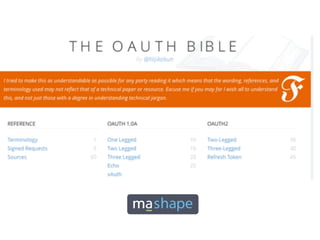
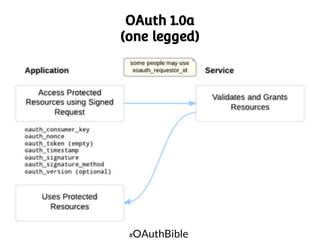
OAuth 1.0a
(one legged)

OAuthBible

#
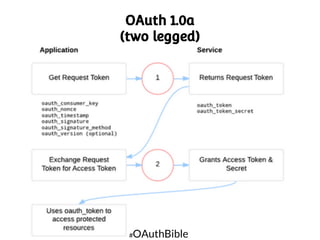
OAuth 1.0a
(two legged)

OAuthBible

#
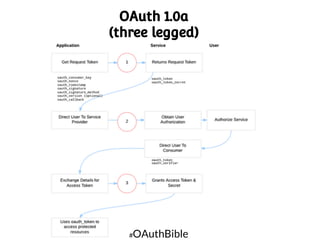
OAuth 1.0a
(three legged)

OAuthBible

#
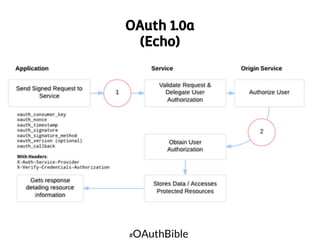
OAuth 1.0a
(Echo)

OAuthBible

#
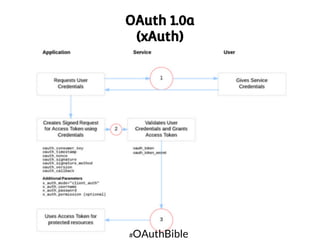
OAuth 1.0a
(xAuth)

OAuthBible

#
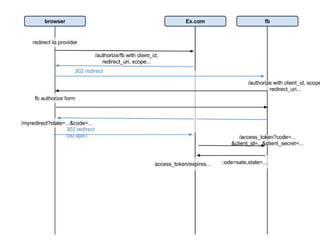
OAuth 2.0
Authentication and Signatures
- Stop cryptographic requirements of
signing requests with the client ID and
secret and replaces signatures with
requiring HTTPS for all
communications between browsers,
clients and the API.
User Experience and Alternative Authorization
Flows

OAuth 2 supports a better user experience for
native applications, and supports extending
the protocol to provide compatibility with
future device requirements.
Performance at Scale
- Many steps require state management and temporary
credentials, which require shared storage and are
difficult to synchronize across data centers.
- requires that the API server has access to the
application's ID and secret, which often breaks the
architecture of most large providers where the
authorization server and API servers are completely
separate.
- OAuth 2.0 (Two-legged)
Client credential
Resource user password
- OAuth 2.0 (Three-legged)
- OAuth 2.0 (Refresh token)
Scopes are often not implemented the good way,
following the specs.
Sometimes spaces are not set, names are different
from providers….
#OAuthBible
OAuth is fragmented.
OAuth is broken.
OAuth 2.0 is a
compromise.
-
Eran Hammer has quit the
OAuth 2.0 Board.
He is building Oz.
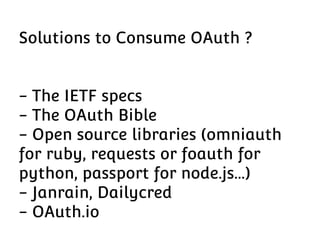
Solutions to Consume OAuth ?
- The IETF specs
- The OAuth Bible
- Open source libraries (omniauth
for ruby, requests or foauth for
python, passport for node.js…)
- Janrain, Dailycred
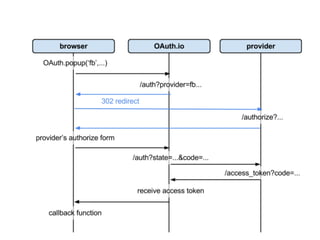
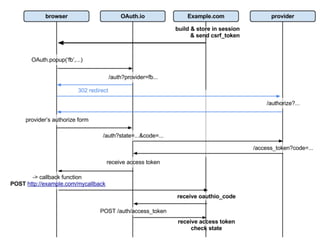
- OAuth.io
OAuth.io
Demo
OAuth.io
OAuth.io
Demo
oauthd
Open source version of
OAuth.io
The Glue of OAuth?
https://github.com/oauth-io/oauthd/blob/master/providers
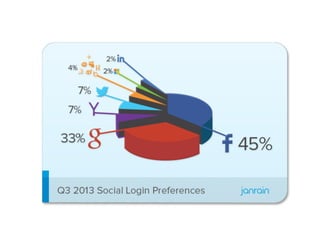
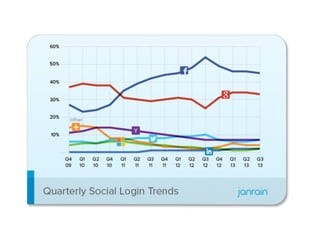
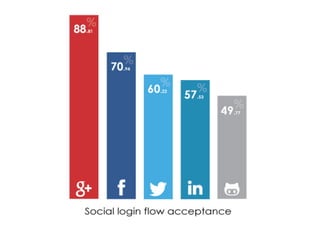
OAuth Report
#SOCIAL LOGIN
The future?
Mozilla Persona (Browser ID)
Docker.io
Thank you!
Mehdi Medjaoui
@medjawi
webshell.io
oauth.io

OAuth with OAuth.io : solving the OAuth Fragmentation for Identity Management on the Web