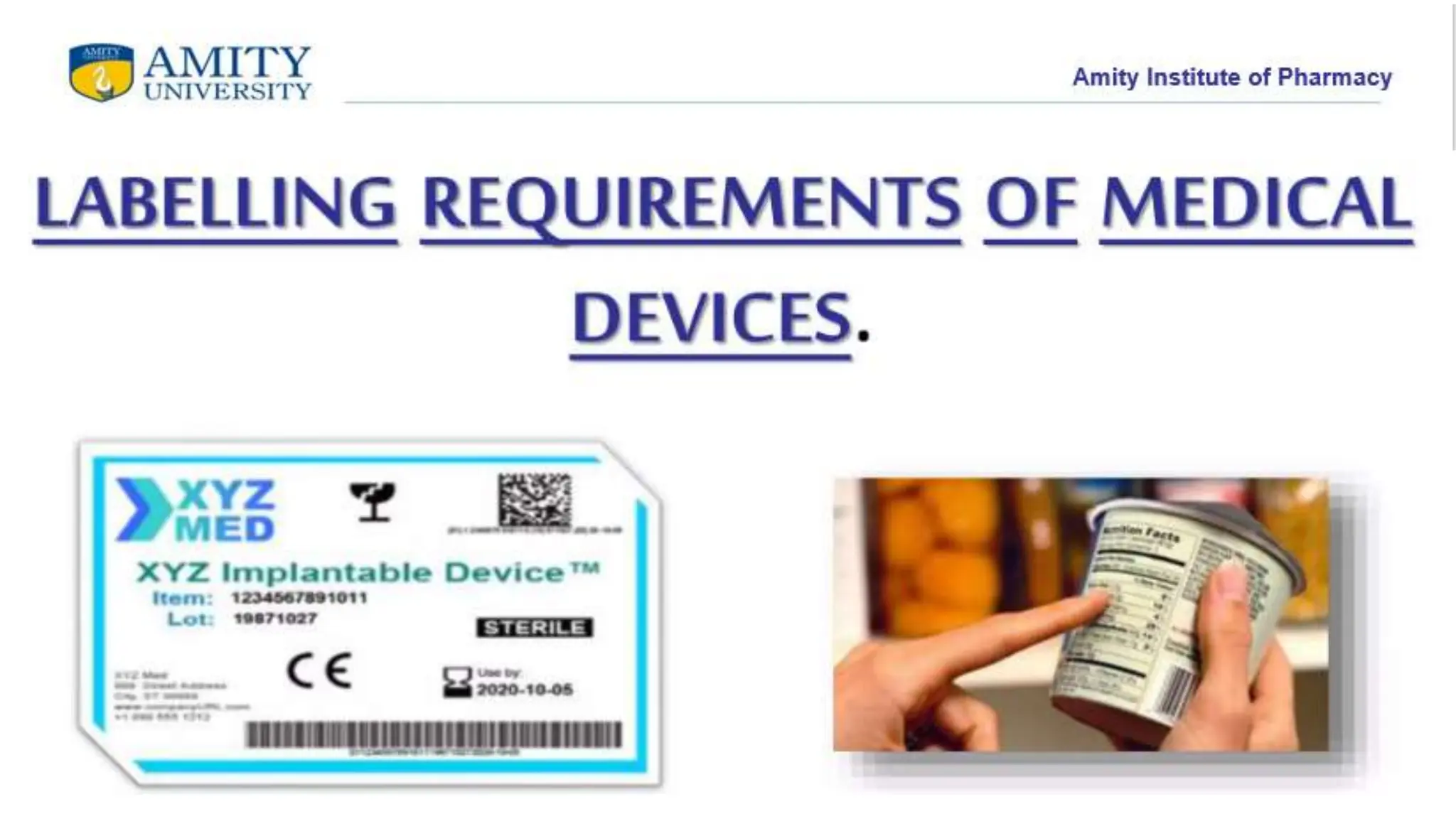
Topic - Investigational Device Exemption (IDE)
and In Vitro Diagnostics (IVD), quality system
requirements (21 CFR part 820), labeling
requirements (21CFR part 801)
Submitted by – Chahat Tyagi
Investiga
tional
Device
Exemption
(IDE)
• An IDE is a regulatory submission
to the FDA that permits the clinical
investigation of devices.
What is IDE ( Investigational Device Exemption )-
• An Investigational Device Exemption (IDE) is an authorization
from the FDA that allows an investigational device to be used in
a clinical study to collect safety and effectiveness data
IDEs are governed by 21 CFR Part 812, which outlines the
procedures for conducting clinical studies on unapproved
devices.
IDE should be sent to
–
Food and Drug Administration
Center for Devices and Radiological
Health(CDRH)
Document Mail center- WO66-G609
10903 New Hampshire Avenue
Sliver Spring, Maryland 20993-002
In Vitro
Diagnostics (IVD),
It is an instrument, apparatus,
implement, machine, implant, in vitro
reagent, or other similar or related
article intended for use in the
diagnosis of disease or in cure,
mitigation, treatment, or prevention of
disease.
Each IVD is assigned to one of three risk-based regulatory classes, Class
I, Class II, or Class III, based on the level of regulatory control necessary
to provide reasonable assurance of its safety and effectiveness.
class
Risk
level
Regulatory
control
1 Low General controls
2 Moderate general controls and
special controls
3 High general controls and
Risk-based classification of IVDs
Acc. To FDA
Quality
System
Requireme
nts
Quality management system
class
Risk level
class
Risk level
21CFR Part 820- Quality Management System
What is a Quality Management System?
• A quality management system (QMS) is a collection of
business processes focused on consistently meeting
customer requirements and enhancing their satisfaction.
• It is aligned with an organization’s purpose and strategic
direction.
Elements of the
management subsystem
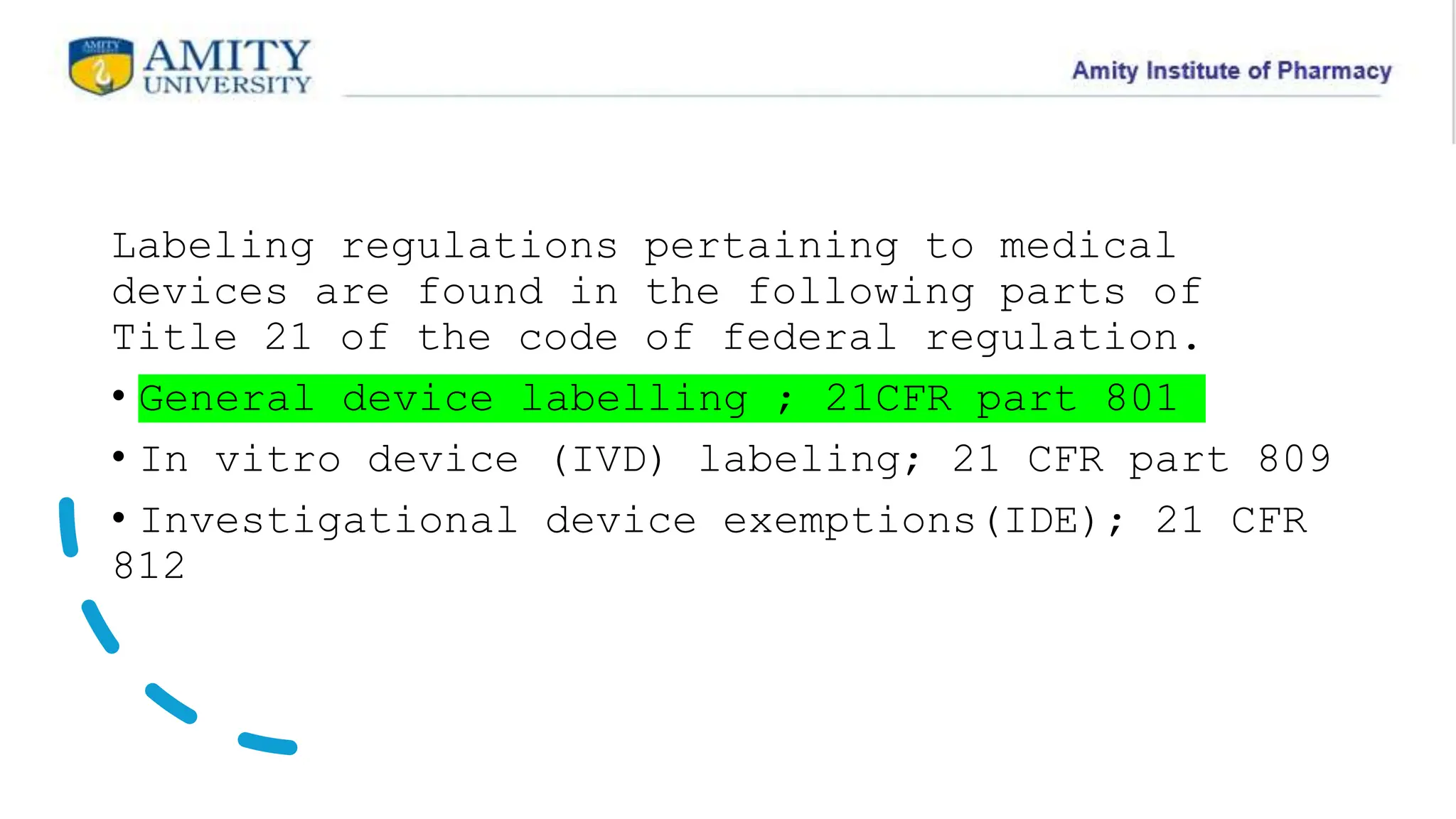
Labeling regulations pertaining to medical
devices are found in the following parts of
Title 21 of the code of federal regulation.
• General device labelling ; 21CFR part 801
• In vitro device (IVD) labeling; 21 CFR part 809
• Investigational device exemptions(IDE); 21 CFR
812
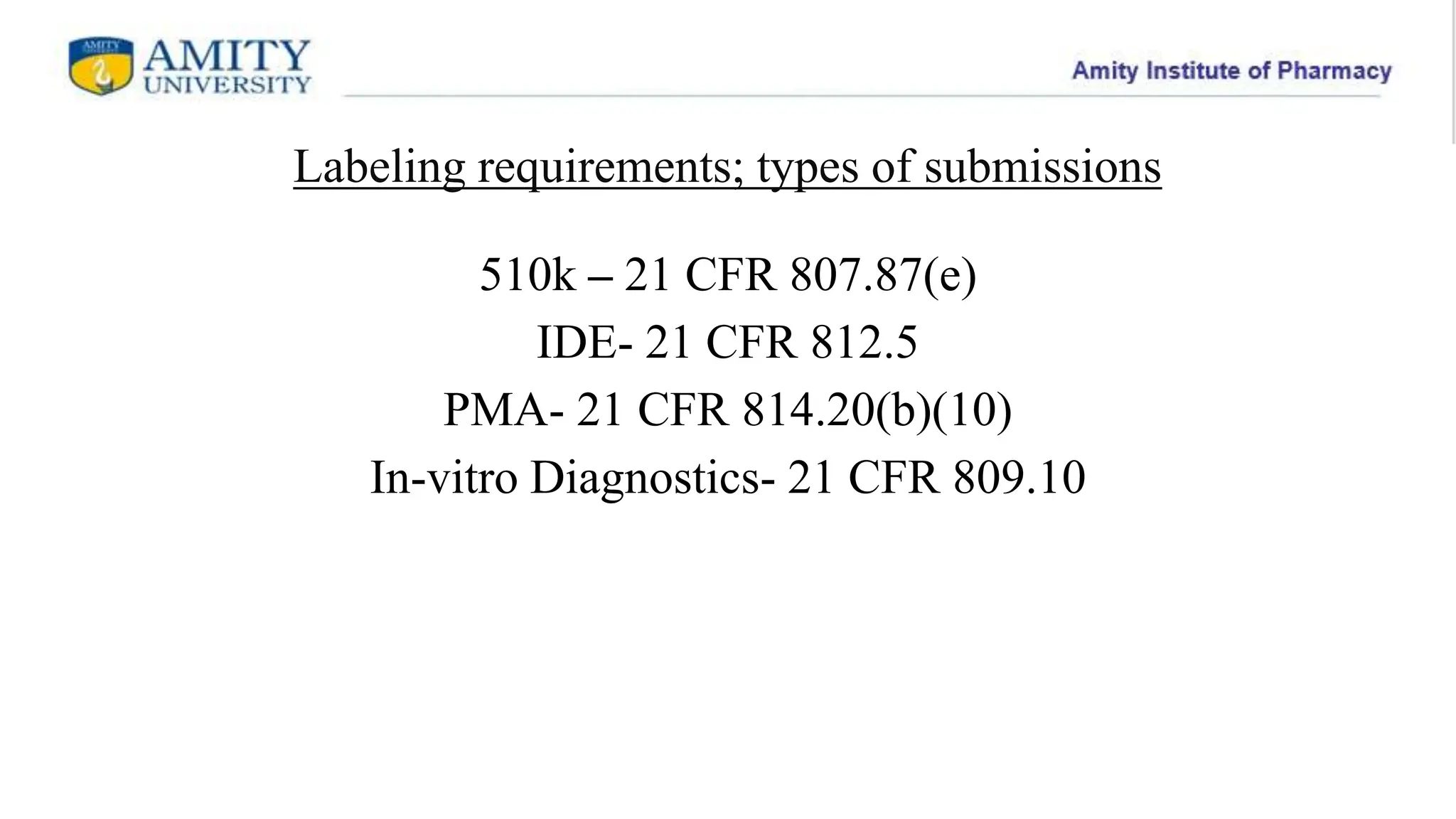
Labeling requirements; types of submissions
510k – 21 CFR 807.87(e)
IDE- 21 CFR 812.5
PMA- 21 CFR 814.20(b)(10)
In-vitro Diagnostics- 21 CFR 809.10
Acc. To USFDA minimal labelling requirements –
Must be included on the package label
Name and place of manufacturer, packer or distributor.
Adequate directions for use a device safely for intended purposes.
Required information must be displayed prominently on the device
label.
Conclusion
• https://www.fda.gov/medical-
devices/overview-device-
regulation/device-labeling

(IDE)and(IVD),QMS,21 CFR part820 , 801)

  • 1.
    Topic - InvestigationalDevice Exemption (IDE) and In Vitro Diagnostics (IVD), quality system requirements (21 CFR part 820), labeling requirements (21CFR part 801) Submitted by – Chahat Tyagi
  • 2.
    Investiga tional Device Exemption (IDE) • An IDEis a regulatory submission to the FDA that permits the clinical investigation of devices.
  • 3.
    What is IDE( Investigational Device Exemption )- • An Investigational Device Exemption (IDE) is an authorization from the FDA that allows an investigational device to be used in a clinical study to collect safety and effectiveness data IDEs are governed by 21 CFR Part 812, which outlines the procedures for conducting clinical studies on unapproved devices.
  • 5.
    IDE should besent to – Food and Drug Administration Center for Devices and Radiological Health(CDRH) Document Mail center- WO66-G609 10903 New Hampshire Avenue Sliver Spring, Maryland 20993-002
  • 6.
    In Vitro Diagnostics (IVD), Itis an instrument, apparatus, implement, machine, implant, in vitro reagent, or other similar or related article intended for use in the diagnosis of disease or in cure, mitigation, treatment, or prevention of disease.
  • 7.
    Each IVD isassigned to one of three risk-based regulatory classes, Class I, Class II, or Class III, based on the level of regulatory control necessary to provide reasonable assurance of its safety and effectiveness. class Risk level Regulatory control 1 Low General controls 2 Moderate general controls and special controls 3 High general controls and Risk-based classification of IVDs Acc. To FDA
  • 8.
  • 9.
    Quality management system class Risklevel class Risk level 21CFR Part 820- Quality Management System What is a Quality Management System? • A quality management system (QMS) is a collection of business processes focused on consistently meeting customer requirements and enhancing their satisfaction. • It is aligned with an organization’s purpose and strategic direction.
  • 10.
  • 12.
    Labeling regulations pertainingto medical devices are found in the following parts of Title 21 of the code of federal regulation. • General device labelling ; 21CFR part 801 • In vitro device (IVD) labeling; 21 CFR part 809 • Investigational device exemptions(IDE); 21 CFR 812
  • 13.
    Labeling requirements; typesof submissions 510k – 21 CFR 807.87(e) IDE- 21 CFR 812.5 PMA- 21 CFR 814.20(b)(10) In-vitro Diagnostics- 21 CFR 809.10
  • 14.
    Acc. To USFDAminimal labelling requirements – Must be included on the package label Name and place of manufacturer, packer or distributor. Adequate directions for use a device safely for intended purposes. Required information must be displayed prominently on the device label.
  • 15.