Role of Information &
Communication Technology in PGR
             Future
           Kheder Durah, Ph.D.
 International Plant Genetic Resources Institute, CWANA Regional Office
Content
     1. International Treaties
     2. Documenting PGR Knowledge
     3. Agro Biodiversity Knowledge
       Center


IPGRI-Aleppo University-Supreme Council of Science WORKSHOP
               6-8 July 2003, Aleppo University
International Treaties
1. Global Plan of Action – FAO 1996, Activity 17
   “Constructing Comprehensive Information Systems for
   PGR for Food and Agriculture”, Articles: 12, 13, 17, 258,
   260, 261, 262, 264, 265, 266, 267, 268, 269, 270, 271,
   273, 274, 275, 276, 278.
2. Convention of Biological diversity, Articles 7, 8, 17.

   Can be summarized as ‘Increased access to and better
   management and utilization of PGR assembly, exchange
   and provision of useful information via data exchange
   networks and through the development of PGR information
   systems at the National and facility levels’.
The way forward
                1. Great scope to enhance nutritional security and
                   income generation through the use of PGR.
                2. Ample opportunities exist BUT multi-stakeholder
                   partnership along the holistic filiere is essential to
                   move forward the Agenda.
                3. Training efforts are needed to enhance capacities at all
                   levels (from Community members to University
                   students)
                4. Creation of a “Market Intelligence” for PGR in support
                   of Community-driven initiatives is most strategic.
                5. Raising awareness of policy makers on role of PGR is
                   essential to lobby for needed support in promoting
                   these species.
                6. Education of younger generations in appreciating and
                   conserving this important component of
                   Agrobiodiversity is also imperative.

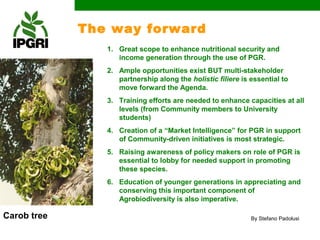
Carob tree                                                   By Stefano Padolusi
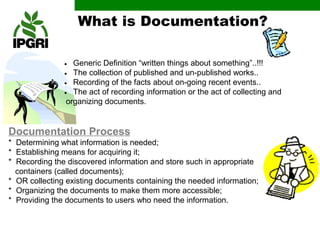
What is Documentation?

               • Generic Definition “written things about something”..!!!
               • The collection of published and un-published works..
               • Recording of the facts about on-going recent events..
               • The act of recording information or the act of collecting and
                organizing documents.


Documentation Process
* Determining what information is needed;
* Establishing means for acquiring it;
* Recording the discovered information and store such in appropriate
  containers (called documents);
* OR collecting existing documents containing the needed information;
* Organizing the documents to make them more accessible;
* Providing the documents to users who need the information.
Why Documentation?


     To address future needs.
     People who need certain
      information will need documents
      that they can refer back to.
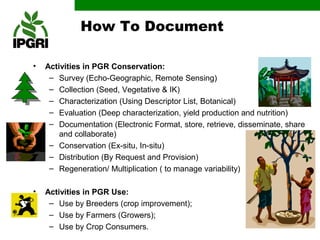
How To Document

•   Activities in PGR Conservation:
     – Survey (Echo-Geographic, Remote Sensing)
     – Collection (Seed, Vegetative & IK)
     – Characterization (Using Descriptor List, Botanical)
     – Evaluation (Deep characterization, yield production and nutrition)
     – Documentation (Electronic Format, store, retrieve, disseminate, share
        and collaborate)
     – Conservation (Ex-situ, In-situ)
     – Distribution (By Request and Provision)
     – Regeneration/ Multiplication ( to manage variability)

•   Activities in PGR Use:
     – Use by Breeders (crop improvement);
     – Use by Farmers (Growers);
     – Use by Crop Consumers.
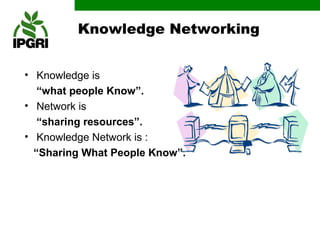
Knowledge Networking


• Knowledge is
   “what people Know”.
• Network is
   “sharing resources”.
• Knowledge Network is :
  “Sharing What People Know”.
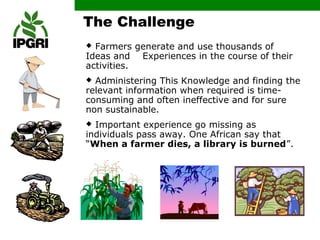
The Challenge
 Farmers generate and use thousands of
Ideas and Experiences in the course of their
activities.
 Administering This Knowledge and finding the
relevant information when required is time-
consuming and often ineffective and for sure
non sustainable.
 Important experience go missing as
individuals pass away. One African say that
“When a farmer dies, a library is burned”.
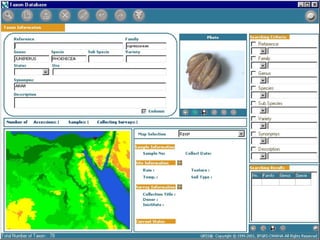
Having a sustainable knowledge management tool is
the key solution to address the challenge of capturing
Indigenous knowledge, analyzing it and share it in a
collaborative manner.

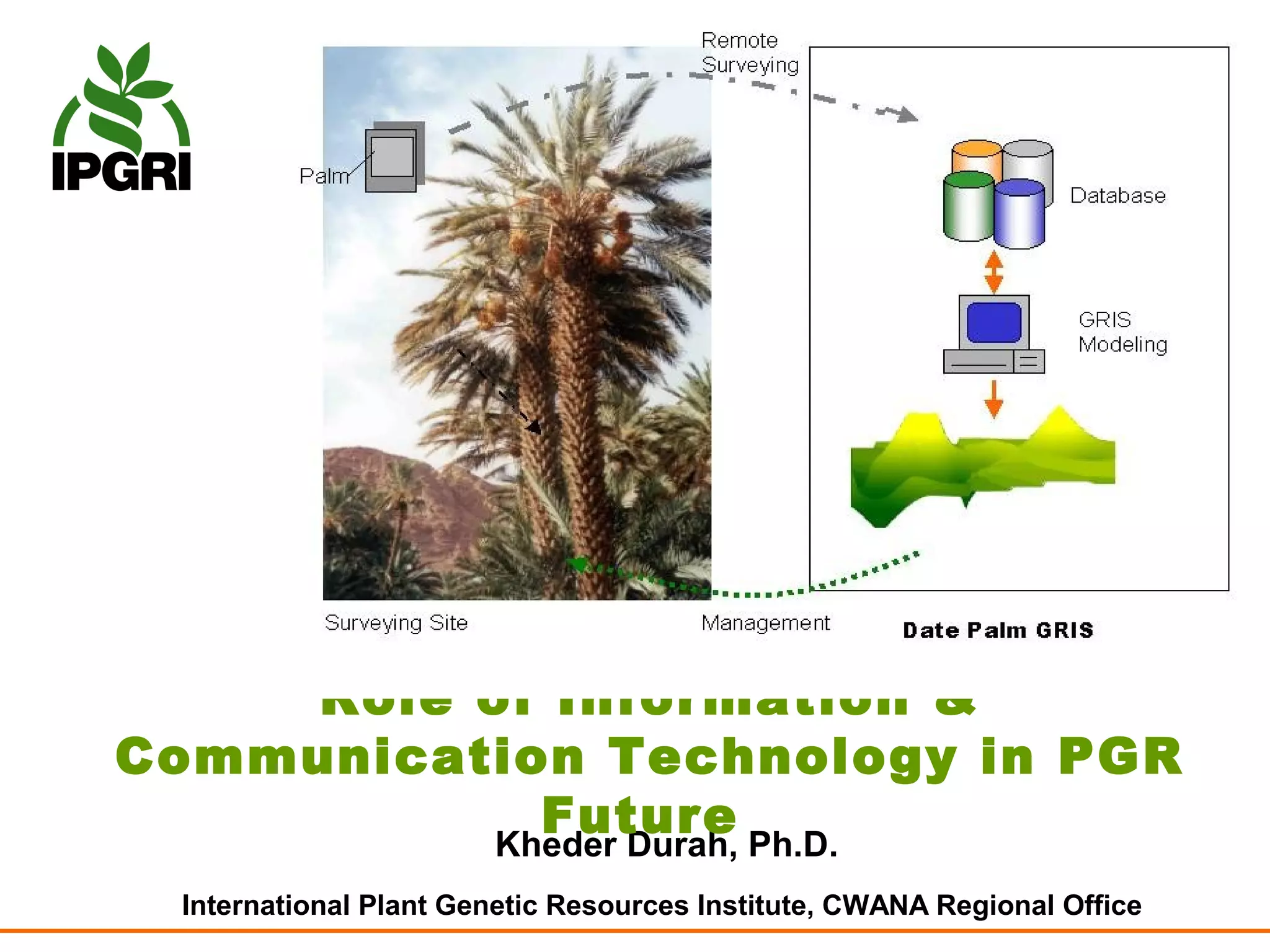
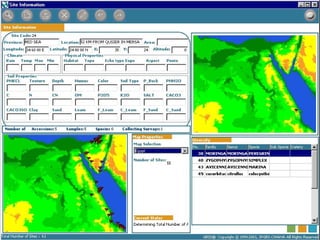
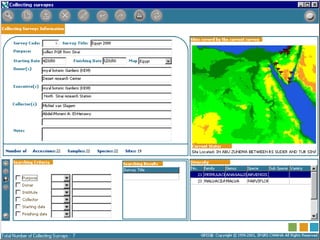
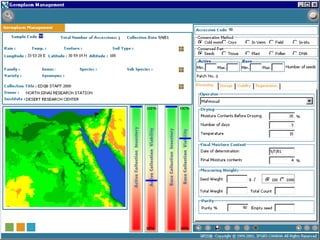
IPGRI CWANA Regional Office Developed GRIS in the
year 2002, Which is an effective modeling tool to
Capture Indigenous Knowledge , analyze and share
among National Programs.
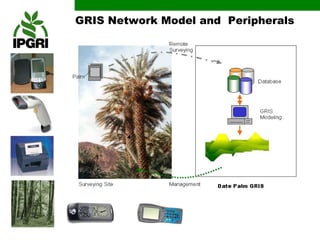
GRIS Network Model and Peripherals
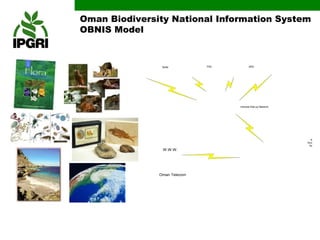
Oman Biodiversity National Information System
OBNIS Model


                NHM           FRC          ARC                    SQU


                                    Intranet Dial-up Network


                                                                  Bio
                                                               Diversity
                                                                Dept.
                W.W.W.


               Oman Telecom
The Future Ahead

Establish
AgroBiodiversity
Knowledge Center in
Syria
• Universities
• Research Institutes
• Private Sector
• International Organizations.
• Acknowledgment
  – Huridocs by Manuel Guzman 2001
  – Stefano Padulosi , IPGRI-CWANA 2003
  – Thomas Metz, IPGRI HQ 2003


• Useful Web sites
  –   http://www.huridocs.org
  –   http://www.ipgri.cgiar.org
  –   http://www.ipgri.cgiar.org/regions/cwana/
  –   http://cwana.ipgri.cgiar.org

Ict role in pgr future, syria 2003

  • 1.
    Role of Information& Communication Technology in PGR Future Kheder Durah, Ph.D. International Plant Genetic Resources Institute, CWANA Regional Office
  • 2.
    Content 1. International Treaties 2. Documenting PGR Knowledge 3. Agro Biodiversity Knowledge Center IPGRI-Aleppo University-Supreme Council of Science WORKSHOP 6-8 July 2003, Aleppo University
  • 3.
    International Treaties 1. GlobalPlan of Action – FAO 1996, Activity 17 “Constructing Comprehensive Information Systems for PGR for Food and Agriculture”, Articles: 12, 13, 17, 258, 260, 261, 262, 264, 265, 266, 267, 268, 269, 270, 271, 273, 274, 275, 276, 278. 2. Convention of Biological diversity, Articles 7, 8, 17. Can be summarized as ‘Increased access to and better management and utilization of PGR assembly, exchange and provision of useful information via data exchange networks and through the development of PGR information systems at the National and facility levels’.
  • 4.
    The way forward 1. Great scope to enhance nutritional security and income generation through the use of PGR. 2. Ample opportunities exist BUT multi-stakeholder partnership along the holistic filiere is essential to move forward the Agenda. 3. Training efforts are needed to enhance capacities at all levels (from Community members to University students) 4. Creation of a “Market Intelligence” for PGR in support of Community-driven initiatives is most strategic. 5. Raising awareness of policy makers on role of PGR is essential to lobby for needed support in promoting these species. 6. Education of younger generations in appreciating and conserving this important component of Agrobiodiversity is also imperative. Carob tree By Stefano Padolusi
  • 5.
    What is Documentation? • Generic Definition “written things about something”..!!! • The collection of published and un-published works.. • Recording of the facts about on-going recent events.. • The act of recording information or the act of collecting and organizing documents. Documentation Process * Determining what information is needed; * Establishing means for acquiring it; * Recording the discovered information and store such in appropriate containers (called documents); * OR collecting existing documents containing the needed information; * Organizing the documents to make them more accessible; * Providing the documents to users who need the information.
  • 6.
    Why Documentation? To address future needs. People who need certain information will need documents that they can refer back to.
  • 7.
    How To Document • Activities in PGR Conservation: – Survey (Echo-Geographic, Remote Sensing) – Collection (Seed, Vegetative & IK) – Characterization (Using Descriptor List, Botanical) – Evaluation (Deep characterization, yield production and nutrition) – Documentation (Electronic Format, store, retrieve, disseminate, share and collaborate) – Conservation (Ex-situ, In-situ) – Distribution (By Request and Provision) – Regeneration/ Multiplication ( to manage variability) • Activities in PGR Use: – Use by Breeders (crop improvement); – Use by Farmers (Growers); – Use by Crop Consumers.
  • 8.
    Knowledge Networking • Knowledgeis “what people Know”. • Network is “sharing resources”. • Knowledge Network is : “Sharing What People Know”.
  • 9.
    The Challenge  Farmersgenerate and use thousands of Ideas and Experiences in the course of their activities.  Administering This Knowledge and finding the relevant information when required is time- consuming and often ineffective and for sure non sustainable.  Important experience go missing as individuals pass away. One African say that “When a farmer dies, a library is burned”.
  • 10.
    Having a sustainableknowledge management tool is the key solution to address the challenge of capturing Indigenous knowledge, analyzing it and share it in a collaborative manner. IPGRI CWANA Regional Office Developed GRIS in the year 2002, Which is an effective modeling tool to Capture Indigenous Knowledge , analyze and share among National Programs.
  • 15.
    GRIS Network Modeland Peripherals
  • 16.
    Oman Biodiversity NationalInformation System OBNIS Model NHM FRC ARC SQU Intranet Dial-up Network Bio Diversity Dept. W.W.W. Oman Telecom
  • 17.
    The Future Ahead Establish AgroBiodiversity KnowledgeCenter in Syria • Universities • Research Institutes • Private Sector • International Organizations.
  • 18.
    • Acknowledgment – Huridocs by Manuel Guzman 2001 – Stefano Padulosi , IPGRI-CWANA 2003 – Thomas Metz, IPGRI HQ 2003 • Useful Web sites – http://www.huridocs.org – http://www.ipgri.cgiar.org – http://www.ipgri.cgiar.org/regions/cwana/ – http://cwana.ipgri.cgiar.org