

VIRTUAL COMMUNITIES AND MOBILE
APPLICATIONS IN WEB EDUCATION: A
CASE STUDY

Luigi Colazzo, Andrea Molinari, Nicola Villa
Laboratory of Maieutics, University of Trento, Italy


                ICELW 2010 9 -11 june 2010
Contents

 From Online Communities to Online
 Mobile Communities

 Mobile Community (MobiC) project

 Services available, first experimentations
 and results
The idea
integrating mobile value services into a system oriented to
the management of virtual communities.
Collaboration with the Institute of Advanced Management
System Research (IAMSR), Åbo Akademi of Turku (FIN)
VC and e-learning particularly stimulate the idea of mobility
 ◦ request for “anywhere, anytime” services
 ◦ many services could be “mobilized”
 ◦ time management and integration with mobile devices
 ◦ integration with Faculty / University Information systems
   and redirection of these services to mobile devices
Previous implementation
 First experimentation: Virtual communities and mobile
 technologies    interesting convergencies
  among useful extensions:
  ◦ time management
  ◦ SMS
  ◦ Chat
  ◦ forum
  ◦ Sticky notes
Changes
 There is no doubt that compared to the past the scenery
 has greatly changed because of:
 ◦ more powerful devices;
 ◦ removal of many typical m-limitations;
 ◦ the availability of m-Internet at reduced costs;
 ◦ web 2.0 and social networks phenomena as a result of
   the connection “anytime, anywhere”;
 ◦ geo-reference services
 ◦ removal of other “taboos” typical of the public bodies,
   i.e., using this device for activities not strictly related with
   telephone calls
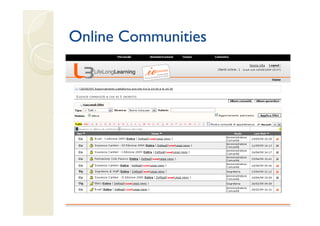
Online Communities
 Collaboration platform currently used mainly in
 educational settings
 Virtual learning communities
 Objectives:
   extend the interaction between teachers and students,
   Extend the boundaries of the classroom toward the
   community
 Currently used in some italian public administration
 training organizations and in other Projects
The difference between a
“community” and a “classroom”
 Communities and their services better help to manage
 situations like
   The community of teachers’ thesis students
   The community of Faculty members
   The community of the Faculty’s secretary
   The community of labor union
   The community of the “HCI” course
   The community of the secretary of “University games”
   The community of people involved in the Project “XYZ”
   The community of people following the stage of student “ABC”
   …….
Online Communities
MobiC -
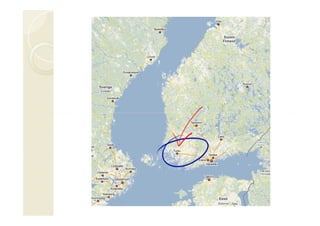
 Long-time collaboration with Åbo Akademi – Turku
 (Finland)
  ◦ Specialized in mobile value services analysis and
    deployment
 Objectives: move the concept of virtual community
 into mobile settings
  ◦ i.e., move human relationships of real-life in a mobile
    settings
The University of Trento
                                 7 Faculties
                                     • Economics
                                     • Engineering
                                     • Humanities and
                                        Philosophy
                    Trento           • Law
                                     • Sciences
                                     • Sociology

                                 16000         Students

                                 550           Professors &
                                               Researchers


        Economics     Sciences   Engineering          Humanities 11 11
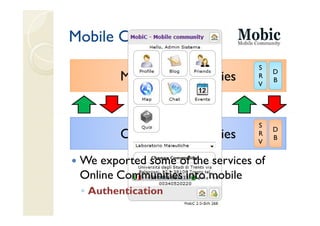
Mobile Community
                                  S
                                       D
        Mobile Communities        R
                                  V
                                       B


                                  S
                                       D
        Online Communities        R
                                  V
                                       B


 We exported some of the services of
 Online Communities into mobile
 ◦ Authentication
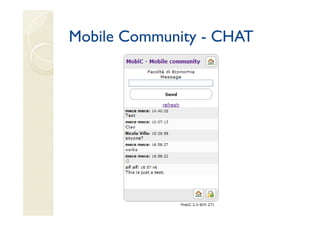
Mobile Community - CHAT
Mobile Community
   Authentication
   Chat
   Quiz
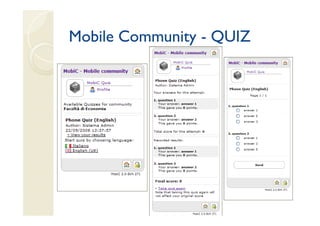
Mobile Community - QUIZ
Mobile Community
   Authentication
   Chat
   Quiz
   Events
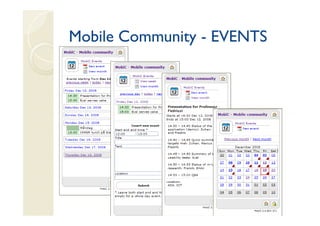
Mobile Community - EVENTS
Mobile Community
   Authentication
   Chat
   Quiz
   Events
   Blog
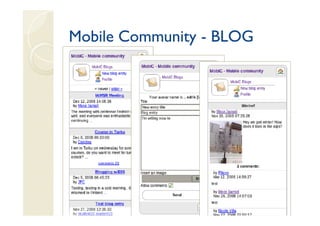
Mobile Community - BLOG
Mobic-
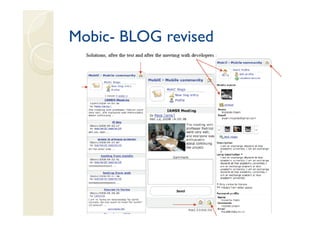
Mobic- BLOG revised
Mobile Community
   Authentication
   Chat
   Quiz
   Events
   Blog
   Friends
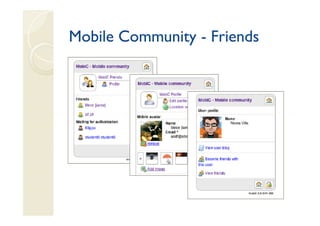
Mobile Community - Friends
Mobile Community
   Authentication
   Chat
   Quiz
   Events
   Blog
   Friends
   Maps
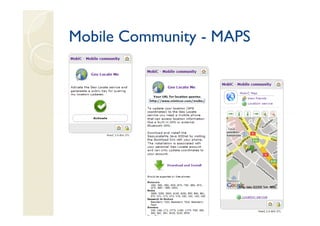
Mobile Community - MAPS
Conclusions
Briefly presented the experience of integrating a VC
platform and mobile technologies
◦ transferring services from Web to mobile, enriching
  them with peculiarities offered by a different device.
This aspect revealed an amplification of problems related
with the usage of the online platform
◦ The transfer of a service from web to mobile revealed
  improvements for both web- and mobile- services.
MobiC offers transparent access both to traditional
services / possible new versions of existing services thanks
to the peculiarities of modern devices.
new version: read RFID devices (at least the passive ones)
or bi-dimensional bar codes (QR-Codes).
Conclusions -2
   extra issues
   ◦   porting a “desktop” app into mobile settings
   ◦   performance issues
   ◦   development framework issues
   ◦   connection management
   ◦   devices’ memory management
   ◦   offline / online management
   ◦   roles and permissions management on mobile
       devices: pros and cons
Conclusions-
Conclusions-3
   extra issues
   ◦ mobile frustration
      developers
      users
   ◦ …not forgetting usual “m-objections”
      costs, screens, keyboard, “do we really learn from
      mobile devices”, etc. etc.
Thank you

  Andrea Molinari
Laboratory of Maieutics
University of Trento, Italy
Andrea.molinari@unitn.it

Icelw 2010 mobile learning

  • 1.
    VIRTUAL COMMUNITIES ANDMOBILE APPLICATIONS IN WEB EDUCATION: A CASE STUDY Luigi Colazzo, Andrea Molinari, Nicola Villa Laboratory of Maieutics, University of Trento, Italy ICELW 2010 9 -11 june 2010
  • 2.
    Contents From OnlineCommunities to Online Mobile Communities Mobile Community (MobiC) project Services available, first experimentations and results
  • 3.
    The idea integrating mobilevalue services into a system oriented to the management of virtual communities. Collaboration with the Institute of Advanced Management System Research (IAMSR), Åbo Akademi of Turku (FIN) VC and e-learning particularly stimulate the idea of mobility ◦ request for “anywhere, anytime” services ◦ many services could be “mobilized” ◦ time management and integration with mobile devices ◦ integration with Faculty / University Information systems and redirection of these services to mobile devices
  • 4.
    Previous implementation Firstexperimentation: Virtual communities and mobile technologies interesting convergencies among useful extensions: ◦ time management ◦ SMS ◦ Chat ◦ forum ◦ Sticky notes
  • 5.
    Changes There isno doubt that compared to the past the scenery has greatly changed because of: ◦ more powerful devices; ◦ removal of many typical m-limitations; ◦ the availability of m-Internet at reduced costs; ◦ web 2.0 and social networks phenomena as a result of the connection “anytime, anywhere”; ◦ geo-reference services ◦ removal of other “taboos” typical of the public bodies, i.e., using this device for activities not strictly related with telephone calls
  • 6.
    Online Communities Collaborationplatform currently used mainly in educational settings Virtual learning communities Objectives: extend the interaction between teachers and students, Extend the boundaries of the classroom toward the community Currently used in some italian public administration training organizations and in other Projects
  • 7.
    The difference betweena “community” and a “classroom” Communities and their services better help to manage situations like The community of teachers’ thesis students The community of Faculty members The community of the Faculty’s secretary The community of labor union The community of the “HCI” course The community of the secretary of “University games” The community of people involved in the Project “XYZ” The community of people following the stage of student “ABC” …….
  • 8.
  • 9.
    MobiC - Long-timecollaboration with Åbo Akademi – Turku (Finland) ◦ Specialized in mobile value services analysis and deployment Objectives: move the concept of virtual community into mobile settings ◦ i.e., move human relationships of real-life in a mobile settings
  • 11.
    The University ofTrento 7 Faculties • Economics • Engineering • Humanities and Philosophy Trento • Law • Sciences • Sociology 16000 Students 550 Professors & Researchers Economics Sciences Engineering Humanities 11 11
  • 12.
    Mobile Community S D Mobile Communities R V B S D Online Communities R V B We exported some of the services of Online Communities into mobile ◦ Authentication
  • 13.
  • 14.
    Mobile Community Authentication Chat Quiz
  • 15.
  • 16.
    Mobile Community Authentication Chat Quiz Events
  • 17.
  • 18.
    Mobile Community Authentication Chat Quiz Events Blog
  • 19.
  • 20.
  • 21.
    Mobile Community Authentication Chat Quiz Events Blog Friends
  • 22.
  • 23.
    Mobile Community Authentication Chat Quiz Events Blog Friends Maps
  • 24.
  • 25.
    Conclusions Briefly presented theexperience of integrating a VC platform and mobile technologies ◦ transferring services from Web to mobile, enriching them with peculiarities offered by a different device. This aspect revealed an amplification of problems related with the usage of the online platform ◦ The transfer of a service from web to mobile revealed improvements for both web- and mobile- services. MobiC offers transparent access both to traditional services / possible new versions of existing services thanks to the peculiarities of modern devices. new version: read RFID devices (at least the passive ones) or bi-dimensional bar codes (QR-Codes).
  • 26.
    Conclusions -2 extra issues ◦ porting a “desktop” app into mobile settings ◦ performance issues ◦ development framework issues ◦ connection management ◦ devices’ memory management ◦ offline / online management ◦ roles and permissions management on mobile devices: pros and cons
  • 27.
    Conclusions- Conclusions-3 extra issues ◦ mobile frustration developers users ◦ …not forgetting usual “m-objections” costs, screens, keyboard, “do we really learn from mobile devices”, etc. etc.
  • 28.
    Thank you Andrea Molinari Laboratory of Maieutics University of Trento, Italy Andrea.molinari@unitn.it