From Consumers into Food Citizens
through Education
Minna Junttila
JAMK University of Applied Sciences
ERIAFF/Sustainable Food Systems
Seinäjoki 11 June 2014
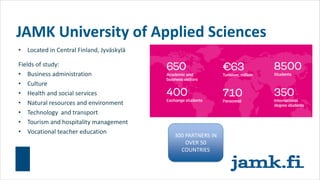
• Located in Central Finland, Jyväskylä
Fields of study:
• Business administration
• Culture
• Health and social services
• Natural resources and environment
• Technology and transport
• Tourism and hospitality management
• Vocational teacher education
JAMK University of Applied Sciences
300 PARTNERS IN
OVER 50
COUNTRIES
Starting point
• National Higher Education reform cut down the amount of students in the field
of Tourism and Hospitality Management in Finland 2013 (appr. 35%, JAMK 38%)
• Currently 5 universities of applied sciences offer Bachelor of Hospitality
Management (210 Cr) studies on food, rather traditional programmes
• In the future all specialisations have to be well profiled, to enhance the
graduates’ employability
Framework
• National strategies include sustainability and responsibility issues
• Sustainable development in food is a global issue due to climate change and
global warming
• Due to the global environmental developments there is a growing interest
towards sustainable food systems, however, this cannot yet be seen much in the
curricula
• Consumers have become more conscious and active (alternative food
initiatives, community supported agriculture, box schemes, urban farming etc.)
Sustainable Gastronomy
• Looking at the whole food system through the sustainable food lens,
enhancing the dialogue between the food system stakeholders and
education
• Locality and globality
• Holistic view, complexity and system thinking
• Graduates grow to become ‘food citizens’
Food Citizen
• ”Eating is an agricultural act”,eating responsibly (Wendell Berry,
1989). Food industry: consumers are passive, uncritical, dependent
• Slow Food: ’Co-producer’ is a conscious consumer who goes beyond
the passive role of consuming and takes an interest in those who
produce our food, how they produce it and the problems they face
in doing so.
• ‘Citizen-consumer’, an ethically informed and committed consumer,
citizen’s ethical values vs. consumer’s selfish preferences
• ‘Food citizen’, belonging to a place, having duties and rights
(Wilkins, 2004)
Practice
• Specialisation (116cr out of which 24cr elective)
in the Bachelor of Hospitality Management degree (210cr),
starting in autumn 2014
• Experiential learning due to its suitability for the complex
multidisciplinary/transdisciplinary nature of food studies
• Internationality through local-global perspective, studies in English,
mobility, international cooperation network
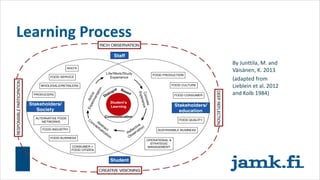
By Junttila, M. and
Väisänen, K. 2013
(adapted from
Lieblein et al. 2012
and Kolb 1984)
Learning Process
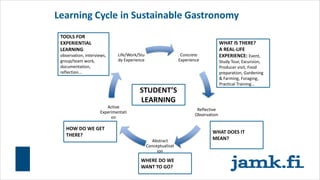
Learning Cycle in Sustainable Gastronomy
Concrete
Experience
Reflective
Observation
Abstract
Conceptualisat
ion
Active
Experimentati
on
Life/Work/Stu
dy Experience
WHAT IS THERE?
A REAL-LIFE
EXPERIENCE: Event,
Study Tour, Excursion,
Producer visit, Food
preparation, Gardening
& Farming, Foraging,
Practical Training…
TOOLS FOR
EXPERIENTIAL
LEARNING:
observation, interviews,
group/team work,
documentation,
reflection…
WHERE DO WE
WANT TO GO?
WHAT DOES IT
MEAN?
STUDENT’S
LEARNING
HOW DO WE GET
THERE?
”In what ways can we support students in sustainable
gastronomy to become curious, innovative and
responsible agents of change in the dynamic context
of food in society?”
minna.junttila@jamk.fi

Minna Junttila

  • 1.
    From Consumers intoFood Citizens through Education Minna Junttila JAMK University of Applied Sciences ERIAFF/Sustainable Food Systems Seinäjoki 11 June 2014
  • 2.
    • Located inCentral Finland, Jyväskylä Fields of study: • Business administration • Culture • Health and social services • Natural resources and environment • Technology and transport • Tourism and hospitality management • Vocational teacher education JAMK University of Applied Sciences 300 PARTNERS IN OVER 50 COUNTRIES
  • 3.
    Starting point • NationalHigher Education reform cut down the amount of students in the field of Tourism and Hospitality Management in Finland 2013 (appr. 35%, JAMK 38%) • Currently 5 universities of applied sciences offer Bachelor of Hospitality Management (210 Cr) studies on food, rather traditional programmes • In the future all specialisations have to be well profiled, to enhance the graduates’ employability
  • 4.
    Framework • National strategiesinclude sustainability and responsibility issues • Sustainable development in food is a global issue due to climate change and global warming • Due to the global environmental developments there is a growing interest towards sustainable food systems, however, this cannot yet be seen much in the curricula • Consumers have become more conscious and active (alternative food initiatives, community supported agriculture, box schemes, urban farming etc.)
  • 5.
    Sustainable Gastronomy • Lookingat the whole food system through the sustainable food lens, enhancing the dialogue between the food system stakeholders and education • Locality and globality • Holistic view, complexity and system thinking • Graduates grow to become ‘food citizens’
  • 7.
    Food Citizen • ”Eatingis an agricultural act”,eating responsibly (Wendell Berry, 1989). Food industry: consumers are passive, uncritical, dependent • Slow Food: ’Co-producer’ is a conscious consumer who goes beyond the passive role of consuming and takes an interest in those who produce our food, how they produce it and the problems they face in doing so. • ‘Citizen-consumer’, an ethically informed and committed consumer, citizen’s ethical values vs. consumer’s selfish preferences • ‘Food citizen’, belonging to a place, having duties and rights (Wilkins, 2004)
  • 8.
    Practice • Specialisation (116crout of which 24cr elective) in the Bachelor of Hospitality Management degree (210cr), starting in autumn 2014 • Experiential learning due to its suitability for the complex multidisciplinary/transdisciplinary nature of food studies • Internationality through local-global perspective, studies in English, mobility, international cooperation network
  • 9.
    By Junttila, M.and Väisänen, K. 2013 (adapted from Lieblein et al. 2012 and Kolb 1984) Learning Process
  • 10.
    Learning Cycle inSustainable Gastronomy Concrete Experience Reflective Observation Abstract Conceptualisat ion Active Experimentati on Life/Work/Stu dy Experience WHAT IS THERE? A REAL-LIFE EXPERIENCE: Event, Study Tour, Excursion, Producer visit, Food preparation, Gardening & Farming, Foraging, Practical Training… TOOLS FOR EXPERIENTIAL LEARNING: observation, interviews, group/team work, documentation, reflection… WHERE DO WE WANT TO GO? WHAT DOES IT MEAN? STUDENT’S LEARNING HOW DO WE GET THERE?
  • 11.
    ”In what wayscan we support students in sustainable gastronomy to become curious, innovative and responsible agents of change in the dynamic context of food in society?” minna.junttila@jamk.fi