Hossam Elamir, MSc.HCM, TQMD, MBBCh
Quality & Accreditation Office, MKH
Institute of Leadership, RCSI
Ahmad Mufreh, B.M., B. Ch
Department of Surgery, ADH
“To err is human,
to cover up is unforgivable, and
to fail to learn is inexcusable.”
Sir Liam Donaldson
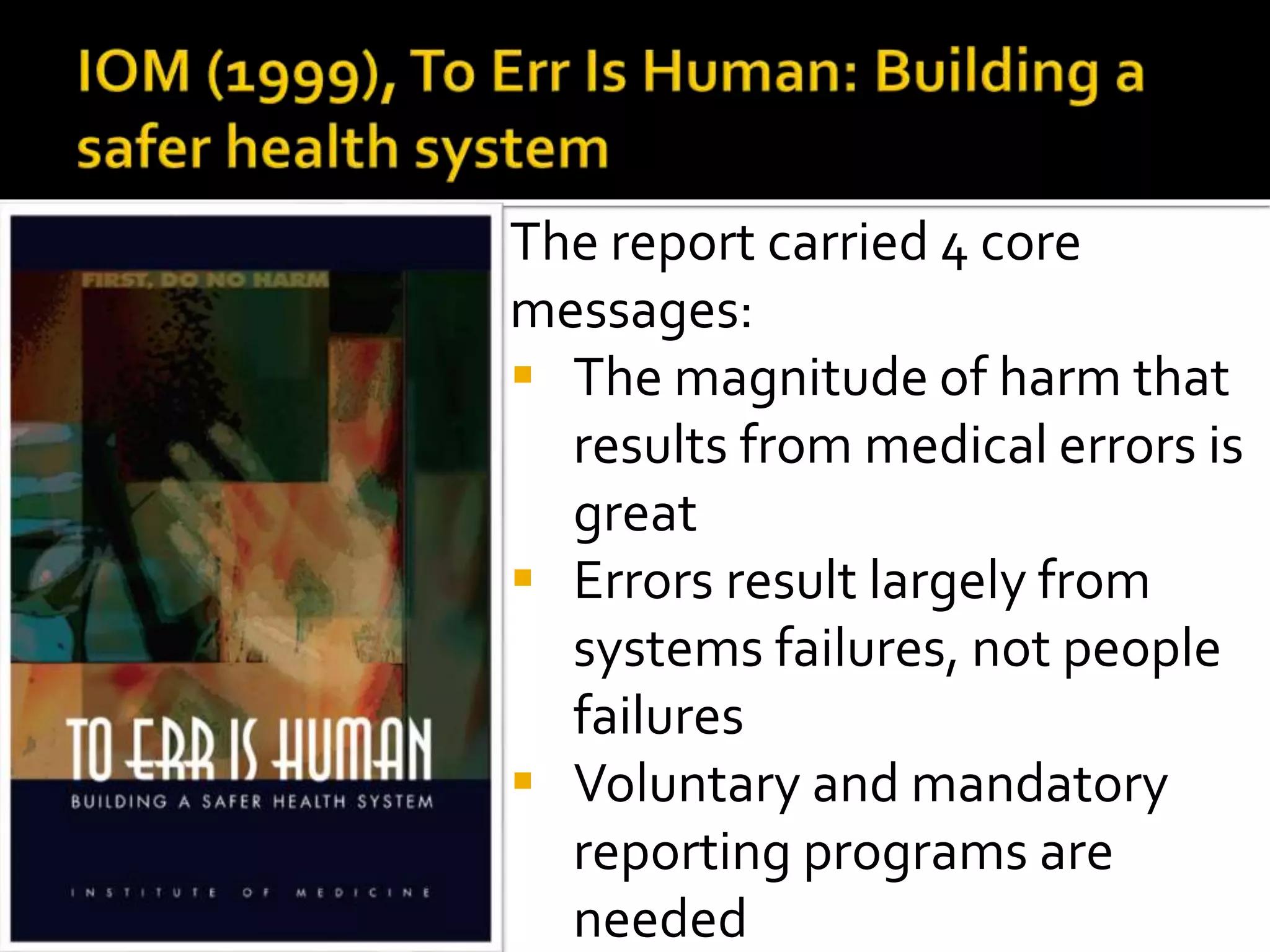
The report carried 4 core
messages:
 The magnitude of harm that
results from medical errors is
great
 Errors result largely from
systems failures, not people
failures
 Voluntary and mandatory
reporting programs are
needed
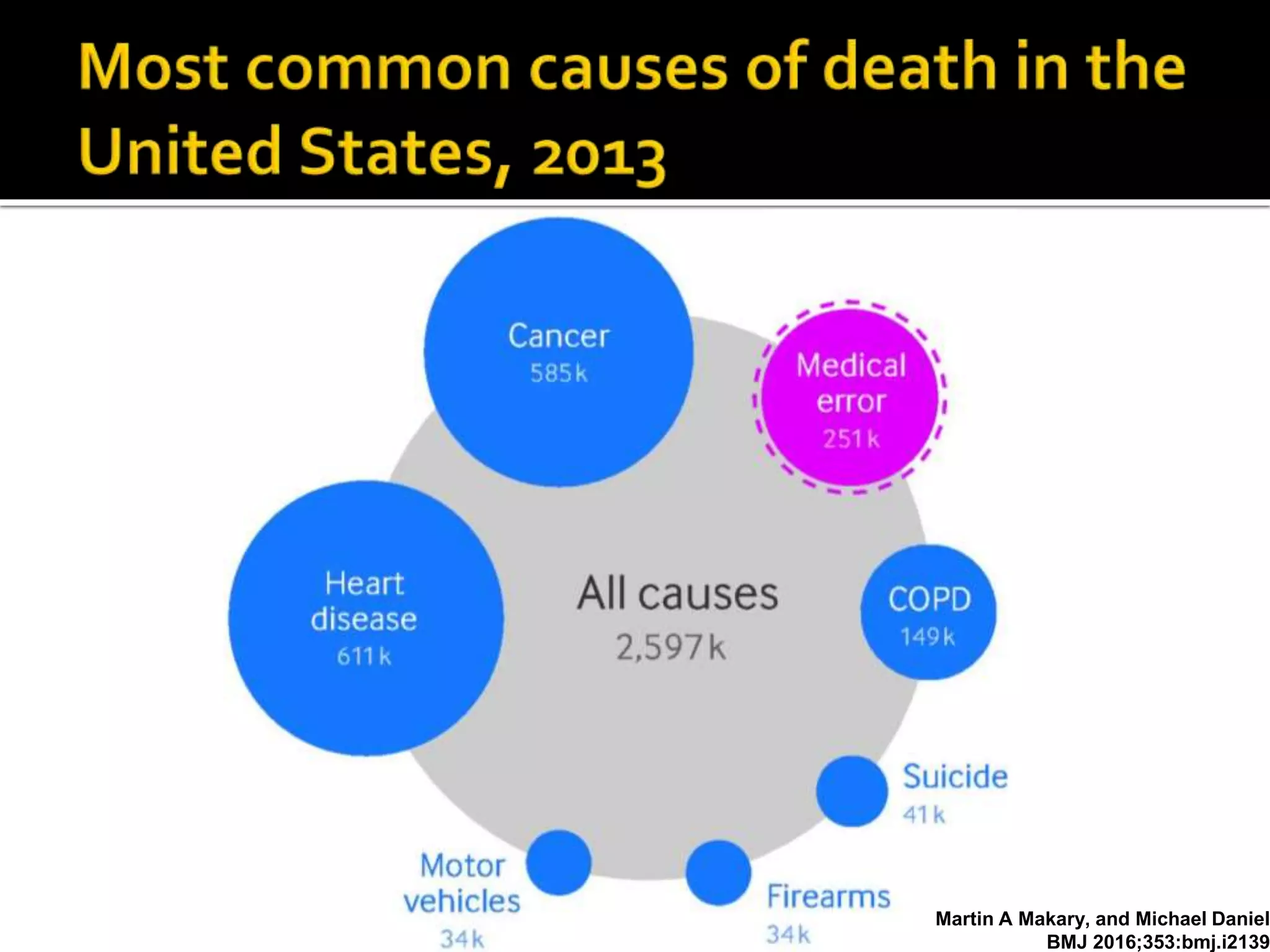
Martin A Makary, and Michael Daniel
BMJ 2016;353:bmj.i2139
Leape, MD
 freedom from accidental or preventable
injuries produced by medical care
Spath, P. (2009). Introduction to Healthcare Quality
Management (Chicago, IL, USA: Health Administration Press)
 Reporting of patient safety event is universal
in healthcare and a backbone of efforts to
detect patient safety issues and quality
problems.(1,2)
 Barriers to reporting include lack of feedback
and fear of personal consequences.(3,4)
 AHRQ stated that effective event reporting
system should have four key elements,
among which are protection of the reporter
privacy, providing easy accessibility to the
reporting system, and timely dissemination
of outcomes and feedbacks.(1)
 In the 750+ bedded general hospital; which is
staffed with more than 3000 employees; the
number of reported incidents was 50-80 reports
per month.
 Majority of reporters are nurses (85 %), while
doctors are the least reporting staff.
 Most of the reported incidents are of the “no harm
errors” type. Near misses (good catch) and harmful
incidents are usually not reported
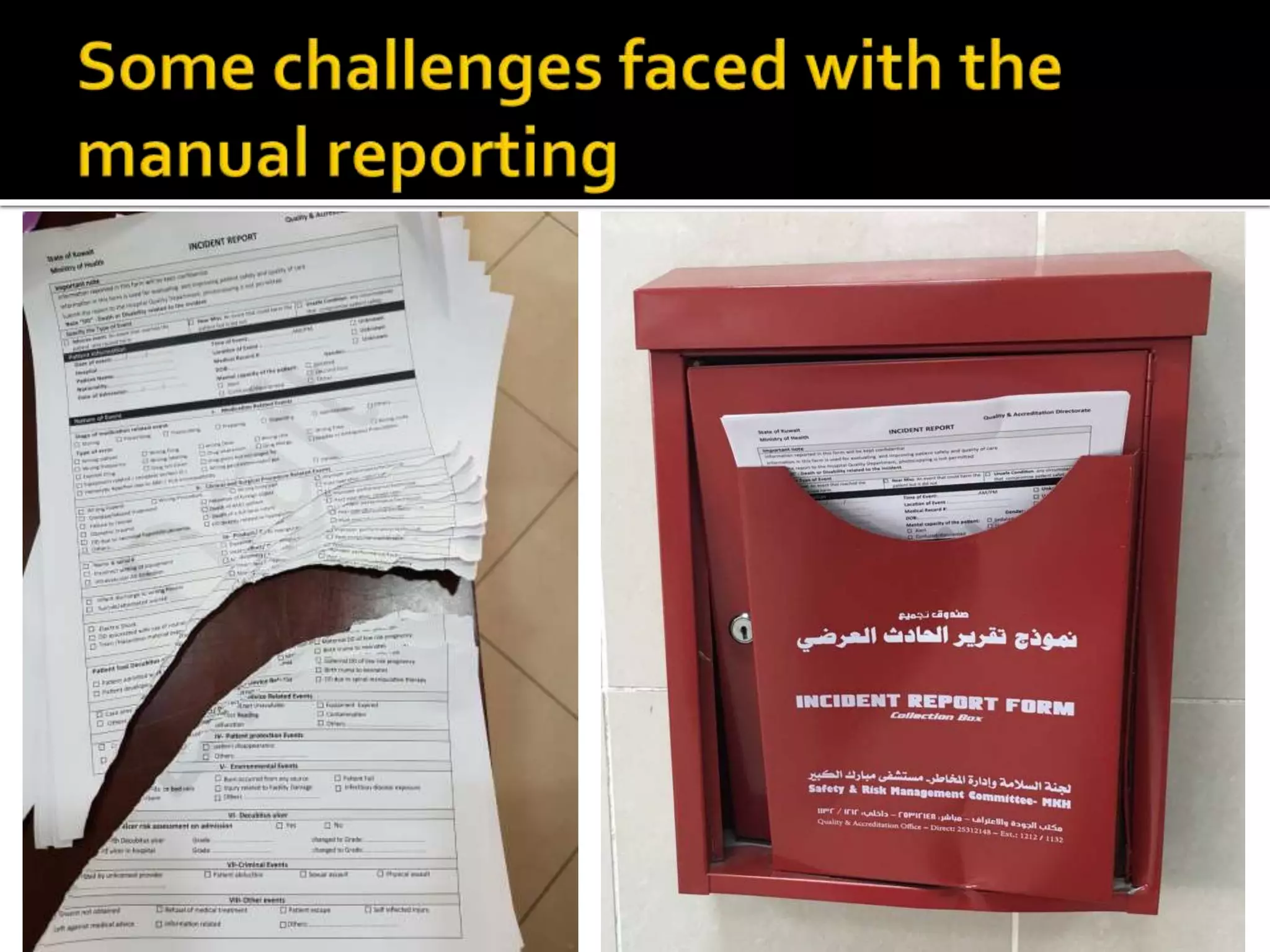
 We distributed 35 “incident collection boxes”
allover the hospital, yet, some locations are still
not covered.
 We interviewed 200 staff; equally representing
doctors, nurses, technicians and administrators; to
identify the causes of underreporting.
 Fear of punitive action, lack of feedback and
limited access to the manual reporting form were
the most common discouraging causes for not to
report.
 Not easily Accessible
 Environmentally unfriendly (Papers, ink)
 Time & Effort to collect
 Redundancy in efforts (Data Entry by the nurses
instead of the reporter)
 No Feedback due to anonymous reporting and/or
overwhelming workload; If feedback given, it will be in
the last stage.
 Opportunity for improvement
 Private Public Partnership
 Multidisciplinary team:
 Clinician as a reporter
 Quality Doctor as a manager
 Senior Programmer
User friendly
Accessible
Anonymous & Confidential
Secure, HIPPA compliant
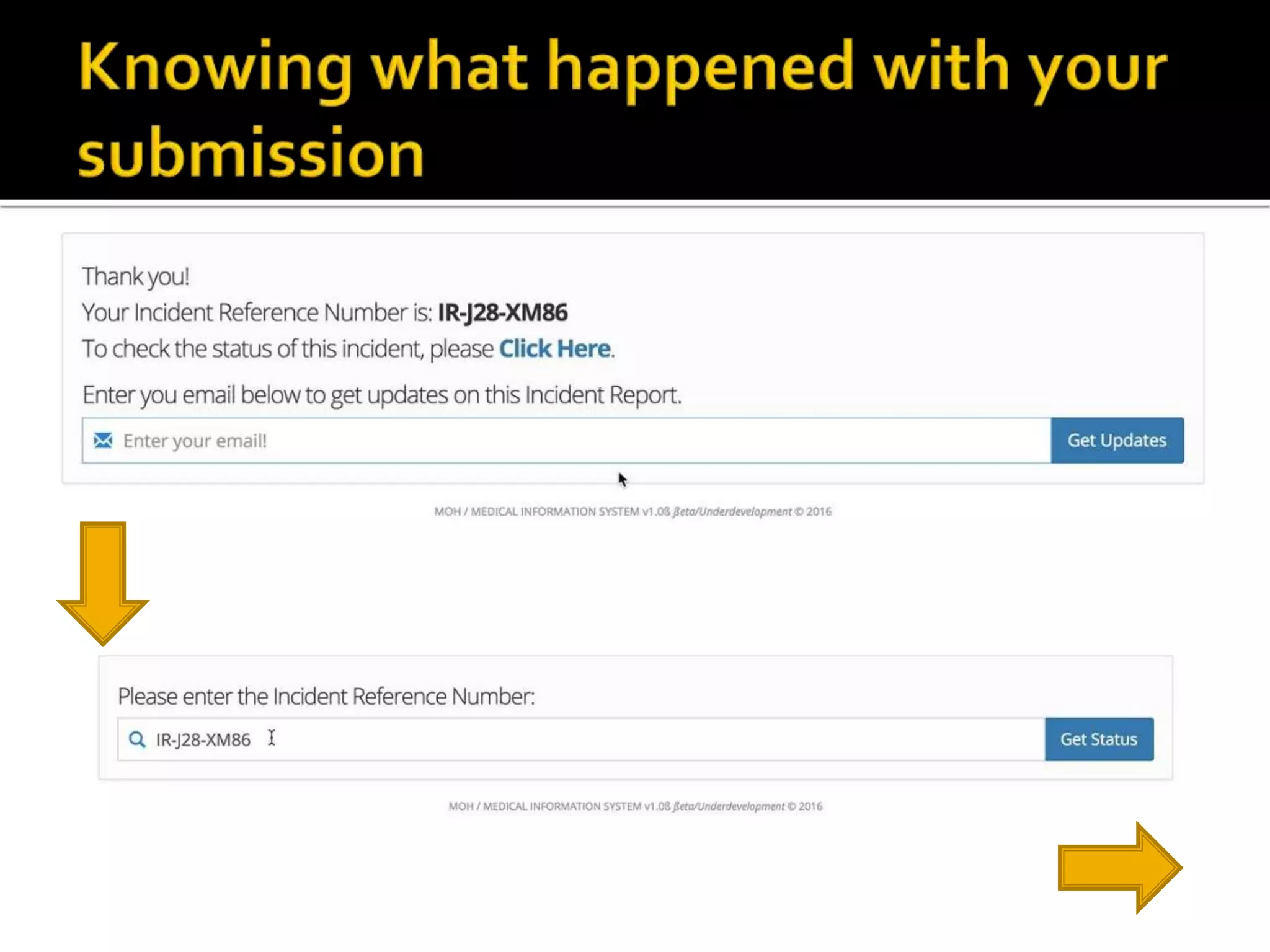
Feedbacks the reporter at different stages
Instant Notification
Permits Easy StatisticalAnalysis and Exports Data
Saves History of Reports
Customizable
Affordable
IntelligentAnalysis Framework
User friendly
Accessible
Anonymous & Confidential
Secure, HIPPA compliant
Feedbacks the reporter at different stages
Instant Notification
Permits Easy StatisticalAnalysis and Exports Data
Saves History of Reports
Customizable
Affordable
IntelligentAnalysis Framework
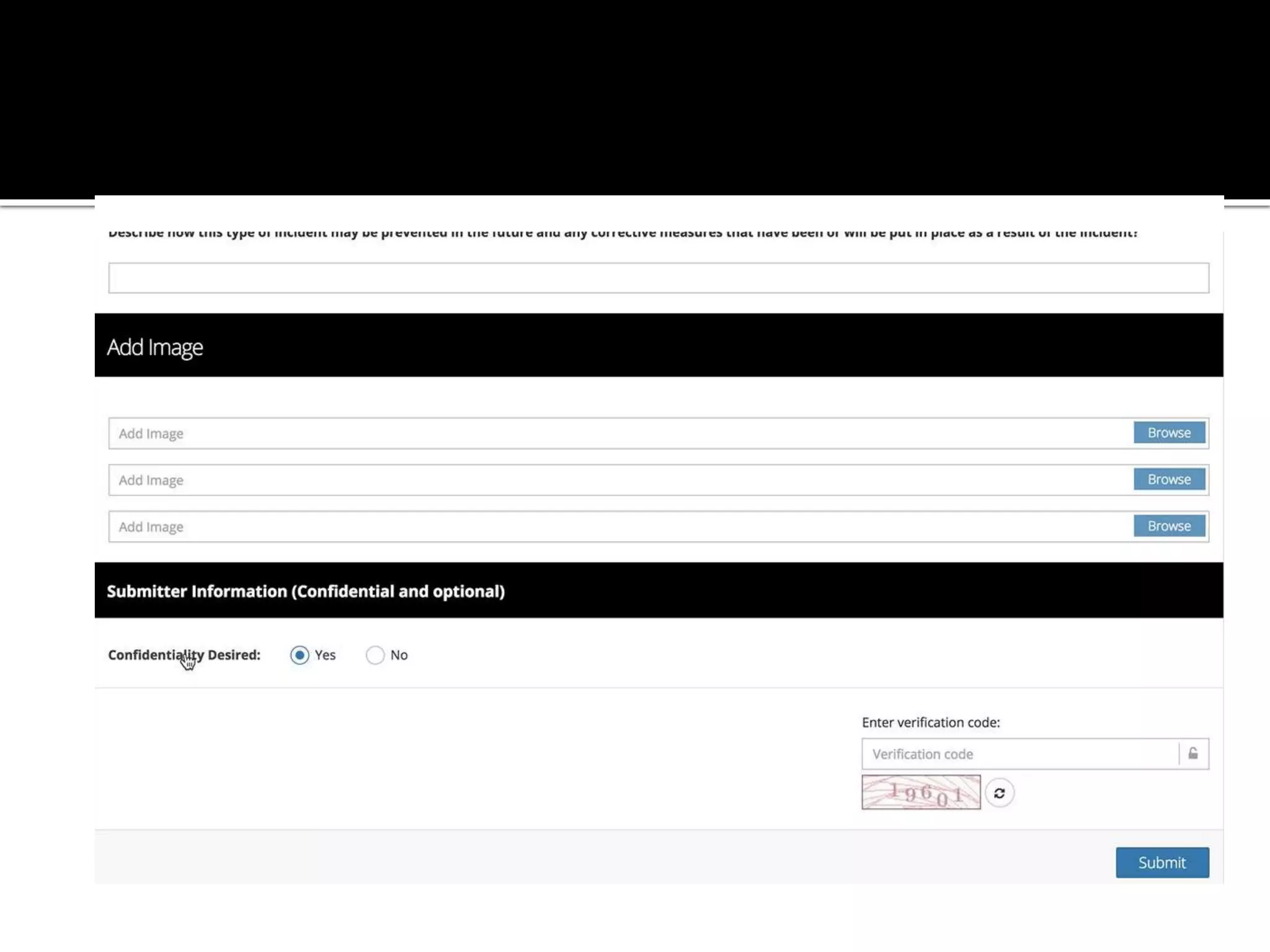
Images and Movies
can be attached too!
YAMCOLLC
1. AHRQ. Voluntary Patient Safety Event Reporting (Incident Reporting) |
AHRQ Patient Safety Network [Internet]. 2014 [cited 2016 Apr 10].
Available from:
https://psnet.ahrq.gov/primers/primer/13/voluntarypatientsafetyeventr
eportingincidentreporting
2. Lawton R, Parker D. Barriers to incident reporting in a healthcare
system. Qual Saf Health Care. 2002;11(1):15–8.
3. Noble DJ, Pronovost PJ. Underreporting of patient safety incidents
reduces health care’s ability to quantify and accurately measure harm
reduction. J Patient Saf. 2010 Dec;6(4):247–50.
4. Mahajan RP. Critical incident reporting and learning. Br J Anaesth.
2010;105(1):69–75.
Dr.HossamElamir
dr_hossam_elamir@hotmail.com
0096565198442
Linkedin:https://kw.linkedin.com/in/hossam-elamir-29697bb2
Dr.AhmadMufreh
Dr.shammar@gmail.com
0096569999126
Linkedin:https://kw.linkedin.com/in/dr-ahmad-m-alshammari-0070b949

I report

  • 1.
    Hossam Elamir, MSc.HCM,TQMD, MBBCh Quality & Accreditation Office, MKH Institute of Leadership, RCSI Ahmad Mufreh, B.M., B. Ch Department of Surgery, ADH
  • 2.
    “To err ishuman, to cover up is unforgivable, and to fail to learn is inexcusable.” Sir Liam Donaldson
  • 3.
    The report carried4 core messages:  The magnitude of harm that results from medical errors is great  Errors result largely from systems failures, not people failures  Voluntary and mandatory reporting programs are needed
  • 4.
    Martin A Makary,and Michael Daniel BMJ 2016;353:bmj.i2139
  • 6.
  • 7.
     freedom fromaccidental or preventable injuries produced by medical care Spath, P. (2009). Introduction to Healthcare Quality Management (Chicago, IL, USA: Health Administration Press)
  • 8.
     Reporting ofpatient safety event is universal in healthcare and a backbone of efforts to detect patient safety issues and quality problems.(1,2)  Barriers to reporting include lack of feedback and fear of personal consequences.(3,4)
  • 9.
     AHRQ statedthat effective event reporting system should have four key elements, among which are protection of the reporter privacy, providing easy accessibility to the reporting system, and timely dissemination of outcomes and feedbacks.(1)
  • 10.
     In the750+ bedded general hospital; which is staffed with more than 3000 employees; the number of reported incidents was 50-80 reports per month.  Majority of reporters are nurses (85 %), while doctors are the least reporting staff.
  • 11.
     Most ofthe reported incidents are of the “no harm errors” type. Near misses (good catch) and harmful incidents are usually not reported  We distributed 35 “incident collection boxes” allover the hospital, yet, some locations are still not covered.
  • 12.
     We interviewed200 staff; equally representing doctors, nurses, technicians and administrators; to identify the causes of underreporting.  Fear of punitive action, lack of feedback and limited access to the manual reporting form were the most common discouraging causes for not to report.
  • 13.
     Not easilyAccessible  Environmentally unfriendly (Papers, ink)  Time & Effort to collect  Redundancy in efforts (Data Entry by the nurses instead of the reporter)  No Feedback due to anonymous reporting and/or overwhelming workload; If feedback given, it will be in the last stage.
  • 15.
     Opportunity forimprovement  Private Public Partnership  Multidisciplinary team:  Clinician as a reporter  Quality Doctor as a manager  Senior Programmer
  • 16.
    User friendly Accessible Anonymous &Confidential Secure, HIPPA compliant Feedbacks the reporter at different stages Instant Notification Permits Easy StatisticalAnalysis and Exports Data Saves History of Reports Customizable Affordable IntelligentAnalysis Framework
  • 21.
    User friendly Accessible Anonymous &Confidential Secure, HIPPA compliant Feedbacks the reporter at different stages Instant Notification Permits Easy StatisticalAnalysis and Exports Data Saves History of Reports Customizable Affordable IntelligentAnalysis Framework Images and Movies can be attached too!
  • 22.
  • 23.
    1. AHRQ. VoluntaryPatient Safety Event Reporting (Incident Reporting) | AHRQ Patient Safety Network [Internet]. 2014 [cited 2016 Apr 10]. Available from: https://psnet.ahrq.gov/primers/primer/13/voluntarypatientsafetyeventr eportingincidentreporting 2. Lawton R, Parker D. Barriers to incident reporting in a healthcare system. Qual Saf Health Care. 2002;11(1):15–8. 3. Noble DJ, Pronovost PJ. Underreporting of patient safety incidents reduces health care’s ability to quantify and accurately measure harm reduction. J Patient Saf. 2010 Dec;6(4):247–50. 4. Mahajan RP. Critical incident reporting and learning. Br J Anaesth. 2010;105(1):69–75.
  • 24.

Editor's Notes

  • #5 Fig 1 Most common causes of death in the United States, 20132
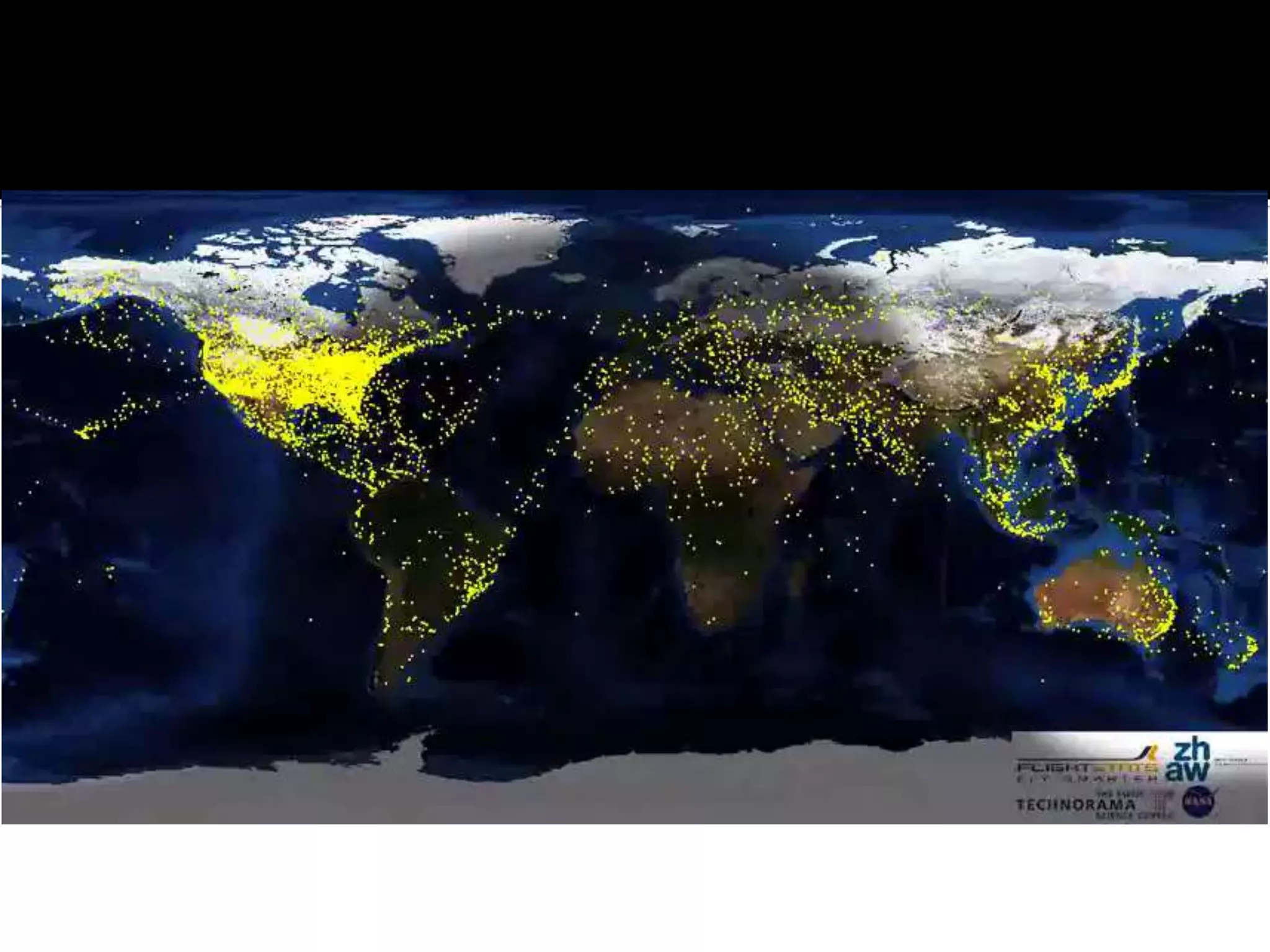
  • #7 However, if we were to divide those activities or sectors according to their potential for catastrophe, we could form two groups. One group collates those activities that pose potential risk to individual users but not so much to a social system at large: bungee jumping and healthcare, for example. Adverse events in this group are rather localized accidents. The other group is made of sectors and activities that pose greater risk to social systems. Adverse events are rather catastrophes and put great strains on a system, even to the point of collapsing it (eg, Chernobyl). sectors or activities that appear as hazardous (such as healthcare), also tend to be less catastrophic and, thus, have a rather individual impact: medical errors and accidents do not cripple a hospital to the point of collapse. This lack of catastrophic consequences may also account for accidental death being more socially acceptable, and for healthcare safety to be less prominent as a social concern. This would also explain why driving, which kills more people than flying, is also a less prominent social concern than, for example, nuclear ships on NZ harbors. Alternatively, if we were to divide those activities or sectors according to total lives lost per year, we can observe that the greatest death toll is carried by sectors and activities engaged by a larger proportion of the population and, even, on a more frequent basis. More people drive or require health care more often than people that fly or work in the chemical or nuclear industries. sectors or activities which people engage more with are also the riskiest and, yet, also show a less prominent social or individual concern: fewer people engage in bungee jumping and, those who do, probably show a greater concern for their individual safety before jumping than when they drive to the event or go to a hospital. Healthcare safety may portrayed as poor, and a big emphasis (and blame) may be placed on healthcare professionals and healthcare systems. However, this perception of healthcare safety and safety culture may not be fully warranted. Nuclear and chemical industries and mass transport systems are safer because they have received greater attention and resources in lieu of their catastrophic potential, greater social concern and lesser familiarity with. In summary, healthcare may not be as safe as it could, but it cannot simply be compared against aviation or other of the 'safe' activities or sectors. The closest comparable activity in regards to social concern and resources seems to be driving. If we could thus argue that healthcare and, for example, aviation are not comparable in their safety outcomes, is it possible that they are not comparable in regards to other outputs and processes, as well?