1
Treatment of hypo and
hyperthyroidism
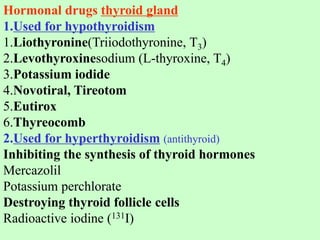
Hormonal drugs thyroid gland
1.Used for hypothyroidism
1.Liothyronine(Triiodothyronine, T3)
2.Levothyroxinesodium (L-thyroxine, T4)
3.Potassium iodide
4.Novotiral, Tireotom
5.Eutirox
6.Thyreocomb
2.Used for hyperthyroidism (antithyroid)
Inhibiting the synthesis of thyroid hormones
Mercazolil
Potassium perchlorate
Destroying thyroid follicle cells
Radioactive iodine (131I)
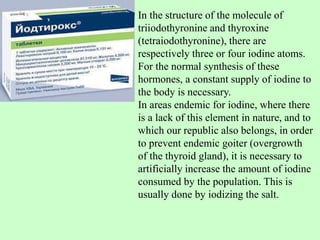
In the structure of the molecule of
triiodothyronine and thyroxine
(tetraiodothyronine), there are
respectively three or four iodine atoms.
For the normal synthesis of these
hormones, a constant supply of iodine to
the body is necessary.
In areas endemic for iodine, where there
is a lack of this element in nature, and to
which our republic also belongs, in order
to prevent endemic goiter (overgrowth
of the thyroid gland), it is necessary to
artificially increase the amount of iodine
consumed by the population. This is
usually done by iodizing the salt.
• Liothyronine (triiodothyronine 50) begins to act after 6-8 hours, is quickly
excreted from the body. It is 4-8 times more intense than levothyroxine so
dium, it is better absorbed from the gastrointestinal tract (up to 95%). It is
used for emergencies, but not for conventional substitution therapy.
• Levothyroxine sodium (L-thyroxine, bagothyrox, euthyrox) is the drug of c
hoice for replacement therapy of hypothyroidism. T-50 is 7 days. 80% of T
3 is formed as a result of peripheral deiodination of thyroxine (T4), while
prescribing drugs in the blood, the content of both hormones increases.
Indications for appointment:
• primary and severe hypothyroidism;
• autoimmune thyroiditis (Hashimoto's diseas
e);
• diffuse toxic goiter in remission to prevent t
he goiter effect of Mercazolil;
• nodular goiter with symptoms of hypothyroi
dism;
• thyroid cancer;
• diffuse non-toxic goiter.
Antithyroid drugs
Inhibit the synthesis of thyroid hormones
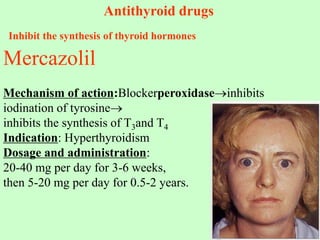
Mercazolil
Mechanism of action:Blockerperoxidaseinhibits
iodination of tyrosine
inhibits the synthesis of T3and T4
Indication: Hyperthyroidism
Dosage and administration:
20-40 mg per day for 3-6 weeks,
then 5-20 mg per day for 0.5-2 years.
adverse reactions: nausea, taste dist
urbance, allergic reactions, agranulocytosis (r
arely), hepatitis, lupus-like syndrome and vasc
ulitis.
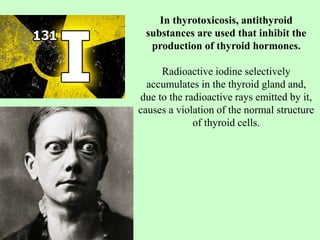
In thyrotoxicosis, antithyroid
substances are used that inhibit the
production of thyroid hormones.
Radioactive iodine selectively
accumulates in the thyroid gland and,
due to the radioactive rays emitted by it,
causes a violation of the normal structure
of thyroid cells.

Hypo and hyperthyroidism .pptx

  • 1.
    1 Treatment of hypoand hyperthyroidism
  • 4.
    Hormonal drugs thyroidgland 1.Used for hypothyroidism 1.Liothyronine(Triiodothyronine, T3) 2.Levothyroxinesodium (L-thyroxine, T4) 3.Potassium iodide 4.Novotiral, Tireotom 5.Eutirox 6.Thyreocomb 2.Used for hyperthyroidism (antithyroid) Inhibiting the synthesis of thyroid hormones Mercazolil Potassium perchlorate Destroying thyroid follicle cells Radioactive iodine (131I)
  • 5.
    In the structureof the molecule of triiodothyronine and thyroxine (tetraiodothyronine), there are respectively three or four iodine atoms. For the normal synthesis of these hormones, a constant supply of iodine to the body is necessary. In areas endemic for iodine, where there is a lack of this element in nature, and to which our republic also belongs, in order to prevent endemic goiter (overgrowth of the thyroid gland), it is necessary to artificially increase the amount of iodine consumed by the population. This is usually done by iodizing the salt.
  • 6.
    • Liothyronine (triiodothyronine50) begins to act after 6-8 hours, is quickly excreted from the body. It is 4-8 times more intense than levothyroxine so dium, it is better absorbed from the gastrointestinal tract (up to 95%). It is used for emergencies, but not for conventional substitution therapy. • Levothyroxine sodium (L-thyroxine, bagothyrox, euthyrox) is the drug of c hoice for replacement therapy of hypothyroidism. T-50 is 7 days. 80% of T 3 is formed as a result of peripheral deiodination of thyroxine (T4), while prescribing drugs in the blood, the content of both hormones increases.
  • 7.
    Indications for appointment: •primary and severe hypothyroidism; • autoimmune thyroiditis (Hashimoto's diseas e); • diffuse toxic goiter in remission to prevent t he goiter effect of Mercazolil; • nodular goiter with symptoms of hypothyroi dism; • thyroid cancer; • diffuse non-toxic goiter.
  • 8.
    Antithyroid drugs Inhibit thesynthesis of thyroid hormones Mercazolil Mechanism of action:Blockerperoxidaseinhibits iodination of tyrosine inhibits the synthesis of T3and T4 Indication: Hyperthyroidism Dosage and administration: 20-40 mg per day for 3-6 weeks, then 5-20 mg per day for 0.5-2 years.
  • 9.
    adverse reactions: nausea,taste dist urbance, allergic reactions, agranulocytosis (r arely), hepatitis, lupus-like syndrome and vasc ulitis.
  • 10.
    In thyrotoxicosis, antithyroid substancesare used that inhibit the production of thyroid hormones. Radioactive iodine selectively accumulates in the thyroid gland and, due to the radioactive rays emitted by it, causes a violation of the normal structure of thyroid cells.