Hypersensitivity Reactions
Presented by Sarah Elsisi
Undersupervision of Prof.Dr. Nageh
Department of toxicology and pharmacology
year 2020
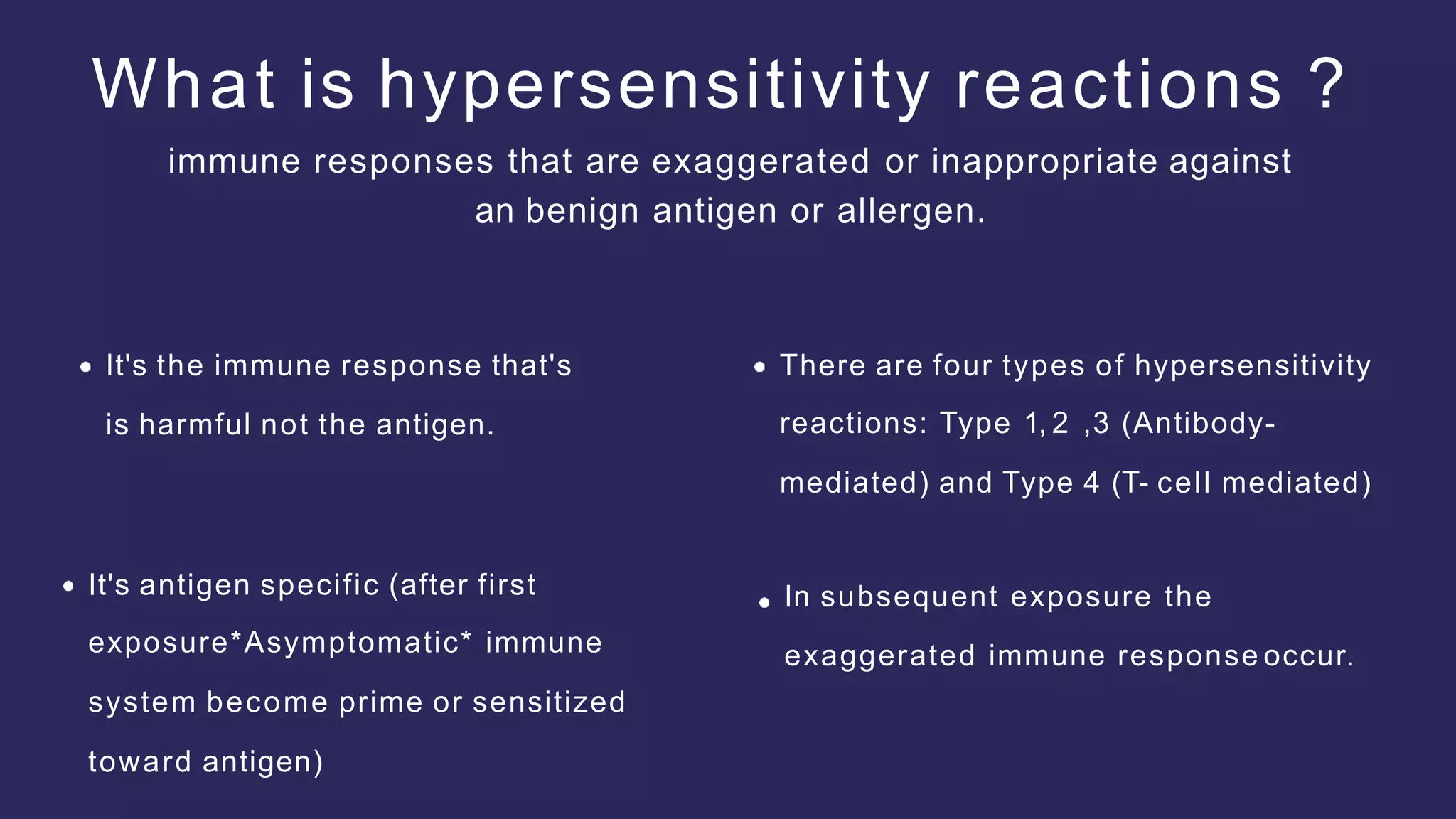
What is hypersensitivity reactions ?
immune responses that are exaggerated or inappropriate against
an benign antigen or allergen.
It's the immune response that's
is harmful not the antigen.
There are four types of hypersensitivity
reactions: Type 1, 2 ,3 (Antibody-
mediated) and Type 4 (T- cell mediated)
In subsequent exposure the
exaggerated immune response occur.
It's antigen specific (after first
exposure*Asymptomatic* immune
system become prime or sensitized
toward antigen)
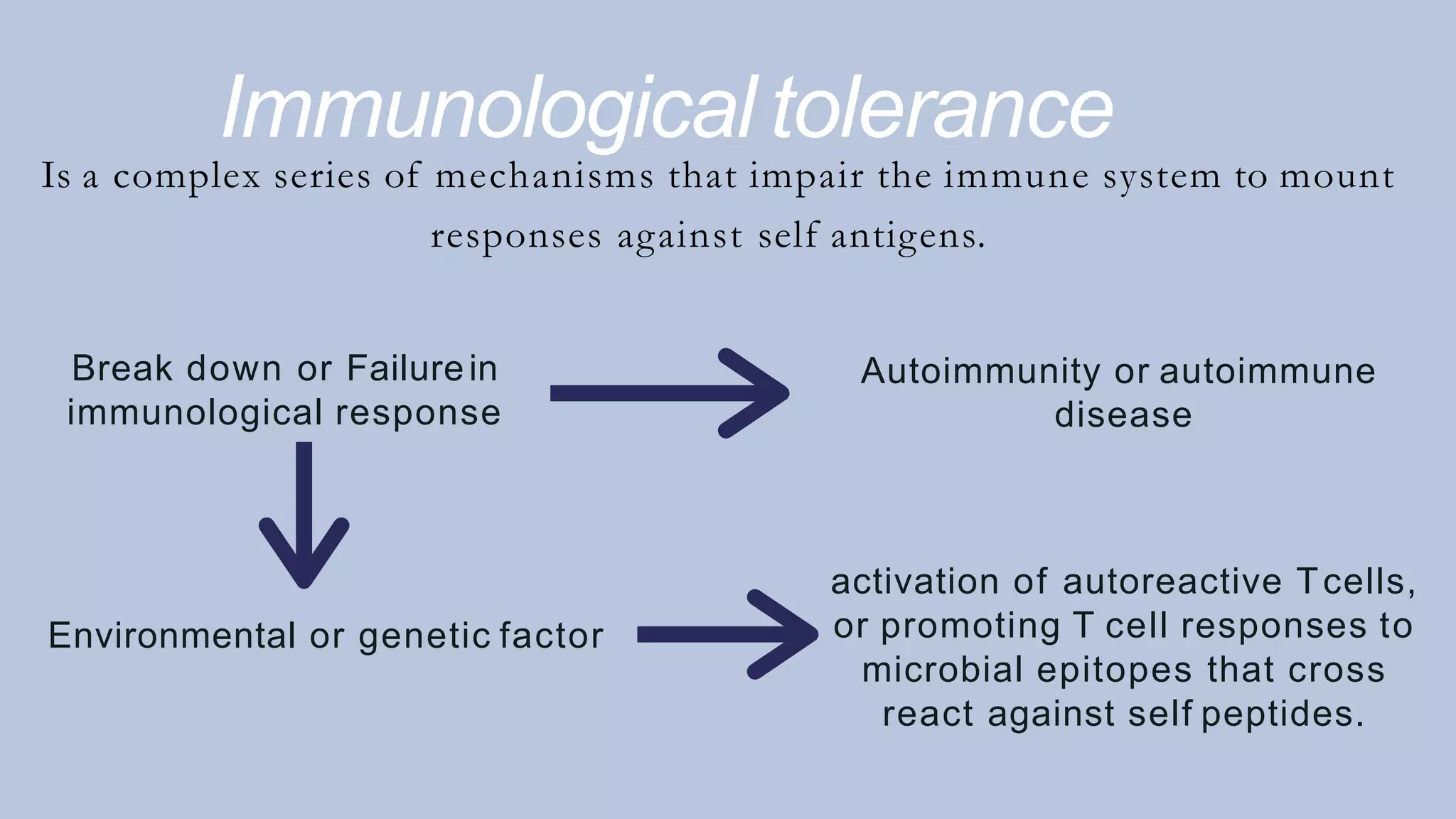
activation of autoreactive Tcells,
or promoting T cell responses to
microbial epitopes that cross
react against self peptides.
Immunological tolerance
Is a complex series of mechanisms that impair the immune system to mount
responses against self antigens.
Break down or Failurein
immunological response
Autoimmunity or autoimmune
disease
Environmental or genetic factor
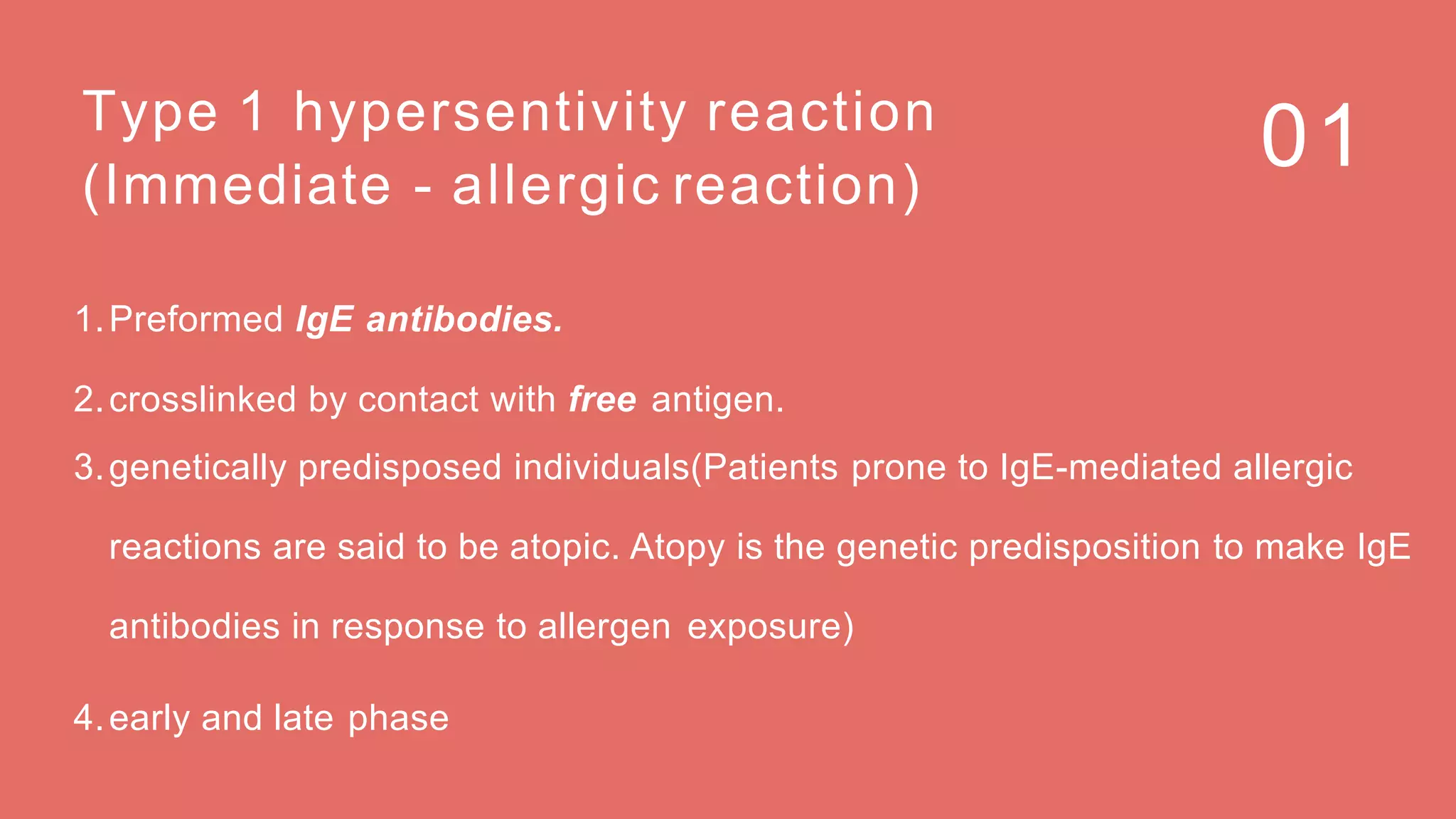
01Type 1 hypersentivity reaction
(Immediate - allergic reaction)
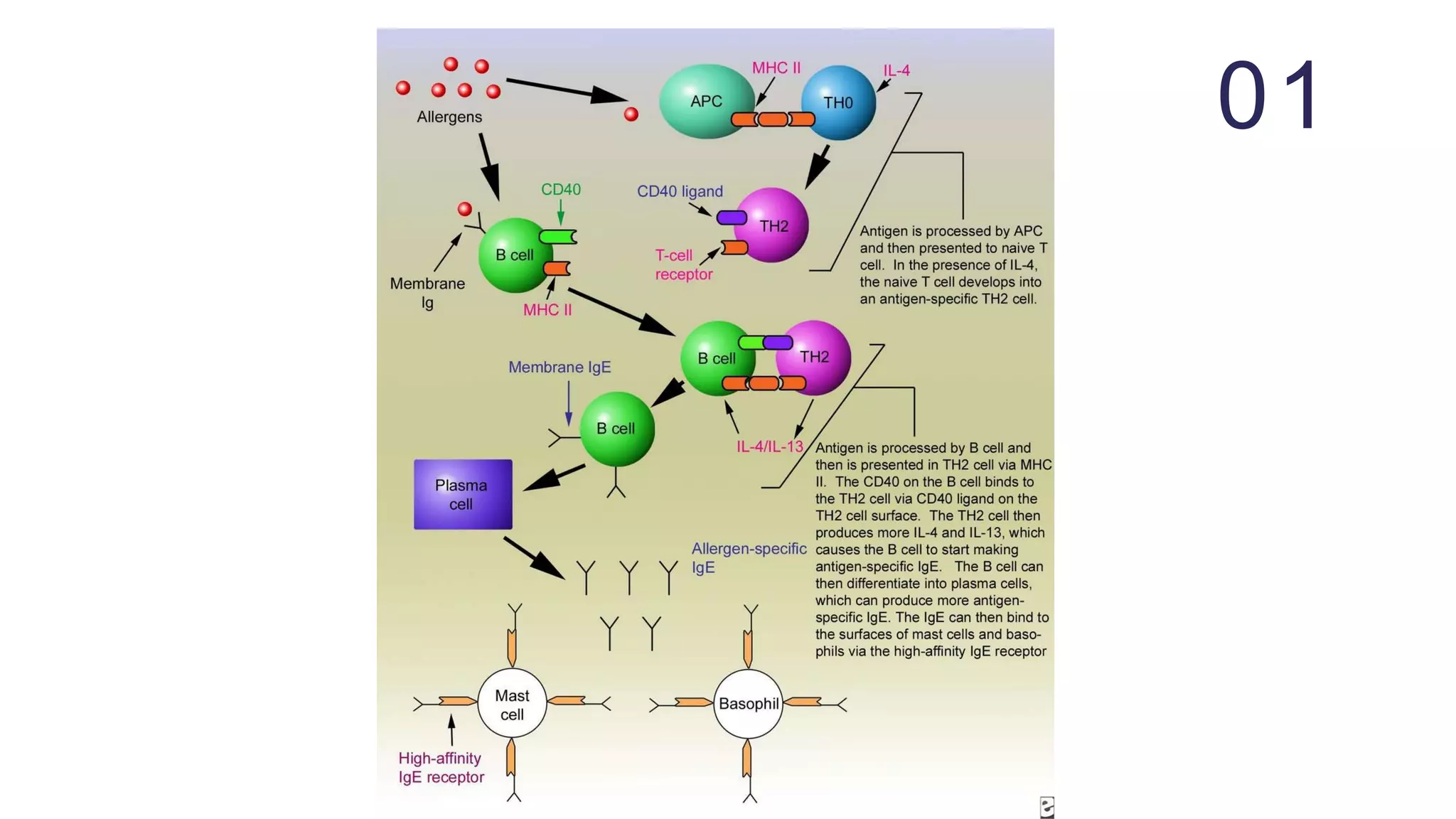
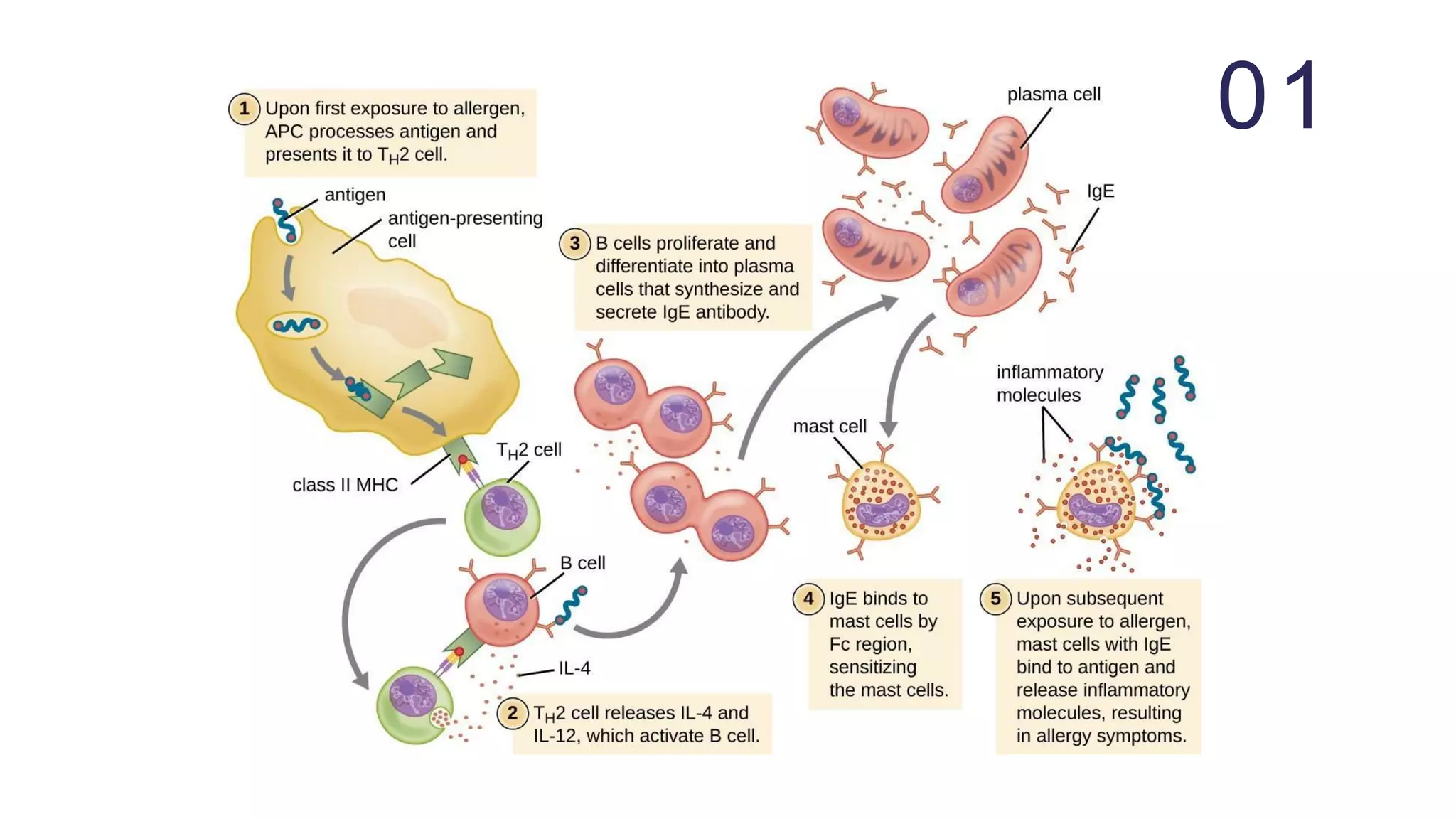
1.Preformed IgE antibodies.
2.crosslinked by contact with free antigen.
3.genetically predisposed individuals(Patients prone to IgE-mediated allergic
reactions are said to be atopic. Atopy is the genetic predisposition to make IgE
antibodies in response to allergen exposure)
4.early and late phase
01
01
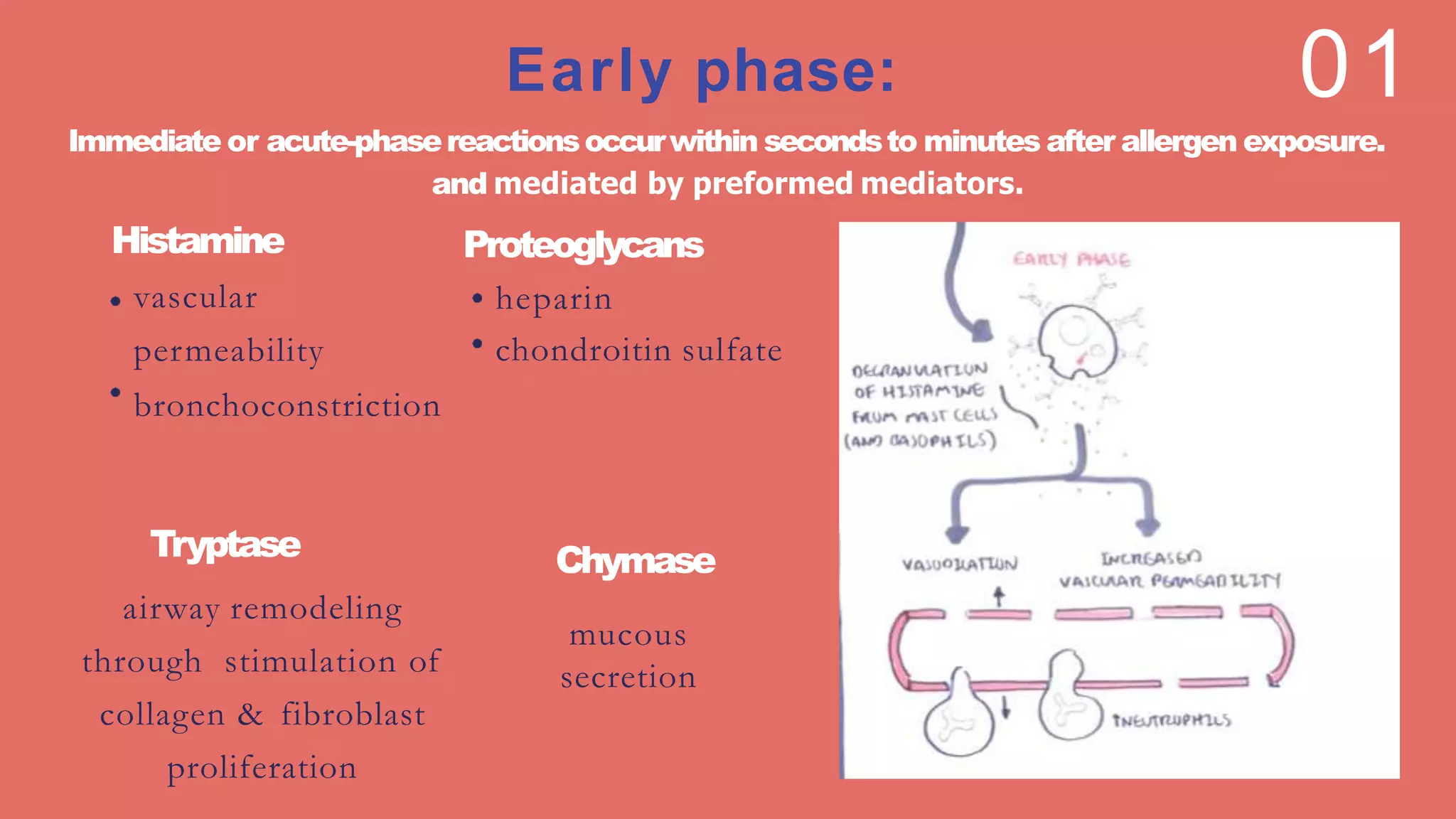
Early phase:
Chymase
mucous
secretion
Proteoglycans
heparin
chondroitin sulfate
Tryptase
airway remodeling
through stimulation of
collagen & fibroblast
proliferation
Histamine
vascular
permeability
bronchoconstriction
01
Immediate or acute-phasereactionsoccurwithin secondsto minutes after allergen exposure.
and mediated by preformed mediators.
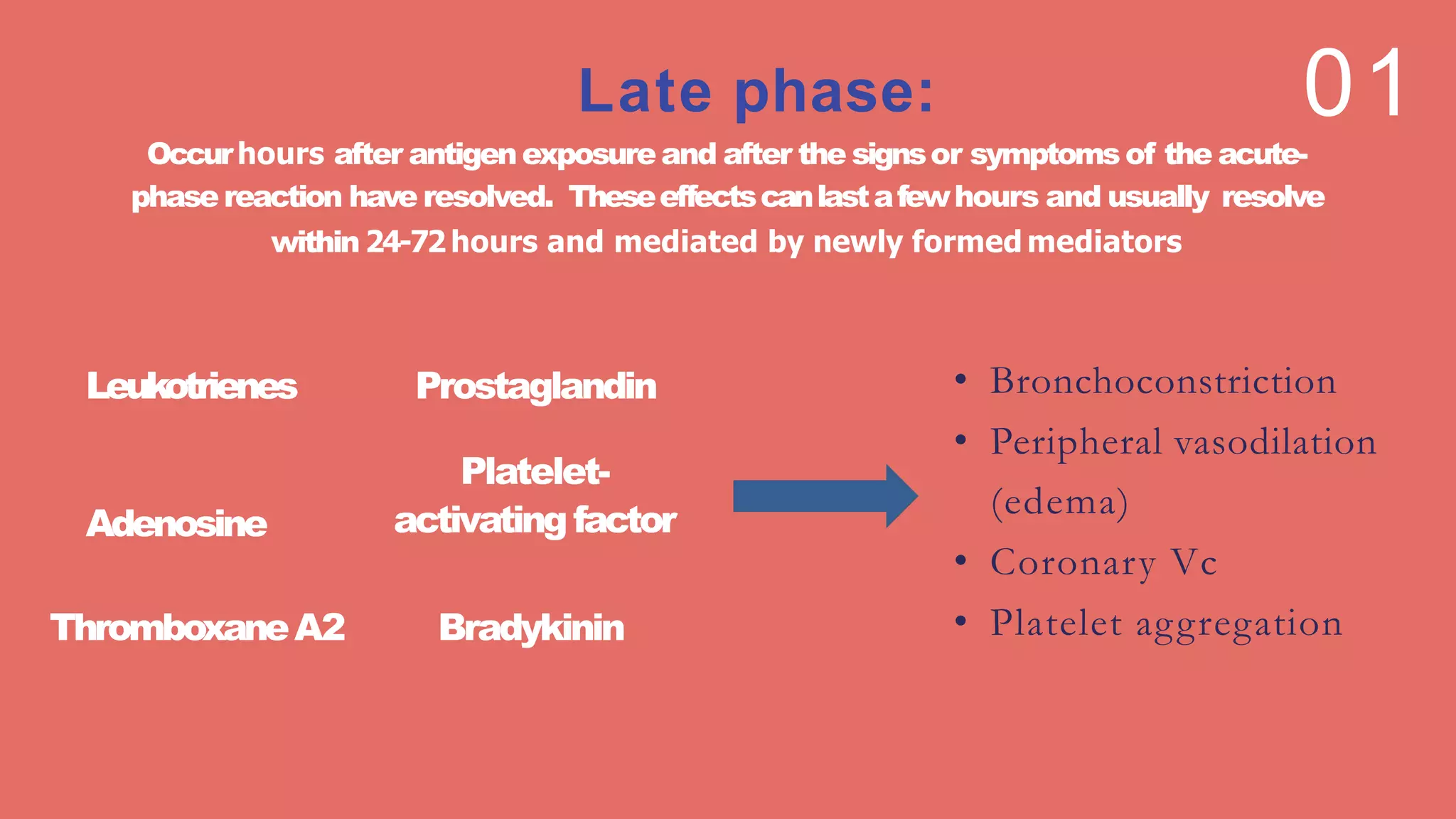
Bradykinin
Prostaglandin • Bronchoconstriction
• Peripheral vasodilation
(edema)
• Coronary Vc
• Platelet aggregationThromboxaneA2
Platelet-
activatingfactor
Leukotrienes
Adenosine
Occurhours after antigenexposureand after the signsor symptoms of the acute-
phasereaction have resolved. Theseeffectscanlastafewhours and usually resolve
within 24-72hours and mediated by newly formed mediators
01Late phase:
Examples of type 1 hypersensitivity
1.Atopic eczema
2. Food allergy
3. bronchial asthma
4. Drug allergy : penicillin
5. Anaphylaxis: most severe form of type 1, Life threatening, require
immediate treatment by epinephrine
01
02
Type 2 hypersentivity reaction
(Cytotoxic-Hypersenstivity)
1.IgM or IgG antibodies
2.bind to antigens on the cells of particular tissue types
(Causing tissue damage)
3.Senstization phase occur as Type 1 but with class
switching of B-cell to plasma secreting IGM.
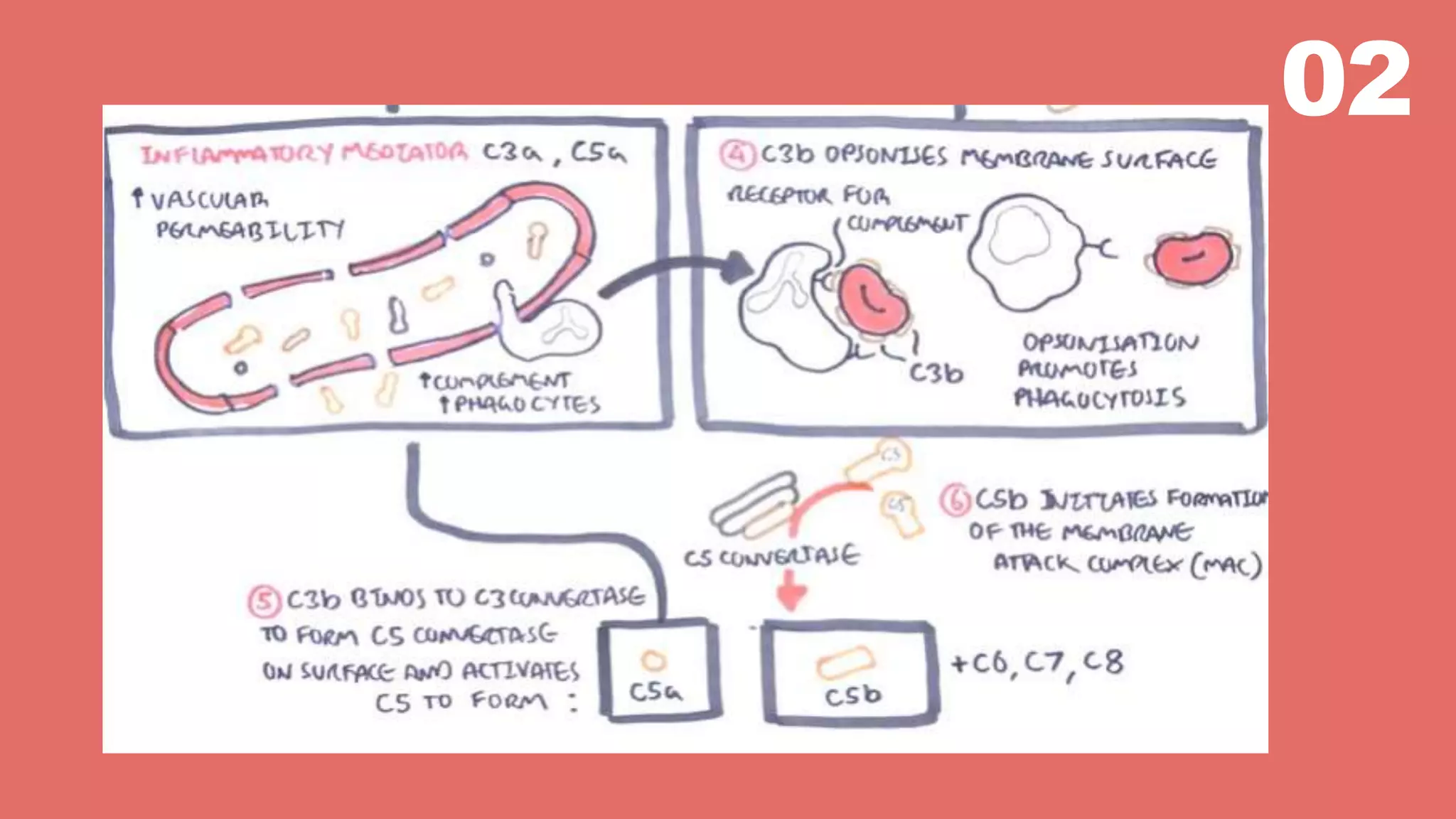
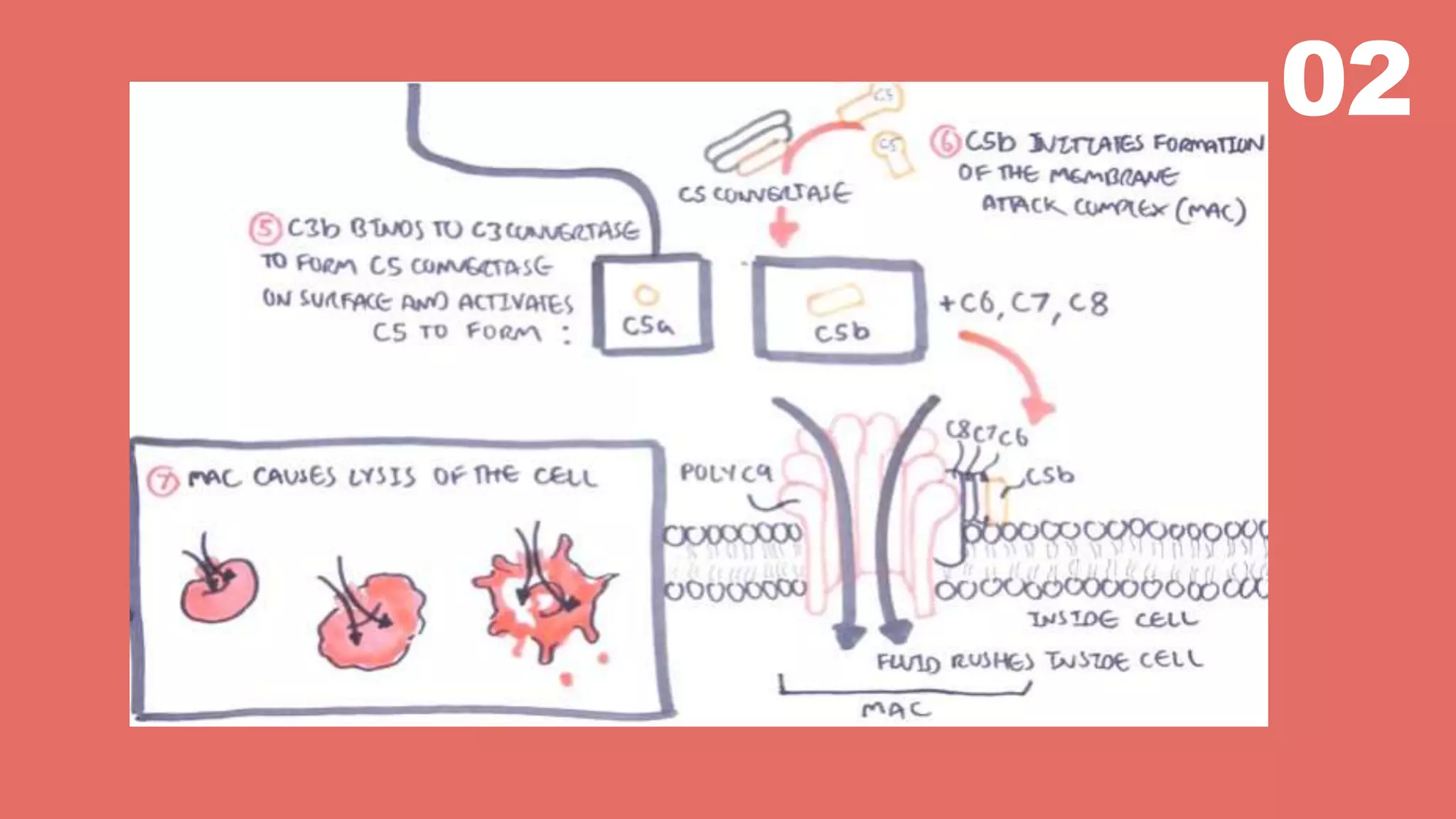
02The Three mechanisms of type
2 hypersenstivity:
1. C o m p le m e nt a cti v a t io n
2 . Ph a g o cy to s is
3 . Ant ib o d y De p e nd e nt C e l lu la r C y to to x ici ty
(AD C C ): b y Nk c e l l w h ich b ind th r o u g h C D16 (FC γRIII)
to th e Fc p o r t io n o f Ig G a nt ib o d ie s t r ig g e r in g th e
ly s is o f c e l ls m e d ia t in g r e le a s e o f g r a nz y m e s a n d p e r fo r in
r e s u l t in g in c e l l d e a th b y a p o p to s is .
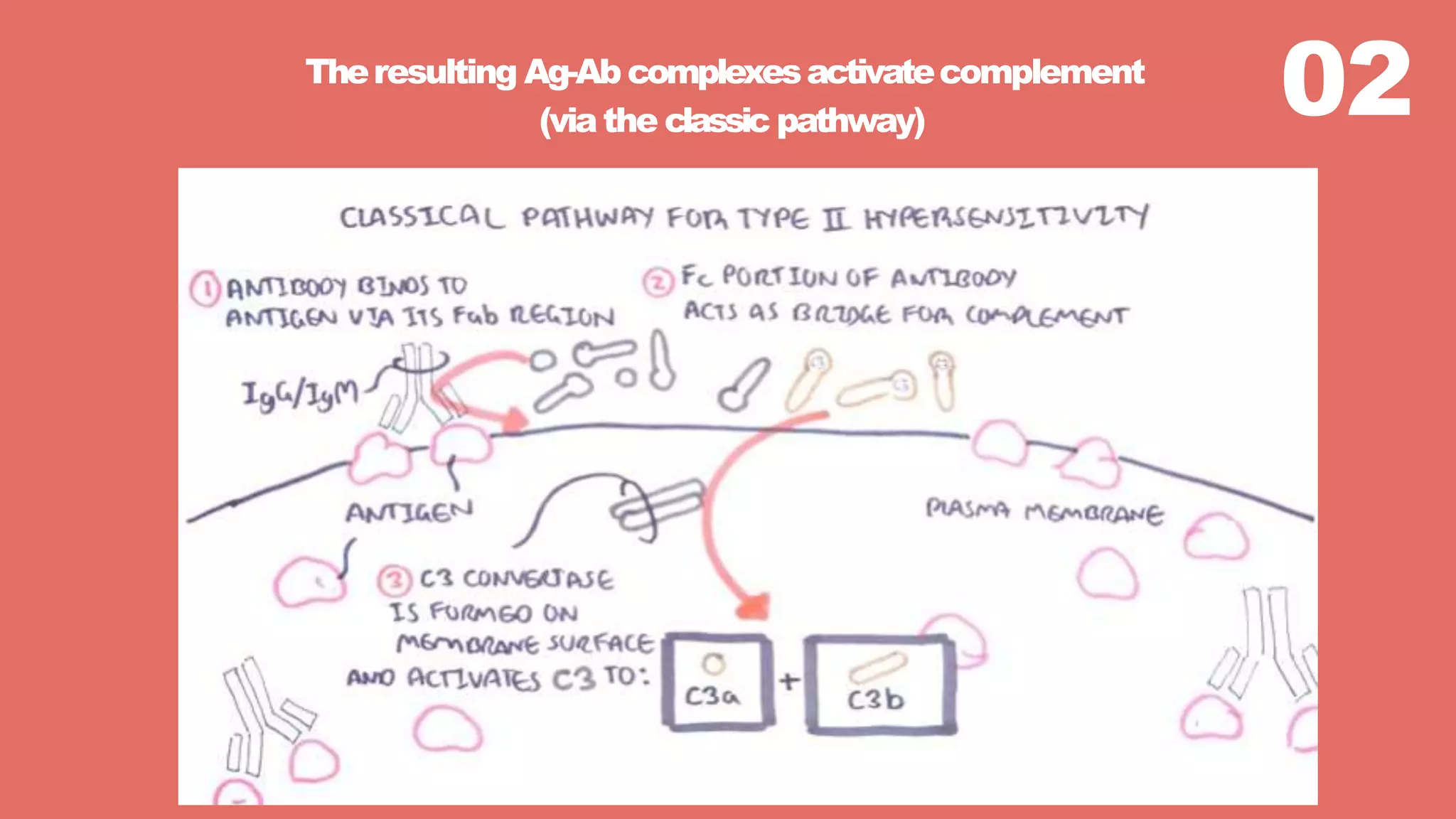
02Theresulting Ag-Ab complexesactivatecomplement
(viathe classic pathway)
02
02
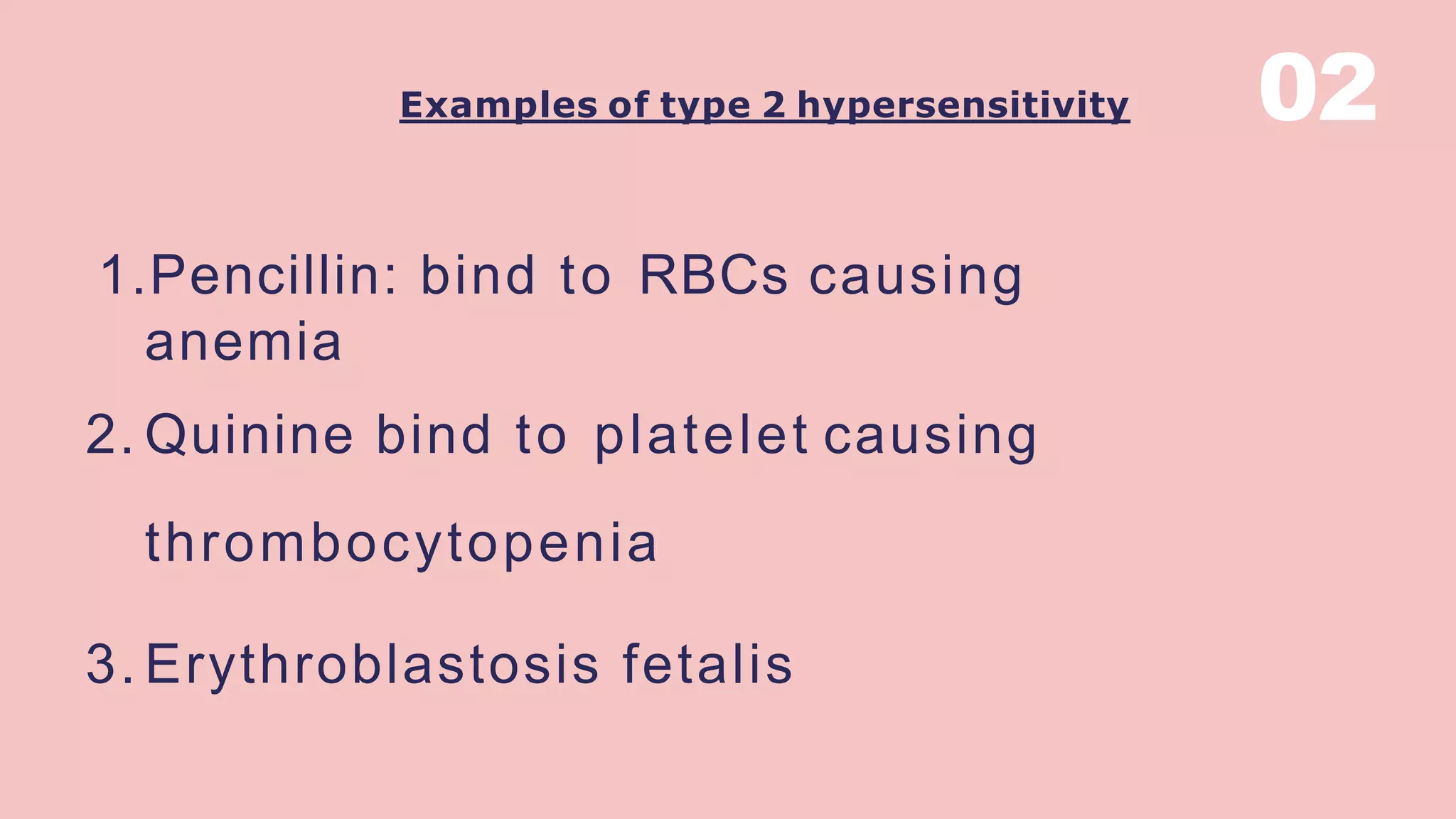
Examples of type 2 hypersensitivity
1.Pencillin: bind to RBCs causing
anemia
2. Quinine bind to platelet causing
thrombocytopenia
3. Erythroblastosis fetalis
02
03Type 3 hypersentivity reaction
(Immune complex-Hypersenstivity)
1.IgM or IgG antibodies
2.react with soluble antigens forming antigen-antibody
complexes.
3.Same MOA of type 2, But Complement activation cascade is
induced by depostion of immune complexes.
03
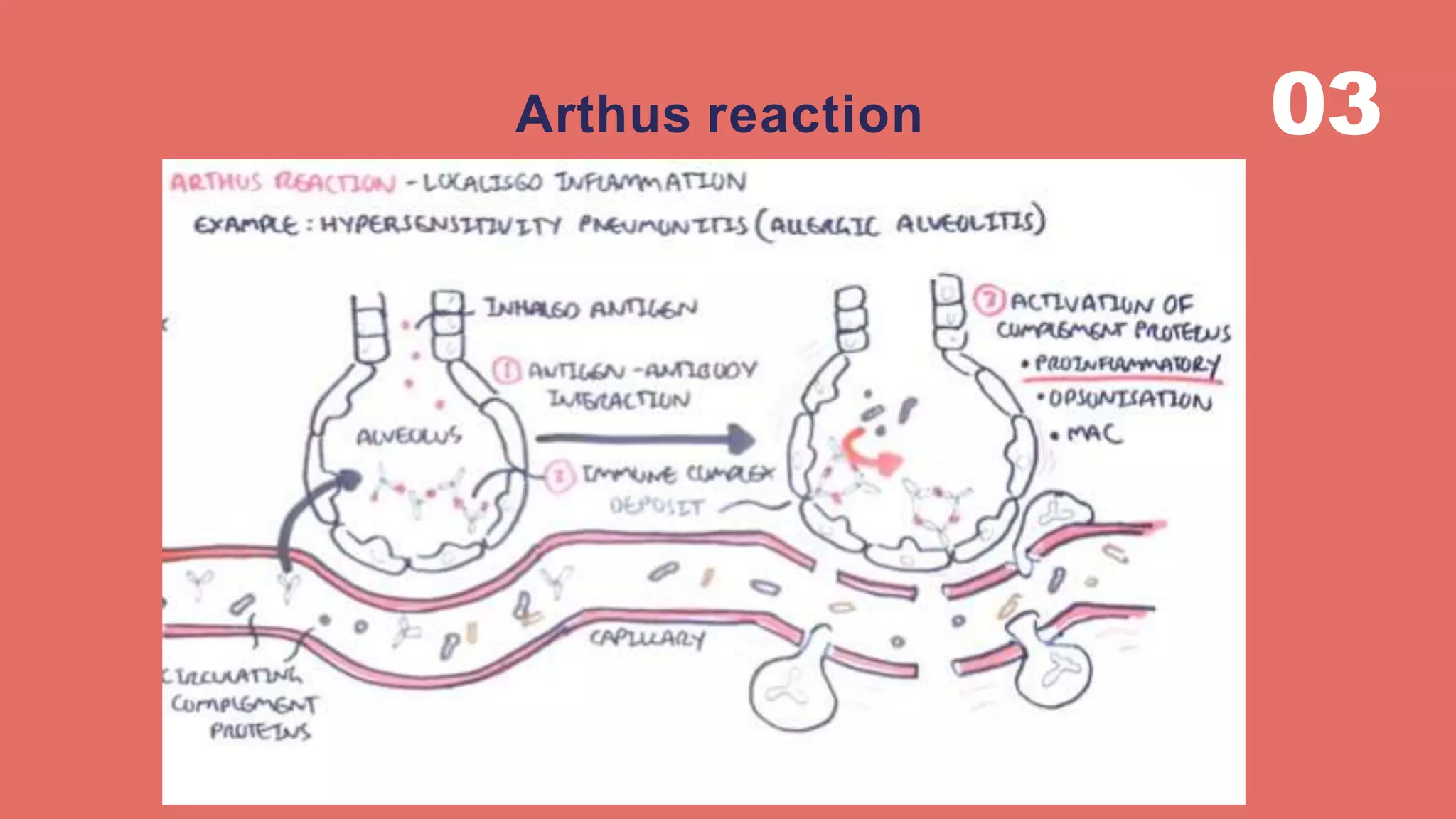
Arthus reaction: involves the localize formation of immune
complexes.
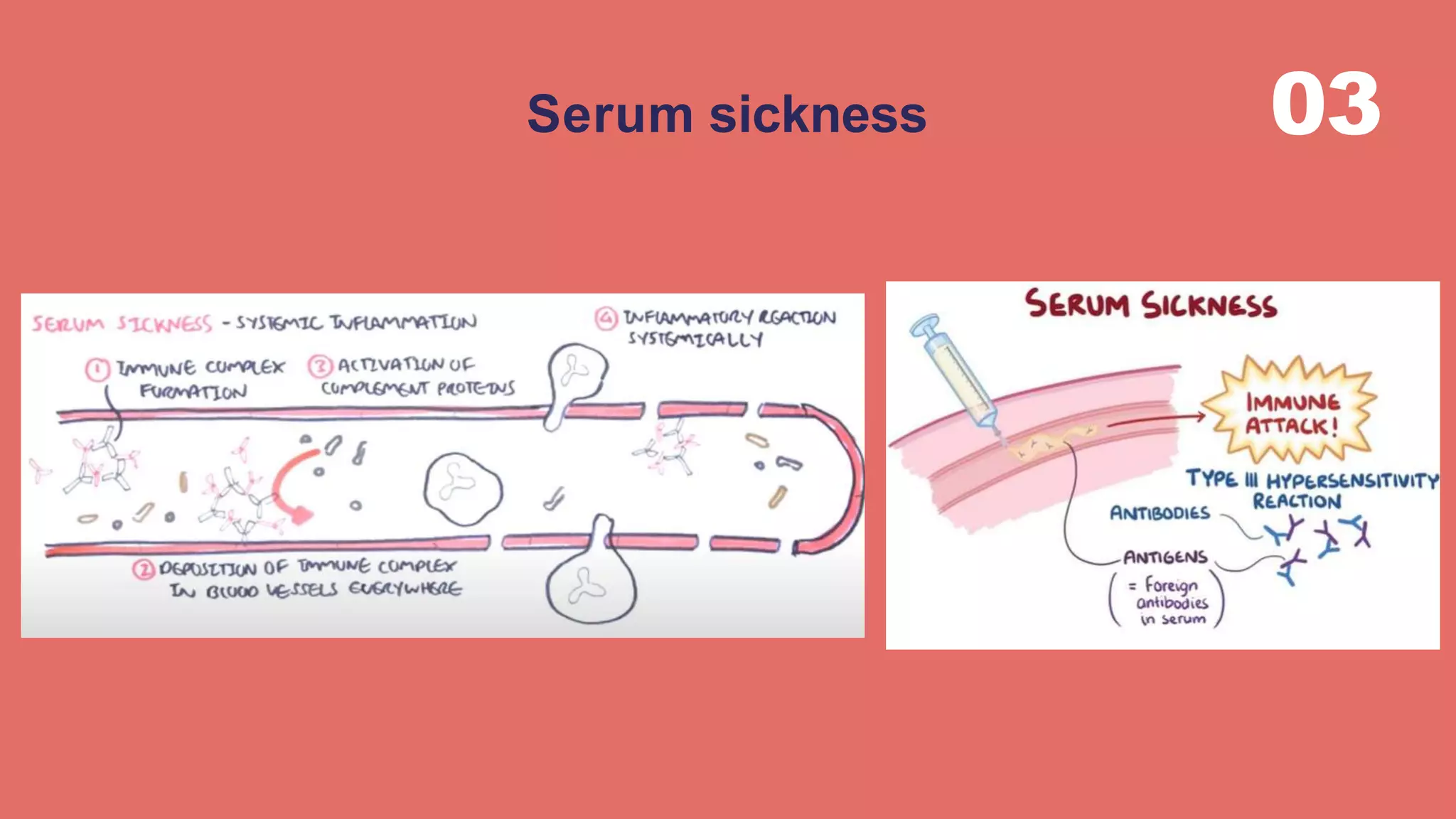
Serum sickness: Circulating immune complexes causing systemic
inflammation.
Type 3 hypersentivity reaction
(Immune complex-Hypersenstivity)
Arthus reaction vs Serum sickness
03Arthus reaction
03Serum sickness
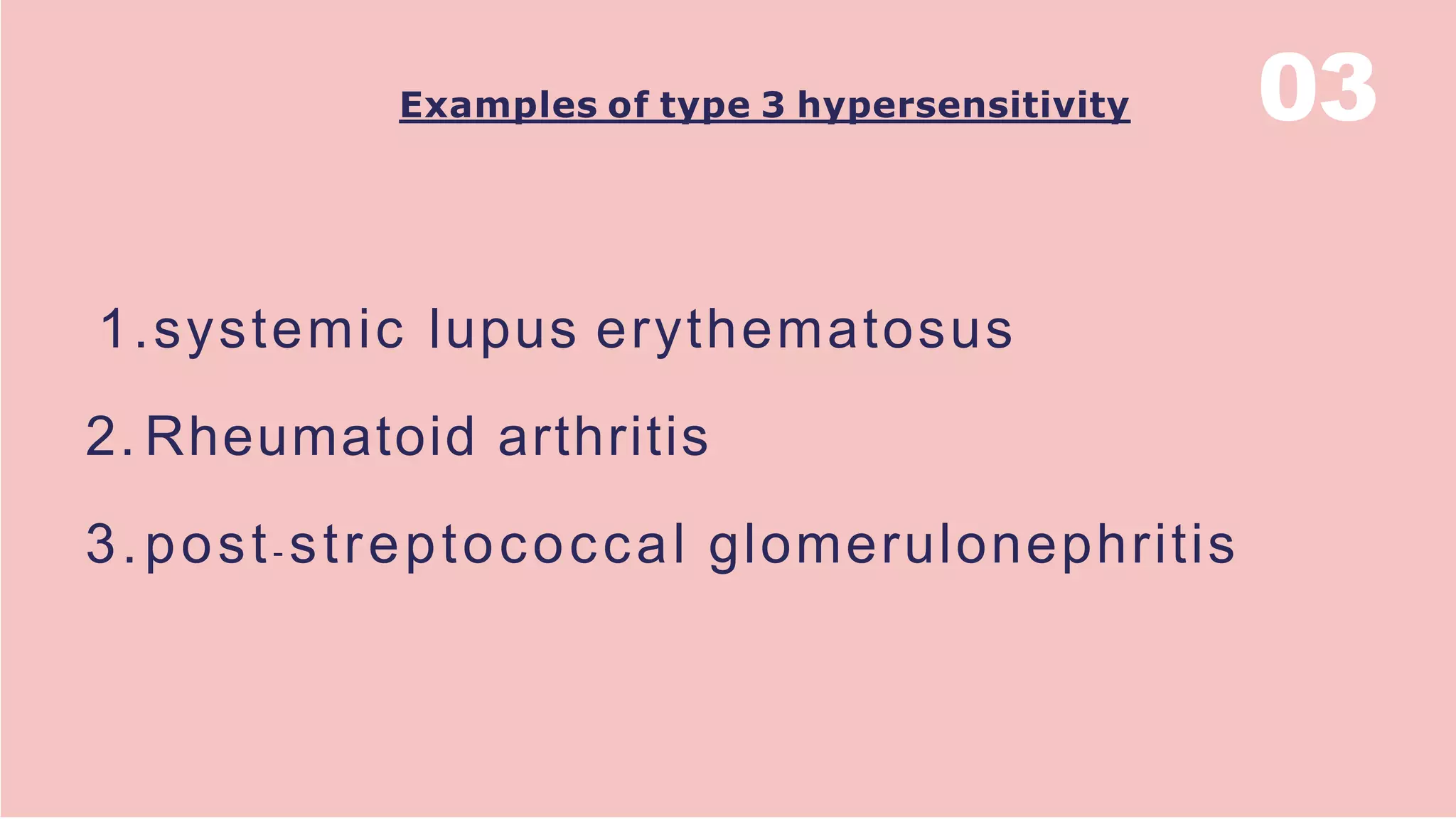
Examples of type 3 hypersensitivity
1.systemic lupus erythematosus
2. Rheumatoid arthritis
3.post- streptococcal glomerulonephritis
03
04Type 4 hypersentivityreaction
(Delayed - Hypersenstivity)
1.unlike the first three types of hypersensitivity which are antibody mediated,
type IV hypersensitivity is cell mediated and also a delayed reaction.
2.Starting at 2 or 3 days and often last for many days.
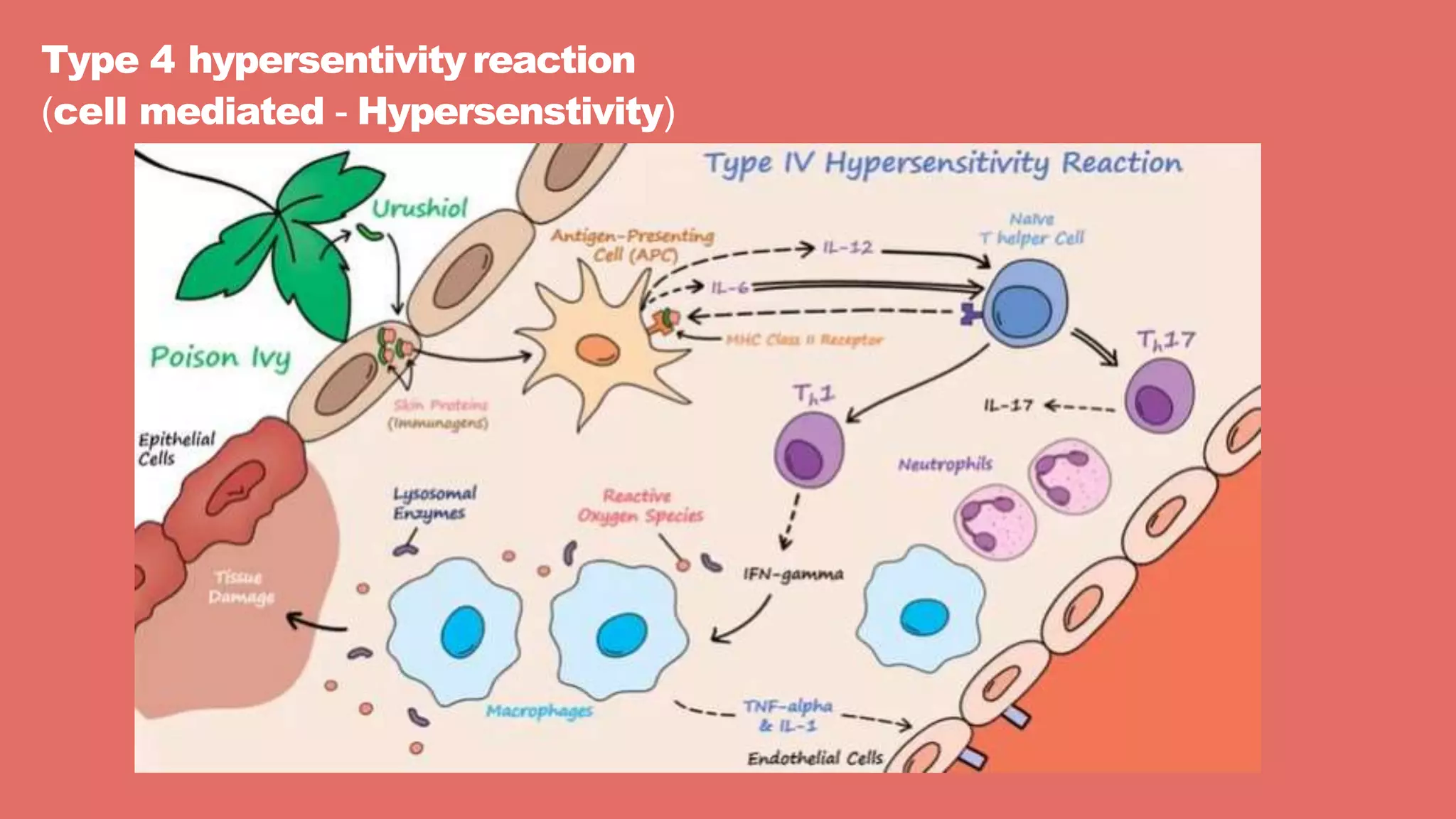
3.mediated by specific subsets of CD4+ helper T cells (Th-1 and Th-17 cells)
or by CD8+ cytotoxic T cells.(Direct cell toxicity via perforin and
granzymes)
Type 4 hypersentivityreaction
(cell mediated - Hypersenstivity)
Examples of type 4 hypersensitivity
Granuloma formation: It is a collection of macrophages
form when the immune system attempts to wall off
substances it perceives as foreign but is unable to
eliminate. (tuberculin test)
Allergic contact dermatitis: Environmental chemicals,
metals or topical medications causing epidermal necrosis,
inflammation, skin rash and blisters.
Type-1 diabetes: The killing of the pancreatic islet cells
by cytotoxic T cellsresulting in insulin deficiency.
04
Thank you.

Hypersensitivity reactions

  • 1.
    Hypersensitivity Reactions Presented bySarah Elsisi Undersupervision of Prof.Dr. Nageh Department of toxicology and pharmacology year 2020
  • 2.
    What is hypersensitivityreactions ? immune responses that are exaggerated or inappropriate against an benign antigen or allergen. It's the immune response that's is harmful not the antigen. There are four types of hypersensitivity reactions: Type 1, 2 ,3 (Antibody- mediated) and Type 4 (T- cell mediated) In subsequent exposure the exaggerated immune response occur. It's antigen specific (after first exposure*Asymptomatic* immune system become prime or sensitized toward antigen)
  • 3.
    activation of autoreactiveTcells, or promoting T cell responses to microbial epitopes that cross react against self peptides. Immunological tolerance Is a complex series of mechanisms that impair the immune system to mount responses against self antigens. Break down or Failurein immunological response Autoimmunity or autoimmune disease Environmental or genetic factor
  • 4.
    01Type 1 hypersentivityreaction (Immediate - allergic reaction) 1.Preformed IgE antibodies. 2.crosslinked by contact with free antigen. 3.genetically predisposed individuals(Patients prone to IgE-mediated allergic reactions are said to be atopic. Atopy is the genetic predisposition to make IgE antibodies in response to allergen exposure) 4.early and late phase
  • 5.
  • 6.
  • 7.
    Early phase: Chymase mucous secretion Proteoglycans heparin chondroitin sulfate Tryptase airwayremodeling through stimulation of collagen & fibroblast proliferation Histamine vascular permeability bronchoconstriction 01 Immediate or acute-phasereactionsoccurwithin secondsto minutes after allergen exposure. and mediated by preformed mediators.
  • 8.
    Bradykinin Prostaglandin • Bronchoconstriction •Peripheral vasodilation (edema) • Coronary Vc • Platelet aggregationThromboxaneA2 Platelet- activatingfactor Leukotrienes Adenosine Occurhours after antigenexposureand after the signsor symptoms of the acute- phasereaction have resolved. Theseeffectscanlastafewhours and usually resolve within 24-72hours and mediated by newly formed mediators 01Late phase:
  • 9.
    Examples of type1 hypersensitivity 1.Atopic eczema 2. Food allergy 3. bronchial asthma 4. Drug allergy : penicillin 5. Anaphylaxis: most severe form of type 1, Life threatening, require immediate treatment by epinephrine 01
  • 10.
    02 Type 2 hypersentivityreaction (Cytotoxic-Hypersenstivity) 1.IgM or IgG antibodies 2.bind to antigens on the cells of particular tissue types (Causing tissue damage) 3.Senstization phase occur as Type 1 but with class switching of B-cell to plasma secreting IGM.
  • 11.
    02The Three mechanismsof type 2 hypersenstivity: 1. C o m p le m e nt a cti v a t io n 2 . Ph a g o cy to s is 3 . Ant ib o d y De p e nd e nt C e l lu la r C y to to x ici ty (AD C C ): b y Nk c e l l w h ich b ind th r o u g h C D16 (FC γRIII) to th e Fc p o r t io n o f Ig G a nt ib o d ie s t r ig g e r in g th e ly s is o f c e l ls m e d ia t in g r e le a s e o f g r a nz y m e s a n d p e r fo r in r e s u l t in g in c e l l d e a th b y a p o p to s is .
  • 12.
  • 13.
  • 14.
  • 15.
    Examples of type2 hypersensitivity 1.Pencillin: bind to RBCs causing anemia 2. Quinine bind to platelet causing thrombocytopenia 3. Erythroblastosis fetalis 02
  • 16.
    03Type 3 hypersentivityreaction (Immune complex-Hypersenstivity) 1.IgM or IgG antibodies 2.react with soluble antigens forming antigen-antibody complexes. 3.Same MOA of type 2, But Complement activation cascade is induced by depostion of immune complexes.
  • 17.
    03 Arthus reaction: involvesthe localize formation of immune complexes. Serum sickness: Circulating immune complexes causing systemic inflammation. Type 3 hypersentivity reaction (Immune complex-Hypersenstivity) Arthus reaction vs Serum sickness
  • 18.
  • 19.
  • 20.
    Examples of type3 hypersensitivity 1.systemic lupus erythematosus 2. Rheumatoid arthritis 3.post- streptococcal glomerulonephritis 03
  • 21.
    04Type 4 hypersentivityreaction (Delayed- Hypersenstivity) 1.unlike the first three types of hypersensitivity which are antibody mediated, type IV hypersensitivity is cell mediated and also a delayed reaction. 2.Starting at 2 or 3 days and often last for many days. 3.mediated by specific subsets of CD4+ helper T cells (Th-1 and Th-17 cells) or by CD8+ cytotoxic T cells.(Direct cell toxicity via perforin and granzymes)
  • 22.
    Type 4 hypersentivityreaction (cellmediated - Hypersenstivity)
  • 23.
    Examples of type4 hypersensitivity Granuloma formation: It is a collection of macrophages form when the immune system attempts to wall off substances it perceives as foreign but is unable to eliminate. (tuberculin test) Allergic contact dermatitis: Environmental chemicals, metals or topical medications causing epidermal necrosis, inflammation, skin rash and blisters. Type-1 diabetes: The killing of the pancreatic islet cells by cytotoxic T cellsresulting in insulin deficiency. 04
  • 24.