HYDROLYSIS OF
NUCLEIC ACIDS
Group 8
Objectives
• To be able to prepare a hydrolyzed and unhydrolyzed DNA and RNA
• To be able to perform qualitative tests to determine the characteristics of nucleic
acid present
THEORIES
Hydrolysis
• Breaking of a bond in a molecule using water.
• Site of cleavage: sugar, phosphate backbone, or in the base
• Result: purine and pyrimidine bases, oligonucleotide, nucleosides, ribose or
deoxyribose, and phosphate.
Base-catalyzed hydrolysis
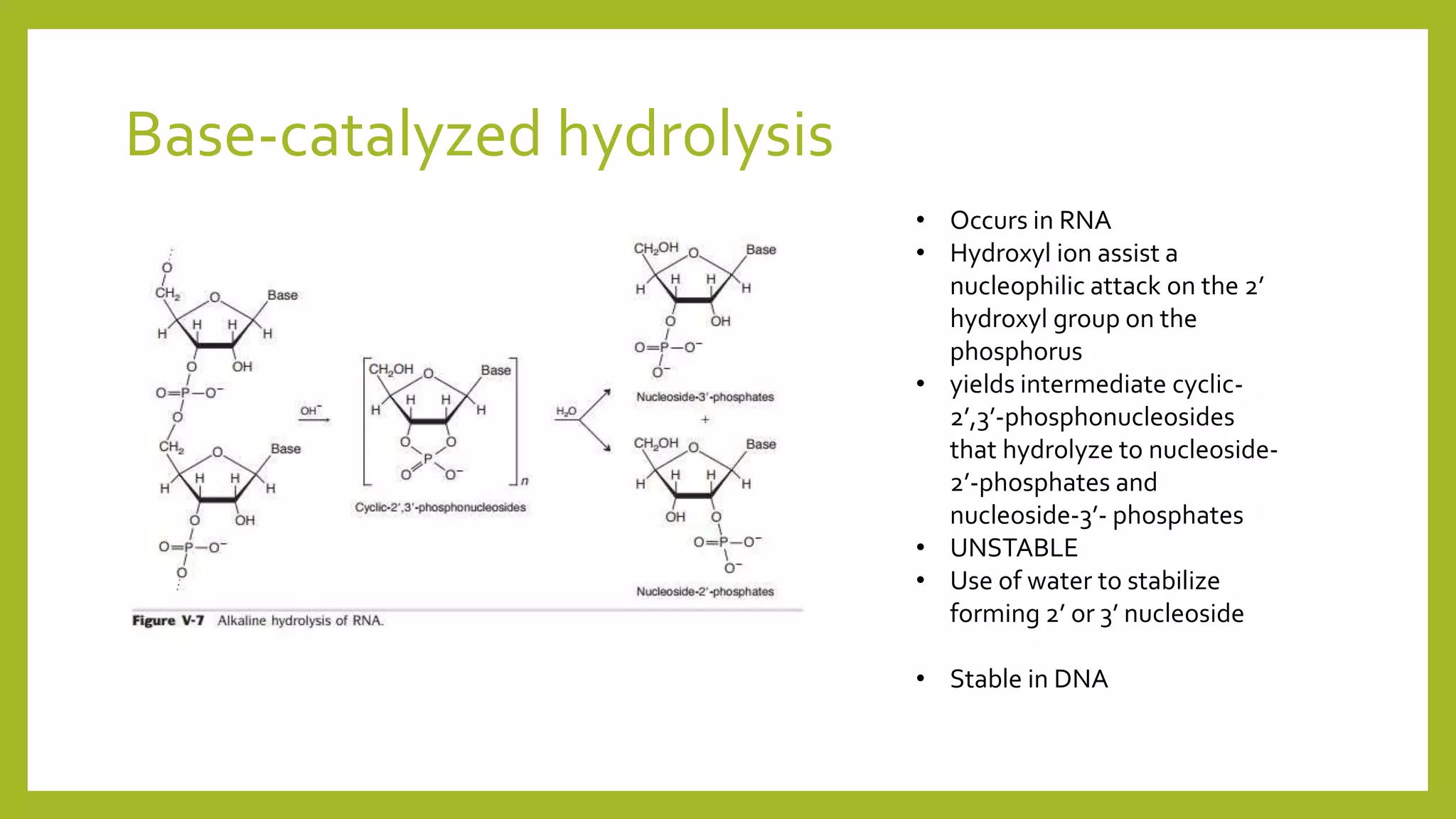
• Occurs in RNA
• Hydroxyl ion assist a
nucleophilic attack on the 2’
hydroxyl group on the
phosphorus
• yields intermediate cyclic-
2’,3’-phosphonucleosides
that hydrolyze to nucleoside-
2’-phosphates and
nucleoside-3’- phosphates
• UNSTABLE
• Use of water to stabilize
forming 2’ or 3’ nucleoside
• Stable in DNA
Acid-catalysed Hydrolysis
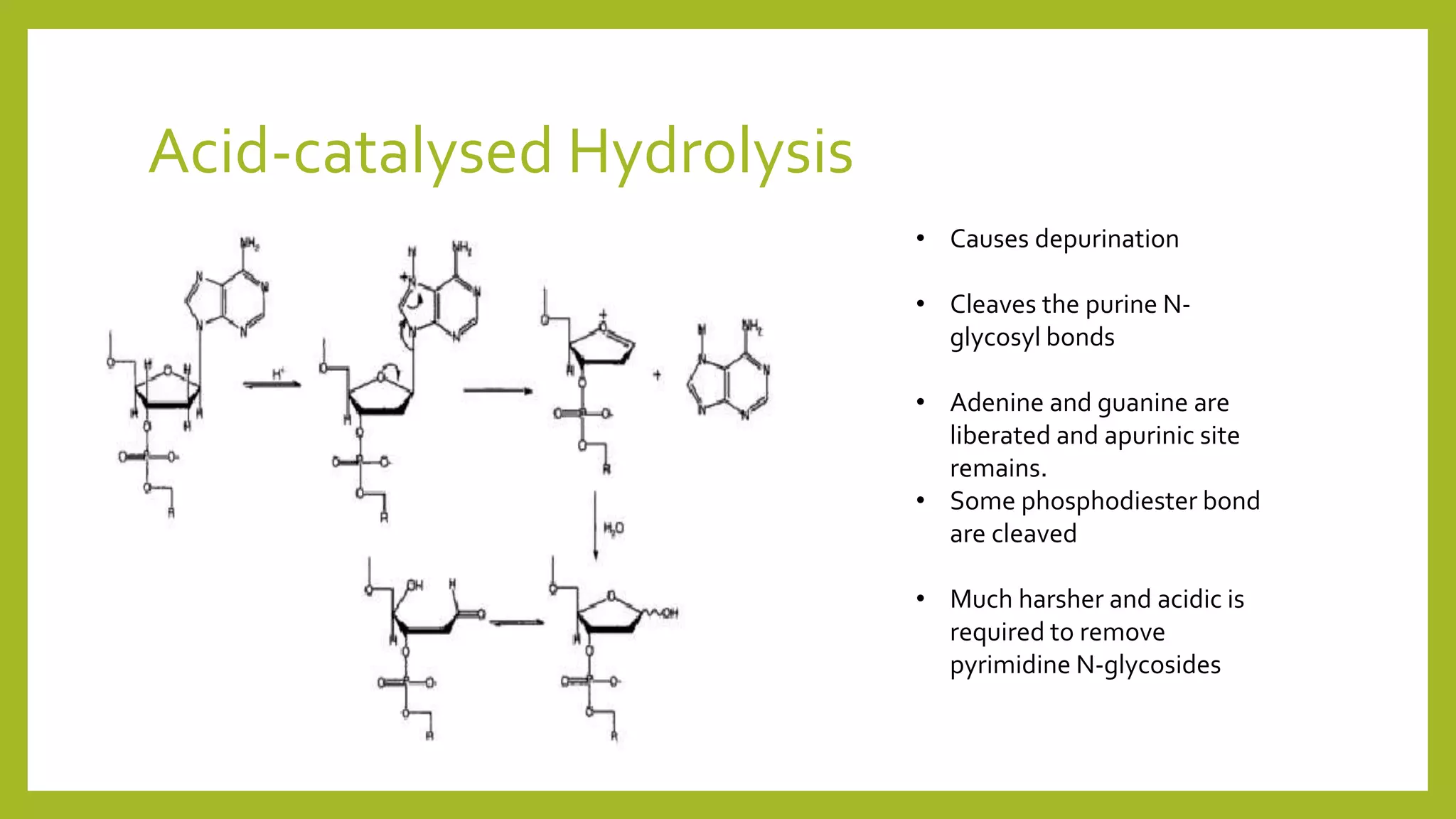
• Causes depurination
• Cleaves the purine N-
glycosyl bonds
• Adenine and guanine are
liberated and apurinic site
remains.
• Some phosphodiester bond
are cleaved
• Much harsher and acidic is
required to remove
pyrimidine N-glycosides
QUALITATIVETEST
DATA
DNA
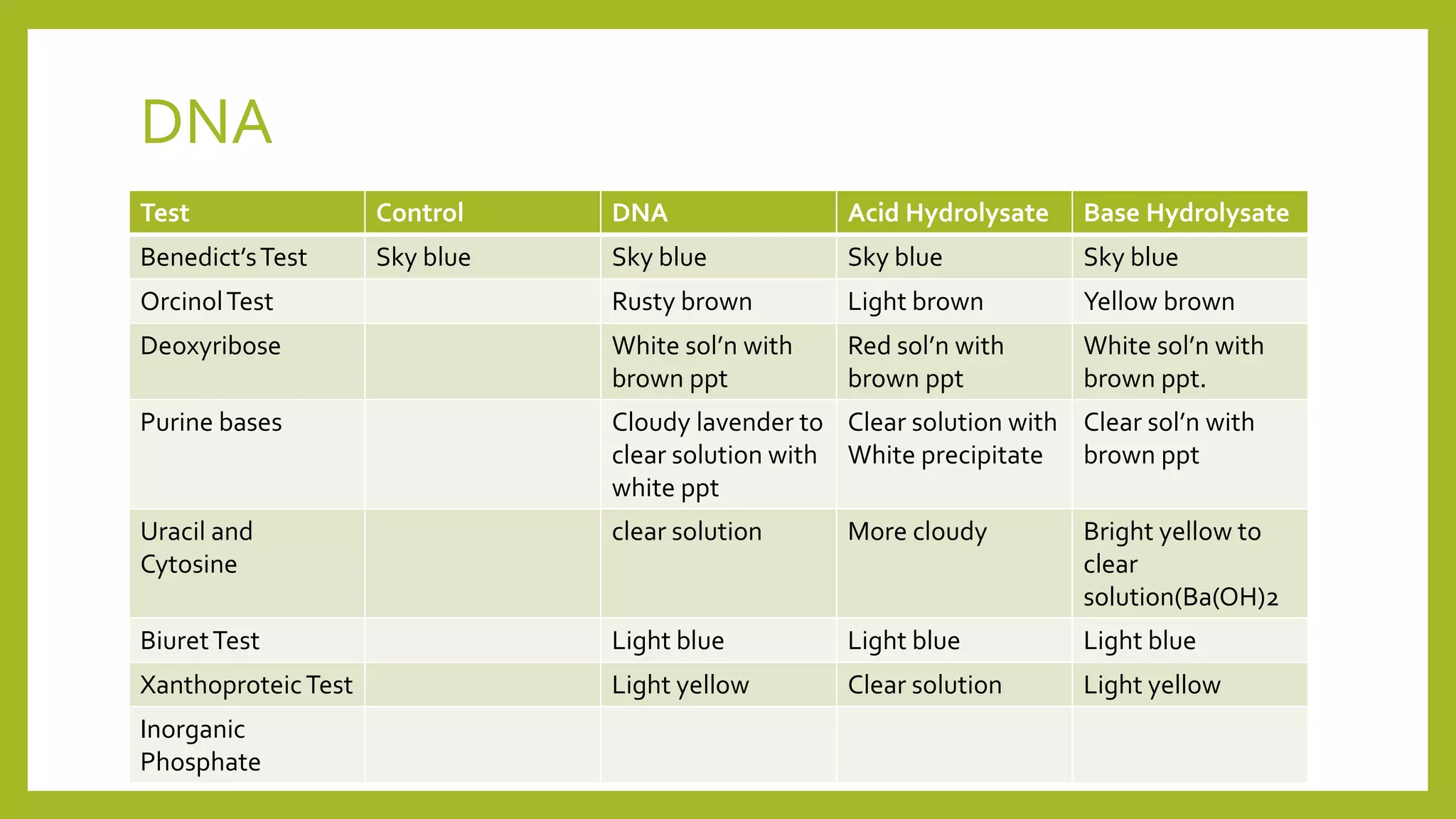
Test Control DNA Acid Hydrolysate Base Hydrolysate
Benedict’sTest Sky blue Sky blue Sky blue Sky blue
OrcinolTest Rusty brown Light brown Yellow brown
Deoxyribose White sol’n with
brown ppt
Red sol’n with
brown ppt
White sol’n with
brown ppt.
Purine bases Cloudy lavender to
clear solution with
white ppt
Clear solution with
White precipitate
Clear sol’n with
brown ppt
Uracil and
Cytosine
clear solution More cloudy Bright yellow to
clear
solution(Ba(OH)2
BiuretTest Light blue Light blue Light blue
XanthoproteicTest Light yellow Clear solution Light yellow
Inorganic
Phosphate
RNA
Test RNA Acid Hydrolysate Base Hydrolysate
Benedict’sTest Sky blue Apple green Sky blue
OrcinolTest Dark bue-green Dark green with black
particles solution
Dark blue-green
Deoxyribose White cloudy with brown
ppt
Red solution with brown
ppt
Layer of orange, white
and brown solutionwith
brown ppt.
Purine bases Cloudy dirty white sol’n Light pink sol’n with
brown ppt
Clear sol’n with black ppt
Uracil and Cytosine More cloudy Cloudy white cloudy white
BiuretTest Light purple Light purple Light blue
XanthoproteicTest Bright yellow Light yellow Bright yellow
Inorganic Phosphate
sample
Benedict’sTest
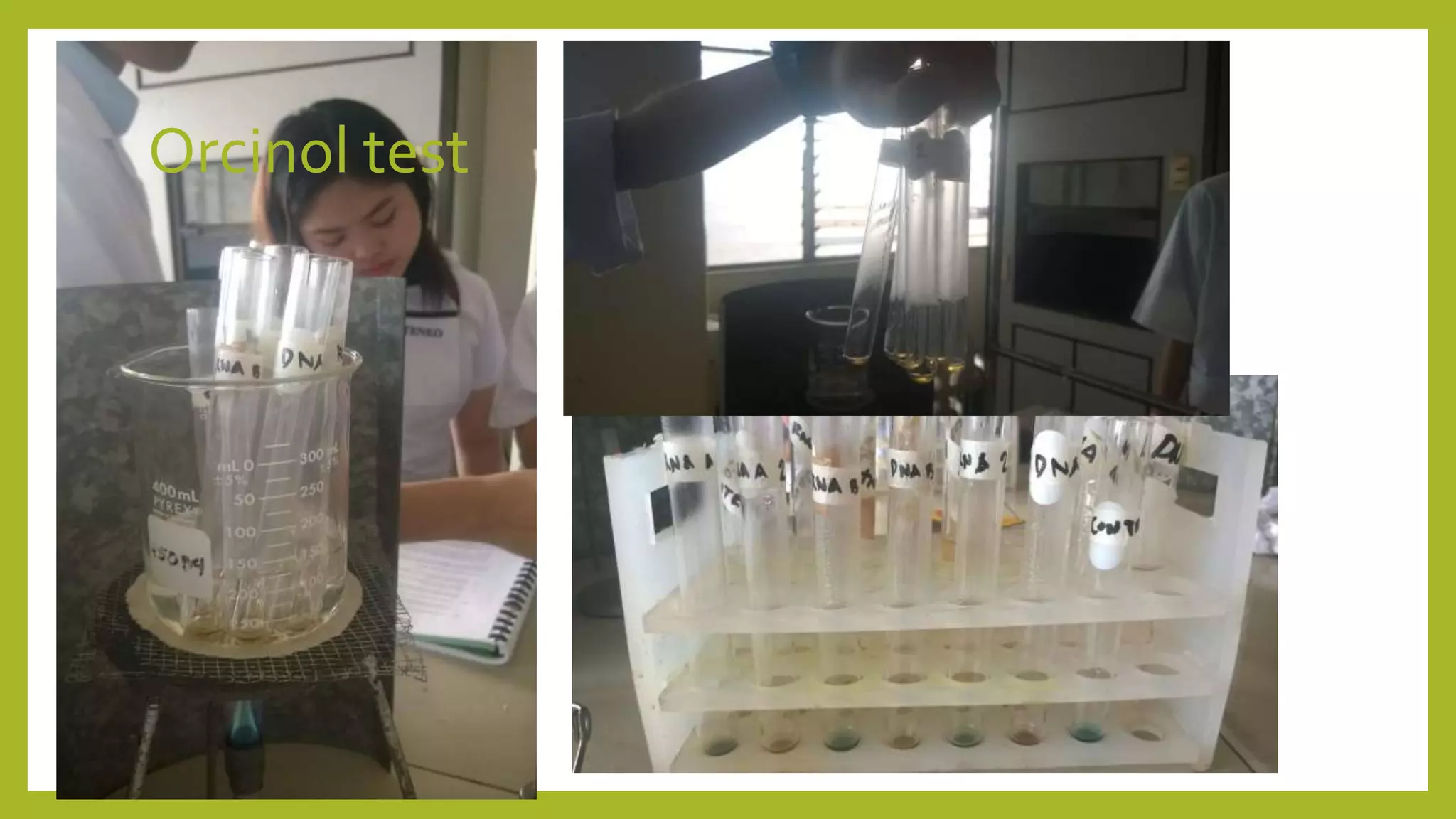
Orcinol test
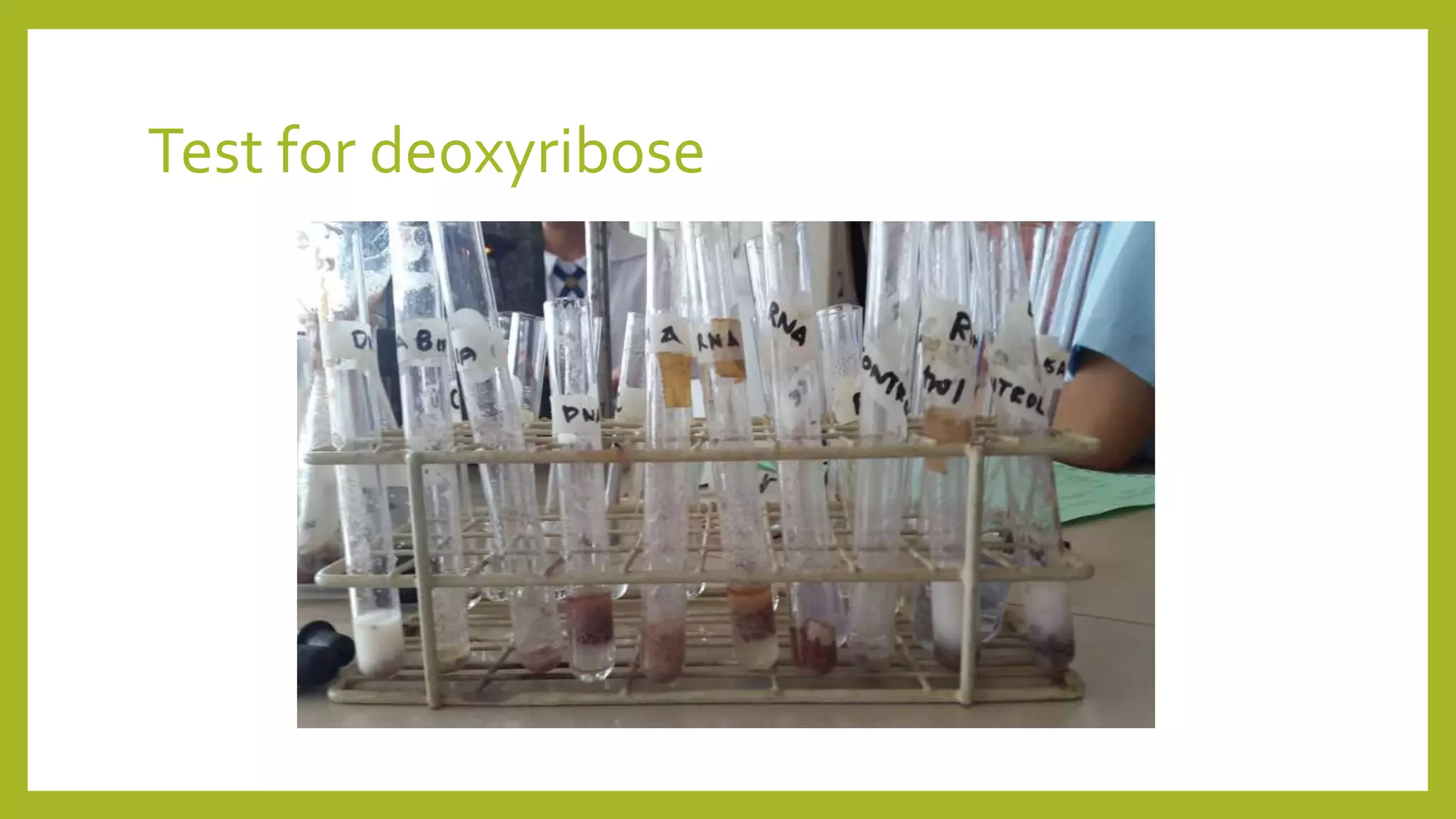
Test for deoxyribose
Test for Purine bases
Test for uracil and cytosine
Biuret test
Xanthoproteic test
ANSWERSTO
QUESTIONS
How can intact DNA be obtained from a
solution of DNA and RNA
• Dna could be obtained from a solution of DNA and RNA by using
a base-catalyzed hydrolysis, since in alkaline solution RNA is
destabilized forming nucleosides while the DNA remains stable
and intact.
Based on the qualitative test, How can you
differentiate hydrolyzed from unhydrolyzed
RNA
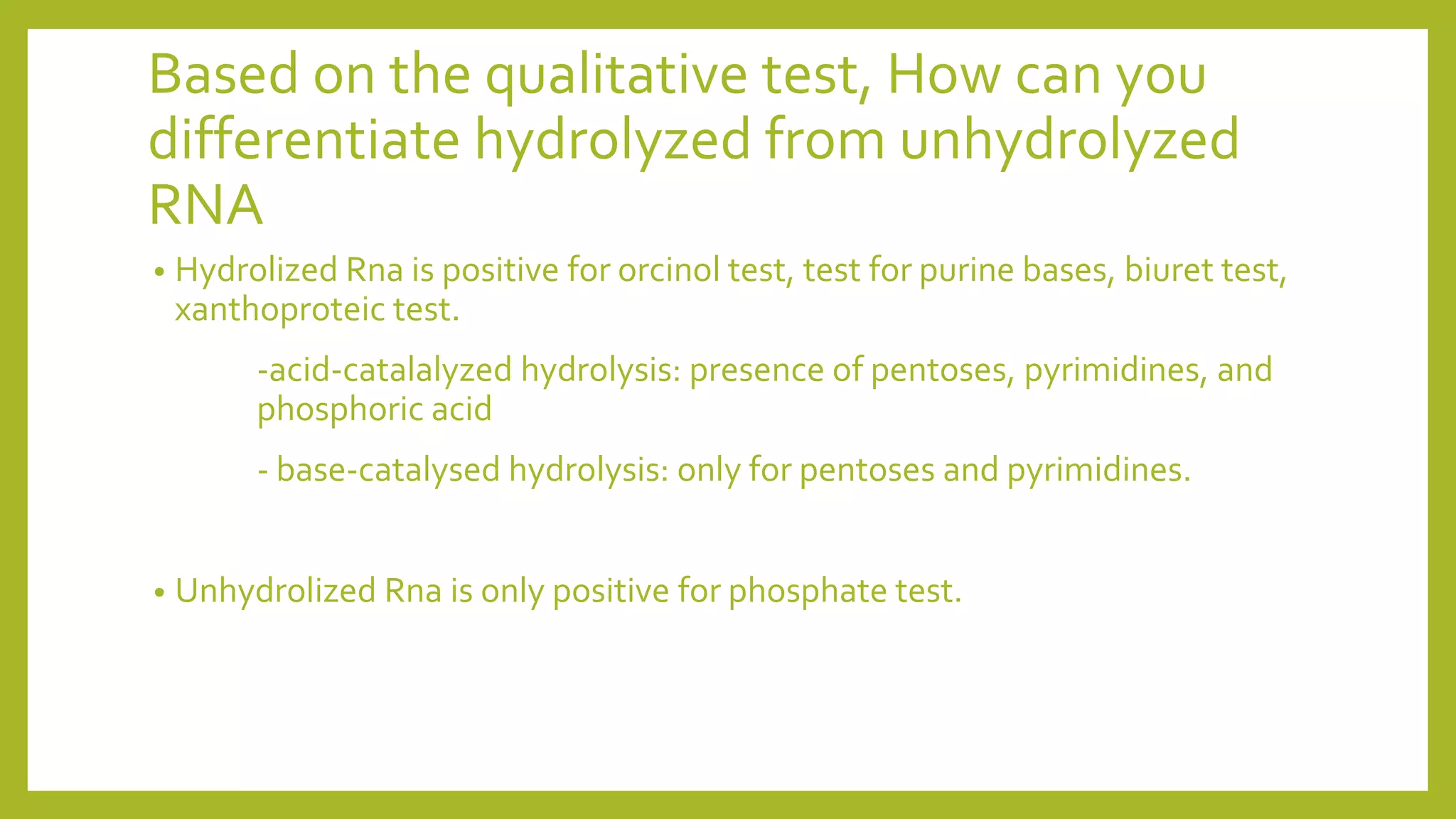
• Hydrolized Rna is positive for orcinol test, test for purine bases, biuret test,
xanthoproteic test.
-acid-catalalyzed hydrolysis: presence of pentoses, pyrimidines, and
phosphoric acid
- base-catalysed hydrolysis: only for pentoses and pyrimidines.
• Unhydrolized Rna is only positive for phosphate test.
Based on this experimental result, do you
think you obtained pure RNA from yeast?Why
orWhy not?
• We were not able to obtain pure Rna from yeast because of the positive result
from our xanthoproteic and biuret tests
Based on these experimental result, do you
think you obtained pure DNA from onion?
Why or why not?
• We were not able to obtain pure DNA because of the positive test of
xanthoproteic on our DNA samples.
CONCLUSION
• Base-catalysed hydrolysis occurs only in RNA
• Acid hydrolysis of nucleic acids yeilds purines, pyrimidine bases and phosphoric
acid
• Despite the errors in the hydrolysis and qualitative test experiment we have
understood the nucleic acid hydrolysis
Reference:
• http://www.scribd.com/doc/38672208/Hydrolysis-of-Nucleic-Acids#scribd
• http://www.chem.uky.edu/courses/che554/5_MolBio/NucleicAcidTechnologyIntro
Chpt.pdf

Hydrolysis_of_nucleic_acids.pptx

  • 1.
  • 2.
    Objectives • To beable to prepare a hydrolyzed and unhydrolyzed DNA and RNA • To be able to perform qualitative tests to determine the characteristics of nucleic acid present
  • 3.
  • 4.
    Hydrolysis • Breaking ofa bond in a molecule using water. • Site of cleavage: sugar, phosphate backbone, or in the base • Result: purine and pyrimidine bases, oligonucleotide, nucleosides, ribose or deoxyribose, and phosphate.
  • 5.
    Base-catalyzed hydrolysis • Occursin RNA • Hydroxyl ion assist a nucleophilic attack on the 2’ hydroxyl group on the phosphorus • yields intermediate cyclic- 2’,3’-phosphonucleosides that hydrolyze to nucleoside- 2’-phosphates and nucleoside-3’- phosphates • UNSTABLE • Use of water to stabilize forming 2’ or 3’ nucleoside • Stable in DNA
  • 6.
    Acid-catalysed Hydrolysis • Causesdepurination • Cleaves the purine N- glycosyl bonds • Adenine and guanine are liberated and apurinic site remains. • Some phosphodiester bond are cleaved • Much harsher and acidic is required to remove pyrimidine N-glycosides
  • 7.
  • 8.
    DNA Test Control DNAAcid Hydrolysate Base Hydrolysate Benedict’sTest Sky blue Sky blue Sky blue Sky blue OrcinolTest Rusty brown Light brown Yellow brown Deoxyribose White sol’n with brown ppt Red sol’n with brown ppt White sol’n with brown ppt. Purine bases Cloudy lavender to clear solution with white ppt Clear solution with White precipitate Clear sol’n with brown ppt Uracil and Cytosine clear solution More cloudy Bright yellow to clear solution(Ba(OH)2 BiuretTest Light blue Light blue Light blue XanthoproteicTest Light yellow Clear solution Light yellow Inorganic Phosphate
  • 9.
    RNA Test RNA AcidHydrolysate Base Hydrolysate Benedict’sTest Sky blue Apple green Sky blue OrcinolTest Dark bue-green Dark green with black particles solution Dark blue-green Deoxyribose White cloudy with brown ppt Red solution with brown ppt Layer of orange, white and brown solutionwith brown ppt. Purine bases Cloudy dirty white sol’n Light pink sol’n with brown ppt Clear sol’n with black ppt Uracil and Cytosine More cloudy Cloudy white cloudy white BiuretTest Light purple Light purple Light blue XanthoproteicTest Bright yellow Light yellow Bright yellow Inorganic Phosphate
  • 10.
  • 11.
  • 12.
  • 13.
  • 14.
  • 15.
    Test for uraciland cytosine
  • 16.
  • 17.
  • 18.
  • 19.
    How can intactDNA be obtained from a solution of DNA and RNA • Dna could be obtained from a solution of DNA and RNA by using a base-catalyzed hydrolysis, since in alkaline solution RNA is destabilized forming nucleosides while the DNA remains stable and intact.
  • 20.
    Based on thequalitative test, How can you differentiate hydrolyzed from unhydrolyzed RNA • Hydrolized Rna is positive for orcinol test, test for purine bases, biuret test, xanthoproteic test. -acid-catalalyzed hydrolysis: presence of pentoses, pyrimidines, and phosphoric acid - base-catalysed hydrolysis: only for pentoses and pyrimidines. • Unhydrolized Rna is only positive for phosphate test.
  • 21.
    Based on thisexperimental result, do you think you obtained pure RNA from yeast?Why orWhy not? • We were not able to obtain pure Rna from yeast because of the positive result from our xanthoproteic and biuret tests
  • 22.
    Based on theseexperimental result, do you think you obtained pure DNA from onion? Why or why not? • We were not able to obtain pure DNA because of the positive test of xanthoproteic on our DNA samples.
  • 23.
  • 24.
    • Base-catalysed hydrolysisoccurs only in RNA • Acid hydrolysis of nucleic acids yeilds purines, pyrimidine bases and phosphoric acid • Despite the errors in the hydrolysis and qualitative test experiment we have understood the nucleic acid hydrolysis
  • 25.

Editor's Notes

  • #7 In the reaction mechanism given, it can be deduced that the depurination occurs is promoted by the protonation of the purine base, thus, weakening the N-glycosyl bond. The N-glycosyl bond is then irreversibly broken by the neighboring oxygen atom giving a free purine base and anapurinic nucleic acid