Hydrogen and Ammonia for
Clean, Renewable Energy: A
Literature Review
Samara Rashid
Research Honors
● To review research in
hydrogen and ammonia
energy so that research
can be used to implement
systems using hydrogen
and ammonia energy in the
real world
Purpose and
applications
● Climate change
○ Causes
○ Effects
○ Solutions
Background
Research
● Hydrogen
○ Uses
○ Energy
Background
Research
● Ammonia
○ Uses
○ Energy
Background
Research
Ammonia at low pressure
● Pilot plant at University of Minnesota
○ Wind energy ---> ammonia production
○ Expensive
● Renewable way of producing ammonia at low pressure
● May be hard to replicate elsewhere
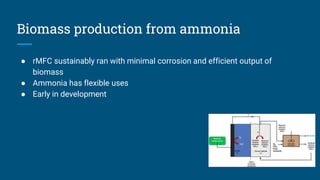
Biomass production from ammonia
● rMFC sustainably ran with minimal corrosion and efficient output of
biomass
● Ammonia has flexible uses
● Early in development
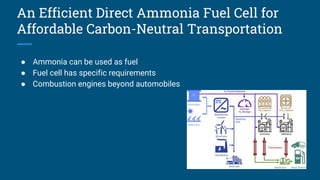
An Efficient Direct Ammonia Fuel Cell for
Affordable Carbon-Neutral Transportation
● Ammonia can be used as fuel
● Fuel cell has specific requirements
● Combustion engines beyond automobiles
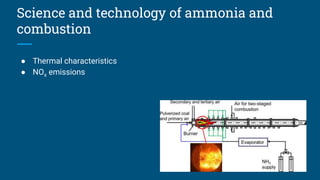
Science and technology of ammonia and
combustion
● Thermal characteristics
● NOx emissions
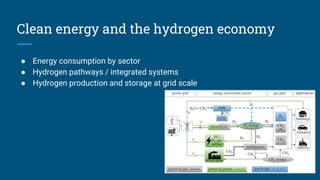
Clean energy and the hydrogen economy
● Energy consumption by sector
● Hydrogen pathways / integrated systems
● Hydrogen production and storage at grid scale
Hydrogen Peroxide as a Sustainable Energy Carrier:
Electrocatalytic Production Peroxide and the Fuel cell
● Catalysts used
● Hydrogen peroxide as fuel
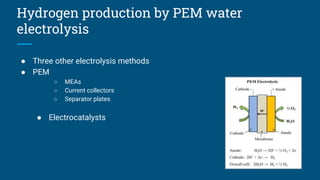
Hydrogen production by PEM water
electrolysis
● Three other electrolysis methods
● PEM
○ MEAs
○ Current collectors
○ Separator plates
● Electrocatalysts
Microalgal hydrogen production
● Microbes
● Genetic engineering
● Photobioreactors
● Manipulating pre existing processes
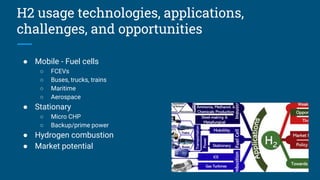
H2 usage technologies, applications,
challenges, and opportunities
● Mobile - Fuel cells
○ FCEVs
○ Buses, trucks, trains
○ Maritime
○ Aerospace
● Stationary
○ Micro CHP
○ Backup/prime power
● Hydrogen combustion
● Market potential
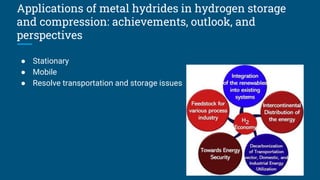
Applications of metal hydrides in hydrogen storage
and compression: achievements, outlook, and
perspectives
● Stationary
● Mobile
● Resolve transportation and storage issues
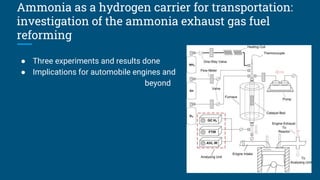
Ammonia as a hydrogen carrier for transportation:
investigation of the ammonia exhaust gas fuel
reforming
● Three experiments and results done
● Implications for automobile engines and
beyond
Conclusion
● Ammonia and hydrogen are viable energy options for our
economy
○ Further modifications and investments in infrastructure
○ Public and private support/willingness
Applications
● To increase hydrogen and ammonia in energy uses, mostly for
transportation but in all sectors eventually
● Doing so will counteract effects of climate change and improve
quality of life
● Energy could become cheaper and more efficient
Limitations
● Most research is based on projects and models,
but those don’t necessarily reflect the real world
Future studies
● A larger scale experiment/case study
● Further research into ammonia fuel cells
● Further research into PEM electrolysis and microbial electrolysis
● Further research into bulk hydrogen storage

Hydrogen/Ammonia Energy

  • 1.
    Hydrogen and Ammoniafor Clean, Renewable Energy: A Literature Review Samara Rashid Research Honors
  • 2.
    ● To reviewresearch in hydrogen and ammonia energy so that research can be used to implement systems using hydrogen and ammonia energy in the real world Purpose and applications
  • 3.
    ● Climate change ○Causes ○ Effects ○ Solutions Background Research
  • 4.
    ● Hydrogen ○ Uses ○Energy Background Research
  • 5.
    ● Ammonia ○ Uses ○Energy Background Research
  • 6.
    Ammonia at lowpressure ● Pilot plant at University of Minnesota ○ Wind energy ---> ammonia production ○ Expensive ● Renewable way of producing ammonia at low pressure ● May be hard to replicate elsewhere
  • 7.
    Biomass production fromammonia ● rMFC sustainably ran with minimal corrosion and efficient output of biomass ● Ammonia has flexible uses ● Early in development
  • 8.
    An Efficient DirectAmmonia Fuel Cell for Affordable Carbon-Neutral Transportation ● Ammonia can be used as fuel ● Fuel cell has specific requirements ● Combustion engines beyond automobiles
  • 9.
    Science and technologyof ammonia and combustion ● Thermal characteristics ● NOx emissions
  • 10.
    Clean energy andthe hydrogen economy ● Energy consumption by sector ● Hydrogen pathways / integrated systems ● Hydrogen production and storage at grid scale
  • 11.
    Hydrogen Peroxide asa Sustainable Energy Carrier: Electrocatalytic Production Peroxide and the Fuel cell ● Catalysts used ● Hydrogen peroxide as fuel
  • 12.
    Hydrogen production byPEM water electrolysis ● Three other electrolysis methods ● PEM ○ MEAs ○ Current collectors ○ Separator plates ● Electrocatalysts
  • 13.
    Microalgal hydrogen production ●Microbes ● Genetic engineering ● Photobioreactors ● Manipulating pre existing processes
  • 14.
    H2 usage technologies,applications, challenges, and opportunities ● Mobile - Fuel cells ○ FCEVs ○ Buses, trucks, trains ○ Maritime ○ Aerospace ● Stationary ○ Micro CHP ○ Backup/prime power ● Hydrogen combustion ● Market potential
  • 15.
    Applications of metalhydrides in hydrogen storage and compression: achievements, outlook, and perspectives ● Stationary ● Mobile ● Resolve transportation and storage issues
  • 16.
    Ammonia as ahydrogen carrier for transportation: investigation of the ammonia exhaust gas fuel reforming ● Three experiments and results done ● Implications for automobile engines and beyond
  • 17.
    Conclusion ● Ammonia andhydrogen are viable energy options for our economy ○ Further modifications and investments in infrastructure ○ Public and private support/willingness
  • 18.
    Applications ● To increasehydrogen and ammonia in energy uses, mostly for transportation but in all sectors eventually ● Doing so will counteract effects of climate change and improve quality of life ● Energy could become cheaper and more efficient
  • 19.
    Limitations ● Most researchis based on projects and models, but those don’t necessarily reflect the real world
  • 20.
    Future studies ● Alarger scale experiment/case study ● Further research into ammonia fuel cells ● Further research into PEM electrolysis and microbial electrolysis ● Further research into bulk hydrogen storage